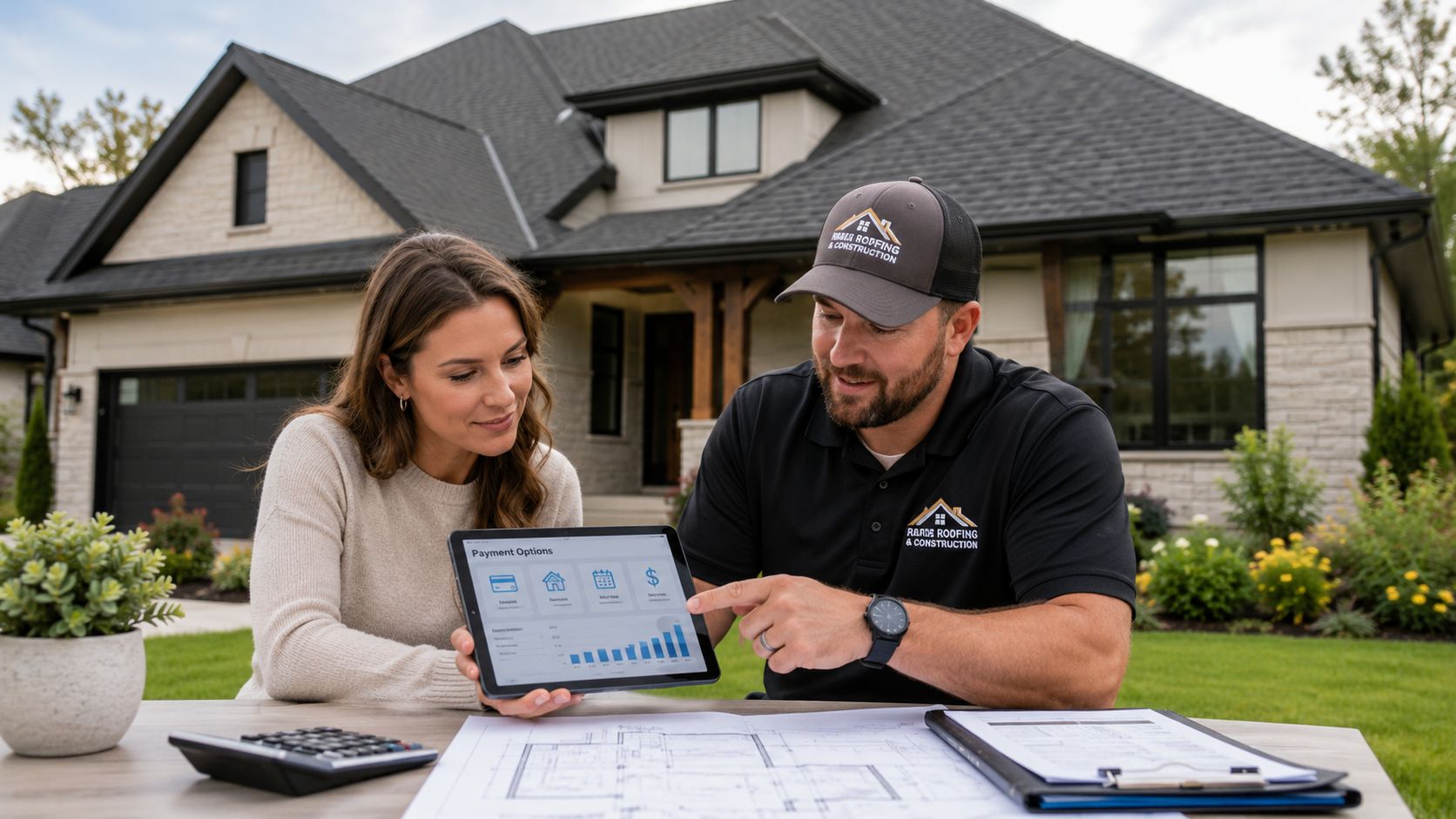
A lot of homeowners start looking into roof payment plans on a bad day.
Maybe you found a ceiling stain after a hard South Florida rain. Maybe your roofer showed you lifted shingles, cracked tile, or underlayment that's reached the end of the line. Maybe your insurance company is asking questions about roof age, and you suddenly need to make a decision faster than you expected.
That's when the numbers hit. A roof is one of the largest home expenses many homeowners face, and very few households want to write one check for the full amount. Roof payment plans exist for that exact reason. They turn a major project into something you can schedule, budget, and compare more calmly.
Table of Contents
- Why You Might Need a Roof Payment Plan
- Understanding Your Roof Financing Options
- Decoding the Details Costs Eligibility and Risks
- Your Step-by-Step Guide to Securing Roof Financing
- Roof Financing in South Florida Storms and Insurance
- How Paletz Roofing Guides You Through the Process
- Frequently Asked Questions About Roof Payment Plans
- Can I finance my insurance deductible
- What if insurance pays less than the roofing quote
- Can I get roof payment plans with credit challenges
- What if my roof is older and my claim payout is reduced
- Is the lowest monthly payment always the best choice
- Should I wait for the insurance check before starting
Why You Might Need a Roof Payment Plan
A common situation goes like this. A homeowner thinks they need a repair, then the inspection shows the problem is bigger. Water got in around flashing, decking needs attention, or storm damage spread farther than it looked from the driveway.
At that point, the question usually changes from “Do I need roof work?” to “How am I supposed to pay for this right now?”
That's why roof payment plans have become a normal part of the roofing conversation. The cost is too large for many families to handle all at once. Independent consumer-finance sources put the average roof replacement around $9,519 as of July 2025, with typical ranges from about $5,868 to $13,213, while some premium projects can go well above $45,000, according to NerdWallet's roof financing guide.
What this looks like in real life
If your roof failed slowly, you may have had time to plan. If it failed after wind-driven rain or visible storm damage, you probably didn't.
In South Florida, urgency is part of the problem. A roof issue during storm season doesn't stay neatly contained. Small openings can become interior damage, mold concerns, insulation problems, and scheduling pressure if the weather stays active.
Practical rule: A roof payment plan isn't about “buying more roof.” It's about giving yourself a workable way to protect the house without draining every available dollar at once.
Why payment plans feel easier to manage
Most homeowners don't need a deep finance background. They need a simple answer to three questions:
- Can I start the work soon: Timing matters when leaks or storm damage are involved.
- Can I afford the monthly payment: This is usually the first filter.
- What will this cost me overall: The lowest monthly payment isn't always the lowest-cost choice.
That's the value of roof payment plans. They give you room to compare options instead of making a rushed decision under stress.
Understanding Your Roof Financing Options
The financing side gets confusing because several products can all be used for the same roof. One lender calls it a home improvement loan. A contractor calls it financing. Your bank may suggest a personal loan or a HELOC.
The easiest way to think about it is this. There are three common paths most homeowners consider: contractor-offered financing, personal loans, and home equity options.

Three common paths homeowners use
Contractor-offered financing is often the most direct route. You get a roofing estimate and a financing option in the same conversation. That makes it easier to compare project price to monthly payment before you sign anything. These plans can be useful when speed matters and you want fewer moving parts.
Personal loans usually come from banks, credit unions, or online lenders. They're often unsecured, which means you're not borrowing against home equity. That can make them appealing if you want to avoid tying the loan to the house, though rates may differ based on your credit profile.
Home equity loans or HELOCs use your equity in the property. These often appeal to homeowners who have built value in the home and want a structure that may fit a larger project or longer timeline.
According to RoofVista's guide to roof financing options, roof financing can range from $1,000 to $100,000, with APRs from 0% promotional offers to 36%. The same guide notes common terms such as 6- to 18-month contractor plans, 5- to 20-year roof loans, and HELOCs with a 10-year draw period followed by 20 years of repayment.
Roof payment plan options compared
| Financing Type | Typical APR Range | Common Term Length | Best For |
|---|---|---|---|
| Contractor financing | 0% promotional offers to higher standard APRs, depending on the program and borrower | Often 6 to 18 months for promotional plans, or longer installment terms | Homeowners who want speed and simple coordination with the roofing estimate |
| Personal loans | Can vary widely based on lender and credit profile | Often multi-year repayment | Homeowners who want a standalone loan not tied to home equity |
| Home equity loan or HELOC | Often lower than unsecured borrowing, depending on market and borrower profile | HELOCs may include a 10-year draw and 20-year repayment structure | Homeowners with usable equity who want flexible access or longer repayment |
Don't compare roof payment plans by monthly payment alone. Compare the loan structure, what happens after any promotional period, and whether the funding timeline matches the urgency of your roof.
How to narrow your choices fast
If you need the roof done quickly, contractor financing is often the first place people look. If you want to keep the debt separate from the home, personal loans may be worth reviewing. If you have solid equity and time to work through approval, a HELOC or home equity loan may deserve a look.
Homeowners doing broader property work sometimes compare roof financing with renovation lending frameworks used in investor projects. If you're trying to understand how short-term real estate funding differs from homeowner financing, this overview of hard money for fix and flip helps clarify the difference between investor-style funding and standard residential payment plans.
Decoding the Details Costs Eligibility and Risks
Once you've picked a likely financing path, the next job is reading the offer correctly. Many homeowners encounter difficulties at this point. The paperwork is full of loan terms, but only a few details really drive the outcome.

The numbers that change your payment
The two biggest variables are APR and term length. APR tells you the cost of borrowing over time. Term length tells you how long you'll be paying.
According to SquareDash's roofing financing cost overview, contractor financing commonly runs about 6.99% to 15% APR with terms of 5 to 15 years. That same overview explains the key tradeoff clearly: a longer term can reduce the monthly payment, but increase total interest paid over time.
Most important number to watch: the full repayment cost over the life of the loan, not just the amount due each month.
A low monthly number can feel comfortable while still costing much more in the long run. That doesn't make it wrong. It just means you should choose it on purpose, not by accident.
What lenders and contractors usually look at
Every provider has its own approval process, but homeowners are usually evaluated on practical basics:
- Credit profile: Better credit often opens more choices.
- Income stability: Lenders want to see that the payment fits your budget.
- Property and equity position: This matters more for home equity products.
- Project documentation: A clear roofing quote helps the lender understand the job.
If you're comparing offers, ask what type of rate you're being shown. A fixed rate stays the same through the loan term. A variable rate can change. That matters because a payment that looks manageable today may not stay that way.
Risks that deserve a second look
Some risks aren't obvious when you're focused on getting the roof installed.
- Promotional traps: A 0% offer can be useful, but you need to know exactly what happens if the balance isn't paid within the promotional window.
- Variable-rate surprises: HELOC-style products can work well, but changing rates can alter future payment amounts.
- Contract timing: Make sure the roofing contract and financing agreement line up on scope, materials, and payment release timing.
- Unclear fees: If there are lender fees or contractor administrative charges, ask for them in writing.
A simple habit helps here. Put every offer on one page and compare the same items in the same order: APR, term, payment, total repayment, rate type, and any conditions that change later.
Your Step-by-Step Guide to Securing Roof Financing
Most financing problems come from rushing. Homeowners are worried about leaks, interior damage, or deadlines, so they sign the first workable payment without slowing down long enough to compare.
A better approach is organized, not complicated.

Start with project clarity
Before you apply anywhere, collect the documents that shape the decision.
- Get a detailed roofing quote. The lender or financing partner needs a clear project amount and scope.
- Pull together your household documents. Income records, identification, and property details are common requests.
- Write down your true budget. Include the amount you can put down today and the monthly payment range that feels safe.
If you need help organizing the broader household side of the project, Koru's renovation budgeting advice is a practical resource for building a budget before you commit.
For homeowners who like to review project visuals alongside paperwork, this roof project image example can also help you think about scope and material discussions more concretely.

Shop and compare without rushing
Apply with enough options to make a real comparison. Don't stop at one monthly payment quote.
Use this short checklist:
- Ask for the full loan summary: You want APR, term, payment, and total repayment.
- Check approval speed: Fast funding matters if your roof issue is active.
- Match the loan to the job timing: A planned replacement gives you more flexibility than emergency leak work.
- Review promotional language carefully: “Deferred,” “introductory,” and “same-as-cash” are not all the same thing.
A good financing offer should make the roof easier to handle, not harder to understand.
Read the final paperwork carefully
Before you sign, confirm four things in writing:
- Project scope matches the estimate: Materials, tear-off, underlayment, and any change orders should be clear.
- Payment release timing is defined: Know when the contractor gets paid and what triggers those payments.
- There's a plan for delays or supplements: This matters if hidden damage is found after work begins.
- You understand prepayment rules: Some homeowners want the option to pay early if cash becomes available.
The final review should feel boring. That's a good sign. If anything still feels rushed, vague, or incomplete, pause and ask for clarification.
Roof Financing in South Florida Storms and Insurance
South Florida adds a layer that many national articles barely touch. The roof isn't always just a home improvement purchase. After a storm, it can also be part of an insurance claim, a deductible problem, a timing problem, and a cash-flow problem all at once.
That's why roof payment plans here need to be understood in the context of claims, not just affordability.
Why timing matters after a storm
In storm-prone markets, homeowners are often told to check insurance first, but financing is still a critical fallback. GAF's guidance on payment plans and roofing projects highlights a major gap in consumer guidance: people need help understanding the workflow between inspection, claim filing, deductible rules, financing approval, and reimbursement handling.
That gap is real in Broward, Miami-Dade, and Palm Beach. A homeowner may have damage now, but the insurance timeline may not line up with the contractor's schedule or the weather risk.
If you're also trying to understand how roof condition can affect premiums and policy decisions over time, this article on the impact of your roof on policy costs gives useful context from the insurance side.
Where homeowners get tripped up
The confusion usually shows up in one of these situations:
- The roof needs work before the claim is fully resolved
- Insurance covers only part of the project
- The deductible creates a large out-of-pocket amount
- The homeowner finances the full project, then later receives a claim payment
Each situation requires slightly different handling. This storm-related roof image reference reflects the kind of damage scenario that often starts that process.

If insurance money may arrive later, ask how that future payment can be applied to the financing balance. Don't assume the process is automatic.
A practical claim-to-finance workflow
Here's the clearest sequence to follow after storm damage:
- Get the roof inspected. You need to know whether you're dealing with a repair, partial replacement, or full replacement.
- Review your policy and file the claim if appropriate. Confirm what type of roof coverage you have and whether age-based limitations apply.
- Ask what your immediate out-of-pocket amount could be. That may include the deductible, excluded items, or code-related upgrades not fully covered.
- Request financing based on the likely gap, not just the gross roof price. This can help you avoid borrowing more than necessary.
- Plan for reimbursement handling before signing. If claim funds come later, decide whether you'll apply them to principal, keep reserves for related repairs, or cover remaining project balances.
For South Florida homeowners, this sequencing matters because storms compress decision time. The mistake isn't using financing. The mistake is using it without a plan for how insurance funds, deductible obligations, and contractor payment timing will interact.
How Paletz Roofing Guides You Through the Process
A roofing company's role shouldn't stop at measuring the roof and handing over a price. Homeowners usually need a quote that makes sense to a lender, a scope of work that's easy to review, and realistic timing on when the project can start.

What support looks like in real life
Paletz Roofing and Inspections works with homeowners in South Florida on the practical parts of the process: documenting roof condition, preparing detailed estimates, and helping clients line up project scope with financing or insurance paperwork.

That kind of support matters because lenders and claims professionals don't just want a rough number. They usually need a clean breakdown of the work, materials, and expected cost. When a homeowner is juggling storm damage, insurance communication, and payment planning at the same time, clear documentation removes a lot of friction.
The smoother project is usually the one with the clearest paperwork.
A contractor can't make every financial decision for you, but a well-prepared estimate and a realistic project timeline make those decisions easier.
Frequently Asked Questions About Roof Payment Plans
Can I finance my insurance deductible
In practice, many homeowners look for financing because the deductible creates the immediate cash burden. Whether that works depends on the financing product and the rules attached to the project. The smart move is to ask directly how the funds can be used and to make sure the deductible is handled transparently in the contract and payment schedule.
What if insurance pays less than the roofing quote
That's one of the most common reasons people use roof payment plans. If the claim covers only part of the job, financing can bridge the remaining gap. The key is to avoid borrowing blindly. Get clarity on what insurance is paying, what remains your responsibility, and how any later claim adjustment would be applied.
Can I get roof payment plans with credit challenges
Possibly, yes. Availability depends on the lender, the program, and whether you're using contractor financing, a personal loan, or a home equity product. Approval terms may differ, so it helps to ask about multiple options rather than assuming one “no” ends the process.
What if my roof is older and my claim payout is reduced
Policy details matter a lot. Some insurance endorsements use a roof surfacing payment schedule, which reduces payouts as the roof ages. For example, Kin's explanation of roof surface payment schedules notes that a shingle roof's claim payout might be reduced to 75% of its value by year 19, which can increase the homeowner's out-of-pocket gap.
If that applies to your policy, don't wait until the last minute to look at financing. The reduced payout can leave a larger balance than you expected.
Is the lowest monthly payment always the best choice
Not necessarily. A longer term can make the monthly amount easier to manage, but you may pay more overall. The better question is whether the payment fits your budget and whether the total cost still makes sense for your household.
Should I wait for the insurance check before starting
Sometimes waiting is fine. Sometimes it creates more risk if the roof is actively leaking or vulnerable to the next storm. The right choice depends on roof condition, claim status, and how comfortable you are carrying temporary financing while the claim is being processed.
If you're sorting through roof damage, insurance questions, or financing choices in Broward, Miami-Dade, or Palm Beach County, Paletz Roofing and Inspections can help you review the roof condition, understand the project scope, and get the documentation you need to make an informed decision.