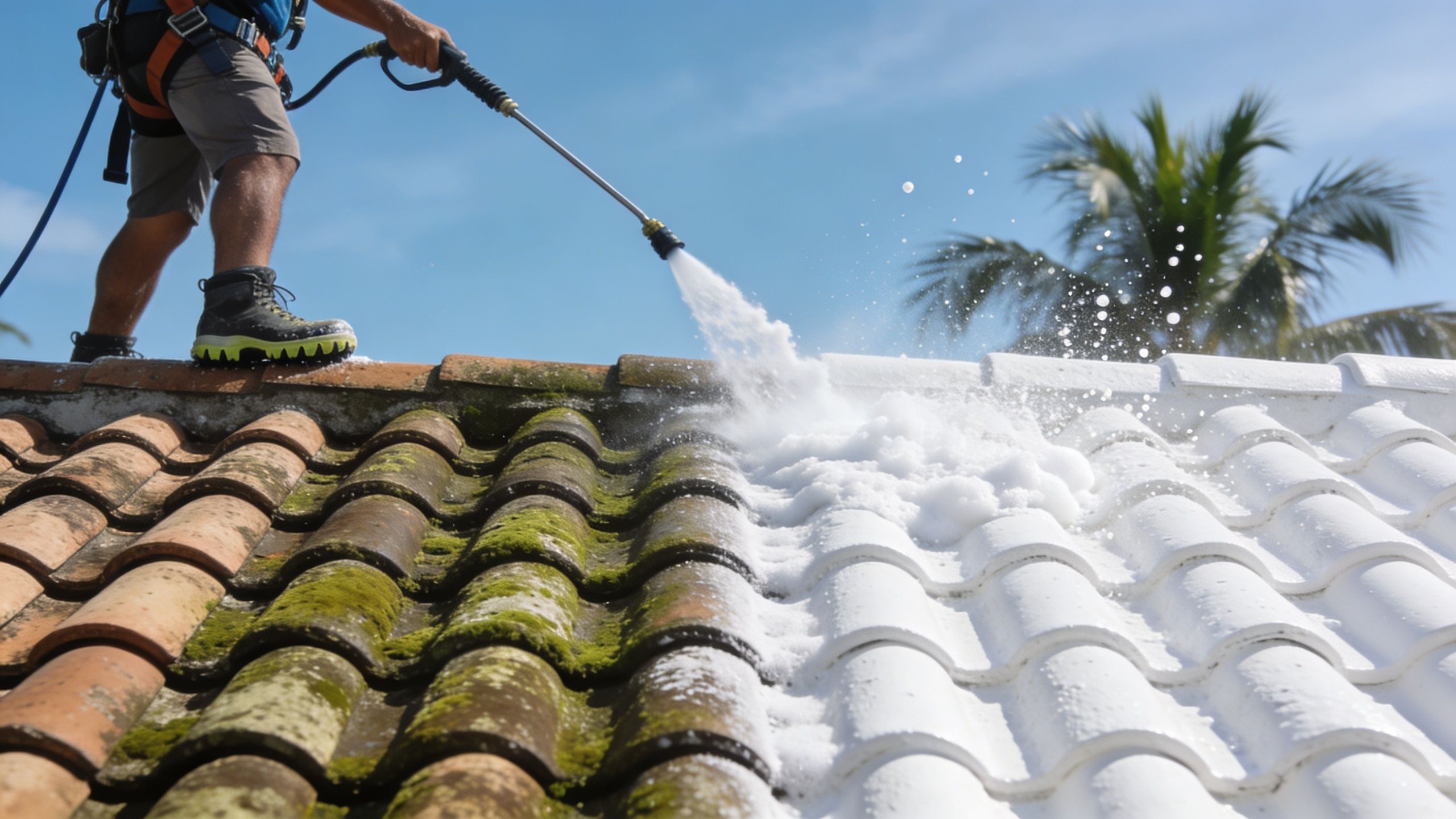
You walk outside, look up, and see it again. Black streaks down the slope. Green patches near the shaded side. Maybe a little buildup around a valley or under an overhanging palm. In South Florida, that roof doesn't stay clean for long.
That matters more than most homeowners think. Roof cleaning isn't just about appearance. In Broward, Miami-Dade, and Palm Beach counties, heat, humidity, wind-driven rain, and salt air create the exact conditions that speed up biological growth and hold moisture where your roofing system needs to dry out fast. If you use the wrong method, you can do more damage than the algae ever would.
This roof cleaning how to guide is built for the way roofs age in South Florida. Not in a dry climate. Not in a mild one. Here, the same roof can bake in strong sun, stay damp after afternoon storms, and take a beating during storm season. That changes how you inspect it, how you clean it, and when you should stop and call a pro.
Table of Contents
- Why Your South Florida Roof Gets Dirty and What to Do
- Safety First Your Pre-Cleaning Inspection Checklist
- Choosing Your Method Soft Wash vs Pressure Washing
- A Step-by-Step Guide to Cleaning Your Roof
- Post-Cleaning Care and South Florida Considerations
- DIY vs Professional The Cost and When to Call Paletz Roofing
Why Your South Florida Roof Gets Dirty and What to Do

Most of the time, those dark streaks aren't “just dirt.” They're biological growth feeding off moisture, shade, and the organic residue that settles on the roof over time. On South Florida homes, that growth spreads faster because the roof rarely stays dry for long. Morning humidity, sudden rain, and heavy tree cover all work against you.
That's why roof cleaning how to advice from national websites often misses the mark. Content built for cooler or drier regions doesn't account for what happens on roofs in tropical humidity. One South Florida roofing source points out that many roof cleaning articles ignore the accelerated biological growth patterns in subtropical climates and the need for more aggressive preventive measures, especially with coastal salt spray and pre-hurricane conditioning in mind, as noted by South Florida roof cleaning guidance for humid climates.
What you're really seeing on the roof
On shingles, the streaking usually starts where moisture hangs around the longest. North-facing slopes, areas under oaks, and sections near chimneys or valleys are common trouble spots. On tile, growth often settles into the lower profile where water drains slower and debris collects.
If the roof is near the coast, salt air makes things trickier. Salt residue doesn't create algae by itself, but it changes how grime holds to the surface and can leave the roof looking dirty sooner. Add hurricane season prep to the mix, and a neglected roof becomes a weak point in your overall maintenance plan.
Roof staining in South Florida is rarely one problem. It's usually moisture, biology, debris, and climate all working together.
Why generic advice falls short here
A South Florida roof needs local timing and local judgment. Clean too late, and wet season growth is already established. Clean too aggressively, and you shorten the life of the roof you're trying to protect.
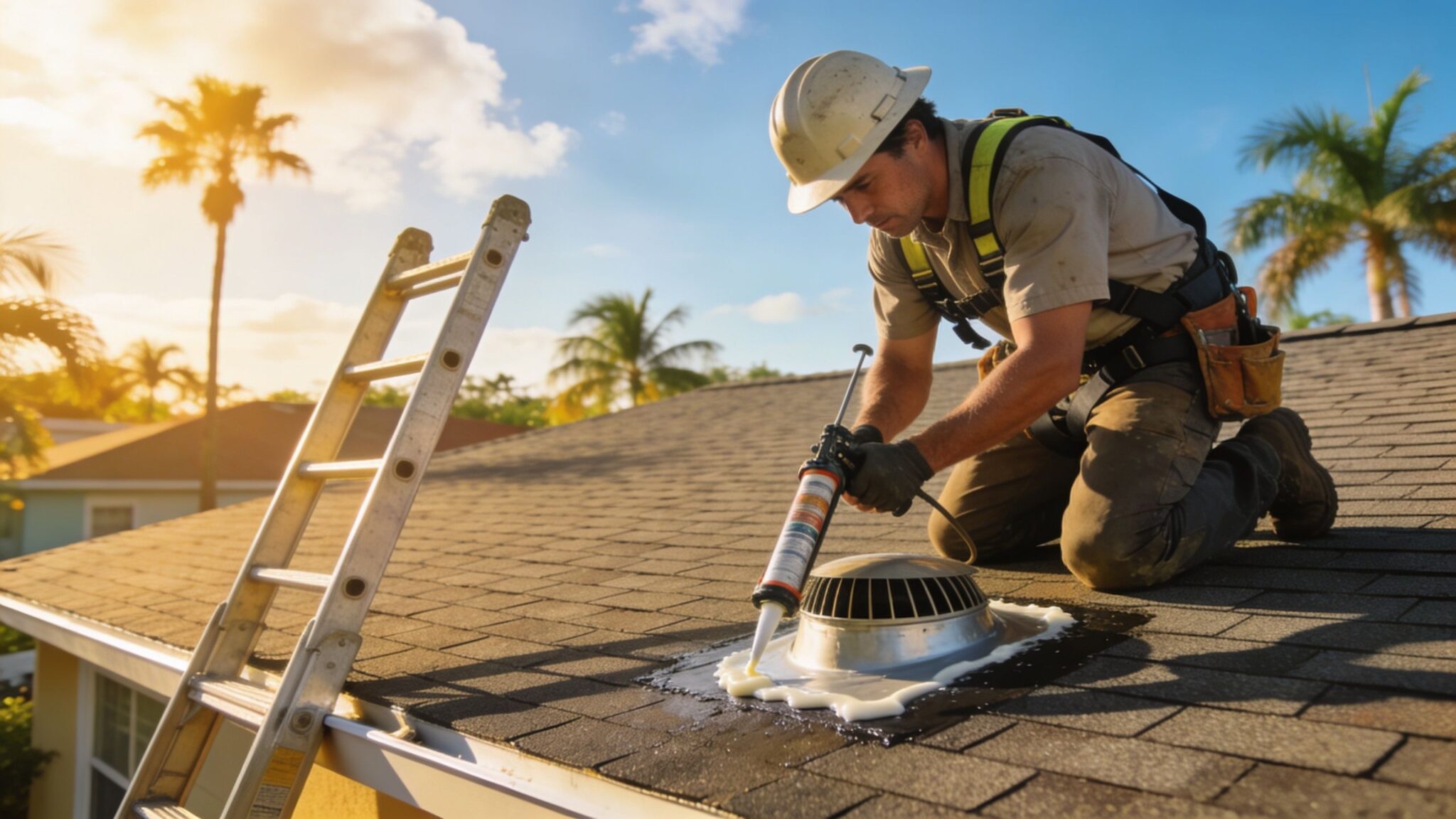
Homeowners who want a visual reference for the kind of staining and aging that shows up in this region can compare what they're seeing to this South Florida roof condition image. The pattern usually tells you a lot. Uniform streaking points to widespread biological growth. Concentrated patches near edges and transitions often point to drainage and shade issues that need to be corrected along with the cleaning.
The right move is simple. Treat roof cleaning as maintenance, not cosmetics. In this climate, a clean roof dries better, shows damage more clearly, and gives you a better shot at catching problems before storm season does it for you.
Safety First Your Pre-Cleaning Inspection Checklist

Before you mix solution, drag out a hose, or set a foot on the roof, stop and inspect. This is the part most DIY jobs rush through. It's also the part that keeps people out of the emergency room.
The danger is real. The roofing sector reported 59 deaths per 100,000 full-time workers in 2021, with falls as the leading cause and 11% from electrocutions, according to roofing safety data on roof cleaning risks. That should end the idea that roof cleaning is just weekend yard work.
The inspection starts before you touch the ladder
Walk the property from the ground first. Look for sagging sections, slipped tile, lifted shingles, damaged flashing, tree limbs over the roof, and power lines anywhere near your path. In South Florida, wet surfaces can stay slick even after the sun comes out, especially where algae has built up.
Also think about your footing around the house. A ladder set on loose shell rock, mulch, wet pavers, or soft planting beds is already a bad start. Stable access matters just as much as what happens on the roof.
If you work outdoors often, proper headwear and sun coverage matter more in this climate than people admit. A practical resource on gear and shade protection is Jackd Workwear for site protection, especially for long exterior jobs under direct Florida sun.
Your pre-cleaning checklist
Use this like a pro's walkaround. If you fail any critical item, don't proceed.
Check ladder placement: Set the ladder on firm, level ground. Make sure it isn't rocking, sinking, or leaning sideways. Extend it high enough that you can step on and off without reaching awkwardly.
Scan for overhead hazards: Look up before the ladder goes up. Service drops, pool equipment lines, and nearby utility lines create real electrocution risk when you're carrying tools, spraying liquid, or shifting a ladder.
Read the roof pitch accurately: A low-slope section may be manageable from the right position. A steep pitch, multi-story elevation, or cut-up roofline with hips and valleys is a different job. Don't pretend comfort and control are the same thing.
Inspect for existing damage: Look for cracked tile, loose ridge pieces, exposed underlayment, popped nails, lifted shingle tabs, rusted fasteners on metal, and soft spots on flat roofs. Cleaning can widen damage that already exists.
Check the weather window: South Florida weather changes fast. Don't work with storms building, winds picking up, or a wet roof that hasn't dried out. Afternoon rain can turn a routine job into a slick surface in minutes.
Protect the ground below: Move patio furniture, cover delicate plants, and clear the work zone so nobody walks under you. Keep pets and kids inside while chemicals and runoff are in play.
Practical rule: If you have to “be careful” on every step just to stand there, it's already beyond a safe DIY job.
Add personal protective equipment before you start. At minimum, that means non-slip footwear, gloves, eye protection, and clothing you don't mind exposing to cleaning solution. On the ground, keep a hose ready to rinse overspray from siding, windows, and plants.
A good inspection also includes one more question. Can you do the cleaning without walking large sections of the roof at all? On many homes, ladder access and controlled application from the edge are safer than treating the roof like a walkway. That's especially true on tile and on any roof with visible biological growth, because the same grime you want to remove is what makes the surface slippery.
Choosing Your Method Soft Wash vs Pressure Washing

A South Florida roof can look tough from the street, then fail fast under the wrong cleaning method. I've seen barrel tile chipped by aggressive spray, shingles lose granules years early, and metal roofs take on water where a pressure tip drove it into a seam. Heat, humidity, salt air, and storm cycles already work these systems hard. Cleaning should remove growth without shortening the roof's life.
These are not the same process
Soft washing relies on low-pressure application and a roof-safe cleaning solution to kill algae, mildew, and lichen where they're attached. Pressure washing relies on force. On roofing materials, force is usually the problem.
The Asphalt Roofing Manufacturers Association warns against power washing asphalt shingles because it can damage the surface and shorten service life, as explained in ARMA guidance on algae discoloration and roof cleaning. That applies even more in South Florida, where black streaks return quickly if the organism is only stripped off the surface and not treated.
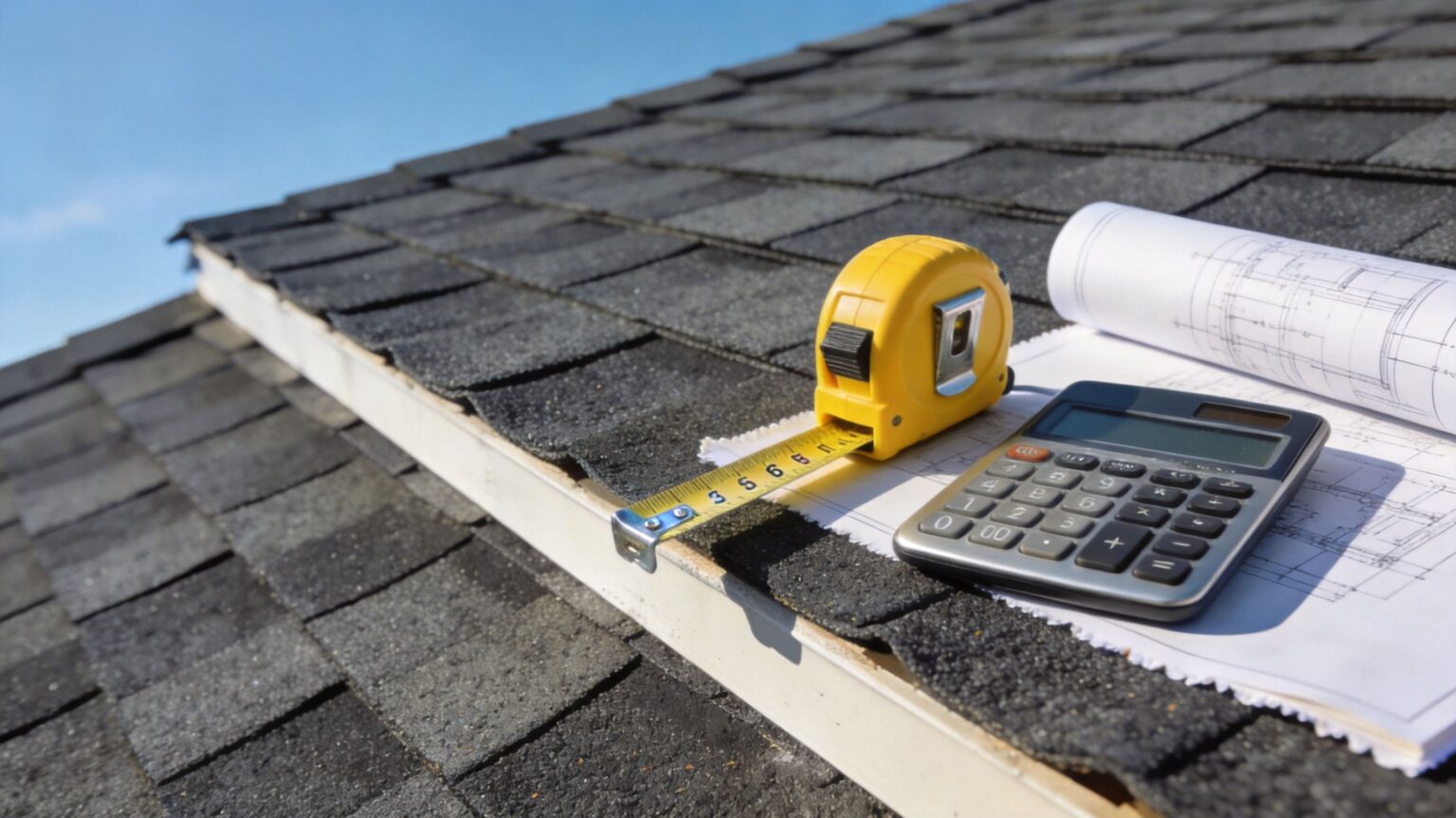
Tile has its own trade-offs. Concrete and clay tile can handle weather, sun, and wind, but they do not respond well to careless foot traffic or concentrated spray at laps and edges. Metal roofs can dent, lose coating, or take on water if pressure is pushed at fasteners, seams, or transitions. If you want a quick visual of the roof types and surface conditions that call for a gentler approach, this South Florida roof cleaning method comparison image helps.
Soft Wash vs. Pressure Wash Which is Right for Your Roof
| Feature | Soft Washing | Pressure Washing |
|---|---|---|
| Cleaning pressure | Low pressure, controlled application | High pressure spray |
| Primary action | Cleaning solution kills and loosens growth | Water force blasts surface buildup |
| Good for algae and organic staining | Yes, especially on humid Florida roofs | Usually only removes what you can see |
| Risk to shingles | Lower when handled correctly | Higher risk of granule loss and surface damage |
| Risk to tile and metal | Lower when handled correctly | Higher risk of cracking, denting, and water intrusion |
| Residential roof fit | Strong fit for most homes | Poor fit for most roofing materials |
| South Florida use | Better for frequent algae regrowth and salt exposure | Adds risk without fixing the root issue |
A lot of homeowners get fooled by speed. Pressure washing can make a roof look cleaner fast. Fast is not the same as safe, and it is not the same as lasting.
Soft washing takes more control. The solution has to dwell long enough to break down organic growth, especially on north-facing slopes, under tree cover, and in areas that stay damp after our afternoon rains. That matters in South Florida because humidity feeds regrowth almost year-round, and salt spray near the coast can leave residue that needs to be handled without grinding the roof surface.
There is a place for pressure washing around a property. It can make sense on some concrete, pavers, and enclosure framing where the material is less delicate. If you're comparing roof cleaning with other exterior cleaning jobs, Tampa Bay home cleaning by Rescreen Rescue gives useful context on where pressure fits better away from roofing.
The practical choice is simple. For most South Florida homes, soft washing is the safer method because it treats the biological growth, protects the roof covering, and reduces the chance of forcing water where it does not belong. Pressure washing may look more aggressive. On a roof in this climate, aggressive is usually expensive later.
A Step-by-Step Guide to Cleaning Your Roof

You see the stain from the driveway, rent a machine, and figure an hour on a Saturday will handle it. In South Florida, that shortcut is how roofs get scarred, tiles get cracked, and water gets pushed where our summer storms will exploit it later. Good roof cleaning is controlled work from the first setup step to the final rinse.
Start with site prep and runoff control
Set the property before any cleaner touches the roof. Wet down plants, grass, painted walls, windows, screen frames, and anything below the eaves that could catch runoff. Keep a hose charged and ready so one person can rinse landscaping while the other works above. On tight South Florida lots, overspray does not have much room to miss.
Pull together the right gear before you climb:
- Soft wash pump or low-pressure applicator: Low pressure gives better control on shingles, tile, and coated metal.
- Garden hose with shutoff nozzle: Use it constantly for plant protection and cleanup.
- Extension ladder: Set it on stable ground and secure it properly.
- Gloves, eye protection, and grippy footwear: Roof surfaces get slick fast in humidity.
- Plastic sheeting or breathable plant covers: Useful around sensitive tropical landscaping.
- Gutter and drain cleanup tools: Open runoff paths before you start washing.
This roof cleaning project reference image shows the kind of roof layout where careful application matters more than raw force.
Apply solution so it flows with the roof, usually from the ridge downward. Give stained areas enough dwell time to work, but do not let cleaner bake dry in direct Florida sun. Early morning usually gives you a wider safety margin. Then rinse in a controlled pattern that keeps water moving off the roof instead of into seams, wall intersections, or under the roofing.
Keep the water going downhill. Every roof system is built around that rule.
How to clean asphalt shingle roofs
Shingle roofs get damaged by pressure, stiff brushes, and careless foot traffic. Florida heat makes the problem worse because hot shingles soften and lose granules more easily under abuse.
Work from a ladder where possible instead of walking large sections of the roof. Apply cleaner gently and evenly, paying attention to dark streaks, shaded areas, and north-facing slopes that stay damp after afternoon rain. Let the solution break down the growth. Scrubbing usually removes protective granules along with the stain.
A few rules keep you out of trouble:
- Work from the top down: Runoff follows the roof design instead of fighting it.
- Keep spray away from shingle edges and tabs: Those areas can lift if hit too hard.
- Watch surface temperature: If the roof is hot enough to dry solution too fast, stop and wait for better conditions.
- Rinse patiently: The roof needs cleaning, not abrasion.
If shingles already have curling, bald spots, cracking, or soft decking, stop. Cleaning will not reverse age or storm wear. It can expose how close the roof is to repair or replacement.
How to clean tile roofs
Tile roofs are common here because they handle sun well and fit the style of many South Florida homes. They also break expensively if you step in the wrong place.
If you must get on the roof, step only where the tile is supported. Older tile roofs, repaired sections, and areas exposed to repeated storm traffic are less forgiving than they look from the ground. One cracked tile can turn into a leak path after the next hard rain.
Apply cleaner into the contours where algae, mildew, and salt residue settle. Barrel tile holds moisture and debris, so coverage matters. Force does not. Let the solution dwell, then rinse with the profile of the tile so runoff leaves the roof cleanly.
The Tile Roofing Industry Alliance notes that tile roof maintenance should avoid practices that damage the tile or underlayment, including careless foot traffic and improper cleaning methods, in its guidance on tile roof care and maintenance. That lines up with what shows up in the field down here after every wet season.
How to clean metal roofs
Metal roofs shed water well, but the finish can still be scratched and the details can still fail. Around the coast, salt film adds another layer to the job.
Use low pressure and a wide spray pattern. Stay away from abrasive pads, wire brushes, and anything that can scuff the coating. Pay close attention around fasteners, panel laps, skylights, vent boots, and transitions where sealant may already be aging under Florida sun.
If you see chalking, rust, loose fasteners, or failed sealant, pause the cleaning plan and address those issues first. A clean metal roof with open details is still vulnerable. For homeowners trying to lower heat load after the roof and attic are cleaned up, Airtight Spray Foam Insulation's summer guide gives useful context on how brutal attic temperatures get in this climate.
How to clean flat roofs
Flat and low-slope roofs need a different mindset. Drainage decides whether the cleaning helped or just moved the mess around.
Pick up loose debris by hand first and bag it. Do not wash leaves, grit, and granules into drains and call it maintenance. After the surface is cleared, apply cleaner to stained or slimy areas and keep rinse water moving toward drains, scuppers, and outlets.
Pay extra attention to these spots:
- Drain bowls and strainers: Debris collects here first and blocks flow fast in storm season.
- Parapet corners: Windblown dirt settles in dead spots.
- HVAC curbs and service paths: Condensate and foot traffic leave heavier buildup.
- Seams, patches, and older repairs: These areas need gentle handling.
If water still ponds after rinsing, the roof likely has a slope or drainage problem. Cleaning did not cause it, but cleaning revealed it.
Finish every roof the same way. Clear the gutters and downspouts, rinse residue off walls and plants, and check the ground for sludge trails or chemical splash. In South Florida, a roof cleaning job is only done when the roof is cleaner, the drainage path is open, and nothing below it got burned, stained, or broken.
Post-Cleaning Care and South Florida Considerations
A roof isn't “done” because it looks better from the driveway. Let it dry, then inspect it again with a sharper eye. Cleaning reveals things dirt used to hide.
What to inspect after the roof dries
Look for missed streaks, heavy regrowth pockets, clogged gutter outlets, loose flashing, displaced tile, and areas where runoff left residue on walls or soffits. On shingles, watch for exposed patches where granules may have already been thin before cleaning. On tile, look for hairline cracks that become easier to see once the surface is clean.
A final walkthrough from the ground matters too. Check garden beds, screens, painted surfaces, and any hardscape below runoff paths. If cleaner or debris reached those areas, rinse and clean them now instead of letting Florida sun bake the residue in place.
A clean roof should also leave clean evidence. No damaged plants, no chemical streaks, no sludge packed in gutters.
Maintenance timing for this climate
South Florida roofs need recurring attention because the climate keeps feeding the same cycle. Afternoon rains, shade, tree litter, and coastal exposure all bring growth back faster than homeowners expect. The smart approach is to watch the roof seasonally and act before staining turns into heavy buildup.
That includes pre-storm thinking. A roof covered in grime, blocked valleys, and loaded gutters doesn't shed water as cleanly when summer storms hit. It also hides small defects that become bigger once wind-driven rain finds them.
Heat inside the house plays into this too. If your attic already runs hot, roof condition and moisture management affect how the whole system performs through summer. For homeowners thinking about broader heat-control issues, Airtight Spray Foam Insulation's summer guide is a useful companion read.
Runoff, landscaping, and local responsibility
South Florida isn't the place for careless runoff. Many neighborhoods sit close to canals, retention systems, bays, and sensitive water areas. That's one reason biodegradable cleaners and controlled application matter. The goal is to clean the roof without pushing a problem downhill into your landscaping, storm drains, or surrounding environment.
If you're in Broward, Miami-Dade, or Palm Beach County, use common sense as a rule of practice. Control overspray. Protect plants. Avoid letting concentrated runoff dump into one low area. Don't clean right before heavy rain if you can avoid it. In a hurricane-prone region, timing and drainage count just as much as product choice.
One more point gets missed all the time. Roof cleaning is also a chance to reduce future buildup. Trim back branches that keep the roof shaded and wet. Clear valleys and gutters. Remove leaf litter from behind chimneys and around roof penetrations. The cleaner stays cleaner when the roof gets sun and drains freely.
DIY vs Professional The Cost and When to Call Paletz Roofing
DIY roof cleaning looks cheaper until you count the whole job. You need equipment, ladders, protective gear, cleaning solution, plant protection, time to prep, time to rinse, and time to clean up what ran off the roof. Then there's the actual cost if you break tile, loosen shingles, stain exterior finishes, or find out halfway through that the roof is too steep to work safely.
What DIY really costs
The biggest hidden cost is risk. Not just falling. Risk of shortening the roof's service life with the wrong method. Risk of turning a maintenance task into a repair call.
That's why the smart comparison isn't “Can I spray my roof?” It's “Can I inspect, protect, clean, rinse, and move around this roof without damaging it or myself?” On many South Florida homes, the honest answer is no.
One practical option for homeowners who want an inspection or cleaning assessment from a local roofing contractor is Paletz Roofing and Inspections brand information. That makes sense when the roof material is delicate, access is awkward, or you've already spotted damage during your pre-cleaning check.

When it's time to stop and call for help
Call a professional if any of these apply:
- The home is multi-story: Height changes everything. Hose handling, ladder setup, and rescue options all get harder.
- The roof is steep or complex: Valleys, dormers, ridges, and mixed materials create trip hazards and rinse-control problems.
- You found damage during inspection: Cracked tile, soft decking, lifted shingles, loose flashing, or leak history should be evaluated before cleaning.
- The roof is heavily stained and slick: Thick biological growth means less traction and a greater chance of hidden damage underneath.
- You're not fully comfortable at height: That alone is enough reason to stop. Hesitation on a roof is dangerous.
A professional roof cleaning crew should understand low-pressure methods, runoff control, roof material differences, and how South Florida weather changes the job. That's the value. Not just getting the roof clean, but getting it clean without creating the next problem.
If your roof in Broward, Miami-Dade, or Palm Beach County is stained, slippery, storm-worn, or just overdue for a careful inspection, Paletz Roofing and Inspections can help you figure out the right next step. Reach out for a no-obligation inspection or quote and get a cleaning plan that fits your roof type, your property, and South Florida conditions.