
Composite roofing usually means one of two very different products: the asphalt composition shingles already covering about 75% of U.S. residential roofs, or a synthetic composite roof that can mimic slate or wood and typically lasts 20 to 50 years depending on the product. If you're in South Florida, that difference matters because the right choice isn't just about looks. It's about how the roof handles heat, wind-driven rain, salt air, and how often you want to replace it.
A lot of homeowners hear "composite roof" and assume they're getting one thing. In practice, they may be getting a basic architectural asphalt shingle quote, or they may be looking at a premium synthetic system made from blended materials engineered for longer service life. Those aren't small differences. They affect price, performance, warranty expectations, and how the roof behaves during storm season.
In South Florida, roofing decisions get expensive when the terminology is sloppy. A roof that works well in a mild inland climate may not be the right value near the coast. The useful question isn't just what is composite roofing. It's which kind of composite roofing you're being quoted, and whether it makes sense for your house.
Table of Contents
- Understanding Composite Roofing in Today's Market
- The Two Types of Composite Roofing Explained
- Composite Roofing vs Traditional Tile and Metal
- Analyzing the Lifespan Cost and Maintenance
- Is Composite Roofing the Right Choice for South Florida
- Signs Your Roof Needs a Professional Inspection
- Your Partner for Roofing Inspections and Installation
- Frequently Asked Questions About Composite Roofing
Understanding Composite Roofing in Today's Market
Roofing isn't a niche purchase. It's a major homeowner decision inside a very large market. The U.S. roofing market is projected to reach USD 33.47 billion in 2026, and residential roofing held 62.1% of the market in 2025, according to U.S. roofing market data from Market Data Forecast. The same source notes that asphalt shingles cover about 75% of all U.S. residential roofs, which explains why many people use "composite" and "shingle" like they mean the same thing.
That shortcut causes confusion.
In the field, composite roofing can mean standard composition shingles, which most homeowners know as asphalt shingles, or it can mean a higher-end synthetic product designed to look like slate or wood shake. If you don't pin down which one your contractor means, you can't fairly compare quotes.
A roof also never works as an isolated surface. Overhang design, drainage, ventilation, and edge details all affect how well the system performs in heavy rain and wind. If you want a quick refresher on that part of the roofline, this explanation of the vital role of roof overhangs is useful context.
Why the term causes problems
Homeowners usually run into trouble in three places:
- Quoted product confusion: One bid says composite and means asphalt. Another says composite and means synthetic. The numbers don't match because the products don't match.
- Warranty misunderstanding: People assume all composite roofs carry the same service life. They don't.
- Appearance assumptions: Some products are meant to imitate cedar shake or slate. Others are standard shingles with a dimensional profile.
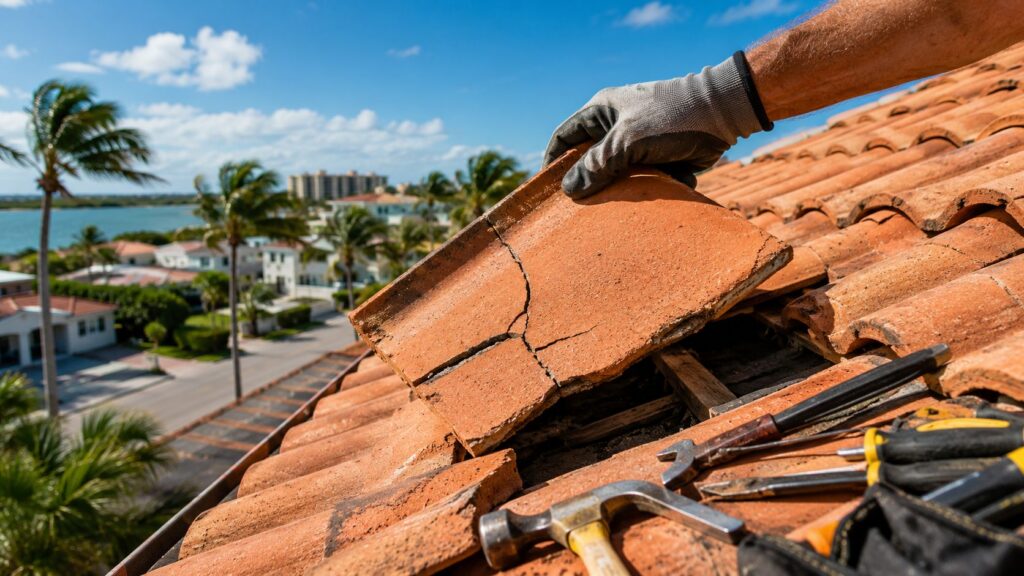
For reference, this roof image example from Paletz shows the kind of curb-appeal conversation that often starts the process, but appearance should never be the only filter in South Florida.
Practical rule: If a contractor says "composite," ask for the exact product category before you discuss price.
The Two Types of Composite Roofing Explained
When homeowners ask what is composite roofing, the cleanest answer is this: there are two common meanings, and they lead to very different roofs.

Composition roofing means asphalt shingles
This is the widely recognized version. Composition shingles are the familiar roofing shingles used on a huge share of homes across the country. In everyday conversation, many roofers and homeowners call them composite because they're made from multiple materials rather than a single natural material.
These are usually the most accessible option when budget drives the project. They come in different profiles, colors, and quality levels, and they're widely used because they balance cost, appearance, and straightforward installation.
If a quote says "composite shingle roof" and the price looks in line with standard residential reroofing, this is often what the contractor means.
Synthetic composite means engineered premium shingles
The second meaning is more specialized. Some manufacturers and contractors use composite roofing to describe a synthetic shingle made to replicate materials like slate or wood shake. According to Roofing Contractor's technical details on composite shingles, premium composite shingles are made from a blended mix of recycled plastics, rubber, fiberglass, asphalt, and additives, and they can be up to 60% thicker than traditional shingles. That added thickness improves resistance to cracking, blistering, splitting, peeling, and warping. Many products are rated for 30 to 50 years.
That doesn't mean every synthetic product performs the same. Product line, installation quality, roof design, and local exposure still matter. But this category is clearly built for a different buyer than basic composition shingles.
What to ask before you sign
If you want to avoid apples-to-oranges comparisons, ask these questions in plain language:
- Is this asphalt composition or synthetic composite?
- What material is the shingle made from?
- What appearance is it designed to mimic, if any?
- What underlayment and accessory system does the manufacturer require?
- What warranty applies to the product versus the installation?
A lot of quote confusion disappears once the contractor writes the product category and manufacturer system into the proposal.
One more point matters in South Florida. Synthetic composite products are often chosen for their appearance and durability, but they still need proper fastening, flashing, ventilation, and deck conditions. A premium shingle installed over a weak assembly won't deliver premium performance.
Composite Roofing vs Traditional Tile and Metal
In South Florida, roof replacement usually comes down to three categories: composite, tile, or metal. That sounds simple until you remember that "composite" can mean two different products. Basic asphalt composition shingles compete on price. Synthetic composite products compete more directly with tile and metal on appearance, weight, and durability.

Appearance and architectural fit
Synthetic composite roofing stands out for one reason. It can mimic slate, shake, or other premium profiles without the mass of the natural material. That gives homeowners more design flexibility, especially on houses that were not framed for a very heavy roof.
Tile still has a strong place in South Florida. It matches many Mediterranean, Spanish, and coastal home styles better than anything else. Metal fits a different look. It is cleaner, sharper, and often better suited to contemporary homes or owners who want a more utilitarian roof profile. Asphalt composition shingles usually do not deliver the same upscale look as synthetic composite, but they can still be a sensible visual choice on the right house and budget.
Weight and structure
Weight affects more than material selection. It affects the framing, fastening approach, and sometimes whether a roof system is practical at all.
Tile is the heaviest option in this comparison, and that matters. On a house designed for tile, that may be fine. On a house that was not, the added load can change the job scope fast. Metal is much lighter. Synthetic composite usually stays far easier to accommodate than tile while offering more profile depth than basic asphalt shingles.
That trade-off matters in reroof work. Homeowners often want the look of a high-end roof without opening the door to structural upgrades, engineering questions, or added labor that pushes the budget far beyond the original plan.
Storm exposure, breakage, and repairs
South Florida roofs take abuse from heat, UV, salt air, wind-driven rain, and hurricane season. Those conditions expose the weak points in every material.
Tile handles sun well, but individual tiles can crack from impact or foot traffic, and matching older tile during repairs can be a challenge. Metal is light and durable, but the performance depends heavily on panel type, attachment method, edge detailing, and the quality of installation. Synthetic composite can offer a useful middle ground. It avoids the brittleness and weight concerns that come with tile, while giving a different appearance and repair profile than metal.
The underlayment matters here too. Modern composite roofing is commonly installed as a layered assembly with roof decking, underlayment, and the finished roof covering, as described in this overview of composite roofing installation. In our climate, that backup layer matters because wind-driven rain does not need a big opening to become a leak.
| Roofing type | Where it often makes sense | Main trade-off |
|---|---|---|
| Asphalt composition | Budget-conscious replacements and straightforward residential reroofs | Shorter service life and a simpler appearance than premium materials |
| Synthetic composite | Homeowners who want a slate or shake look without the weight of tile | Higher upfront cost and tighter manufacturer installation requirements |
| Tile | Homes designed around tile aesthetics and structural load | Heavy material, breakage risk, and more complicated repairs |
| Metal | Owners focused on low weight and a distinct performance profile | Different appearance, noise expectations, and detail-sensitive installation |
Which option makes the most sense here
For many South Florida homeowners, the best choice is the one that balances storm performance, repair practicality, appearance, and insurance reality.
Synthetic composite makes sense for owners who want a premium look without committing to the weight and fragility of tile. Asphalt composition makes sense when keeping initial cost under control is the priority. Tile makes sense when the house is built for it and the owner is comfortable with the repair realities. Metal makes sense when the owner wants a light roof with a long-term performance profile that is very different from shingles.
The wrong move is choosing by curb appeal alone. In this climate, the roof system has to hold up under heat, salt exposure, heavy rain, and high winds, and it has to do that with the right fastening, flashing, and underlayment details.
Analyzing the Lifespan Cost and Maintenance
A roof that saves money on day one can cost more over 15 or 20 years if it ages fast, needs frequent repairs, or creates insurance headaches after storm seasons. That is why composite roofing has to be judged by service life, maintenance load, and replacement timing, not just the proposal total.

What lifespan cost really means
As noted earlier, "composite" covers two very different products. Standard composition asphalt sits at the lower end of the price range and usually the shorter end of the service-life range. Synthetic composite costs more upfront, but it is built to deliver a longer run and a higher-end look.
That distinction matters in South Florida.
If a homeowner hears "composite roof" and assumes every option lasts about the same, the budget decision gets skewed from the start. A basic architectural shingle and a synthetic slate alternative are not competing on the same cost structure, repair profile, or expected replacement cycle.
Maintenance is where cheap roofs get expensive
In this climate, maintenance costs do not come from one dramatic failure. They build from sun exposure, wind-driven rain, salt air near the coast, algae streaking, debris at valleys, and small flashing problems that go uncorrected.
The roofs that hold up best over time usually share the same basics:
- A solid roof deck before installation
- Underlayment that fits the roof system and local exposure
- Flashing details installed cleanly at walls, valleys, vents, and penetrations
- Attic ventilation that helps control heat buildup and moisture
I have seen premium materials underperform because the prep work was rushed. I have also seen standard composition roofs give solid value because the installer got the details right and the owner stayed on top of inspections.
Material matters. Workmanship matters just as much.
The trade-off between asphalt composition and synthetic composite
Asphalt composition usually wins on initial price and repair familiarity. Replacement shingles are easier to source, more crews know the system well, and the upfront investment stays lower. For a homeowner watching cash flow or planning a shorter ownership window, that can be the right call.
Synthetic composite usually wins on appearance retention, impact resistance in some product lines, and longer-term replacement math. It can also avoid some of the cracking, brittleness, and visual wear that owners dislike as lower-cost roofs age in high heat.
That does not make synthetic composite the automatic winner. If the house may be sold in a few years, the payback window may be too short. If the budget is already stretched, a well-installed asphalt composition roof often makes more financial sense than forcing a premium material into the project and cutting corners elsewhere.
How South Florida changes the value calculation
South Florida shortens the margin for error. Heat bakes the roof surface. Hurricane season tests fastening and edge details. Coastal exposure can be harder on metal accessories and fasteners. Insurance carriers may also look closely at roof age, material type, and documentation of condition.
That means lifecycle cost is partly a materials question and partly a risk question. A roof that lasts well on paper but is installed poorly, documented poorly, or maintained poorly can still become expensive fast. For homeowners comparing long-term roof system performance, Airtight Spray Foam Insulation's guide is a useful example of how building-envelope decisions affect durability and maintenance planning.
Questions that lead to the right choice
Before choosing a composite roof, answer these questions clearly:
- How long will you likely keep the home?
- Is your priority lower upfront cost, longer service life, or a premium appearance?
- How close is the property to the coast?
- Will you keep up with inspections after major storms?
- Are you choosing a better material, or just a nicer sales pitch?
The best value usually comes from matching the roof system to the house, the exposure, and the ownership timeline. In South Florida, that is the difference between a roof that looks good on a quote sheet and one that stays cost-effective after years of sun, rain, and storm seasons.
Is Composite Roofing the Right Choice for South Florida
For South Florida homes, the answer is usually yes, but not automatically.
Composite roofing can be a strong fit here, especially when you're talking about a well-installed synthetic system on a sound roof structure. But this isn't a category you choose on marketing language alone. In this climate, details decide whether the roof performs like an upgrade or becomes an expensive disappointment.
Where composite makes sense
South Florida puts roofs under constant stress. Sun exposure is relentless. Humidity stays high. Salt air affects coastal properties differently than inland homes. Storms test every weak point at once, especially edges, penetrations, valleys, and transitions.
That environment is why the value discussion matters more than the buzzword. The key question in this market is whether synthetic composite delivers enough real-world benefit to justify its cost compared with standard asphalt. As discussed in this comparison of composite and asphalt shingles in hurricane-prone conditions, synthetic composites can offer high impact resistance and a 40 to 50 year lifespan, but those benefits depend on a sound roof deck, proper installation, and the correct manufacturer-specific underlayment system. Standard composition asphalt shingles remain one of the most affordable and proven options, so the decision comes down to weather exposure, replacement cadence, and insurance implications.
If your home is in a tougher exposure zone, or you want the look of slate or shake without carrying the weight of natural materials, synthetic composite deserves a serious look.
Where homeowners make the wrong call
The wrong move is assuming premium material solves poor assembly.
A synthetic roof installed on a compromised deck, with weak ventilation or sloppy flashing, won't justify the price. In South Florida, that roof still has to handle driven rain, heat cycling, and storm conditions. The material may be strong, but the system can still fail if the basics are wrong.
Another common mistake is buying purely for appearance. If your budget only works by cutting corners on tear-off, underlayment, or repairs to the substrate, it's better to choose a simpler roof and install it correctly.
Buy the roof system you can install correctly, not the product name that sounds most impressive.
Insurance and ownership reality
Homeowners often ask whether a more resilient roof helps with insurance. It can matter, but it isn't a universal formula. Carriers, roof age, documentation, local underwriting conditions, and inspection findings all come into play. That's why I tell homeowners to treat insurance as one factor, not the whole decision.
If you're comparing roofing systems more broadly, this overview from Airtight Spray Foam Insulation's guide is helpful for understanding how different roof types solve different building problems. The lesson is simple: not every roof is trying to do the same job.
For many South Florida homeowners, asphalt composition is the sensible value choice and synthetic composite is the premium value choice. Both can be right. The wrong answer is choosing without confirming the deck condition, underlayment plan, and exact product category.
Signs Your Roof Needs a Professional Inspection
Most roof failures don't begin with a dramatic collapse. They start with visible wear, small leaks, recurring stains, or storm damage that looks minor from the ground. If you see any of the issues below, it's time to have a roofer inspect the system in person.
Surface warning signs
Look across the roof from several angles and at different times of day.
- Curling or cracked shingles: These often signal aging, heat stress, or loss of flexibility.
- Missing shingles or lifted edges: Wind exposure may have broken the seal or loosened fastening.
- Bald areas or surface wear: If sections look uneven or worn out, the roof may be losing protective surface material.
- Dark streaks or patchy discoloration: In South Florida, that often points to algae, trapped moisture, or chronic drainage issues.
These conditions don't always mean full replacement is required, but they do mean the roof needs a closer look.
Interior clues that matter
Sometimes the roof tells on itself inside the house first.
Check for water stains on ceilings, damp insulation, musty attic air, or daylight where it shouldn't be visible. Also pay attention after hard rain. A small active leak can indicate a larger failure around flashing, underlayment, or penetrations.
If the attic shows moisture, don't wait for a ceiling stain to confirm the problem.
After-storm inspection triggers
After a major storm, homeowners should be especially alert for:
- Debris impact: Branch strikes and blown objects can crack or puncture roofing materials.
- Loose ridge or edge components: Wind often attacks perimeter details first.
- Overflow patterns: Water spilling where it normally doesn't can signal blocked drainage or displaced materials.
- Fresh granules or fragments on the ground: That can indicate recent surface damage.
You don't need to diagnose the roof yourself. You just need to recognize when the conditions have moved past normal aging and into possible system failure.
Your Partner for Roofing Inspections and Installation
In South Florida, a roofing mistake usually shows up fast. Heat, wind-driven rain, salt exposure, and insurance scrutiny have a way of exposing weak recommendations.
A useful roofing contractor does more than hand over a quote. The job starts with an inspection that checks the roof deck, flashing, underlayment condition, ventilation, leak paths, and how the current system has held up in this climate. That matters even more with composite roofing, because homeowners are often using one term to describe two very different products. If a contractor cannot clearly separate asphalt composition shingles from synthetic composite slate or shake, the proposal is not ready.
Paletz Roofing and Inspections serves Broward, Miami-Dade, and Palm Beach counties with inspections, repairs, replacements, and new roof installation for homes and commercial buildings. The company brings decades of South Florida roofing experience, which helps when the important question is not just what looks good on paper, but what will hold up through storm seasons, meet code, and make financial sense over time.
Homeowners who want to confirm the company identity can view the Paletz Roofing logo used on job materials and project communications.


For a South Florida homeowner, the smart next step is straightforward. Get the roof inspected, confirm exactly which material is being proposed, and compare the full system, not just the shingle, tile, or panel on top.
Frequently Asked Questions About Composite Roofing
Can composite shingles go over an existing roof layer
Sometimes they can, but that doesn't mean they should. In South Florida, a tear-off often gives the roofer a chance to inspect the deck, replace bad wood, and build the system correctly from the substrate up. If the existing roof is hiding moisture damage or uneven areas, installing over it can create bigger problems later.
Do synthetic composite roofs help resale value
They can improve buyer perception because they often offer a premium appearance, especially when designed to mimic slate or shake. But resale depends on the whole package, including roof age, visible condition, documentation, and whether the style fits the house.
What kind of warranties come with composite roofing
That depends on the exact product and installer. Terminology is therefore important. As noted in this explanation of the ambiguity around the term composite roofing, some sources use the term for standard asphalt composition shingles, while others use it for synthetic polymer roofing that imitates slate or wood. That difference affects performance, warranty, and price, so homeowners should ask for the precise product name and written warranty terms before signing a contract.
What's the single most important question to ask a roofer
Ask, "When you say composite roofing, do you mean asphalt composition shingles or synthetic composite shingles?" That one question clears up most of the confusion at the start.
If you're comparing roofing options for a home in Broward, Miami-Dade, or Palm Beach County, Paletz Roofing and Inspections can inspect the existing roof, explain whether a quote refers to asphalt composition or synthetic composite, and provide practical guidance on replacement, repair, or installation based on your home's structure and South Florida exposure.