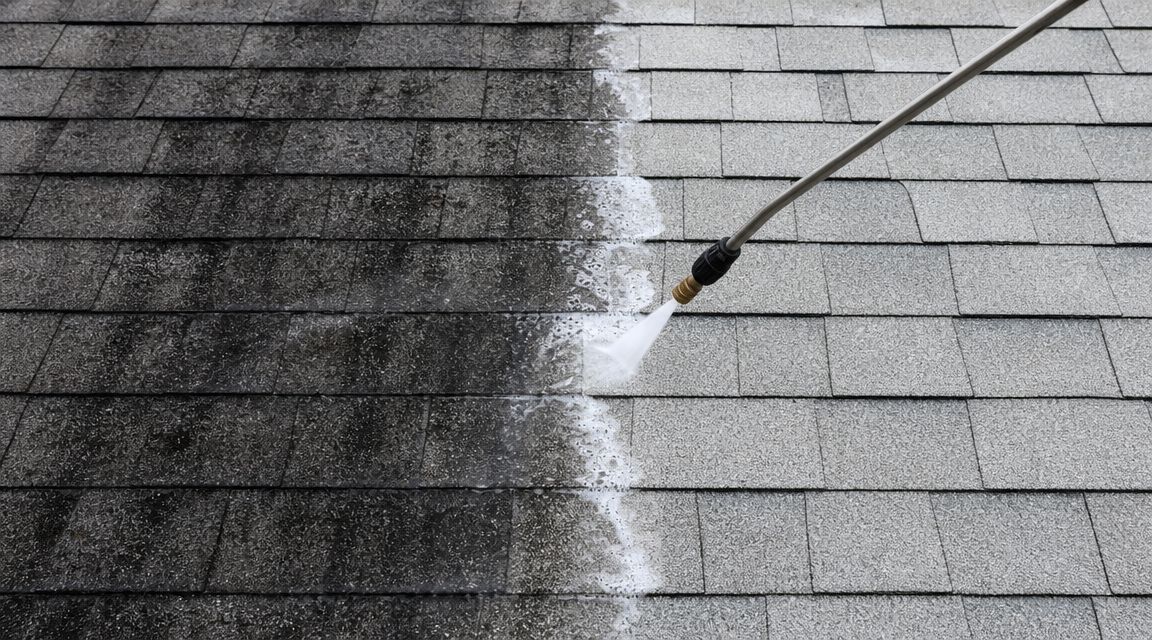
You look up at your roof and see long black lines running down the shingles. Most homeowners think the same thing first. Dirt, mold, age, or maybe something is starting to fail.
In South Florida, this is one of the most common roof concerns I hear about, and the good news is that those stains usually don't mean your roof is suddenly leaking or collapsing. The bad news is that a lot of people make the problem worse by cleaning it the wrong way. A stained roof can often be handled safely. A roof that gets blasted with pressure can lose years of life in one afternoon.
If you're dealing with black streaks on roof shingles, the most important thing is to identify the cause correctly, understand what it means for the shingle surface, and avoid “fixes” that trade an appearance problem for real roof damage.
Table of Contents
- What Exactly Are Those Black Streaks on Your Roof
- Why Black Streaks Appear on Certain Roofs
- Are Black Streaks Damaging Your Roof
- Your Guide to Safely Cleaning a Stained Roof
- How to Prevent Black Streaks From Returning
- Frequently Asked Questions About Black Roof Streaks
- Common questions homeowners ask
- Are algae-resistant shingles foolproof
- Can roof cleaning void a warranty
- How often should a roof in South Florida be cleaned
- Can I clean the roof myself
- Is bleach always bad for a roof
- Why do the streaks look worse after rain
- Can I paint over black streaks on the roof
- When should I stop cleaning and start thinking about replacement
- What's the smartest next step if I'm unsure
What Exactly Are Those Black Streaks on Your Roof
The short answer is this. In most cases, black streaks on roof shingles are biological staining, not simple dirt.
Industry roofing references identify the usual culprit as Gloeocapsa magma, a blue-green alga that became a major roofing issue as asphalt shingles spread across warm, humid parts of North America, especially places like South Florida where moisture hangs around and rain repeatedly moves growth down the roof surface, as explained in this roofing overview of black roof streaks.

It's not dirt, and that matters
A lot of homeowners assume the roof just needs a harder rinse. That's the mistake.
Consider dandelions in a yard. The seeds move in through the air, settle where conditions are right, and keep coming back if the environment suits them. Roof algae behaves in a similar way. It lands on the shingle surface, takes hold where moisture lingers, and spreads gradually.
What you see as black isn't the organism's natural color. The dark appearance comes from a protective coating that helps it survive sun exposure. That's why the streaking can look so pronounced from the street even when the roof isn't otherwise failing.
Practical rule: If the marks look like long, uneven dark trails flowing down the slope, treat them as a roof-surface growth problem first, not a dirt problem.
There's also a practical reason roofers pay attention to this. On asphalt shingles, the growth isn't just sitting on top like mud on a driveway. It interacts with the surface in a way that calls for the right cleaner and the right method.
How to tell algae staining from other roof marks
Not every stain on a roof comes from the same source. Here's a quick way to think about it.
| Stain Type | Appearance | Common Location |
|---|---|---|
| Algae staining | Dark streaks that run down the slope | Shaded or damp roof planes |
| Soot or pollution | More uniform dingy film | Areas exposed to airborne residue |
| Mineral runoff | Lighter or chalky streaking | Below metal flashings or drainage paths |
If the roof is an asphalt shingle roof and the staining is strongest where shade and moisture hang around, algae is usually the first thing to suspect. If you want a visual example of how this kind of staining typically presents from the curb, this roof staining reference image shows the kind of pattern homeowners commonly notice first.
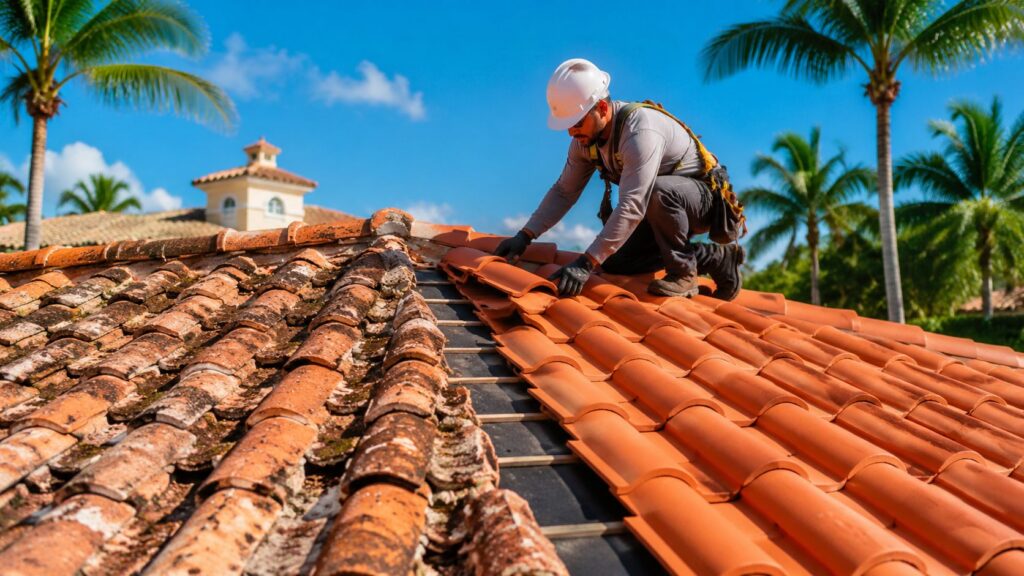
The main point is simple. Correct diagnosis comes before cleaning. If you misidentify the stain, you usually choose the wrong remedy.
Why Black Streaks Appear on Certain Roofs
Two houses on the same street can have completely different-looking roofs. One stays fairly clean, while the other develops black streaks on roof shingles that seem to show up out of nowhere. The roof usually isn't cursed. It just has the right conditions for growth.

Why one slope stains before another
Roof algae favors places that stay damp longer. Roofing guidance notes that growth is favored by shade, high humidity, tree cover, and damp roof planes, which is why north-facing or heavily shaded slopes often stain first, as described in this explanation of Gloeocapsa magma on asphalt shingles.
That tracks with what homeowners usually see in South Florida. The front slope may look acceptable while the side under a big oak starts showing dark lines. Early morning shade, afternoon storms, and slow drying all work together.
A few common site conditions push a roof in the wrong direction:
- Overhanging branches: They block sunlight, drop debris, and keep the surface damp.
- Poor airflow: Roof areas that don't dry quickly give biological growth more time to establish.
- Frequent rainfall: Rain helps move the staining downward, creating those long streak patterns.
- Persistent shade: Even a good roof will stain faster if one plane rarely gets enough direct sun.
A roof doesn't have to be old to stain. It only has to stay moist long enough, often enough.
Your shingles can feed the problem
This is the part many homeowners haven't heard before. On many composition shingles, the algae isn't only sitting on the surface. It can feed on the limestone filler used in asphalt shingles.
That matters because it changes the conversation from appearance to material health. If the roof surface itself offers food and the climate offers moisture, the organism has exactly what it wants. South Florida supplies the rest with heat, humidity, shade, and regular rain.
So when a homeowner asks, “Why my roof?” the answer is usually a combination of these factors:
- The environment helps it grow.
- The shaded slope stays wet longer.
- The shingle material gives it something to feed on.
That's why black streaks often return if nobody changes the conditions or uses the proper maintenance method.
Are Black Streaks Damaging Your Roof
The honest answer is yes, they can be. But not in the dramatic, instant-disaster way many people fear.
Black roof streaks usually start as a maintenance issue and a curb-appeal issue. They don't automatically mean your roof is leaking. They also shouldn't be brushed off as harmless forever, especially when the staining has been left in place for a long time.
When it's cosmetic and when it becomes a concern
A lightly stained roof may still be functioning well. The shingles can continue shedding water, and the house can stay dry. That's why I don't like scare tactics around this issue.
What concerns roofers is the long game. The growth feeds on material in the shingles, holds moisture on the surface longer, and creates a better environment for more stubborn growth to join the party later. Once a roof stops drying normally, it's easier for other surface problems to gain traction.
Here's the practical distinction:
- Mostly cosmetic: Early staining, no missing shingles, no exposed underlayment, no active leak signs.
- Needs closer attention: Heavy staining combined with surface wear, brittle shingles, granule loss, or other visible aging.
- Needs inspection soon: Staining plus curling, cracking, leak history, or signs that someone already cleaned it too aggressively.
If you're also reviewing broader home protection questions, especially after storm season or when comparing policy details, it helps to understand how roof condition fits into personalized Florida homeowners coverage. Stained roofs and damaged roofs aren't the same thing, but documentation and maintenance still matter.
The hidden risk is often bad cleaning, not the stain itself
Trouble can arise for homeowners. The algae can be a slow-moving problem. Bad cleaning can be immediate damage.
Pressure washing doesn't just remove the stain. It can strip away the granules that help protect the asphalt shingle from weather and sun. Once that protective surface gets blasted off, the roof ages faster and the shingle loses part of what it was built to do.
Cleaning should never leave the roof weaker than the stain did.
That's why I tell homeowners to treat black streaks as a roof-care issue, not a force issue. If the method is aggressive enough to tear up the shingle surface, it's the wrong method.
Your Guide to Safely Cleaning a Stained Roof
If you want the roof to look better without shortening its life, the safe path is narrow. There are methods that work, and there are methods that look fast but cause damage.

What works
For asphalt shingles, the accepted approach is a low-pressure, manufacturer-compatible biocidal wash. Owens Corning states that algae discoloration can be lightened with a 1:1 diluted chlorine bleach-and-water solution applied for about 10 to 20 minutes, with vegetation protected beforehand, and warns against scrubbing or high-pressure washing because those methods remove granules and shorten roof life, as outlined in Owens Corning's algae-resistance cleaning guidance.
That tells you the standard clearly. Roof staining should be handled as a chemical treatment and rinse problem, not a blasting problem.
A safe cleaning process usually includes:
- Protecting landscaping first: Pre-wetting and shielding nearby plants matters when any cleaning solution is used.
- Applying solution at low pressure: The goal is to kill and loosen the biological growth, not cut into the shingles.
- Letting dwell time do the work: If the chemistry is right, time does more than force.
- Avoiding mechanical abrasion: No hard scrubbing, scraping, or aggressive surface attack.
If you're comparing service categories and trying to understand how pricing discussions differ between delicate roof work and more routine exterior cleaning, this window cleaning price breakdown for Arizona gives useful context on why not every “washing” service should be treated as the same kind of job.
What ruins shingles
The biggest mistake is using a pressure washer because it feels decisive. It's the roofing equivalent of sanding a countertop to remove a coffee stain. Yes, the stain may change. So does the surface, and not for the better.
Avoid these approaches:
- High-pressure washing: This can blast granules off the shingle face.
- Aggressive scrubbing: Brushes and scraping tools can scar the surface.
- Uncontrolled chemical use: Strong mixes without proper handling can harm surrounding vegetation and create unnecessary risk.
A roof with black streaks doesn't need brute force. It needs the right treatment. If you want to see the kind of visual difference between harsh washing assumptions and proper roof-safe cleaning discussions, this roof cleaning comparison image is a helpful reference.
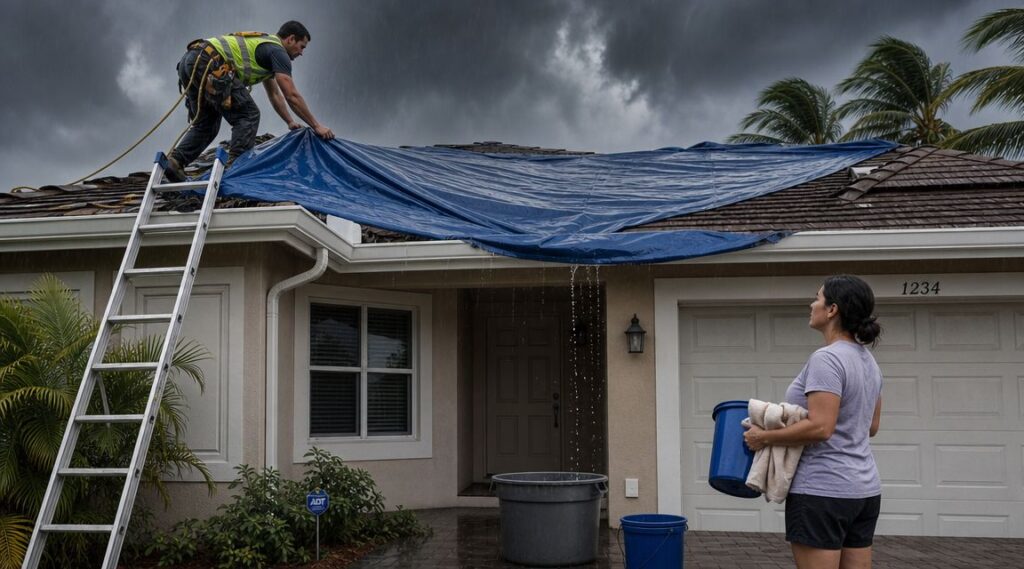
Field advice: If a contractor talks more about pressure than protection, keep looking.
How to Prevent Black Streaks From Returning
You can clean a roof correctly and still see the problem come back later if nothing changes around it. Prevention isn't about making the roof algae-proof forever. It's about making the roof a worse place for growth to take hold.

Make the roof less inviting to algae
Most prevention starts with moisture control and surface cleanliness. If shade, debris, and slow drying helped create the problem, those are the first things to improve.
A strong prevention checklist looks like this:
- Trim back overhanging limbs: More sun and airflow help the roof dry faster after rain.
- Keep leaves and debris off the roof: Organic buildup holds moisture against the shingles.
- Maintain gutters and drainage: Water needs to move off the roof cleanly, not back up or splash around.
- Address staining early: Light growth is easier to manage than a roof plane that's been ignored for years.
These aren't glamorous fixes, but they work because they change the environment.
Think long term at replacement time
Some homeowners want a longer-range answer than periodic cleaning. That's where material choice comes in.
Two options often come up:
Zinc or copper strips near the ridge
As rainwater moves across the roof, these metals can create conditions that are less friendly to biological growth down the slope. They're not magic, but they can help.Algae-resistant shingles at replacement time
If your roof is already nearing the end of its useful life for other reasons, this is the time to ask about shingles designed to better resist staining. They won't make maintenance disappear, but they can be part of a better long-term plan.
This is also where realistic expectations matter. Prevention reduces recurrence. It doesn't override South Florida's climate. Heat, humidity, shade, and regular rainfall are always working in the background.
If you're evaluating curb appeal, maintenance planning, or future reroofing options, this roof maintenance visual guide is a useful example of the kind of preventive thinking that saves headaches later.
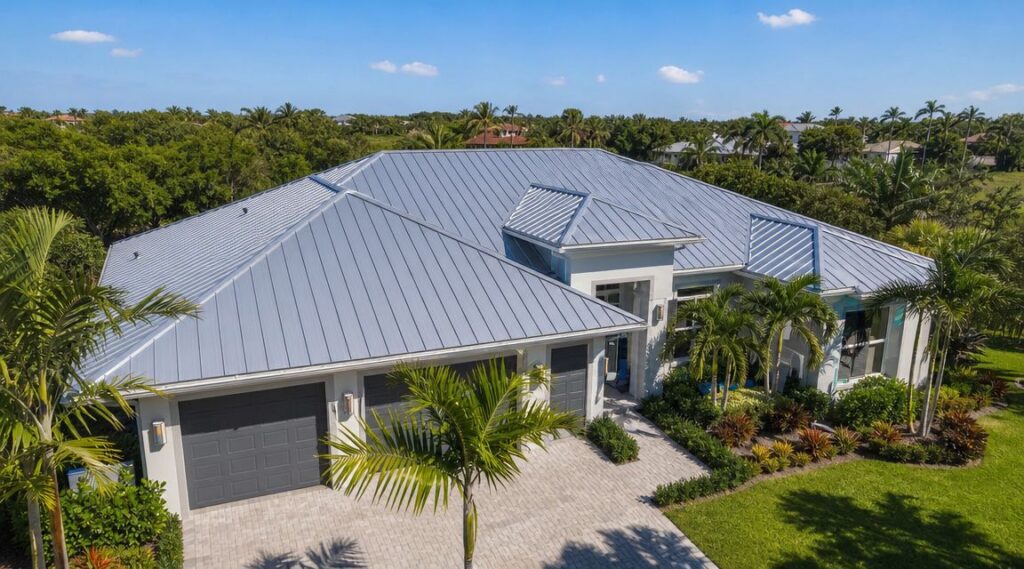
A roof stays cleaner longer when the home around it helps it dry.
Frequently Asked Questions About Black Roof Streaks
Common questions homeowners ask
Here are the questions that come up most often when people notice black streaks on roof shingles and start wondering whether to clean, repair, or replace.
| Question | Answer |
|---|---|
| Are black streaks just dirt? | Usually no. On asphalt shingle roofs, they're commonly biological staining rather than plain dirt. |
| Do black streaks mean the roof is leaking? | Not by themselves. Staining and leaking are different issues, though both deserve proper evaluation. |
| Should I pressure wash my roof? | No. High pressure can remove granules and shorten shingle life. |
| Is soft washing better? | Yes. Low-pressure chemical treatment is the safer method for asphalt shingles. |
| Will the streaks come back? | They can, especially in humid, shaded conditions, if the environment stays the same. |
Are algae-resistant shingles foolproof
No roof product is foolproof in South Florida. A shingle can be more resistant to staining and still develop surface issues over time if the roof stays shaded, damp, and covered in debris.
What algae-resistant shingles do well is improve your odds. They're worth discussing when replacement time comes, especially if the current roof has a history of recurring staining. But they don't eliminate the need for normal roof maintenance.
Can roof cleaning void a warranty
Improper cleaning can definitely create problems, even if the issue isn't phrased by a homeowner as “voiding a warranty.” The bigger concern is this: if someone uses a method the manufacturer warns against, and the roof surface gets damaged, you've made a bad situation harder to defend.
That's why manufacturer-compatible cleaning matters. If the approach is low pressure, controlled, and appropriate for asphalt shingles, you're protecting both the roof and your paper trail. If someone shows up with a pressure washer and starts blasting away, that's the opposite of careful roof maintenance.
How often should a roof in South Florida be cleaned
There isn't a single schedule that fits every house. That depends on shade, tree cover, humidity exposure, and how quickly one slope dries after rain.
A practical approach is to inspect the roof regularly and act when staining begins to establish, not after the entire visible slope is covered. Homes under heavy tree canopy often need attention sooner than homes with strong sun exposure and good airflow.
The key is not to wait for the problem to become dramatic from the street. Early treatment is usually simpler and gentler.
Can I clean the roof myself
Some homeowners can safely handle small, low-risk exterior maintenance. Roof cleaning is different. The hazards include falls, plant damage from improper solution use, and accidental shingle damage from the wrong equipment.
Even when someone means well, DIY work often slips into one of two bad habits. They either use too much pressure, or they use the wrong mix without protecting landscaping. Neither one saves money if the shingles end up damaged.
Is bleach always bad for a roof
Not in every form and not in every use. The issue is uncontrolled use, wrong strength, poor application, or applying it in a way that harms plants or roof materials. On asphalt shingles, what matters is following a manufacturer-compatible low-pressure method, protecting vegetation, and avoiding abrasion.
The roof industry warning isn't “never use chemistry.” It's “don't use force where chemistry should do the work.”
Why do the streaks look worse after rain
Moisture makes biological staining stand out more clearly. Wet shingles can increase contrast, and runoff patterns make the dark lines easier to see from the ground.
That doesn't necessarily mean the roof suddenly got worse overnight. It often means the same staining became more visible because the surface is wet.
Can I paint over black streaks on the roof
That's a bad idea. Painting doesn't solve the biological growth problem underneath, and it introduces a coating onto a roofing material that was designed to shed water and weather in a specific way.
If the roof is stained, clean it correctly. If the roof is worn out, replace it. Paint sits in the middle as the wrong answer to both problems.
When should I stop cleaning and start thinking about replacement
Replacement becomes the primary conversation when staining is only one part of the roof's condition. If the shingles are already brittle, losing granules, curling, cracking, or showing broader age-related wear, cleaning may improve appearance without solving the actual roofing issue.
A clean old roof is still an old roof. The stain should never distract from the condition of the shingle itself.
What's the smartest next step if I'm unsure
Have the roof evaluated by someone who understands asphalt shingles, biological staining, and safe cleaning methods. You want a diagnosis before a treatment plan.
That means asking practical questions:
- What is causing the staining on this specific roof?
- Is the issue mainly cosmetic, or is there visible surface wear too?
- What cleaning method will be used?
- Will that method protect granules, flashing, plants, and gutters?
- Is cleaning reasonable here, or is the roof already at a stage where replacement should be discussed?
Those answers tell you a lot about the quality of the advice you're getting.
If you're seeing black streaks on your roof and want a clear answer before anyone touches the shingles, Paletz Roofing and Inspections can help. Their South Florida team handles inspections, repairs, replacements, and practical roof guidance across Broward, Miami-Dade, and Palm Beach counties, so you can find out whether your roof needs safe cleaning, maintenance, or a closer look for age-related wear.