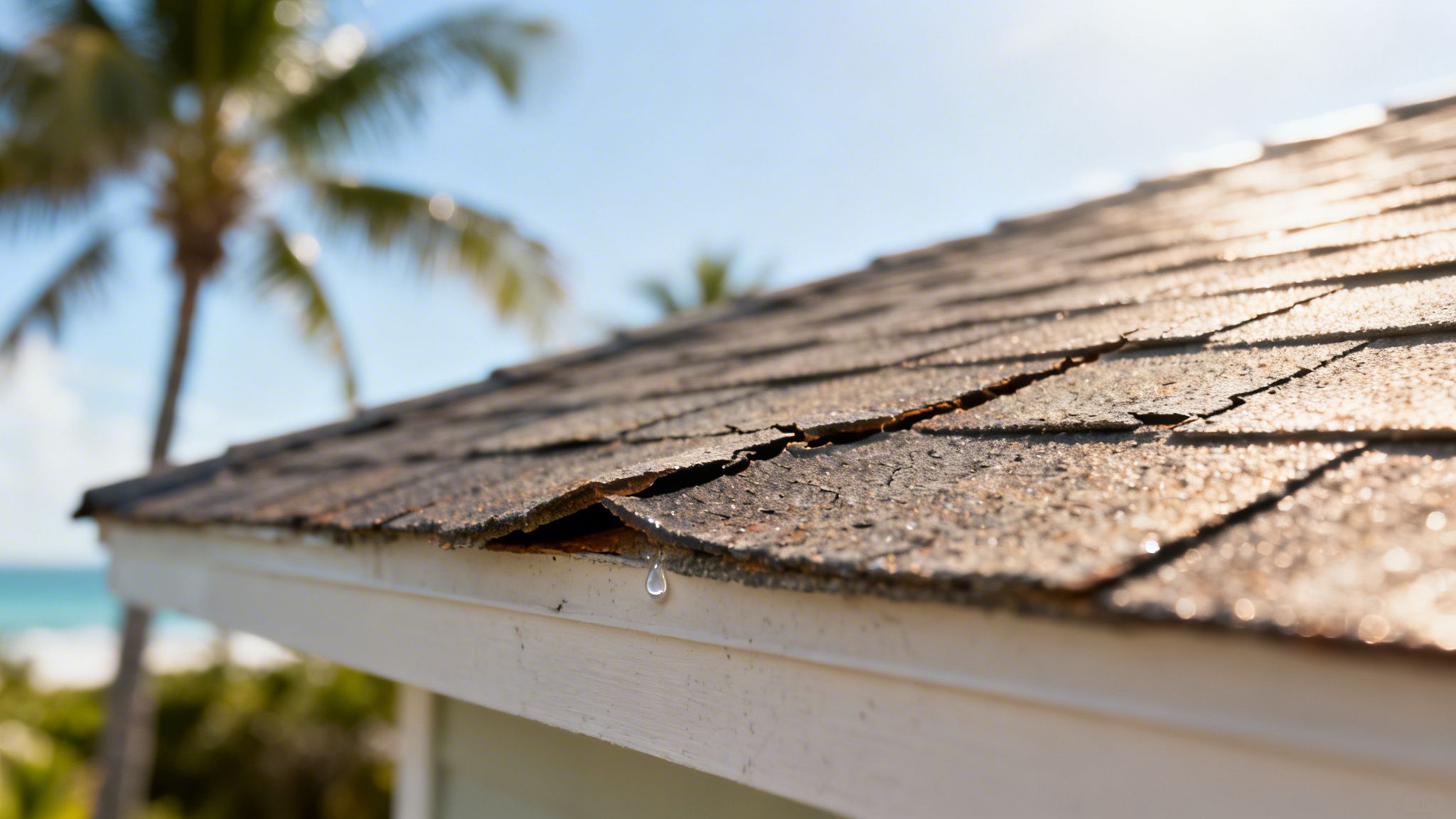
That relentless drip-drip-drip isn’t just an annoying sound—it's your home's alarm system screaming that there's a breach in its most important line of defense. The most common reasons a roof starts leaking are often tied to material aging, damage from severe weather, and problems with the flashing around vents, chimneys, and roof edges.
Think of your roof as a single, unified shield. Any crack, hole, or weak seam is an open invitation for water to get past its defenses and into your home.
Your Quick Guide to Common Roof Leak Causes
Understanding what’s actually causing your roof to leak is the first real step toward getting it fixed quickly and correctly. Your roof is a complex system, and a failure in one tiny area can snowball into major headaches down the road.
Imagine your roof is like a high-quality raincoat. When it's brand new, it's a seamless barrier that keeps you dry in the worst storms. But after years of use, the material can get brittle, seams might pull apart, and tiny punctures can appear. A roof leak is exactly the same. It could be a cracked shingle, a piece of rusted metal flashing, or a seal that has been baked to a crisp by the Florida sun—each one is a potential entryway for water.
Uncovering the Main Suspects
Most leaks aren't just random acts of bad luck; they’re the result of specific, identifiable failures. The three most common culprits we see are the natural aging of roofing materials, damage from severe weather, and breakdowns in the flashing system.
This infographic gives a great visual summary of where leaks often start.

As you can see, leaks tend to pop up from material decay, the impact of a storm, or at critical connection points like flashing. This is why a thorough inspection is so important—it checks all the usual suspects.
To give you a head start before we dive deeper, we’ve put together a quick reference guide. You can use this table to try and match the symptoms you’re seeing with their likely causes and get a feel for how urgently you need to act.
Key Insight: A small leak can cause a shocking amount of hidden damage long before you ever see a water spot on your ceiling. Finding it early is absolutely critical to preventing expensive structural repairs, mold growth, and ruined insulation.
This table is designed to be a first-look diagnostic tool. It will help you get a sense of the situation so you can make an informed first move.
Quick Reference for Roof Leak Causes and Urgency
Use this table to quickly identify potential roof leak sources, their warning signs, and how urgently you should act.
| Leak Cause | Warning Signs to Look For | Recommended Urgency Level |
|---|---|---|
| Aged or Damaged Shingles | Cracked, curling, or missing shingles; dark, "wet" looking spots on the roof; granules in gutters. | High: Exposed underlayment can lead to rapid water intrusion. Schedule an inspection. |
| Flashing Failures | Rusted metal, cracked sealant around chimneys, vents, or skylights; water stains on interior walls. | Immediate: Flashing leaks often direct water straight into your home's structure. |
| Storm Damage | Missing shingles after high winds; dents on vents from hail; large branches on the roof. | Immediate: Storm damage can create multiple, severe leak points. Call for an emergency inspection. |
| Clogged Gutters | Water overflowing from gutters; sagging gutters; plant growth in gutters. | Medium: Address before the next rain to prevent water from backing up under roof edges. |
| Ponding Water (Flat Roofs) | Standing water on the roof more than 48 hours after rain. | High: The weight and constant presence of water will inevitably cause a leak. |
Seeing these signs doesn’t make you a roofing expert overnight, but it does arm you with the knowledge to protect your home. Now, let’s get into the specifics of each of these common causes.
The Top 10 Culprits Behind A Leaking Roof

To figure out what causes a roof to leak, you almost have to think like a drop of water. Water is persistent and opportunistic. It will find and exploit any vulnerability, no matter how tiny, to make its way inside your home. This guide breaks down the 10 most common weak spots that give water the opening it’s looking for.
Think of your roof as a single, complex shield. When one part of that shield cracks, shifts, or fails, the entire system is suddenly at risk. Here are the top offenders we see in the field.
1. Simple Age and Wear
Nothing lasts forever, especially not something that’s exposed to the elements 24/7. For asphalt shingles, which cover the majority of homes, age is a primary enemy. After years of baking in the South Florida sun, the essential oils that keep shingles flexible and waterproof eventually dry out.
This process turns them brittle. Soon, they start to crack, curl up at the edges, or lose their protective granules. Once that top layer is compromised, your roof’s underlayment is exposed, creating a direct pathway for water to get in.
2. Broken or Missing Shingles
A strong gust of wind, a fallen tree limb, or even a bit of clumsy foot traffic can easily crack a shingle, lift it up, or tear it right off the roof. This isn't just a cosmetic problem; it's the equivalent of leaving a window wide open during a downpour.
Even a single missing shingle exposes the vulnerable layers underneath to direct rainfall. This not only lets water seep in but can quickly lead to the rot and decay of the roof decking itself, turning what was a small issue into a major structural repair.
3. Compromised Flashing
If you think of your roof as a shield, flashing is the custom-fit armor that guards its most critical joints. These thin metal strips are installed wherever the roof meets a wall or another surface—think chimneys, skylights, vents, and valleys.
When flashing rusts, comes loose, or the sealant around it fails, it creates a superhighway for water to enter some of the most sensitive areas of your home. In fact, failed flashing is one of the most common answers to "what causes roof leaks," especially around chimneys.
4. Clogged Gutters and Drains
Your gutters are a vital part of your roofing system, designed to channel thousands of gallons of water safely away from your foundation. But when they get clogged with leaves, pine needles, and other gunk, they simply can't do their job.
Water backs up, creating a pool right along the edge of your roof. This standing water is relentless and will eventually work its way under your shingles, rotting out the fascia boards and roof decking.
5. Improper Roof Installation
A roof is only as good as the person who installed it. Unfortunately, cutting corners is all too common with less-than-reputable roofers. Shingles that are nailed incorrectly, missing underlayment, or poorly installed flashing can create headaches from day one.
These mistakes often aren't visible from the ground, but they create built-in weaknesses that the very first major storm will exploit. It can be hard to spot these issues without a trained eye, which is why professional inspections are so crucial. You can see some clear examples of proper versus improper installation by checking out these visual guides. https://paletzroofing.com/wp-content/uploads/2026/03/thumbnail-13-1024×576.jpg
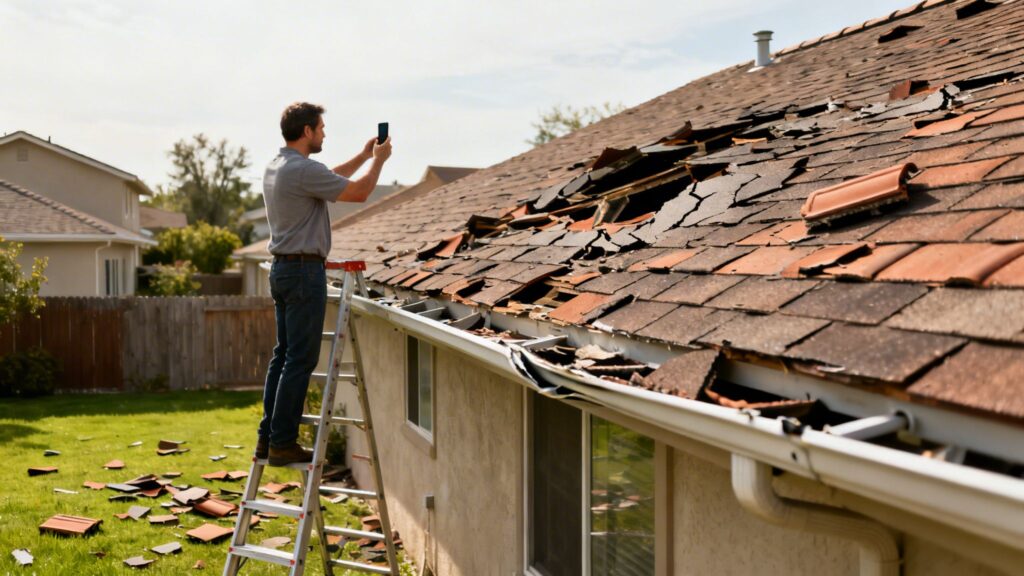
Here are a few other common culprits to watch for:
- Damaged Vent Boots: The rubber boots sealing the pipes on your roof get brittle from sun exposure and eventually crack.
- Cracked Chimneys: The actual masonry of a chimney can develop cracks that act like a sponge, absorbing water and letting it seep in.
- Skylight Leaks: Older or poorly installed skylights are notorious for developing leaks around their seals over time.
- Ponding Water: On flat and low-slope roofs, even minor drainage issues can lead to standing water that eventually finds a way through.
- Attic Ventilation Issues: A poorly ventilated attic traps heat and moisture, which can literally rot your roof structure from the inside out.
Unique South Florida Challenges That Cause Roof Leaks
A roof in a temperate climate has a tough job, but a roof in South Florida is on the front lines of an entirely different kind of battle. Here, the usual suspects for roof leaks are cranked up to eleven by a relentless combination of intense sun, extreme humidity, corrosive salt air, and the constant threat of hurricane-force winds.

To really get what causes roof leaks in our region, you have to understand that our environment puts a unique kind of stress on every single part of your roof. These factors team up, turning what would be a minor issue elsewhere into a major failure, and they do it much faster. A South Florida roof just works harder, every single day.
The Constant Threat Of Thermal Shock
Picture stretching a rubber band and then letting it relax, over and over, hundreds of times a day. Sooner or later, tiny cracks will start to form, and the material will weaken until it just snaps. That’s a pretty good picture of what’s happening to your roof from a process called thermal shock.
Under the blazing Florida sun, your roof's surface can easily rocket past 150°F. Then, one of our classic afternoon thunderstorms rolls in, and a cool downpour sends that temperature plummeting by 50-70 degrees in a matter of minutes. This violent temperature swing forces your roofing materials to expand and contract like crazy.
This daily cycle of expansion and contraction is a primary contributor to material failure in South Florida. Over time, it creates hairline cracks in tiles, asphalt shingles, and membrane roofing, providing a perfect entry point for water during the next rain shower.
This relentless stress is a huge reason why materials that might last 20-30 years in a milder climate often have a much shorter effective lifespan down here. The constant flexing and stress make them brittle and vulnerable far sooner than you’d ever expect.
Corrosive Salt Air And Metal Components
Living near the coast is fantastic, but that salty, humid air is a major enemy to your roof’s metal parts. You can think of it as a slow, steady chemical assault on the most important seals protecting your home.
All the metal flashing around your chimney, vents, and skylights, not to mention the nails and fasteners holding it all together, are extremely susceptible to corrosion. Salt-laden moisture just dramatically speeds up the rusting process.
Here’s how this regional problem turns into a leak:
- Rusted Flashing: As flashing corrodes, it can get thin or even develop pinholes. This allows water to sneak right past it and drip into your attic.
- Failed Fasteners: When the nails or screws holding your shingles or tiles rust out, the materials can come loose. That creates an easy path for wind-driven rain to get right underneath.
This is exactly why any roof inspection in coastal areas like Broward and Palm Beach has to pay extra close attention to all the metal elements. What might look like a minor spot of rust somewhere else could be a sign of a major failure waiting to happen here.
Hurricanes And Wind-Driven Rain
Hurricanes are the most obvious threat, of course, but the damage they cause is often a lot more subtle than just ripping shingles clean off. During a big storm, incredibly powerful winds can push rainwater sideways and even upwards, forcing it under the edges of shingles and tiles that look perfectly fine.
This wind-driven rain exploits tiny, pre-existing weak spots that would never cause a leak during a normal downpour. A nail that wasn’t sealed just right or a small crack in a vent boot suddenly becomes a major breach when it’s up against 100+ mph winds and horizontal rain.
The Problem With Ponding Water
Flat and low-slope roofs are a signature of South Florida architecture, but they come with a very specific risk: ponding water. If a roof's drainage system isn't absolutely perfect, water can collect in low spots and just sit there after a storm.
This standing water is a ticking time bomb. First, its immense weight puts constant stress on the roof structure. Then, the persistent moisture will eventually work its way through even the tiniest imperfection in the roofing membrane. A puddle that’s still there for more than 48 hours is a clear signal that your roof has a serious drainage problem that will, without a doubt, lead to a leak.
How To Identify A Roof Leak Before It Becomes A Disaster
That dark water stain on your ceiling isn’t the beginning of a problem; it's the final, dramatic scene of a story that likely started weeks, or even months, ago. By the time you see that unmistakable sign, water has already been quietly working its way through your attic, soaking insulation, and seeping into drywall. Learning to be a "roof detective" means knowing how to spot the subtle clues before a minor issue turns into a costly catastrophe.

The best part? This detective work doesn't require you to climb onto your roof. In fact, some of the most telling signs are found right inside your home. Catching these early is your absolute best defense against the staggering costs of structural damage and mold remediation that follow a hidden, long-term leak.
Look For Interior Warning Signs
The story of a roof leak often begins long before a single drop hits your floor. Your home actually leaves a trail of breadcrumbs leading right back to the source, if you just know where to look. Train your eyes—and your nose—to pick up on these common red flags.
You should regularly check for:
- Water Stains and Discoloration: Keep an eye out for yellowish-brown spots or distinct "rings" on ceilings and walls, especially in rooms on your top floor. These are the classic calling cards of a slow leak.
- Peeling or Bubbling Paint: Moisture getting into the drywall will cause paint to lose its grip. Look for bubbling, blistering, or peeling paint on walls near the ceiling line or around windows.
- Musty Odors: An unexplained musty or earthy smell, particularly in upstairs rooms or closets, is a huge indicator of hidden moisture and potential mold growth. Never, ever ignore a persistent strange odor.
Think of these signs as your home's early alert system. Responding to them quickly can be the difference between a simple patch and a major restoration project.
A small, dark stain on the wood sheathing in your attic is the first chapter of a story that could end with a collapsed ceiling. This is the point where a leak is easiest and cheapest to fix.
Conduct An Attic Inspection
If you can access it safely, your attic is the best place to find direct, undeniable evidence of a roof leak. On a sunny day, head up there and turn off any lights. Look around for tiny pinpricks of daylight shining through the roof deck—if light can get in, water absolutely can.
Next, grab a good flashlight and methodically scan the entire underside of the roof deck. You're looking for specific clues that point directly to water getting in.
- Dark Stains on Wood: Water leaves dark, streaky stains on the wooden rafters and sheathing. These are often the first visible signs.
- Damp or Matted Insulation: Check for insulation that looks compressed, clumpy, or feels damp to the touch. Wet insulation is useless and loses its R-value, which can also lead to higher energy bills.
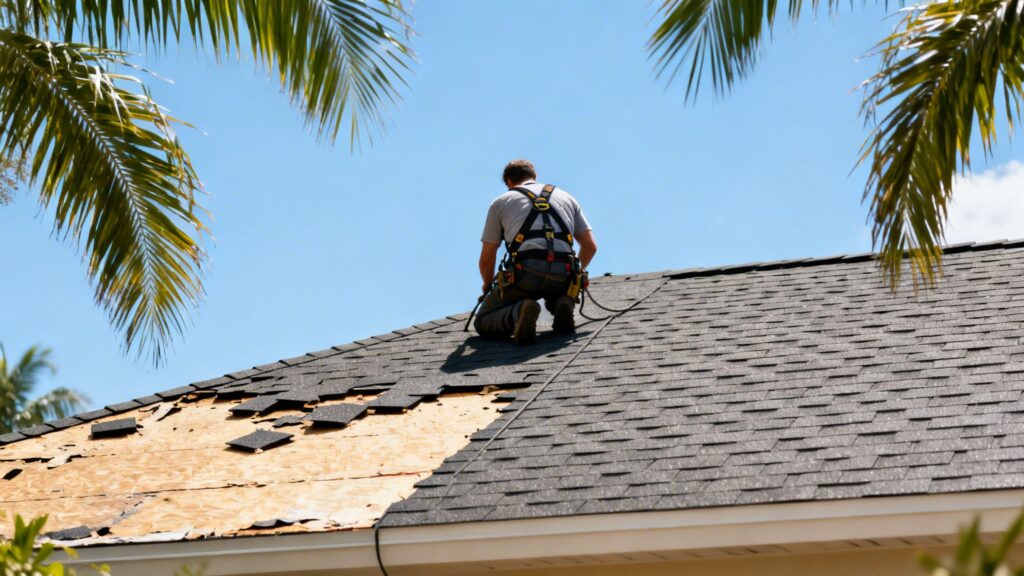
- Visible Mold or Mildew: Black or white fuzzy spots on wood surfaces are a sure sign of a chronic moisture problem that needs immediate attention. Seeing this should prompt an immediate call to a professional. You can see more examples of what to look for with our detailed photo gallery of water damage types.
Why Commercial Roofs And HOAs Face Special Leak Risks
When you're managing a commercial property or a homeowners association (HOA), you’re dealing with a roofing system on a totally different level than a single-family home. The stakes are just higher. A leak isn't just an inconvenience; it can shut down a business, damage expensive assets, or create a financial nightmare for an entire community.
A commercial roof isn't just a roof—it's the primary shield for business operations, tenant property, and shared investments. And while age and storms are always a factor, these massive roofs have their own unique set of problems, especially here in South Florida. For property managers and HOA board members, understanding these specific risks is the first step in protecting a very significant investment.
The Overlooked Threat From HVAC Units
You might think the biggest threat to a commercial roof is a hurricane or old age. Surprisingly, that's not usually the case. More often than not, the real troublemaker is something you rely on every single day: the rooftop HVAC unit.
It’s a startling fact, but roof-mounted air conditioning units are responsible for roughly 70% of all commercial roof leaks. The problem almost always starts with a faulty installation. Whether it’s poor sealing where the unit meets the roofing membrane or improper leveling that messes with drainage, a small mistake here has big consequences. As many facility managers have learned the hard way, what looks like a minor $500 fix can quickly become a multi-thousand-dollar structural disaster if you ignore it. You can find more about this common issue on sbrroofing.com.
The issue really boils down to two things:
- Bad Seals and Installation: Cutting a hole in a roof to install a heavy machine creates a huge weak spot. If the flashing and seals around the unit's base—what we call the curb—aren't installed perfectly, it’s like leaving a door wide open for water.
- Constant Vibration: HVAC systems don’t just sit there. They run, and when they do, they create tiny, constant vibrations. Over the years, that subtle shaking can work the seals loose, pulling them away from the roof and creating the perfect entry point for rain.
Flat Roofs and Their Unique Weaknesses
Most commercial buildings and a lot of HOA properties use flat or low-slope roofs. They’re great for covering huge areas, but their design comes with some built-in weaknesses you don’t see on a typical pitched roof.
One of the biggest culprits is simple foot traffic. Every time a technician goes up to service an HVAC unit, a satellite dish, or other equipment, there’s a risk. Just walking across the roof or accidentally dropping a tool can puncture the membrane. A tiny hole is all it takes for water to start working its way into the structure below.
Drainage is the other massive concern. A pitched roof uses gravity to its advantage, shedding water instantly. A flat roof can't do that. It has to rely on a system of internal drains and scuppers to get rid of rainwater.
A clogged internal drain on a large flat roof is a recipe for disaster. If water cannot escape, it can quickly accumulate, creating immense weight and pressure that can lead to catastrophic structural failure and massive interior flooding.
For businesses and HOAs, this is where specialized commercial roof maintenance becomes non-negotiable. Regularly checking these drains isn't just a good idea; it's absolutely essential to stop a small clog from becoming a building-wide catastrophe. Protecting these large-scale roofs requires a proactive mindset and an expert’s eye.
Proactive Maintenance Your Best Defense Against Leaks
When it comes to your roof, the smartest move any property owner can make is shifting from a reactive to a proactive mindset. It’s far more cost-effective than waiting for that tell-tale water stain to appear on your ceiling. Think of a solid maintenance plan as your home's best insurance policy against the chaos a leak can cause, because a small leak is almost never a small problem.
The reality is, leaking roofs are the single most common issue plaguing American households. The latest data shows that nearly 6 million homes across the country are dealing with roof leaks right now. That staggering number shows why prevention isn't just a good idea—it’s absolutely essential for protecting your investment, especially in a demanding climate like South Florida's.
Build Your Preventative Action Plan
Your first line of defense is a simple, repeatable maintenance checklist. The good news is that most of these tasks are straightforward and can be done safely from the ground, giving you the power to spot trouble long before it gets serious.
A smart plan also takes your property type into account. For commercial buildings and HOAs, for instance, a detailed commercial building maintenance checklist is invaluable for mitigating risks from things like our intense summer monsoons, which are a frequent source of leaks.
Your personal checklist should include these non-negotiable tasks:
- Consistent Gutter Cleaning: Clogged gutters are a roof's enemy. They force rainwater to back up and seep under your roof's edge, where it can rot wood and cause hidden leaks. Cleaning them twice a year is critical, especially after the fall.
- Ground-Level Visual Checks: After a big storm, or at least twice a year, take a walk around your property and just look up. A pair of binoculars can help you scan for missing, cracked, or curling shingles or tiles.
- Trim Overhanging Tree Limbs: Before hurricane season kicks into high gear, trim back any branches hanging over your roof. This simple step prevents damage from falling limbs and cuts down on the debris that clogs your gutters in the first place.
The central message is this: a small investment in proactive care is your best insurance against tens of thousands in future damages. It’s not a cost; it’s a crucial investment in your home's value and your family’s peace of mind.
The Ultimate Fail-Safe: Professional Inspections
While your own checks are a great start, they can’t replace the trained eye of a professional. An experienced roofer knows exactly what causes roof leaks and can spot the subtle signs of wear and tear you would almost certainly miss. They can identify failing sealant around vents, compromised flashing, or the very first signs of material breakdown.

Think of it like a regular health check-up. You go to the doctor for preventative screening to catch problems before they become serious threats. An annual professional roof inspection does the exact same thing for your home by providing a detailed, expert assessment of its condition.
This is especially critical as you prepare for the next hurricane season. A professional can certify that your roof is structurally sound and ready to handle high winds and torrential rain. Don't wait for the storm warnings to discover your roof has a hidden weakness. By taking action now, you can address any vulnerabilities and secure your home long before the weather turns. Our team at Paletz Roofing offers thorough evaluations to give you that essential peace of mind.
Frequently Asked Questions About Roof Leaks
Spotting that first dreaded water stain sends a jolt of panic through any homeowner. Your mind immediately races with questions about what to do and how bad the damage might be. We've put together this straightforward guide to give you clear answers for navigating a roof leak and understanding what's really going on up there.
I See A Water Stain, What Do I Do Right Now?
First, you need to manage the water. Grab a bucket or a large bowl and place it directly under the drip to protect your floors and furniture. If you see the ceiling paint starting to bulge, it’s because water is pooling behind it. Puncturing the center of the bulge with something small can relieve that pressure and prevent a much larger section of your ceiling from collapsing. Only do this if you feel comfortable and safe.
Next, if you can safely access your attic, take a look. Try to follow the path of the water from the stain on your ceiling back to where it’s coming in through the roof deck. But your most critical next step is calling a professional roofer for an emergency inspection—water damage can spread quickly and silently behind walls and ceilings.
The moment you notice a leak is the moment to act. Putting off a professional inspection can let a minor, easy-to-fix issue spiral into a major disaster involving mold remediation and structural repairs, which dramatically increases the cost and headache of the fix.
Can I Repair A Small Leak Myself?
While your local hardware store has shelves full of DIY patch kits and roofing cement, these should only ever be seen as a temporary, emergency stopgap. The real challenge isn’t just slapping a patch on a hole; it's finding the exact entry point on the outside of your roof. Water can travel a long way from where it gets in to where it shows up inside your home.
DIY repairs often fail because they don't solve the underlying problem. Worse, they can sometimes trap moisture, making the rot and damage spread unseen. A professional repair pinpoints the true source of the leak and fixes it correctly, protecting you from bigger problems down the road.
How Often Should My South Florida Roof Be Inspected?
Given our region's brutal combination of intense sun, high humidity, and the constant threat of severe storms, we strongly recommend a professional roof inspection at least once per year. It is also absolutely critical to have your roof checked after any major weather event, like a hurricane or a strong tropical storm. Even if you don't see any obvious damage from the ground, hidden problems could be starting.
Don't wait for a small drip to become a disaster. The expert team at Paletz Roofing and Inspections has over 30 years of experience protecting South Florida homes. Schedule your professional roof inspection today by visiting us at https://paletzroofing.com.