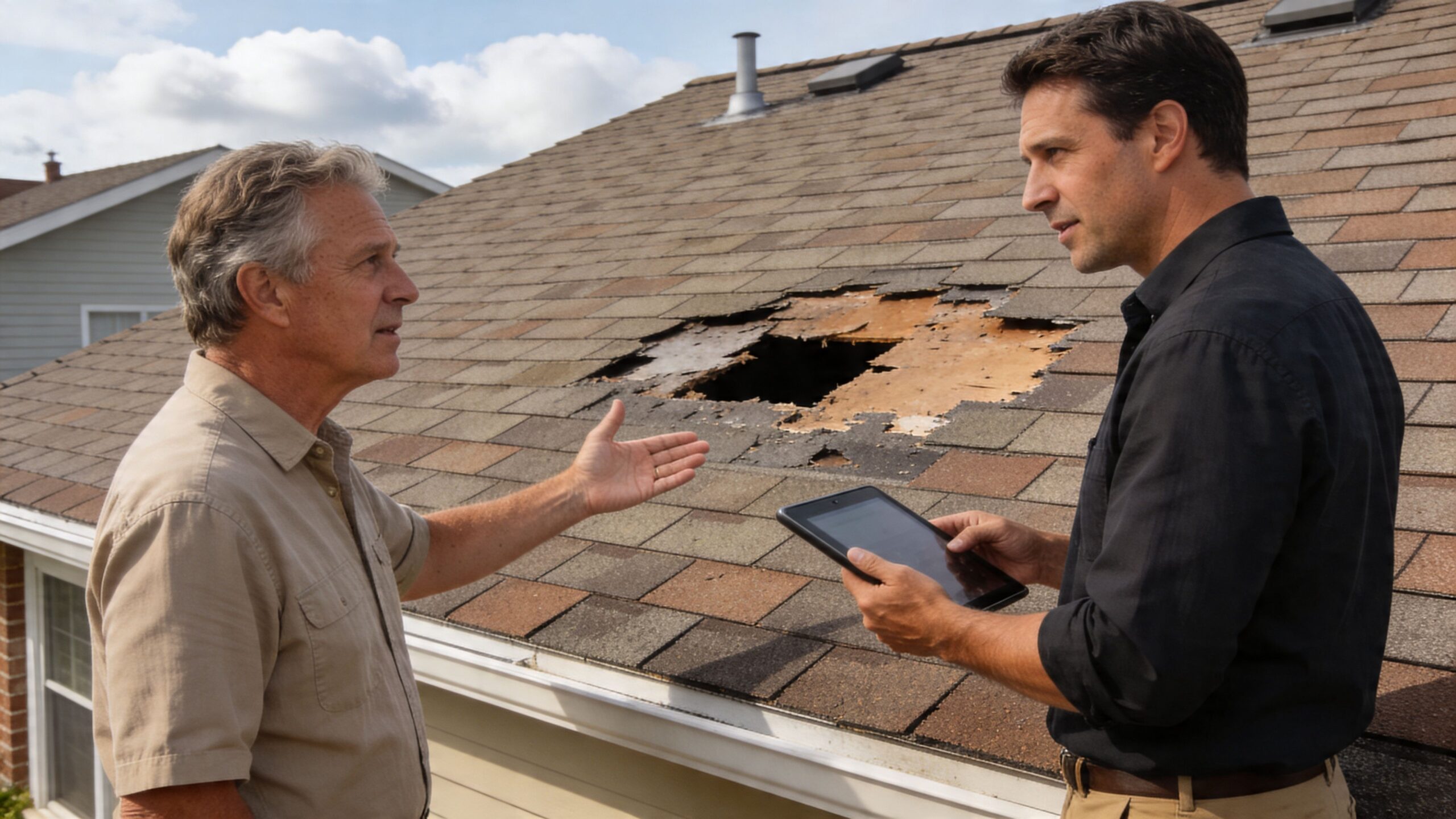
You walk into the living room after a hard South Florida storm and see it right away. A brown water stain spreading across the ceiling. Maybe there are shingles in the yard. Maybe the drip hasn’t started yet, but you can smell damp drywall and you know something changed overnight.
That’s usually the moment the main question hits. Does homeowners insurance cover roof damage, or are you about to pay for this yourself?
The short answer is: sometimes, yes. But coverage depends far less on the fact that your roof is leaking and far more on why it’s leaking. Insurance companies pay for certain causes. They deny others. In Broward, Miami-Dade, and Palm Beach, that difference matters because storms are common, roofs age fast, and carriers look closely at maintenance, roof age, and policy wording.
The Post-Storm Reality for Florida Homeowners
A lot of homeowners call when the storm has already passed and the panic has set in. The ceiling stain is growing, the attic smells wet, and they’re trying to decide whether to call a roofer first or the insurance company first.
That stress is understandable. Roof claims are common, and not just in Florida. Wind and hail damage represents the most frequent type of property claim, accounting for more than 40% of all homeowners insurance claims and affecting approximately 1 in 36 insured homes annually. In 2023, convective storm damages doubled to $60 billion, according to homeowners insurance claim statistics. In South Florida, where afternoon storms, tropical systems, and hurricane winds are part of life, that’s not abstract data. It’s the reason so many homeowners end up dealing with the same question you’re dealing with now.

What homeowners usually get wrong first
The first mistake is assuming any roof leak should be covered. It won’t be.
The second mistake is assuming a denied claim means there was never a valid claim to begin with. That’s also not always true. In Florida, a claim can turn on details like whether the damage was sudden, whether the roof was already compromised, whether wind caused an opening, and whether the repair the insurer proposes restores the roof properly.
A roof claim starts as a roofing problem, but it quickly becomes a documentation problem and a causation problem.
The first few hours matter
If water is entering the house, your priority is to prevent further interior damage safely. Move furniture, protect valuables, and document what you see before anything changes. Take wide shots of each room, close-ups of stains, attic moisture if accessible, and exterior photos from the ground.
For homeowners who want a visual reference of what storm-related roof issues can look like, this roof damage example image helps show the kind of visible conditions that often trigger a closer inspection.
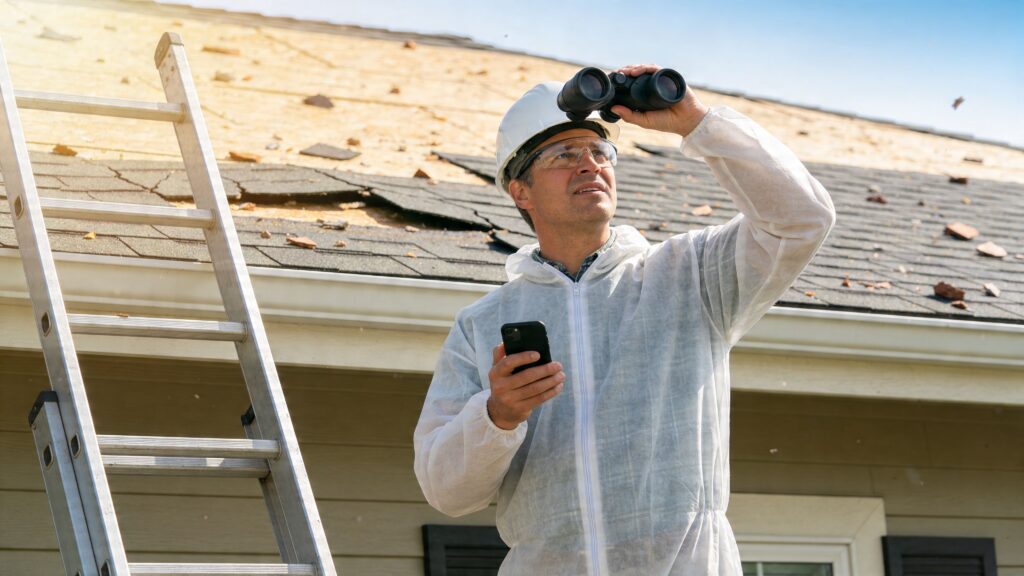
Practical rule: Don’t wait for a small ceiling stain to become a collapsed section of drywall. Early documentation is often the difference between a clean claim file and an argument over what happened later.
What Your Homeowners Policy Actually Covers
Insurance doesn’t cover “a bad roof.” It covers damage caused by a covered peril.
That sounds like insurance language because it is, but the idea is simple. It's comparable to a car warranty. If a major part suddenly fails because of a covered event, you may have protection. If the tires are bald because they wore down over time, that’s maintenance. Roof coverage works much the same way.
The cause matters more than the symptom
A leak is only a symptom. The insurer wants the cause.
If wind lifted shingles during a storm and rain entered through that opening, that may be covered. If the same water came in because the underlayment had failed over time, flashing had been neglected, or an old repair was already giving out, the claim can be denied. As Auto-Owners explains in its discussion of roof storm damage coverage, standard homeowners policies cover roof damage from defined perils like wind and hail, but exclude gradual deterioration. If an adjuster concludes the leak came from age-related wear instead of a specific storm, the claim may be denied entirely.
That’s why homeowners often feel blindsided. They see storm timing. The adjuster sees roof condition.
Covered perils vs common exclusions for roof damage
| Covered Perils vs. Common Exclusions for Roof Damage | |
|---|---|
| Typically Covered (Sudden & Accidental) | Typically Excluded (Gradual or Preventable) |
| Wind damage from a storm | Wear and tear from age |
| Hail impact | Deferred maintenance |
| Fire damage | Rot or long-term deterioration |
| Fallen tree or debris impact | Pest or animal damage |
| Sudden storm-created opening leading to interior water damage | Improper installation or prior faulty repair |
| Lightning-related roof damage | Flooding or earth movement under separate policy structures |
The table is a shortcut, not a substitute for your policy. Carriers vary. Some policies have endorsements, restrictions, separate deductibles, or exclusions that change the answer.
What else may be covered
If a covered roof event allows water into the home, the policy often also covers resulting interior damage. That can include drywall, paint, insulation, flooring, and personal property damaged by water entering through a covered opening.
That doesn’t mean every wet ceiling is automatically paid. It means the interior damage usually rises or falls with the roof causation decision. If the roof damage is accepted as a covered event, the indoor damage tied to that event often follows.
A leak after a storm doesn’t prove a covered loss by itself. It proves you need the roof inspected before the evidence disappears.
Read the policy like an adjuster would
Most homeowners look at the declarations page and stop there. The useful answers are often buried deeper in the sections covering dwelling, exclusions, wind or hail limitations, endorsements, and deductibles.
If you want a plain-English walkthrough of how to approach policy wording, this guide on how to read a homeowners insurance policy is a helpful companion. It gives homeowners a better framework for spotting the language that controls what gets paid and what gets denied.
When homeowners ask me whether insurance covers roof damage, I don’t start with the leak. I start with three questions:
- What happened: Was there a specific storm event, fallen limb, fire, or visible sudden damage?
- What condition was the roof in before: Was it maintained, repaired properly, and free of known long-term issues?
- What does the policy say: Are wind and hail included without special limitation, or is there a separate endorsement or deductible?
Those three answers usually tell you whether you have a straightforward claim, a disputed claim, or a maintenance issue insurance won’t touch.
Understanding Your Payout Replacement Cost vs Actual Cash Value
Two homeowners can have the same storm damage and receive very different claim payments. The reason is often the settlement method written into the policy.
The two terms you need to know are Replacement Cost Value (RCV) and Actual Cash Value (ACV). If you don’t know which one applies to your roof, you can’t judge whether the insurer’s offer is reasonable.

What RCV means in plain language
RCV is designed to pay what it costs to replace damaged roofing with new materials of like kind and quality, subject to the deductible and policy terms.
For a homeowner, that usually means less out-of-pocket exposure if the claim is approved and the roof qualifies for replacement cost treatment. It’s the broader protection homeowners assume they already have.
What ACV really does
ACV subtracts depreciation for age and condition. The older the roof, the less the insurer may value it before the deductible is applied.
As Goosehead explains in its roof coverage guide, under an ACV policy, a $10,000 roof damaged after 10 years might be valued at only $7,000 due to depreciation. After a $1,000 deductible, the homeowner receives just $6,000. That gap is why ACV catches so many people off guard.
Why this hits older Florida roofs hard
South Florida roofs age under intense sun, wind, driving rain, and salt-heavy air. Even when storm damage is real, a depreciated payout can leave a homeowner covering a large portion of the replacement cost.
Here’s the practical difference:
- With RCV: The payment structure is built around replacing the damaged roof with new materials, minus your deductible and any policy conditions.
- With ACV: The payment reflects what the roof was worth at the time of loss, not what it costs to install a new one today.
- With older roofs: Depreciation becomes the center of the dispute. The carrier may accept damage but still pay far less than the replacement bill.
Questions to ask before you accept the offer
When the claim paperwork arrives, don’t focus only on the total number. Check how the number was built.
Ask these:
- Is the roof being valued as RCV or ACV
- What depreciation was applied
- What deductible was taken out
- Did the insurer allow for all damaged components, including underlayment, flashing, ridge materials, and related items
- Is any amount being held back until work is completed
Those details matter more than the first page of the estimate.
If the settlement offer seems too low, don’t assume the insurer found less damage. Sometimes the insurer accepted damage but valued the roof under ACV terms you didn’t realize were in the policy.
What works and what doesn’t
What works is reviewing the line-item estimate carefully and comparing it to a contractor’s scope. What doesn’t work is relying on the claim summary alone and assuming every roof item made it into the valuation.
A homeowner can have a valid claim and still be underpaid if depreciation, omitted components, or policy limitations aren’t understood at the front end.
Common Exclusions and Why Proactive Maintenance Matters
Most denied roof claims don’t fail because there was no storm. They fail because the carrier says the storm wasn’t the actual cause of the loss, or says the homeowner didn’t maintain the roof well enough for coverage to apply cleanly.
That’s frustrating, but it’s also predictable. Insurance companies don’t want to pay for problems that developed over time and finally became visible during a storm.
The exclusion homeowners run into most
The most common problem is wear and tear. A roof ages. Sealants dry out. Flashings loosen. Old repairs fail. Valleys collect debris. Water eventually finds a path.
If a hurricane or thunderstorm shows you the leak for the first time, the insurer may still argue the roof had been vulnerable long before that event. Once the file shifts into “pre-existing condition” or “lack of maintenance,” the claim gets harder.
Coastal Florida adds another layer
Policy structure matters as much as roof condition. In coastal markets like South Florida, Allstate’s overview of roof leak coverage notes that 30% of policies may mandate separate windstorm riders that can cost thousands annually, and insurers may deny claims if lack of maintenance, such as clogged gutters, contributed to damage.
That means two things for homeowners in Broward, Miami-Dade, and Palm Beach:
- You can have homeowners insurance and still face a separate wind-related coverage issue.
- You can have a real storm event and still lose part of the claim if maintenance problems helped the water get in.
Problems that often lead to denial
- Clogged drainage paths: Gutters, scuppers, or drains that back water up toward vulnerable transitions.
- Old patchwork repairs: Previous fixes that were only temporary and later fail under wind or heavy rain.
- Damaged flashing: Chimney, wall, and vent flashing that was already compromised.
- Faulty workmanship: Earlier installation mistakes that the insurer classifies as construction defect rather than storm loss.
- Pests or animals: Damage carriers treat as preventable maintenance.
A good habit is to keep photos and invoices from any prior roof service. If the insurer questions upkeep, your file is stronger when you can show regular attention to the roof.
What proactive maintenance actually looks like
This doesn’t mean climbing onto your roof every month. It means being organized and observant.
Use a simple routine:
- After major storms: Walk the perimeter from the ground and photograph anything new.
- Twice a year: Have the roof checked for loose tiles, lifted shingles, flashing issues, sealant failure, and drainage problems.
- Before hurricane season: Clear gutters and roof drains, trim overhanging limbs, and address small issues before they become coverage disputes.
- Keep records: Save inspection reports, invoices, and photos in one folder.
For homeowners comparing visible warning signs, this example roof condition image is the kind of visual reference that helps people recognize when “minor” roof issues are no longer minor.
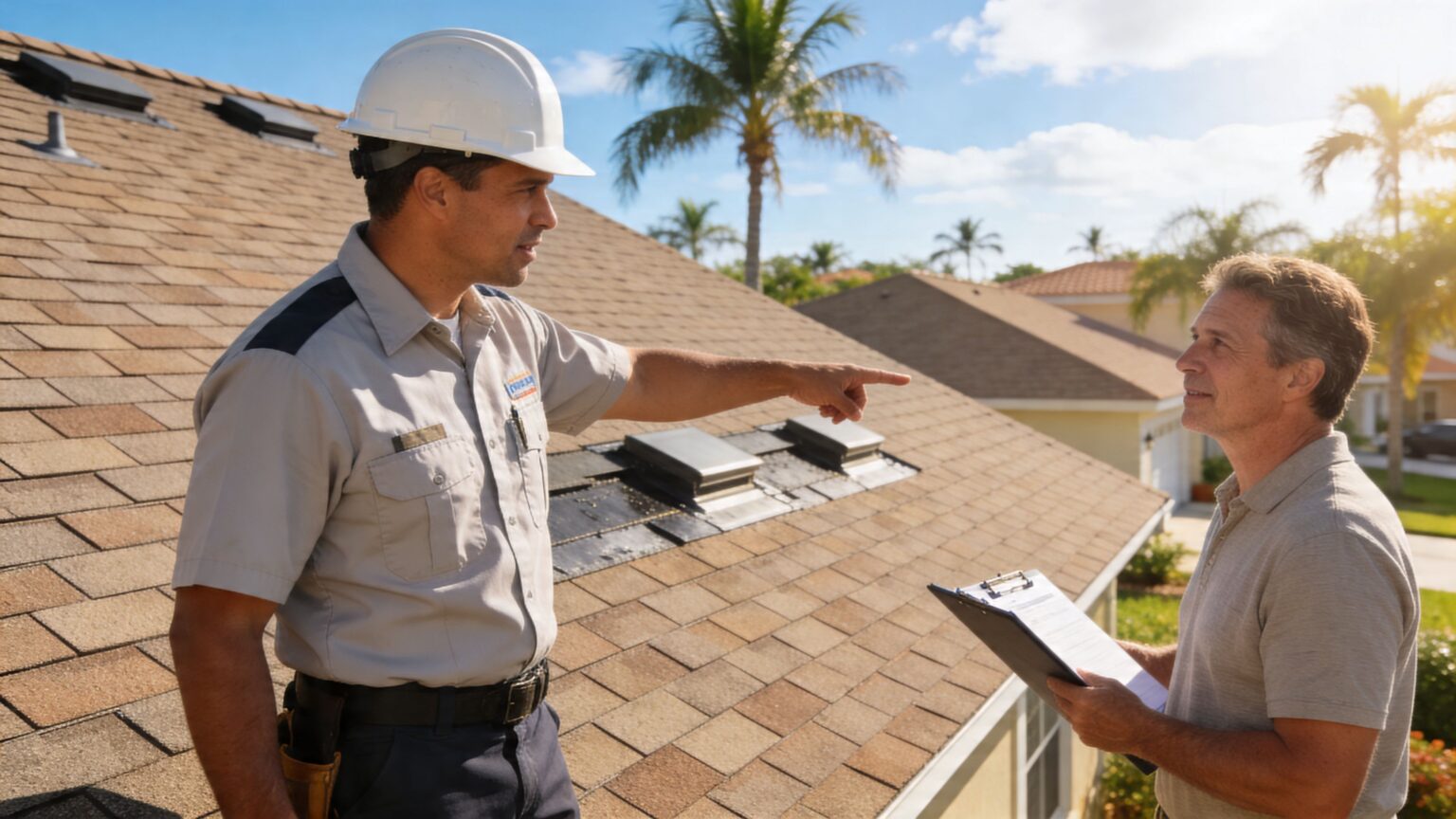
One hard truth: The best time to build a strong roof claim file is before you ever need to file a claim.
That’s why regular roof inspections matter. They protect the roof itself, and they also protect your position if a storm hits later and the insurer starts asking what condition the roof was in beforehand.
Your Step-by-Step Roof Damage Claim Workflow
The first 24 hours after a South Florida storm often decide whether a roof claim stays straightforward or turns into a fight. I have seen homeowners in Broward, Miami-Dade, and Palm Beach do the hard part right by protecting the house, then lose ground because the damage was never documented before cleanup started.
Order matters.

Step one and step two
Document the damage before anything gets moved
Start inside the house, then work outside from safe ground level. Photograph ceiling stains, wet insulation, attic leaks if visible, damaged personal property, and every exterior slope you can see. Take wide photos first so the insurer can place the damage, then close-ups that show cracked tile, lifted shingles, missing components, or debris impact.Report the claim to your insurer right away
Open the claim and get the claim number on day one if possible. Ask what temporary repairs are allowed, what your deductible is, whether wind or hurricane deductibles apply, and whether the carrier wants specific forms or photos up front.
If you want another plain-English overview before you speak with the carrier, A Homeowner's Guide to Roof Insurance Claims is a useful reference.
Step three and step four
Protect the home from further water intrusion
Florida policies expect homeowners to take reasonable steps to prevent added damage. That usually means tarping, emergency dry-in work, or stopping active leaks. Save every receipt and photograph the conditions before and after the temporary work.Meet the adjuster with a clear file, not a vague story
Be there if you can. Walk the adjuster through when the leak started, which rooms were affected, and what changed after the storm. Have your photos, repair receipts, prior inspection records, and a simple timeline ready.
This roof claim inspection reference image shows the kind of conditions contractors and adjusters often review during an inspection.
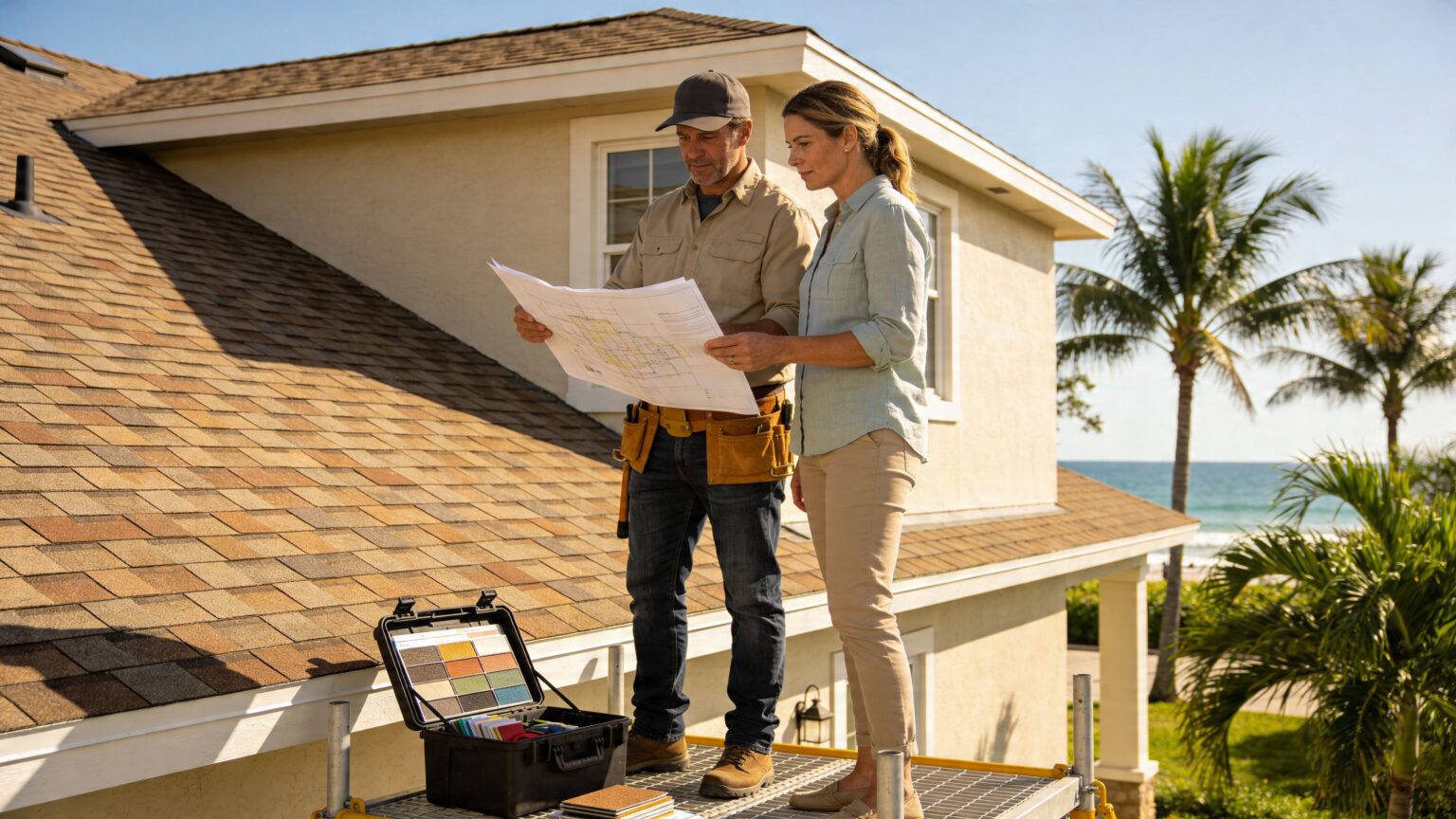
Step five through step seven
Read the carrier’s estimate line by line
Do not stop at the total payment. Check whether the insurer allowed for full roof components or only spot repairs, whether code items were omitted, and whether the loss was reduced by depreciation or limited by a windstorm exclusion. In South Florida, this is also the stage where matching problems start showing up, especially on older tile and discontinued shingle lines.Compare that estimate with a roofer’s scope of work
A proper roofing scope should list underlayment, flashing, vents, starter, ridge, tile or shingle quantities, and disposal. If the carrier pays for a small patch but the material cannot be matched, that issue needs to be documented early. Florida homeowners often miss this point until the claim is nearly closed, and then the argument gets harder.Submit supplements and finish repairs once scope and payment are settled
If the insurer missed items, send supporting photos, contractor documentation, and any updated pricing. Once the scope is approved, schedule the permanent work quickly so the home is not left exposed through the next storm cycle.
Mistakes that cost homeowners money
These are the problems I see most often on troubled claims:
- Cleaning up before taking photos: Once stained drywall, broken tile, or soaked insulation is gone, proof gets thinner.
- Throwing away damaged materials: Keep recoverable pieces if they can be stored safely.
- Making permanent repairs too soon: Emergency protection is fine. Full replacement before inspection can create coverage disputes.
- Skipping the adjuster appointment: Important details get missed when no one familiar with the damage is present.
- Accepting a partial repair without asking about matching: On many Florida roofs, especially older ones, appearance and material compatibility matter to the final scope.
A field-tested workflow that helps
Strong claims usually have the same pattern. Early photos. Fast temporary protection. A clear timeline. A roof inspection by someone who knows the difference between storm-created damage and long-term wear.
A roofing contractor can help by documenting observable conditions, preparing a repair or replacement scope, and meeting the adjuster with the homeowner. Paletz Roofing and Inspections is one example of a company that provides that kind of claim support without relying on guesswork or sales language.
How to Maximize Your Claim Payout in South Florida
Generic roof claim advice usually stops at “take photos and call your insurance company.” In Florida, that’s not enough.
Homeowners in Broward, Miami-Dade, and Palm Beach face issues that don’t come up the same way elsewhere. Two of the biggest are matching disputes and wear-and-tear denials on aging roofs.

Florida’s matching statute matters more than most homeowners realize
Florida’s matching statute can be a major advantage when the insurer agrees part of the roof is damaged but proposes only a partial repair.
According to Mehr Fairbanks on Florida’s roof matching requirements, Florida's matching statute requires insurers to replace an entire roof if a partial repair cannot match the existing materials in quality, color, or size. For older roofs, discontinued products, faded tile, weathered shingles, and changed profiles can make a true match impossible.
That matters because many homeowners get offered a patch when the underlying issue is uniformity and proper restoration.
What to do if the insurer offers only a repair
If the carrier wants to replace only one slope or one section, don’t argue in general terms. Get specific.
Use this approach:
- Document the existing material clearly: Brand markings if available, profile, color, dimensions, and weathering.
- Ask whether matching material is currently available: Not “something similar.” The actual matching product.
- Get the contractor’s opinion in writing: If the replacement material won’t match in quality, color, or size, that point should be documented plainly.
- Tie the argument to policy and Florida law: Keep the focus on restoring the roof properly, not just cheaply.
The post-reform denial problem
Another issue in South Florida is the “pre-existing wear and tear” label. A storm can be real, the damage can be real, and the insurer can still frame the loss as age-related.
That’s why independent inspections matter so much. If the roof was inspected before storm season, or immediately after the storm before conditions changed, you have a stronger basis to challenge a denial that leans too heavily on old age or generalized deterioration.
The strongest dispute files usually don’t rely on opinions alone. They rely on dated photos, roof condition notes, material identification, and a clear record of what changed after the storm.
What actually improves your position
The most effective strategy isn’t arguing louder. It’s narrowing the factual gaps.
That means:
- Know your policy language, especially wind coverage and settlement method.
- Create a record of roof condition before storm season when possible.
- Inspect quickly after a storm before sun, cleanup, or temporary patching changes the evidence.
- Challenge incomplete scopes with specifics, not broad complaints.
- Use the matching issue when it applies, particularly on older roofs where product availability and fading become central.
For Florida homeowners asking “does homeowners insurance cover roof damage,” the better question is often this: Can you prove the damage came from a covered peril, and can you prove the insurer’s proposed repair restores the roof correctly? In South Florida, those are the questions that move claim outcomes.
Frequently Asked Questions About Roof Damage Claims
Will filing a roof claim raise my premium
It can, but premium decisions depend on your carrier, claim history, location, and broader market conditions. The bigger mistake is avoiding a valid claim out of fear and then paying for major storm damage entirely out of pocket. Before filing, compare the likely repair cost to your deductible and policy terms.
If my ceiling leaks during a storm, should I call insurance or a roofer first
If the leak is active, call a roofer first for emergency mitigation and documentation, then notify the insurer promptly. You need to stop additional damage, but you also need a clear record of what happened before conditions change.
Does insurance cover a full roof replacement or just a repair
Either can happen. It depends on the extent of damage, your policy settlement method, and whether a proper partial repair is possible. In Florida, matching issues can become important when the insurer proposes a patch that won’t perfectly match the rest of the roof.
What if my claim is denied as wear and tear
Read the denial letter closely. Look for the reason given, then compare it to storm date evidence, photos, prior maintenance records, and an independent roof assessment. Many disputed claims come down to causation, not whether water got in.
Is interior water damage covered too
It often is when the water entered because of covered roof damage. If the carrier accepts the roof opening as storm-related, resulting interior damage is commonly included under the same claim.
How do I choose a contractor for an insurance-related roof inspection
Choose a licensed and insured roofer who documents conditions carefully, understands claim language, and can explain the difference between storm damage, aging, and prior repair issues without guessing. You want clear evidence, a detailed scope, and someone who can communicate professionally with the adjuster.
If you’re dealing with storm damage, a denied claim, or a repair-vs-replacement dispute in Broward, Miami-Dade, or Palm Beach, Paletz Roofing and Inspections can provide roof inspections, damage documentation, and claim support so you can make decisions from facts instead of guesswork.