
When you're investing in a metal roof that can last 50+ years, the underlayment you choose is just as critical as the metal panels themselves. The best option, hands down, is a high-temperature synthetic product. It’s built for the job, offering the durability, heat resistance, and moisture protection needed to match the incredible lifespan of a modern metal roof. It's the clear industry standard for a reason.
Your Guide to Metal Roof Underlayment
Think of underlayment as the unsung hero of your roofing system. This layer is your roof deck's last line of defense against moisture, whether it's from condensation, wind-driven rain, or ice dams. Without a solid underlayment, even the best metal roof can fail decades too soon.
It’s no surprise that the global roofing underlayment market is booming, valued at USD 29.75 billion in 2024 and expected to hit USD 52.03 billion by 2034. More and more people are realizing just how important this layer is. You can dig deeper into the numbers in this roofing underlayment industry analysis.
There are three main types of underlayment to consider, and each has its place:
- Synthetic Underlayment: This is the modern go-to for metal roofing. Made from woven polypropylene, it's incredibly lightweight, tough as nails, and won't break down under the high heat that metal panels generate.
- Felt Underlayment: This is the old-school, traditional choice made from asphalt-saturated felt. While it’s cheap, it's a terrible match for metal. It can't handle the heat, tends to absorb moisture, and has a much shorter lifespan.
- Self-Adhered Membranes: Think of this as a premium synthetic option with a powerful adhesive backing. It creates a completely waterproof, self-healing seal, making it perfect for tricky spots like low-slope roofs, valleys, and around vents.
Comparing Your Main Options
Getting a handle on the core differences between these materials will make it obvious which one is right for your project. While synthetic is the default choice for most metal roofs, some situations absolutely demand the ironclad protection of a self-adhered membrane.
The single biggest mistake I see in modern roofing is pairing a 50-year metal roof with a 15-year felt underlayment. The underlayment is guaranteed to fail decades before the roof, creating a hidden time bomb that will lead to expensive, frustrating repairs down the road.
This infographic does a great job of showing the performance gap between these three options.
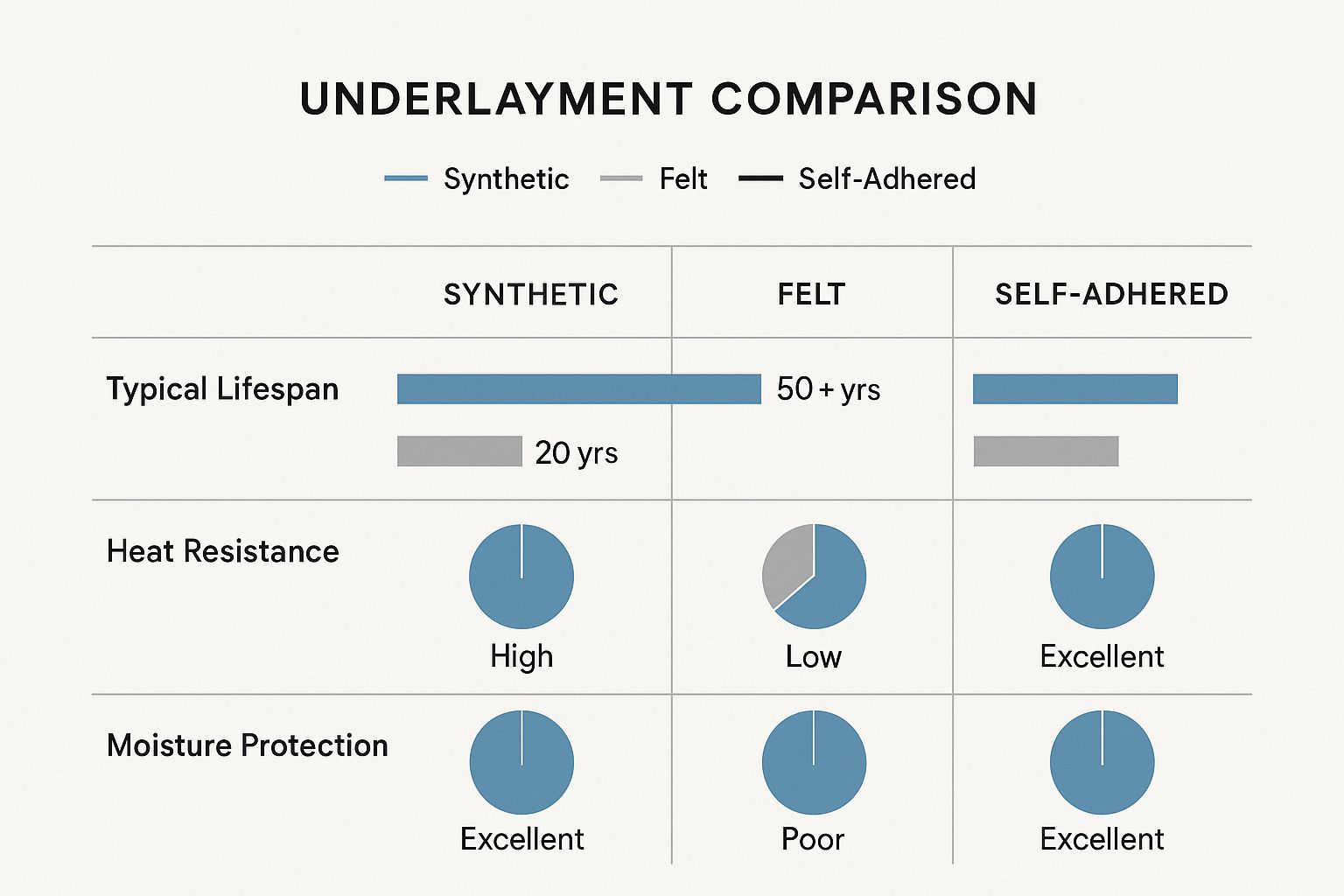
As you can see, both synthetic and self-adhered underlayments blow felt out of the water in every category that matters for a metal roof.
Quick Underlayment Type Comparison
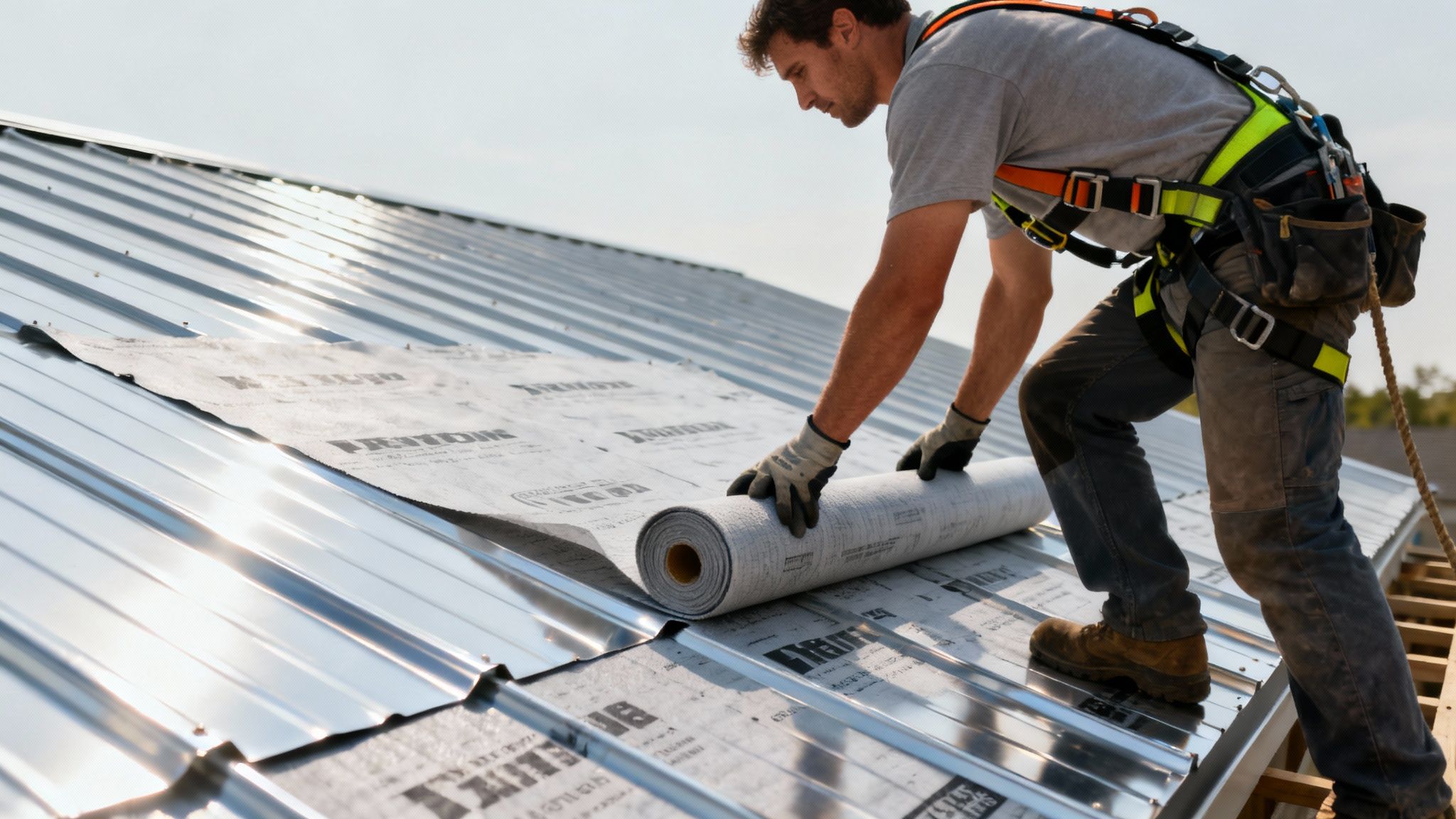
To make things even clearer, here’s a quick table breaking down where each underlayment shines. The material composition makes all the difference in how it performs, as you can tell from this visual example of underlayment installation.

| Underlayment Type | Best For | Primary Benefit | Average Lifespan |
|---|---|---|---|
| Synthetic | Most residential and commercial metal roofs with moderate to steep slopes. | High heat tolerance, tear resistance, and overall durability. | 50+ Years |
| Felt | Temporary, budget-constrained projects or specific historical requirements. | Lowest initial cost. | 15-20 Years |
| Self-Adhered | Low-slope roofs, valleys, eaves, and around roof penetrations. | Creates a complete waterproof, self-sealing barrier. | 50+ Years |
Ultimately, the choice comes down to matching the underlayment's performance to the long-term demands of your metal roof.
Why Underlayment Is a Critical Investment
It’s a common, and frankly dangerous, myth that a metal roof is a single, impenetrable shield against the elements. While the metal panels are incredibly tough, they're only the primary line of defense. The best metal roof underlayment acts as an essential secondary defense—a non-negotiable layer that protects your home’s bones and makes sure your roof actually lasts a lifetime.
Skipping this step or, just as bad, choosing the wrong product is a costly mistake that undermines your entire investment. Think of it like building a beautiful house on a shaky foundation; it's not a matter of if it will fail, but when.
The True Role of Underlayment
The job of an underlayment goes far beyond just being another layer. It serves several distinct, critical purposes that protect your home from the first day of installation through decades of harsh weather. Its importance really can't be overstated.
Here are the primary jobs your underlayment is doing up there:
- Temporary Weather Protection: During construction, your roof deck might sit exposed for days or even weeks. A quality synthetic underlayment acts as a temporary roof, shielding the wood sheathing from rain and UV rays before the metal panels go on.
- A Secondary Moisture Barrier: Metal roofs are designed to shed water, not be completely waterproof. Wind-driven rain, melting snow, and ice can force moisture under the panels, especially around seams, vents, and valleys. The underlayment is the failsafe that stops this water from reaching the wood deck and starting to rot it out.
- Ice Dam Defense: In climates with freezing temperatures, ice dams can form at the eaves, pushing water back up under the metal panels. A self-adhered underlayment in these key areas creates an impenetrable seal, preventing trapped water from leaking into your attic and walls.
To really appreciate its importance, think of underlayment as a key item on any professional construction quality control checklist.
"The underlayment is the last line of defense. When a small leak goes unnoticed for years because it’s hidden under the metal panels, it’s the underlayment that stands between a minor issue and catastrophic structural rot. It's the cheapest insurance you can buy for your roof."
Preventing Corrosion and Condensation
Beyond just keeping outside water out, underlayment manages moisture and chemical reactions happening right underneath the panels. This is absolutely crucial for the longevity of both the metal and the wood structure it sits on.
A common issue is the chemical reaction between metal panels and certain types of wood. For instance, pressure-treated lumber often contains chemicals that are highly corrosive to metal. An underlayment acts as a vital separation layer, preventing direct contact and stopping these corrosive reactions before they can even start.
On top of that, metal roofs are prone to condensation. As the metal cools overnight, moisture from the air can condense on its underside. Without a vapor-impermeable underlayment, this moisture drips directly onto the roof sheathing, leading to mold, mildew, and slow-developing rot. The underlayment effectively catches this condensation, allowing it to drain away safely. Investing in the right layer isn’t just a recommendation; it’s a fundamental requirement for a durable, long-lasting metal roofing system.
Analyzing High-Performance Synthetic Underlayment
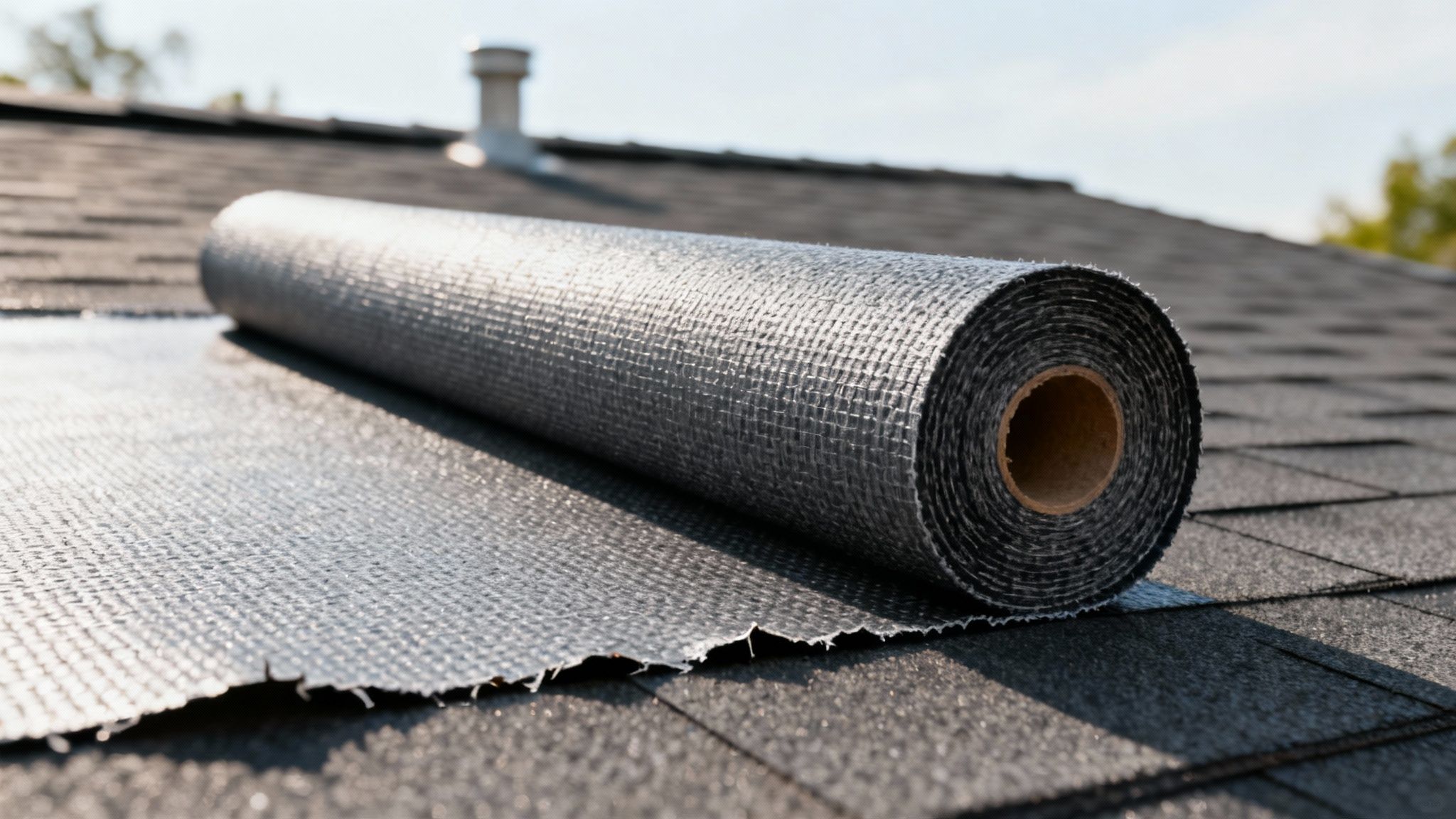
When you’re looking for the best metal roof underlayment, the conversation today almost always begins and ends with high-performance synthetic products. These materials have become the undisputed industry standard for a reason. They were engineered specifically to solve the problems of older materials like asphalt felt and to stand up to the extreme durability of metal roofing panels.
Unlike old-school felt paper, which is basically just asphalt-soaked paper, synthetic underlayment is built from woven polypropylene or similar polymers. This modern construction gives it incredible strength and tear resistance—a critical feature when you have installers walking all over it and securing heavy metal panels.
The market’s confidence in this material is crystal clear. The synthetic roofing underlayment market was estimated at around $2.5 billion in 2023 and is expected to grow at a rate of 7.6% annually through 2032. This trend isn't just about new technology; it reflects superior performance, especially in the demanding environments where metal roofs shine. You can dig into more insights about this growing market and its drivers.
Superior Performance Under High Heat
One of the defining challenges for any underlayment beneath a metal roof is heat. Metal panels can get incredibly hot in direct sunlight, with surface temperatures easily soaring past 160°F. This intense, sustained heat will literally cook traditional asphalt felt, causing it to dry out, wrinkle, and become brittle in just a handful of years.
Synthetic underlayment, however, is designed for this very environment. Its polymer construction is thermally stable, meaning it won’t wrinkle, warp, or degrade when exposed to the high temperatures radiating from the metal above it.
This stability isn’t just about longevity; it's about maintaining a perfectly smooth, flat surface for the metal panels. Wrinkled underlayment creates bumps that can "telegraph" through the metal, ruining the clean, modern look of the roof.
Unmatched Durability and Safety
Beyond heat resistance, the sheer physical toughness of synthetic underlayment provides huge practical advantages during the installation itself. First off, its lightweight nature is a game-changer. A typical roll of synthetic underlayment weighs between 25 to 40 pounds. Compare that to a roll of #30 felt, which can weigh 60 to 80 pounds or even more.
This weight difference is a massive deal for crew safety and efficiency. Hauling lighter rolls up a ladder and across a steep roof is faster, easier, and dramatically cuts down the risk of strains and accidents for the installation team.
On top of that, synthetic underlayment offers far better traction. Many products come with a textured or slip-resistant surface, providing a much safer walking area for roofers, especially on pitched roofs or in damp conditions. This simple feature helps prevent slips and falls, which is a major concern on any roofing job. For a better idea of how it's handled, you can see professionals working with this material in this guide to underlayment installation processes.

Standard vs. Premium Self-Sealing Synthetics
Now, not all synthetic underlayments are the same. They generally fall into two categories, and choosing the right one depends on your roof's specific needs and, of course, your budget.
1. Mechanically-Fastened Synthetic Underlayment
This is your workhorse option, the high-performance standard used for the majority of a typical metal roof. It’s laid across the roof deck and secured with cap nails or staples. It provides excellent water resistance, durability, and heat tolerance. For most steep-slope roofs in moderate climates, this is the perfect choice for the main field of the roof.
2. Self-Adhered (Peel-and-Stick) Synthetic Underlayment
This is the premium version. It features a powerful adhesive backing that bonds directly to the roof deck, creating a bulletproof seal. The magic is in its ability to form a completely waterproof barrier around every single fastener that goes through it. The rubberized asphalt adhesive literally "heals" around nails and screws.
Here’s a quick breakdown to help you decide:
| Feature | Mechanically-Fastened Synthetic | Self-Adhered Synthetic (Peel-and-Stick) |
|---|---|---|
| Primary Use | Main roof field on moderate to steep slopes | Valleys, eaves, low slopes, penetrations |
| Installation Method | Nailed or stapled to the roof deck | Adheres directly to the roof deck |
| Waterproofing Level | Water-resistant | Completely Waterproof |
| Fastener Sealing | Good | Excellent (self-sealing) |
| Cost | Lower | Higher |
For most projects, the smartest strategy is a hybrid approach. Use the cost-effective mechanically-fastened synthetic for the large, open areas of the roof and reserve the premium self-adhered membrane for high-risk spots like valleys, eaves, and around vents or chimneys. This targeted application gives you maximum protection right where it’s needed most without breaking the bank.
When to Think About Traditional Felt Underlayment
While synthetic underlayment has become the gold standard for metal roofing, it's worth understanding the role of traditional asphalt-saturated felt. For decades, felt paper was the only game in town, and it did a decent enough job under old-school roofing like asphalt shingles. But when you put it under a modern metal roof, its weaknesses become glaringly obvious.
Despite its declining use in new construction, felt still makes up a big chunk of the overall market. It accounted for more than 52% of market share in 2020, mostly because of its long history protecting roof decks. Yet, as this roofing underlay market analysis explains, synthetics are quickly taking over for good reason.
This history is exactly why some old-school contractors might still bring it up—it's familiar and cheap upfront. But here's the bottom line: pairing a 50-year metal roof with an underlayment that gives out in 15 years is a recipe for disaster.
A Mismatch in Heat Tolerance
The biggest problem with putting felt under metal is its complete inability to handle high heat. Metal panels get incredibly hot, often soaring past 160°F in direct sunlight. This constant, intense heat cycle is brutal on any asphalt-based product.
The heat literally bakes the felt, causing the oils in the asphalt to evaporate. This process turns the felt brittle and prone to cracking, making it totally useless as a moisture barrier. And we’re not talking about a slow decline over 20 years; under a metal roof, this breakdown can happen shockingly fast, leaving your roof deck exposed and vulnerable.
The Problem with Moisture Absorption
Another critical difference is how these materials deal with water. Synthetic underlayment is hydrophobic—it repels water. If moisture finds its way under your metal panels, it just beads up and drains away without causing any trouble.
Felt, on the other hand, is hygroscopic, meaning it absorbs moisture. A little bit of water won't cause an immediate leak, but the felt will hold it like a sponge right up against your wooden roof deck. This constant dampness creates the perfect breeding ground for wood rot, mold, and mildew, all hidden from sight beneath your beautiful metal roof.
A common myth is that using heavier #30 felt instead of #15 felt solves these issues. While #30 felt is thicker, it's still just an asphalt-saturated product. It will still dry out, crack under intense heat, and soak up moisture, making it just as unsuitable for a long-term metal roofing system.
Identifying the Limited Scenarios for Felt
So, is there ever a time to even consider using felt? The situations are extremely limited and almost never apply to a permanent home or commercial building.
- Temporary Structures: For a shed, workshop, or another outbuilding where you're not concerned about longevity, the low cost of felt might be acceptable for a short-term fix.
- Extremely Tight Budgets (with a Major Warning): If a project has an incredibly restrictive budget, a contractor might suggest felt to cut initial costs. This is a dangerous trade-off. Any savings will almost certainly be wiped out by the repair bills that are sure to come when the underlayment fails.
- Specific Historical Restorations: In very rare cases, a historical preservation project might require period-correct materials, and that could include old-fashioned felt paper.
For just about every other situation, the performance gap between felt and synthetics is just too big to ignore. The risk of premature failure and the certainty that the underlayment won't last anywhere near as long as the metal panels make felt a poor investment. Choosing a high-performance synthetic is the only way to build a complete roofing system that's truly made to last.
Using Self-Adhered Membranes for Maximum Protection
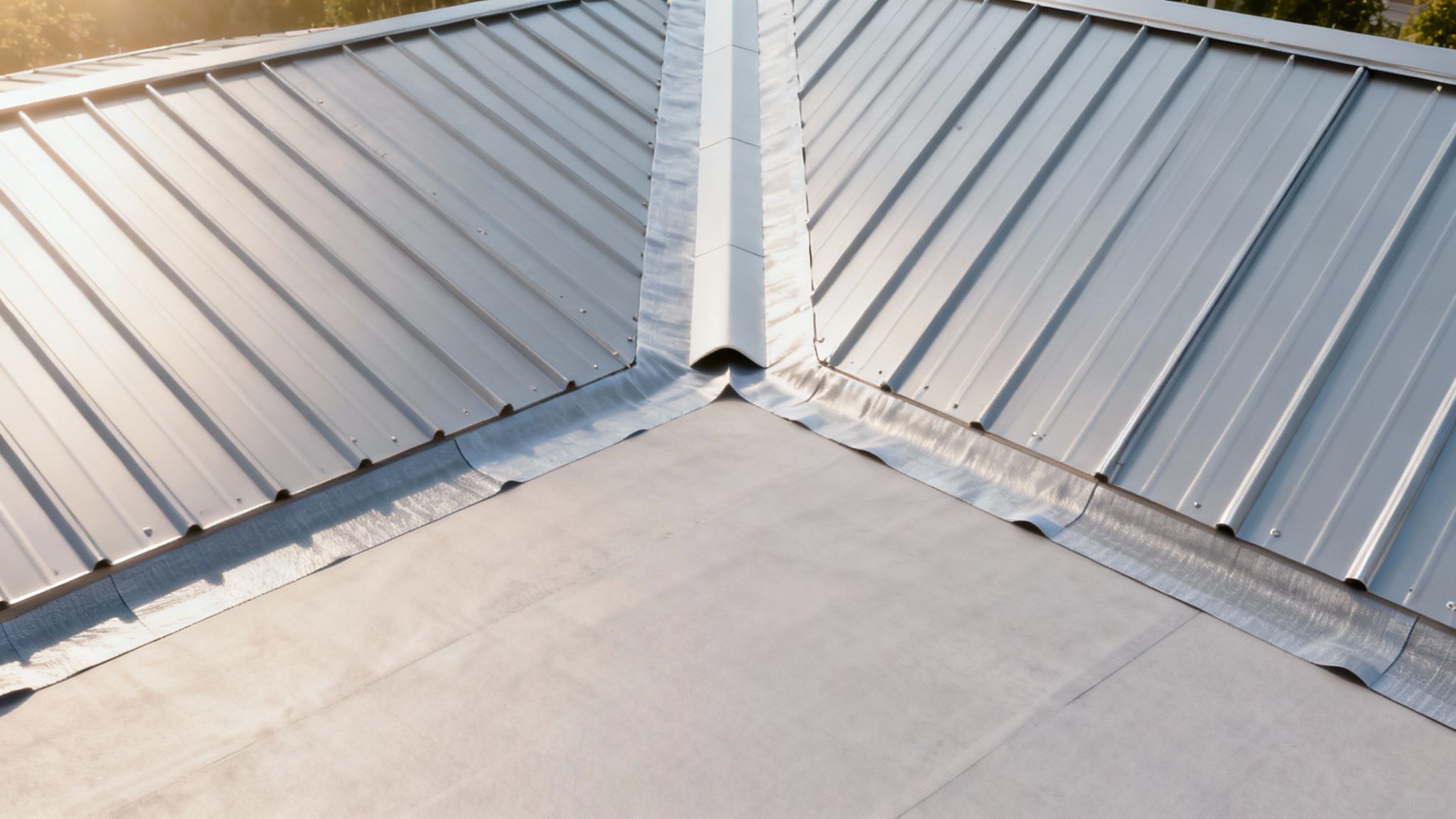
When you absolutely need failsafe protection for the most vulnerable spots on your roof, self-adhered membranes are the top-tier solution. You'll often hear this product called "peel-and-stick" underlayment, and it essentially takes a high-performance synthetic and adds a powerful, rubberized asphalt adhesive. The result is a fully bonded, impenetrable waterproof seal directly on the roof deck.
Unlike mechanically fastened underlayments that depend on overlapping layers, a self-adhered membrane literally becomes part of the sheathing. Its most critical feature is the ability to self-seal around every single nail or screw that goes through it. The gummy, flexible adhesive instantly closes around the fastener, shutting down what would otherwise be a direct path for water.
The move toward these advanced membranes reflects a broader industry trend. In the United States, the roofing underlayment market was valued at around $2.3 billion in 2024 and is projected to hit $2.8 billion by 2029. Much of that growth is driven by self-adhesive products, signaling a clear shift toward installation methods that guarantee better waterproofing and long-term performance. You can dig deeper into roofing underlayment market trends to see the data for yourself.
Identifying High-Risk Roof Zones
While it's not practical to wrap an entire roof in a self-adhered membrane, using it strategically gives you a "belt-and-suspenders" level of water protection. Think of it as targeted armor for the areas where water is most likely to cause trouble. For a metal roof, there are a few non-negotiable zones where this product is essential.
Applying the right underlayment to the right roof zone is a fundamental part of a professional installation. High-risk areas demand the superior sealing power of self-adhered membranes, while less vulnerable zones can be adequately protected with high-quality synthetics.
Underlayment Application by Roof Zone
| Roof Zone | Recommended Underlayment | Reasoning |
|---|---|---|
| Eaves & Rakes | Self-Adhered Membrane | Prevents water backup from ice dams and wind-driven rain. |
| Valleys | Self-Adhered Membrane | Handles high volumes of channeled water, sealing a critical transition. |
| Low-Slope Areas (<3/12) | Self-Adhered Membrane | Required by code to prevent leaks from slow-draining water. |
| Penetrations | Self-Adhered Membrane | Creates a continuous, watertight seal around vents, chimneys, etc. |
| Main Roof Field (>3/12) | Mechanically Fastened Synthetic | Provides excellent secondary water resistance in less critical areas. |
This strategic approach ensures maximum protection where it's needed most, optimizing both performance and your budget.
A single leak in a roof valley can cause thousands of dollars in hidden water damage to framing, insulation, and drywall. Using a self-adhered membrane in these critical transition areas is the smartest investment you can make for the long-term health of your home.
Sealing Around Complex Penetrations
Beyond the broad sections of the roof, self-adhered membranes are absolutely crucial for creating a bulletproof seal around anything that pokes through your roof. Every penetration is a potential weak point, and this is where the self-sealing properties of these products really prove their worth.
Just think about all the things that break the plane of your roof:
- Chimneys
- Skylights
- Plumbing Vents
- Exhaust Vents
Simply wrapping these features with a standard underlayment leaves behind seams and fastener holes that are bound to fail over time. A self-adhered membrane, however, can be cut and formed into a continuous, adhered flashing that integrates seamlessly with both the roof deck and the penetration itself. This detailed sealing process stops the slow, persistent leaks that so often start in these complex spots. By using the best metal roof underlayment for these high-risk zones, you ensure the entire roofing system works as one cohesive, waterproof unit for decades.
How to Choose the Right Underlayment for Your Home
Picking the best metal roof underlayment isn't about finding one perfect product. It's about matching the right system to your home, your climate, and your budget. Tech specs are one thing, but making a smart decision comes down to answering a few practical questions first. This framework will help you make an informed choice that actually supports your roofing investment for the long haul.
Your decision needs to be a balance between performance and cost. A one-size-fits-all approach is a recipe for disaster—you either overspend on protection you don't need or, even worse, under-protect the most critical areas of your roof.
Assess Your Local Climate and Roof Design
Your environment and your roof's architecture are the two biggest factors that should drive your decision. A homeowner in a hurricane zone has completely different needs than someone in a dry, hot climate.
Start by thinking about these elements:
- Heavy Rain and Wind: If you live where wind-driven rain is a regular occurrence, a quality synthetic underlayment is the bare minimum. For coastal areas, I always recommend a self-adhered membrane on all eaves and rakes. It provides that essential seal against water getting pushed sideways during a nasty storm.
- Snow and Ice: In colder climates where ice dams are a real threat, a self-adhered "ice and water shield" along the first three to six feet of your roof's eaves is non-negotiable. This is what stops melting snow from backing up under the metal panels and leaking straight into your attic.
- Roof Pitch and Complexity: The steeper your roof, the better it sheds water. But low-slope roofs (anything with a pitch below 3/12) are a different story. They need a full layer of a self-adhered membrane to keep slow-draining water from finding a way in. Roofs with lots of valleys, dormers, and skylights also create more potential failure points, so they benefit from targeted self-adhered protection in those complex spots. For a clear look at how these materials are applied, you can review this example of professional underlayment work.

Balance Your Budget with Long-Term Value
Budget is always part of the conversation, but it’s critical to see underlayment as a long-term investment, not just an upfront cost.
Choosing a cheaper, less durable underlayment to save money now is a classic example of being penny-wise and pound-foolish. The cost to tear off a perfectly good metal roof to replace a failed underlayment in 15 years will far exceed any initial savings.
A smart strategy is to take a hybrid approach. Use a high-performance, mechanically fastened synthetic underlayment for the main, less vulnerable fields of the roof. Then, spend the money on premium self-adhered membranes for the high-risk zones—the eaves, valleys, and around all penetrations. This method puts maximum protection right where it matters most, giving you the best return on your investment and helping ensure you get a true 50-year roofing system.
Frequently Asked Questions
When you're digging into the details of metal roof underlayment, a few key questions always seem to pop up. Getting the right answers is what separates a roofing system that lasts a lifetime from one that causes headaches down the road. Let's tackle some of the most common things homeowners and builders ask.
Can a Metal Roof Be Installed Over Old Shingles?
It might seem like a tempting shortcut to lay a new metal roof right over your old asphalt shingles, but it's a move most pros will tell you to avoid. In fact, the majority of building codes demand a full tear-off, and for good reason. Tearing off the old roof is the only way to get a clear look at the roof deck.
Covering up old shingles can trap moisture, hide rotted wood or other structural problems, and create an uneven surface that will ultimately compromise your brand-new roof. A complete tear-off ensures the best metal roof underlayment goes down on a solid, clean deck—which is absolutely essential for getting that 50+ year lifespan you expect from metal panels.
How Long Can Synthetic Underlayment Be Exposed to UV Rays?
One of the biggest perks of using a high-quality synthetic underlayment is its built-in UV resistance. This gives your crew a window of time to work before the metal panels go on, which is a lifesaver on complex or delayed projects. But that window doesn't stay open forever.
Most manufacturers specify exactly how long their product can sit in the sun, usually somewhere between 90 and 180 days. Always check the label.
Pushing past the manufacturer's recommended UV exposure limit is a serious mistake. It can break down the underlayment's protective layers, weakening its water resistance and strength before your roof is even finished. It's a critical detail to manage, especially on a long build.
Sticking to these timelines isn't just about performance; it's also about keeping your warranty intact and making sure the underlayment provides reliable, long-term protection once it's covered.
Is a Breathable Underlayment Necessary for a Metal Roof?
Now this is where things get a bit more technical. The need for a "breathable" underlayment—one that allows water vapor to pass through—really depends on how your entire roof system is designed.
If you have an unventilated roof assembly, like one where spray foam insulation is applied directly to the underside of the deck, you actually want a vapor-impermeable underlayment. This prevents warm, moist air from inside from condensing on the cool underside of the metal panels.
On the other hand, if you have a traditional, well-ventilated attic, a breathable underlayment can be a great choice. It acts as a backup, allowing any moisture that gets trapped in the roof assembly to dry out, which helps keep the roof deck healthy.
Here’s a simple breakdown:
- For Ventilated Attics: A breathable synthetic underlayment adds an extra layer of moisture control.
- For Unventilated Roofs: A non-permeable underlayment (often self-adhered) is essential to create a solid vapor barrier and stop condensation in its tracks.
The right call here isn't one-size-fits-all. It comes down to your specific roof assembly and ventilation strategy.
Your roof is your home's first line of defense. Ensure it's built right from the deck up with expert installation and the highest quality materials. The team at Paletz Roofing and Inspections has over 30 years of experience protecting South Florida homes. Contact us today for a free, no-obligation quote.