
When people ask what a metal roof is made of, the answer is a bit more complex than just a single piece of metal. A modern metal roof is actually a sophisticated system built from several key components. The most visible part, of course, is the panels themselves, which are usually crafted from durable metals like steel, aluminum, copper, or zinc. Each one offers a unique blend of strength, longevity, and style.
The Building Blocks of a Metal Roof
Thinking about what goes into a metal roof is like looking at a recipe with multiple ingredients. While the metal panels are definitely the star of the show, they can't do the job alone. They work together with other critical components to form a complete shield over your home. It’s not just about picking a certain metal, but understanding the entire protective system being put in place.
This diagram gives a great overview of how a complete metal roofing system comes together.
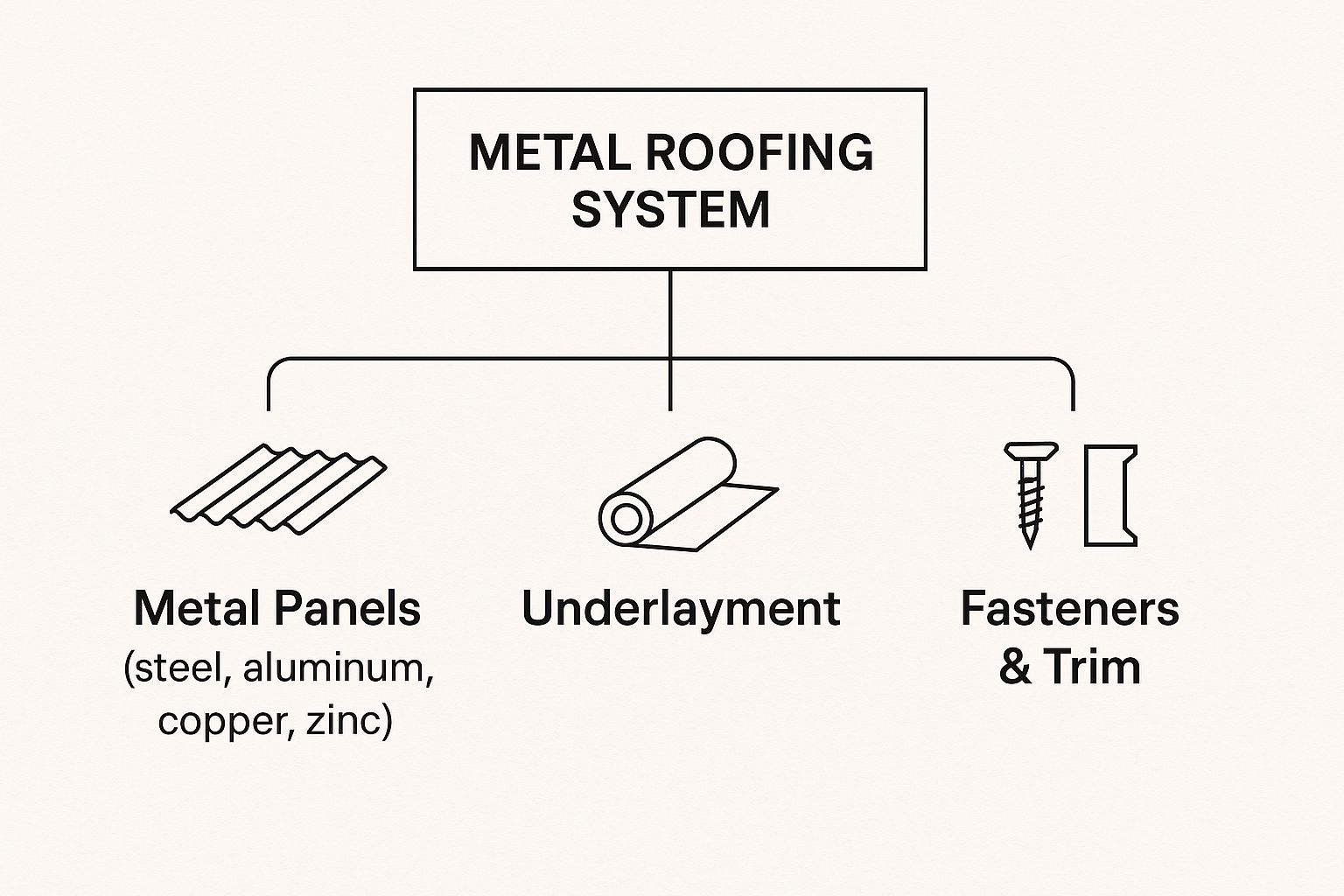
As you can see, the panels, underlayment, and fasteners all lock together to form a cohesive unit designed for maximum protection against whatever nature throws at it.
Primary Metal Roofing Materials
The type of metal you choose is the single biggest decision you'll make for your roof. The most common options are steel, aluminum, copper, and zinc, and each has distinct properties that really influence how it performs and where it's best used.
Steel is far and away the most popular material in the roofing world. It holds the largest market share because it hits that sweet spot of durability and cost-effectiveness. Aluminum comes in as the second most common choice, and it's a real favorite in coastal areas. Its incredible resistance to saltwater corrosion and lightweight nature make it a perfect fit for homes near the ocean, as it doesn't put a lot of stress on the building's structure. You can dive deeper into these industry trends over at Malco Tools.
A metal roof isn’t a single product but a layered defense system. The visible panels provide the primary shield against weather, while the underlayment acts as a secondary water barrier, and fasteners secure everything against high winds.
Quick Comparison of Metal Roofing Materials
To give you a quick sense of the main players, here’s a high-level comparison of the metals used most often in roofing today.
| Metal Type | Primary Benefit | Average Lifespan | Common Use Case |
|---|---|---|---|
| Steel | Strength & Value | 40-70 Years | Residential & Commercial |
| Aluminum | Corrosion Resistance | 50+ Years | Coastal & Humid Climates |
| Copper | Longevity & Beauty | 100+ Years | Historic & Luxury Homes |
| Zinc | Self-Healing & Durable | 80-100 Years | Architectural & High-End |
This table gives you a snapshot, but as we'll see, there's a lot more that goes into each of these materials, from how they're made to the coatings that protect them.
Understanding Steel Roofing Systems
When people start looking into metal roofing, they quickly find that steel is the undisputed heavyweight champion in terms of popularity. It really hits the sweet spot, offering a fantastic balance of serious strength, long life, and affordability. That’s why it’s the go-to choice for an enormous range of homes and commercial buildings.
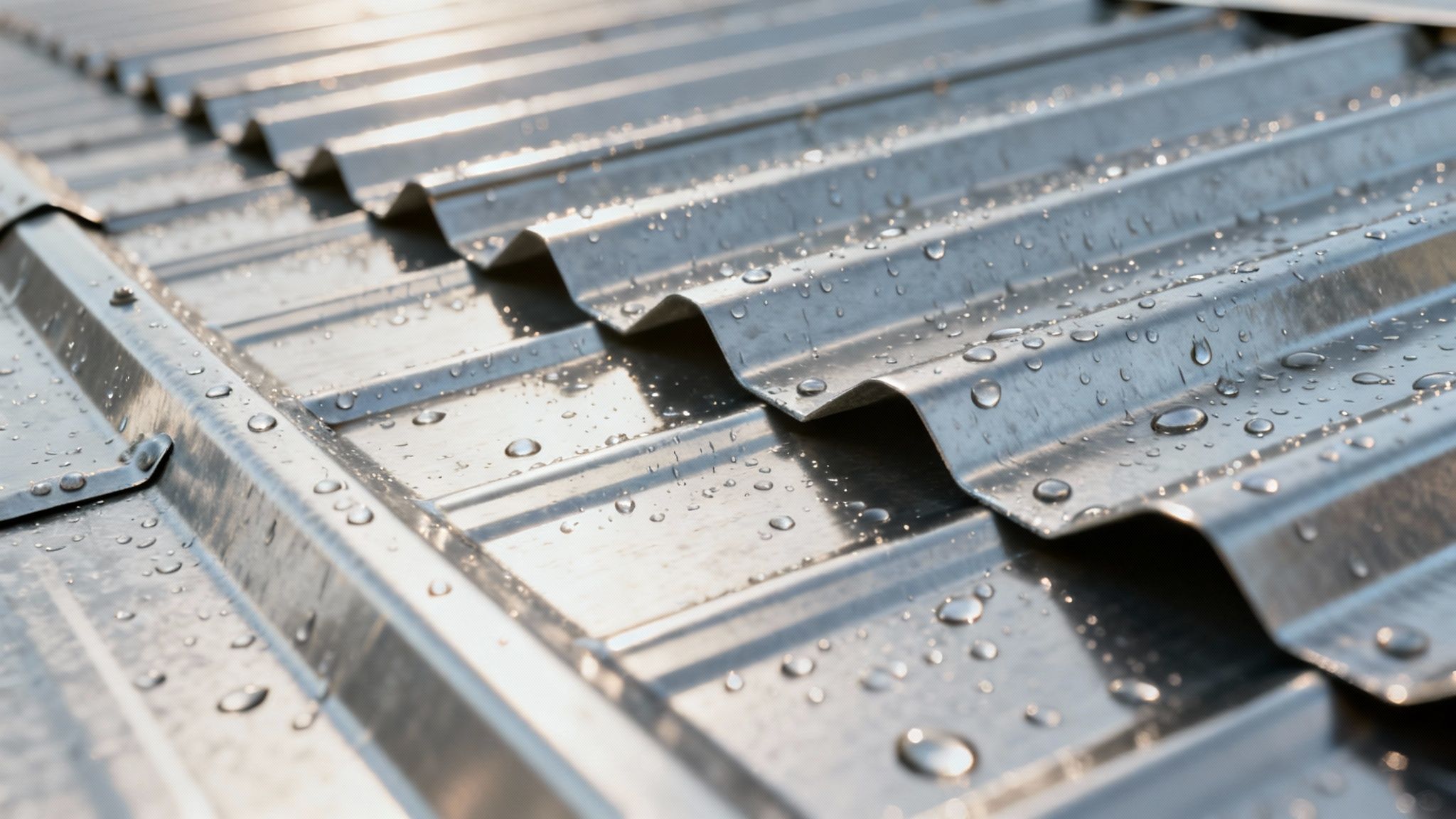
But "steel roofing" isn't just one thing. It’s actually a whole category of products, and the real secret to their performance lies in the protective coatings applied to the steel core.
Think of these coatings like a high-tech raincoat custom-made for the steel. Without this protective layer, raw steel would be an open invitation for rust and corrosion. The specific type of coating is what really determines how a roof will hold up in different environments, from the rainy seasons to the dry, sunny days.
Types of Steel Roof Coatings
Getting a handle on the main types of steel is the first step to making a smart decision. Each one offers a different level of protection and is built for specific situations, which is especially important in a demanding climate like South Florida.
The three main players in the steel roofing game are:
- Galvanized Steel: This is the classic, time-tested option. It’s made by dipping the steel core into molten zinc, which creates a tough, protective barrier. The zinc coating is designed to sacrifice itself over time to shield the steel from rust.
- Galvalume Steel: A more modern take, Galvalume is an alloy that combines zinc with aluminum and a touch of silicon. This blend gives it superior long-term corrosion resistance in most environments compared to traditional galvanized steel, although it can be a bit more prone to scratching.
- Weathering Steel: You might know this one by its trademark name, COR-TEN. This steel is fascinating—it’s engineered to develop a stable, rust-like finish after a few years of exposure to the weather. This "patina" isn't a flaw; it's a protective layer that eliminates the need for paint and creates a really unique, rustic look.
While all three are tough, your local environment is a huge factor in the decision. For instance, the high salt content in the air along the coast—a major issue in places like Broward and Miami-Dade—means you have to think carefully about which coating will give you the best long-term defense against corrosion.
Understanding Steel Thickness and Gauge
Another critical piece of the puzzle is the gauge, which is just a way of talking about the metal's thickness. It's a little counterintuitive, but with steel gauge, a lower number means a thicker, stronger panel. For most residential metal roofs, you'll be looking at steel between 24 and 29 gauge.
A thicker, lower-gauge steel panel can take more of a beating. It offers much better resistance to impacts from things like hail or falling tree limbs and is way less likely to get dented.
While a 29-gauge panel might be perfectly fine for some projects, stepping up to a 24 or 26-gauge panel provides a noticeable boost in durability and a more solid, robust feel. Making the right call on the gauge ensures your roof has the muscle to stand up to severe weather, a vital consideration for any property owner.
Exploring Lightweight Aluminum Roofing
While steel gives you a fantastic mix of brawn and value, it isn't the right fit for every house. For homes nestled in coastal areas, especially places like South Florida where salty sea air is a daily reality, aluminum roofing often steps into the spotlight as the clear winner. Its unique properties make it a champion at fending off the specific challenges that come with harsh, humid, and salt-heavy weather.
So, what’s aluminum’s secret weapon in these environments? It all comes down to a bit of natural science. The moment aluminum meets the atmosphere, it forms an incredibly thin, tough, and see-through layer of aluminum oxide on its surface. This layer is like a built-in, self-healing shield, protecting the metal underneath from rust and corrosion.
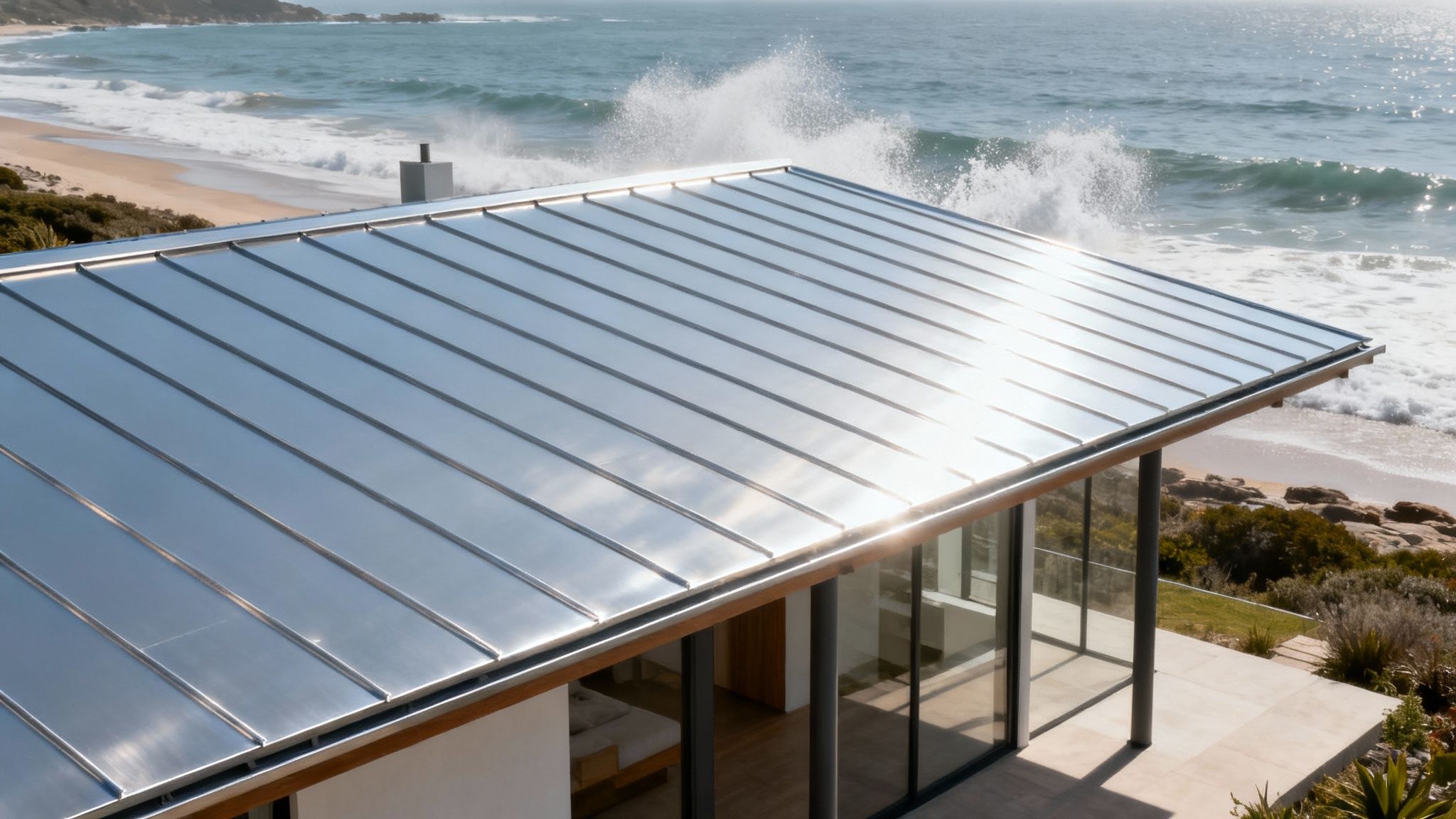
This natural defense is precisely why aluminum can handle the constant barrage of saltwater spray that would chew through other metals in no time. It's an essential material to consider when you're figuring out what metal roofing is made of for a seaside property.
The Lightweight Advantage
Beyond its impressive resilience, aluminum’s most famous trait is its weight—or lack thereof. It is significantly lighter than steel, a feature that brings several real-world benefits to your home's structure and even your wallet.
Think of it like this: a steel roof is like a heavy-duty work coat—incredibly tough and protective, but also bulky. Aluminum, on the other hand, is like a high-tech, lightweight performance jacket. It gives you incredible protection from the elements but without all that heft.
The reduced weight of aluminum panels puts far less structural load on your home. This can be a huge advantage for older homes or structures where you want to minimize stress on the framing.
This featherlight quality often means a smoother, and sometimes more affordable, installation. Crews can handle the panels more easily, which can shave off labor time and the costs that come with it.
Energy Efficiency and Performance
An aluminum roof doesn't just protect your home; it helps keep it comfortable, too. One of its standout benefits is its high reflectivity. This means it bounces a huge amount of the sun's radiant heat away from your home instead of soaking it up.
This reflective power leads to a cooler attic and living space, which is a game-changer in sunny climates. The practical impact is easy to see:
- Lower Cooling Costs: By cutting down on the heat your roof absorbs, your air conditioner doesn't have to work nearly as hard. This can lead to serious energy savings—sometimes as much as 25% on your cooling bills.
- Improved Comfort: A cooler attic helps keep the temperatures inside your home more consistent and comfortable all day long.
- Sustainability: Using less energy means a smaller carbon footprint, making aluminum a more environmentally friendly choice.
This powerful combination of corrosion resistance, low weight, and energy efficiency makes aluminum an incredibly smart investment for homeowners who need a long-lasting, high-performance roof that’s perfectly matched for demanding coastal environments.
The Legacy of Copper and Zinc Roofs
When you start looking into what metal roofing is made of, you eventually get to the top shelf. This is where you find materials chosen not just for keeping the rain out, but for their timeless beauty and almost unbelievable longevity. Copper and zinc aren't just roofing materials; they're lifetime investments that become part of a home's very identity.
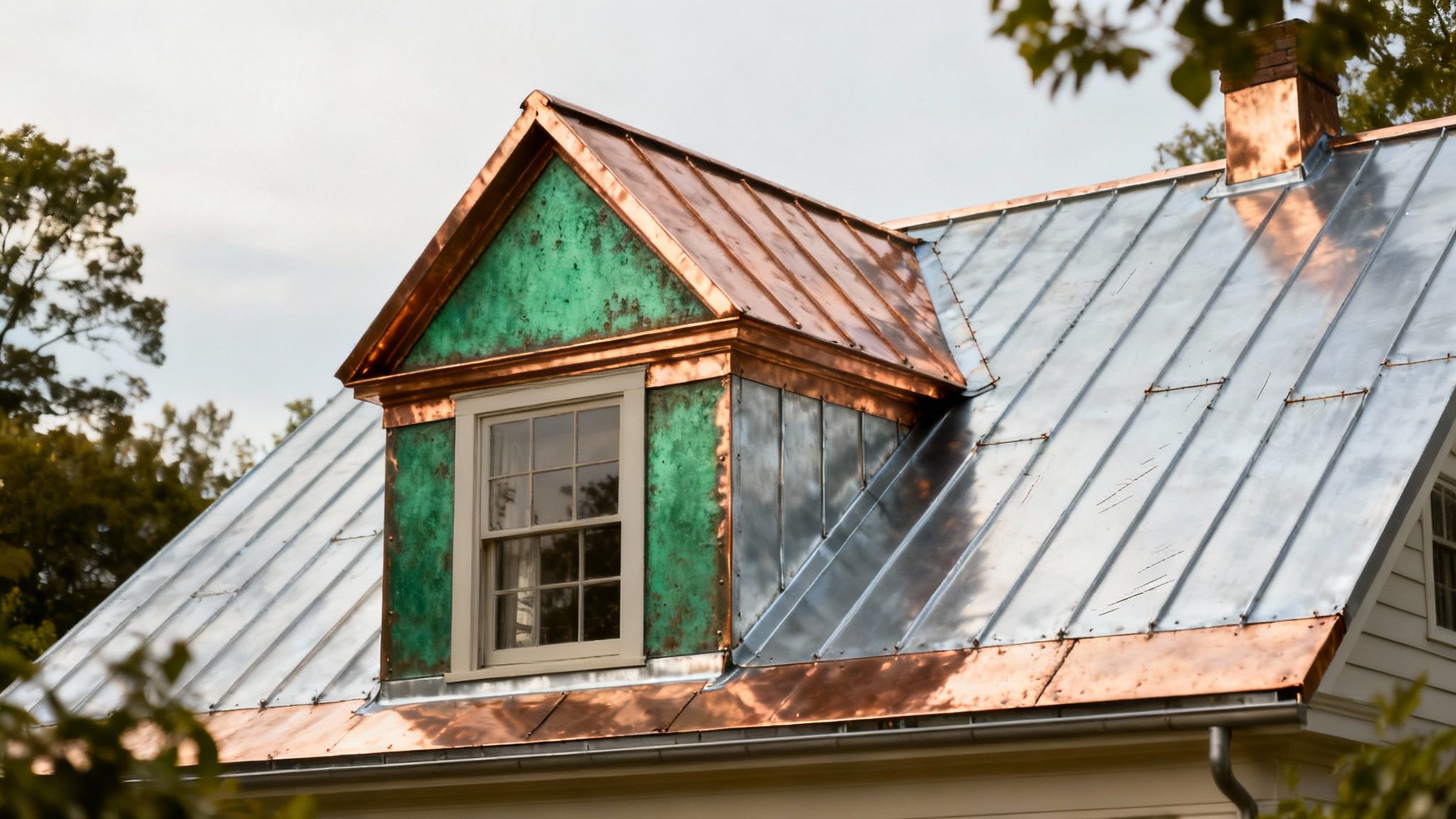
A brand-new copper roof starts out with a brilliant, shiny gleam, almost like a freshly minted penny. But its real story is told over the years as it lives and breathes with the elements. This journey of graceful aging is what sets it apart from pretty much any other roofing material out there.
The Living Finish of Copper
Over time, that initial brightness mellows to a deep brown, then slowly, beautifully transforms into its famous blue-green patina. This isn't a flaw or a sign of decay. Just the opposite—this verdigris patina is a natural, self-forming protective layer that shields the copper underneath from any further corrosion.
This natural shield is the real secret to copper's legendary lifespan. A properly installed copper roof can easily last for over 100 years, outliving the people who put it up and becoming a permanent part of the building's legacy. It's the ultimate "install it and forget it" roof.
This incredible endurance makes copper the go-to for historic landmarks, grand cathedrals, and luxury homes where permanence and elegance are everything.
The Self-Healing Power of Zinc
Right alongside copper is another architectural giant: zinc. While you might not see it as often on residential homes, zinc has a unique quality that makes it exceptionally tough. It has an incredible ability to "heal" itself.
If a zinc panel gets scratched or scuffed up, the metal simply reacts with the air and moisture to form a protective patina—a zinc carbonate layer—that naturally covers the blemish. This self-healing trick ensures the roof’s integrity stays locked in for decades while keeping its clean, modern look.
These legacy metals share some key traits:
- Exceptional Lifespan: Both copper and zinc can last for a century or even longer with very little maintenance.
- Corrosion Resistance: Their natural patinas create a shield that rust and decay simply can't penetrate.
- Architectural Beauty: They offer a sophisticated look that only gets better and more distinguished with age.
- High Value: The upfront cost is significant, no doubt. But their longevity provides incredible long-term value and can seriously boost a property's resale value.
While steel and aluminum are fantastic, high-performance options, copper and zinc are in a class all their own. They represent a deep commitment to lasting quality and architectural beauty, making them a powerful answer to the question of what the most enduring metal roofs are made of.
The Science Behind Protective Roof Coatings
The raw metal is only the first chapter of the story. The final, crucial layer is the protective coating, which acts as the panel's first line of defense against the elements and locks in its color for decades. Honestly, this finish is where much of the roof's long-term performance is decided.
Understanding these coatings is easier than you might think. Beyond the metal itself, these layers are what truly determine how your roof will look and perform ten, twenty, or even thirty years from now. For a deeper dive into the professional techniques used to apply these finishes, it's worth exploring resources on how to paint metal surfaces effectively. It’s this kind of expert application that ensures a flawless, durable finish that lasts.
Comparing SMP and PVDF Finishes
The two most common high-performance coatings you’ll run into are Silicone Modified Polyester (SMP) and Polyvinylidene Fluoride (PVDF), often known by its famous trade name, Kynar 500®. While both are excellent, they are engineered for different levels of performance and longevity.
Here's a simple way to think about it.
Consider an SMP coating as a high-quality exterior house paint. It's tough, offers good color retention, and provides solid protection for many years. It’s a reliable workhorse for a wide range of applications and budgets.
Now, think of a PVDF (Kynar 500®) coating as the high-tech, multi-layer finish on a luxury car. It’s chemically engineered to offer superior resistance to fading from UV exposure, chalking, and chemical degradation. This premium finish maintains its vibrant color and gloss far longer than SMP, making it the top choice for projects where long-term aesthetic appeal is non-negotiable.
While SMP offers great value, PVDF coatings are the gold standard for color retention. Their carbon-fluorine bond is one of the strongest in chemistry, allowing them to withstand harsh sun without fading for 30 years or more.
How Cool-Roof Coatings Boost Energy Efficiency
Beyond simple protection, modern coatings play an active role in your home's energy performance. Many metal roofs feature ENERGY STAR-rated "cool-roof" coatings specifically designed to reflect solar radiation away from your home.
These coatings contain special infrared-reflective pigments. Here’s how they work:
- Reflecting Sunlight: A standard dark roof absorbs a massive amount of solar heat, transferring it right into your attic and living spaces. Cool-roof pigments, on the other hand, reflect a significant portion of this invisible infrared radiation.
- Lowering Surface Temperature: By bouncing that heat away, the roof's surface can stay up to 50-60°F cooler on a hot, sunny day compared to a traditional dark asphalt shingle roof. It's a massive difference.
- Reducing Cooling Load: A cooler roof means less heat seeping into your home, which dramatically reduces the strain on your air conditioning system. This can lead to energy savings of up to 25% on annual cooling costs—a huge benefit, especially in warmer climates.
This technology transforms your roof from a passive shield into an active, energy-saving part of your home, adding another powerful layer of value to your investment.
How Metal Roofing Panels Are Manufactured
The journey from a simple coil of metal to a precision-engineered roofing panel is a fascinating one. It all starts with massive, heavy coils of steel or aluminum—the raw material for the entire process. These coils are carefully loaded onto a machine, marking the first step in their transformation from a flat sheet into a structured, weather-resistant barrier.
This is where the real magic happens. The flat metal sheet is uncoiled and fed into a specialized piece of equipment called a roll-forming machine. The best way to picture this is to think of an industrial-scale pasta maker. Just as a pasta maker methodically presses a flat sheet of dough into specific shapes like fettuccine, the roll-former uses a series of finely-tuned rollers to bend and shape the metal into its final profile.
From Flat Sheet to Finished Panel
Each set of rollers in the machine makes a small, precise bend. As the sheet moves through the line, these gradual bends add up, slowly forming the distinct ridges and channels of the finished panel, whether it's a sleek standing seam or classic corrugated design. It's a continuous, highly controlled process that guarantees every single panel is identical in shape and dimension.
After the panel has its shape, it goes through the final steps:
- Protective Coatings Applied: Long before the metal is shaped, it's treated in a factory setting where multiple layers of protective coatings and paint are applied. This ensures a uniform, durable finish that is baked on for maximum toughness and longevity.
- Shearing to Length: Once formed, an automated shear cuts the continuous panel to the exact length needed for a specific job, ensuring a perfect, custom fit on-site.
The entire manufacturing process, from coating the coil to cutting the final panel, happens in a controlled factory environment. This level of quality control is what guarantees every panel meets strict standards for thickness, color consistency, and protective performance before it ever leaves the building.
This precise method is a world away from the early days of metal roofing. While sheet metal was used as far back as the Revolutionary War, modern advancements have made it incredibly strong and much easier to install. You can learn more about this long history over at This Old House.
Got Questions About Metal Roofing? Let's Clear Things Up.
Even after digging into what makes a metal roof tick, a few practical questions always seem to pop up. Let's tackle some of the most common ones I hear from homeowners. Getting these answers straight can help you feel confident you're making the right call.
Which Metal Roof Is the Most Eco-Friendly?
Here's the great thing: all metal roofing is a highly sustainable choice. Most panels already contain a good chunk of recycled material, and they're 100% recyclable at the end of their incredibly long life. That means they won't be taking up space in a landfill.
Aluminum, in particular, is a standout. It can be recycled over and over again without losing any of its quality.
If environmental responsibility is a major factor for your project, it's worth looking into how different materials contribute to sustainable building certifications. This commitment to green building is a huge reason so many people are switching to metal these days.
Are Metal Roofs Noisy When It Rains?
This is probably the biggest myth in the entire roofing industry. Forget that old image of a loud, "pinging" tin roof on a barn—it simply doesn't apply to modern residential systems.
When a metal roof is installed correctly over a solid roof deck with the right underlayment and insulation, it's no louder than a standard asphalt shingle roof. All those underlying layers do a fantastic job of absorbing the sound from rain, leaving your home's interior quiet and peaceful.
A properly installed metal roof offers the same acoustic comfort as any other premium roofing material. The sound is absorbed by the sheathing and insulation, not amplified.
Can I Install a Metal Roof Over My Old Shingles?
In many situations, you absolutely can. One of the best features of metal roofing is how lightweight it is, which often allows it to be installed directly over a single layer of existing asphalt shingles. This process, often called a roof-over or overlay, can save you a serious amount of money on the labor and disposal costs of a full tear-off.
However, this isn't a one-size-fits-all solution. You always need to check your local building codes first. More importantly, have a professional roofer inspect your current roof deck to make sure it's structurally sound and can safely support a new system.
Ready to explore the best metal roofing options for your South Florida home? The experts at Paletz Roofing and Inspections have over 30 years of experience helping homeowners make the right choice. Contact us today for a free, no-obligation quote at https://paletzroofing.com.