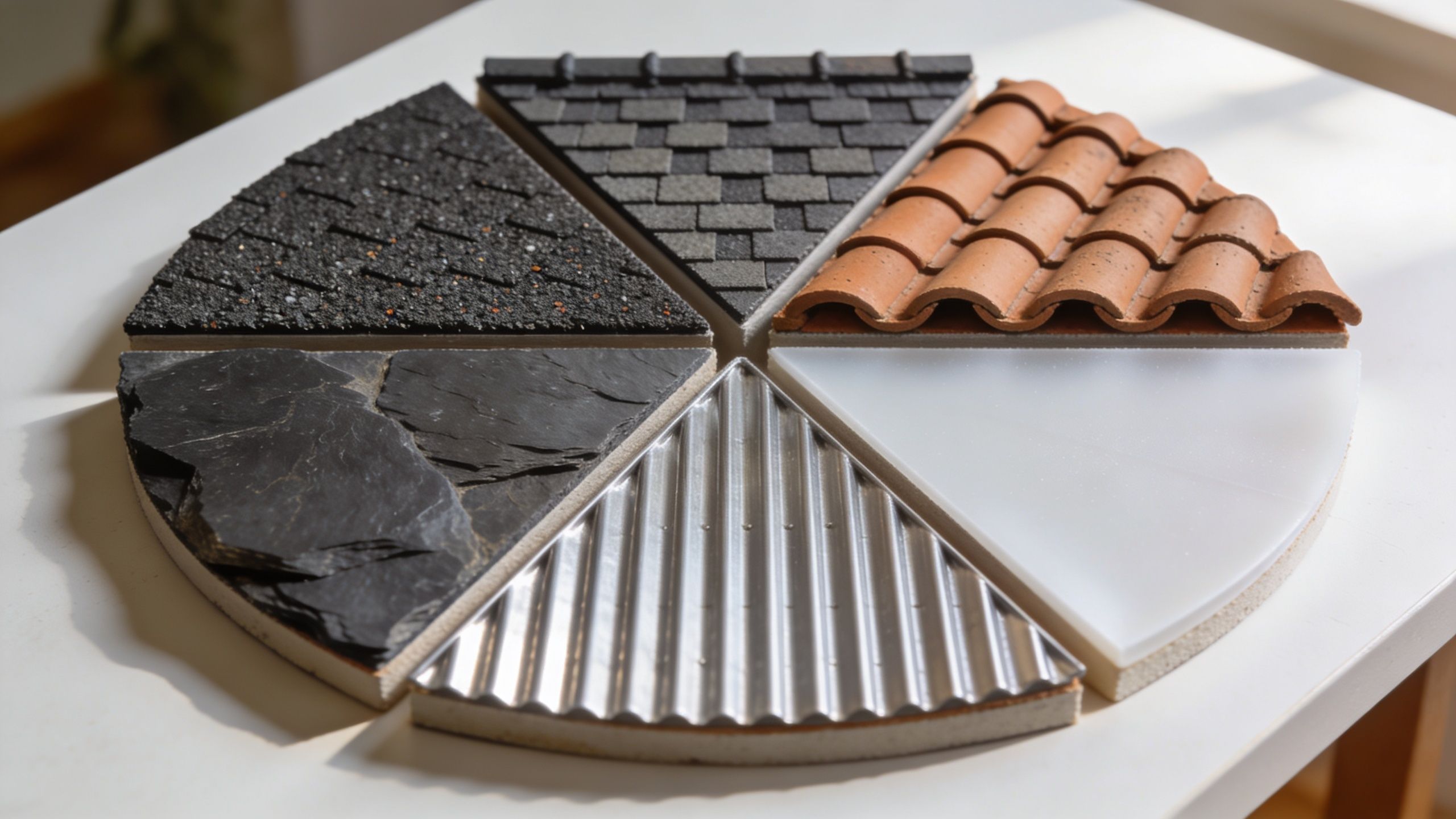
In South Florida, the gap between a short-lived roof and a long-lived roof isn't small. It's the difference between a system that may be rated around 15 to 20 years in one category and materials that can last well over 100 years in another, depending on what you choose and how it's built. That's why “what are the best roofing materials” isn't really a style question here. It's a wind question, a heat question, a moisture question, and a long-term cost question.
The other reality is that most homeowners start from the same baseline. Asphalt shingles account for about 73% of the U.S. residential roofing market, which tells you why they're the default choice on so many homes, but not necessarily the best fit for every coastal property or storm-exposed building in South Florida, according to Roofing industry statistics from Rooflink.
Table of Contents
- Choosing the Right Roof for Your South Florida Property
- Roofing Materials at a Glance A Quick Comparison
- A Deep Dive Into Common Roofing Materials
- Special Considerations for South Florida Properties
- Beyond the Material Installation Codes and Insurance
- Our Recommendations for Your South Florida Roof
- Frequently Asked Questions About Roofing Materials
Choosing the Right Roof for Your South Florida Property
A roof in Broward, Miami-Dade, or Palm Beach County doesn't live an easy life. It takes direct sun for months, humidity almost year-round, wind during storm season, and in many neighborhoods, salt air that speeds up wear on exposed components. The best roofing material has to handle all of that at the same time.
That's where a lot of generic buying guides miss the mark. They rank materials by popularity or by lifespan alone. South Florida owners need to look at performance under local stress, not just what looks good on a sample board or what carries the lowest initial estimate.
What usually matters most in this market
For most homes and commercial properties here, the decision comes down to five factors:
- Wind resistance: The roof has to stay attached and keep water out during severe weather.
- UV durability: Constant sun breaks down lower-grade materials faster.
- Moisture behavior: Humidity, algae, and trapped moisture punish poorly ventilated roofs.
- Repair practicality: Some systems are easier to service after a storm than others.
- Lifecycle cost: A cheaper roof can become the expensive roof if it needs replacement sooner.
Practical rule: In South Florida, the cheapest installed roof often isn't the cheapest roof to own.
Asphalt still has a place. It's common for a reason. But on a coastal home, a luxury residence, or a building owner planning to hold the property long-term, the conversation changes fast. Materials like metal, tile, and in select cases slate, can make more technical sense because they resist weather and aging differently.
A good roof choice starts with the building itself. Roof slope, structural capacity, attic ventilation, nearby tree cover, distance from the coast, and even how long you plan to own the property all affect what works and what doesn't. On one property, an architectural shingle roof is a smart move. On another, it's a short-term solution that will cost more over time.
Roofing Materials at a Glance A Quick Comparison
The fastest way to sort roofing options is to look at them side by side. Not every owner needs the same thing. A rental property, a waterfront home, a shopping center, and a custom residence won't land on the same answer.
This visual gives a quick snapshot before the deeper material-by-material breakdown.

Roofing Material Comparison for South Florida
| Material | Estimated Cost (per sq. ft. installed) | Typical Lifespan | Wind Resistance | South Florida Suitability |
|---|---|---|---|---|
| Asphalt shingles | Lower relative upfront cost | Shorter than premium systems | Fair to good, depending on product and installation | Good for budget-driven homes if upgraded to architectural shingles |
| Tile | Premium | Long-lasting | Good when properly installed | Strong option for many residential properties, especially where aesthetics and durability matter |
| Metal | Premium | Long-lasting | Strong | Excellent for hurricane-prone and high-sun environments |
| Slate | Premium to ultra-premium | Very long-lasting | Strong but structure-dependent | Limited to homes that can support the weight and budget |
| Flat roofing systems | Varies by system | Varies by system | Depends heavily on installation quality and drainage design | Best for commercial and low-slope applications |
Quick read on what that table really means
Asphalt is still the entry point for many homeowners because it's widely available and familiar to contractors. That matters when timing, budget, and neighborhood standards are part of the job.
Tile sits in a different category. It gives you a long-service material and a look that fits many South Florida homes, but repairs can get more specialized, and the roof structure has to be right for it.
Metal is often the most balanced upgrade. It's durable, clean-looking, strong in wind when specified correctly, and it performs well in sun-heavy conditions.
If you're deciding between “most affordable today” and “least trouble over time,” you're already asking the right question.
Flat roofing systems belong in a separate bucket. They're common on commercial buildings and some modern homes, but they should never be judged the same way as steep-slope materials. On low-slope roofs, drainage design, seams, flashing details, and penetrations usually matter as much as the membrane itself.
A Deep Dive Into Common Roofing Materials
South Florida roofs fail in predictable ways. Fastener issues, uplift at edges, flashing breakdown, trapped moisture, corrosion at metal parts, cracked tile, and aging from UV exposure show up again and again. The material affects all of that, but so does the roof design and the quality of the install.
This close-up is a good reminder that a roof isn't just one material. Transitions, flashings, and tie-ins often decide whether the system holds up.

Asphalt shingles
Asphalt shingles are the baseline because they're common, affordable, and flexible across many residential roof shapes. But there's a major difference between basic shingles and upgraded ones. According to Consumer Reports' roofing buying guide, standard 3-tab shingles are commonly rated around 15 to 20 years, while architectural shingles typically reach 25 to 30+ years.
That gap matters in South Florida. If a homeowner asks me which shingle category makes sense here, the answer is usually simple. Skip the lowest tier when possible. Architectural shingles are the smarter play in a hurricane-prone market because they generally bring better wind performance and better durability.
Where asphalt works well
- Budget-focused replacements: When upfront spend controls the decision, shingles often stay in the running.
- Subdivisions with similar roof profiles: They fit many neighborhood aesthetics and HOA expectations.
- Homes where structural load is a concern: Shingles are lighter than tile or slate.
Where asphalt falls short
- Long hold periods: If you plan to own the property for many years, shorter service life becomes a real cost issue.
- High-end homes: The visual and performance ceiling is lower than premium materials.
- Heavy coastal exposure: Sun, wind, and salt can make the tradeoffs harder to ignore.
One overlooked point is repair visibility. Shingle repairs can be straightforward, but patching isn't always invisible, especially after weathering and color fade. On some homes, that matters less than function. On others, curb appeal matters.
If you're evaluating roof condition photos during a sale, a maintenance review, or an insurance discussion, a visual reference like this roof inspection image can help owners understand where flashing, shingle wear, and transition details deserve a closer look.
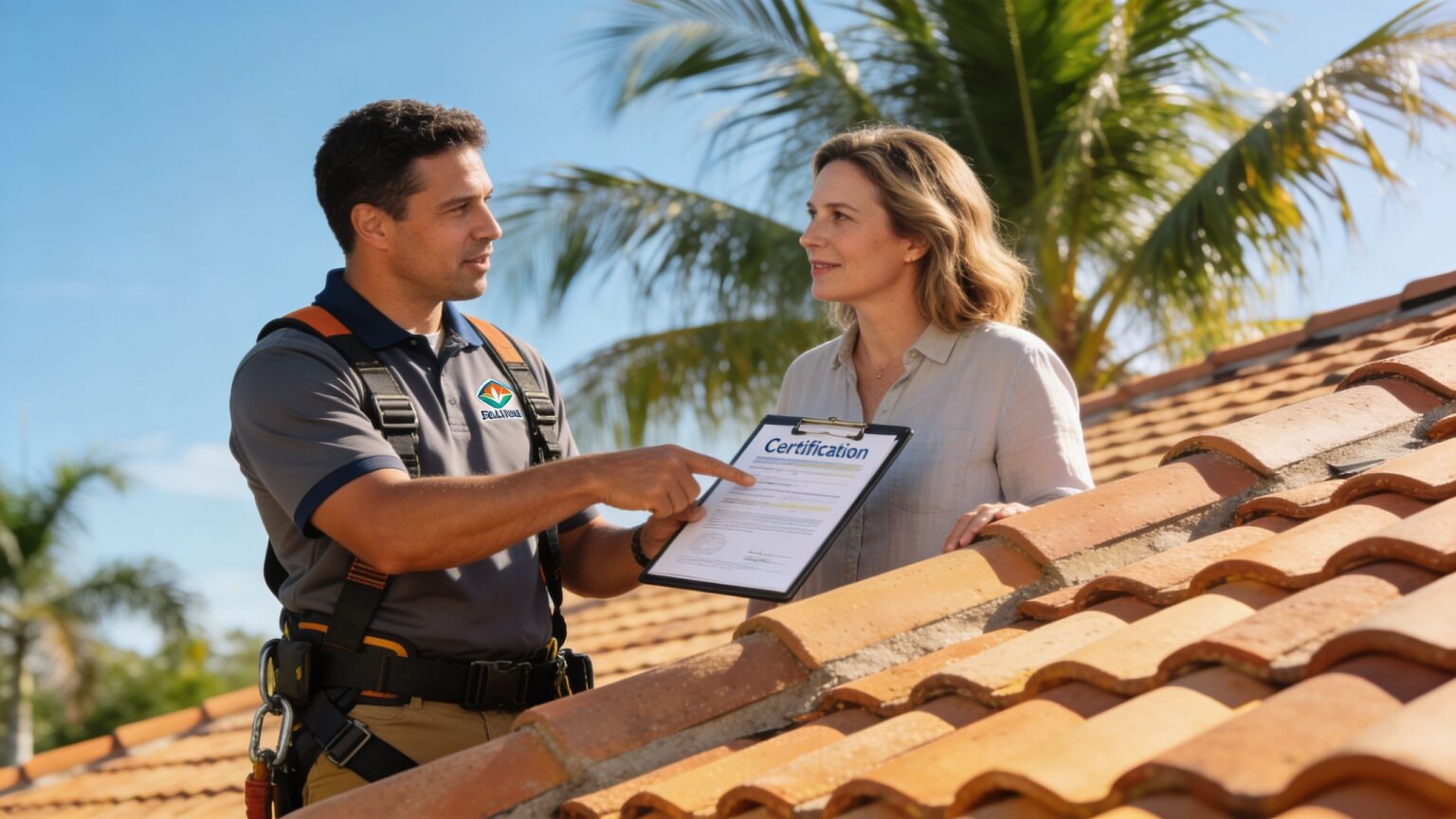
Tile roofing
Tile is one of the most recognizable roof choices in South Florida. It fits the regional architecture, handles heat well, and has a long-service reputation when the system is installed and maintained correctly.
Tile's strength is long-term durability. Its weakness is complexity. A tile roof isn't just “strong by default.” The underlayment, fastening method, flashing package, valley detailing, and maintenance approach determine whether it performs the way owners expect.
What tile does well in South Florida
Tile holds up well under strong sun, and many owners like how it keeps a home looking appropriate to the local style. It also doesn't carry the same appearance of rapid aging that lower-end materials can show after years of heat and moisture exposure.
For homes where appearance matters almost as much as service life, tile remains a practical premium option.
What owners underestimate
- Breakage during foot traffic: Service work from other trades can crack tiles.
- Repairs require matching: Finding the right profile and color can become a project.
- Weight affects the whole job: The structure has to be suitable before tile ever goes on.
Tile is durable, but tile systems still depend on the parts you don't see. Underlayment and flashing failures can show up long before the tile itself looks old.
Concrete and clay tile both have a place. The better choice usually depends on the building design, the desired profile, and how aggressively the property is exposed to weather. On luxury homes and established neighborhoods across South Florida, tile often makes sense if the owner is prepared for premium installation and maintenance standards.
Metal roofing
If the question is what are the best roofing materials for South Florida specifically, metal belongs near the top of the list. It's one of the few materials that consistently checks multiple boxes at once. Wind performance, fire resistance, lower maintenance compared with some premium systems, and reflective properties all make it a serious contender.
Metal also gives owners choices. Standing seam systems, metal shingles, and exposed-fastener panel options don't all perform the same way. In practice, that means you can't evaluate “metal roofing” as one single product category. The attachment method and panel design matter.
Why metal keeps gaining ground
Metal tends to make the most sense for owners who care about lifecycle performance instead of just first cost. It's strong in storm regions, and it's a good fit for homes or buildings that bake under direct sun.
A well-specified metal roof also tends to age in a more predictable way than lower-cost options. That doesn't mean it's maintenance-free. Fasteners, sealants, flashings, and penetrations still need professional attention. But the system itself is often a strong long-term investment.
Where metal is especially strong
- Coastal properties: With the right material and finish selection, metal can be a strong fit.
- Hurricane-prone neighborhoods: High-wind performance is a major advantage.
- Modern homes and commercial buildings: The clean lines fit contemporary design well.
Its biggest objection is usually upfront cost. The second objection is noise. In real-world installations, proper assembly matters more than people think. A correctly built roof system doesn't behave like a loose metal shed roof.
Slate roofing
Slate is the longevity champion in most roofing discussions. It's a premium material for owners who want the longest potential service life and a distinct natural appearance.
But slate is rarely the default answer in South Florida. The reason isn't quality. It's practicality.
Why slate is admired
Slate has a reputation that's earned. It lasts a very long time, looks exceptional, and gives a building a level of permanence that few other roofing materials can match.
Why slate is limited here
- Extreme weight: Many structures aren't designed for it.
- Higher project complexity: Not every crew is equipped to handle it properly.
- Cost sensitivity: It's hard to justify unless the owner has a specific long-term vision for the property.
For custom homes, landmark-style architecture, or owners building for generations rather than resale cycles, slate can make sense. For the average South Florida homeowner, it usually doesn't. Metal or tile tends to deliver a better balance of durability, structure compatibility, and overall value.
Flat and low-slope roofing systems
Flat roofs deserve their own category because the failure patterns are different. On a low-slope roof, standing water, drainage layout, penetration detailing, seam quality, and edge conditions all become critical.
On commercial properties, condo structures, apartment buildings, additions, and some modern homes, the “best roofing material” question is really a system design question. Membrane selection matters, but so do insulation layout, taper design, drain placement, curb flashing, and rooftop equipment coordination.
What makes flat roofs succeed or fail
A flat roof usually fails at the details first. Not the field membrane. Penetrations, seams, drains, scuppers, wall flashings, and transitions are where most trouble starts.
That's why owners should ask better questions during bidding:
- How is drainage being handled?
- What happens around penetrations and rooftop units?
- Who coordinates with HVAC or solar contractors after the roof is complete?
- How will the roof be maintained after installation?
On low-slope roofs, the cleanest sales pitch means very little. The detail work is what keeps water out.
For South Florida commercial properties, flat roofing can perform very well, but only when the design respects ponding risk, heat exposure, and the truth that service trades will keep walking the roof for years.
Special Considerations for South Florida Properties
A roofing material that performs well inland in a milder climate can become a poor choice near the coast. Local exposure changes everything. Broward, Miami-Dade, and Palm Beach roofs have to survive a harsher mix of wind, heat, moisture, and salt than many national guides account for.
This is the lens owners should use when comparing materials, not just the brochure language.

Wind performance matters first
In South Florida, the first question isn't always lifespan. It's whether the roof system is suited for severe wind exposure. Materials with strong historical durability include slate, tile, and metal. According to this roofing material longevity and performance guide, natural slate can last 75 to 200 years, tile often reaches 50 to 100 years, and standing seam metal is typically rated for 40 to 80 years.
That doesn't mean every tile or metal roof is automatically storm-ready. Attachment details, perimeter securement, flashing work, and penetrations still decide a lot.
A useful field reference for owners comparing profiles and roof geometry is this South Florida roof photo example, especially when looking at slope, tile layout, and edge exposure.
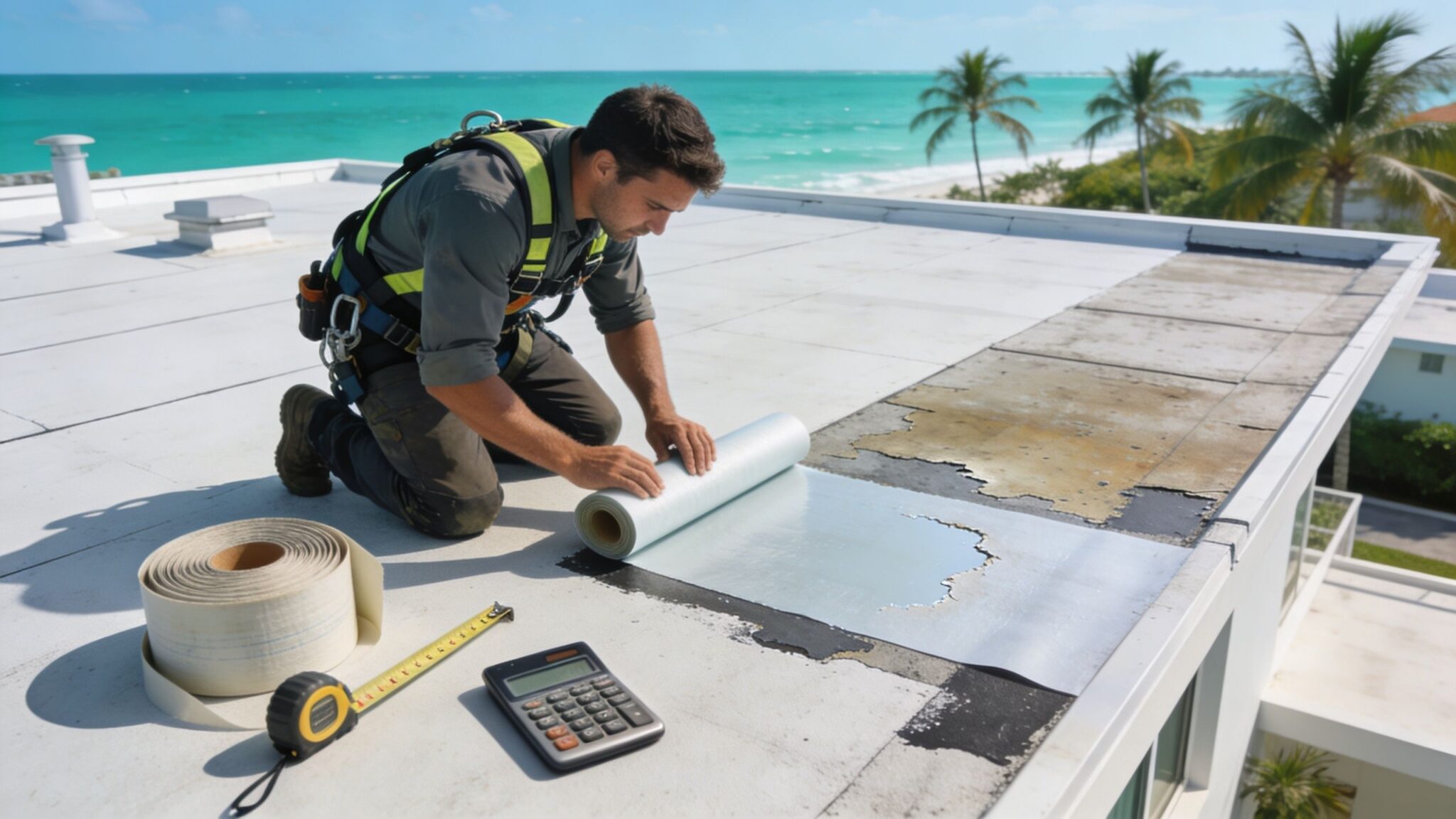
Sun humidity and salt air change everything
UV exposure is relentless here. Lower-grade materials can age faster, lose appearance sooner, or become more brittle over time. Humidity adds another layer. Algae staining, mold around poorly ventilated areas, and moisture issues under the roof assembly become common when the system isn't designed and maintained correctly.
Salt air creates a separate challenge near the coast. It attacks exposed metal components and punishes poor material selection. That doesn't eliminate metal roofing. It means you need the right metal roof system, the right finish, and the right accessories for the location.
South Florida screening questions
- How close is the property to the coast
- Does the roof have shaded sections that stay damp
- Will other trades walk the roof often
- Is the property held for long-term ownership or near-term sale
Those answers can change the recommendation more than homeowners expect.
Energy savings are part of roof selection
Cooling demand is a real operating cost in this market. Roofing color, reflectivity, attic design, and ventilation all affect how hard the building has to work.
One of the clearest technical advantages belongs to reflective metal systems. The same guide notes that light-colored metal roofing can cut cooling costs by up to 25% when conditions are right. That doesn't make metal the automatic answer for every property, but it does make energy performance part of the discussion, not an afterthought.
A South Florida roof should be judged in August, not just on installation day.
Beyond the Material Installation Codes and Insurance
A lot of owners focus almost entirely on product type. Shingle versus tile. Tile versus metal. That matters, but it's only part of the job. A poorly executed premium roof can underperform a well-installed mid-tier system.

A great material can still fail
Installation errors usually show up at the edges and interruptions. Valleys, wall tie-ins, penetrations, ridges, transitions, and flashing details are where trouble starts. On flat roofs, drainage mistakes create another layer of risk.
That's why owners should ask for more than a product name on an estimate. You want to know how the system will be attached, flashed, ventilated, and finished for this specific building.
Questions worth asking before you sign
- Who handles permitting and code compliance
- What underlayment or membrane is included
- How are penetrations and transitions being flashed
- What maintenance does the system need after installation
If drone images are being used during inspections, progress checks, or storm documentation, property owners should also understand the legal side. The rules for Florida drone hobbyists are a useful reference for anyone reviewing roof imaging practices around homes and neighborhoods.
Heavy roofs carry hidden costs
Many material comparisons fall short here. They celebrate lifespan but ignore what it takes to carry that lifespan on a real building. According to this roofing material cost and structure discussion, heavy systems like slate and tile can require structural evaluation or reinforcement, which can change the full project budget significantly.
That issue matters in South Florida because many owners aren't choosing between idealized products on paper. They're choosing what their current structure can support without triggering major additional work.
The longest-lasting material isn't always the best buy if the house wasn't built for it.
Insurance inspections and documentation matter
Insurance carriers care about roof age, condition, installation quality, and storm readiness. A stronger roof system may help an owner's position with underwriting or inspections, but the roof has to be documented correctly and built to code.
For that reason, the smartest path isn't always the most expensive material. It's the material and system that fit the structure, match the exposure, and can be inspected, maintained, and repaired without turning every issue into a specialty project.
Our Recommendations for Your South Florida Roof
Most South Florida owners don't need the most expensive roof. They need the roof that fits their building, their budget, and their hold period. That answer changes from property to property, but some patterns are clear.
According to this roofing comparison guide focused on long-term performance, metal roofing is often the strongest technical upgrade when lifecycle performance is the goal, with a typical range of 40 to 70+ years, while slate can exceed 100 years but carries major weight and cost tradeoffs.
Best choice for tighter budgets
If budget controls the project, go with an architectural asphalt shingle rather than the most basic shingle option. It's usually the better practical decision for South Florida homes that need a balance of cost, appearance, and stronger overall performance than entry-level shingles.
This works best for homeowners who need a reliable replacement now and don't want to overbuild for the property.
Best all-around upgrade for long-term value
For many South Florida homes and light commercial buildings, metal roofing is the recommendation that makes the most technical sense. It gives owners strong lifecycle value, solid wind performance, reflective benefits, and fewer of the structural concerns that come with heavier premium materials.
If someone asks me for the most balanced answer to what are the best roofing materials in this market, metal is usually near the top.
For owners who want a local company to inspect the existing roof condition before deciding, Paletz Roofing and Inspections provides roof inspections along with replacement and reroofing services across South Florida.

Best fit for premium homes and specialty projects
Tile is often the right call for upscale residential properties where appearance, long service life, and regional architectural fit are major priorities. It's a strong material when the structure is appropriate and the owner understands the maintenance and repair realities.
Slate belongs in a narrower lane. It's excellent, but only for owners who are deliberately choosing maximum lifespan and have a structure and budget that support it.
If the property is low-slope or commercial, choose the flat roofing system based on drainage design, traffic needs, penetrations, and serviceability. On those roofs, details matter more than labels.
Frequently Asked Questions About Roofing Materials
Does roof color really affect cooling costs
Yes, it can. In South Florida, lighter and more reflective roofing surfaces generally help reduce heat gain. The material still matters, but color and reflectivity can improve overall energy performance, especially on sun-exposed roofs.
Is reroofing the same as full replacement
No. A reroof typically means installing over an existing roof system when conditions allow. A full replacement means removing the old roofing down to the deck or other required layers and rebuilding the system properly. Whether reroofing is appropriate depends on the roof's condition, code requirements, and the material being installed.
What signs tell me my roof is nearing the end
Watch for recurring leaks, missing or damaged roofing components, cracked tiles, loose flashing, visible wear around penetrations, sagging areas, repeated repairs, and aging that shows up across large sections rather than one isolated spot. On flat roofs, persistent ponding and seam issues are major warnings.
What's usually the best roofing material for hurricane-prone homes
If the goal is a strong balance of wind performance, long-term value, and practical ownership, metal often stands out. For some homes, tile is also a strong option. The final answer depends on structure, slope, budget, and how exposed the property is.
Should I choose based on lifespan alone
No. Lifespan matters, but owners should also weigh structural compatibility, maintenance needs, repairability, installation quality, and local exposure to sun, humidity, and salt air.
If you're deciding between shingles, tile, metal, or a flat roofing system, Paletz Roofing and Inspections can inspect your current roof, explain what fits your structure, and help you compare practical options for Broward, Miami-Dade, and Palm Beach properties.