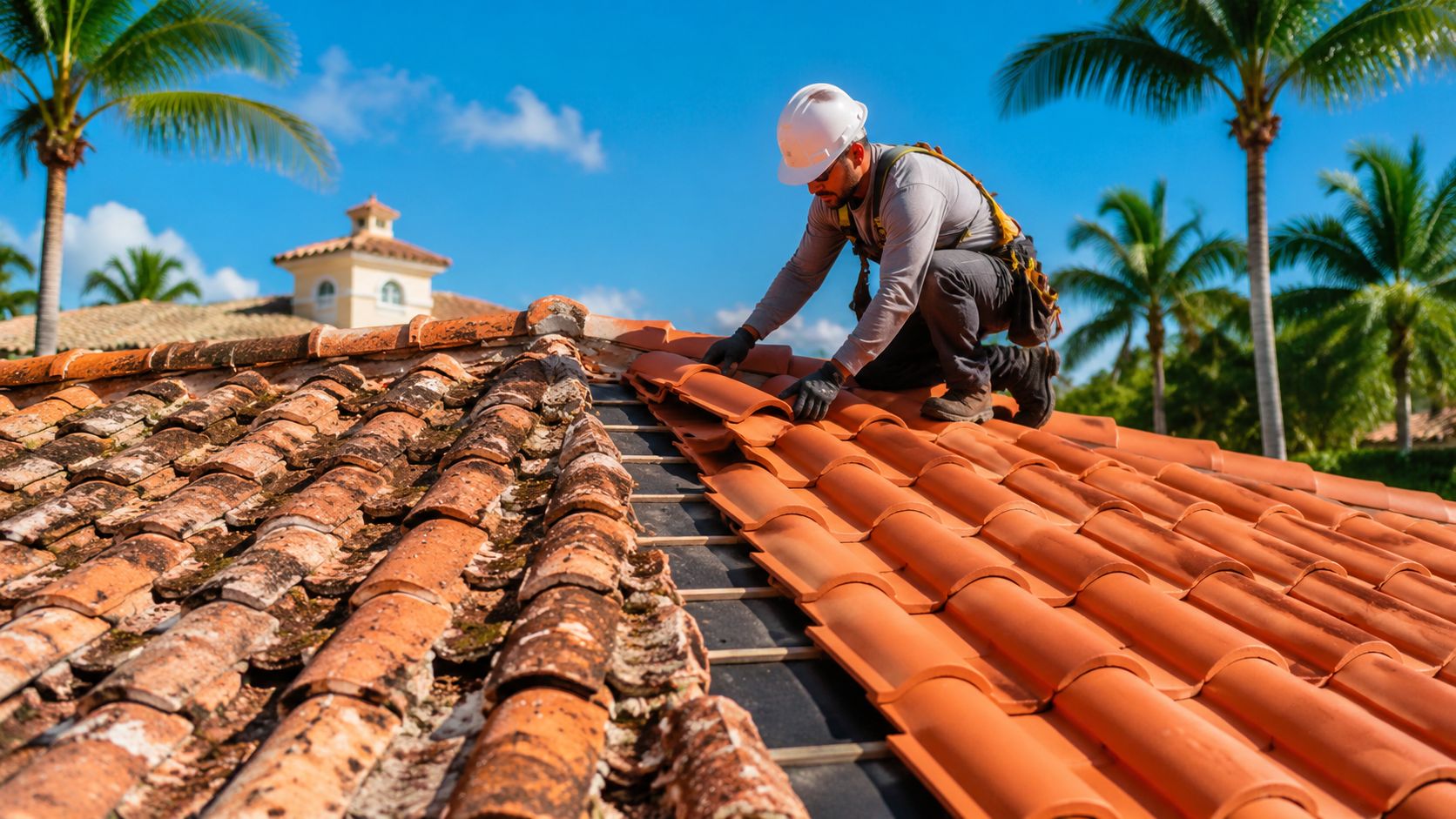
Tile roofs are built for a long service life, but South Florida shortens the margin for error. Heat, salt air, pounding rain, and hurricane season test every part of the system, not just the tile you can see from the driveway.
That matters because replacing roof tiles here is rarely a cosmetic update. It is a roof assembly decision tied to wind resistance, water intrusion risk, permit approval, resale value, and insurance documentation. Homeowners who want a broader storm-prep perspective can also review blogs on hurricane resistant homes.
National roofing advice often misses what decides success in Miami-Dade, Broward, and Palm Beach. A tile roof in South Florida has to stand up to wind uplift, wind-driven rain, long UV exposure, and strict local code enforcement. In many replacement jobs, the old tile is only part of the story. The underlayment, flashing, attachment method, and roof-to-wall details usually determine whether the next storm leaves you with a dry house or a major interior claim.
From a roofing contractor's standpoint, that is the issue. A proper tile replacement in South Florida has to match the home, the exposure, and the code in force at the time of permit. If those pieces do not line up, a roof can look good on day one and still fail where it counts.
Table of Contents
- Investing in Your Home's First Line of Defense
- Signs Your Tile Roof Needs Replacement Not Just Repair
- Choosing Your New Roof Tiles Clay vs Concrete
- The Tile Roof Replacement Process Explained
- Navigating Costs Permits and Insurance in South Florida
- Why Professional Installation is Critical for Tile Roofs
- Your Partner in South Florida Roofing Paletz
- Frequently Asked Questions About Tile Roof Replacement
Investing in Your Home's First Line of Defense
A tile roof is one of the few parts of a home that people notice from the street and depend on during the worst weather. In South Florida, that combination matters. Your roof isn't just curb appeal. It's the first surface taking wind uplift, driven rain, debris impact, and relentless sun.
When homeowners talk about replacing roof tiles, they often mean one of two very different things. Sometimes they mean swapping a handful of damaged pieces. Other times they mean rebuilding the roof assembly so the home is ready for another long cycle of storms. Those are not the same project, and treating them as if they are is where expensive mistakes begin.
South Florida homeowners usually benefit from thinking about tile replacement the same way they think about windows, doors, or structural upgrades. It's part appearance, part building envelope, part storm planning. If you're also evaluating broader resilience upgrades, these blogs on hurricane resistant homes give useful context on how roof decisions fit into the rest of the house.
What makes tile worth the effort
Tile remains a premium roofing choice because it can deliver long service life, strong visual appeal, and solid performance when the system is installed correctly. But the keyword is system. A beautiful tile profile won't save a roof with failing underlayment, bad flashing, or weak fastening at the perimeter.
Practical rule: In South Florida, a tile roof should be judged by how the whole assembly sheds water and resists wind, not by how good the field tiles look from the driveway.
That is why a proper replacement plan starts with condition, not guesswork. You want to know whether you're solving a cosmetic issue, a leak path, or a structural roofing problem that has already started moving below the surface.
Signs Your Tile Roof Needs Replacement Not Just Repair
A few broken tiles don't automatically mean you need a new roof. But a lot of South Florida roofs get repaired long after they should've been replaced. Homeowners see cracked pieces, ask for matching tile, and assume the problem stops there. Often it doesn't.
A tile roof works a little like a car body over a chassis. The outer finish matters, but the structure underneath determines whether the whole thing still performs. On tile roofs, the visible pieces shed weather. The underlayment and flashing do waterproofing work when conditions get rough.

What you can see from the ground
Some warning signs are obvious enough that you can spot them from your yard or driveway.
- Cracked or broken areas across more than one section usually mean the issue isn't isolated anymore.
- Slipped or displaced tiles tell you the roof has movement, fastening trouble, or prior storm stress.
- Visible gaps at walls, penetrations, or transitions suggest water can get where it shouldn't.
- Interior water stains mean the system has already failed somewhere above the ceiling line.
- Sagging or uneven roof lines raise concern about deck condition and should be inspected quickly.
Other clues are less dramatic but still important. Repeated service calls. Small leaks that return after repair. Tiles that break when touched because the roof has aged unevenly or been walked incorrectly over time.
What usually decides repair versus replacement
The biggest technical mistake I see is focusing only on the tile surface. Industry guidance notes that repair makes sense when damage is limited to a small area, the problem traces to a localized issue, and the underlayment is still sound. Replacement becomes the better choice when the underlayment is at end of life, leaks appear in multiple areas, tiles keep breaking or slipping, or repairs have become repetitive and costly, according to tile roof repair versus replacement guidance.
That last point matters. Repetition is a clue. If one area leaks this season and another area leaks next season, you're probably not dealing with random bad luck.
Look closely at these patterns:
Leaks at multiple locations
Water isn't always entering directly above the stain you see inside. On tile roofs, it can travel before it shows itself. Multiple interior signs usually point to broader system failure.Frequent tile movement
Slipping, rattling, or recurring breakage after windy weather suggests fastening or support problems, not just old tile.Previous patches around penetrations
Vents, stacks, skylights, and wall transitions are common weak points. When those details have already been patched several times, a larger reroof often gives a more durable result.
A tile field can look serviceable from the street while the moisture barrier underneath has already stopped doing its job.
In South Florida, I tell homeowners to be suspicious of roofs that look "mostly fine" but leak during hard wind-driven rain. That's exactly the kind of roof that gets underestimated. Surface appearance can hide underlayment fatigue, flashing failure, and long-term moisture entry around penetrations.
Choosing Your New Roof Tiles Clay vs Concrete
In South Florida, the tile itself is only part of the decision. The better question is which material fits your house, your budget, and the wind-resistance requirements your reroof has to meet.
Clay and concrete can both perform well here. I have seen both last and I have seen both fail early. The difference usually comes down to the full roof assembly, the fastening pattern, the underlayment package, and whether the product selected is a good fit for the structure and the home's location, especially near the coast.
Clay is the traditional choice for Mediterranean, Spanish, and older custom homes. It keeps the original character of the house and usually looks better over time than lower-cost substitutes. Homeowners who care about architectural consistency often stay with clay, even at a higher material cost.
Concrete is often the more practical replacement option. It comes in more profiles, more color ranges, and it is usually easier to source when a homeowner wants a tile look without paying for premium clay. On many South Florida reroofs, concrete gives the best balance of appearance, availability, and cost.
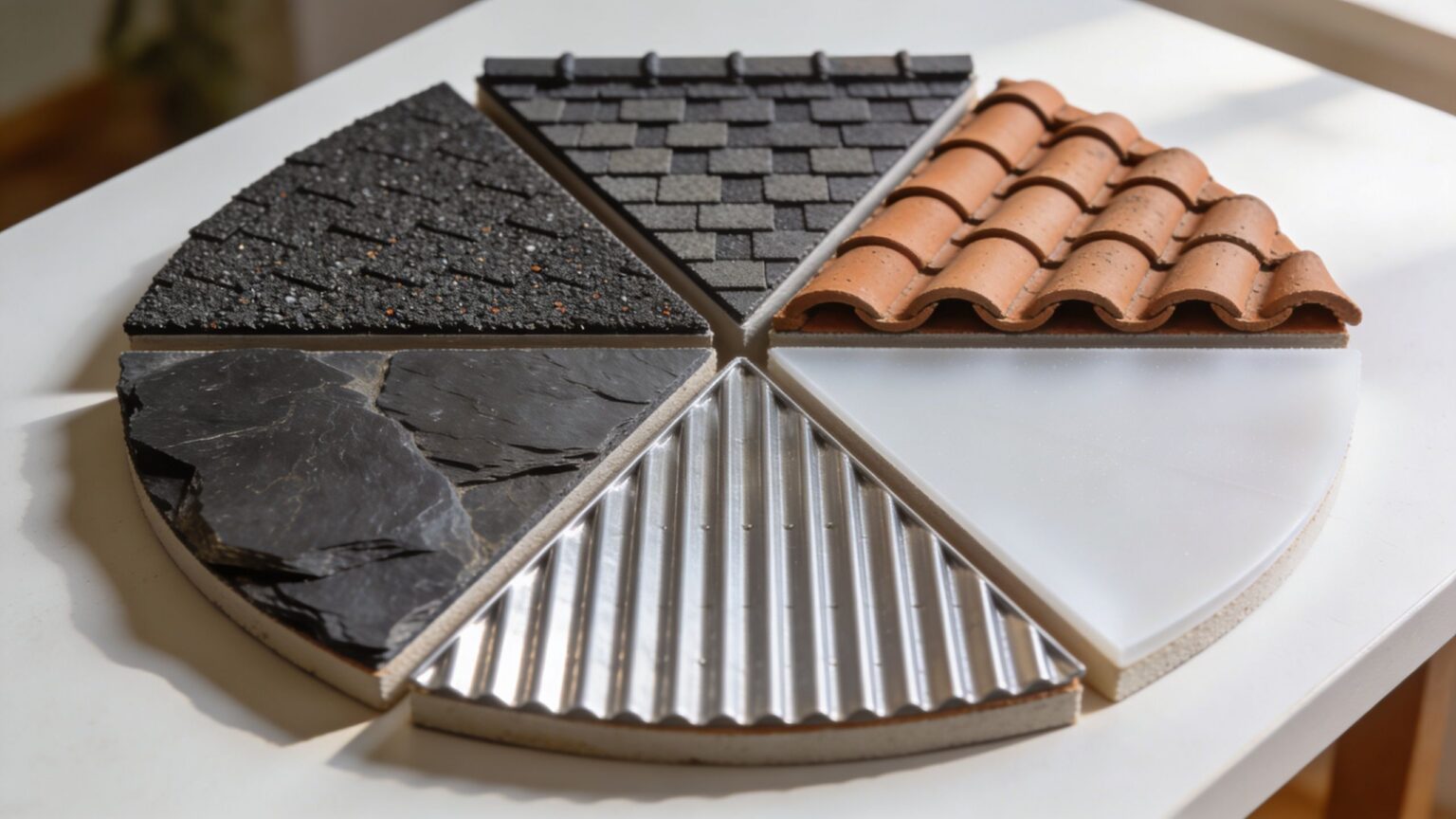
A side-by-side roof tile profile comparison image helps homeowners see how close some concrete profiles now come to classic clay styles.
What matters on a real South Florida reroof
The sales brochure rarely tells you what matters most in Broward, Miami-Dade, or Palm Beach County.
- Weight affects the structure. Tile is heavy. Before choosing a profile, the roof framing has to be able to carry the load under current code requirements.
- Wind approval matters. In hurricane-prone zones, the tile system needs to meet local product approval and installation requirements, not just look good on the sample board.
- Profile availability matters. If the home has a specific architectural style, or if an HOA expects a close match, the material choice may be driven by what can still be ordered.
- Repairs years from now matter. Some profiles and colors are easier to match later. That can save money after isolated storm damage.
- Salt exposure matters. Near the ocean, the tile choice is only one part of the equation. Fasteners, flashings, and accessories need to hold up in a corrosive environment.
Clay vs. Concrete Roof Tiles A Comparison
| Feature | Clay Tiles | Concrete Tiles |
|---|---|---|
| Appearance | Traditional look that fits Mediterranean, Spanish, and many older South Florida homes | Wider range of profiles and colors, including styles that resemble clay |
| Typical longevity | Often chosen for long-term appearance retention and architectural character | Often chosen for solid service life at a lower upfront cost |
| Cost approach | Higher material cost on many projects | More budget-friendly on many projects |
| Replacement considerations | Best fit when preserving the home's original design is a priority | Best fit when balancing curb appeal, availability, and cost |
| South Florida performance | Performs well when installed to code with the right fastening and underlayment system | Performs well when installed to code with the right fastening and underlayment system |
| Main caution | Premium material does not correct poor flashing, weak attachment, or aging deck issues | Lower cost does not matter if the assembly details are done wrong |
One point I make on almost every tile replacement estimate. Homeowners often focus on the tile first, but in South Florida the underlayment, flashing details, ridge treatment, and attachment method usually have more to do with storm performance than whether the field tile is clay or concrete.
Choose the tile that suits the house. Then make sure the system under it is built for South Florida wind, rain, salt air, and current code.
The Tile Roof Replacement Process Explained
Most homeowners are surprised by how much of a tile roof replacement happens before the first new tile is installed. The visible part is the finish line. Critical quality work happens in teardown, deck evaluation, drying-in, and detail work around every interruption in the roof plane.

What happens before new tile goes on
A professional tile reroof usually starts with staging, delivery planning, and permit readiness. Crews need to protect landscaping, driveways, pool enclosures, and entry paths before tear-off begins. Tile is heavy and fragile, so site control matters.
Then comes removal of the existing system. Old tiles come off first, followed by underlayment and accessories that have reached the end of service. Once the roof is opened up, the deck can be thoroughly inspected. This is one of the most important checkpoints in the project because damaged or weak substrate can't be hidden under a premium finish.
The usual sequence looks like this:
Inspection and scope confirmation
The roof is measured, problem areas are documented, and replacement details are aligned with permit requirements.Tear-off and disposal
Old tile, underlayment, and worn flashings are removed carefully so the deck can be evaluated.Deck inspection and repair
Rotten, soft, or compromised sections are addressed before waterproofing begins.Dry-in with underlayment
The roof gets its primary moisture protection layer.Flashing and penetration detailing
Valleys, walls, vents, stacks, chimneys, and transitions are rebuilt properly.Tile installation and fastening
New field tiles, ridge components, and trim pieces are set to the approved pattern.Final inspection and cleanup
The job site is cleaned, punch items are handled, and inspection closeout follows.
A visual example of roofing work in progress helps homeowners understand how much happens beneath the finished surface. This tile roofing project image shows the kind of sequencing and jobsite control a proper reroof requires.
Where South Florida jobs are won or lost
In this climate, details around penetrations and transitions are where good roofs separate from short-lived ones. Technical guidance from the Tile Roofing Industry Alliance emphasizes that every penetration or disruption in the field tiles must receive appropriate deck or underlayment flashing and tile flashing so water keeps moving properly across the roof and secondary protection remains in place if the tile layer is breached, according to tile flashing guidance.
That sounds technical, but the field takeaway is simple. Every pipe, vent, wall, valley, and mounted component is a leak opportunity unless it's detailed correctly.
Watch for these quality checkpoints during replacing roof tiles:
Dry-in before decorative finish
If the underlayment phase isn't done cleanly, the rest of the roof inherits that weakness.Neat, intentional flashing work
Flashing should look deliberate, not improvised.Consistent tile alignment
Crooked courses often signal rushed work or poor layout control.Proper fastening for wind exposure
South Florida roofs need fastening that respects local wind demands and the specific roof geometry.
The best-looking tile roof on the block can still fail early if the penetrations, valleys, and edge details were treated as afterthoughts.
Navigating Costs Permits and Insurance in South Florida
Tile roof replacement is one of the larger exterior investments a homeowner makes. National cost ranges help frame expectations, but South Florida pricing depends heavily on roof shape, access, tile choice, deck repairs, disposal, permit scope, and the level of detail work required. A simple roof and a cut-up roof are two very different jobs even if the house footprints seem similar.
This Old House reports that roof replacement broadly ranges from $9,858 to $41,822, with an average around $25,840, and notes that tile roof replacements can surpass $50,000 when the work is extensive, according to roofing cost and market data. That broad spread is realistic because tile systems carry higher labor and handling complexity than many other materials.

What drives the final price
A homeowner usually gets into trouble when comparing bids by the bottom-line number alone. On tile roofs, scope gaps hide inside phrases like "repair as needed" or "replace flashing where required." Those allowances can change the actual cost once the roof is opened.
The biggest cost drivers are usually:
Roof complexity
Valleys, hips, ridges, elevation changes, and penetrations add labor and detail work.Tile material and profile
Availability, handling, breakage risk, and accessory pieces all affect price.Deck condition
Once tear-off exposes substrate issues, repairs may be necessary before work continues.Disposal and logistics
Heavier tear-off material and difficult access can increase labor and hauling demands.Code-driven upgrades
South Florida jurisdictions can require work that cheap estimates don't fully account for.
If you're comparing proposals, ask each roofer to spell out whether the bid includes tear-off, underlayment replacement, flashing replacement, permit handling, inspection coordination, and cleanup. If one line item is vague, that vagueness usually becomes your problem later.
Permits and insurance paperwork that matter
In Broward, Miami-Dade, and Palm Beach, permits aren't optional for full reroof work. Local building departments want documentation, approved scope, and inspections. In high-wind South Florida, that process exists for good reason. The roof is a life-safety system.
Miami-Dade and Broward homeowners should also understand that local and state code expectations can be stricter than what national roofing articles describe. Fastening methods, product approvals, underlayment assemblies, and edge details all need to fit the jurisdiction and the building type. A contractor who can't explain the permit path in plain language is a contractor I wouldn't trust on a tile reroof.
Insurance adds another layer. After storm damage, adjusters and carriers usually want clear photos, date context, visible damage documentation, and a practical explanation of whether the issue is isolated tile loss or a broader assembly failure. For homeowners trying to understand that side before filing, this Florida homeowners' roof insurance guide is a useful plain-English reference.
A few practical habits make insurance conversations easier:
- Photograph damage early before temporary conditions change.
- Keep repair history if you've had recurring leak work.
- Save contractor findings in writing when broken tile turns out to involve underlayment or flashing issues.
- Ask whether matching concerns affect the repair path if your tile profile is older or discontinued.
Insurance claims go more smoothly when the homeowner can show not only what broke, but how the roof system was affected.
Why Professional Installation is Critical for Tile Roofs

Tile roofs fail at the details first. In South Florida, those details are tested by heat, salt air, wind-driven rain, and hurricane-season pressure changes that can expose weak fastening, poor flashing work, or broken water barriers fast.
A tile reroof also carries more weight and more breakage risk than many homeowners expect. The tiles are what you see, but long-term performance depends on the installer's control of underlayment, metal, layout, attachment, and traffic on the roof during the job. If any part of that sequence goes wrong, a new tile roof can still leak.
Why DIY fails on tile roofs
Walking a tile roof without the right method can crack tiles several courses away from where you step. Homeowners often notice the obvious broken piece and miss the chipped corners, loosened fasteners, or shifted tiles around it.
Leaks are just as misleading. Water may enter at a vent, valley, sidewall, or ridge detail and show up somewhere else inside the house. Swapping out a few visible tiles rarely fixes that. On South Florida homes, the bigger issue is often the waterproofing layer beneath the tile field, especially on older roofs where the tile may outlast the underlayment.
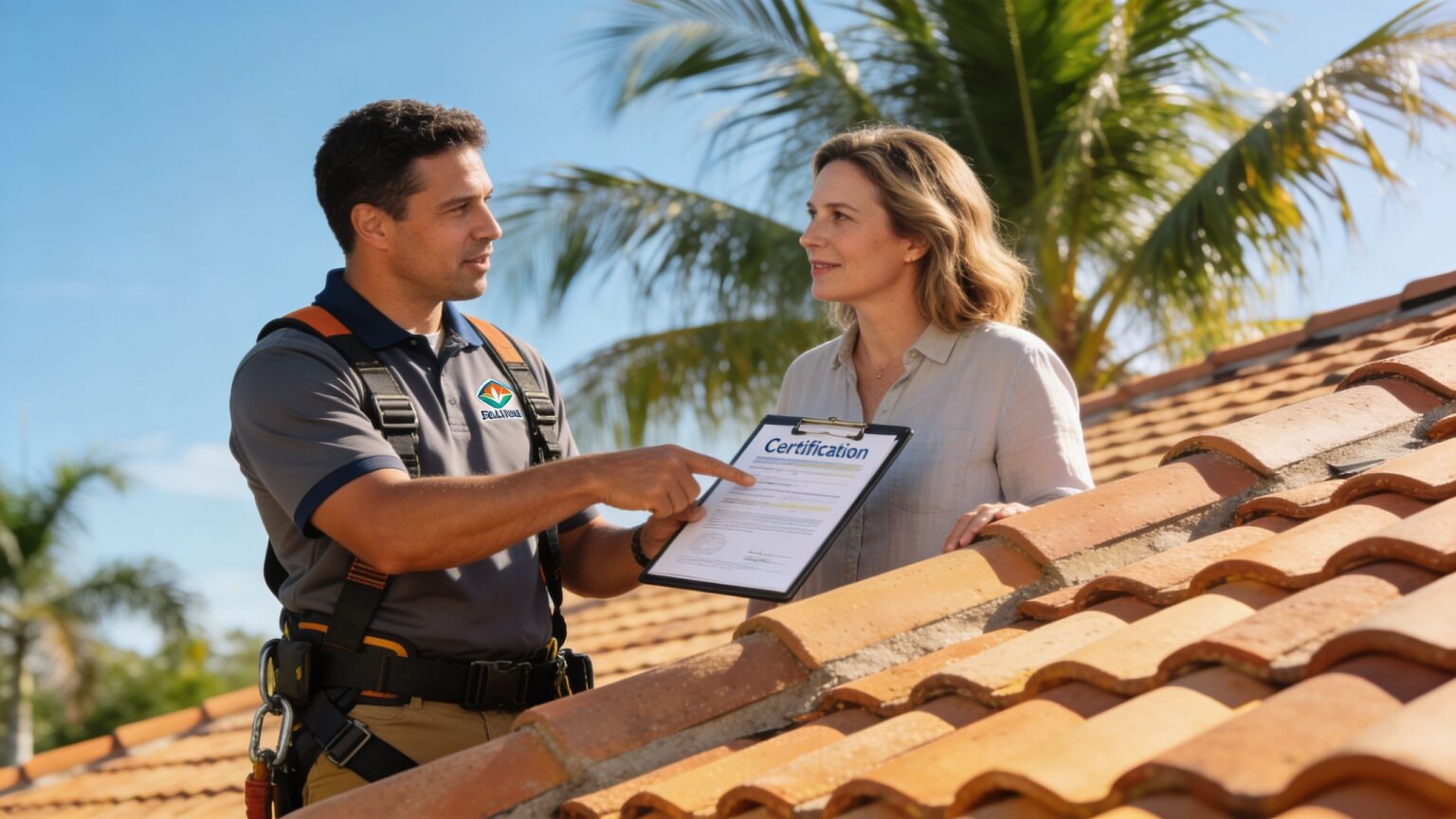
Unpermitted work can create problems later during resale, insurance review, or a municipal inspection after a storm. Tile reroofing in this region is tied to product approvals, fastening patterns, and inspection steps that need to match the home and the jurisdiction. A field example like this tile roof installation setup in progress shows how much staging, positioning, and controlled movement are involved before a roof is ready to shed water properly.
What a Qualified Contractor Delivers
A qualified tile contractor handles far more than tile placement. The job includes protecting the deck during tear-off, checking for rotten sheathing, installing the right underlayment assembly, setting flashings correctly, keeping the roof dried-in during weather changes, and meeting local permit and inspection requirements.
In Miami-Dade and Broward, that matters because code compliance is not a paperwork exercise. It affects wind resistance and whether the roof system is installed the way the approval requires. The right contractor knows which details are allowed for the tile profile, the slope, and the structure below.
Good tile crews also protect the parts of the roof homeowners do not see from the driveway:
- Attachment methods that fit the approved system and wind exposure
- Flashing details at walls, chimneys, valleys, and penetrations
- Traffic control on the roof so new and existing tiles are not damaged during installation
- Dry-in planning to keep the home protected if weather shifts mid-project
- Documentation and inspection closeout so there is a clear record of what was installed
Paletz Roofing and Inspections is one local company that handles tile roof repair, replacement, and inspections in South Florida. That type of tile-specific experience is what homeowners should look for from any roofer they hire. The lowest bid often leaves out the parts that keep a tile roof in place when the next storm pushes on every edge and penetration.
Your Partner in South Florida Roofing Paletz
A South Florida tile reroof asks a lot from a contractor. They need to understand local permit culture, weather exposure, tile handling, leak diagnostics, and recognizing that homeowners want both storm readiness and a finished roof that looks right on the house. General roofing experience helps, but local tile experience is what keeps the project from drifting into delays, patchwork decisions, or weak detail work.
What homeowners need from a roofing partner
Homeowners usually need three things more than anything else. Clear diagnosis. Honest scope. Reliable execution.
That means the roofer should be able to tell you whether your issue is limited tile damage or system failure, explain what the permit and inspection path looks like, and document what will be replaced. If a contractor talks only about tile color and never talks about underlayment, flashing, penetrations, and wind resistance, that's a warning sign.
Paletz Roofing and Inspections has been licensed and insured since 1990 and brings over 30 years of experience serving Broward, Miami-Dade, and Palm Beach, based on the company's published business profile and service overview. The company handles residential and commercial roofing work, including inspections, repairs, replacements, emergency response, and tile roofing projects.
Why local tile experience matters
South Florida roof work is local by nature. County expectations, municipal inspection habits, and exposure conditions differ from what national articles assume. A contractor working this market regularly is more likely to recognize the leak patterns, flashing trouble spots, and storm-related wear that show up on tile systems here.
Paletz also provides homeowners with a recognizable local brand presence, shown on their Paletz Roofing and Inspections company logo. More important than branding, though, is whether the contractor gives you a detailed scope, a clean permit path, and a roof assembly built for South Florida conditions.

The right contractor should leave you with a roof that doesn't just look finished. It should be documented, inspected, and built to perform.
Frequently Asked Questions About Tile Roof Replacement
Can you replace just one or two tiles
Sometimes, yes. If the damage is limited and the surrounding roof system is still sound, replacing a small number of tiles can be appropriate. The bigger concern is whether those broken tiles are isolated damage or a signal of something below them. Industry guidance notes that tile is mainly a weather-shedding layer, and repeated cracks, slipping tiles, or gaps can point to underlayment, flashing, or fastening problems that still leak even after the visible tile is replaced, according to guidance on tile gaps and underlying roof issues.
How disruptive is a full replacement
It's a real construction project, so expect noise, material delivery, crew movement, and limited access around parts of the house during work hours. Angi notes that tile roof installation commonly takes 6 to 12 days depending on roof size and weather, as referenced in this discussion of tile replacement timing and logistics. Actual scheduling can shift based on permit timing, inspections, weather windows, and what the crew finds once the old roof is removed.
Does a new tile roof help resale and insurance
In practice, yes, it often helps the overall story of the house. Buyers like a recently replaced roof because it reduces uncertainty. Insurers and adjusters also pay attention to roof age, visible condition, and code-compliant replacement documentation. The exact financial effect varies by carrier, property, and market timing, so it's better to treat a new roof as a risk-reduction and value-supporting improvement rather than promise a specific return.
What should you ask before signing a contract
Ask what is being removed, what is being replaced, what happens if deck damage is discovered, who handles permits, what inspections are required, how tile matching is addressed, and how penetrations and flashing will be rebuilt. Also ask who will document the job from tear-off through completion. Clear answers up front prevent most disputes later.
If you're considering replacing roof tiles in Broward, Miami-Dade, or Palm Beach, Paletz Roofing and Inspections is a practical place to start for an inspection, written scope, and project guidance specific to South Florida conditions. A good first step is getting the roof evaluated as a full system so you know whether you need a targeted repair or a complete replacement built for long-term durability.