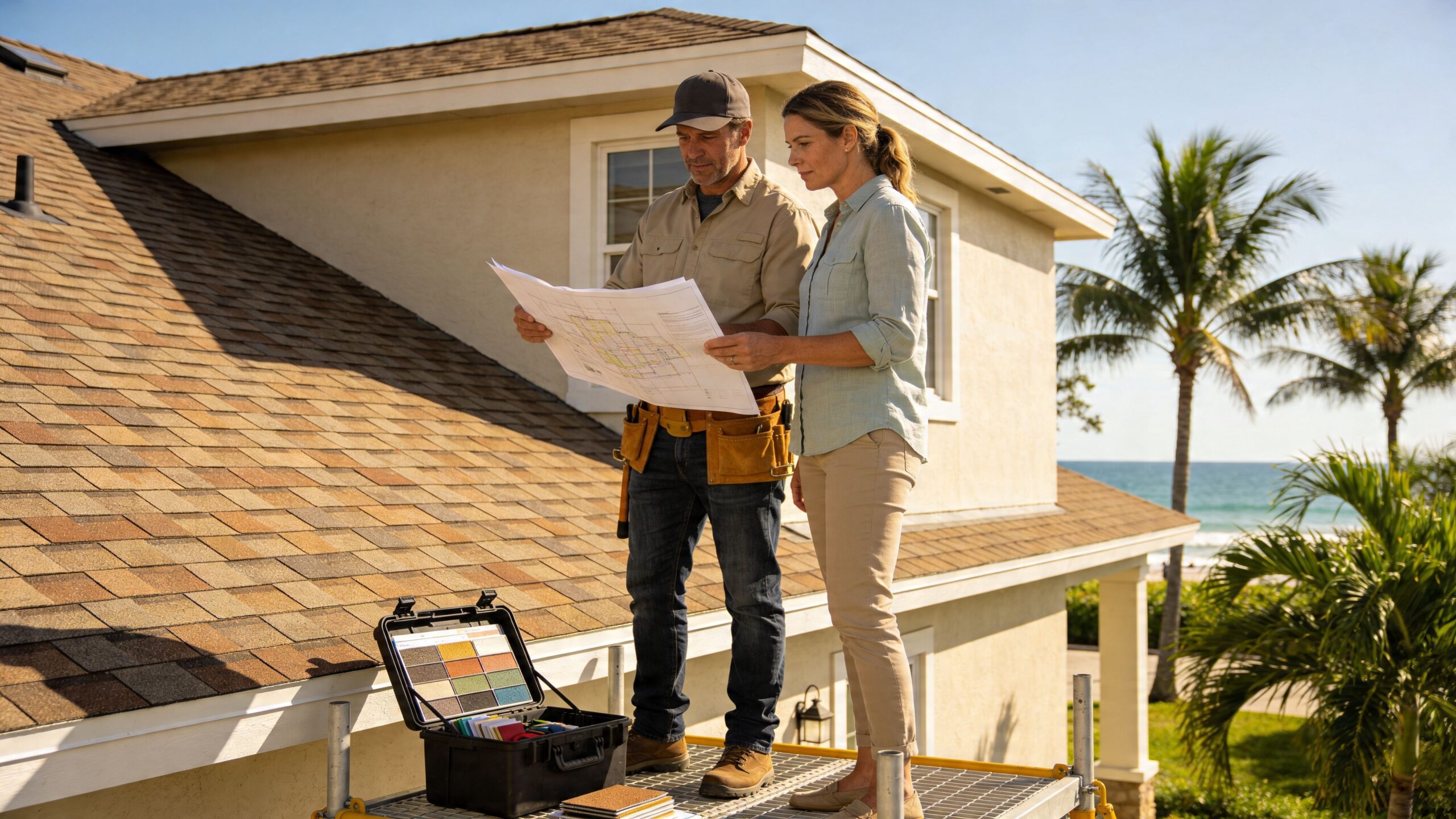
If you're reading this after a hard rain, you're probably doing what most Boynton Beach homeowners do first. Looking up at a ceiling stain, walking the side yard for fallen tile or shingle pieces, or wondering whether that small leak is a patch job or the start of a much bigger expense.
That uncertainty is what makes roofing stressful in South Florida. The sun is relentless, storms expose every weak detail, and the local market is crowded enough that finding a trustworthy roofing contractor Boynton Beach homeowners can rely on takes more than scanning star ratings. You need to know what your roof is telling you, what a real estimate should include, and which parts of the job matter most when hurricane season comes around.
Your Roof's Health Check Identifying Problems Early
A roof rarely fails all at once. Most of the time it gives warnings first. The problem is that homeowners often notice the inside symptom long after the outside issue started.

A brown ring on drywall after an afternoon storm doesn't automatically mean the roof failed that same day. Water can travel along decking, underlayment, or framing before it shows itself indoors. That matters, because the visible stain is often several feet away from the actual entry point.
If you want a good visual reference for how water gets in and what maintenance habits reduce leaks, this guide to effective roof leak prevention is useful. It lines up with what roofers see in the field. Small failures around penetrations, flashing edges, and neglected debris areas turn into interior damage fast.
Start outside before you panic inside
A quick ground-level walk tells you more than many people think. Look at the roof in early morning or late afternoon when shadows make defects easier to spot.
Watch for these signs:
- Lifted or uneven shingles: Persistent wind can loosen edges before a full shingle blows off. If one area looks ruffled while the rest sits flat, that section needs attention.
- Cracked or slipped tiles: In South Florida, tile roofs take heat all day and cool quickly during heavy rain. That movement can expose weak points, especially around valleys and penetrations.
- Dark streaking or organic growth: Staining isn't always just cosmetic. It often means moisture is lingering longer than it should.
- Blistering on flat roofs: On low-slope systems, intense UV exposure can break down the surface and create weak spots that eventually split.
A roof photo can help you compare what you're seeing against a healthy field of shingles or tile. This roof condition image reference is the kind of simple visual check many homeowners find helpful before they call for an inspection.
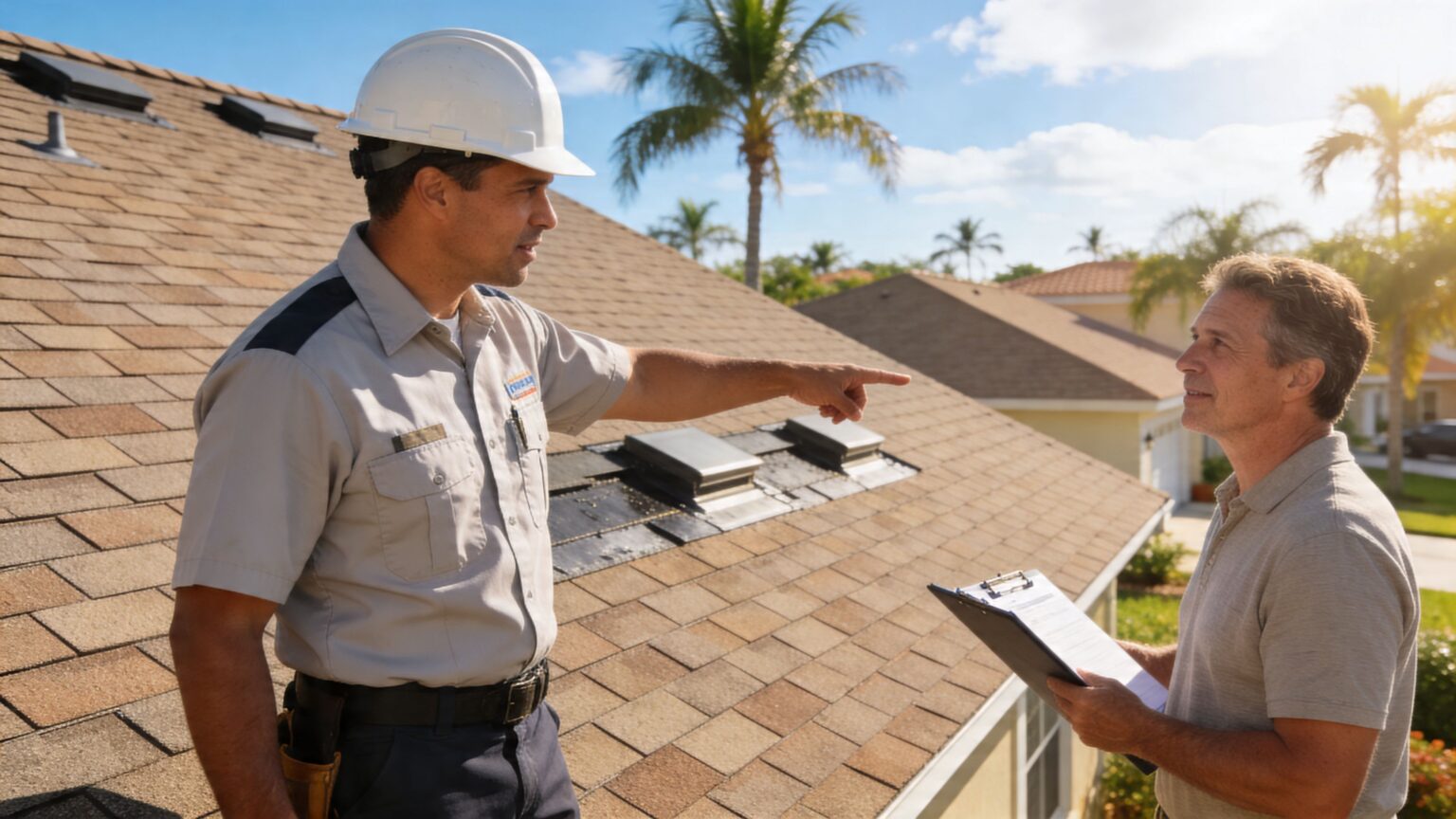
Practical rule: If the problem is isolated to one clear area, a repair may be realistic. If you see defects repeating across multiple slopes, you're usually looking at wear across the whole system, not one bad spot.
What the attic and ceiling can tell you
Inside the house, don't just look for an active drip. Look for clues of repeated moisture.
Common interior warning signs include:
- Ceiling stains that expand after storms
- Peeling paint near soffits or wall tops
- A musty smell in an upstairs room or closet
- Daylight showing through the attic
- Damp insulation or darkened roof decking
Those signs don't all mean replacement. Sometimes the fix is a failed pipe boot, a cracked vent flashing, or a localized section where wind got under the roof covering. But when moisture shows up in more than one room, or the attic reveals repeated staining on the wood, the issue is usually broader.
Repair problem or replacement problem
Here's the trade-off homeowners need to understand. A simple repair works when the roof system is still healthy overall and one component failed early. A patch becomes a money pit when the roof is aging evenly and every storm exposes a new weak point.
A repair is more likely to make sense when:
- Damage is confined to one area
- The surrounding materials still have life left
- Flashing and decking remain solid
- The leak source is identifiable
A replacement becomes more likely when:
- Problems appear on several sections
- Materials are brittle, loose, or visibly worn across the field
- Past repairs are scattered all over the roof
- Leaks keep returning in new places
A roof doesn't need to collapse to tell you it's at the end of its service life. Repeated small failures are often the clearest warning.
How to Vet a Roofing Contractor in Boynton Beach
A lot of bad roofing decisions in Boynton Beach start the same way. Water shows up on a ceiling after a hard summer storm, a contractor says he can start tomorrow, and the homeowner signs before checking who bears responsibility for the roof.
That is how people end up with permit problems, failed inspections, or a warranty that is useless when the next storm season hits. In Palm Beach County, vetting matters because the market is crowded, crews move in and out after major weather events, and hurricane code is not forgiving.

Start with the paperwork that protects you
Florida roofing work requires a proper license. Get the contractor's full license name and number, then verify it yourself through the state. Match that information to the contract, the permit application, and the company collecting your deposit. If those names do not line up, stop there.
Insurance deserves the same level of scrutiny. The contractor should carry general liability coverage and workers' compensation, and the certificates should be current. If you want a plain-language overview before reviewing policy documents, this guide to Roofing Contractor Insurance gives a useful baseline.
A business identity check helps too. Reviewing a contractor's company logo and business branding record next to license and insurance documents can help confirm you are dealing with the same company named on the contract.

Read reviews for patterns under pressure
Homeowners often look at star ratings first. I care more about what happened when the job got complicated.
Look for repeated comments about communication, cleanup, scheduling, change orders, and warranty follow-through. A review that says "great job" tells you almost nothing. A review that says the crew showed up late for two weeks, left nails in the driveway, and stopped returning calls after final payment tells you a lot.
The same rule applies in the other direction. If several homeowners mention that the company documented deck damage with photos, explained added costs before proceeding, and passed final inspection without drama, that carries weight.
In South Florida, a roofing contractor earns trust by how the company handles surprises, not by how polished the sales pitch sounds.
Ask the questions that reveal how the job will actually run
A serious contractor should answer direct questions without getting defensive or vague. Ask who pulls the permit, who supervises the crew each day, who orders materials, and who speaks with you if decking damage shows up after tear-off.
Then get more specific.
- Who pulls the permit: It should be the contractor, not the homeowner.
- Who is the on-site supervisor: The person who sold the job may never be at your house.
- How are rotten or split deck boards handled: The contract should explain pricing and approval for replacement wood.
- What underlayment and flashing are being installed: Brand and product type should be listed in writing.
- How are photos, inspection notes, and change orders documented: That matters for both resale records and insurance support.
Boynton Beach roofs take a beating from sun, wind, salt air, and sudden downpours. A contractor who cannot explain the system in clear terms usually is not the one you want building it.
Local experience matters for more than reputation
Roofing in Boynton Beach is not the same as roofing in an inland market with lighter wind exposure and fewer coastal corrosion issues. The contractor needs to know local permit flow, inspection expectations, HOA friction points, and the material choices that hold up best in this climate.
That includes understanding Florida's tougher wind requirements and the practical side of installing systems that can pass inspection and still make sense for the house. Plenty of companies advertise heavily after storms. Fewer have a stable local presence, a real office, and a record of completing jobs here year after year.
One local option with a long-standing regional footprint is Paletz Roofing and Inspections, which has operated in South Florida since 1990 and handles residential and commercial shingle, tile, metal, and flat roofing work. That kind of history is worth comparing against newer operators or storm-chasing crews that appear only after a weather event.
Red flags that should end the conversation
Some warning signs are enough to walk away immediately:
- A large upfront deposit before materials are scheduled
- Pressure to sign the same day
- No clear business address or inconsistent company name
- A proposal that stays vague about materials and scope
- Promises about permits, insurance, or warranty coverage that never appear in writing
A roof contract should reduce uncertainty. If the paperwork leaves basic questions unanswered, keep looking.
Decoding Quotes and Comparing Roofing Materials
A Boynton Beach roof quote can look fine at the top and still hide the cost drivers that decide whether the job stays on budget. I see that all the time. Two proposals may be only a few hundred dollars apart on paper, but one includes new flashing, proper underlayment, and deck repairs if needed, while the other leaves those items vague and waits to bill them later.

Price matters, but scope matters more. In this market, the wrong quote usually looks cheap right up until tear-off starts.
What should appear on a serious estimate
Read every line. If the proposal does not spell out what the contractor is removing, replacing, and protecting, it is not ready to sign.
A solid estimate should address:
- Tear-off and disposal: How many existing layers come off, what gets hauled away, and whether dumpster or trailer costs are included.
- Deck evaluation: How damaged plywood or tongue-and-groove decking is handled after tear-off, and how replacement is priced.
- Underlayment: The exact product or system, not a blanket reference to "felt" or "synthetic."
- Flashing work: Step flashing, wall flashing, valleys, pipe boots, drip edge, and chimney or curb details.
- Permits and inspections: Who pulls the permit, who meets inspectors, and whether reinspection fees are excluded or included.
- Cleanup: Site protection, magnetic nail sweep, driveway cleanup, and final debris removal.
Cheap bids stay cheap by leaving the expensive parts undefined.
Why estimate accuracy matters in South Florida
Roofing estimates in Boynton Beach need to account for more than square footage. Access can slow a crew down. Tile homes often need more setup and breakage planning. Low-slope sections can require different materials than the main roof. Even simple homes can turn complicated once the old roof comes off.
Estimating Edge's roofing estimator guidance explains how experienced estimators account for waste, labor variables, and project conditions before the contract is signed. That matters here because South Florida jobs regularly run into heat exposure, staging limits, and municipal timing issues that a rushed estimate may ignore. If a quote feels unusually low, ask what was left out.
Material choice is where budget and climate meet
Material selection in Boynton Beach is not just about curb appeal. The roof has to deal with salt air, hard UV exposure, wind-driven rain, and repair work after storm season. Some systems cost less up front and need earlier replacement. Others cost more but hold up better if the house structure and budget support them.
Here is a working comparison homeowners can use.
| Material | Average Cost (per sq. ft.) | Expected Lifespan | Hurricane Resistance | Best For |
|---|---|---|---|---|
| Asphalt shingles | Varies by product grade, roof design, and scope | Moderate in South Florida conditions | Good with the right system and installation, but repeated wind exposure shortens service life faster than heavier systems | Owners who want lower upfront cost and easier spot repairs |
| Metal roofing | Usually priced above shingles and below some premium tile assemblies, depending on panel type and trim detail | Long service life when installed correctly | Strong wind performance and fast water shedding | Owners focused on durability, lighter weight, and long-term value |
| Tile roofing | Higher labor and material cost, often with structural considerations | Long service life if maintained and repaired correctly | Strong overall, but individual pieces can crack or dislodge | Homes where appearance, longevity, and neighborhood fit matter |
| Flat roofing systems | Varies widely by membrane, insulation, drainage, and penetration count | Depends heavily on drainage and maintenance | Good when seams and edge details are done correctly | Low-slope sections, additions, and commercial-style roof areas |
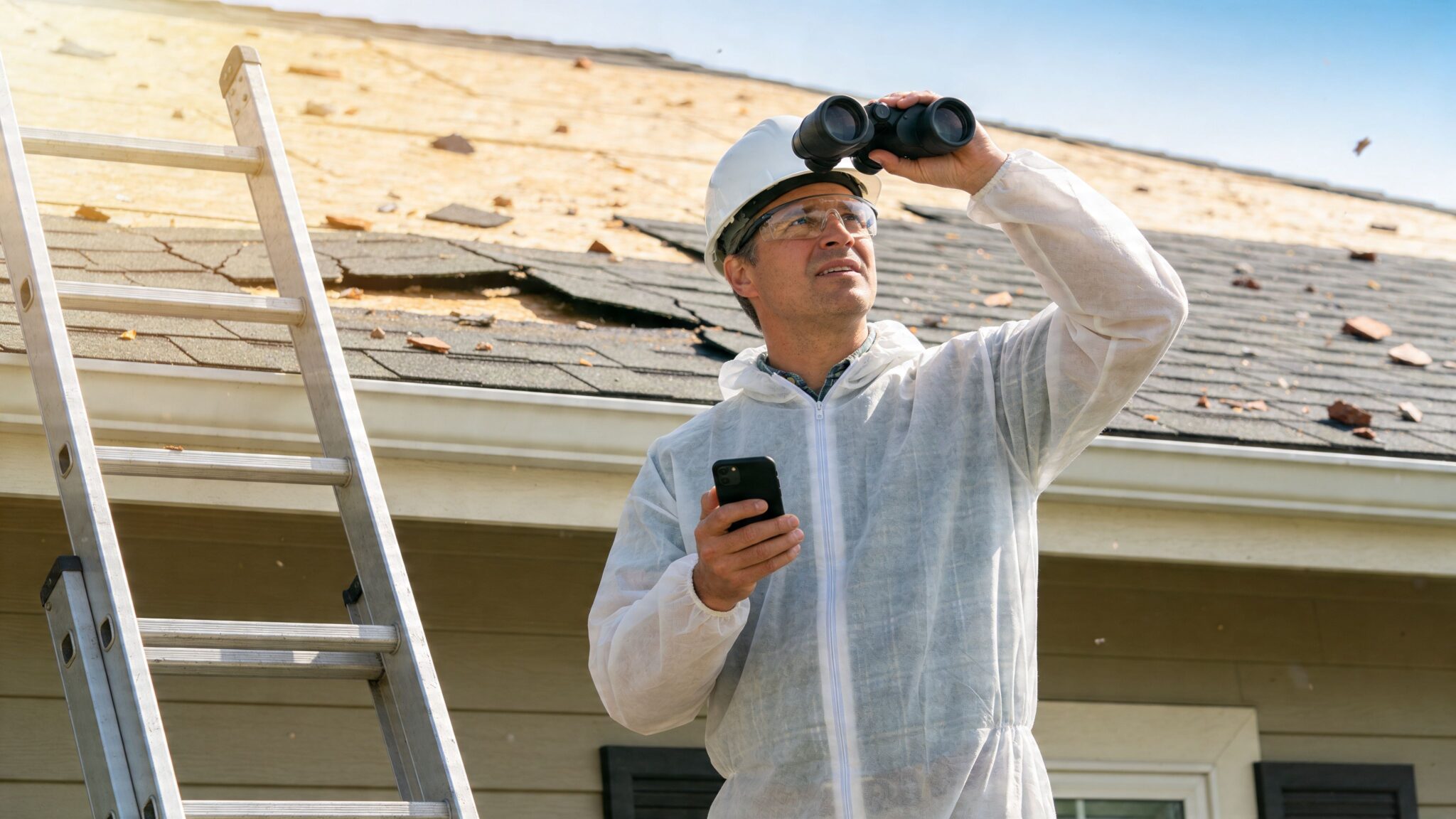
A South Florida roof assembly example helps show why those material choices cannot be separated from edge details, transitions, and roof geometry.
Practical trade-offs by material
Asphalt shingles
Shingles are still the entry point for many homeowners because the upfront cost is easier to absorb. They are also easier to match and repair after a smaller isolated loss.
The trade-off is service life in this climate. Boynton Beach sun bakes shingles year-round, and storm seasons test the seal strips, ridge caps, and exposed edges again and again. A well-installed shingle roof can perform well, but it gives you less margin for sloppy nailing, poor attic ventilation, or weak flashing.
Tile
Tile fits South Florida homes well and can last a long time. It also handles heat better than many owners expect, and it keeps a strong look over the years if broken pieces are replaced promptly.
The trade-off is weight, repair complexity, and brittleness. Not every home is the same structurally, and not every crew handles tile carefully. Matching older tile can also become a problem, especially after partial storm damage.
Metal
Metal roofing has real advantages in coastal Florida. It sheds water quickly, weighs less than tile, and performs well in wind when the panel system, fastening, and trim details are selected properly.
It also demands precision. The panel itself is only part of the system. Transitions, edge metal, sealant placement, penetrations, and fastening schedules decide whether the roof stays tight. I have seen expensive metal roofs underperform because the detail work was average.
Flat systems
Flat and low-slope roofs reward careful workmanship and regular maintenance. They can perform very well, but they do not hide mistakes for long.
Drainage is the whole story. If water ponds around a penetration, curb, or low area, the membrane takes a beating and the insulation below can start holding moisture before a stain ever appears inside.
One line item many owners ignore
Roof cleaning and maintenance deserve a spot in the budget, especially under Boynton Beach trees and humidity. Algae, leaf debris, and clogged drainage paths shorten roof life by holding moisture where it does not belong.
The cost is usually modest compared with repairing rot, replacing stained fascia, or chasing leaks that started because debris was allowed to sit for months. A roof does not need constant attention, but it does need periodic care if you want the full service life you paid for.
Hurricane Code Compliance Your Roof's Most Important Feature
A Boynton Beach roof usually looks fine right up until the first real wind event tests the edges, the fasteners, and the way every detail was put together. I have seen roofs with expensive materials fail early because the installation did not match the approval, the permit, or the wind exposure at the house.

In Palm Beach County, compliance starts with the right product approvals and ends with correct installation in the field. Those are two different things. A bundle of shingles, a tile profile, or a metal panel can be approved for Florida use, but the roof still fails inspection or underperforms in a storm if the fastening pattern, edge metal, underlayment, or flashing details are wrong.
The weak spots are usually predictable. Corners take higher wind pressure. Perimeters and ridges get tested first. Valleys, wall flashings, vents, and low transitions are where water shows up after the wind has already lifted or loosened something. A good roofer builds those areas for South Florida weather, not for a brochure photo.
A South Florida roof assembly example shows why roof shape, overhangs, and edge conditions matter so much once gusts start pushing and pulling on the system.
What a contractor should know before they start
Boynton Beach homeowners do not need a lecture on code sections. They do need a contractor who can explain which approvals apply to the roof being installed and how the crew will follow them. For Florida roofs, that often means checking product approvals through the Florida Building Code product approval system and making sure the selected assembly matches the home's exposure and design requirements.
Experience matters here, but not as a sales slogan. I would rather hire a roofer who can explain the difference between field, perimeter, and corner fastening requirements than one who only talks about how many roofs the company has installed. In coastal South Florida, details decide whether the roof holds together.
Code-compliant roofing is the floor, not the upgrade.
The parts of compliance owners should ask about
Ask for plain answers on these items before material shows up:
- Underlayment type and attachment: This affects water intrusion resistance after the outer covering is damaged.
- Edge metal and perimeter fastening: Many blow-offs start at the edge, not in the middle of the roof.
- Flashing at walls and penetrations: These transitions separate careful work from leak-prone work.
- Approved assembly and fastener schedule: The material and the fastening pattern have to match the approved system.
- Permit and inspection sequence: The contractor should know what the city or county inspector will need to see and when.
If the explanation is vague, keep pressing.
Why this matters beyond the storm itself
Code compliance affects more than wind performance. It shapes permit approval, inspection sign-off, repair documentation, resale conversations, and the questions that come up after a named storm passes through Palm Beach County. A roof installed outside the approved method can create expensive arguments later, even if the problem is not obvious on day one.
A roofing contractor Boynton Beach homeowners trust should be able to show what is being installed, which approval it follows, and how that work will be documented. If the answer is mostly sales talk, keep looking.
Navigating Inspections and Supporting Insurance Claims
The inspection process is where a good roofer stops guessing and starts documenting. That matters twice. First for finding problems early, and second for giving the insurance side of the job something solid to work from.
A professional roof inspection can achieve 90% early detection of potential failures, and when discrepancies are properly documented by the roofer, success rates in preventing insurance claim denials can reach 85%, according to the Boynton Beach structural recertification inspection guidance. Those numbers explain why homeowners shouldn't treat inspections as a formality.
What a thorough inspection looks for
A real inspection doesn't stop at obvious broken pieces. It looks at the whole system.
That usually includes:
- Exterior roof covering condition: loose tiles, missing shingles, open seams, punctures, and exposed fasteners
- Transition details: flashing at walls, valleys, vents, curbs, and penetrations
- Signs of movement or moisture: sagging areas, soft spots, staining, and membrane deterioration
- Interior evidence: attic staining, wet insulation, deteriorated decking, and ventilation issues
On South Florida roofs, some of the most important findings are the ones the homeowner can't see from the driveway.
Why documentation changes claim outcomes
Insurance carriers want proof, not general statements. "The roof is damaged" doesn't go far. Photo documentation, marked-up scope notes, and records showing what was uncovered during tear-off are far more useful.
If a contractor documents the discrepancy between what was visible before the job and what appears once materials come off, that can support a supplement request. That's especially important when decking damage or flashing deficiencies were hidden under the old roof.
A roof inspection helps the homeowner understand the problem. Documentation helps the adjuster justify the file.
What homeowners should ask for after an inspection
Don't just ask, "Is it bad?" Ask for usable records.
Request:
- Photos of each affected area
- A written summary of observed conditions
- Notes on whether the issue appears isolated or widespread
- A clear scope for repair or replacement
- Documentation suitable for insurance review if storm damage is involved
A contractor who can inspect well but not document well leaves money and clarity on the table.
Where inspections help even without a current claim
Even if you're not filing insurance paperwork today, a documented inspection helps with planning. It gives you a baseline. If a storm hits later, you already know what was pre-existing and what changed.
That matters in real estate transactions too. Buyers, sellers, and agents all benefit when the roof condition is described with evidence instead of opinions.
Your Partner for a Secure Roof in Boynton Beach
A Boynton Beach roof usually fails on the details, not the obvious. One home has lifted tile at the ridge after a windy summer. Another has sun-baked flashing that looks fine from the driveway but leaks around a vent stack in the first hard storm. The homeowner who does best is the one who treats roofing as a code, weather, and contractor-selection job, not just a price comparison.
That matters here because Boynton Beach homeowners deal with more than age and wear. Roofs in this part of Palm Beach County have to stand up to hurricane exposure, year-round UV, salt air, and a crowded contractor market where proposals can look similar while the actual scope is very different.
The right path is usually straightforward. Find problems before they spread. Hire a contractor who knows local permitting and current code. Make sure the proposal matches the roof system and attachment requirements your house needs. Keep records that protect you after the work is done.
Paletz Roofing and Inspections has worked in Broward, Miami-Dade, and Palm Beach counties since 1990, handling residential and commercial projects across shingle, tile, metal, and flat roofing systems. That kind of regional experience matters in South Florida because the trade-offs are rarely generic. A tile repair in Boynton Beach is different from a full reroof under current wind-load requirements, and both require sound judgment from the start.
A roofing contractor Boynton Beach property owners can rely on should do more than install materials. They should explain where your roof is vulnerable, recommend a scope that fits the house and the code, and leave you with a finished job that is documented properly. That is how you get a roof that holds up when the weather turns and the paperwork starts.
Frequently Asked Questions About Boynton Beach Roofing
How long does a roof replacement take in Boynton Beach
Timelines depend on material, weather, permit flow, and crew availability. In 2025, Palm Beach County saw project delays of around 25% due to subcontractor shortages, and homeowners should expect 4-6 week waits for some tile materials while budgeting for an 18% hike in roofing labor costs, according to the Boynton Beach roofing FAQ reference.
For homeowners, the practical takeaway is simple. Start earlier than you think you need to. If your roof is aging or already leaking, don't wait for storm season to begin calling.
What should a roofing warranty actually cover
A warranty should clearly separate manufacturer material coverage from contractor workmanship coverage. Those are not the same thing.
Read the exclusions carefully. A warranty may not cover damage caused by storm events, foot traffic, neglected maintenance, poor drainage, or work done later by another trade. If the contractor can't explain what is and isn't covered in plain language, ask again before you sign.
The best time to understand a warranty is before the first nail is removed.
What should I do if I have an emergency roof leak
Start with safety. Move valuables, contain water with buckets or towels, and stay away from any area where water is close to electrical fixtures.
Then take a few photos of the interior damage and, if you can do it safely from the ground, the exterior area you suspect is involved. Don't climb on a wet roof. Call a licensed roofer for emergency protection and inspection. Temporary dry-in measures can limit further interior damage while the full scope is being evaluated.
Is repair always cheaper than replacement
Not always. A repair costs less upfront when the issue is isolated and the rest of the roof is still in solid condition. But repeated repairs on a roof with widespread wear often cost more over time and leave you with the same underlying risk.
A good contractor should be able to tell you when a repair is a smart move and when it's just delaying a larger problem.
Does a lower estimate mean better value
Usually not by itself. Lower estimates often leave out scope details that matter later, including flashing work, disposal, permit handling, or decking repairs if damage is uncovered. Compare scope before price.
If you need a clear answer on whether your Boynton Beach roof needs repair, replacement, or documentation for a claim, Paletz Roofing and Inspections can help with inspections, damage assessments, and practical guidance based on decades of South Florida roofing experience.