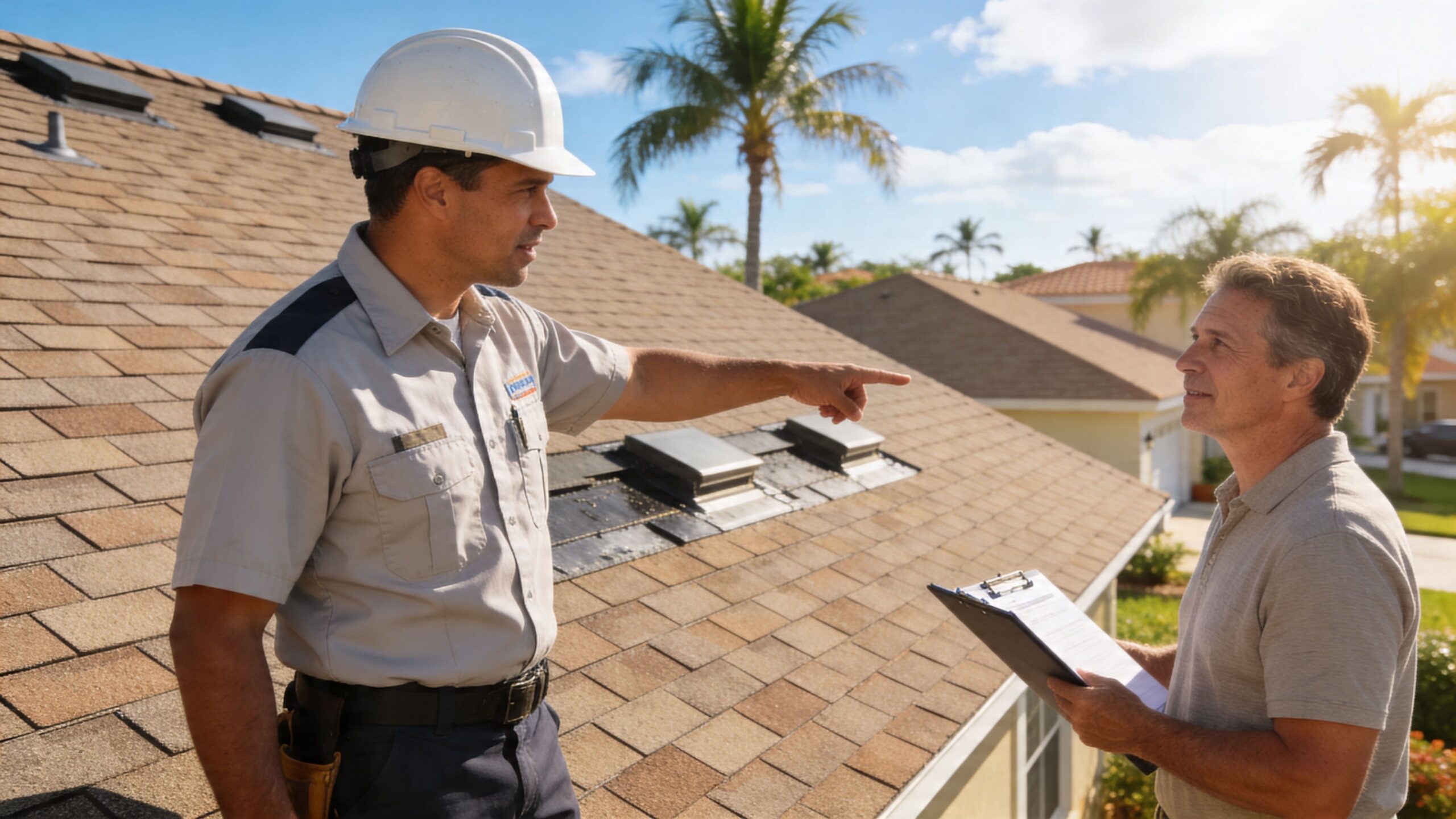
A lot of Boynton Beach roofing jobs start the same way. A ceiling stain shows up after a hard rain, a few shingles look wrong from the driveway, or an insurance notice lands in the mailbox and suddenly the roof moves from “later” to “now.”
That urgency is exactly when homeowners get pushed into bad decisions. In South Florida, the roof over your head is tied to storm protection, insurance, resale value, and code compliance. It’s also tied to one uncomfortable reality: when storms roll through, questionable contractors show up fast.
A search for roofing company boynton beach gives you plenty of names. The hard part isn’t finding a roofer. It’s figuring out who will protect your property, follow code, communicate clearly, and leave you with a legal, insurable roof instead of a bigger problem.
Your Guide to Hiring a Boynton Beach Roofer
A common call starts with a homeowner who noticed a brown spot spreading on the ceiling over the guest room. The leak seems small. Then they get on Google, see page after page of roofers, and realize they have no clear way to sort a seasoned contractor from a storm chaser.

That confusion is understandable. The South Florida market includes 1,098 BBB-accredited roofing contractors near Boynton Beach as of 2026, which makes careful vetting essential. In a crowded field, long operating history matters, especially for a firm that’s been licensed since 1990, as noted in this Boynton Beach roofing market overview.
What matters first
The first question isn’t “Who gave the lowest quote?” It’s “What problem am I solving?”
A roof with a small isolated issue needs a different response than a roof with widespread failure, storm damage, or age-related deterioration. Homeowners often lose money when they skip that step and let the salesperson define the problem for them.
Three things should happen before you sign anything:
- Identify the scope: Is this a repair, a partial rebuild, or a full replacement?
- Verify the contractor: License, insurance, local experience, and written process all matter.
- Check the paperwork: Estimate, contract terms, permit responsibility, and inspection path should be clear.
Practical rule: If a contractor wants your signature before giving you a detailed written scope, slow the conversation down.
Why local experience still matters
South Florida roofing isn’t generic. Sun exposure, wind uplift, salt air, flashing details, drainage, and permit compliance all affect how a roof performs here.
That’s why homeowners should pay attention to a company’s local record, not just its ad spend. You can review the Paletz Roofing and Inspections company identity asset as part of your broader verification process, but the larger point is simple. In Boynton Beach, history, accountability, and code familiarity usually tell you more than a flashy flyer.

Decoding Your Roofing Needs and Material Options
Before you compare contractors, get clear on whether your roof needs a repair or a replacement. That one distinction shapes cost, timeline, disruption, permit needs, and what materials make sense.
This visual helps frame the decision.

Repair makes sense when damage is contained
Repairs usually fit roofs with isolated damage. A few missing shingles, one trouble area around flashing, or a leak tied to a specific penetration can often be addressed without replacing the entire system.
Replacement becomes the smarter move when problems are spread across the roof. Repeated leaks, visible deterioration in multiple sections, storm impact across large areas, or deck concerns point to a larger project.
A good contractor should explain why a repair will hold, or why it won’t. If you only hear “you need a whole new roof” without photos, problem areas, and reasoning, keep asking questions.
Material choice in Boynton Beach is not just about appearance
In this climate, the right material has to stand up to heat, heavy rain, wind exposure, and coastal air. Some materials cost less up front but demand more attention over time. Others cost more initially but can offer stronger storm performance and insurance advantages.
Florida homeowners can receive up to 30% in insurance premium discounts for fortified roofs using compliant metal or tile systems, and newer code requirements call for higher wind ratings of 180+ mph, according to this BBB roofing category reference for Boynton Beach.
A roof should be selected like an exterior system, not a cosmetic finish. If it looks good but doesn’t match the wind and moisture demands of the property, the wrong choice shows up later.
Boynton Beach Roofing Material Comparison
| Material | Average Lifespan | Estimated Cost (per sq ft) | Hurricane Resistance | Best For |
|---|---|---|---|---|
| Asphalt shingle | Varies by product and installation quality | Qualitatively lower upfront cost than tile or metal | Can perform well when properly specified and installed, but product selection matters | Budget-conscious homeowners seeking a familiar look |
| Standing seam metal | Longer-term option in many South Florida applications | Higher upfront cost | Strong fit for wind-focused performance and fortified roof strategies | Homeowners prioritizing durability and insurance considerations |
| Concrete or clay tile | Long-service material when properly installed | Higher upfront cost | Strong storm-oriented choice when system details are correct | Homes where aesthetics and long-term value both matter |
| Flat roofing systems | Varies by membrane and drainage design | Project-specific | Performance depends heavily on drainage, detailing, and installation quality | Low-slope residential and commercial properties |
Ventilation and underlayment are part of the decision
Homeowners often fixate on the visible surface and ignore what sits beneath it. That’s a mistake.
A roof system in South Florida also depends on underlayment quality, edge details, fastening pattern, and attic airflow. If you want a practical primer on why airflow matters, this guide to proper roof ventilation is useful background reading before you review proposals.
When I see avoidable callbacks, they often trace back to hidden details. Not the tile color. Not the shingle brand on the brochure. The problem is usually in the installation decisions no one talked through at the estimate stage.
Finding and Vetting Reputable Local Roofers
Typing roofing company boynton beach into a search bar feels like research. Sometimes it’s just the first step toward being marketed to.

The biggest mistake homeowners make is assuming a polished website, a fast estimate, or a friendly sales pitch means the contractor is trustworthy. It doesn’t. The firms that cause the most damage often sound the most confident.
A serious warning sign comes from South Florida scam patterns. State lawsuits against firms like Florida Roof Specialists, which faced 137 complaints for deceptive practices, show how pressure sales and vague contracts can harm homeowners, as discussed in this consumer protection report on roofing scams.
Red flags that should stop the conversation
If a contractor does any of the following, pause the process:
- Pushes you to sign immediately: Post-storm urgency is real, but high-pressure signing is a scam pattern.
- Uses vague language: “We’ll take care of everything” isn’t a scope of work.
- Treats insurance like a sales tool: A contractor can document damage. They should not turn the estimate into a scripted promise about what your carrier will do.
- Avoids license and insurance proof: A reputable company should provide documentation quickly.
- Leaves material details unclear: If the quote doesn’t name what’s being installed, you can’t compare bids accurately.
What a real vetting process looks like
A better screening method is boring on purpose. That’s a good thing.
Start with written verification. Confirm the business name matches the license and insurance records. Make sure the estimate carries the same company identity that appears on contracts, vehicles, and permit paperwork. Review project photos, but don’t stop there.
Then look for process clarity:
- Inspection method: Did they inspect the full roof or only glance from the ground?
- Documentation: Did they provide photos and explain the findings plainly?
- Crew structure: Who performs the work?
- Permitting: Who pulls the permit and coordinates inspections?
- Cleanup: How do they protect landscaping, driveways, and HVAC equipment?
If a roofer can’t explain the job in plain language before the contract, communication usually gets worse after the deposit.
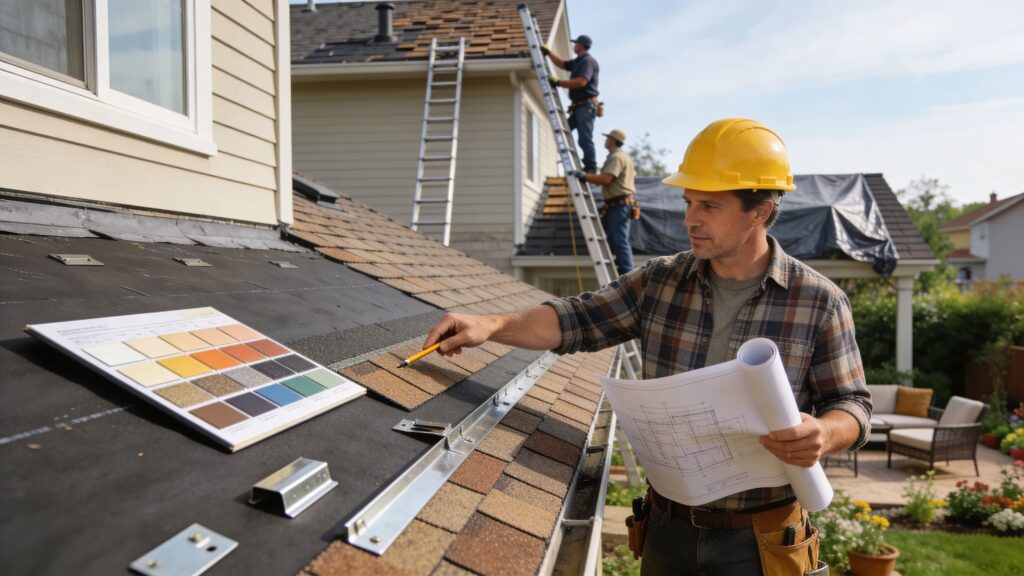
One useful way to screen presentation quality is to compare how companies visually document work and communicate scope. This project image example shows the kind of asset homeowners often see during contractor review, but the image itself isn’t proof. The proof is whether the contractor backs visuals with license records, insurance proof, a written scope, and permit accountability.
Trust the contractor who slows the sale down
Predatory roofers rush. Solid roofers explain.
The right company usually asks more questions than the wrong one. They want to know the leak history, prior repairs, attic conditions, insurance concerns, and whether you’ve seen interior staining in more than one area. That slower conversation often protects the homeowner from the wrong job.
Key Questions to Ask Potential Roofing Contractors
When the estimator is standing in your driveway, treat that appointment like an interview. A trustworthy roofer won’t mind direct questions. In fact, clear questions usually lead to a better project.
Ask what they found and how they know
Start with this: What did you see, and can you show me?
A strong contractor answers with photos, marked problem areas, and a clear explanation of whether the issue is isolated or system-wide. A weak contractor falls back on general language and skips evidence.
Follow with: If we only repair this, what risk remains?
That question reveals whether the contractor thinks in systems or just sells scopes.
Ask who is actually doing the work
Some companies estimate the job and disappear after the contract is signed. Others manage the work closely from tear-off through final inspection.
Ask:
- Who will be on site each day
- Are the crews employees or subcontracted crews
- Who supervises quality and safety
- Who is my point of contact if something changes
Good answers are specific. Vague answers usually mean loose jobsite control.
Ask about materials by exact product line
Don’t settle for “architectural shingles” or “metal roof.” Ask for exact product names, underlayment type, flashing details, and fastening method.
Questions that matter:
- What exact roofing material are you proposing?
- What underlayment will go under it?
- How are valleys, penetrations, and edges being detailed?
- What corrosion-resistant components are included for our coastal conditions?
This is also the point where a contractor might present options. For example, Paletz Roofing and Inspections handles shingle, tile, metal, and flat roofing systems in South Florida, which is the kind of multi-system capability some homeowners want when comparing proposals rather than being steered toward only one product type.
Ask about protection, cleanup, and closeout
Homeowners often forget to ask how the crew will treat the property.
Use direct language:
- How will you protect landscaping, pool enclosures, and driveway surfaces?
- What does daily cleanup look like?
- Will you do a final magnetic sweep for nails and metal debris?
- What paperwork do I receive when the job is complete?
The best answer is usually detailed and unhurried. If someone gets irritated by reasonable questions before the job starts, that’s useful information.
Ask for proof, not reassurance
End with two simple requests. Ask for the license information and proof of insurance. Ask for a sample contract before you agree to anything.
A professional contractor should be ready for both. You’re not being difficult. You’re doing the job every Boynton Beach homeowner should do before handing over a deposit.
Understanding Quotes Contracts and Local Requirements
A roofing estimate is not just a price. It’s a technical document, a legal roadmap, and a preview of how the contractor thinks.

The cheapest quote often leaves out the very items that prevent leaks and inspection trouble. If two bids are far apart, don’t ask which one is cheaper. Ask what one of them removed from the scope.
Compare quotes line by line
An estimate should tell you exactly what the contractor plans to do. If it doesn’t, you’re comparing marketing, not work.
Look for these items in writing:
- Tear-off scope: How much existing material is being removed
- Deck work: What happens if damaged sheathing is found
- Underlayment: Exact type, not just “felt” or “water barrier”
- Flashing and edge metal: Whether replacement is included
- Ventilation components: Intake and exhaust details if applicable
- Permit responsibility: Who pulls it and manages inspections
- Warranty language: Manufacturer coverage and contractor workmanship terms
If one bid says “replace roof,” that’s not enough.
The contract should protect you, not just the contractor
A sound roofing contract should be plain enough to read without a translator. If critical terms are hard to find, that’s a problem.
Check for:
- Payment schedule: Clear amounts tied to milestones
- Materials list: Exact products or approved equivalents
- Start and completion terms: Not vague promises
- Change-order process: Written approval before extra charges
- Cleanup and disposal: Dumpster, debris handling, and final cleanup
- Lien protection: Ask how payment documentation and waivers will be handled
A fair contract reduces surprises for both sides. A vague contract usually protects only the side that wrote it.
Boynton Beach permit and code issues are not optional
Roofing in Boynton Beach is tightly tied to permit compliance. Projects require a building permit and must pass phased inspections. Non-compliance with the Florida Building Code, including omission of wind-resistant underlayment, accounts for 40% of inspection rejections and can trigger rework, according to this Angi summary of Boynton Beach roofing requirements.
That means the contractor should already be talking about:
- Permit submission
- Wind load calculations
- Phased inspections
- Underlayment compliance
- Final sign-off
If those topics never come up during estimating, that’s a serious concern.
A low bid can get expensive fast
A quote that omits critical details may still look attractive at the kitchen table. Then the project starts, hidden charges appear, inspection corrections pile up, and the final number climbs.
Good proposals don’t hide complexity. They price for it openly. That’s what protects the roof, the permit, and the homeowner.
What to Expect During Your Roofing Project
Once the contract is signed and the permit is moving, most homeowners want to know one thing. What will happen on my property?
A professional roof installation follows a sequence. That sequence includes deck inspection and repair, followed by installation of a high-temp, 150-mph rated ice-and-water shield, and certified installers achieve a 98% success rate versus 70% for generalists according to NRCA benchmarks, as described in this 7-step roof installation overview.
The project should move in a visible order
You should expect to see the old roofing removed, the deck checked closely, damaged wood addressed if needed, underlayment installed, flashing details completed, and then the finish material applied.
That deck inspection is where good roofers earn their keep. Problems hidden under old roofing don’t improve when they’re covered over.
Daily disruption should still be managed
Roofing is noisy. Materials arrive, crews move quickly, and tear-off days are active. But a well-run project still feels organized.
Expect communication about start times, access needs, debris handling, and cleanup. A responsible crew protects plantings, keeps pathways usable where possible, and leaves the site in better shape each afternoon than a careless crew would.
You can also review a roofing project visual example to understand the kind of installation environment homeowners often see during active work.
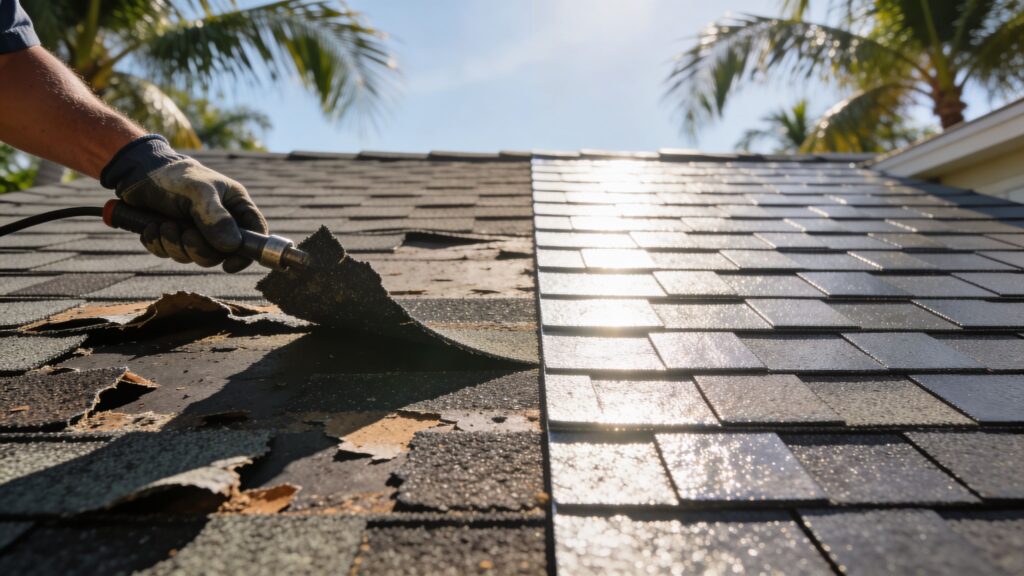
The smoothest jobs aren’t silent. They’re predictable. Homeowners can tolerate noise a lot better than confusion.
Final closeout matters
At the end, the contractor should do more than say “finished.” You should see a final walkthrough, explanation of any replaced decking or detail changes, cleanup confirmation, and warranty documentation.
That last stage is where a professional job stops feeling like construction and starts feeling like protection.
Frequently Asked Questions About Boynton Beach Roofing
Should I repair the roof or replace it after a storm
If damage is isolated, a repair may be the practical answer. If the roof has multiple failure points, repeated leaks, or broad storm impact, replacement often makes more sense. The right answer depends on documented conditions, not a sales script.
How long should a roofing estimate take
A serious estimate usually takes enough time for inspection, photos, note-taking, and discussion. If someone gives you a firm recommendation almost immediately without documenting what they saw, be cautious.
Do I need to worry about permits
Yes. Roofing work in Boynton Beach has permit and inspection requirements. Homeowners should confirm in writing that the contractor is handling that process and building the work to local code.
What if a roofer says they’ll deal with my insurance and I don’t need to worry
Be careful. A contractor can document visible roof conditions and provide a written scope. You should still read every contract, understand every commitment, and avoid vague promises tied to coverage.
What should I keep after the job is complete
Keep the contract, permit record, final invoice, warranty paperwork, product information, and any photos that document the completed work.
If you need a roof inspection, repair scope, or replacement proposal in Boynton Beach, Paletz Roofing and Inspections provides residential and commercial roofing services across Palm Beach, Broward, and Miami-Dade counties. A practical next step is to get the roof documented clearly, compare written scopes carefully, and make sure any contractor you hire is prepared to meet local permit, material, and inspection requirements.