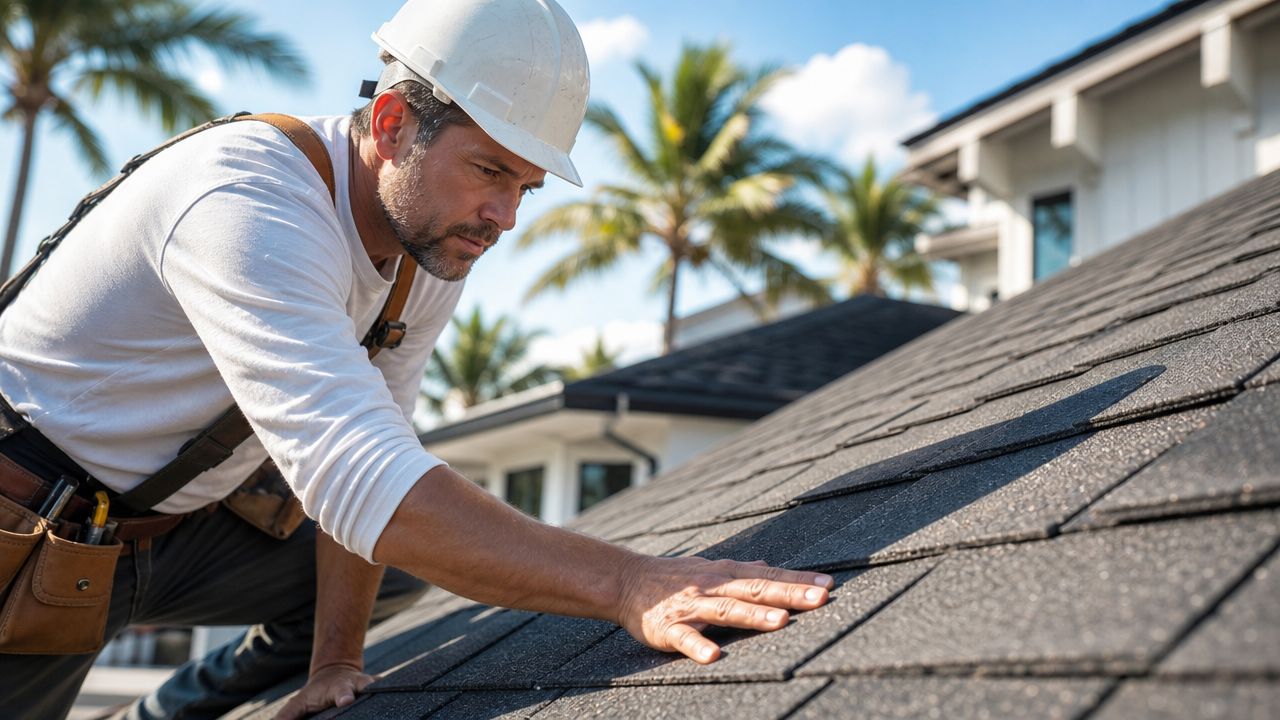
If you're standing in your driveway after another hard South Florida storm, looking up at dark streaks, lifted shingles, or a ceiling stain that wasn't there last month, you're in the same spot many Plantation homeowners reach before they start searching for answers on roof replacement. The hard part isn't just knowing whether the roof is done. It's figuring out what replacement really costs here, what Broward County will require, and how to pay for it without making a rushed decision.
In Plantation, a roof doesn't fail from one thing alone. Sun bakes it. Wind tests every edge. Humidity feeds algae. Then hurricane season exposes every shortcut. After decades working on South Florida roofs, we've seen the same pattern over and over. Homeowners wait on a roof that needed action sooner, or they get sold a system that doesn't fit the house, the code, or the budget.
Table of Contents
- Is It Time for a New Roof in Plantation
- Budgeting for Your Roof Replacement Cost and Financing
- Choosing the Best Roofing Materials for South Florida
- Navigating Plantation Permits and Hurricane Codes
- How to Choose and Vet a Plantation Roofing Contractor
- The Roof Replacement Process From Start to Finish
- Local Plantation Roofing FAQs
Is It Time for a New Roof in Plantation
A lot of homeowners first notice trouble after a typical afternoon thunderstorm. Water shows up where it shouldn't. A shingle tab looks bent. The patio is dotted with granules. In Plantation, those aren't random cosmetic issues. They're often early warnings that the roof system is losing its ability to handle heat, rain, and uplift.
What to look for after a Plantation storm
Start from the ground. Walk the perimeter and look at the roof lines, valleys, and edges. If sections look uneven, curled, or visibly lifted, the roof may already have movement from repeated wind pressure.
Then check these common signs:
- Granules in gutters or at downspouts: On shingle roofs, that often means the surface layer has worn down and the sun is getting direct access to the asphalt beneath.
- Cracked or brittle shingles: South Florida heat dries shingles out. Once they lose flexibility, they don't seal and flex the way they should in storm weather.
- Dark streaks and algae growth: Some staining is cosmetic, but widespread growth can hold moisture and hide underlying wear.
- Flashing trouble: Around chimneys, vents, and wall transitions, loose or rusted flashing often causes the leak homeowners mistake for a field-shingle problem.
Practical rule: If the same roof has active leaks, visible shingle damage, and edge or flashing issues at the same time, you're usually past the stage where a simple patch makes financial sense.
Signs the roof is near the end, not just in need of repair
Repairs still make sense when the problem is isolated. A single damaged section after a storm, one failed penetration detail, or a small leak that traces to one flashing area can often be fixed properly. What doesn't work is scattering repairs across an aging roof that has broad wear.
Watch for patterns, not just isolated defects:
- Damage in multiple areas instead of one section.
- Interior signs returning after previous repairs.
- Surface aging across the whole roof, especially faded, dry, or uneven shingle fields.
- Sagging or soft spots, which can point to deck issues below the covering.
A quick homeowner check helps, but don't climb the roof. Plantation roofs get slick from moisture, algae, and loose granules. From the ground, binoculars and a careful attic look after rain tell you plenty. In the attic, look for damp insulation, stained decking, or daylight around penetrations.
One more sign matters here more than people think. If your roof made it through past seasons but looks progressively weaker each year, hurricane season becomes the deadline, not the decision point. A roof that barely holds through summer storms usually doesn't improve when the wind gets serious.
Budgeting for Your Roof Replacement Cost and Financing
A Plantation homeowner gets two quotes for what sounds like the same job. One looks thousands lower. Then the permit review starts, rotten decking shows up at tear-off, and the cheaper number no longer looks cheap. We see that regularly.
What Plantation homeowners usually pay
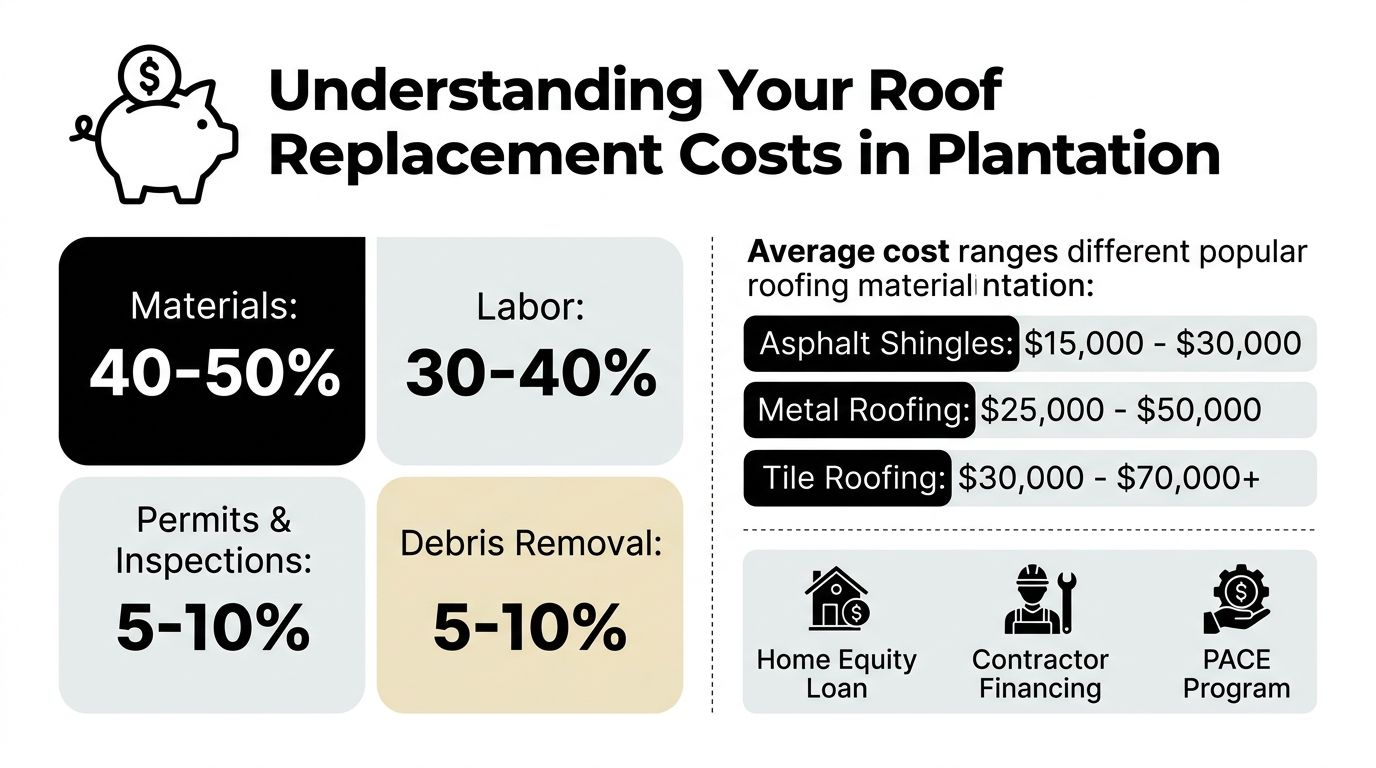
Roof replacement cost in Plantation depends on scope, not just square footage. Material choice matters, but so do tear-off conditions, roof layout, permit requirements, and whether the estimate includes the code-related items that Broward County often forces into the final contract.
For a broad local benchmark, HomeYou's Plantation roof replacement cost page lists an average roof replacement cost in Plantation at $6,313 to $7,114, with a broader local range of $5,913 to $7,514 as of June 2026.
Across Florida, Florida roof replacement costs from HomeAdvisor place a typical 2,000-square-foot roof replacement at $15,000, with per-square-foot costs ranging from $3.50 to $10.50 depending on material and complexity.
Those figures only make sense if you compare scope to scope. Online averages often reflect cleaner jobs with fewer complications. In Plantation, once you add real permit requirements, disposal, underlayment upgrades, flashing replacement, and possible deck repairs, the contract price can move well above a simple calculator result.
| Roof type | Typical local range |
|---|---|
| Asphalt shingle | $8,000 to $15,000 |
| Premium metal | $12,000 to $25,000+ |
| Tile | $20,000 to $40,000+ |
What changes the final quote
Square footage gives you a starting point. It does not give you a real budget.
The biggest price drivers are usually roof geometry, material weight and labor demands, tear-off difficulty, and hidden wood damage. A simple shingle roof with clean access prices very differently from a cut-up tile roof with valleys, tied-in sections, and limited room for debris staging.
Code-related work is where homeowners get surprised. In this market, the estimate needs to account for the fastening pattern, underlayment, flashing details, and other items that may be required during permit review or field inspection. If that language is missing from the proposal, the low number may only be a placeholder.
We advise homeowners to read estimates line by line and ask direct questions:
- Does the quote include permit fees and disposal?
- Is rotten decking included, capped, or billed as needed?
- Are flashing replacements listed specifically?
- Does the scope identify the underlayment and attachment method?
- Are there allowances for code-triggered upgrades?
A short proposal usually means a longer invoice later.
Financing options that deserve a hard look
Paying cash is clean if the reserves are there, but cash is not the only sensible option. Some owners use home equity because the rates can be lower than unsecured credit. Some use project-based lending when the roof is part of a larger property improvement. For buyers, landlords, or owners combining exterior work with interior rehab, Investor renovation loans may fit better than a basic personal loan.
PACE financing deserves careful review because it gets discussed often and understood poorly. In Florida, PACE programs are administered through local government arrangements and tied to the property rather than a conventional mortgage note. The Florida PACE Funding Agency explains how eligible improvements, repayment terms, and program structure work.
That structure can help an owner preserve liquidity, especially when the roof upgrade overlaps with energy-related improvements. It also comes with trade-offs. The repayment obligation is added through the property tax bill, and homeowners need to understand the long-term cost, transfer issues at sale, and how mortgage servicers may view it. We tell customers to review those terms as carefully as they review the roofing contract.
Insurance savings are part of the budgeting conversation too. A properly permitted roof system with the right documentation may improve eligibility for wind mitigation credits or help during policy renewal, but those savings depend on the final assembly, the inspection paperwork, and compliance with local requirements. Budget for the paperwork, not just the shingles.
Choosing the Best Roofing Materials for South Florida
A Plantation homeowner usually starts with color and style. After the first hard summer, important questions show up. How does the roof handle heat, wind-driven rain, salt air, algae, and the inspection standards that come with replacing it in Broward County?
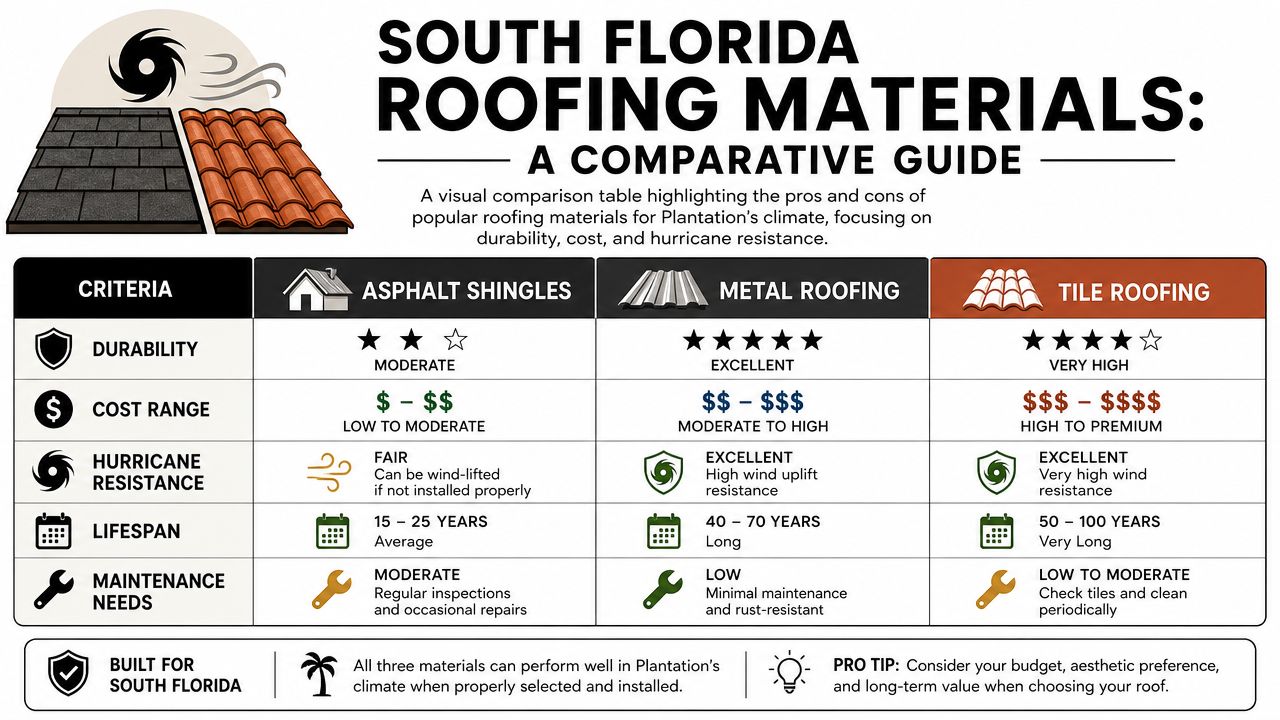
How shingles, metal, tile, and flat systems really compare
We tell customers to choose the roof system the house can support, the budget can carry, and the permit file can document cleanly for insurance purposes.
Architectural shingles stay popular for a reason. They fit a wide range of home styles, they keep initial cost lower than tile or standing seam metal, and repairs are usually more straightforward. The trade-off is service life and heat performance. In South Florida, lower-grade shingles and weak attic ventilation show their problems early.
Metal roofing costs more up front, but it has real advantages in this climate. Lighter colors can reduce heat gain, panels shed water fast, and the finished look works well on both updated ranch homes and newer custom builds. The catch is workmanship. Metal is less forgiving than shingles. If the panel layout is off or the flashing crew cuts corners, you will see it, and leaks usually show up at details, not in the field of the roof. The Metal Roofing Alliance guide to residential metal roofing gives homeowners a good overview of system types and performance considerations.
Tile fits South Florida well, especially on homes built for that profile and weight. It holds up to sun exposure, and many Plantation neighborhoods already have concrete or clay tile roofs. But owners need to understand the long-term maintenance issue. The tile itself may still look fine while the underlayment below it is aging out. That changes the budgeting conversation because repairs and future replacement are more labor-heavy.
Flat and low-slope areas need a different approach altogether. Modified bitumen, TPO, or another approved low-slope assembly may be the right answer, depending on the structure and drainage. We see problems when someone tries to force a steep-slope material onto a section that should have been treated as a membrane roof from the start.
Which material fits which house
The right choice usually lines up like this:
- Choose shingles for a standard pitched roof where cost control matters and the goal is a solid, code-compliant replacement.
- Choose metal if you want longer-term value, cleaner lines, and you're prepared to pay for skilled fabrication and detail work.
- Choose tile if the structure supports the weight and the home's design calls for it.
- Choose a dedicated flat roofing system anywhere the slope is too low for shingles or tile to perform properly.
Material choice also affects financing and resale decisions more than many owners expect. A buyer planning to sell in a few years may prefer shingles because the upfront spend stays lower. An owner who expects to hold the property longer may decide metal makes better financial sense. A tile replacement can support the architectural style of the home, but it raises both installation cost and future repair complexity.
That is why we do not recommend materials by trend. We recommend them by roof geometry, structural capacity, maintenance expectations, and how much paperwork the owner wants lined up cleanly for inspections and insurance files.
One company homeowners often evaluate for this type of work is Paletz Roofing and Inspections, along with other licensed local contractors that handle shingle, tile, metal, and flat systems in South Florida.
A roof system has to work as an assembly. The surface material matters, but in Plantation the underlayment, flashing, fastening pattern, edge metal, and drainage details usually decide whether the roof performs well after the first major storm season.
Navigating Plantation Permits and Hurricane Codes
A Plantation reroof usually gets stressful the moment the old roof starts coming off and the owner realizes the actual job is not just shingles or tile. This actual job is getting a roof system approved, inspected, and documented correctly under Broward County rules so it holds up in storm season and stands up to insurance review later.
That starts with HVHZ requirements. Broward County falls under the High-Velocity Hurricane Zone, which means the assembly matters at every layer. Fastener type and spacing, underlayment attachment, drip edge, flashing transitions, and product approvals all have to line up with the permitted scope. We have seen roofs look clean from the driveway and still fail inspection because one component did not match the approved system.
Homeowners often ask why two reroof proposals can be far apart in price when the roof size looks similar. Permit handling is part of that answer. A contractor pricing a legal, code-compliant replacement is carrying the cost of approved materials, inspection scheduling, documentation, and the labor needed to install to HVHZ standards. A cheaper number can mean shortcuts in paperwork, cheaper accessories, or details that get covered before anyone checks them.
What the permit process should look like
A proper reroof in Plantation should be easy to follow on paper before work starts. The proposal should identify the roof system, note likely deck repair procedures, and state that the work will be permitted and inspected. If that language is vague, the owner is taking on risk.
Expect these steps:
Permit application with a clear scope
The application should match the roof system being installed, including any flat sections, secondary water barrier details, or deck attachment work if required.Approved product documentation
The crew should be installing components that belong in an approved assembly for South Florida conditions, not mixing parts because they were available that week.Required inspections at the right stages
Inspection timing matters. Some of the most important work gets hidden fast, so the sequence has to be planned instead of treated like an afterthought.Closeout paperwork for the owner
Final permit approval, product information, and photos of key stages help with resale, warranty questions, and insurance files.
This paperwork has real financial value. A clean permit history and proper final inspection can support wind mitigation documentation, which may help lower insurance costs. Financing matters too. Owners using PACE or comparing lender options need a contractor who can keep the scope, invoice trail, and permit record consistent from start to finish. We regularly tell owners to decide on financing before permit submission if possible, because mid-project changes create delays and document problems that are hard to clean up later.
A lot of bad roof jobs are discovered during a sale, an insurance inspection, or after the first hard wind event.
Plantation owners should also understand the trade-off between speed and compliance. Fast scheduling sounds good, but a rushed reroof can create failed inspections, rework, and missed insurance savings. We would rather lose a day waiting on the right approval than cover critical details and leave the owner with a file that does not hold up later. For a quick visual reference on who you are hiring, ask for the company's Paletz Roofing and Inspections logo and company identification along with license and permit information.

Insurance should be verified before the first bundle hits the roof. Even though this project is in Florida, the broader risk issues are explained well in this guide to roofer insurance in WA. The state is different, but the owner takeaway is the same. Confirm coverage, confirm licensing, and confirm who is responsible if something goes wrong on your property.
If a roofer suggests skipping the permit, using another company's permit, or "handling it later," end the conversation. In Plantation, permit discipline is part of the roof system.
How to Choose and Vet a Plantation Roofing Contractor
The wrong contractor usually looks fine until the first inspection fails, the supplement bill shows up, or the owner tries to file for insurance credits and finds out the paperwork is incomplete. In Plantation, that is not a small detail. Contractor selection affects code approval, wind mitigation documentation, jobsite safety, and the total financial value you get from the reroof.
Core requirements
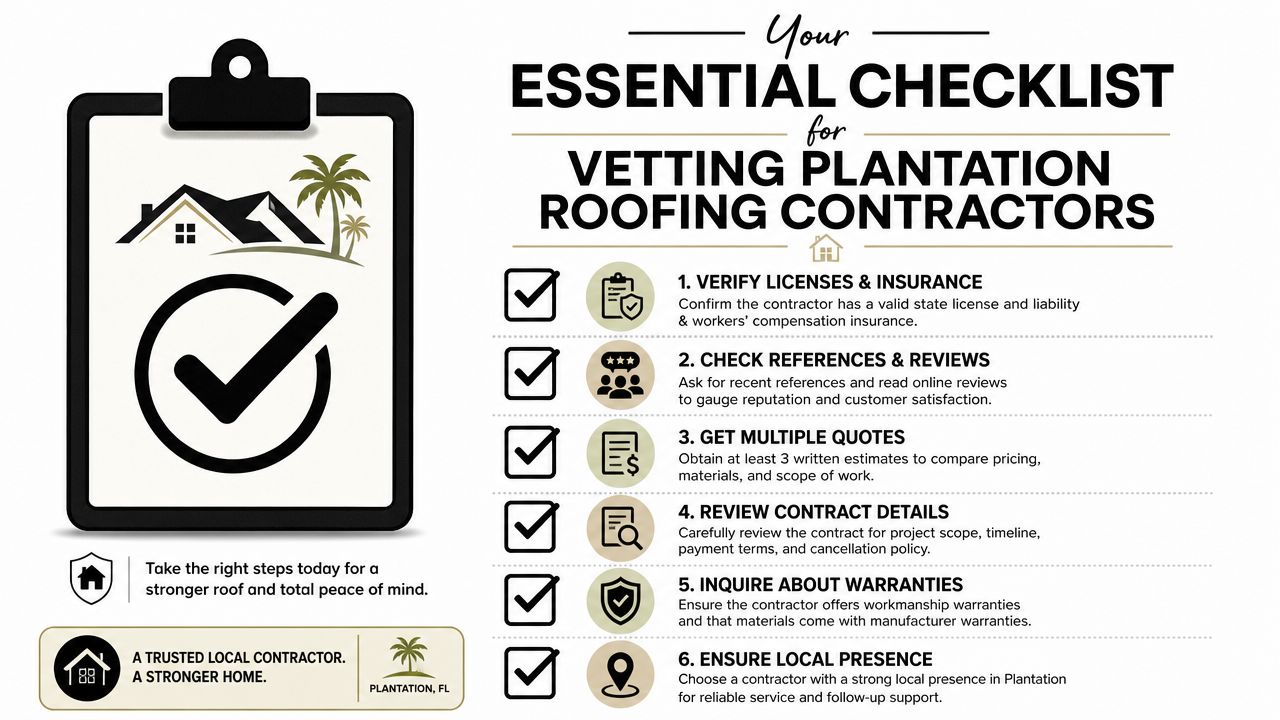
South Florida roofing is full of contractors who can sell. Fewer can explain how they will handle HVHZ documentation, secondary water barrier details, attachment requirements, and final closeout in a way that protects the owner later. We tell homeowners to check the company first, then the shingle color.
Ask for these items before you sign:
- Florida roofing license: Confirm it is active and matches the work being proposed.
- General liability and workers' compensation certificates: Get current documents, not a verbal "we're covered."
- Broward and Plantation reroof experience: Local history matters because inspection standards, scheduling, and correction notices are stricter here than many owners expect.
- Clear written scope: The proposal should spell out tear-off, deck re-nailing if required, underlayment, flashing replacement, disposal, permit responsibility, and how wood replacement is billed.
- Warranty terms in writing: Manufacturer material coverage and contractor workmanship coverage are different protections.
- Daily supervision: Find out who is on site, who speaks with the inspector, and who can approve changes if damaged decking is found.
- Company identification: Ask for the contractor's Paletz Roofing and Inspections logo and company identification along with the license name so you know the business on the contract matches the business showing up at your house.
Insurance paperwork deserves extra attention. If you want a plain-English breakdown of what those policies should cover, this guide to roofer insurance in WA explains the categories well. The state is different, but the owner check is the same. Confirm who pays if a worker gets hurt or your property is damaged.
Questions that expose weak contractors fast
A good roofer should be able to answer hard questions without getting slippery.
Ask these:
- Who pulls the permit, under what license, and who attends inspections?
- What attachment method, underlayment, and flashing package are included for this roof?
- Will you provide the documents needed for wind mitigation and insurance review after final inspection?
- How do you handle change orders for bad decking or code-required upgrades?
- What is the payment schedule, and what triggers the final payment?
- Who is my day-to-day contact once the job starts?
Listen to how they answer, not just what they say. Vague language usually means vague scope. That is how owners end up comparing a complete reroof proposal to a stripped-down bid that leaves out permit handling, disposal, or critical metal work.
Price still matters. So does financing. But the cheapest number often comes from a contractor who assumes fewer replacement flashings, lighter cleanup, less supervision, or a weak closeout package. In Plantation, a properly documented job can support insurance savings and make resale easier. A cheap job with thin paperwork can cost more by the time you fix the omissions.
The right contractor is usually the one whose proposal is easiest to audit line by line.
The Roof Replacement Process From Start to Finish
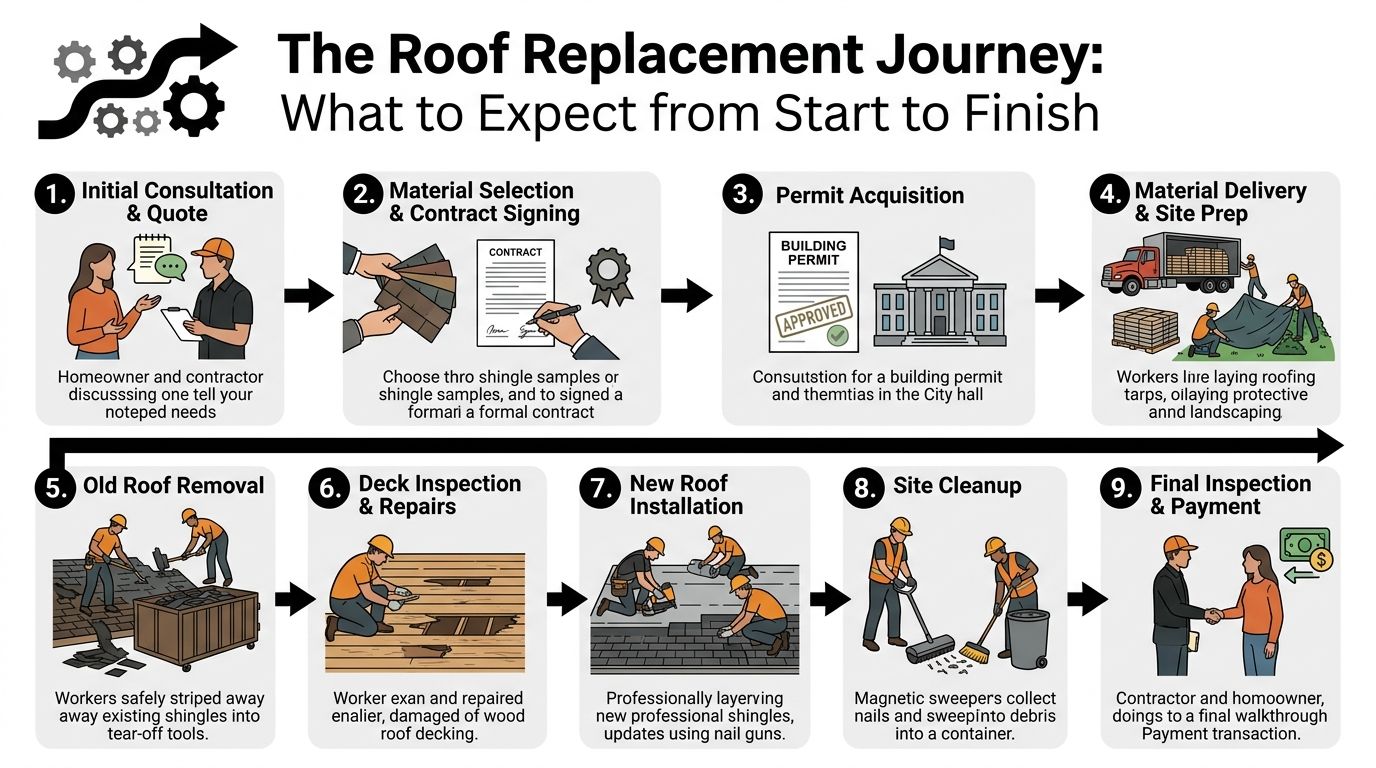
Most homeowners don't mind replacing the roof. They mind not knowing what the week will look like. A well-run job should feel organized, even when it's noisy.
What happens before tear off day
The process usually starts with the signed contract, material selection, and permit filing. After that, the crew schedules delivery, confirms access, and prepares the site. That often means a dumpster or dump trailer, staging materials in a safe spot, and protecting landscaping and vulnerable exterior areas.
Before work begins, move cars out of the driveway and clear fragile items from walls and shelves inside. Roof tear-off creates vibration. That's normal, but homeowners should be ready for it.
What happens during installation and closeout
On installation day, the old roof comes off first. Once the covering is removed, the crew checks the deck. If they find damaged wood, that gets addressed before underlayment and finish materials go on. Then the new system is installed in sequence, including flashing, penetrations, hips, ridges, and edge details.
A typical workflow looks like this:
- Tear-off and disposal
- Deck inspection
- Replacement of bad decking where needed
- Underlayment installation
- Roof covering installation
- Flashing and finish details
- Cleanup and magnetic nail sweep
- Final inspection and owner walkthrough
Expect noise, foot traffic on the roof, and delivery activity. You can usually stay in the home, but the house won't be quiet.
The final day should not end with "looks good from the street." It should end with cleanup, permit closeout steps, and a walkthrough where the contractor answers questions about maintenance, warranty records, and any special details on your specific roof.
When the job is run properly, the process is disruptive but manageable. When it isn't, small communication failures create most of the homeowner stress.
Local Plantation Roofing FAQs
Can I stay in the house during a roof replacement
Usually, yes. Many Plantation homeowners stay home during the job. The bigger question is whether you want to. Tear-off and fastening are loud, the house will shake some, and pets often handle it worse than people do. If you work from home, have a newborn, or care for someone sensitive to noise, plan to be out for the heaviest work hours.
How long does the full process take
The roof installation can be relatively quick once materials are on site and the permit is active. The full job often takes longer because Broward County approvals, HVHZ documentation, inspection timing, weather delays, and material lead times all affect the schedule.
That paperwork side matters in Plantation. A contractor who handles permits cleanly and closes them out properly helps avoid delays with final inspection, insurance paperwork, and future home sales.
How much should I expect to invest in Broward County
There is no honest flat price for roof replacement in Broward County. The number changes based on roof size, pitch, access, material, tear-off layers, decking repairs, and the details required to meet current code.
In our experience, Plantation homeowners should budget for more than just shingles, tile, or metal panels. The real cost often includes permit fees, upgraded underlayment, flashing replacement, rotten wood, and HVHZ-compliant fastening patterns. If you're comparing financing options, look past the monthly payment and check fees, interest structure, and whether programs such as PACE affect your tax bill or future sale of the property.
What maintenance does a new roof need
A new roof still needs attention in South Florida. Keep drains, valleys, and gutters clear. Remove storm debris promptly. After a major rain or wind event, look for displaced tiles, lifted shingles, loose metal trim, or stains that were not there before.
We also tell homeowners to keep records. Save permit documents, final inspection approvals, warranty paperwork, and photos of the completed roof. That file helps with warranty claims, insurance questions, and resale.
If you're weighing a roof replacement in Plantation and want a straight assessment of condition, code requirements, and material options, Paletz Roofing and Inspections can inspect the roof, explain what can be repaired versus what should be replaced, and provide a clear scope for shingle, tile, metal, or flat roofing work in Broward County.