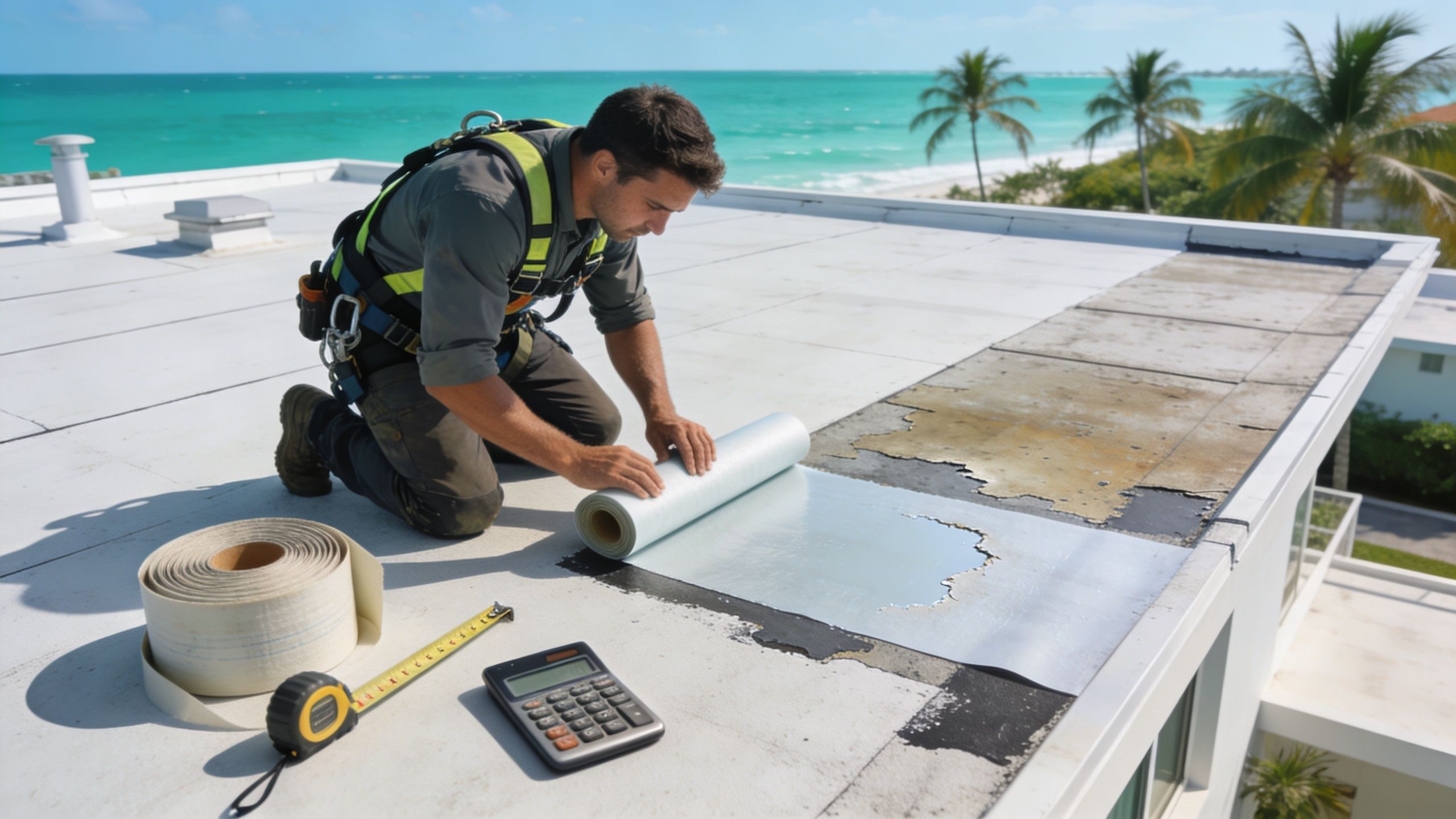
Flat roof repairs in South Florida typically run $2.50 to $10.00 per square foot, and a common leak repair usually falls between $500 and $1,200. That's the honest starting point for most owners here, but the final number depends on what failed, how long water has been getting in, and what our climate has already done to the system.
A lot of property owners search the cost of flat roof repairs expecting one clean number. South Florida doesn't work that way. A small split at a vent flashing is one job. A leak that has been feeding wet insulation through two rainy weeks is a different job entirely.
That gap matters in Broward, Miami-Dade, and Palm Beach. Heat bakes the membrane, humidity keeps moisture trapped, and storms punish every seam, drain, curb, and edge. If you understand what drives the bill, you can tell the difference between a fair repair quote and a cheap quote that turns into a second repair.
Table of Contents
- Your 2026 Guide to South Florida Flat Roof Repair Costs
- Why South Florida Flat Roofs Face Unique Challenges
- Decoding the Price Tag Key Flat Roof Repair Cost Factors
- Common Flat Roof Repairs and Their Typical Costs
- How to Read Your Paletz Roofing Repair Estimate
- Navigating Your Repair Project From Claims to Completion
- Protect Your Investment Get a Definitive Repair Quote
Your 2026 Guide to South Florida Flat Roof Repair Costs
National pricing gives owners a starting point, but South Florida repair bills often climb faster than expected once water gets under the membrane. Broadly, flat roof repairs are commonly priced at $2.50 to $10.00 per square foot, with many leak repairs falling around $500 to $1,200, while coating or resealing work can run $500 to $2,000 and full replacement can reach $4,000 to $16,800, based on HomeGuide's flat roof repair cost data.
Those numbers help with budgeting. They do not reflect South Florida conditions by themselves.
Here, heat, humidity, salt exposure near the coast, and storm-related wear push many jobs toward the higher end of the range. A repair that stays simple in another market can turn into membrane work plus wet insulation removal, edge detail corrections, and code-related upgrades once the roof is opened up. That is why two leaks that look similar from inside the building can produce very different estimates.
What those numbers usually mean on a real property
On an actual South Florida property, lower-cost repairs usually mean the problem is still localized. That could be a small membrane split, an open seam, a failed flashing detail, or a drain area that needs to be rebuilt and sealed properly. Once deterioration spreads across a larger section, pricing shifts from a patch to a system decision.
Older roofs are where owners need to be careful. Repeated service calls on the same section rarely mean the patch itself was the only problem. In my experience, the usual culprits are trapped moisture, movement in the substrate, or drainage that keeps feeding the same weak spot every time we get hard rain.
If a roof is already past its better years, another repair may buy time without lowering your long-term cost. That is especially true in South Florida, where UV exposure and heavy summer weather shorten the margin for temporary fixes.
What to use this guide for
Use this section to set a realistic budget range before you call for estimates. Then compare scopes, not just bottom-line numbers. A useful repair proposal should spell out the roof type, the exact location of failure, how the contractor plans to repair it, and whether the crew expects wet insulation, deck repairs, or code-triggered detail work once the surface is opened.
If you are still sorting through contractors, VerticalRent's directory of local roofers is one way to see who actively works in this market. If you want a quick reference for the kind of system discussed here, this South Florida flat roof example image shows the general roof profile many local owners have.
Why South Florida Flat Roofs Face Unique Challenges
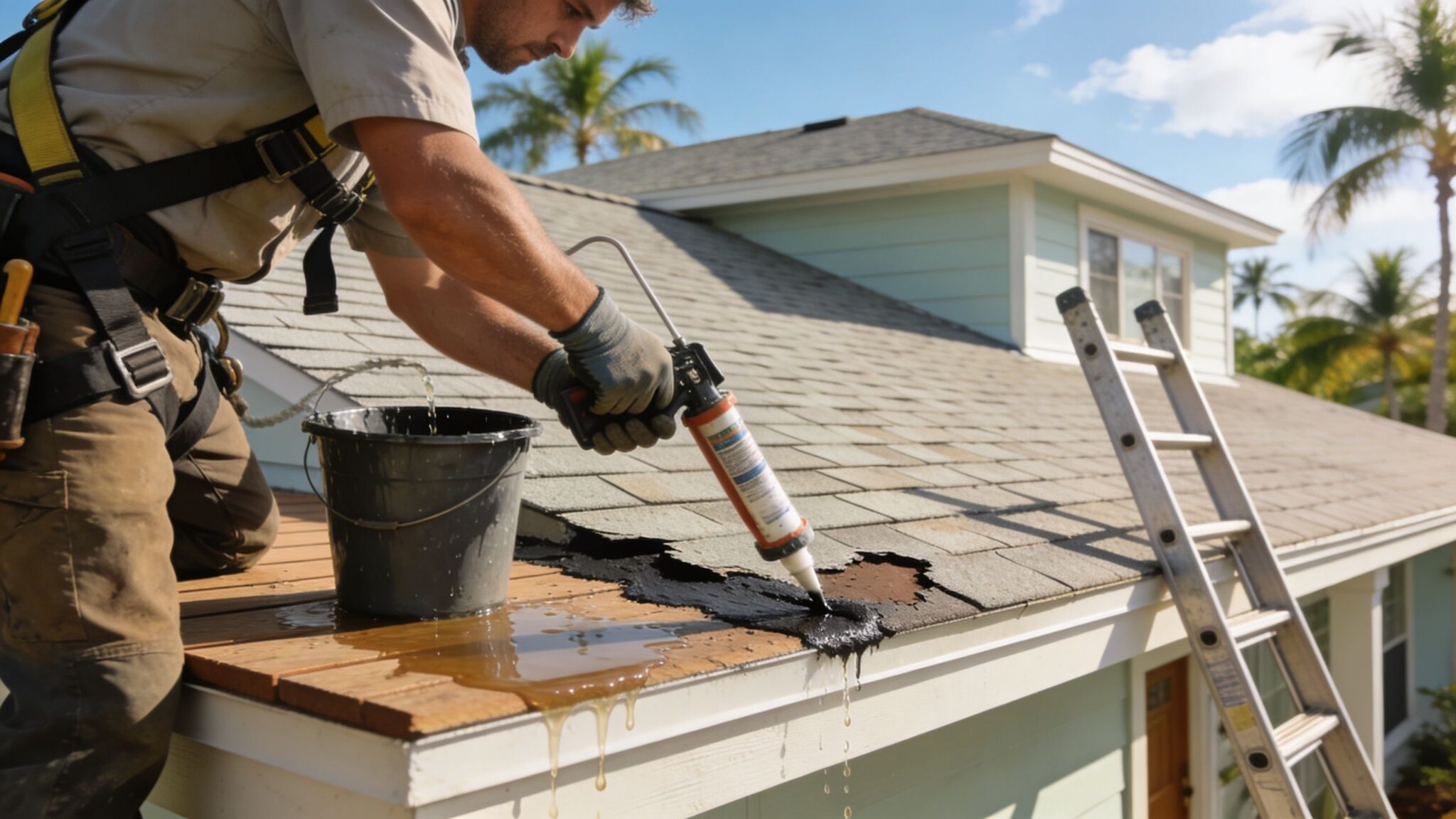
South Florida flat roofs don't fail for one reason. They fail because sun, water, wind, and humidity attack the system at the same time. That combination is why the cost of flat roof repairs here often feels less predictable than owners expect.

Intense sun breaks down the surface first
A flat roof in this region takes direct UV exposure day after day. The surface dries out, seams age, coatings lose performance, and details around penetrations become brittle sooner than owners expect. On a sloped roof, water leaves faster and some areas get less punishment. On a flat roof, every weak point stays exposed.
The result is simple. A repair that might hold in a milder climate can fail early here if the contractor only smears sealant over the symptom and doesn't rebuild the detail properly.
Heavy rain and humidity expose every drainage flaw
South Florida storms don't politely test a roof. They dump water fast. If a drain is partially blocked, if a low spot has developed, or if the membrane around a scupper is starting to separate, that roof shows it immediately.
Ponding water is one of the biggest reasons a small issue becomes a large invoice. Water sitting where it shouldn't sit works on seams, flashings, edge details, and penetrations for hours and sometimes days. Humidity makes things worse because moisture doesn't leave quickly once it gets below the surface.
A practical checklist after a hard rain:
- Look for standing water: If water is still sitting long after the weather clears, drainage needs attention.
- Check inside first: Ceiling stains, damp odor, and bubbling paint often show up before the leak point is obvious on the roof.
- Watch rooftop equipment areas: HVAC curbs and service paths get more wear than open field membrane.
- Document storm conditions: If the issue followed severe weather, save photos and timing details. A homeowner can also review this Home Project Services storm repair guide for a practical first response after visible roof damage.
A flat roof rarely leaks “out of nowhere.” Usually the roof has been warning the owner for a while through blocked drainage, loose flashing, prior patchwork, or repeated damp spots inside.
Wind turns small defects into major openings
Hurricane season changes the conversation. On a flat roof, edge securement, flashing attachment, and membrane bond matter just as much as the field material itself. When wind gets under a loose section, the problem can escalate fast.
That's why the cheapest repair is often the most expensive one in South Florida. If someone patches a split but ignores uplift at the perimeter or movement around a curb, the next storm tests the exact area they left behind.
What works here and what doesn't
What works is disciplined repair work. Dry out the area if needed. Open the assembly where moisture has spread. Rebuild details with compatible materials. Confirm drainage. Secure edges correctly.
What doesn't work is generic roof cement, random caulking, or coating over an active moisture problem. Those are temporary disguises, not repairs.
Decoding the Price Tag Key Flat Roof Repair Cost Factors
In South Florida, two repairs that look similar from the parking lot can land hundreds or thousands of dollars apart once a roofer opens the area and prices the work correctly. I see that confusion every week. Owners are often comparing totals when they should be comparing scope, material compatibility, access, and code exposure.

A repair quote is usually built from five cost drivers: roof system type, labor, hidden moisture spread, building access, and permit or code requirements. If one contractor includes all five and another prices only the visible patch, the cheaper number is not the same job.
Material type changes the repair method
Membrane type sets the repair process. A TPO seam repair, a PVC flashing failure, and a modified bitumen split may all show up as “a leak,” but they do not get fixed the same way.
As outlined in CertaRoof's flat roof repair cost guide, single-ply systems such as TPO and PVC often repair in the $3 to $7 per square foot range, while modified bitumen commonly runs $4 to $8 per square foot, and labor typically makes up 40 to 50% of the total. Those ranges help explain why South Florida owners see real price separation between systems. Heat-welded seams, adhesive compatibility, torch work restrictions, weathered membranes, and detailing around curbs or drains all affect the time and risk on the roof.
If you are unsure what roof system you have, the estimate can feel arbitrary. It is not. The membrane controls the repair material, prep requirements, attachment method, and whether the crew can patch the area cleanly or needs to cut back farther to get sound edges.
You can see the kind of flat roof detail conditions that slow down a repair crew on many South Florida buildings, especially around penetrations and perimeter transitions.
Labor covers the work you do not see from the ground
Owners sometimes focus on the patch itself. Labor cost usually comes from everything around the patch.
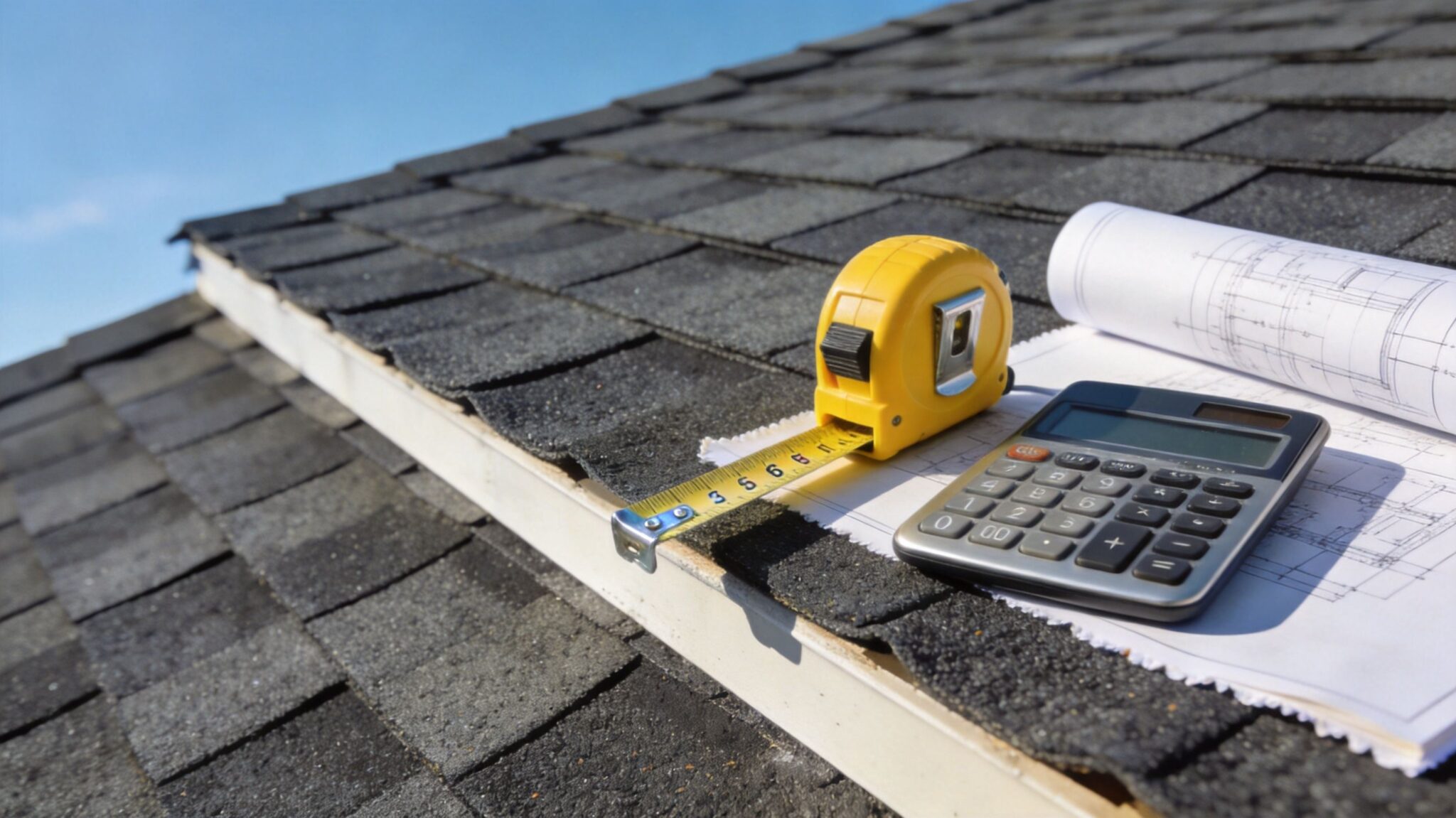
Crews have to locate the full failure, set up access, protect occupied areas, remove wet material when needed, prep the surface correctly, complete the repair with compatible products, seal transitions, clean the site, and inspect the finished work. On a South Florida roof, that labor also has to account for afternoon rain risk, slick surfaces from humidity, and rooftop temperatures that can slow production and require tighter safety practices.
That is why vague line items cause trouble. “Seal leak area” is cheap language. It does not tell you whether the contractor plans to probe for wet insulation, remove failed flashing, or rebuild a detail that has already separated.
Damage scope decides whether the job stays small
The stain inside rarely tells you the full size of the repair. Water often moves sideways through insulation or along the deck before it shows up indoors. By the time the owner calls, the visible entry point may be only one part of the problem.
That is where costs rise fast in South Florida. Our rain patterns expose weak areas over and over, and trapped moisture does not dry quickly in a humid roof assembly. Once a roofer opens the section, the scope may shift from a surface patch to wet insulation removal, cover board replacement, fastening work, edge wood replacement, or drain-area rebuilding.
Here is the practical difference:
| Scope level | What it usually includes | Cost impact |
|---|---|---|
| Localized surface repair | Patch, seam correction, flashing reseal | Lower end of the range |
| Open and inspect repair | Cut test areas, remove wet material, rebuild section | Mid-range pricing |
| Structural or drainage-related repair | Replace substrate sections, correct sag, rebuild details | Higher end quickly |
A small opening is inexpensive. Wet substrate is not.
Access and building conditions add real labor and handling cost
A repair on a one-story building with clear access prices differently than the same repair on a condo, school, or retail plaza. Height, staging distance, elevator access, pedestrian protection, tenant coordination, parapet height, and rooftop equipment all slow the job and add labor hours.
South Florida buildings often make this worse because many roofs are crowded. HVAC units, satellite mounts, lightning protection, solar equipment, and old patchwork force the crew into careful hand work instead of fast open-field production. Even debris removal takes longer when materials have to move through a restricted access point instead of straight to a truck.
Common site conditions that raise price include:
- Multi-story access: More setup time, hoisting, and safety planning
- Limited material paths: Longer handling time for every roll, board, and bag of debris
- Occupied properties: Restricted work hours and added protection for people below
- Dense rooftop equipment: Slower repairs around penetrations, curbs, and conduit runs
Permits and code compliance are part of the price in South Florida
South Florida is not forgiving about roofing details. Wind zone requirements, municipal permitting rules, inspection thresholds, and edge-securement standards all matter when a repair reaches certain conditions or sizes.
A serious estimate should state whether permit costs are included, whether inspections are expected, and what code-related work is part of the repair. If the scope touches perimeter metal, drainage correction, larger cut-out areas, or attachment details, code compliance affects labor, material, and schedule.
The quotes that create the most problems are the shortest ones. If an estimate says only “repair flat roof leak,” you still do not know what membrane is being used, how much area is being opened, whether wet insulation is included, or who is handling permits. That is how owners end up comparing prices that have nothing in common.
Common Flat Roof Repairs and Their Typical Costs
South Florida owners usually ask one question first. “What does this repair usually cost?” The honest answer depends on what failed, how long water has been getting in, and whether the problem stops at the membrane or has already reached the insulation, substrate, or deck.
On flat roofs in this market, the cheapest repair is usually the one caught early. After a few weeks of summer rain, that same leak can turn into a cut-out repair, wet insulation replacement, interior protection, and more labor around rooftop equipment. That is why broad national averages only help as a starting point. Local heat, UV exposure, wind-driven rain, and storm traffic wear South Florida flat roofs in very specific ways.
Minor leaks and punctures
Small punctures, open seams, and localized splits are the repairs owners hope for. If the surrounding membrane is still dry and firmly attached, the work can stay limited to a patch, seam repair, or detail correction.
Analysts at Fixr place simple flat roof leak repairs on a wide national range, from $150 to over $4,000, and that spread is realistic. A small service repair near a clean membrane field sits at one end. A “simple leak” that has been feeding wet insulation around a curb or drain lands at the other.
In South Florida, I tell owners to be cautious with the phrase minor leak. If the ceiling stain is new, the repair may stay contained. If the area has leaked through more than one storm, expect exploratory cuts to check for trapped moisture.
Ponding water and sagging sections
Standing water is one of the costliest flat roof problems we see here. Afternoon downpours hit hard, and if a roof section already drains poorly, the same low area keeps getting hammered. The membrane breaks down faster, seams stay stressed, and the insulation below starts losing strength.
Sagging repairs often cost more because surface patching does not solve the actual failure. The crew may need to open the section, remove wet material, rebuild the low area, and restore the membrane with compatible materials. If the dip is near a drain, scupper, curb, or equipment stand, labor goes up because every tie-in has to be rebuilt correctly.
A soft or visibly sunken area should never be priced mentally as “just seal it.”
Blisters, alligatoring, and surface breakdown
South Florida sun cooks flat roofs year-round. On modified bitumen and similar systems, older surfaces often show blistering, cracking, granule loss, and that dried, alligatored look owners notice from a ladder or upper window.
A few isolated blisters can sometimes be repaired without opening a large area. Widespread surface fatigue is different. At that point, labor shifts from fixing one defect to deciding whether targeted repairs still make financial sense, or whether coating, resealing, or partial replacement will hold up better through another storm season.
That is a real cost fork in the road. Cheap patchwork on a roof with broad surface decline often leads to repeat service calls.
Flashing, edge metal, and penetration details
Many persistent leaks start at transitions, not in the open field. Pipes, wall flashings, parapets, scuppers, drains, counterflashing, edge metal, and HVAC curbs are the places I inspect first after a South Florida wind event.
These repairs are labor-heavy because detail work takes time. Failed sealant has to come off. Loose or corroded metal may need replacement. New flashing has to tie into the existing roof system without creating a weak point next to the repair. On older roofs, matching compatible materials can take more effort than owners expect.
If you want to see the kind of field conditions and transition areas that often drive these repair costs, this flat roof repair surface example is a useful visual reference.
| Repair Type | Typical Scope | Typical South Florida Planning Range |
|---|---|---|
| Minor leak patch | Small puncture, split, or isolated seam repair on an otherwise sound area | $250 to $750 |
| Standard active leak repair | Leak investigation, localized cut-out, membrane repair, and resealing at a typical problem area | $750 to $1,500 |
| Larger leak with wet insulation | Broader cut-out, removal of saturated materials, rebuild, and tie-in work | $1,500 to $3,500+ |
| Sagging or soft section repair | Open roof, remove compromised material, rebuild low or weakened section, restore membrane | $1,500 to $4,000+ |
| Flashing or penetration repair | Detail repair at curbs, drains, pipes, parapets, scuppers, or edge conditions | $600 to $2,000 |
| Coating or resealing on an aging but repairable roof | Surface prep, detail treatment, and restoration work where the roof condition still supports it | $1,000 to $4,000+ |
Use those numbers for budgeting, not for choosing a contractor on price alone. Two estimates can describe the same leak and include very different work. One may cover only surface sealant. The other may include moisture removal, compatible membrane tie-ins, and repair at the actual entry point. That difference is where flat roof repair budgets in South Florida usually rise or fall.
How to Read Your Paletz Roofing Repair Estimate
A roofing estimate should answer five questions fast. What failed. What will be removed. What will be installed. What is included in labor. What backs the work if the repair doesn't perform.

Scope of work should be specific
The scope is the heart of the estimate. It should identify the roof section, the problem area, and the repair method in plain language. “Repair flat roof leak” is not enough. “Cut out wet membrane at west HVAC curb, replace damaged substrate as needed, install compatible patch, reseal curb flashing, and water-test repair area” is the kind of detail owners should look for.
If you can't tell what the crew plans to do, the estimate is too vague.
Materials labor permits and warranty should be separate
A trustworthy estimate separates major categories so you can see what you're paying for. That doesn't mean every screw has to be listed, but the owner should be able to identify the membrane or patch material, accessory components, labor, disposal, permit handling if required, and warranty terms.
This Paletz Roofing brand reference should match the company name on the estimate, inspection notes, and warranty paperwork. Basic consistency matters more than people think, especially when insurance, property management, or future real estate disclosure is involved.

A good estimate often includes:
- Specific roof system language: TPO, PVC, modified bitumen, or another clearly named material.
- Defined repair area: Which slope, section, or rooftop feature is affected.
- Labor inclusions: Tear-out, prep, patching, cleanup, and testing.
- Permit note: Whether permit fees are included, excluded, or not required based on scope.
- Warranty terms: What is covered, for how long, and under what conditions.
The best estimate is the one you can hand to an adjuster, property manager, or future buyer without having to translate it.
Red flags in vague roofing estimates
One-line bids create most of the trouble. So do quotes that are dramatically lower than every other proposal without explaining why. If a contractor doesn't mention material compatibility, moisture damage, edge conditions, or what happens if hidden deterioration appears once the roof is opened, the owner is the one carrying the risk.
A careful estimate doesn't need to be bloated. It just needs to be clear enough that everyone understands the job before the crew starts.
Navigating Your Repair Project From Claims to Completion
Once you know the roof needs work, the next questions are usually practical. Can you patch it yourself. Will insurance help. How long is this going to disrupt the property.
DIY usually costs more on flat roofs
Flat roofs fool people because they look accessible. A homeowner sees one small split and assumes a tube of sealant will handle it. On flat systems, that shortcut often traps moisture, contaminates the repair area, and makes the professional repair harder later.
The problem isn't just workmanship. It's diagnosis. Many leaks travel. Water can enter at one flashing and show up somewhere else inside. If you patch the wrong point, you haven't fixed the roof. You've only delayed the proper repair.
For owners deciding whether to call a roofer or keep waiting, these are the practical signs that professional repair should happen now:
- Interior staining is spreading: The leak is active, not historical.
- The roof has been patched before: Repeat leaks usually mean the first fix was incomplete.
- There is ponding or softness: Surface sealing won't correct a drainage or substrate problem.
- A storm preceded the issue: Wind-related failures can involve more than the visibly torn section.
Insurance claims depend on documentation
Insurance coverage depends on the cause of loss and the policy terms, but property owners help themselves most by documenting the roof before temporary conditions change. Take photos of interior damage, exterior damage if it's safe to access, wet contents, and the date of the weather event if one is involved.
Keep records simple and organized:
- Photograph the damage clearly.
- Write down when you first noticed it.
- Save any prior repair invoices or roof inspection reports.
- Prevent further interior damage if you can do so safely.
- Meet the adjuster with the contractor's written findings available.
Owners get into trouble when they wait too long and the damage starts looking like maintenance neglect instead of a distinct event. Fast documentation matters.
Timeline expectations for South Florida repairs
Most roofing work moves faster than owners fear when the scope is defined and materials are available. Modernize's roof repair cost data notes that 76% of all roofing projects are completed in a week or less, which is a useful benchmark for expectation-setting. It doesn't mean every flat roof repair is a one-day job, but it does mean most professionally managed repair work should not drag on endlessly.
A small localized patch may be completed quickly. A repair involving trapped moisture, multiple leak points, or partial tear-off takes longer because the crew has to remove damaged material, rebuild correctly, and coordinate dry conditions. Commercial properties can also slow the schedule if access windows, tenant coordination, or permit inspections are involved.
A proper repair should minimize disruption, but speed isn't the main goal. Dry substrate, compatible materials, and complete detail work matter more than rushing a crew off the roof.
Protect Your Investment Get a Definitive Repair Quote
The cost of flat roof repairs in South Florida always comes back to three things. What roof system you have, how far the damage has spread, and how our weather has stressed the weak points around drains, seams, edges, and penetrations.
The rough numbers are useful for planning. They help you spot whether a bid is in the right neighborhood. They don't replace an on-site inspection. A leak that looks minor from the ceiling can still involve wet insulation, failed flashing, or a drainage issue that only shows up once a roofer walks the roof.
For condo boards, commercial owners, and landlords, repair budgeting works better when roof work is treated as planned capital care rather than emergency spending. Property managers who build long-term maintenance budgets often use resources like reserve funds explained to think through future building expenses in a more disciplined way.
The smart move is simple. Get a detailed inspection, get a written scope, and make sure the repair addresses the cause of the leak, not just the stain it created.
If you need a clear, documented assessment of your flat roof, Paletz Roofing and Inspections can inspect the roof, identify the failed areas, and provide a detailed repair quote for your South Florida property. That gives you real scope, real pricing, and a practical path forward before a small roof problem turns into interior damage.