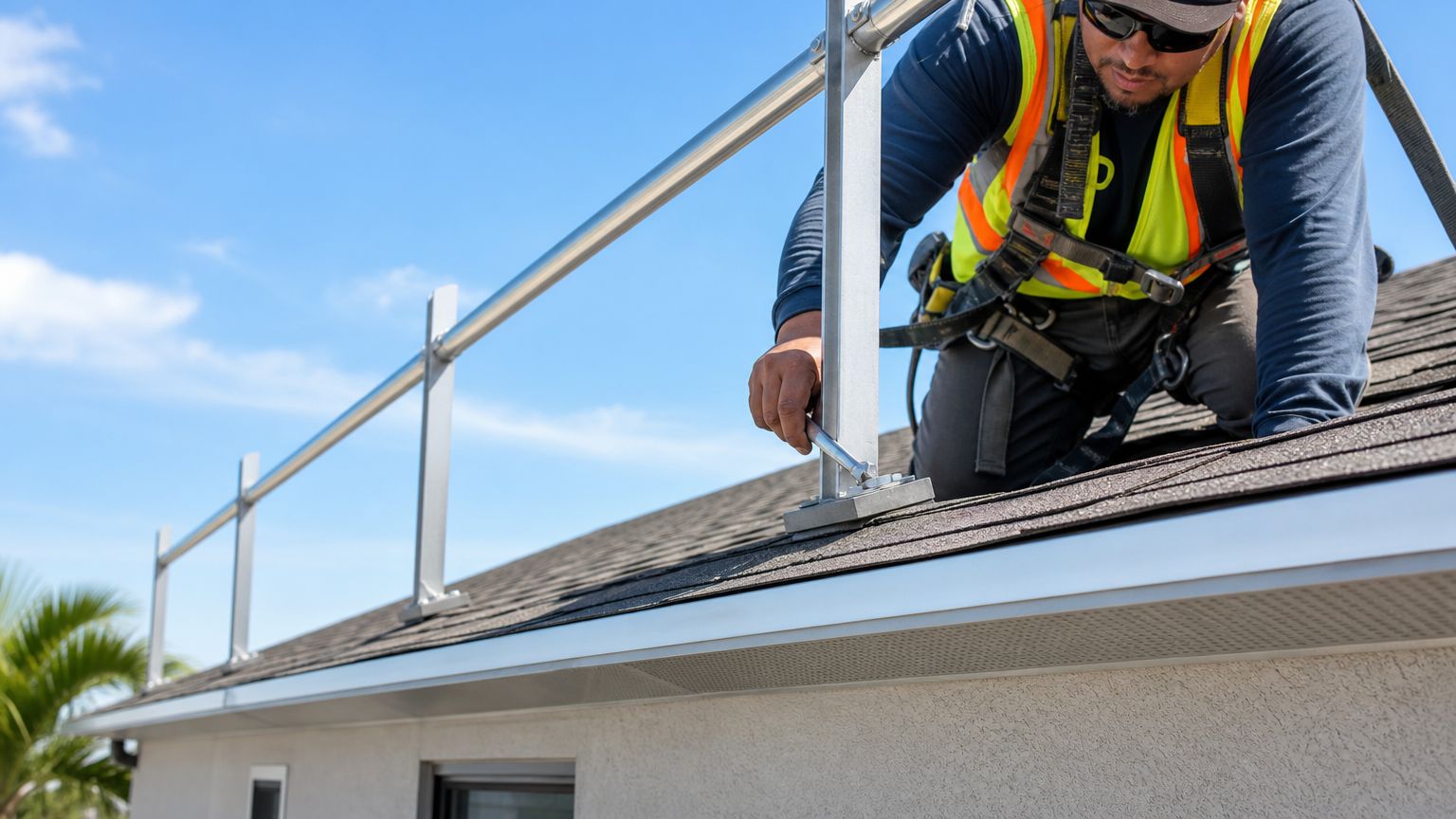
The mention of roof edge protection often brings to mind a temporary guardrail. That's only half the job. On a real roof, especially in South Florida, the edge has to protect people during work and protect the building itself from wind and water year-round.
That split matters because the term gets used for two very different systems. One is jobsite fall prevention, which is heavily regulated in the U.S. and other major markets. The other is the roof perimeter detail that helps keep membranes, shingles, metal panels, and underlayment from being peeled back or flooded when weather hits hard. In a hurricane zone, confusing those two can lead to expensive mistakes.
A roof can look fine from the yard and still be weak at the perimeter. I've seen edge details treated like trim, when in practice they act more like the roof's first line of defense.
Table of Contents
- What Is Roof Edge Protection Really For
- Worker Safety Systems vs Structural Edge Systems
- Navigating Roof Safety Codes and OSHA Rules
- Key Considerations for Installing Edge Protection
- Roof Edge Protection in Florida's Hurricane Zone
- Maintaining Your Roof Edge for Lasting Protection
- What to Ask When Hiring a Roofer for Edge Work
What Is Roof Edge Protection Really For
Roof edge protection does two jobs. It prevents falls while crews are working, and it protects the roof perimeter from failure after the crew leaves. If you only think about one side of that equation, you miss how roofs perform.
On the safety side, roof edge protection means a physical barrier or another approved fall-protection method at exposed edges. On the building side, it means the permanent components at eaves, rakes, corners, fascia lines, and transitions that help shed water, hold materials in place, and resist wind pressure trying to lift the roof system from the outside in.
In South Florida, that second role gets overlooked too often. Homeowners focus on tiles, shingles, membrane, or color. Adjusters and facility managers often end up tracing failures back to the edge, where poor fastening, bad laps, or weak metal detailing let the damage start small and spread.
Field reality: The edge is where many roof problems begin because it's where exposure is highest and workmanship shows first.
A temporary rail system and a permanent drip edge aren't interchangeable, but both belong under the same conversation if you want a roof that's safe to work on and hard to tear apart. That's the practical view. Anything narrower creates blind spots.
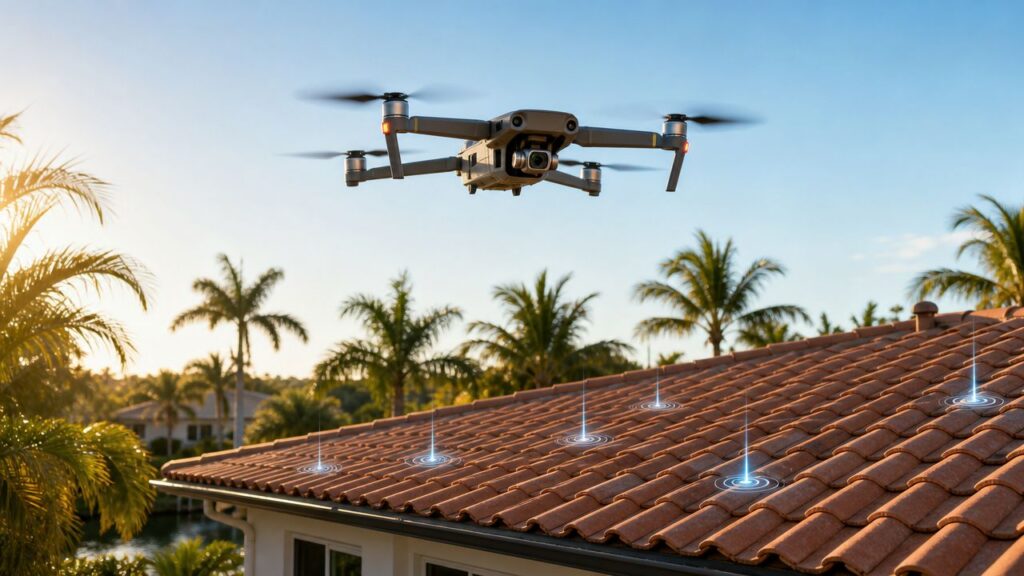
If you want a simple visual for what the roof perimeter includes, look at this roof edge detail reference image. It helps show why “edge protection” isn't just one product.
Worker Safety Systems vs Structural Edge Systems
A lot of confusion disappears once you separate roof edge protection into two buckets. One bucket protects workers from falling. The other protects the roof assembly from weather and uplift.
Two buckets that shouldn't be mixed up
Personnel safety systems are temporary or permanent barriers used while someone is on the roof. Think guardrails, perimeter rails, toe-boards, warning systems where allowed, and other fall-prevention setups. The best way to picture them is as an engineered fence at the roof perimeter. Their job is to stop a person, tool, or material from going over the edge.
SafeWork NSW states that temporary roof edge protection is most effective as a collective fall-prevention system, with physical guardrails identified as the best control measure. That guidance requires a guardrail height of at least 900 mm, along with top and mid-rails and toe-boards to stop tools and materials from falling, according to SafeWork NSW roof edge protection guidance.
Structural edge systems stay with the roof. These include drip edges, perimeter metal, fascia wraps, edge flashings, membrane terminations, and the fastening pattern that holds those parts in place. I explain these to owners as the roof's bumper and water-shedding edge rolled into one. They finish the perimeter, but their chief role is to help the roof resist entry by wind and water.
One protects a person standing near the edge. The other protects the building when nobody is on the roof.
Two Types of Roof Edge Protection
| Feature | Personnel Safety Systems (e.g., Guardrails) | Structural Edge Systems (e.g., Drip Edge) |
|---|---|---|
| Primary purpose | Prevent falls during roof access or work | Protect the roof perimeter from wind and water |
| Typical use timing | During construction, repair, maintenance, inspection | During and after roof installation for long-term service |
| What it includes | Guardrails, rails, toe-boards, monitored edge controls where permitted | Drip edge, fascia metal, edge flashing, perimeter fastening details |
| Main failure risk if done poorly | Worker injury, dropped tools, code violations | Water intrusion, loose edge metal, wind-driven failure at perimeter |
| What owners should ask | How is it anchored, inspected, and matched to the roof type? | How is it fastened, lapped, and tied into underlayment or membrane? |
The trade-off is simple. Safety systems have to protect people without creating new roof damage. Structural edge systems have to resist weather without being treated like decorative trim.
A roofer who talks clearly about both categories usually understands the full perimeter problem. A roofer who lumps everything together usually doesn't.
Navigating Roof Safety Codes and OSHA Rules
Loose safety talk gets people hurt. On a roof edge, the rule has to be clear enough to measure, inspect, and enforce.

What the OSHA numbers mean on a jobsite
OSHA sets hard thresholds for exposed roof edges. For construction work, the OSHA fall protection guidance for construction requires a guardrail system, safety net system, or personal fall arrest system when workers are exposed to an unprotected side or edge above the trigger height. The same OSHA guidance also addresses how close materials can be staged to the edge and when limited exceptions may apply on certain low-slope roofs.
Those details matter because a compliant setup is more than a harness in the truck or a warning shouted from the ladder. A guardrail system has to meet strength and configuration requirements. If it cannot take the required load, it is not a guardrail in any useful sense.
That is where owners need to separate real protection from jobsite theater. A few 2x4s screwed together, a loose pipe frame, or a rope line with no clear control plan may look like effort, but appearance does not satisfy OSHA and it does not stop a fall.
South Florida adds another layer. Afternoon storms, slick surfaces, and sudden gusts change roof conditions fast. A system that might seem adequate on a calm morning can become unstable once materials start moving and the weather shifts. Review a roof edge safety setup example the same way you would review any other part of the job. Ask how it is anchored, how it is inspected, and how it holds up if wind picks up before the crew gets off the roof.
What owners should watch for
A good contractor can explain the fall-protection plan in plain language and point to the equipment on site.
Look for these signs:
- The system fits the roof type and work being done. Steep-slope tear-off, low-slope repair, tile work, and service calls do not use the same setup.
- The equipment is purpose-built and in good condition. Rails, posts, anchors, clamps, and connectors should be identifiable, properly installed, and not cobbled together.
- Materials are controlled at the perimeter. Bundles, tear-off debris, tools, and loose metal should not be staged where wind or foot traffic can send them over the edge.
- The crew works to a visible plan. Organized access, defined work zones, and active supervision usually tell you the contractor takes both safety and roof protection seriously.
Owners should also remember the code question does not end with worker safety. OSHA governs how the crew is protected while the job is underway. The roof edge itself still has to meet the building-side requirements that keep wind and water out after the crew leaves. In South Florida, that distinction matters. One system keeps a worker from going over the side. The other helps keep the roof from peeling back in a storm.
Key Considerations for Installing Edge Protection
Installation quality decides whether roof edge protection works when conditions get rough. That applies to temporary safety systems and permanent edge details, but the inspection points are different.

Temporary systems need more than fast setup
Temporary guardrails have to be secure, compatible with the roof, and checked after installation. Fast setup means nothing if the anchorage damages the roof surface or if the system shifts once the crew starts moving materials.
On membrane roofs, the wrong clamp or base can create punctures, compression points, or wear spots. On tile and metal roofs, poor contact points can crack components or create instability. A proper installer looks at slope, surface condition, edge geometry, access points, and how the crew will move across the roof.
Use this roof safety installation visual as a reference for the kind of perimeter setup owners should expect to see discussed before work starts, not figured out halfway through the job.
A reliable temporary system should be:
- Properly anchored or supported for the roof type
- Inspected before access begins
- Rechecked after weather, impact, or changes in layout
- Installed so it protects the work path, not just one corner of the roof
Permanent edge work has to be integrated
Permanent edge protection fails when installers treat it as finish trim instead of part of the roofing system. The drip edge, fascia metal, starter course, underlayment turn-down, membrane termination, and seal points all have to work together.
The common weak spots are easy to identify once you know where to look:
- Bad seam laps that open under movement or weather
- Loose fasteners that let edge metal chatter in wind
- Poor underlayment integration that drives water behind the metal instead of over it
- Sloppy corners and transitions where most of the stress shows up first
The best edge work looks boring. Lines are straight, laps are intentional, corners are tight, and nothing feels loose when inspected closely. If the perimeter looks rushed, assume the hidden tie-ins deserve a closer look too.
Roof Edge Protection in Florida's Hurricane Zone
South Florida doesn't give roof edges an easy life. Wind hits the perimeter differently than it hits the field of the roof, and that's why edge details matter far more here than many owners realize.

Why the perimeter takes the beating
In high-wind regions like South Florida, roof edge protection is critical for building-envelope integrity. Building America guidance emphasizes fully adhered membranes at eaves and rakes, along with code-compliant metal drip edges and mechanically fastened edge details to improve uplift resistance and help prevent water intrusion during severe weather, according to Building America roof edge protection guidance.
That lines up with what roofers see after major wind events. Once wind gets under a loose edge, the failure can spread inward. What started as a perimeter weakness can become a much larger roof problem because the edge was the opening point.
Corners and perimeter terminations are where small installation mistakes become expensive. A backed-out fastener, weak metal profile, poor membrane bond, or bad lap might stay hidden in normal weather. Under repeated wind exposure, those weak points get tested hard.
On hurricane-prone roofs, the edge isn't a cosmetic finish. It's part of the pressure-resistance system.
What better edge detailing looks like in South Florida
Stronger roof edge protection in this region usually means crews pay closer attention to how the perimeter is built, not just what material name is on the estimate. Better work often includes edge metal that's suited to local exposure, fastening patterns that hold consistently, and membrane or underlayment tie-ins that don't leave a hidden path for driven rain.
For owners thinking about insurance, it also helps to understand how roof features are documented. A good overview of wind mitigation inspections and discounts can help explain why roof attachment, secondary water resistance, and perimeter detailing matter beyond the roof itself.
Practical priorities for Florida properties include:
- Eaves and rakes that are firmly tied into the roofing system
- Metal edges installed to shed water cleanly without reverse paths
- Perimeter details that don't rely on sealant alone
- Post-storm inspections focused on corners, lifted metal, and displaced flashing
Homeowners often ask whether minimum code is enough. My practical answer is that code is the floor. In South Florida, the roof edge is one of the last places to cut corners if you care about long-term performance.
Maintaining Your Roof Edge for Lasting Protection
A well-built edge still needs attention. Roof edge protection takes constant sun, wind, salt air, rain, and foot traffic from service trades. If nobody checks it, small defects can stay hidden until water gets inside or wind starts peeling parts loose.
What to inspect after storms and service work
The most useful maintenance habit is a visual perimeter check after significant weather and after anyone has been working on the roof. HVAC crews, satellite installers, painters, solar crews, and gutter contractors don't always mean to damage edge components, but they can shift metal, loosen fasteners, or disturb seal points.
Look for these conditions:
- Loose or lifted edge metal that no longer sits tight to the roof line
- Backed-out fasteners or missing screws at the perimeter
- Rust, corrosion, or finish wear on exposed metal parts
- Open joints or failed sealant where water can track behind the edge
- Debris buildup that holds moisture and hides movement
Don't ignore minor movement at corners. Corners take a beating, and small separation there can become a leak path long before staining shows up inside.
A roof leak at the edge often starts quietly. Water gets behind the metal, wets the substrate, and keeps working before anyone notices it indoors.
Good maintenance isn't complicated. It's consistent. If the roof is older, near the coast, or has already seen repair work at the perimeter, inspections should be more disciplined because those roofs have less tolerance for neglected edge defects.
What to Ask When Hiring a Roofer for Edge Work
The fastest way to sort serious roofers from smooth talkers is to ask detailed questions about the perimeter. Edge work exposes whether a contractor understands safety, waterproofing, and wind resistance as one connected problem.
Questions that separate roofers from sales talk
Ask direct questions and listen for direct answers.
- How will you protect workers at the roof perimeter on my property? You want a clear explanation of the fall-protection method, not a general promise to follow regulations.
- How do you tie the edge metal into the underlayment or membrane? A real roofer should explain sequence, overlap, and how water gets directed out instead of behind the edge.
- What do you pay special attention to at corners, rakes, and eaves in South Florida? Those are the stress points. If the answer stays generic, that's a warning sign.
- How do you inspect the edge after installation and after weather exposure? Good roofers don't assume the job is finished the second the last piece goes on.
- Can you show examples of completed perimeter work similar to my roof type? Photos matter. So do close-up shots, not just wide curb-appeal pictures.
If you're comparing contractors online, it also helps to understand how roofing companies present themselves and how homeowners sort through ads, reviews, and lead sources. This overview of Polaris Marketing Solutions' Google Ads guide is useful for seeing how roofers attract calls, which can help you look past slick marketing and focus on substance.
You can also ask for proof of company identity and inspection branding. Even something as simple as a roofing inspection company logo and credentials reference can be part of checking whether the business presents itself consistently across estimates, inspections, and documentation.

The right hire understands that roof edge protection isn't just about passing an inspection or finishing the trim package. It's about keeping workers safe during the job and keeping the roof perimeter intact when South Florida weather starts testing every weak spot.
If you need an experienced assessment of your roof perimeter, fall-safety concerns during active work, or storm-ready edge detailing for a home or commercial property, Paletz Roofing and Inspections serves Broward, Miami-Dade, and Palm Beach counties with inspections, repairs, replacements, and practical roofing guidance built on decades of South Florida field experience.