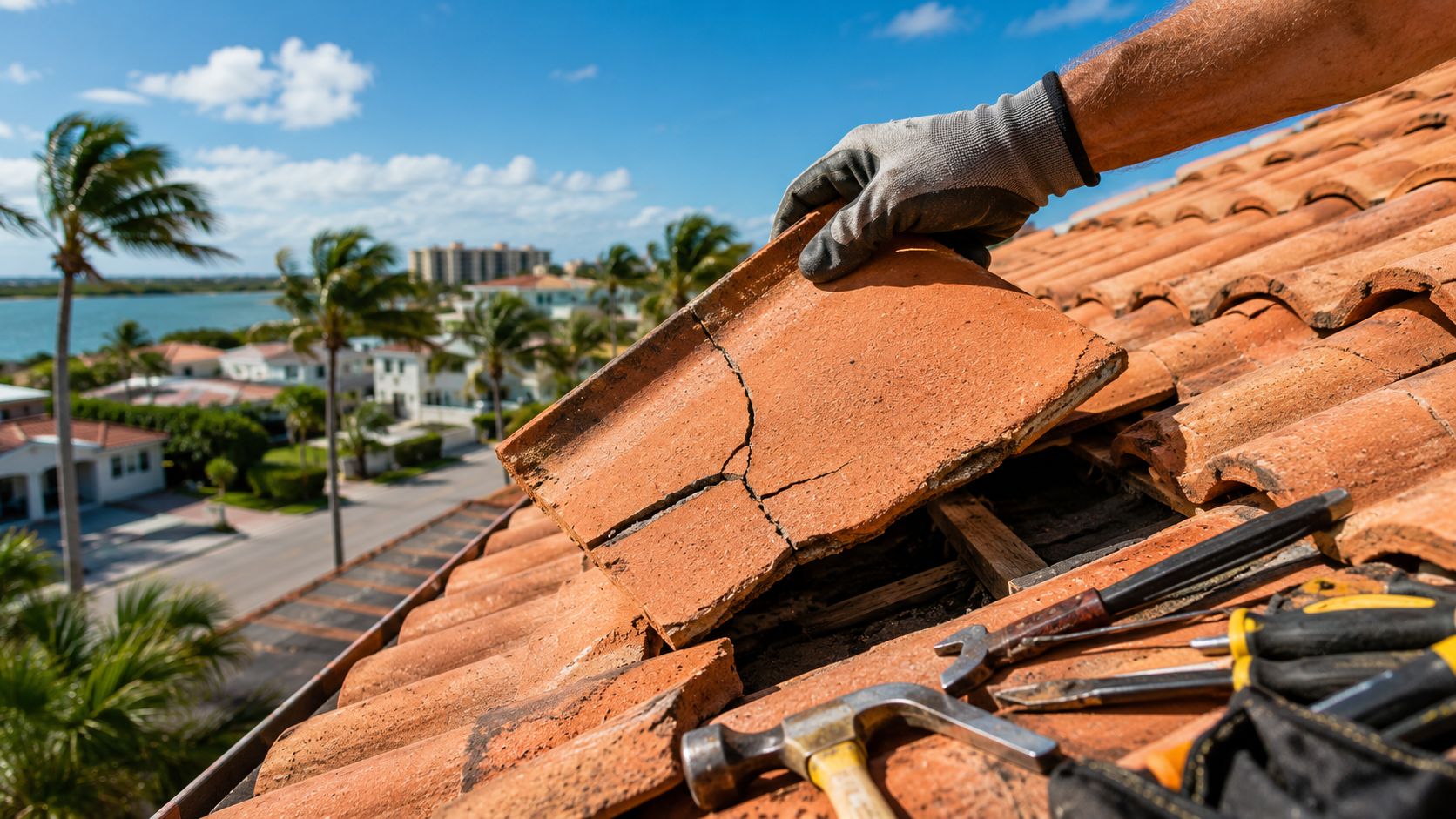
A lot of Sarasota homeowners start the same way. A storm rolls through, the yard is a mess, and then someone looks up and notices a slipped tile, a chipped corner, or a piece of roof tile near the driveway. The first question is always the same: is this a small repair, or the start of something bigger?
That's the right question, because a tile roof rarely fails for only one visible reason. A cracked tile matters, but the actual risk usually sits underneath it. Flashings loosen. Fasteners back out. Underlayment ages. Water follows those weak points long before the roof looks bad from the street.
If you're searching for tile roof repair in Sarasota, the useful answer isn't “replace the broken tile and move on.” It's knowing whether the roof system is still doing its job.
Table of Contents
- Your Guide to Tile Roof Health in Sarasota
- How to Spot Tile Roof Problems Early
- Understanding Tile Roof Repair Methods and Costs
- Sarasota Weather and Your Tile Roof
- Navigating Permits and Insurance for Your Repair
- Why Trust a Licensed Contractor for Your Tile Roof
- Frequently Asked Questions About Tile Roof Repair
Your Guide to Tile Roof Health in Sarasota
A tile roof gives people confidence because it looks solid. From the ground, it can still look solid when water is already getting past the protective layers below. That's why homeowners get surprised by a ceiling stain when the roof line still looks mostly fine.
The main thing to understand is simple. Tile is the exposed water-shedding layer, not the whole waterproofing system. When a repair crew treats tile as the only issue, they often miss the actual leak path.
What Sarasota homeowners usually notice first
Sometimes it's a tile that shifted after wind. Sometimes it's a damp smell in the attic after hard rain. Sometimes it's a yellow stain that appears near a ceiling corner and seems to dry out between storms. Those early clues matter more than homeowners think.
Tile roofs in Florida take regular stress from sun, rain, humidity, salt exposure, and storm cycles. A single broken tile may be isolated. It may also be the visible symptom of movement around a valley, vent, eave edge, or wall flashing.
Practical rule: If you can see tile damage from the ground, assume there may also be hidden damage beneath nearby courses.
What a smart repair decision looks like
Homeowners usually have three choices. Repair the isolated issue. Perform maintenance on vulnerable sections before they leak. Or move toward partial re-roofing where the field tile is still usable but the waterproofing below is no longer a good repair candidate.
That decision should come from diagnosis, not guesswork. A careful contractor checks the surrounding tiles, lift pattern, fastening condition, flashing details, and signs that the underlayment has stopped performing as a dependable secondary barrier.
For homeowners who want a professional opinion on whether the issue is isolated or systemic, Paletz Roofing and Inspections is one option that handles tile roof evaluation and repair work using a system-first approach rather than a surface-only patch.
How to Spot Tile Roof Problems Early
Most homeowners shouldn't walk a tile roof. You can still catch a lot from the ground, around the gutters, and inside the house after heavy rain.

A visual example of roof wear can help homeowners know what they're looking for. This tile roof photo reference is useful for comparing obvious surface issues with what you see on your own home.

What you can see from the ground
Start with a slow walk around the house in good daylight.
- Cracked or missing tiles: Look for clear gaps, broken corners, or pieces that don't sit flush with the surrounding pattern.
- Tiles that have slipped out of line: A tile doesn't have to be shattered to create a leak path. A tile that has shifted can expose vulnerable joints below.
- Dark streaks or persistent discoloration: Surface staining can be cosmetic, but it can also point to moisture hanging around where it shouldn't.
- Organic growth: Moss, algae, or dark buildup often tells you water is lingering on the roof surface or debris is trapping moisture.
- Debris in gutters: Tile fragments, grit, or unusual sediment can be an early warning that sections of the roof are deteriorating or moving.
Homeowners also ask about chalky residue. On tile roofs, that can be a sign of mineral deposits left behind as moisture moves through or across the surface. It doesn't automatically mean failure, but it does justify a closer look if it appears with staining, movement, or leaks.
What the house tells you inside
Local Sarasota leak guidance points to brown or yellow ceiling stains, damp attic insulation, or wet wood after heavy rain as early leak warnings, and it recommends an annual roof inspection and prompt repair. Those are the signs homeowners should take seriously even when the roof still looks acceptable from the street.
Use this quick indoor checklist after a storm:
- Ceiling changes: Brown or yellow staining usually means water has already moved beyond the roof covering.
- Attic smell: A musty odor often shows up before a major visible leak.
- Wet framing or damp insulation: Check with a flashlight. You're looking for darkened wood, dampness, or localized wet spots.
- Puddling near penetrations: Water often enters around vents, chimneys, skylights, and wall intersections before it shows up in the middle of a room.
Small stains don't stay small if the leak path remains open through another storm cycle.
A homeowner who watches the roof this way usually catches problems earlier. That lowers the odds that a minor tile issue turns into interior damage and a much larger repair scope.
Understanding Tile Roof Repair Methods and Costs
A proper tile repair is controlled disassembly and rebuilding of a small roof section. It isn't a tube of sealant and a quick promise.

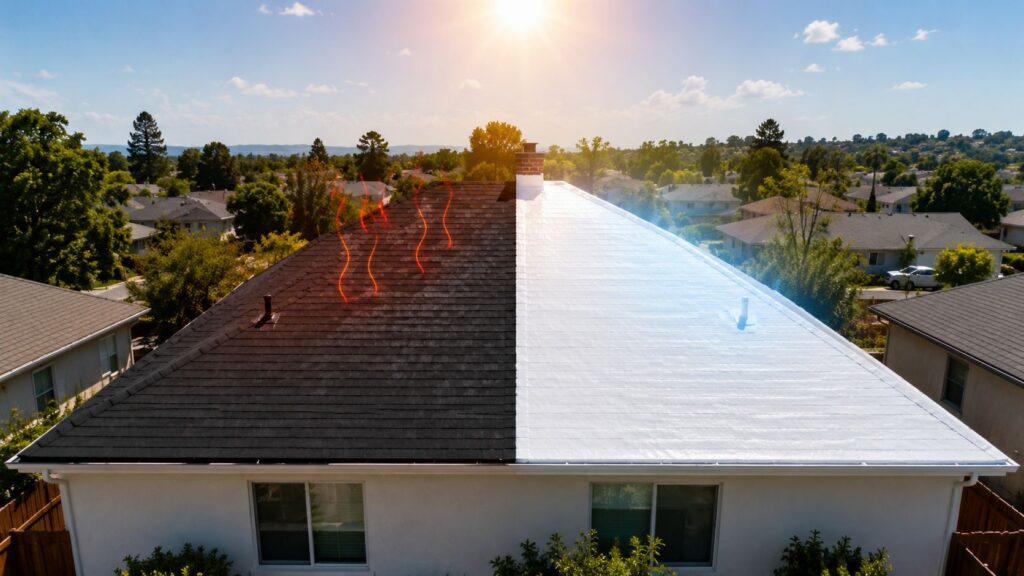
If you want a visual of a repair area before and after tile removal, this tile roofing repair image shows the kind of layered work homeowners usually don't see from the driveway.
What a proper repair actually includes
A tile crew usually starts by lifting adjacent tiles carefully so the damaged unit can be removed without cracking nearby pieces. That part alone takes experience. Tile can break from bad foot placement or rough handling, and a sloppy repair can leave the homeowner with more damage than the original problem.
After the tile comes off, the inspection begins. The roofer checks the underlayment, the fasteners, and nearby flashing details. If water got past the field tile, the crew has to repair the waterproofing layer before resetting or replacing the tile above it.
A sound process usually includes:
- Controlled tile removal so the surrounding field stays intact.
- Inspection below the surface for punctures, wear, or failed transitions.
- Repair of flashing or underlayment where the leak path exists.
- Resetting and fastening tiles correctly so the repaired area sheds water like the rest of the roof.
- Final inspection to confirm alignment, fastening, and drainage.
What drives the price in Sarasota
In Sarasota, standard tile roof repair is commonly quoted at $500 to $2,500, while more extensive restoration work can run $2,500 to $5,000, according to local tile roof repair cost guidance. The important part isn't just the range. It's what creates the range.
A homeowner may see one cracked tile and expect a small invoice. If the tile comes off and the underlayment or flashing below has failed, the scope changes. That's why the visible tile count rarely tells the whole story.
Here's a simple way to think about pricing:
| Repair type | What it usually involves | Cost context |
|---|---|---|
| Localized repair | Limited tile replacement with minor surrounding work | Often falls within the lower end of the cited Sarasota range |
| Leak-focused repair | Tile removal plus flashing or underlayment correction in one area | Usually lands in the middle of the range depending on complexity |
| Restoration work | Broader section repair where multiple system components need attention | Can reach the higher restoration range |
Flat roofs fail differently, but homeowners comparing roof budgets across property types may also find this outside resource on flat roof repair costs 2026 helpful for understanding why waterproofing layers, access, and repair scope matter more than surface appearance alone.
The cheapest tile repair is often the one that fixes the leak path the first time.
Sarasota Weather and Your Tile Roof
Sarasota weather doesn't forgive weak detailing. A tile roof can handle harsh conditions well, but only when the full assembly is intact.

Why wind exposure changes the repair approach
In a high-velocity wind region like Sarasota, the underlayment isn't a background detail. It is a major part of how the roof keeps water out after wind-driven rain starts testing every overlap and transition.
Trade guidance for tile repair notes that on slopes of 3:12 or greater, the underlayment must have 6-inch side laps and 2-inch headlaps, with two underlayments typically required in high-velocity wind regions. It also notes that tile headlap should be at least 3 inches and that proper fastening is part of restoring the complete water-shedding assembly, as outlined in this technical tile roof repair guidance.
Those details matter because post-storm damage often fools people. A homeowner sees one loose tile. The problem may be that the assembly around it no longer sheds water the way it was designed to.
What to do before and after a storm
Good storm prep is mostly documentation and observation.
Before storm season gets active:
- Photograph the roof from the ground: Get all sides of the home in clear light.
- Note existing issues: If a tile is already slipped or a valley already holds debris, write it down.
- Keep gutters and drains clear: Water has to leave the roof quickly.
After a storm:
- Stay off the roof: Broken tile and wet surfaces are a bad combination.
- Walk the property line: Look for fallen tile pieces, flashing fragments, or fresh debris.
- Check the attic and ceilings early: Don't wait for the stain to spread.
- Call for inspection if something changed: Wind damage is easier to evaluate when the evidence is fresh.
A lot of failed storm repairs come from rushing to patch the visible spot. On a tile system, wind and rain usually test edges, penetrations, and transitions first. Those are the areas that deserve the closest inspection.
Navigating Permits and Insurance for Your Repair
The paperwork side of roof work frustrates homeowners because it feels separate from the actual problem. It isn't. Permits and claim records protect you if the scope grows, if the insurer asks questions later, or if a future buyer wants documentation.
Permits first, not after the work
Whether a permit is required depends on the scope of the repair and the local authority having jurisdiction. If the work moves beyond a very minor isolated fix and starts involving larger sections, system components, or more substantial roof work, homeowners should verify permit requirements with Sarasota County or the City of Sarasota before the job starts.
That protects you in several ways:
- Code compliance: The repair gets reviewed against local requirements.
- Job documentation: There's a clear record of what work was approved and performed.
- Resale protection: Buyers and inspectors often ask whether roof work was permitted.
- Contractor accountability: A legitimate roofer won't treat permits as optional when they're required.
If a contractor says permitting doesn't matter for a substantial repair, that should raise concerns.
How to document a roof claim clearly
Insurance claims go smoother when the homeowner stays organized and factual.
Use a basic file with:
- Date of storm or leak discovery
- Ground photos of visible roof changes
- Interior photos of staining or wet materials
- Written notes on when and where water appeared
- Inspection findings and repair recommendations
Keep your descriptions plain. Don't guess at cause if you don't know it yet. State what happened, what you observed, and when you observed it.
For homeowners dealing with pushback, delays, or disagreements about covered roof damage, this homeowner's guide to roof claim disputes gives a practical overview of how to think through the dispute side of a roof claim.
Good documentation helps the adjuster see the sequence of damage instead of treating the leak as a vague complaint.
Why Trust a Licensed Contractor for Your Tile Roof
Tile roofs punish shortcuts. A handyman may be able to replace a visible piece. That doesn't mean the roof section was repaired correctly.

For homeowners evaluating roofing companies online, it also helps to understand how legitimate contractors present their service areas and specialties. This overview of Netco Design LLC local SEO is useful if you want to see what clear, location-specific service information should look like when vetting providers.
A company logo doesn't prove craftsmanship, but it helps homeowners confirm they're dealing with an established business. The Paletz Roofing and Inspections logo is one example of the kind of identifiable business asset you want to see tied to licensing, insurance, and a real service presence.

What goes wrong with patch-only repairs
A key problem for Sarasota homeowners is deciding whether they still have a repairable roof section or whether repeated leaks point to deeper failure. Local guidance on tile systems notes that recurring leaks often indicate underlayment failure, which means a simple cracked-tile fix is only temporary, as discussed in this Sarasota tile roof repair overview.
That's exactly where unlicensed or underqualified repairs go wrong. The worker swaps a tile, smears sealant around a penetration, and leaves the actual leak path untouched. The homeowner thinks the roof was fixed until the next hard rain.
What a licensed roofer brings to the job
A licensed roofing contractor should know how to:
- Diagnose beyond the symptom: The visible tile may not be the cause.
- Work the roof without creating more breakage: Tile handling and foot placement matter.
- Match repair methods to the roof system: Fasteners, flashings, and underlayment details have to work together.
- Document the actual condition: Some roofs are good repair candidates. Some aren't.
That honest diagnosis is the key benefit. A homeowner doesn't just need someone who can place tile. They need someone who can tell whether the roof still makes sense to repair.
Frequently Asked Questions About Tile Roof Repair
How quickly should a small leak be repaired
As soon as you confirm it's active. A minor leak can soak insulation, stain ceilings, and spread into wood components long before it becomes dramatic.
Will new replacement tiles match the old roof
Sometimes closely, sometimes not exactly. Color fade, age, and discontinued profiles can make perfect matching difficult, especially on older roofs. A skilled repair aims for the best visual blend while restoring function first.
How long does a tile roof repair take
That depends on access, the number of affected areas, weather, and whether the crew finds damage below the tile. A straightforward isolated repair can move quickly. A leak that involves underlayment or flashing takes longer because the system below the surface has to be rebuilt correctly.
Should I repair one bad area or think about partial re-roofing
If leaks keep returning in the same section, or if the visible tile keeps getting blamed while the water returns, it's time to ask whether the field tile is outlasting the waterproofing beneath it. That's often the turning point between repair and partial re-roofing.
Can I inspect the roof myself
You can inspect from the ground and inside the attic. Walking a tile roof without training is risky for both you and the roof.
If you're dealing with a leak, storm damage, or a tile roof that keeps needing the same repair, contact Paletz Roofing and Inspections for a professional evaluation. A good inspection should tell you whether the problem is isolated, whether the underlayment or flashing has become the underlying issue, and whether repair still makes financial sense before you spend money on another temporary fix.