You usually notice it on a bad afternoon in Palm Beach Gardens. A ceiling stain shows up after a hard rain, a tile cracks where you can't reach it, or an adjuster says the roof is older than you thought and wants a closer look. At that point, roof replacement Palm Beach Gardens stops being a vague future project and becomes a scheduling, permitting, and budgeting problem that has to be handled the right way.
The homes here don't age like homes inland. Heat, heavy rain, wind exposure, HOA rules, and insurer scrutiny all stack up at once, so the decision is rarely just about “new shingles.” If you're trying to make the right call before a leak turns into interior damage, the practical questions are cost, material choice, approvals, and whether the job can move forward without delays.
Table of Contents
- Why Roof Replacement in Palm Beach Gardens Is Different
- How Much Roof Replacement Costs in Palm Beach Gardens
- Choosing the Right Roofing Material for Coastal South Florida
- Permits, HOA Approvals, and the 25% Rule in Palm Beach Gardens
- Working With Insurance on a Storm-Damaged Roof
- Hiring and Working With a Palm Beach Gardens Roofing Contractor
- Hurricane-Rated Design and What It Means for Your Roof
- Common Mistakes and Your Next Steps
Why Roof Replacement in Palm Beach Gardens Is Different
A reroof in Palm Beach Gardens starts with the weather, but the delay often comes from paperwork and approvals. Heat, humidity, salt air, and frequent summer rain wear down underlayment, fasteners, sealants, and flashing long before the shingles look obviously failed from the street. In this market, a roof can look presentable and still be one storm away from a bigger problem.
Practical rule: in South Florida, the roof you see is rarely the whole roof that matters. Underlayment, attachment, and edge details usually decide whether the assembly survives the next storm.
The other difference is approval timing. HOA or ARC review can take weeks, and that waiting period has to be built into the reroof schedule before a crew ever tears off the first shingle. If the home is in a community with stricter exterior standards, the right product choice may be limited by what the association will approve, not just by what the homeowner wants.
Palm Beach Gardens also sits inside a permitting system that expects documentation up front. A re-roof permit packet calls for product approvals and system-specific forms, and a Notice of Commencement is required once valuation exceeds $5,000. That means the job is not just materials and labor. It also depends on having the right paperwork ready before the work starts.
The other trap is damage scope. What looks like a repair can turn into a full replacement once inspection, insurance review, and code requirements are checked against the actual condition of the roof. That is why a Palm Beach Gardens reroof has to be planned around the approval path, the inspection trail, and the code implications together, not as separate steps. For homeowners sorting through the contractor side of that process, the tips from Bookkeeping and Accounting of Florida can help frame how records and contractor paperwork fit into the job.
One more practical issue shows up after storm damage. A roof here is judged on how it holds up in coastal exposure, how it fits local code, and whether it stays insurable after the work is done. That is a different job from a quick patch or a simple like-for-like swap, and it is why the plan needs to be measured, documented, and realistic about both trade-offs and timing.
How Much Roof Replacement Costs in Palm Beach Gardens
For a typical 2,000 to 2,500 square foot home, a full tear-off and replacement with architectural asphalt shingles in Palm Beach Gardens lands in a higher range than many owners expect, because the work includes disposal, underlayment, fastening, and permit-related labor, not just new shingles. The local market also tends to price in coastal exposure, so bids often reflect more careful detailing than a simple inland reroof.
Typical Roof Replacement Cost Ranges in Palm Beach County
| Material | Typical Cost Range | Avg. Lifespan |
|---|---|---|
| Architectural asphalt shingles | $13,600 to $28,200 | Qualitatively shorter than tile or metal |
| Tile | $16,000 to $34,000 | Long-life system |
| Metal | $20,000 to $36,000 | Long-life system |
| Flat roof | $11,000 to $19,000 | Moderate life cycle |
Those Palm Beach County ranges line up with what homeowners here keep running into, longer-life systems cost more up front, and they usually bring more resistance to heat, wind, and repeated weather exposure. That does not make the priciest option the right one for every house. It does mean a low bid can hide a short service life or a thinner scope.
What drives the price here
Palm Beach Gardens pricing is not just a material story. Labor has to cover tear-off, deck condition, underlayment, fastening, cleanup, and the permit process, and coastal work often calls for more careful flashing and attachment than a roof in a milder climate. Heat, rain, and storm exposure also shorten the useful life of roof assemblies, so homeowners here often replace sooner than they would in cooler markets.
A cheap roof that fails early is expensive twice. You pay once for installation, then again for water damage, disruption, and another reroof sooner than planned.
Budgeting should also leave room for financing, insurance proceeds, and warranty terms. If you are comparing offers, a clear financing breakdown helps, and the construction rate guide for growing companies is a practical reference point for how contractors structure project cash flow and customer payment schedules. For a visual look at how replacement costs are often presented in homeowner financing conversations, this roof replacement financing options image gives a simple overview.

The biggest mistake I see is comparing only the bottom-line price. In Palm Beach Gardens, the key comparison is scope versus scope, with the same code work, the same permit work, and the same warranty terms included on every bid.
Choosing the Right Roofing Material for Coastal South Florida
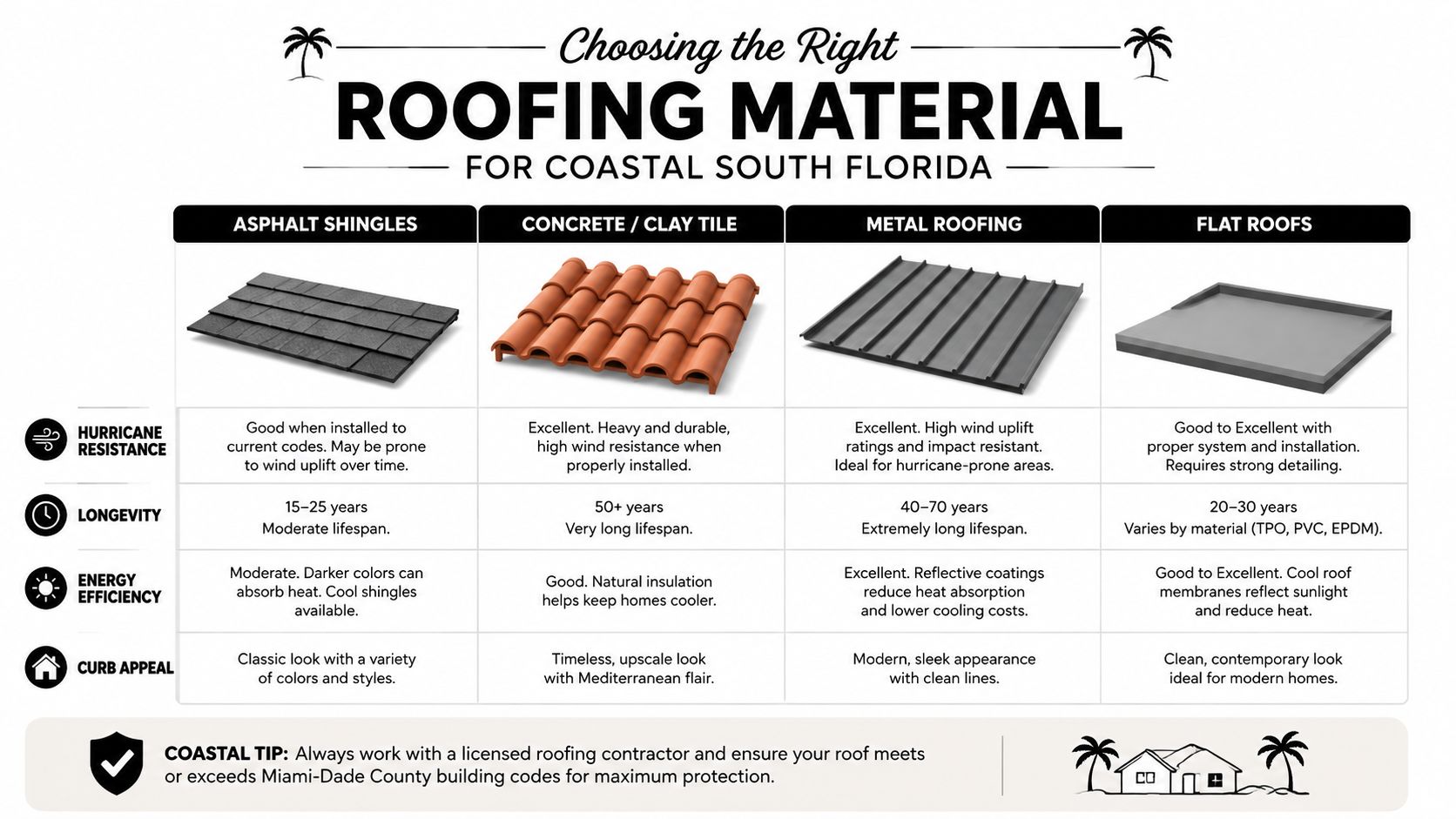
On a Palm Beach Gardens reroof, the material choice usually gets decided faster than the paperwork, but the wrong call can create problems for years. Metal gets a lot of attention in this market because homeowners are looking for long service life, storm resistance, and better long-term value, and local contractors see that preference over and over in the field. That interest does not make metal the answer for every house, though it does tell you what many buyers are trying to solve for, especially in a coastal climate where heat, wind, and salt exposure all matter.
Shingle, tile, metal, and flat roof trade-offs
Architectural asphalt shingles still work well when budget control matters and the goal is a straightforward replacement. They are familiar, widely available, and quicker to install than heavier systems. The trade-off is simple, they usually do not match the lifespan or coastal durability of tile or metal, so owners need to be clear about how long they expect the roof to stay on the house.
Tile roofing fits many Palm Beach Gardens homes because it matches the local look and gives strong curb appeal. It also comes with weight, which is fine on homes built for it, but it is not a casual choice for every structure. The framing, deck condition, and attachment details need to be reviewed before anyone assumes tile is a safe fit.
Metal roofing is the system many homeowners ask about once they start thinking beyond the next storm season. It is favored for longevity and resilience, and it can make sense for a coastal property that needs a tougher shell. The trade-off is upfront cost, and near the coast the details matter, fasteners, corrosion resistance, and installation quality all affect how the system performs.
Flat-roof systems are common on certain home designs and additions. They can look clean and function well, but they need disciplined drainage and regular maintenance because standing water becomes a bigger issue when the roof is nearly level.
What coastal buyers should ask on every quote
- Attachment method: Ask exactly how the system is being fastened.
- Corrosion resistance: Confirm how the material and fasteners handle coastal exposure.
- Warranty scope: Separate labor coverage from material coverage.
- Aesthetic approval: Verify whether the HOA will accept the profile and color.
The best material choice fits the home's structure, the neighborhood's rules, and the owner's tolerance for maintenance and reroof timing.
Permits, HOA Approvals, and the 25% Rule in Palm Beach Gardens
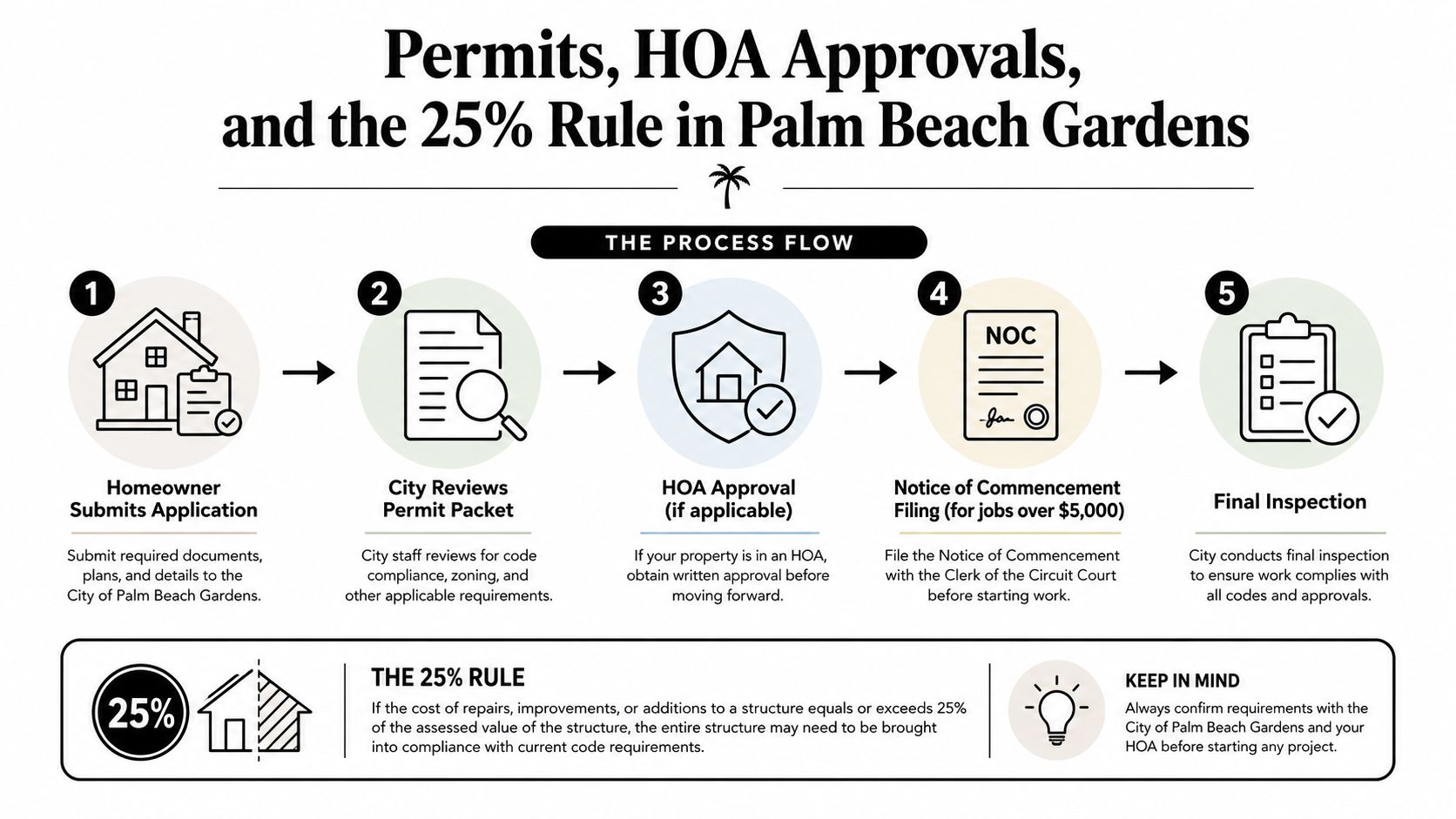
A reroof in Palm Beach Gardens is paperwork-driven before it is labor-driven. The city's re-roof packet asks for documented product approvals (NOAs) and system-specific forms, and it also calls for a Notice of Commencement when valuation exceeds $5,000 (City of Palm Beach Gardens re-roof packet). That means the city wants to see the product, the installation method, and the party responsible for the work before the tear-off starts.
What you need before the crew starts
The smoothest projects are the ones where the paperwork is handled early. In many Palm Beach Gardens communities, the homeowner also has to clear HOA or ARC review before the contractor can lock in production, and that review can take time even when the roof itself is ready. Tile color and profile often need written approval, not just a verbal okay from a board member. In a gated community, that timing can matter as much as crew availability, which is why I keep an apartment gate entry app in the same planning conversation as the permit checklist when access control could slow the job.
County reroof guidance adds another layer. The roof assembly has to be documented correctly, and Palm Beach County expects engineered tie-in details from a design professional, roofing contractor, or registered roof consultant without a financial interest in the installing company, or a manufacturer-approved tie-in detail when applicable.
Why the 25% rule changes the conversation
The Florida Building Code's 25% rule matters after storm damage because it can change the project scope fast. Once damage crosses 25% of the roof area, a repair can turn into a full code-up replacement, which changes the permit path, the schedule, and sometimes the insurance discussion.
That is why I tell homeowners to stop asking only whether a roof can be patched and start asking whether the damage triggers a full reroof. If it does, the project needs permits, documentation, and a realistic timeline, not just a quick service visit.
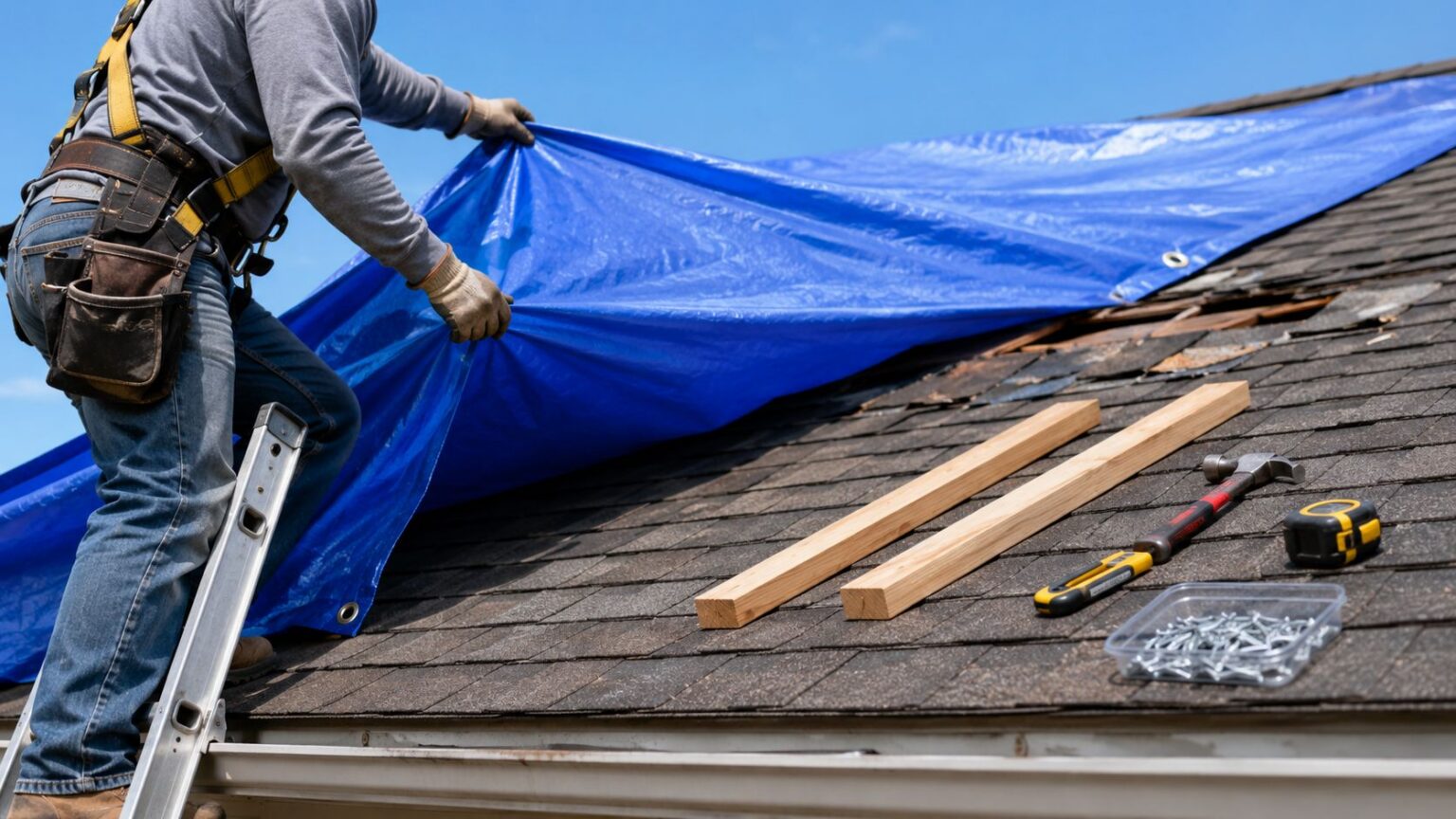
If an emergency tarp is needed, this roof damage tarp reference image is a useful reminder that temporary dry-in is there to limit loss, not solve the roof problem. Insurers usually respond better when the damage is documented clearly, the timing is tied to a storm, and the evidence separates sudden damage from ordinary wear.
Working With Insurance on a Storm-Damaged Roof
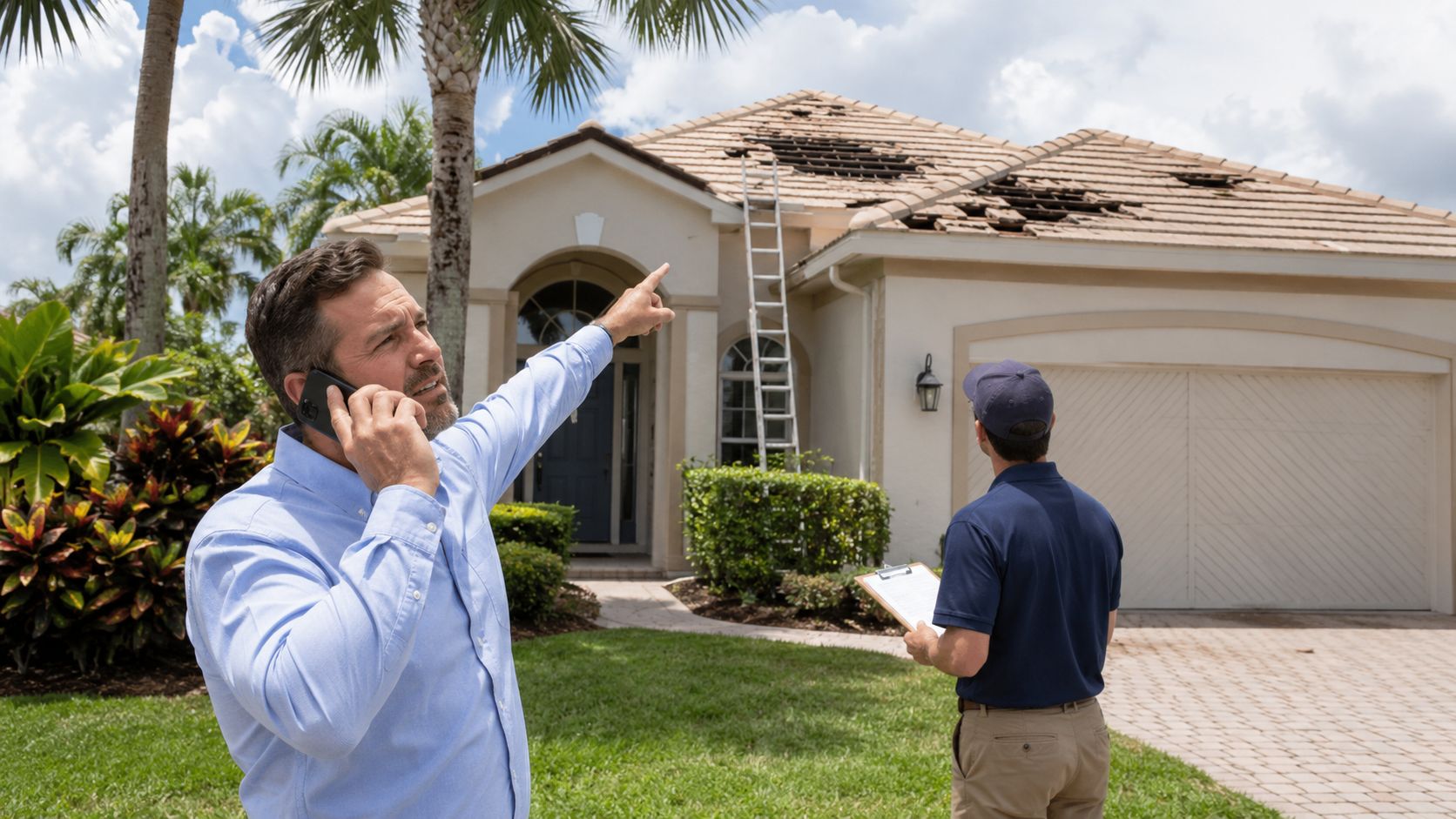
A storm-damaged roof usually turns into a claim conversation fast. A homeowner sees lifted shingles, broken tile, or a leak line on the ceiling, calls the carrier, and waits for an adjuster to decide whether the work stops at repair or becomes a full replacement. In Palm Beach Gardens, that answer often changes once the damage crosses the 25% rule, because a repair that looked straightforward can turn into a code-up reroof as noted earlier.
What strengthens the claim
Documentation carries the claim. Before cleanup starts, homeowners should photograph the affected slopes, cracked or missing tiles, lifted shingles, damaged flashing, and any water intrusion inside the house. If an emergency tarp is needed, this roof damage tarp reference image is a useful reminder that temporary dry-in is there to limit loss while the repair gets sorted out.
Carriers respond better when the condition of the roof is easy to verify, the timeline is clear, and the damage lines up with a specific storm rather than normal wear. That matters after tropical-storm winds, hurricane debris impact, or wind-driven rain, because old age and covered loss can look similar from the street. Good photos, a dated contractor inspection, and notes about where the failure started make the file easier to defend.
Where homeowners get tripped up
The biggest mistake is assuming the adjuster will automatically treat visible damage as a full replacement. That rarely happens on its own. A carrier may approve a partial reroof, push back on the size of the damaged area, or argue that some of the roof is just worn out, which is why pre-inspection photos and contractor notes matter so much.
Access can slow things down too. In a gated community or multifamily property, inspections and temporary repairs can stall if nobody can get the crew to the roof fast enough, so something like an apartment gate entry app can help coordinate entry when timing is tight.
The claim also has to line up with what the policy covers and what the code requires. When those two pieces match, the adjuster conversation gets more direct, and the homeowner can decide whether repair or replacement makes more sense for the house and the budget.
Hiring and Working With a Palm Beach Gardens Roofing Contractor
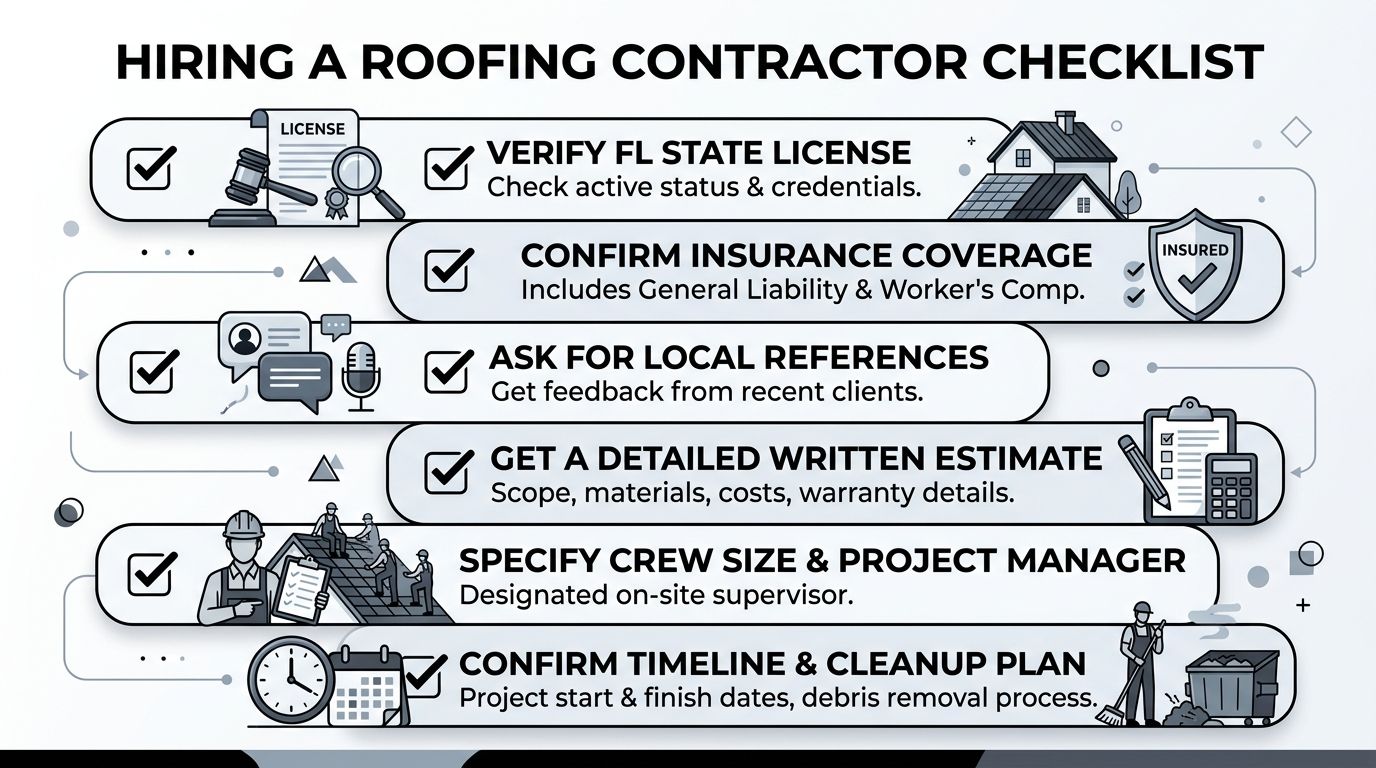
A roof replacement in Palm Beach Gardens can go smoothly or drag for weeks, and the contractor usually sets that tone on day one. Start with license and insurance verification, then compare bids only after each one spells out the same scope, the same materials, the same permit work, and the same cleanup expectations. If a company will not put those details in writing, the bids are not really comparable.
A contractor should also explain where the job may slow down before anyone signs. HOA or ARC review can sit in front of the project for weeks, and storm damage can trigger a code question that changes a planned repair into a full replacement. A good roofer talks about both early, because those delays affect the schedule and the budget just as much as shingles or tile.
Questions that separate solid crews from risky ones
Ask who will be on site each day, who manages the job, how cleanup gets handled, and when payment is due. You want a contractor who can walk through the sequence from material drop-off through tear-off, dry-in, installation, and final inspection without guessing.
Red flags are easy to spot if you slow down long enough to look. Watch for large upfront deposits, no physical address, no local references, or pressure to sign immediately. Those patterns usually show up when a roofer is chasing volume instead of managing projects.
A roof bid should answer more questions than it creates. If it does not, keep looking.
What a normal on-site sequence looks like
The first day is usually mobilization and protection. Then the tear-off starts, the deck gets checked, and the dry-in stage matters because it limits weather exposure while the system is open.
From there, the crew installs underlayment, flashing, and the selected roof covering, then cleans the site and waits for municipal inspection. A well-run project feels organized, not frantic, and the homeowner should know who to call if weather, product delivery, or hidden deck damage changes the plan.
For homeowners comparing service models, Paletz Roofing and Inspections is one option that handles roof replacement, repairs, and inspections across South Florida, including Palm Beach County. That matters less as a sales point than as a practical reminder that the contractor should be able to explain the job from assessment through closeout.
Hurricane-Rated Design and What It Means for Your Roof
Palm Beach County's expedited reroof worksheet makes the engineering side of the job very clear. It specifies a design wind speed of 170 Vult mph and Exposure Category C, and it requires installers to identify the exact attachment method, product approval pages, and FRSA or manual details for the assembly (Palm Beach County expedited reroof worksheet). That means the roof isn't just a covering, it's an engineered system.
Why attachment matters as much as material
Two roofs can use the same shingle and still perform very differently. One may be attached with a stronger perimeter pattern and better edge detailing, while the other relies on the minimum acceptable fastening. In a high-wind zone, the weak point is often the connection, not the covering.
The design pressure is especially important around the perimeter and corner zones, where uplift forces are highest. If the product approval rating comes in below the calculated load, enhanced fastening or a different assembly may be needed, and that decision happens before the shingles or panels go down.
What to ask before you sign
- Attachment method: Ask whether the crew is using the approved pattern for your exact roof.
- Edge metal: Confirm that the drip edge and perimeter details match the wind design.
- Fastener schedule: Make sure the fastening plan is tied to the product approval, not a generic habit.
- Assembly documentation: Request the product approval pages in the job file.
A lot of homeowners get surprised. They think they're buying a color and a profile, but what they're really buying is a tested assembly with specific attachment requirements. If that assembly is built loosely, even a premium product can underperform when weather gets rough.
Common Mistakes and Your Next Steps
The same mistakes come up again and again. People wait too long, ignore the 25% rule, choose the cheapest bid, skip HOA approvals, or assume a permit exemption applies without checking the details. In Palm Beach Gardens, any one of those can stall the job or create an insurance headache later.
Florida's permit rules do include a narrow exemption, but only under strict conditions. Effective July 1, 2026, a written permit exemption may apply to non-structural roof work valued under $7,500 on a single-family home outside a special flood hazard area, while electrical, plumbing, structural, mechanical, and gas work remain excluded, and the project can't be split into smaller pieces to stay under the cap (Florida permit exemption summary).
A simple same-week action plan
- Check the damage. If the roof has storm loss, get photos before anyone moves debris.
- Pull the paperwork early. HOA, permit, and product-approval items should move together.
- Compare bids on scope. Make sure every quote includes the same code work and inspection steps.
- Confirm who's responsible. The contractor should know who files, who inspects, and who closes the permit.
The fastest roof isn't the one that starts first. It's the one that gets approved, installed, and closed out without a preventable delay.
If you're staring at a roof issue this week, don't wait for the next leak or the next storm. Get the damage evaluated, gather the permit and HOA documents, and choose a contractor who can explain the code path before the tear-off starts.
If you need a roof replacement or a detailed inspection in Palm Beach Gardens, Paletz Roofing and Inspections can assess the roof, document the condition, and help you map the next steps around permits, materials, and storm damage. Reach out before the problem spreads, so you can make the replacement decision with the paperwork, scope, and timing already under control.