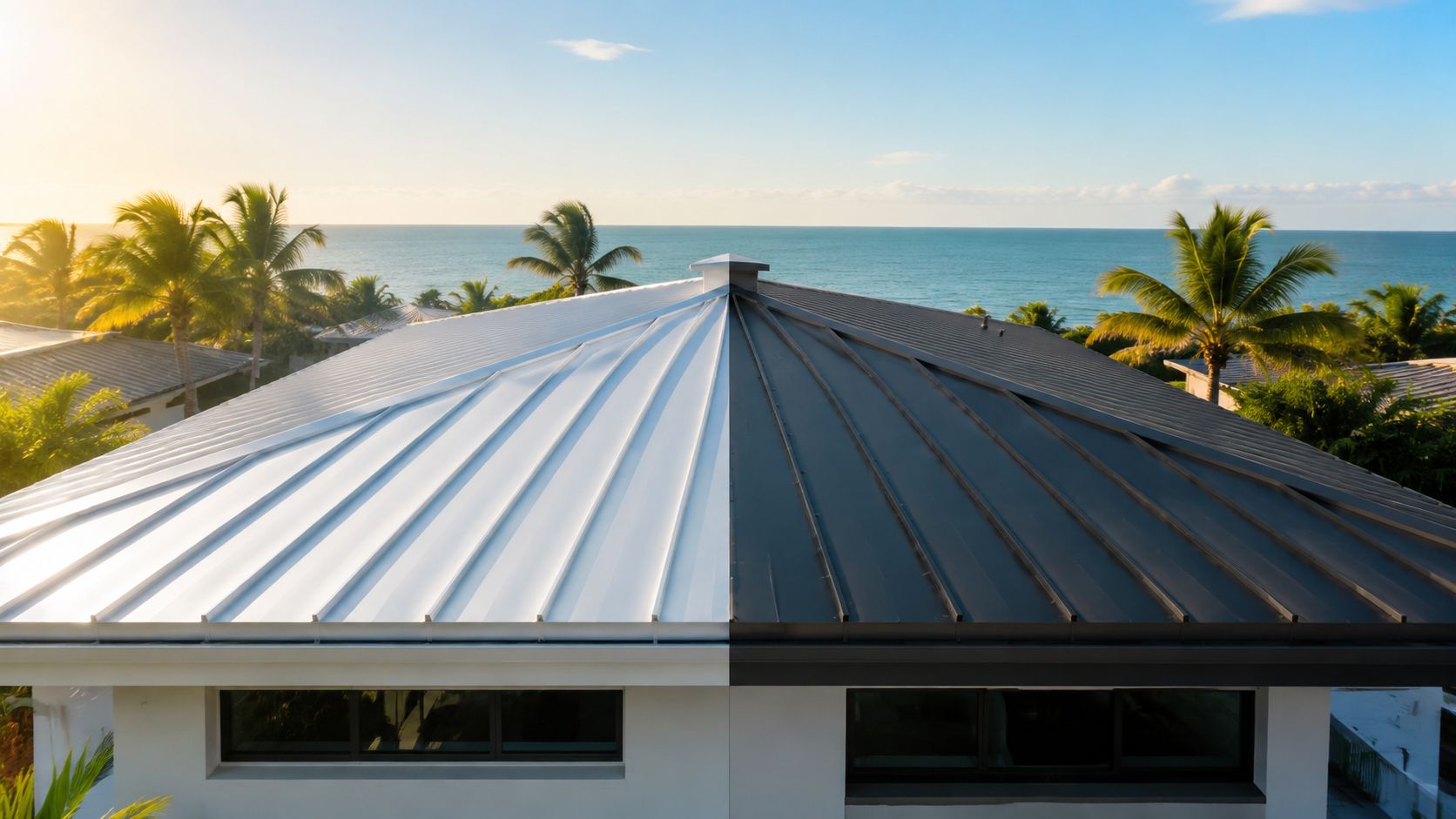
A summer squall has just moved across your South Florida neighborhood. You're standing in the driveway, looking at shingles scattered across the lawn and water marks beginning to show near the ceiling. The immediate question is whether to replace the old roof with another conventional system or make the larger investment in metal. Then comes the harder question: aluminum or steel?
That choice isn't generic in Broward, Miami-Dade, or Palm Beach County. Salt-laden air, hurricane-zone approvals, intense ultraviolet exposure, and cool-roof requirements can change which material delivers the better result. Steel usually wins on cost, stiffness, and dent resistance. Aluminum usually wins where salt exposure and low structural weight matter most. The right answer depends on your distance from the ocean, roof design, code requirements, and how long you expect to own the property.
Table of Contents
- Why South Florida Changes the Metal Roofing Decision
- Market Share and Pricing for Aluminum and Steel Roofing
- Weight and Structural Performance Compared
- Corrosion Resistance and Coastal Longevity
- Florida Hurricane Zone Code Requirements
- Energy Performance and Cool Roof Compliance
- Which Material Fits Your Property
Why South Florida Changes the Metal Roofing Decision
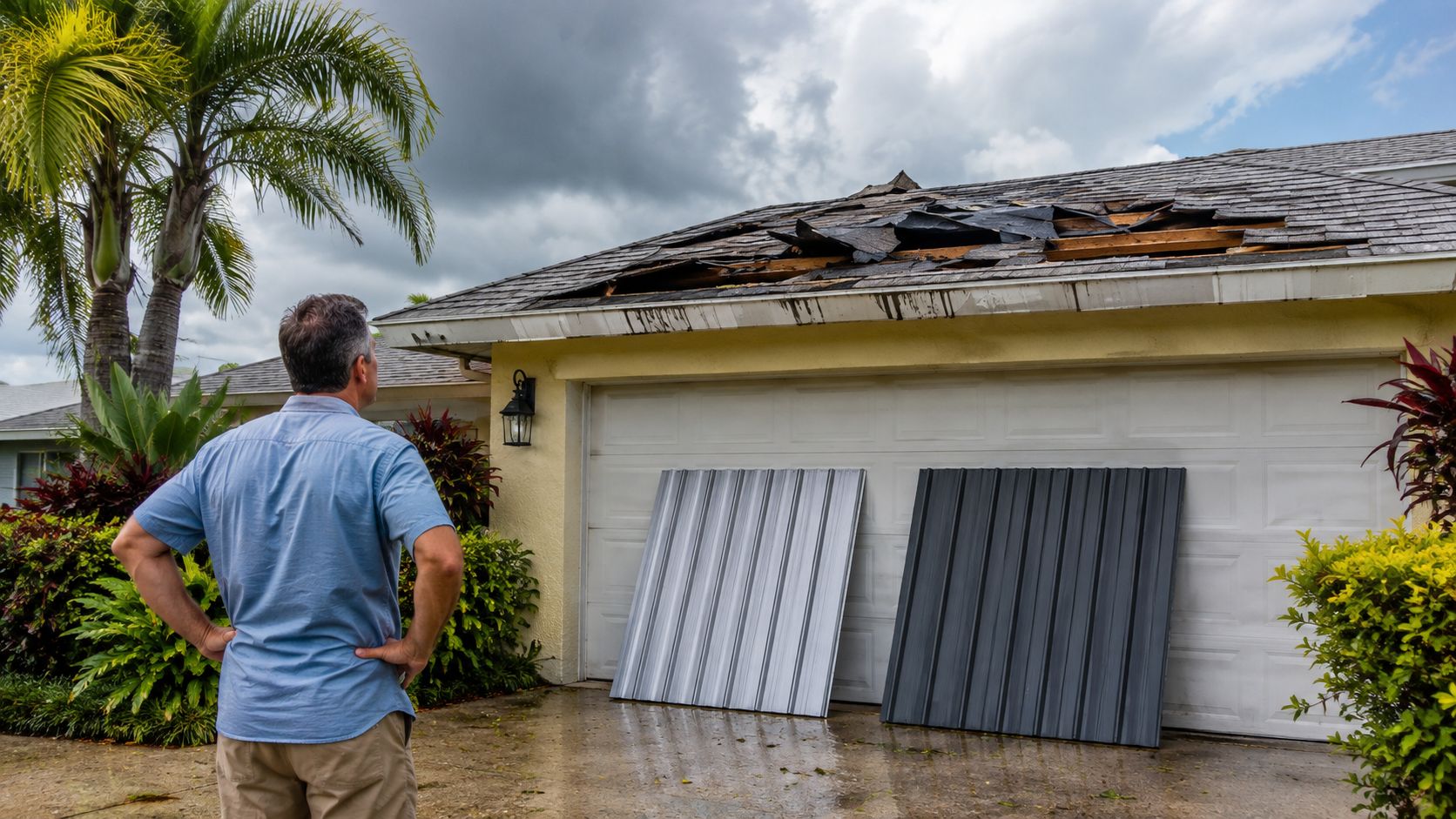
A homeowner inland from Fort Lauderdale may compare metal roofing mainly by price, color, and expected maintenance. An owner near the beach has a different calculation. Every panel edge, exposed fastener, cut line, and flashing detail has to cope with salt, humidity, wind-driven rain, and year-round sun.
History helps explain why the two materials occupy different parts of the market. Aluminum entered metal roofing in the early 1900s because installers valued its low weight and natural corrosion resistance. By the 1920s, Alcoa was marketing rolled aluminum sheets and interlocking shingles in natural and painted finishes. The invention of Galvalume in the 1970s, a zinc-aluminum coating for steel, improved rust resistance and helped steel expand into broader roofing use. Sheffield Metals' roofing history provides useful background on that transition.
Three local pressures reshape the decision:
- Salt exposure: Properties close to the coast face a more aggressive marine environment than inland buildings. Steel depends on its protective coating, while aluminum naturally develops a protective oxide layer.
- HVHZ wind demands: Miami-Dade and Broward projects require approved assemblies, tested fastening patterns, and documented resistance to uplift and impact. The panel material alone doesn't establish compliance.
- Solar exposure: Strong ultraviolet radiation can age paint and protective finishes. A durable coating, correct color selection, and proper attic ventilation matter on either substrate.
Practical rule: In South Florida, choose the complete roof assembly, not just the metal name on the estimate.
Generic national advice often misses the local details. A steel roof that performs well inland may need more careful coating and fastener selection near saltwater. Aluminum can reduce dead load and resist marine corrosion, but it's softer and usually costs more. Your property's location, structure, approved system, and ownership horizon should drive the decision.
Market Share and Pricing for Aluminum and Steel Roofing
Steel dominates metal roofing volume because it's widely available, rigid, and generally more economical. One global market estimate places steel at about 42.3% of metal roofing market share in 2025, compared with about 24.7% for aluminum, while another industry report describes steel at roughly 55% and aluminum at about 25% of global metal-roofing type share. These figures differ by methodology, but they point in the same direction. Steel is the larger category, while aluminum holds an important coastal and marine niche. IndustryResearch.biz's market report outlines those market comparisons.
Installed pricing also reflects the material difference. Steel roofs are commonly cited at $7 to $12 per square foot, while aluminum is commonly cited at $12 to $18 per square foot, according to the same market reference. Actual South Florida bids vary with profile, access, tear-off, underlayment, engineering, permits, and fastening requirements. For broader roof-replacement budgeting context, a roof replacement cost guide from Richmond Tree Experts GA can help homeowners understand why material prices are only one part of a complete estimate.
| Factor | Steel Roofing | Aluminum Roofing |
|---|---|---|
| Global market position | Larger category, about 42.3% to roughly 55% in cited estimates | Smaller but substantial category, about 24.7% to 25% in cited estimates |
| Common installed range | About $7 to $12 per square foot | About $12 to $18 per square foot |
| Main value | Lower upfront cost, stiffness, availability | Coastal corrosion resistance, low weight |
| Typical South Florida concern | Coating and fastener performance near saltwater | Higher price and dent susceptibility |
| Best fit | Inland and cost-sensitive projects | Coastal, marine, and weight-sensitive projects |
Steel pricing responds to the cost of iron-based production and protective coatings. Aluminum pricing is influenced by the metal itself and the energy required to produce it. Local distributors often carry more aluminum profiles in coastal markets because architects, homeowners, and contractors regularly specify material suited to marine exposure. That availability doesn't make aluminum inexpensive, but it can make profile selection more practical.
Insurance treatment also needs careful wording. A carrier may evaluate an impact-resistant metal roof based on the approved assembly and policy terms, not solely whether the panel is aluminum or steel. Ask for written confirmation before assuming either material automatically earns a discount.
Weight and Structural Performance Compared
Aluminum's biggest physical advantage is weight. Aluminum has a density of 2.7 g/cm³, compared with 7.85 g/cm³ for carbon steel, making it roughly one-third as dense. Common standing-seam aluminum panels weigh about 0.5 to 0.75 lb/ft², while comparable steel panels weigh roughly 1.5 to 2.0 lb/ft². Somei Aluminum's technical comparison documents those material and panel-weight comparisons.
That difference matters during reroofing. Older South Florida homes may have framing and decking designed around a lighter roof covering. A contractor should inspect the existing structure rather than assume it can accept any metal profile without review. Aluminum can be useful where the owner wants to limit added dead load, particularly over existing structures or on large-span buildings.
| Property | Aluminum Panels | Steel Panels |
|---|---|---|
| Density | 2.7 g/cm³ | 7.85 g/cm³ for carbon steel |
| Common standing-seam panel weight | About 0.5 to 0.75 lb/ft² | About 1.5 to 2.0 lb/ft² |
| Structural benefit | Lower dead load | Greater stiffness |
| Impact behavior | Softer and more vulnerable to visible dents | Harder and generally more dent resistant |
| Design consideration | Requires an approved system engineered for uplift | Supports rigid assemblies and broader commercial applications |
Low weight doesn't mean aluminum is automatically stronger. Steel generally offers higher stiffness and better dent resistance at the same thickness. Falling branches, hail, ladders, and dropped tools can leave more visible marks in softer aluminum. The panel profile, ribs, seam design, substrate, and installation quality all affect real-world performance.
Fastening works differently as well. Aluminum's lower mass can reduce dead load, but wind resistance comes from the tested assembly, including clips, screws, seams, purlins, decking, and substrate. Steel's rigidity can support wider purlin spacing in some commercial low-slope designs, but a heavier system places greater demands on the supporting structure.
The lightest roof isn't automatically the safest roof. The safe roof is the one whose complete assembly has been engineered and approved for the building.
Corrosion Resistance and Coastal Longevity
Salt air exposes the central difference between these materials. Aluminum naturally forms a protective oxide layer, so it doesn't rely on a separate zinc or aluminum-zinc coating to prevent ordinary rust. When the surface is scratched, the oxide layer can reform. That doesn't make aluminum immune to staining, pitting, or every chemical reaction, but it removes the iron core that produces conventional steel rust.
Steel has a different protection strategy. Galvanized steel uses zinc, while Galvalume uses a zinc-aluminum coating over the steel substrate. Those coatings provide valuable protection, but the system remains dependent on coating continuity and proper detailing. Scratches, cut edges, incompatible fasteners, trapped moisture, and salt deposits can create trouble, especially where water repeatedly moves across exposed metal.
| Factor | Aluminum Roofing | Steel Roofing |
|---|---|---|
| Base-metal corrosion | Doesn't rust like iron-based steel | Can rust if the protective coating or steel core is exposed |
| Primary protection | Natural oxide layer plus finish coating | Zinc or Galvalume coating plus finish coating |
| Coastal suitability | Strong choice for marine exposure | More dependent on coating, detailing, and maintenance |
| Fastener compatibility | Requires compatible fasteners and accessories | Requires protection at penetrations, edges, and cut areas |
| Maintenance focus | Inspect for galvanic interaction, finish wear, and fastener condition | Inspect for coating damage, edge corrosion, rust, and fastener deterioration |
Paint is still important on aluminum. A high-quality PVDF finish, often referred to by the trade name Kynar 500, can provide a secondary barrier against weathering, fading, and chalking. The finish doesn't change the underlying fact that aluminum is a nonferrous metal, but it improves appearance and surface protection.
Galvanic corrosion deserves particular attention. Dissimilar metals can react when moisture and salt provide a conductive path. Installers should use compatible screws, washers, clips, flashings, and sealants. A good aluminum panel installed with the wrong accessory can develop problems at the connections even though the panel itself won't rust.
For steel near the coast, maintenance begins with the details. Inspect exposed cuts, penetrations, valleys, closures, and fasteners. Rinse salt deposits where the system and manufacturer allow it, and address damaged coatings before corrosion reaches the substrate. For practical trade context on metal fabrication and installation services, you can also review Thorpe's sheet-metal installer listing.
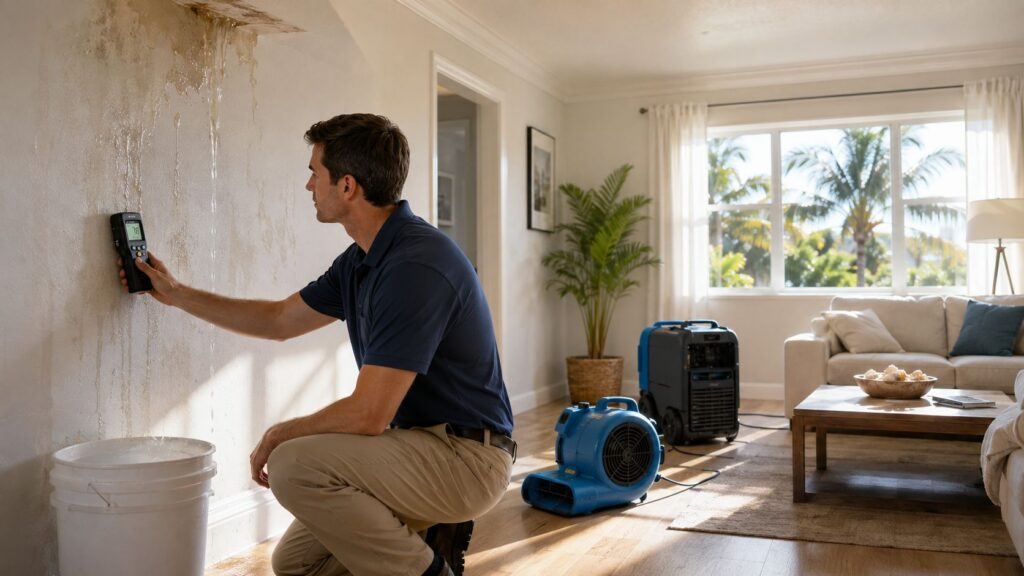
A roof inspection should also look beyond the panel surface. Water entering at a failed transition can damage insulation, framing, and interior finishes, which is why this water-damage mitigation reference belongs in the maintenance conversation. Material selection reduces risk, but it doesn't replace inspections and correct installation.
Florida Hurricane Zone Code Requirements
HVHZ compliance starts with the approved assembly, not with a sales label. The roof panel, clips, screws, seams, underlayment, decking attachment, edge metal, and flashing details must work together under the required testing and approval pathway.
Florida's concrete minimums include a direct distinction. In HVHZ applications, steel roofing panels and shingles must use at least G-90 corrosion-resistant steel and be no less than 26 gauge, while aluminum panels and shingles must be at least 0.025 inch, or 0.685 mm, thick. Those requirements are summarized in the ASTM B117 salt-spray and roofing guidance from DECRA.
A contractor reviewing a South Florida proposal should confirm:
- Product approval: Verify the applicable Miami-Dade or Florida approval and make sure the proposed profile matches the approved installation.
- Wind and impact testing: Review the listed testing and evaluation documents, including the requirements that apply to the building and location.
- Fastener schedule: Confirm screw type, spacing, clip layout, edge fastening, and substrate attachment. Substituting hardware can invalidate an assembly.
- Secondary water protection: Confirm the specified peel-and-stick or other approved underlayment system beneath the metal.
- Corrosion details: Check dissimilar-metal separation, flashing compatibility, cut-edge treatment, and exposed fastener protection.
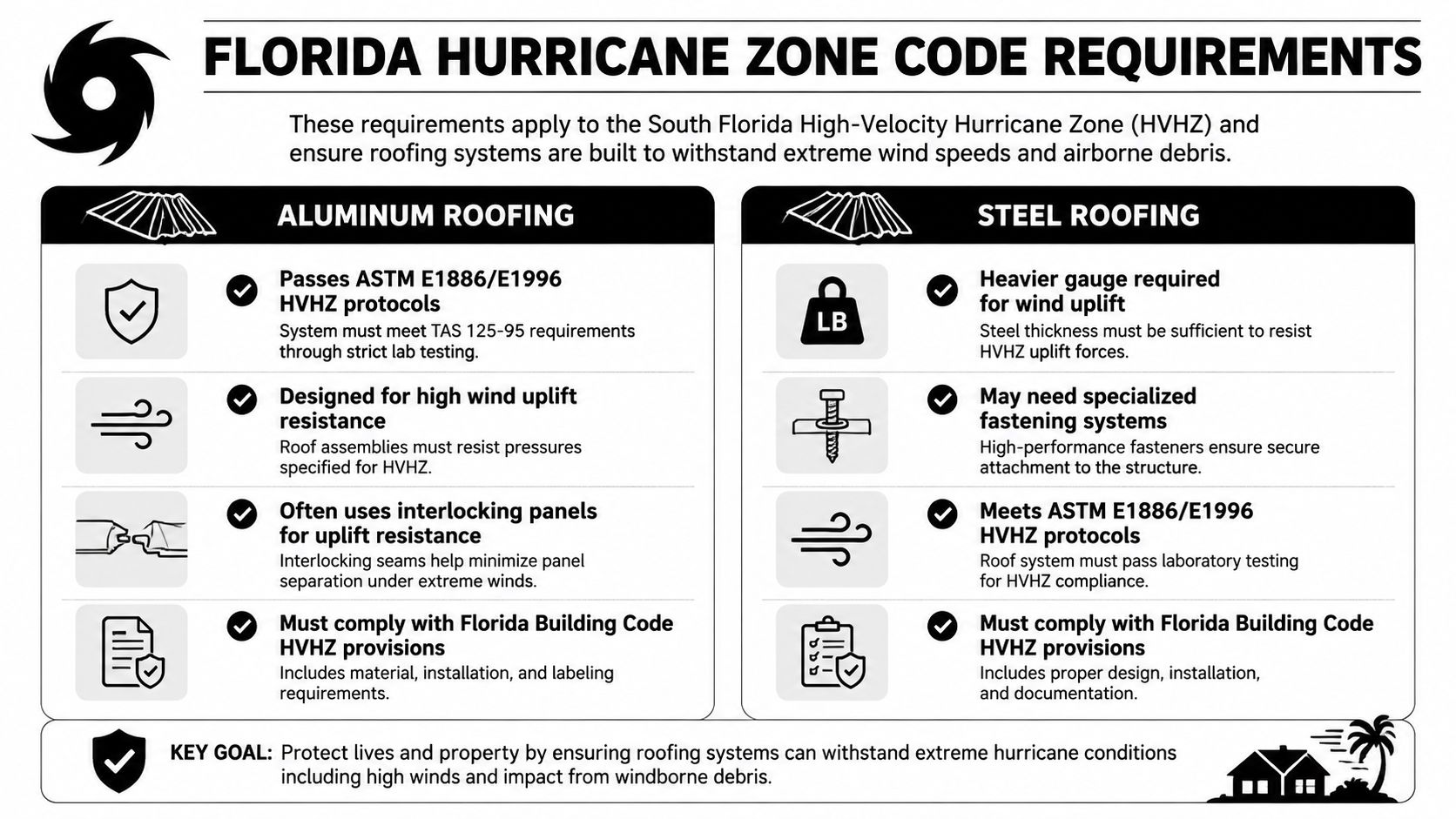
Aluminum may need a thicker panel or a different profile to achieve the required structural performance. Steel's higher stiffness can allow a more compact material design, but the roof still has to meet the specific approval. Neither metal receives a code pass automatically because it's marketed as hurricane resistant.
Ask for the approval number, installation details, and fastening schedule before signing. “Hurricane metal roof” is a description, not proof of compliance.
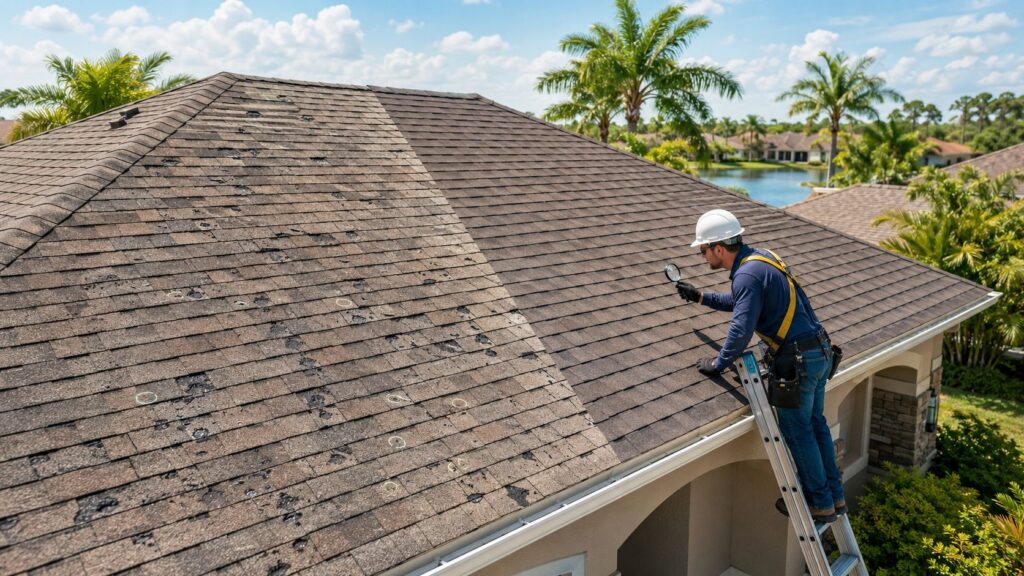
Underlayment matters because a roof can lose panels and still need to limit water intrusion. A proper secondary barrier works below the metal and supports the building envelope during storm damage. For a visual reference on inspection concerns after severe weather, see this hail-damage roof inspection image.
Energy Performance and Cool Roof Compliance
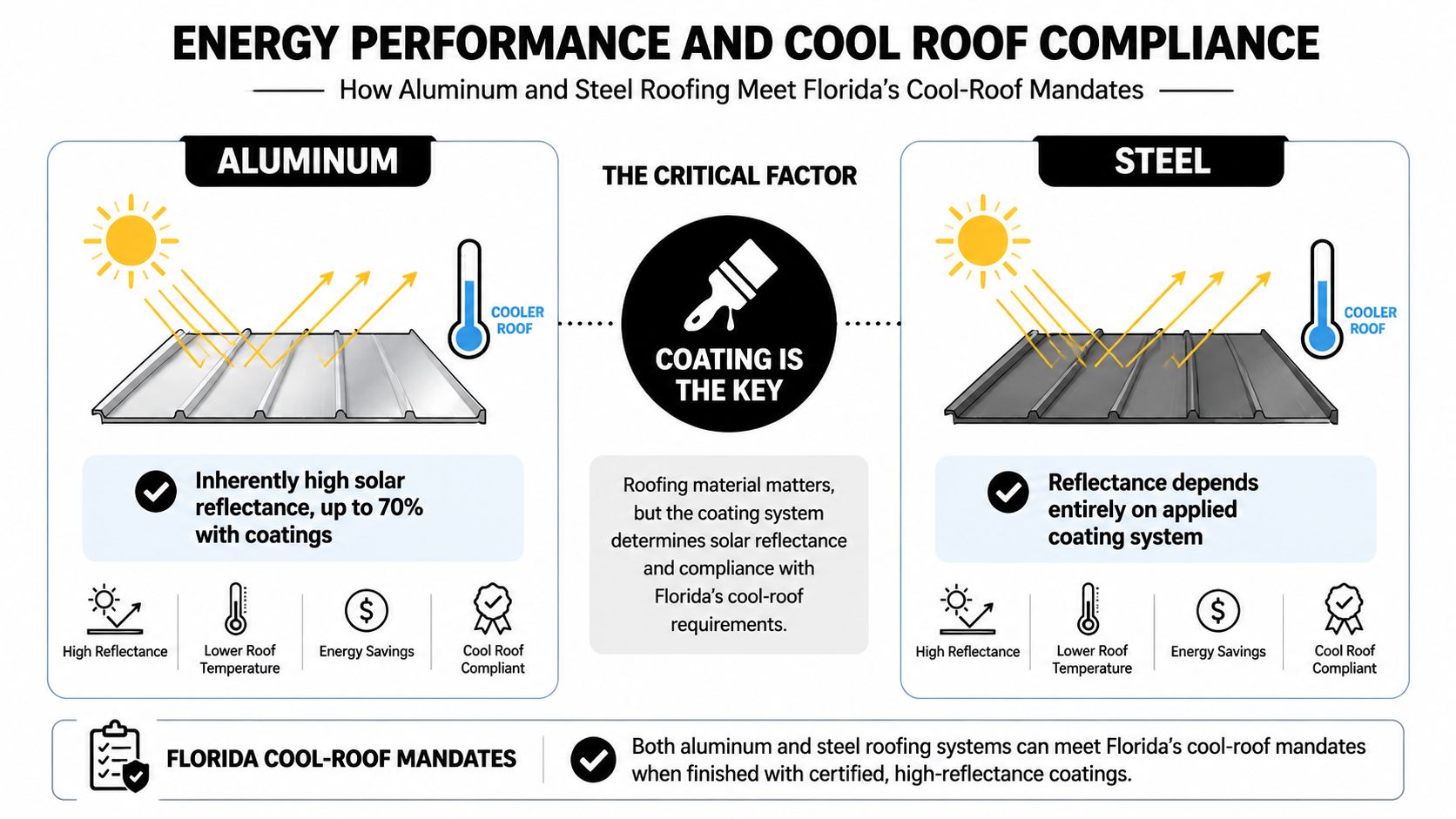
Homeowners often ask whether aluminum is automatically cooler than steel. The practical answer is no. Coating chemistry, color, solar reflectance, thermal emittance, attic ventilation, insulation, and roof geometry usually matter more than the base metal alone.
Bare aluminum can reflect more radiant heat than bare steel, but painted systems change the comparison. A light-colored steel roof with a high-performance coating can perform well, while a dark aluminum roof can absorb substantial solar energy. The finish must be evaluated as part of the complete roof specification.
Cool-roof products have gained attention as energy standards become stricter across major markets. Bonafide Research's global metal-roofing market coverage discusses the connection between cool-metal demand, energy performance, and broader metal-roofing adoption. In South Florida, ask the contractor to identify the coating system and provide the applicable reflectance and emittance documentation rather than relying on the word “metal.”
The coating does the heavy lifting
PVDF and SMP finishes behave differently in color retention, weathering, and long-term appearance. Lighter colors generally preserve solar reflectance more effectively than darker colors, but the product data sheet controls the actual performance. A high-quality finish can help either aluminum or steel meet the project's energy goals.
The same principle applies to patio and accessory structures. If you're comparing roof assemblies for an outdoor living area, an insulated roof for patio guide can provide useful context on how insulation and roof construction affect comfort beyond the metal skin.
Aluminum's natural corrosion resistance can help preserve the roof system in humid coastal conditions, while a durable coating helps preserve its appearance. Steel can also deliver strong energy performance when the manufacturer specifies a suitable cool-roof finish. Select the documented coating and assembly first, then compare the substrates.
Which Material Fits Your Property
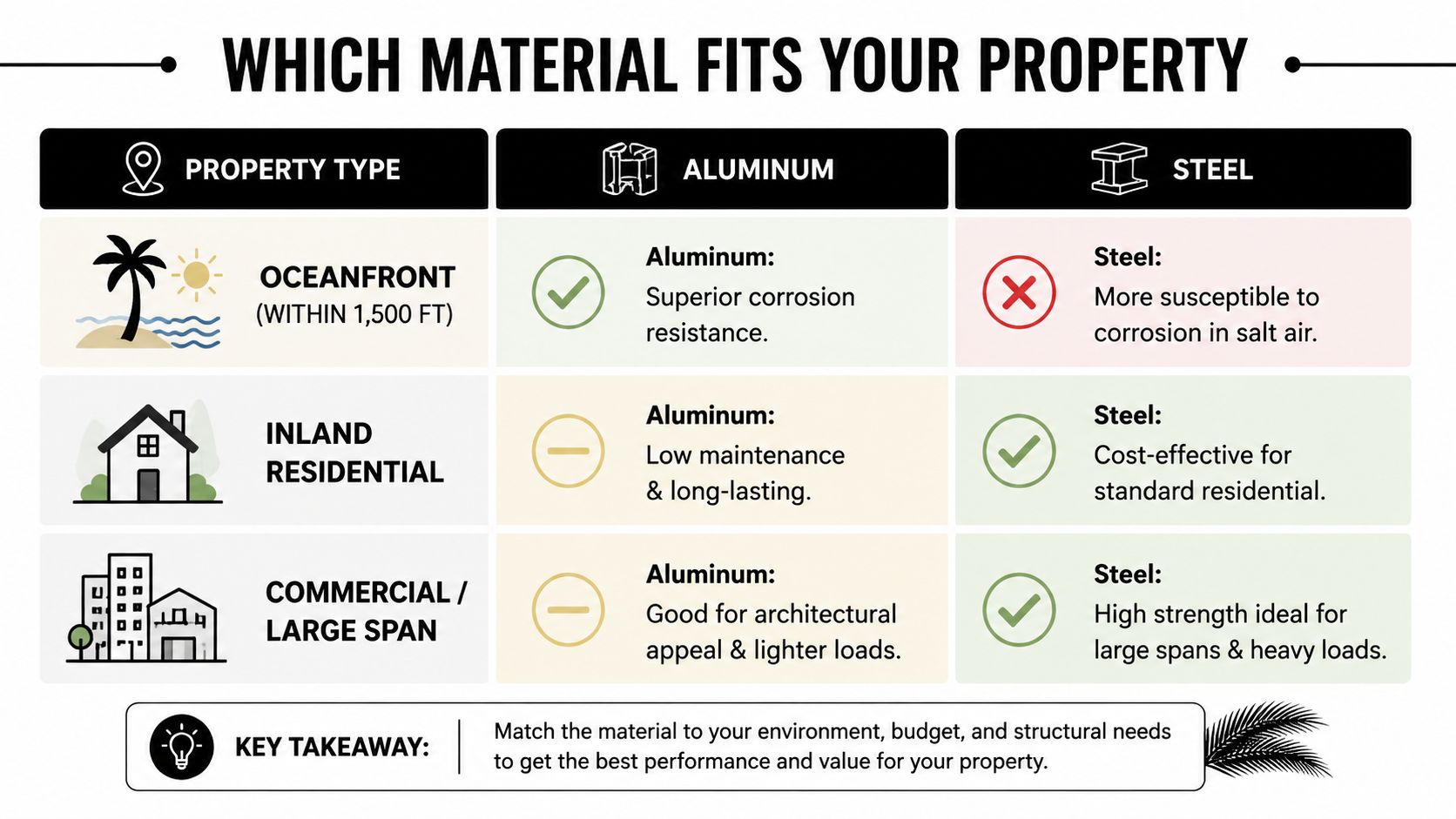
The simplest recommendation is climate-based. Choose aluminum when salt exposure is the dominant threat. Choose steel when budget, stiffness, and inland availability carry more weight. That rule isn't absolute, but it reflects how these materials behave in South Florida buildings.
For an oceanfront home or a property close to saltwater, aluminum usually deserves serious priority. Its natural corrosion resistance removes the steel-core rust problem, though the installer still needs compatible fasteners, properly designed flashings, and an approved hurricane assembly. The higher initial price can make sense when avoiding coating repairs and marine corrosion is more important than minimizing the first invoice.
Inland residential properties often give steel its strongest case. Galvalume or galvanized systems can provide a practical balance of cost, rigidity, appearance, and code compliance when salt exposure is limited. The roof still needs a documented finish, careful edge detailing, and routine inspection, especially after storms.
| Property situation | Aluminum recommendation | Steel recommendation |
|---|---|---|
| Oceanfront or marine exposure | Strong fit because the base metal doesn't rust like steel | Use only with careful coastal specifications and maintenance planning |
| Inland residential home | Useful where low weight is important | Usually the more economical, rigid option |
| Commercial low-slope building | Works for architectural systems and corrosion-sensitive sites | Often advantageous for stiffness, purlin layouts, and profile availability |
| Reroof over an existing structure | Attractive where dead-load reduction matters | Requires structural review before adding the heavier system |
| Long ownership horizon | Corrosion resistance can support long-term value | Works when the environment is mild and maintenance is managed |
Commercial owners should focus on span, substrate, drainage, access, and maintenance logistics. Steel's rigidity can simplify some structural layouts, while aluminum standing-seam systems make sense for architectural projects where marine exposure and long-term appearance matter.
For reroofing, weight deserves a formal review. A lighter aluminum assembly may reduce structural demands, but the design still has to meet uplift, impact, and attachment requirements. Never install a second roof layer just because the material appears light. Have the deck, framing, penetrations, and existing moisture conditions evaluated first.
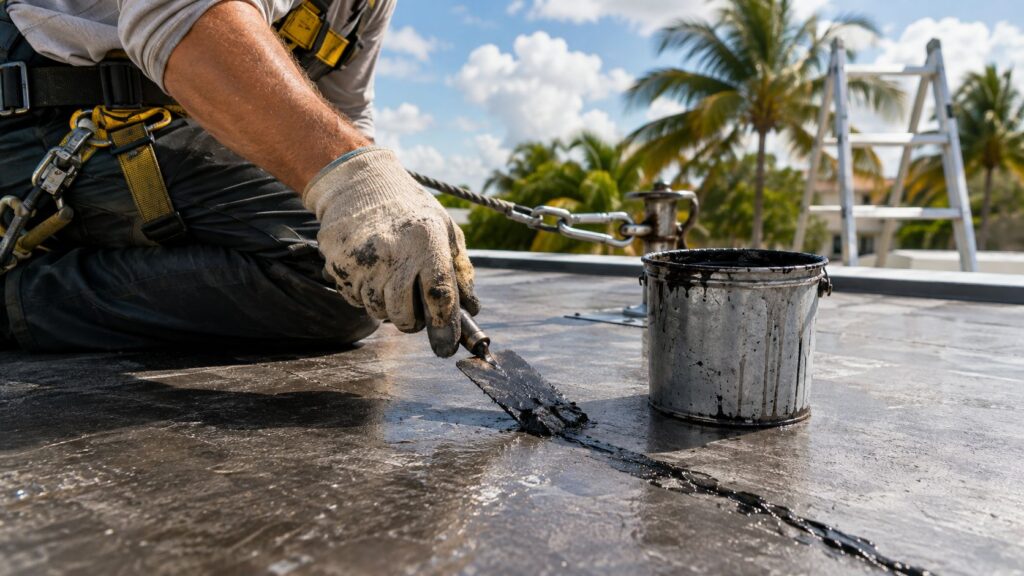
Before accepting a bid, verify the product approval, the installer's insurance, the exact coating, the fastening schedule, and experience with similar South Florida buildings. Ask how the crew handles flashing, cut edges, dissimilar metals, underlayment, and post-storm inspections. For leak-related work during the decision process, this roof-repair reference image illustrates why temporary attention to water entry shouldn't replace a complete roof evaluation.
Paletz Roofing and Inspections provides roof inspections, repairs, replacements, and metal-roof installation for residential and commercial properties across South Florida. Their team can compare aluminum and steel assemblies against your building's coastal exposure, structure, coating needs, and HVHZ approval requirements. Visit Paletz Roofing and Inspections to request an inspection and discuss the right metal roofing plan for your property.