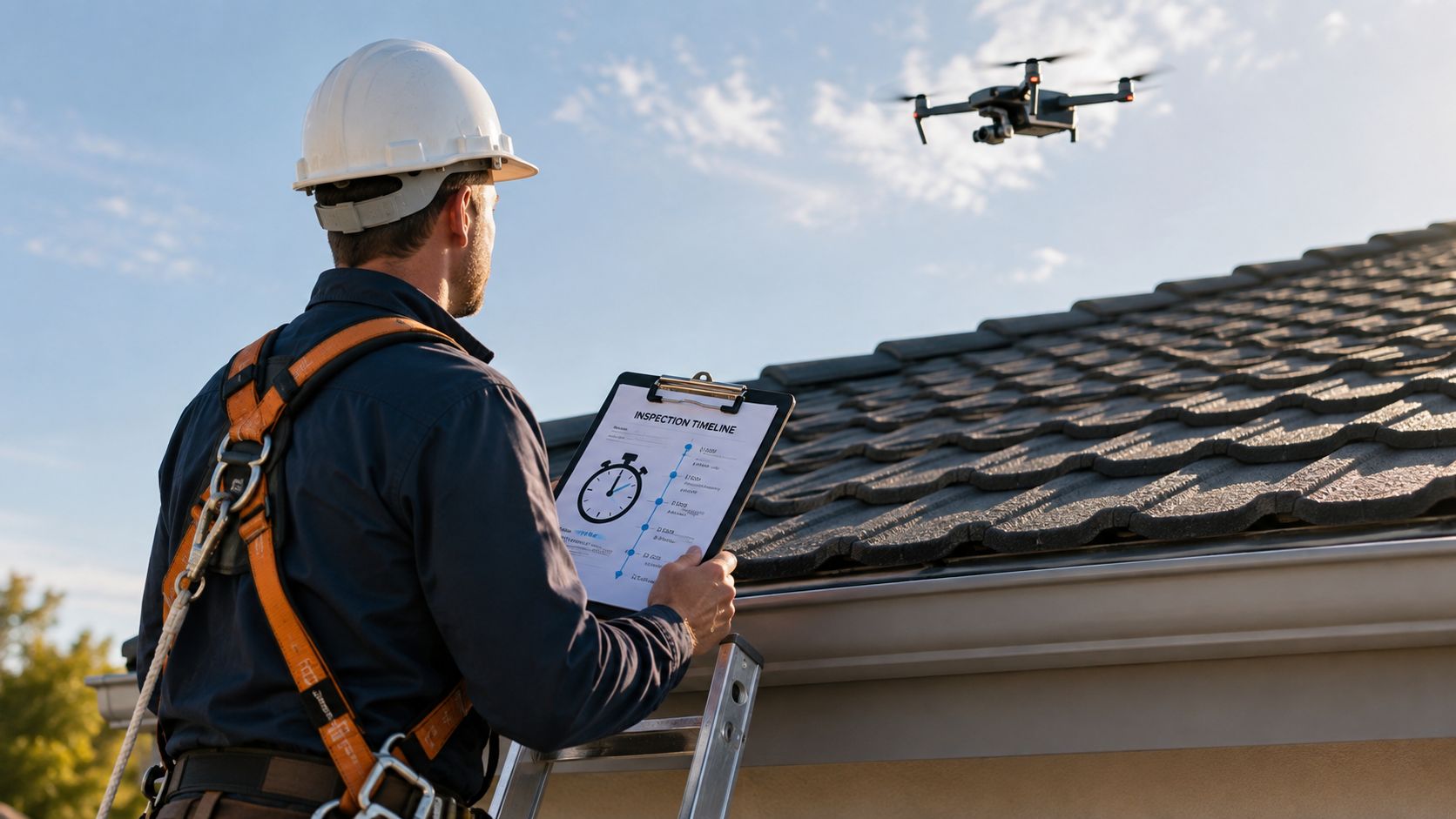
A standard residential roof inspection typically takes 45 minutes to 2 hours. A simple single-story home falls toward the shorter end, while a larger or more complex roof can require the full two hours or more.
That range is a planning estimate, not a guarantee. The inspector may need to examine the roof surface, edges, flashing, penetrations, gutters, attic, and interior signs of moisture, then photograph findings and prepare documentation. In South Florida, the method matters as much as the time. A technician may inspect in person, or an insurer may rely on drone imagery and AI analysis before deciding what happens next.
Table of Contents
- Typical Roof Inspection Timeframes Explained
- How Different Inspection Types Affect Duration
- Key Factors That Extend or Shorten Your Inspection
- What Happens During Your Roof Inspection Appointment
- The Rise of Drone and AI Roof Inspections
- How to Prepare for a Smooth Roof Inspection
- Planning Your Roof Inspection with Confidence
Typical Roof Inspection Timeframes Explained
For a typical single-story home under 2,000 square feet with a straightforward gable or hip roof, a practical benchmark is 45 to 60 minutes, according to residential roof inspection timing guidance. Larger or more complicated properties often require 90 to 120 minutes, especially when the roof has multiple levels, steep sections, dormers, skylights, or difficult access.
The reason is straightforward. An inspector isn't measuring time with a stopwatch and then leaving when the hour ends. They're checking each roof plane and each component that can allow water into the building. A simple roof gives the inspector fewer surfaces and transitions to examine. A complex roof creates more valleys, joints, flashings, penetrations, and drainage paths where defects can develop.
Use your roof shape as the first estimate
A quick self-assessment can help you plan the appointment:
- Simple single-story roof: Expect the shorter end of the range when the roof has a basic gable or hip design and clear access.
- Average multi-plane roof: Allow more time for intersecting slopes, chimneys, skylights, and flashing details.
- Large or steep property: Plan for the longer end of the range, particularly when the inspector must use additional safety equipment or document multiple roof sections.
- Two-story or highly detailed home: A thorough inspection can take up to two hours because height, pitch, and access slow the physical examination.
A concise visual check may be completed quickly, but it shouldn't be confused with a documented inspection. The inspection's purpose also matters. A maintenance visit may focus on visible wear, while a pre-purchase or insurance inspection usually requires more photographs, notes, and explanation.
Practical rule: Schedule enough time for the inspector to investigate, not just to arrive, glance upward, and leave.
If you're considering drone-based inspection work as part of a broader property assessment workflow, professional drone pilot education can help explain the skills and safety practices behind aerial documentation.
How Different Inspection Types Affect Duration
Not every roof inspection has the same scope. A basic exterior look and a full inspection with attic access, moisture detection, thermal imaging, and claim documentation are different services, even when they concern the same roof.
| Inspection Type | Typical Duration | Best For |
|---|---|---|
| Basic exterior walk-around | 30 to 60 minutes | Routine visual screening and obvious exterior concerns |
| Standard residential inspection | 45 minutes to 2 hours | General roof condition, visible defects, edges, flashings, and documentation |
| Whole-house inspection roof portion | 20 to 40 minutes | Roof review performed within a broader home inspection |
| Comprehensive inspection | Longer than a basic visual visit | Attic access, interior checks, moisture detection, thermal or infrared imaging |
| Post-storm or hail inspection | 90 to 180 minutes | Damage documentation, photographs, and insurance records |
| Pre-purchase inspection | 60 to 150 minutes | Buyers, sellers, report writing, and follow-up questions |
The ranges for smaller homes, average homes, whole-house appointments, and specialized inspections are outlined in published roof inspection duration guidance. A small single-story home with a simple gable roof may be completed in 30 to 60 minutes, while an average home between 1,500 and 2,500 square feet commonly takes 1 to 2 hours. Within a whole-house inspection lasting 2 to 4 hours, the roof portion may use 20 to 40 minutes.
Match the inspection to the decision
A basic walk-around works when you need an initial view of visible condition. It doesn't replace an attic review if you're investigating a leak, and it may not provide enough documentation for an insurer or a real-estate transaction.
A standard inspection examines the exterior more carefully and may include accessible attic areas. It's the practical choice for routine ownership questions, maintenance planning, or a concern that isn't tied to a recent storm.
A thorough inspection adds diagnostic work. Accessing the attic, checking ventilation, looking for moisture, and using thermal or infrared equipment adds setup and documentation time. As inspection method guidance explains, these added steps are why two inspections of the same property can have materially different durations.
Post-storm inspections and pre-purchase inspections are usually more documentation-heavy. The inspector isn't only identifying conditions. They're creating a record that other people may review, including buyers, sellers, adjusters, lenders, or property managers.
Key Factors That Extend or Shorten Your Inspection
Roof size and geometry usually determine the baseline. Access, weather, inspection purpose, and the amount of documentation can then add time around that baseline.
A large roof contains more surface area to examine, but size isn't the only issue. Each valley, dormer, skylight, chimney, wall intersection, and other penetration creates another transition where the inspector must check materials and flashing. Roof inspection guidance on size and complexity identifies these features as repeated drivers of inspection duration.
The main time drivers
- Roof layout: Multiple planes and angles require the inspector to change position, follow drainage paths, and photograph separate areas.
- Pitch and height: Steeper pitches and two-story homes create slower, more controlled movement and may require extra safety measures.
- Access: Limited ladder placement, blocked attic entries, fragile surfaces, or landscaping near walls can prevent a direct approach.
- Inspection purpose: A routine condition check generally has a narrower scope than a post-storm claim or pre-purchase assessment.
- Weather: Wet, icy, windy, or otherwise unsafe conditions can postpone the appointment rather than lengthen it.
These factors can compound. A large roof with several dormers is already slower to inspect. Add a steep pitch, limited ladder access, and a recent storm, and the inspector must spend more time both examining the system and creating defensible documentation.
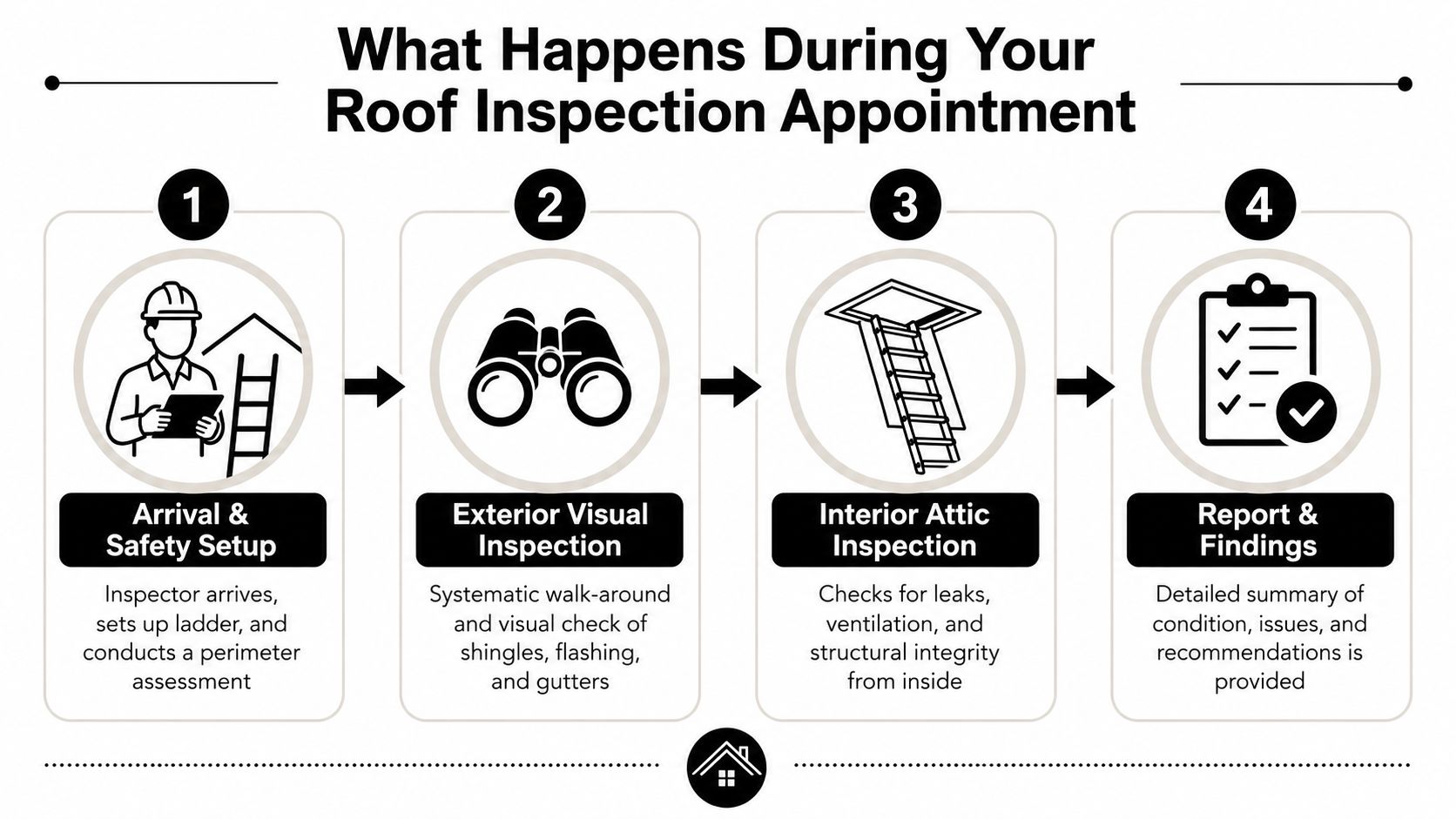
A roof inspection also shouldn't be shortened by skipping hard-to-reach areas. A fast appointment may look efficient, but it doesn't help if the inspector misses a rear valley, concealed flashing defect, or attic evidence of water entry. For reference, this roof decking replacement image illustrates why surface condition and underlying structure can't always be judged from one position.
The useful question isn't only, “Can this be done quickly?” Ask whether the inspection includes the areas relevant to your decision, and whether the final report will document them clearly.
What Happens During Your Roof Inspection Appointment
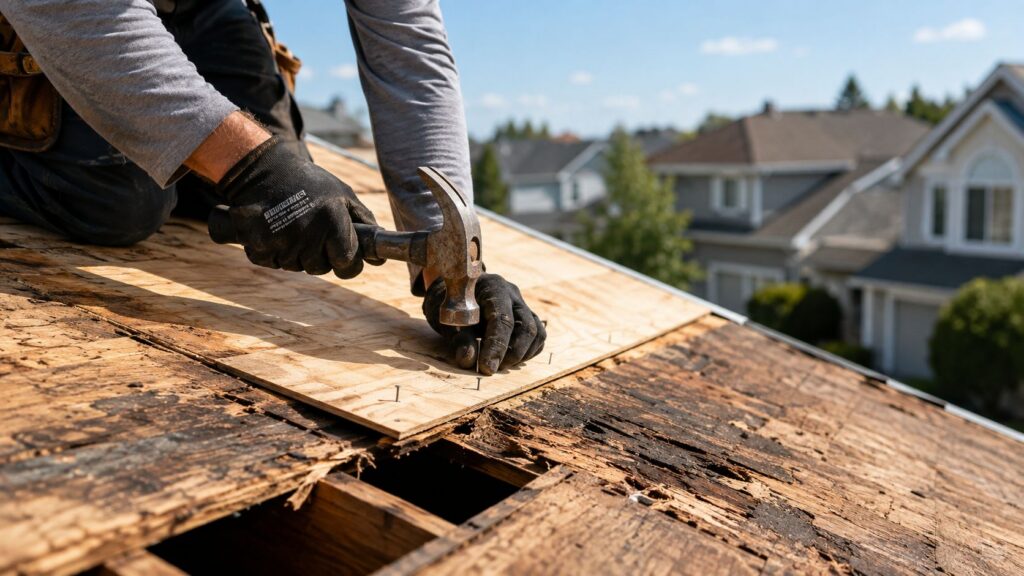
The appointment usually starts on the ground. Published guidance allocates 5 to 10 minutes for arrival and safety setup, 10 to 20 minutes for the exterior ground-level assessment, and 20 to 40 minutes for the on-roof portion of a typical home, as described in a staged inspection timeline.
Arrival and ground assessment
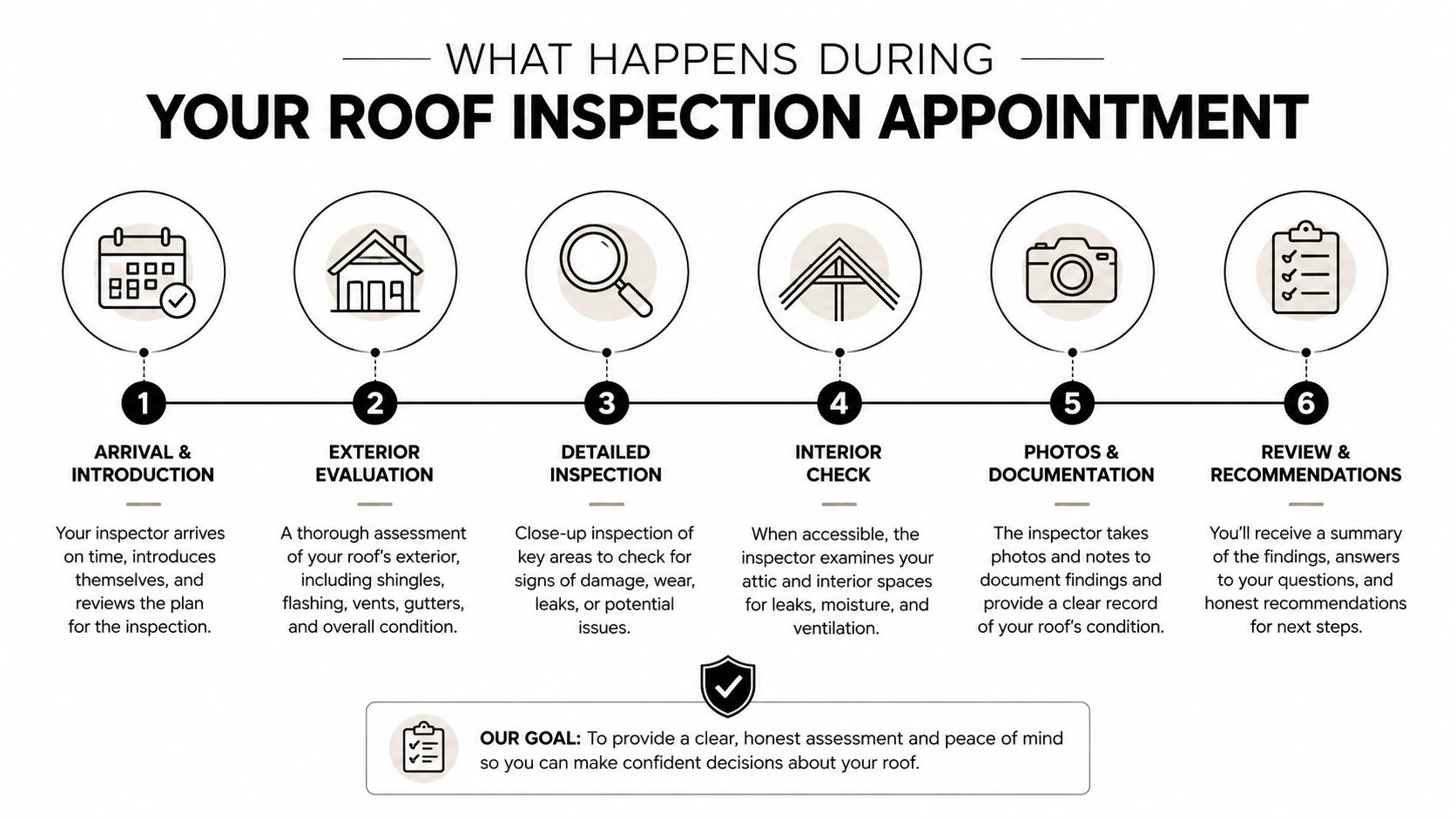
The inspector confirms the property, reviews the reason for the inspection, and identifies safe access points. They may ask about leaks, stains, storm dates, previous repairs, or areas that concern you. Before climbing, they'll examine roof edges, gutters, soffits, fascia, wall intersections, and visible drainage conditions from the ground.
This first stage matters because ground-level evidence can guide the closer inspection. A ceiling stain, displaced gutter, or damaged eave may point toward a particular roof section.
Roof, attic, and documentation
On the roof, the inspector checks the field material, ridges, valleys, flashings, penetrations, edges, and visible signs of wear or storm impact. They take photographs as they work rather than relying on memory after leaving the property. If attic access is included, they look for water entry, ventilation concerns, and signs that the roof system's condition is affecting the interior.
The final stage may be a discussion on-site, a written report, or both. Digital workflows can also organize photographs, findings, and review steps. For teams comparing inspection software, an AI-driven vendor inspection portal shows how inspection records can be managed through a structured platform.
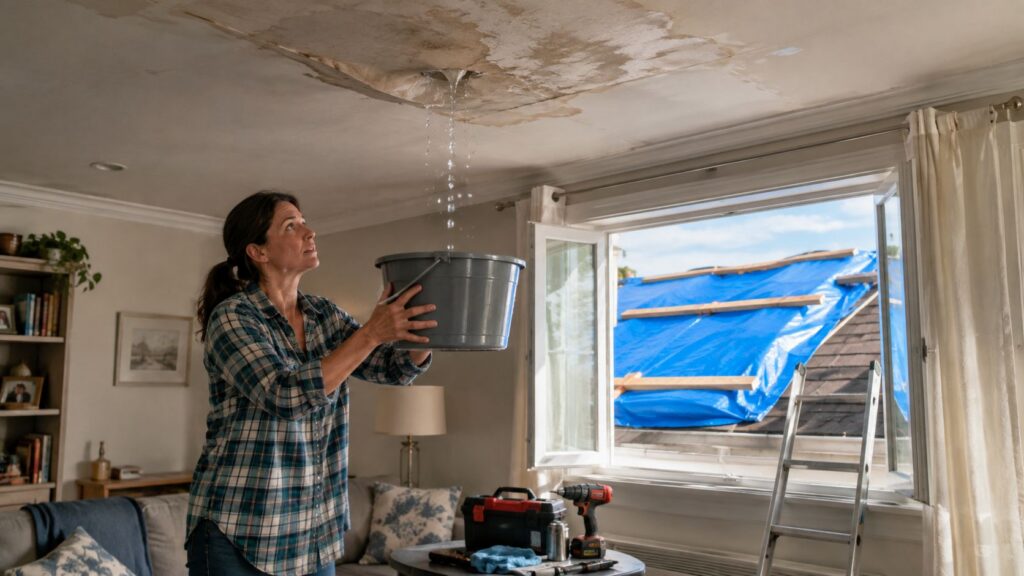
If the appointment concerns an active leak, keep the affected interior area accessible. A ceiling leak repair image reflects the kind of interior evidence that can help connect a visible symptom with the roof condition above it.
The Rise of Drone and AI Roof Inspections
The old assumption is that every roof inspection requires a person to climb onto the roof. That's no longer true in every insurance or property-assessment workflow.
Independent reporting in 2026 describes insurers using drone-captured imagery analyzed by AI to inspect thousands of homes quickly without dispatching a human inspector. The same reporting says major insurers now conduct aerial assessments every 1 to 3 years, sometimes supported by satellite imagery that updates every few months. These claims are discussed in reporting on insurer drone roof assessments.

Why the method matters in South Florida
In Broward, Miami-Dade, and Palm Beach counties, homeowners may deal with weather exposure, insurance requirements, and claim scrutiny at the same time. An aerial assessment can give an insurer a broad view without putting a field inspector on every roof. That may make the physical inspection appear fast, but the homeowner still needs to understand what the insurer reviewed and how the decision was made.
Drone imagery can document roof planes, visible damage, and conditions that are difficult or unsafe to reach manually. AI can help sort and flag imagery for review. Neither method automatically answers every question. Aerial images may not reveal concealed moisture, interior staining, ventilation problems, soft decking, or material conditions that require hands-on testing.
A fast aerial assessment isn't automatically a complete roof inspection.
Ask for the inspection method, the areas reviewed, the images or report used to support a decision, and whether an in-person follow-up is available. The practical issue has shifted from only asking how long the inspection takes to asking how long it will take the insurer to act on the findings, and what evidence you can use if the assessment misses a condition.
How to Prepare for a Smooth Roof Inspection
Good preparation removes avoidable delays. It won't make an unsafe roof safe, and it won't reduce the time a careful inspector needs to examine complex areas, but it can prevent the appointment from stalling before the work begins.
Clear the access points
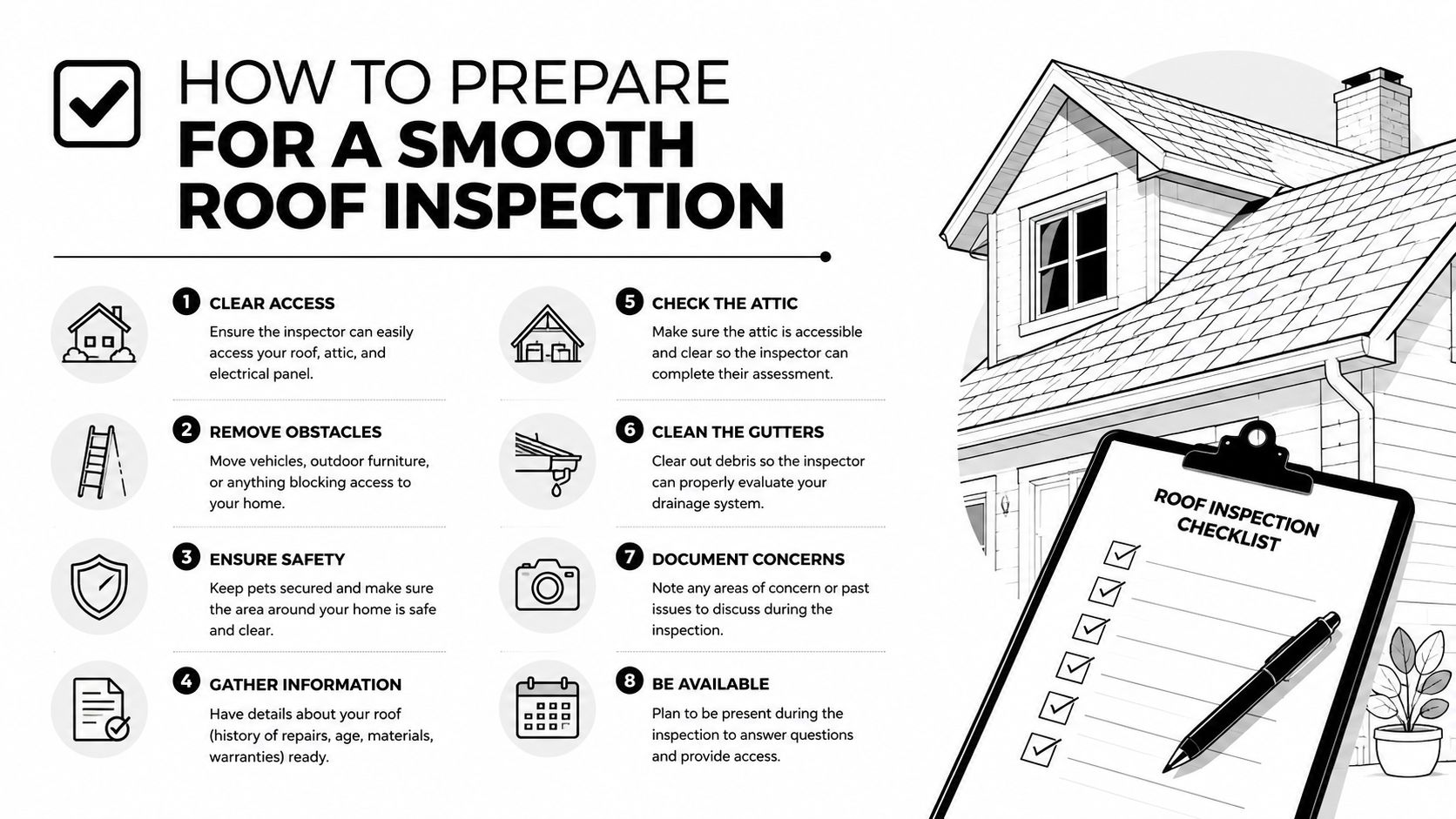
Identify the safest path around the property. Move vehicles when ladder placement or perimeter access requires it, and clear boxes or stored items from the attic entry. Secure pets and keep children away from the work area so the inspector can concentrate on safety and documentation.
Gather records that may answer questions without guesswork:
- Previous reports: Provide earlier inspection findings, repair notes, or maintenance records.
- Warranty information: Keep roofing and repair warranties available when a defect may relate to prior work.
- Leak history: Mark ceiling stains and note when you first noticed them or whether they appeared after a storm.
- Insurance paperwork: For a claim, have relevant correspondence and the claim reference available.
- Your questions: Write down concerns about shingles, tile, metal panels, flashing, gutters, attic ventilation, or recurring leaks.
Confirm weather and scope
Weather can change the schedule. Roof access and weather guidance notes that wet, icy, windy, or otherwise unsafe conditions may postpone an inspection, while steep pitches and limited ladder placement can add safety measures and time.
Call the inspection company before the appointment if conditions look unsafe. Confirm whether the visit includes attic access, interior checks, drone imagery, moisture detection, thermal imaging, photographs, and a written report. Knowing the scope in advance helps you compare appointments fairly and prevents a short visual screening from being mistaken for a full assessment.
Planning Your Roof Inspection with Confidence
For a straightforward single-story roof, plan around the practical residential range established earlier. For a larger, steep, multi-plane, storm-damaged, or transaction-related property, allow more time and ask what documentation the inspector will provide.
Choose the inspection type based on the decision in front of you:
- Routine maintenance: Request a documented visual assessment focused on visible condition and drainage.
- Active leak: Confirm that the inspector will review the interior and accessible attic, not only the roof surface.
- Insurance claim: Ask how photographs, aerial imagery, damage notes, and supporting documentation will be delivered.
- Property purchase or sale: Confirm the report format, scope, limitations, and process for answering follow-up questions.
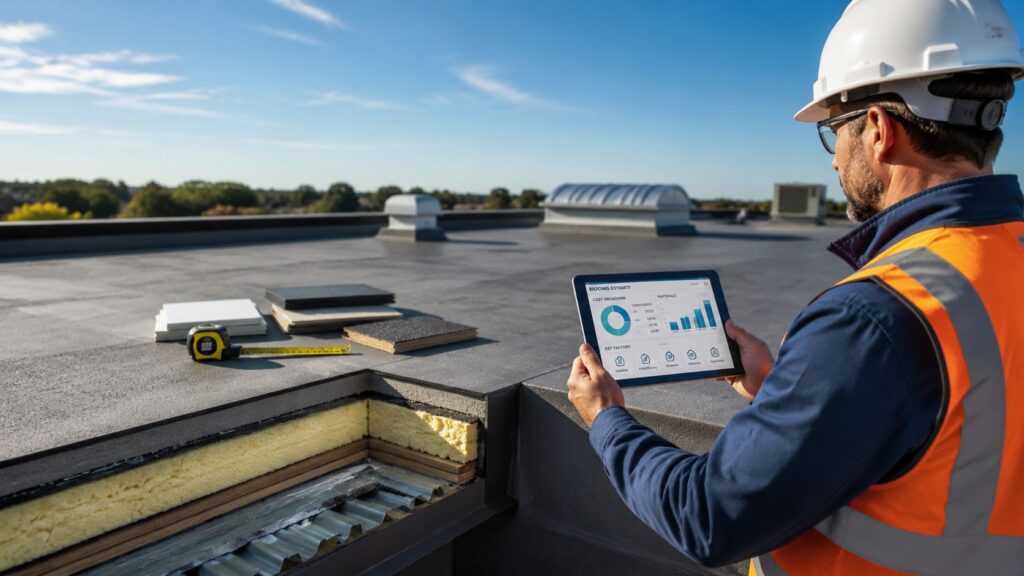
- Commercial property: Ask how the inspector will handle multiple roof sections, access logistics, and records. A commercial roofing inspection image reflects why commercial assessments often need a different planning approach.
Don't choose an inspection solely because the appointment is short or inexpensive. Compare the scope, access method, photographs, reporting, safety procedures, and whether the provider can explain findings in practical terms. If you manage exterior maintenance in another weather-sensitive region, guidance on window cleaning during Arizona monsoon offers a useful reminder that seasonal conditions affect exterior service planning.
Schedule the inspection when the property is accessible, the weather is safe, and the inspector knows why you're requesting the visit. That preparation gives you a clearer answer than relying on a fixed one-hour promise.
Paletz Roofing and Inspections offers roof inspections for residential and commercial properties, including detailed assessments that can support maintenance, repairs, real-estate decisions, and insurance documentation. Contact Paletz Roofing and Inspections to arrange an inspection around your property's access, roof complexity, and specific concerns.