
A roof can look fine from the driveway and still be losing its ability to keep water out. Preventive maintenance is a scheduled process that finds and corrects small defects before they become leaks, structural damage, or storm emergencies. In South Florida, that process has to account for intense heat, humidity, salt spray, tropical growth, ultraviolet exposure, and severe weather.
The most reliable routine combines inspections, drainage care, vegetation control, flashing checks, material repairs, biological-growth removal, attic ventilation, compatible coatings, and professional documentation. The sequence below adapts those actions to shingle, tile, metal, and flat roofs, while separating safe ground-level observations from work that belongs with a qualified roofing professional.
Homeowners can use the list to organize seasonal care. Property managers can assign tasks, preserve inspection histories, and compare conditions across buildings. Commercial owners and facility teams can use the same workflow to plan access, coordinate contractors, and keep storm documentation ready for insurance or warranty questions. Roofs should be inspected at least twice a year, ideally in spring and fall, and after significant weather or construction events, according to the Roof Maintenance Guide from the Roofing Contractors Association of British Columbia.
Table of Contents
- 1. Establish a Scheduled Inspection Calendar
- 2. Monitor Weather and Plan Storm-Specific Maintenance
- 3. Clean Gutters and Downspouts Regularly
- 4. Trim Tree Branches Overhanging the Roof
- 5. Inspect and Maintain Roof Flashing
- 6. Check and Secure Loose or Missing Shingles and Tiles
- 7. Remove Algae, Moss, and Mold Growth
- 8. Maintain Proper Ventilation and Attic Air Flow
- 9. Apply Protective Coatings and Sealants
- 10. Partner with Certified Roofing Professionals and Document Maintenance Activities
- 11. Build a Roof Map and Triage Maintenance Findings
- 11-Point Roof Preventive Maintenance Comparison
- Turn the Checklist Into a Year-Round Roof Plan
1. Establish a Scheduled Inspection Calendar
A roof inspection should appear on the calendar before anyone notices a ceiling stain. Set recurring spring and fall appointments, then add a post-storm inspection whenever severe weather may have affected the property. South Florida owners often use March and October as practical seasonal reminders, but the right dates should also reflect the roof's age, material, exposure, occupancy, and maintenance history.
The inspection should produce more than a pass-or-fail opinion. Record the date, weather conditions, roof type, visible defects, photographs, recommended work, urgency, and follow-up status. A digital archive gives homeowners and managers a usable history instead of a collection of disconnected invoices.
Practical rule: A roof record should show what changed, not just that someone visited.
For a shingle roof, document curling, granule loss, lifted tabs, and exposed underlayment. Tile inspections should note cracked, displaced, or mismatched units and the condition beneath repaired areas. Metal roofs require attention to fasteners, seams, oxidation, and coating wear. Flat roofs need careful observation of membrane seams, drains, edge metal, penetrations, and areas where water may remain.
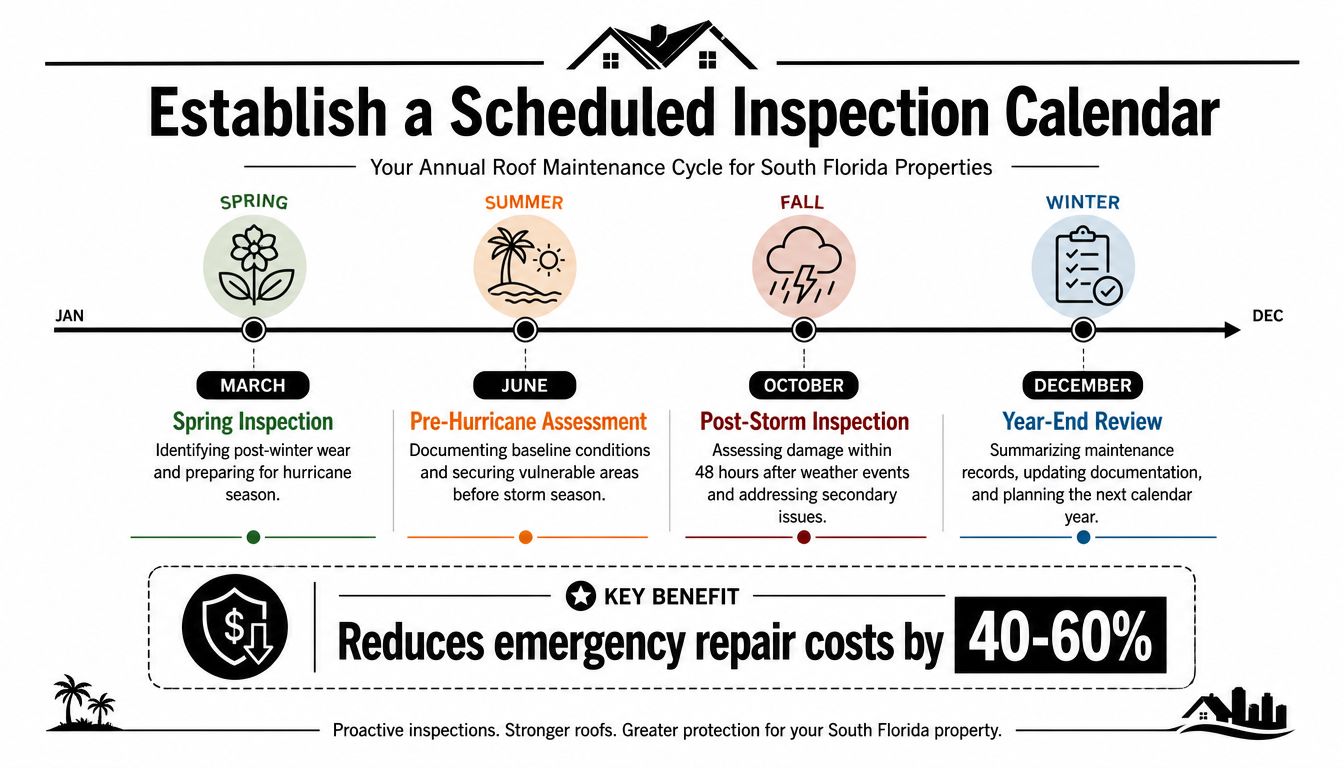
Ground-level photographs can help track broad changes, while a qualified inspector can evaluate conditions that aren't visible from below. Drone imagery may improve documentation on large or difficult-to-access properties, but it doesn't replace hands-on assessment when flashing, fasteners, membranes, or concealed moisture require closer examination. Keep the roof inspection image and documentation reference with the property file when inspection records are being organized.

2. Monitor Weather and Plan Storm-Specific Maintenance
Storm preparation starts well before a warning appears. In South Florida, owners should monitor tropical weather from June through November, while keeping the roof ready year-round for heavy rain, strong wind, and sudden squalls. A pre-season inspection in May gives the team time to correct loose materials, blocked drainage, deteriorated sealants, and vulnerable roof edges before conditions become urgent.
Create a written storm procedure for residents, staff, and contractors. It should identify who clears accessible drainage, who secures loose exterior items, who takes condition photographs, who contacts the insurer, and who authorizes emergency work. Property managers should establish contractor relationships before a storm, because finding qualified help after widespread damage can be difficult.
Before the season begins, photograph roof slopes, penetrations, flashings, drainage points, mechanical equipment, ceilings, and exterior walls. After a storm, take dated photographs promptly. The Roof Maintenance Guide recommends post-event inspection, and suspected infiltration should be assessed with non-destructive moisture detection where appropriate.
Don't climb onto a wet, damaged, or wind-affected roof after a storm. Photograph visible conditions from a safe location, contact the insurer when damage is suspected, and arrange a professional assessment before temporary or permanent repairs. Keep the emergency leak repair reference with your storm-response materials so occupants know where to direct urgent reports.

3. Clean Gutters and Downspouts Regularly
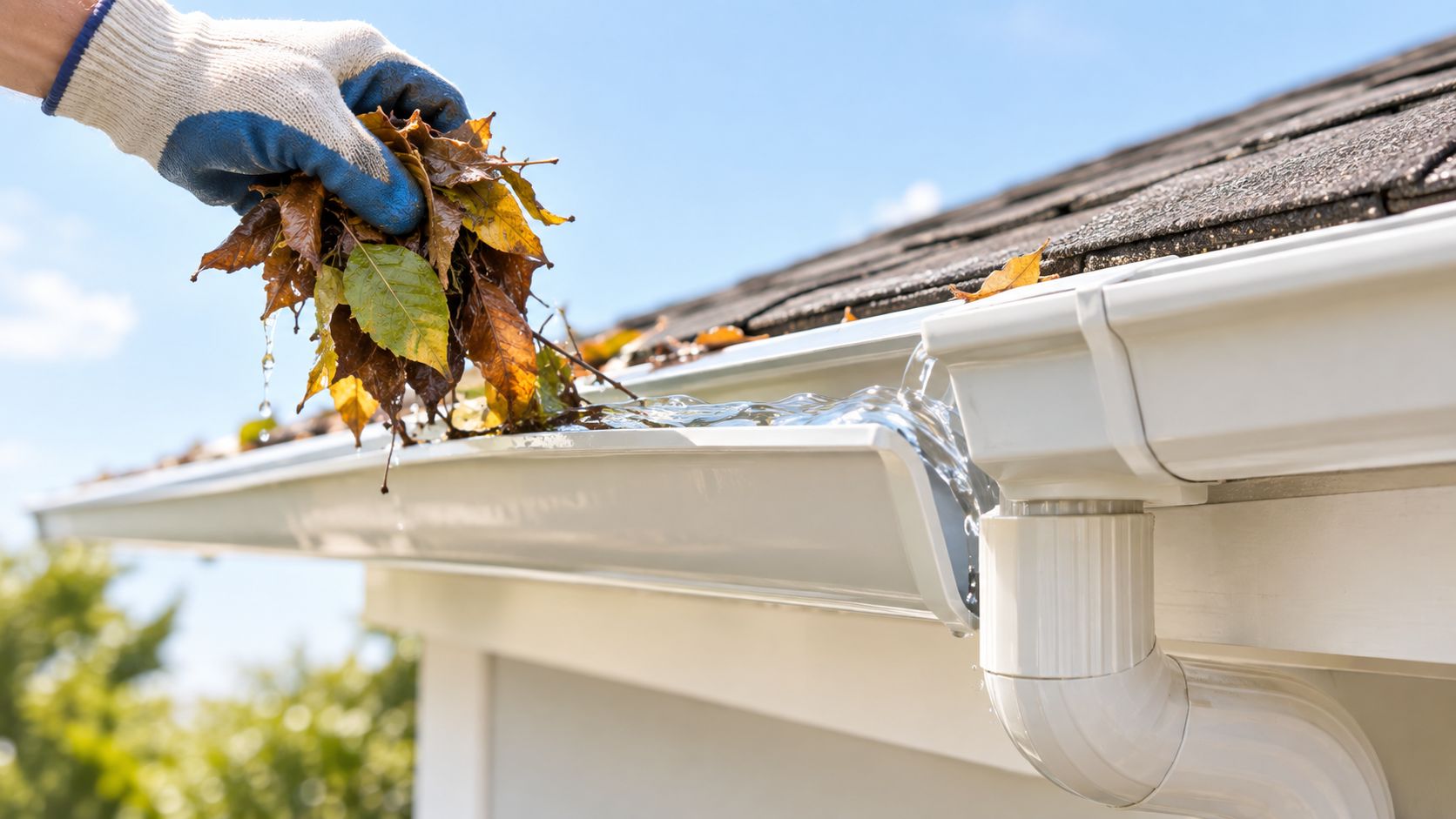
Blocked drainage creates roof problems even when the roof covering itself is intact. Leaves, palm debris, sediment, and windblown material can restrict gutters and downspouts, forcing water against fascia, roof edges, walls, and penetrations. On flat roofs, blocked drains can leave water across the membrane and increase stress on seams and flashings.
The International Council of Shopping Centers roof maintenance guidance recommends checking drains and ensuring that ponding water is drained within 48 hours of rain. That timing matters particularly on low-slope commercial roofs, where drainage performance is a central part of membrane protection.
Start from the ground with binoculars when possible. Look for sagging gutters, visible debris, separated joints, overflowing outlets, and downspouts that discharge too close to the building. After major storms, inspect for dents, displacement, sediment, and connections pulled apart by wind or falling branches.
- Shingle roofs: Keep edge drainage clear so runoff doesn't back up beneath shingles or damage fascia.
- Tile roofs: Watch for broken tile fragments collecting in valleys and gutters.
- Metal roofs: Remove debris that holds moisture against panels or accelerates corrosion around fasteners.
- Flat roofs: Check every drain, scupper, overflow, and debris screen, and report standing water promptly.
Gutter guards can reduce debris entry, but they don't eliminate inspections. Salt spray can also leave deposits on coastal properties, so rinse or clean exposed drainage components using methods appropriate for the materials. Roof-edge work requires stable access, fall protection, and insurance coverage, so hire a qualified professional rather than improvising from a ladder. For a separate homeowner-oriented reference, see this guide to gutter maintenance for Ventura homeowners.
4. Trim Tree Branches Overhanging the Roof
Trees protect a property from heat, but branches that touch or hang over the roof create several maintenance problems. They drop leaves into drainage paths, rub against roof coverings, shade damp areas, and can become impact hazards during tropical storms. Dense vegetation also makes it harder for an inspector to see flashing, roof edges, and signs of moisture entry.
Pruning should be based on the tree's health, species, growth pattern, and distance from the structure. South Florida properties often contain palms and other tropical species that respond differently to pruning than temperate trees. A certified arborist can distinguish dead or diseased limbs from healthy growth and determine whether a tree should be pruned, monitored, or removed.
Schedule routine property assessment before storm preparation, then remove dead or diseased branches promptly. Don't wait for a seasonal appointment if a branch is already cracked, hanging, or pressing against a roof surface.
Material-specific risks differ:
- Shingles: Repeated rubbing can wear the protective surface and expose vulnerable areas.
- Tile: Falling limbs can crack tiles, while trapped debris can obstruct valleys and drains.
- Metal: Branch movement can scratch protective finishes and expose steel or aluminum to corrosion.
- Flat roofs: Leaves and branches can block drains, damage edge details, and conceal membrane defects.
Avoid cutting large limbs from a roof or using chainsaws near power lines. Have the arborist and roofer coordinate when branches are close to penetrations, skylights, mechanical equipment, or fragile tile. Document pruning dates, tree conditions, and any roof damage found afterward. The record helps managers decide whether recurring pruning is adequate or whether removal is the safer long-term choice.
5. Inspect and Maintain Roof Flashing
Flashing protects the transitions where water is most likely to enter. It appears around vents, skylights, chimneys, walls, roof edges, valleys, equipment curbs, and other penetrations. A roof field can remain in good condition while a failed flashing joint sends water into the assembly.
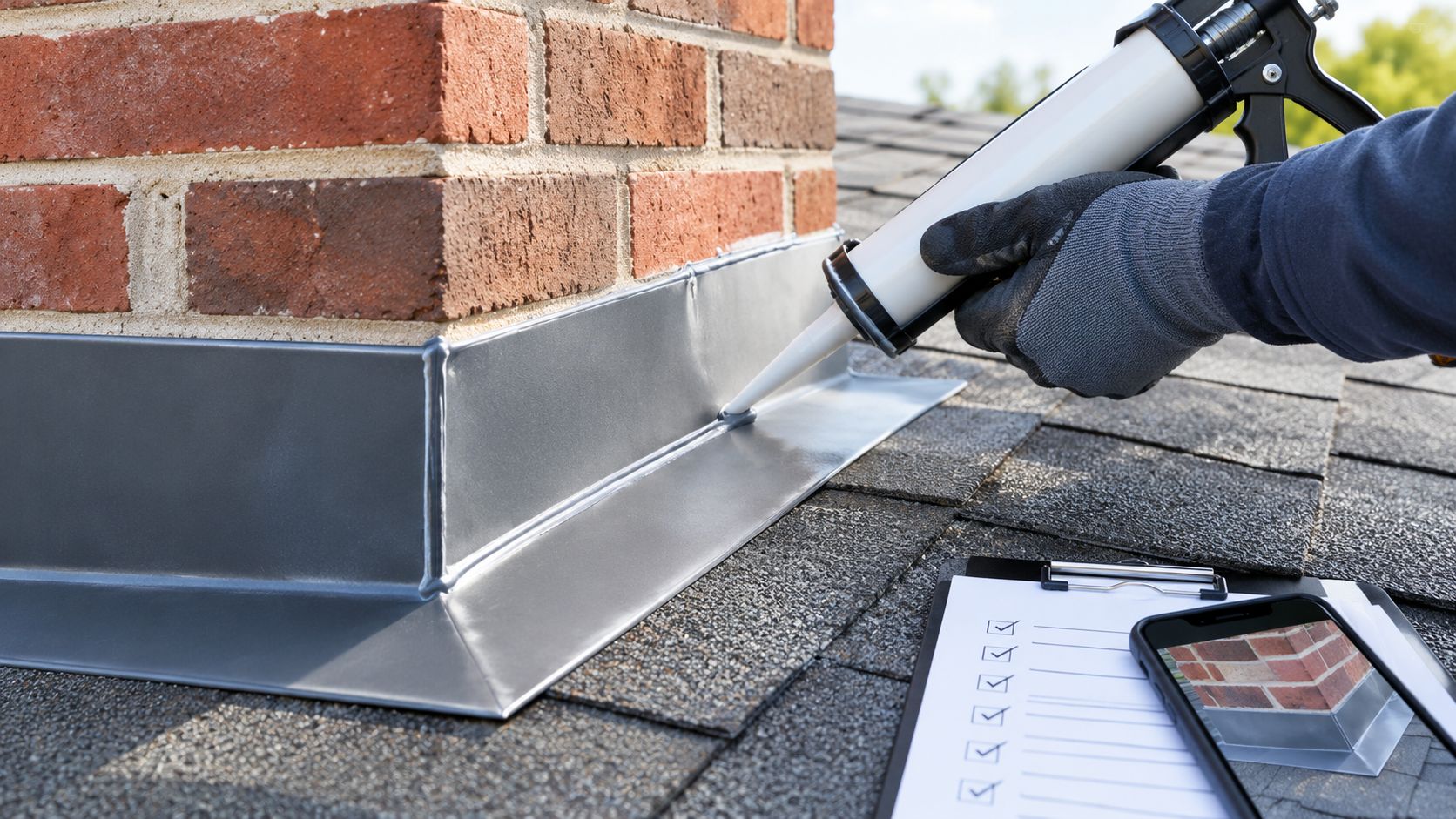
Inspect flashing during every scheduled roof assessment and after severe weather. Look for lifted edges, open seams, cracked or shrinking sealant, loose fasteners, corrosion, staining, and movement around penetrations. A stain inside the building doesn't always sit directly below the entry point, so tracing the moisture path may require professional testing.
Salt spray increases the importance of material compatibility and corrosion control near the coast. Record whether existing flashing is aluminum, copper, stainless steel, or another material before ordering replacements. Combining incompatible metals can create corrosion, and the wrong sealant may fail under South Florida UV exposure, heat, and humidity.
Flashing is a transition detail, not a cosmetic strip. Treat every gap, fastener, and sealant joint as part of the water-management system.
Sealant replacement should follow the product, roof system, and exposure conditions rather than a blind calendar. The maintenance plan provided for this workflow uses three-to-five-year sealant review and replacement planning where appropriate, while visible deterioration or movement calls for earlier action. Use silicone or polyurethane products approved for the specific roof material and tropical exposure.
Shingles need compatible flashing beneath and around vulnerable transitions. Tile roofs require careful attention to mortar, metal, and underlayment interfaces. Metal roofs depend on correctly detailed seams, closures, and fasteners. Flat roofs require compatible membrane patches, termination details, and equipment-curb treatment. Before deck or substrate work is authorized, preserve the roof decking replacement reference with the inspection file.
6. Check and Secure Loose or Missing Shingles and Tiles
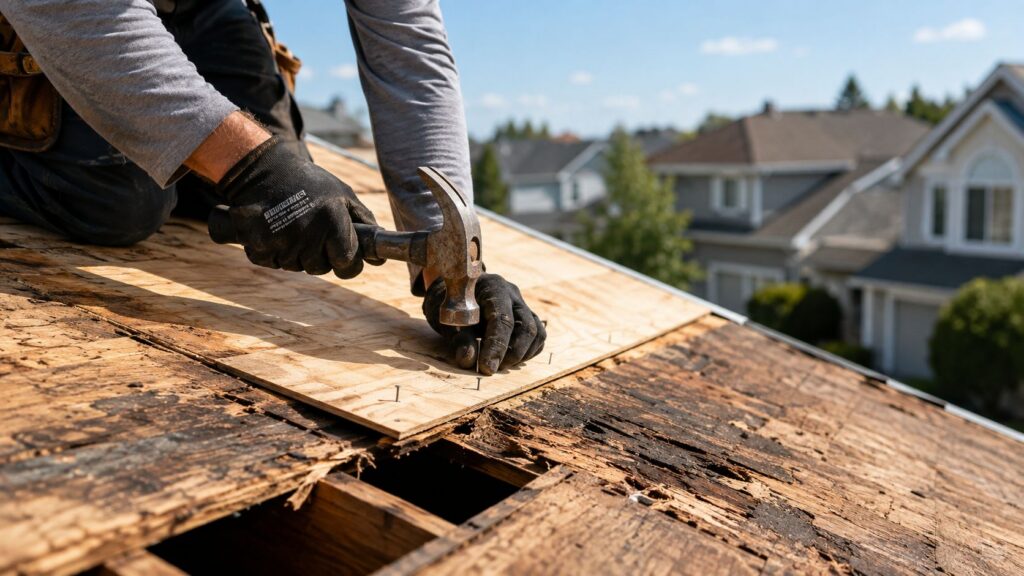
A missing shingle or cracked tile is an opening in the roof system, not a minor appearance issue. Wind can lift adjacent materials, rain can reach underlayment or decking, and moisture can spread beyond the visible defect. Repairs should happen promptly, especially after a storm.
From the ground, inspect roof slopes with binoculars every month when practical. A closer inspection can be scheduled quarterly, but only with appropriate access, fall protection, and training. After a significant storm, look for missing, lifted, curled, cracked, or displaced materials. The Roof Maintenance Guide supports inspection after significant weather events and immediate correction of defects before moisture enters the system.
Maintain a small inventory of matching repair materials when the manufacturer and installer permit it. For shingles, matching color and profile helps preserve the repair and makes future work easier. For tile, matching the original profile and installation method matters because an incorrect replacement can sit poorly, crack, or disturb neighboring units.
- Document first: Photograph the defect, surrounding area, and completed repair.
- Check the cause: Repeated damage in one location may indicate failing underlayment, deck movement, poor fastening, or a vulnerable edge.
- Use correct methods: Fasteners, adhesives, and roofing cement must be compatible with the roof system and exposure.
- Escalate patterns: Frequent repairs on one slope deserve a broader assessment instead of another isolated patch.
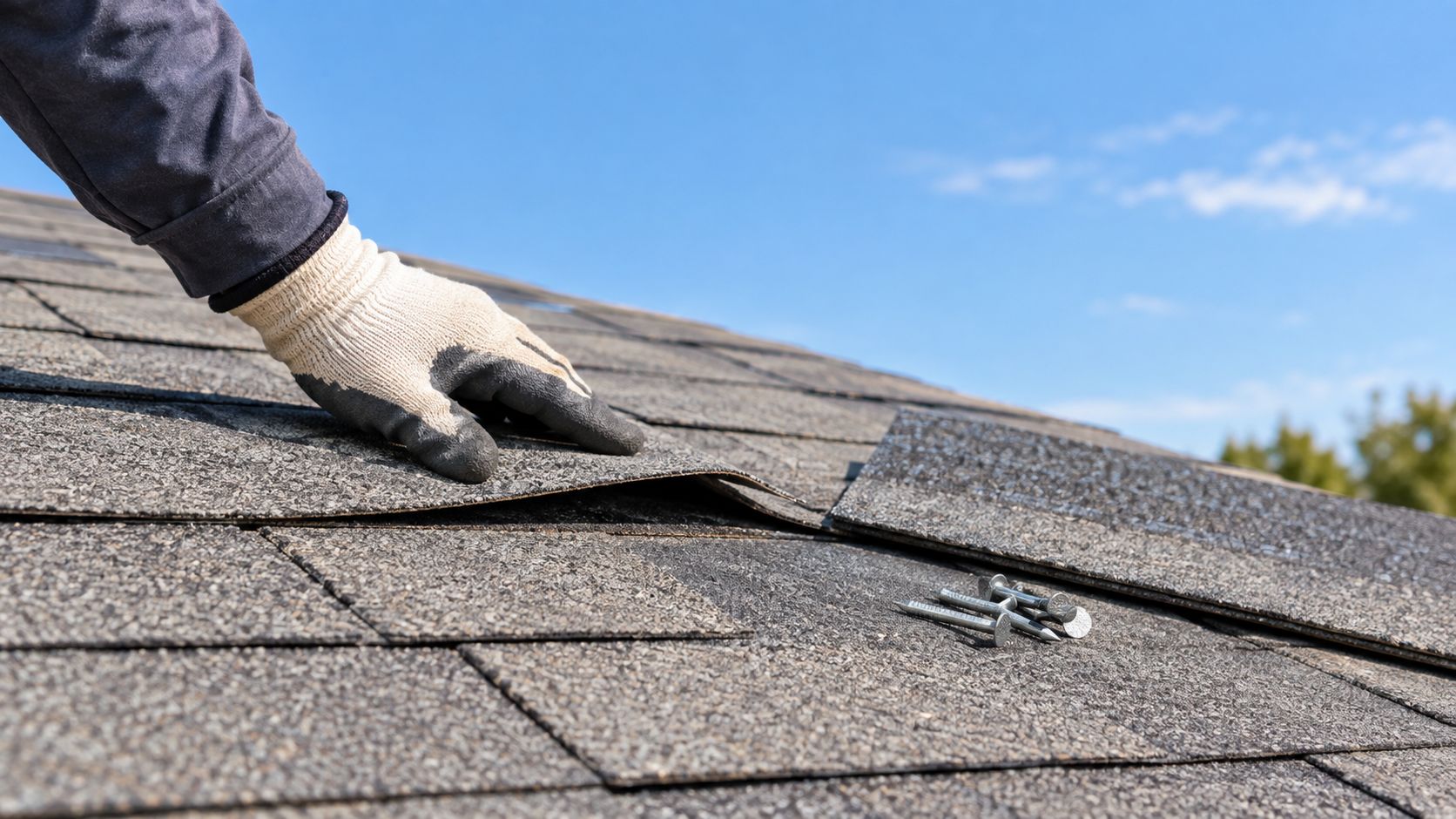
Don't walk on tile unless the person is trained to do so safely and knows where the tile can support weight. Don't attempt storm repairs on a roof with concealed structural damage, active electrical hazards, or unstable surfaces. A professional assessment is safer when damage extends across multiple slopes or involves the deck, underlayment, or roof-to-wall connections.
7. Remove Algae, Moss, and Mold Growth
Warm, humid conditions support algae, mold, and other organic growth on roof surfaces. Growth can hold moisture against materials, hide defects, stain finishes, and obstruct visual inspection. South Florida roofs deserve particular attention in shaded areas, beneath trees, around drainage paths, and wherever humidity remains high.
Cleaning method matters more than aggressive pressure. High-pressure washing can strip granules from asphalt shingles, damage tile surfaces, force water beneath laps, and remove protective finishes from metal. Soft-washing with a material-compatible, biodegradable solution is generally a safer approach when performed by a contractor who understands the roof system and runoff controls.
Schedule cleaning after the period when growth is most noticeable, then inspect the roof while the surface is clear. Ask the contractor to protect landscaping, control discharge, and explain whether any treatment is compatible with shingles, tile, metal, or a flat membrane.
- Shingles: Use a method that won't dislodge granules or damage asphalt coatings.
- Tile: Avoid cracking units or forcing cleaning solution beneath overlaps.
- Metal: Confirm that cleaning won't compromise paint, galvanizing, or factory-applied protection.
- Flat roofs: Verify membrane and coating compatibility before applying any cleaner.
A treatment intended to slow regrowth may be useful, but its performance depends on shade, moisture, tree cover, and product suitability. Don't treat an appearance problem while ignoring a blocked drain, failed flashing, or wet insulation. Combine cleaning with a roof inspection and document before-and-after conditions. For an additional roof-cleaning service reference, review Pine Country Window Cleaning roof services.
8. Maintain Proper Ventilation and Attic Air Flow
Roof coverings and attic spaces experience South Florida heat and humidity from different directions. When intake and exhaust paths are blocked, the attic may retain heat and moisture, encouraging mold, wood deterioration, and premature wear on roofing components. Ventilation also has to work with the building envelope, insulation, air sealing, and mechanical systems.
Start with a professional evaluation of the roof design and attic condition. Check whether soffit vents are blocked by insulation, paint, dust, or debris. Verify that ridge vents, gable vents, turbines, or mechanical exhaust equipment are installed correctly and can move air without drawing conditioned air from the building.
Shingle roofs often depend on balanced intake and exhaust ventilation. Tile systems need unobstructed airflow paths beneath the roof covering where the design calls for them. Metal roofs can experience condensation concerns if the assembly isn't detailed and ventilated appropriately. Flat roofs may use different assemblies entirely, and adding vents without understanding the membrane, insulation, and vapor-control layers can create new problems.
A useful maintenance record should include visible attic moisture, staining, insulation displacement, blocked vents, fan operation, and any changes made. Temperature and humidity readings can provide context, but a single reading isn't a diagnosis. Persistent mold, wet insulation, wood decay, or condensation requires assessment by qualified roofing, building-envelope, or HVAC professionals.
Don't cut new roof openings or install attic fans as a standalone fix. The contractor must consider intake capacity, exhaust location, rain resistance, electrical safety, and the relationship between ventilation and air conditioning. In many buildings, moisture control begins with repairing leaks and air leakage before adding equipment.
9. Apply Protective Coatings and Sealants
Coatings can protect a suitable roof surface from UV exposure, water, and environmental contaminants, but they aren't universal repairs. A coating won't correct saturated insulation, failed flashing, unstable decking, open seams, or active leaks. The roof must be inspected, cleaned, dried, and repaired before application.
Select the product by roof material and exposure. A reflective coating may reduce heat absorption on an appropriate low-slope assembly, while a coastal property may need a formulation chosen for salt exposure and adhesion. Shingle roofs require asphalt-compatible products. Tile and metal roofs need confirmation that the coating will bond without damaging the existing finish. Flat roofs require membrane-specific preparation, reinforcement, and detail work.
Apply coatings during a suitable dry period and follow the manufacturer's surface-preparation and curing requirements. South Florida weather can change quickly, so the applicator should account for rain, humidity, dew, and substrate moisture rather than relying on a convenient date.
- Inspect first: Repair leaks, loose materials, failed seams, and deteriorated flashing before coating.
- Confirm compatibility: Match the coating to the membrane, shingle, tile, metal finish, or existing coating.
- Record the system: Save product names, lot information when available, application dates, coverage, and warranty documents.
- Plan renewal: Review the coating condition on a three-to-five-year planning cycle, adjusting for exposure and manufacturer guidance.
A white or highly reflective surface isn't automatically the right choice. Appearance, glare, drainage, adhesion, ponding, and future repair access all matter. Ask the applicator how patches, penetrations, drains, and edge details will be treated. A sound coating program supports preventive maintenance, but it shouldn't hide unresolved roof defects.
10. Partner with Certified Roofing Professionals and Document Maintenance Activities
A strong maintenance plan depends on who holds the contract, not just who climbs the ladder. Choose a licensed, insured roofing professional with experience in the installed system and South Florida conditions, including tropical storms, humidity, UV exposure, salt spray, and rapid organic growth. Ask for references from comparable properties in Broward, Miami-Dade, or Palm Beach counties.
Require a written estimate before work begins. It should identify the roof areas, materials, preparation, access method, exclusions, safety procedures, payment terms, and warranty conditions. Compare the full scope rather than choosing by price alone. A low estimate may omit substrate repairs, fall protection, disposal, or follow-up inspections.
Set expectations before an emergency. For commercial properties and multi-building communities, define work hours, tenant communication, rooftop-equipment access, fall-protection requirements, and who can approve additional work. The contractor should also understand drainage routes, restricted areas, prior repairs, and the differences among shingle, tile, metal, and flat roof assemblies.
Ask how the crew will handle hidden damage. Shingle and tile repairs may expose underlayment or deck deterioration. Metal work requires compatible fasteners and careful treatment of corrosion. Flat roofs may need controlled access, membrane-specific repairs, and safe ponding assessment. Roof entry can also create pest access points, so include practical guidance on how to prevent roof rats.
Before signing, confirm current licensing and insurance, identify the responsible supervisor, and obtain references you can contact. State who supplies materials, who pulls required permits, how change orders are approved, and what happens if weather interrupts the work.
Professional assessment is the safer starting point for complex flat roofs, high-rise properties, structural-deck concerns, storm damage, or any repair requiring unsafe access. A qualified roofer can define the work boundary and reduce the risk of turning a small defect into a larger repair.
11. Build a Roof Map and Triage Maintenance Findings
A roof map turns inspection notes into assigned work. Use a roof plan or annotated aerial image to mark slopes, drains, scuppers, penetrations, expansion joints, equipment curbs, roof edges, and interior leak locations. Separate shingle, tile, metal, and flat roof areas, because each system has different failure points and access limits.
Tie every photograph to a map location, inspection date, roof type, and finding. A close-up of cracked tile, exposed fasteners, failed flashing, ponding, or tropical growth is far more useful when the next reviewer can locate it quickly. South Florida records should also identify storm exposure, salt-spray corrosion, UV wear, humidity-related growth, and changes around rooftop equipment.
Use one property file for the entire maintenance history. Include inspection details, defect descriptions, photographs, repair scope, materials used, invoices, warranties, follow-up status, and the date each issue was closed. Record whether the repair resolved the original leak or whether further assessment remains open. This prevents conflicting spreadsheets and helps a new roofer understand previous work.
Good records don't replace maintenance. They make missed maintenance harder to hide.
Review findings by urgency:
- Immediate risks: Active leaks, open penetrations, unstable tiles or metal, exposed deck, major storm damage, and unsafe access.
- Scheduled work: Failing sealants, early corrosion, blocked drainage or ventilation, algae and mold, tropical growth, and localized shingle or membrane defects.
- Monitor items: Cosmetic color changes, minor wear, and stable areas that need comparison during the next inspection.
Match the response to the roof system. Shingle and tile findings may involve underlayment or deck damage. Metal roofs need attention to compatible fasteners and corrosion. Flat roofs require controlled access, membrane-specific repairs, and careful ponding review. Roof entry can also create pest access points, so document practical guidance on how to prevent roof rats.
Recheck the map after storms, renovations, HVAC work, tree changes, and recurring leaks. Use a qualified professional for unsafe access, structural concerns, complex flat roofs, or storm damage.
11-Point Roof Preventive Maintenance Comparison
| Item | 🔄 Implementation Complexity | ⚡ Resource Requirements | 📊 Expected Outcomes | 💡 Ideal Use Cases | ⭐ Key Advantages |
|---|---|---|---|---|---|
| Establish a Scheduled Inspection Calendar | Moderate, set cadence, recordkeeping | Low–Moderate, inspector time, digital logs | Early issue detection; fewer emergencies; longer roof life | All properties; HOAs; post-hurricane planning | Documentation for claims; proactive cost savings |
| Monitor Weather and Plan Storm-Specific Maintenance | Moderate–High, continuous monitoring & protocols | Moderate, forecasting tools, contractor agreements | Reduced storm damage severity; faster recovery | Coastal/hurricane-prone properties | Rapid response readiness; stronger insurance support |
| Clean Gutters and Downspouts Regularly | Low, routine maintenance tasks | Low, labor, safety gear or pro service | Prevents water intrusion; reduces pests; low cost | Tree-lined and coastal properties | Simple, high-impact protection for interiors |
| Trim Tree Branches Overhanging the Roof | Moderate, arborist planning and execution | Moderate, professional pruning, periodic repeats | Less debris; reduced storm-impact risk | Properties with mature landscaping | Decreases algae growth; reduces physical damage risk |
| Inspect and Maintain Roof Flashing | High, material-specific inspection & repairs | Moderate, sealants, metal replacement, pros | Prevents most leak sources; extends roof life | Roofs with many penetrations; coastal areas | Cost-effective prevention of water intrusion |
| Check and Secure Loose or Missing Shingles/Tiles | Low–Moderate, frequent checks and repairs | Low–Moderate, replacement materials, labor | Prevents leaks; avoids wind uplift failures | High-wind regions; post-storm response | Quick repairs avert catastrophic damage |
| Remove Algae, Moss, and Mold Growth | Moderate, professional soft-wash & treatments | Moderate, biodegradable cleaners, coatings, pros | Restored appearance; slower material degradation | Humid climates (e.g., South Florida) | Extends material life; improves reflectivity |
| Maintain Proper Ventilation and Attic Air Flow | High, design assessment, possible retrofits | Moderate–High, vents, fans, HVAC input | Lower attic temps; reduced moisture; energy savings | Hot, humid climates; energy-focused buildings | Prevents mold/rot; improves efficiency and lifespan |
| Apply Protective Coatings and Sealants | Moderate, material selection and application | Moderate, coatings, certified applicators | Extended lifespan; lower roof temps; energy savings | Coastal/sun-exposed roofs; aging systems | UV/salt protection; measurable operating savings |
| Partner with Certified Roofing Professionals & Document Activities | Low–Moderate, vetting contractors, system setup | Moderate, professional fees, documentation systems | Higher workmanship quality; warranty & claim support | All properties; those requiring compliance | Expert diagnosis, warranty compliance, reliable records |
Turn the Checklist Into a Year-Round Roof Plan
Preventive maintenance works when the property team treats it as a repeating operating process, not a once-a-year cleanup. Start with scheduled inspections in spring and fall, then add post-storm assessments and inspections after construction or other significant events. Record every finding with photographs, locations, dates, recommended actions, and follow-up status.
Drainage and vegetation deserve early attention because they affect every roof type. Clear gutters, downspouts, drains, scuppers, and overflow paths. Remove debris before it traps moisture or blocks water movement. Trim branches that can rub against the roof, fill valleys, damage edges, or fall during tropical weather. The International Council of Shopping Centers maintenance guidance calls for checking drains and draining ponding water within 48 hours of rain, a practical benchmark for low-slope roof oversight.
Address material damage as soon as it's found. Missing shingles, cracked tiles, lifted metal panels, failed fasteners, open seams, and damaged edge details can allow water into the assembly. Flashing and sealants need focused review because penetrations and transitions often fail before the main roof field. Remove algae, mold, and other growth with methods suited to the material, not with aggressive pressure that can shorten roof life.
The roof type changes the inspection emphasis:
- Shingle roofs: Look for granule loss, curling, lifted tabs, exposed underlayment, damaged valleys, and deteriorated flashing.
- Tile roofs: Check cracked or displaced tiles, broken fragments in drainage paths, underlayment exposure, and safe access conditions.
- Metal roofs: Inspect seams, fasteners, penetrations, oxidation, scratches, corrosion, and protective coatings.
- Flat roofs: Prioritize drains, scuppers, ponding, membrane seams, flashings, equipment curbs, edge metal, and substrate condition.
Ventilation and coatings require diagnosis before installation. Confirm that attic airflow is balanced and unobstructed, and investigate moisture sources rather than masking symptoms. Apply protective coatings only after the roof is sound, clean, dry, and compatible with the selected product. For both residential and commercial properties, qualified professionals should handle roof-edge work, storm damage, flashing failures, steep or fragile surfaces, and complex commercial systems.
A South Florida owner who wants one team to help organize inspections, maintenance, repairs, and storm assessments can contact Paletz Roofing and Inspections, which serves Broward, Miami-Dade, and Palm Beach counties. The company works with shingle, tile, metal, and flat roofing systems and provides roofing inspections, repairs, replacements, and new installations. Visit the Paletz Roofing and Inspections website to review available services and arrange an assessment.
Paletz Roofing and Inspections provides South Florida roof inspections, preventive maintenance, repairs, replacements, and storm assessments for homes and commercial properties in Broward, Miami-Dade, and Palm Beach counties. Visit Paletz Roofing and Inspections to schedule a roof evaluation and turn this maintenance checklist into a documented year-round plan.