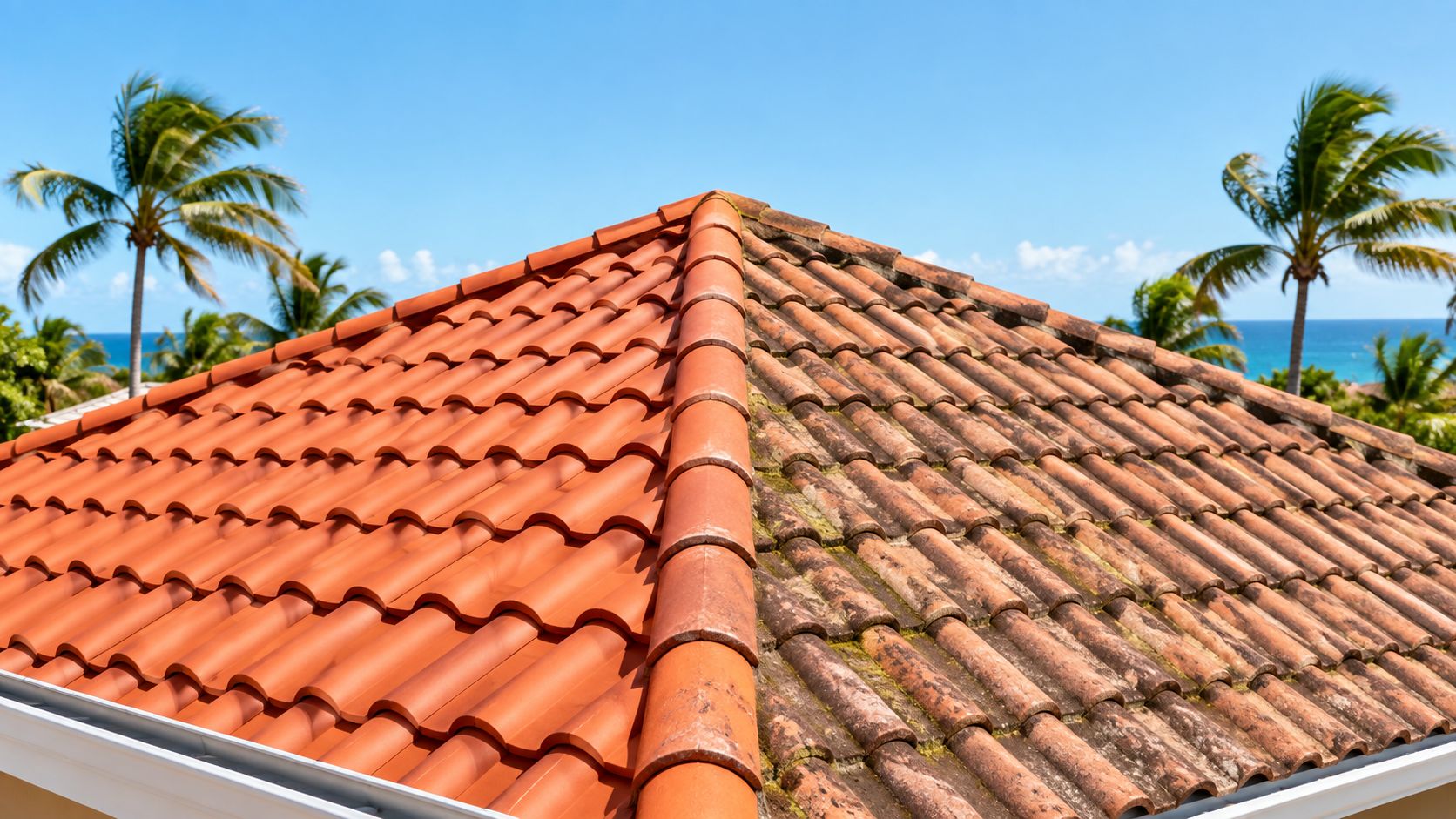
Concrete tile roofs in Florida typically last 40 to 60 years, while clay tile roofs often last 50 to 100 years or more. The complete roof system usually has a practical life of about 25 to 50 years, because the underlayment commonly needs replacement every 20 to 25 years, even when the tile still looks serviceable.
A homeowner in Broward County may look up at a roof that appears solid, clean, and unchanged since the house was built. Then a leak appears around a vent or wall intersection. The natural question is, “How can a roof with decades of life left start leaking now?” The answer is that tile is only one part of the roof. The waterproof layer beneath it may be much older than the homeowner realizes.
That distinction matters throughout South Florida. Salt air, intense sun, heat, humidity, wind-driven rain, and hurricane exposure all test the materials beneath the visible surface. The right question isn't only how long the tile can last. It's how long the entire assembly can continue protecting the building.
Table of Contents
- How Long Tile Roofs Really Last in South Florida
- Understanding How a Tile Roof System Works
- What Determines Tile Roof Lifespan in Florida
- Concrete Tile Versus Clay Tile Lifespan Compared
- Signs Your Tile Roof Is Nearing the End of Its Life
- How to Extend the Life of Your Tile Roof in Florida
- When to Repair Re Underlay or Replace Your Tile Roof
How Long Tile Roofs Really Last in South Florida
A tile roof can have decades of visible service left while its waterproofing layer is already due for attention. That difference explains why a roof that still looks sound can begin leaking around vents, walls, or other openings.
Concrete tile roofs in Florida generally last about 40 to 60 years, while clay tile often lasts 50 to 100 years or more with proper installation and maintenance. Florida roofing guidance on tile lifespan notes that the underlayment commonly needs replacement every 20 to 25 years. A separate Florida roofing overview places concrete tile at about 40 to 50 years and clay tile at 50 to 100 years or more, while recognizing that the supporting materials age sooner. Florida tile roof lifespan guidance
Why the two answers can both be correct
A tile roof works like a rain jacket with a hard outer shell. The tile deflects much of the sun, rain, and impact. The underlayment is the waterproof membrane beneath that shell. If the membrane becomes brittle, punctured, or poorly sealed, water can enter even when the visible tile remains attractive.
The tile is therefore the long-lived exterior component, not the complete protection system. In South Florida, salt air, intense sunlight, heat, humidity, wind-driven rain, and hurricane exposure steadily test the hidden layers. Local conditions can shorten the practical service life of the assembly, especially when aging underlayment and roof penetrations are overlooked.
Florida roofing guidance places a complete tile roof system in a practical range of about 25 to 50 years, because the assembly includes more than tile. A Florida tile roof guide describes tile lasting roughly 40 to 100 years or more, while the underlayment often needs attention around 15 to 25 years.
For a homeowner in Broward, Miami-Dade, or Palm Beach County, the useful question is not, “How long will the tile last?” Check the age and condition of the underlayment, deck, flashings, fasteners, and penetrations as well. Those parts determine when repair, re-underlayment, or replacement becomes practical.
Practical rule: Judge a tile roof by the age and condition of the complete system, not by the appearance of the tile alone.
Understanding How a Tile Roof System Works
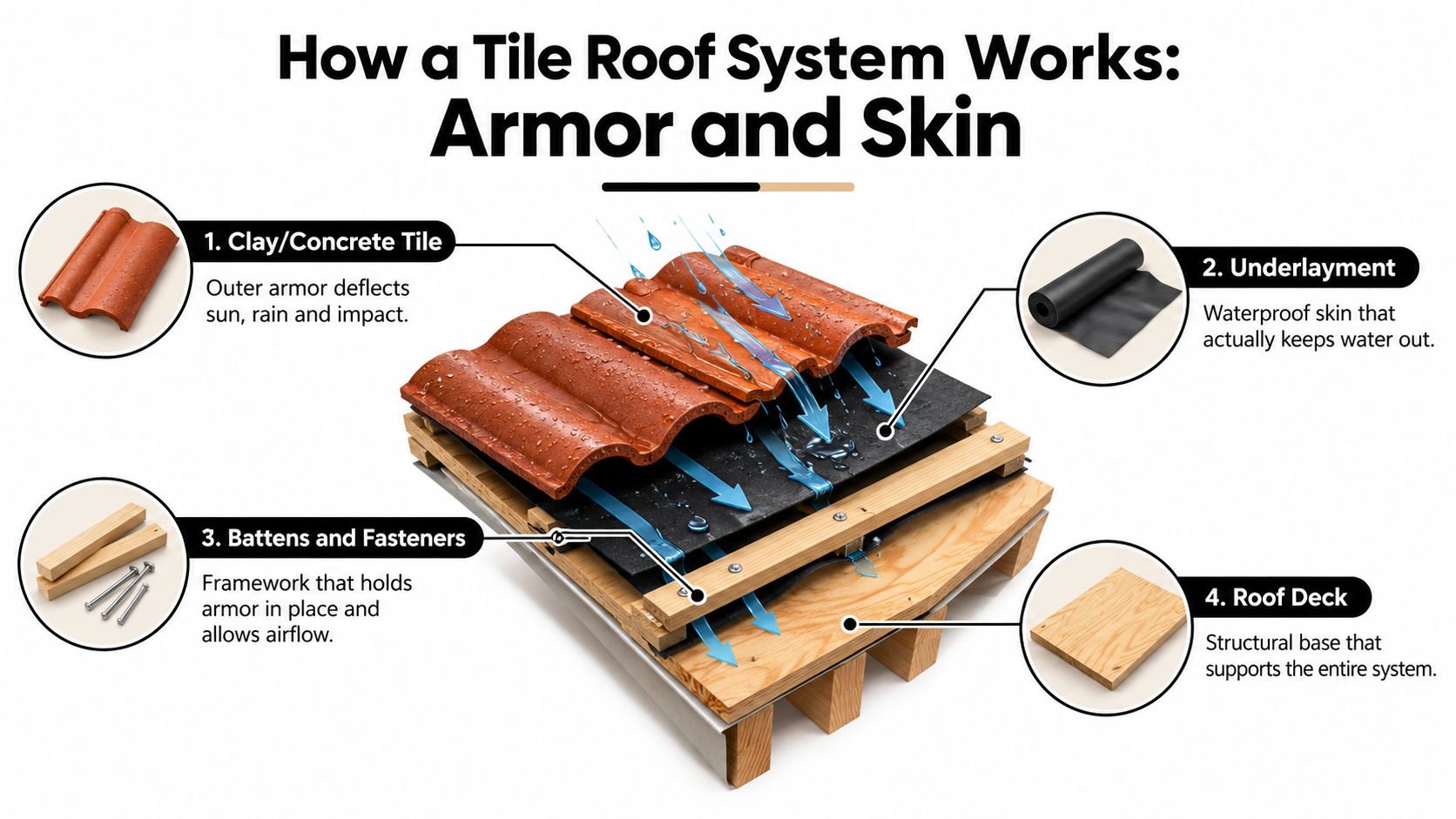
A tile roof works like a rain jacket with a hard outer shell. The tile deflects much of the sun, rain, and ordinary impact, while the hidden layers manage moisture that reaches the joints. Each layer has a separate job, so the roof's practical lifespan depends on the complete assembly rather than the tile alone.
Tile is the armor
Clay or concrete tile forms the visible outer surface. It sheds most rainwater and blocks direct sunlight from the materials below. Tile is durable, but it is not one continuous waterproof sheet. Water can travel between pieces, around penetrations, or beneath a broken or displaced section.
The underlayment sits beneath the tile and over the roof deck. It acts as the roof's waterproof skin. When water passes a tile joint, the underlayment carries it toward the eaves instead of allowing it to reach the deck or attic. In South Florida, this hidden layer often governs replacement timing because heat, ultraviolet exposure, salt air, humidity, and storm moisture steadily reduce its protective ability.
The supporting layers
The roof deck is the structural base, commonly made from wood panels. It supports the roof assembly and transfers its loads to the framing. Repeated moisture exposure can soften or decay the deck and reduce the fasteners' holding strength.
Battens and fasteners position and secure some tile assemblies. They also create space for air movement beneath the tile. Coastal salt, moisture, and storm movement can affect fasteners and other metal components, even when the tile still looks sound.
Flashing seals transitions where water changes direction or tends to collect. Typical locations include walls, valleys, chimneys, skylights, vents, and roof edges. A roof may have intact tile and underlayment yet leak because its flashing is damaged, corroded, or poorly installed.
Water sheds over the tile, but waterproofing happens below
Tile mainly moves water downhill. The underlayment provides backup protection when rain reaches spaces between tiles or enters around a penetration. An inspection may therefore require access beneath the tile, not just a view from the ground.
The roof's functional life is limited by the layer that loses its protective role first. That is why attractive tile does not, by itself, confirm that the system remains ready for South Florida weather.
What Determines Tile Roof Lifespan in Florida
Two tile roofs can be the same age and material yet reach replacement time years apart. In South Florida, the deciding factor is usually the condition of the roof system, especially the hidden underlayment, rather than the tile's appearance alone.
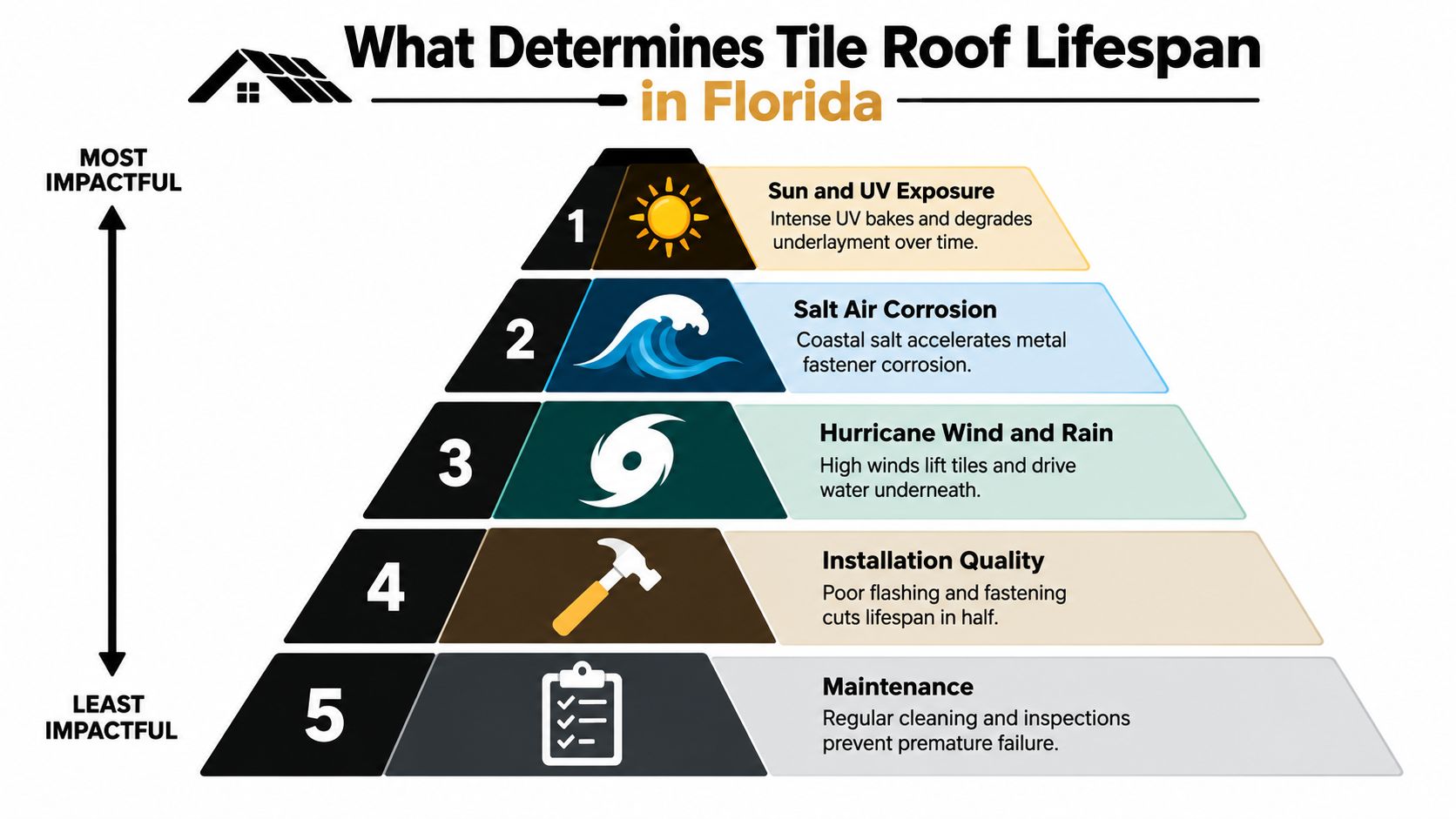
Sun and ultraviolet exposure
Strong sunlight heats the tile and the layers beneath it day after day. Ultraviolet exposure gradually weakens exposed membranes, sealants, coatings, and other components. The tile may still look sound while the underlayment has become stiff, brittle, or less able to block water.
The tile is the roof's outer shell. The underlayment is the rain jacket underneath. Once that layer loses its protective function, the roof may need work even if many tiles remain usable.
Salt air near the coast
Atlantic moisture carries salt that can speed corrosion on fasteners, flashing, vents, and other metal parts. Coastal exposure does not automatically mean a tile roof will fail early. It does mean these details need closer inspection, particularly where metal meets masonry or holds tile in place.
Hurricane wind and wind-driven rain
Storms test every connection in the assembly. Wind can shift or break tiles, while wind-driven rain can enter below displaced sections and put pressure on flashing and underlayment seams.
Research using simulated hurricane impacts found that concrete tile results varied with the attachment method, with mortar-set assemblies performing best under the tested conditions. The Office of Insurance Regulation roof report also identifies differences in damage rates by roof type during severe weather. The practical point is direct: installation details and wind-zone compliance matter as much as the material's theoretical lifespan.
Installation quality
Flashing, fasteners, underlayment overlaps, penetrations, and tile attachment all affect service life. A small weakness can become a leak path after repeated storms. “Installation quality” means checking these working details, not assuming one attachment method guarantees a specific lifespan.
Material and maintenance choices
Concrete and clay have different durability profiles, but both depend on the layers below them. Debris, blocked drainage, algae, and neglected flashing keep moisture against vulnerable components and can shorten the system's useful life.
For a Broward, Miami-Dade, or Palm Beach home, assess the roof through its sun exposure, coastal location, storm history, attachment method, installation workmanship, and maintenance. The tile may have years left, while the underlayment sets the more immediate replacement schedule.
Concrete Tile Versus Clay Tile Lifespan Compared
Concrete and clay tiles can both serve Florida homes for decades, yet the tile is only the roof's outer shell. Concrete tile is commonly placed at about 40 to 60 years, while clay tile is often cited at 50 to 100 years or more for the tile itself. Those ranges describe the visible material, not the complete roof system. Florida tile roof guidance
The working roof assembly usually reaches its practical limit sooner. Underlayment, flashing, fasteners, and roof-deck connections age under South Florida's salt air, intense sun, rain, and hurricanes. Some Florida guidance describes a full tile roof system as lasting about 25 to 50 years, and a roof with a 50-year tile life may need one or two underlayment replacements during that period. Additional Florida roofing guidance The tiles may still look serviceable while the waterproofing layer underneath has become brittle or unreliable.
| Material | Tile Life | Full System Life | Key Consideration |
|---|---|---|---|
| Concrete tile | 40 to 60 years | About 25 to 50 years | The tile may remain usable while underlayment and flashing need work |
| Clay tile | 50 to 100+ years | About 25 to 50 years | Clay can outlast other components by a wide margin |
| Complete tile assembly | Not applicable | About 25 to 50 years | System condition depends on underlayment, deck, fasteners, and flashing |
How to read your roof's age
A concrete tile roof approaching its middle service period deserves an underlayment and detail inspection, rather than an automatic tile replacement. The same applies to older clay tile that remains intact. Age raises the need for evaluation, but it does not by itself prove that the tiles have failed.
Maintenance also requires a light touch. Aggressive cleaning can damage tile surfaces, disturb attachments, or affect protective details. Homeowners seeking information about tile-cleaning practices can contact Ventura County Roof Cleaners. Local storm exposure and the condition of the layers below still determine the appropriate work for a South Florida roof.
Signs Your Tile Roof Is Nearing the End of Its Life
A tile roof can look old without having lost its waterproofing. Faded color, surface marks, or one hairline crack may only require observation. The more important question is whether water can still move across the roof and remain outside the building.
Functional warnings call for quicker action. A slipped tile exposes the underlayment to Florida's sun and rain. A broken tile leaves an opening, while cracked mortar or corroded flashing can send water into the roof assembly. The tile is the visible shell. The underlayment and flashing work like the roof's raincoat and seams, so their condition often determines replacement timing.
Start with safe observations
Use binoculars from the ground to check for displaced, missing, or broken tiles. Look for uneven ridge tiles, corroded flashing, and debris gathered in valleys or behind roof penetrations. Do not climb onto the roof to confirm what you see.
If it is safe to enter the attic, look for damp insulation, water marks, musty odors, darkened decking, or daylight. Ceiling stains and recurring leaks deserve prompt attention. They can indicate underlayment or flashing failure even when the tile surface appears normal.
Cosmetic and functional warnings
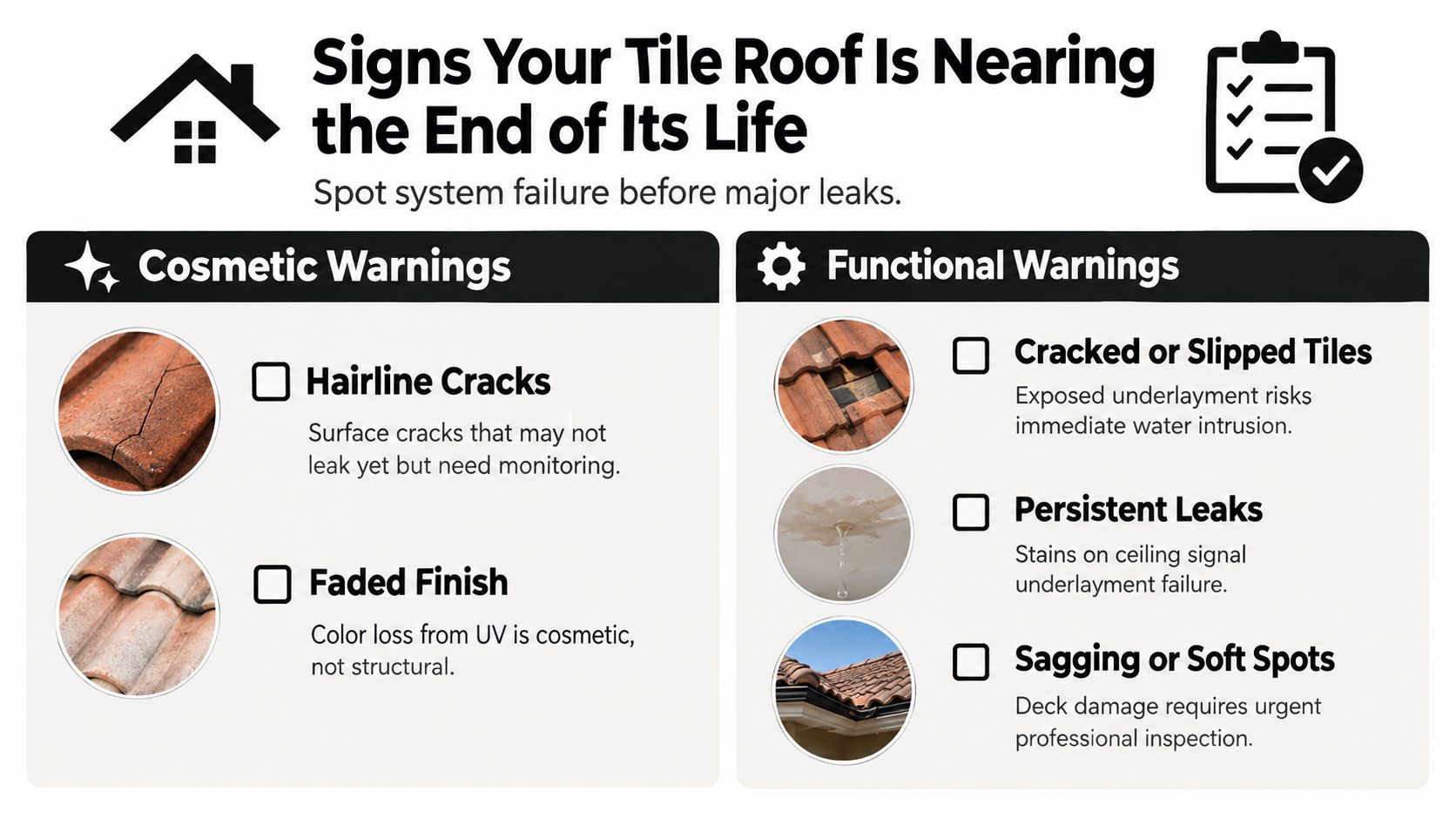
- Hairline cracks: A narrow crack may not leak today. Photograph it, record its location, and have it monitored.
- Faded finish: Sun bleaching is generally cosmetic alone. Concern increases when fading appears with broken or shifting tiles.
- Cracked or slipped tiles: Exposed underlayment faces direct weather and needs prompt evaluation.
- Persistent leaks: Repeated ceiling stains suggest water is passing through a failed detail or waterproofing layer.
- Sagging or soft spots: These can point to damaged decking and require professional inspection.
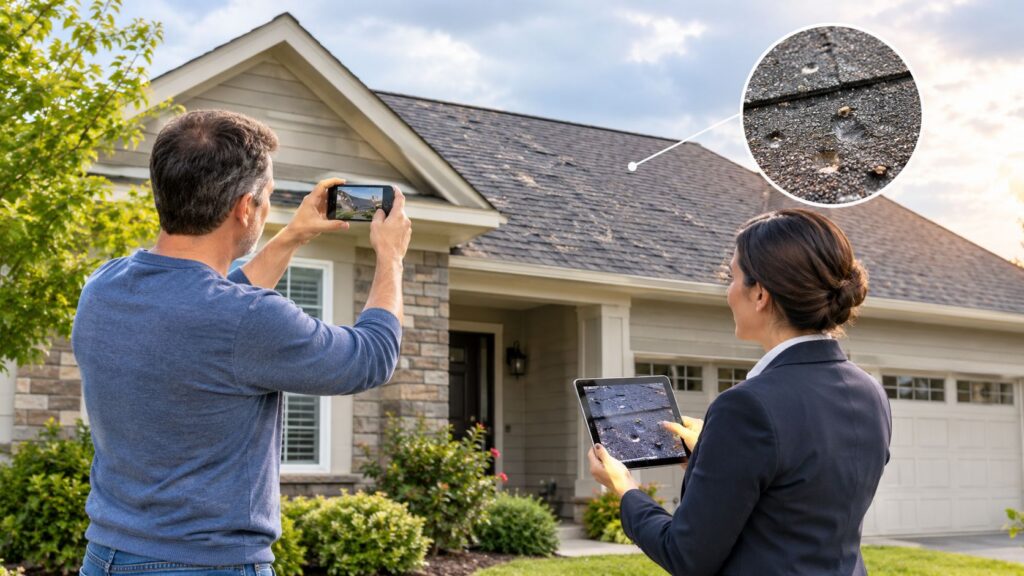
Walking on tile can break it, and a weakened area may give way underfoot. A roof inspection image showing storm-related damage shows why surface appearance alone cannot reveal the full condition of a roof system. A professional inspection can connect visible defects with hidden moisture, aging underlayment, and storm damage.
How to Extend the Life of Your Tile Roof in Florida
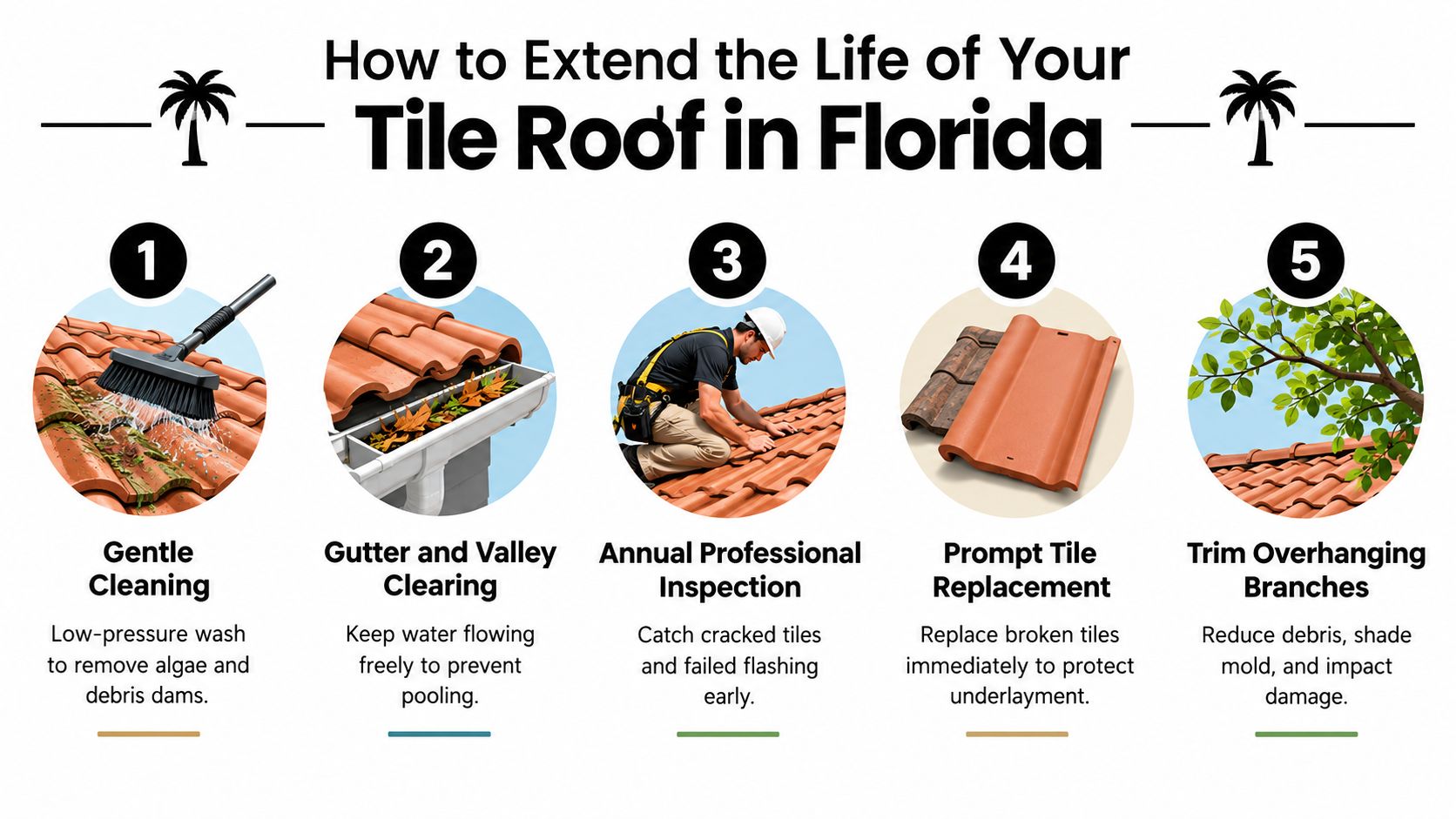
Maintenance cannot stop ultraviolet exposure, salt air, or hurricanes. It can reduce the chance that small defects become routes for prolonged moisture. In South Florida, protecting the roof system means caring for the tile, underlayment, flashing, and drainage together. The tile is the roof's outer shell. The underlayment works like the waterproof backup layer beneath it.
A practical South Florida routine
Clean gently. Remove leaves, branches, and organic buildup without methods that can crack tiles or strip protective finishes. Algae and debris hold moisture against roof components, so they can create more than an appearance problem.
Keep gutters, valleys, and roof drains clear. Blocked drainage can push water beneath edges or leave it standing at vulnerable transitions. After heavy rain, check ground-level drainage for overflow or pooling.
Small actions that protect hidden layers
- Schedule professional inspections: Have a qualified roofer examine tiles, flashing, penetrations, fasteners, and accessible underlayment areas.
- Replace damaged tiles promptly: A new tile shields the layer below from direct sun and rain.
- Trim overhanging branches: This reduces debris, shade-related moisture, and storm impact.
- Rinse coastal buildup carefully: Address salt residue around exposed metal details with compatible cleaning methods.
- Use compatible repair materials: Sealants, flashing, fasteners, and replacement tiles must suit the existing assembly.
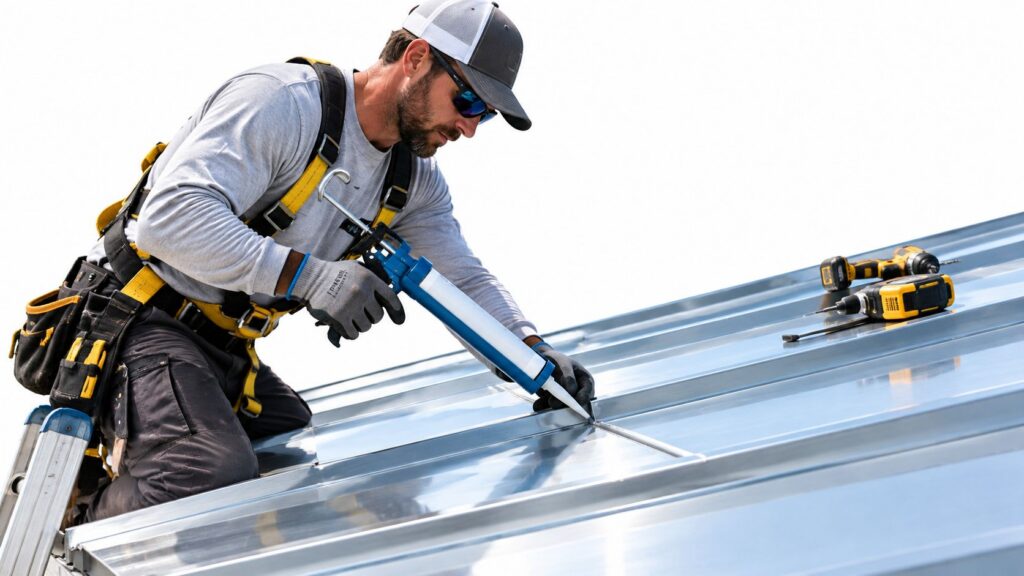
After hurricane conditions, arrange an inspection even if the roof looks acceptable from the street. Wind can shift tiles or loosen details without causing an immediate interior stain. A roof repair sealant example shows one repair material homeowners may encounter, but the correct product depends on the roof component and repair location.
When to Repair Re Underlay or Replace Your Tile Roof
A sound decision begins by separating three projects: a localized repair, re-underlayment, and complete replacement. One broken tile with a healthy roof system may need only targeted work. Widespread leaks, failing underlayment, or damaged decking indicate a larger problem.
Use age as a planning signal
Arrange a detailed inspection around 15 years, especially when installation records are missing. Start planning for underlayment work around 20 to 25 years. In Florida, the waterproof layer can age out while the tile still looks serviceable. The tile is the roof's outer shell, while the underlayment acts like the raincoat beneath it. Sun, salt air, humidity, and hurricanes can weaken that hidden protection first.
A full replacement depends on both material and condition. Concrete tile commonly reaches 40 to 60 years, while clay tile can reach 50 to 100 years or more. Those figures describe the tile, not every roof component. The deck, flashing, attachment system, and underlayment may need attention sooner. An inspection should identify which layers remain dependable and which ones need repair or replacement.
Account for insurance requirements
Florida insurers may assess roof age differently for tile and shingle roofs. One 2026 Florida-focused insurance guide says tile roofs are often evaluated around 25 to 40 years, while another explains that insurers may request records or an inspection showing at least five years of remaining useful life after a roof passes 15 years. Florida roof age guidance for 2026
A reported 2026 Florida roof-age update connects the relevant age with the last time 100% of the roof surface was built or replaced under the applicable building code. For a roof at least 15 years old, the insurer must allow an inspection before requiring replacement. If that inspection documents five or more years of useful life, age alone cannot justify nonrenewal under the described rule. Florida roof-age rule explanation
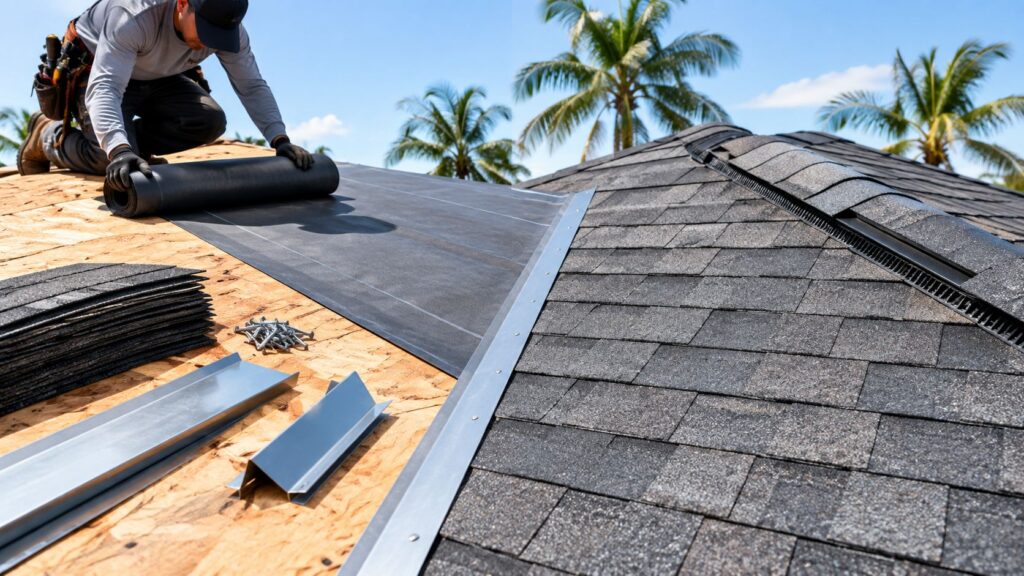
Budgeting also requires local context. A guide to new roof price Palm Coast St. Augustine can help homeowners outside South Florida frame the discussion, but actual decisions depend on materials, access, permits, storm requirements, and project scope. This roof replacement construction image illustrates the layers and work involved.
Paletz Roofing and Inspections evaluates tile, flashing, underlayment, decking, and storm-related concerns across Broward, Miami-Dade, and Palm Beach. Visit Paletz Roofing and Inspections to request an inspection and discuss repair, re-underlayment, or replacement options.