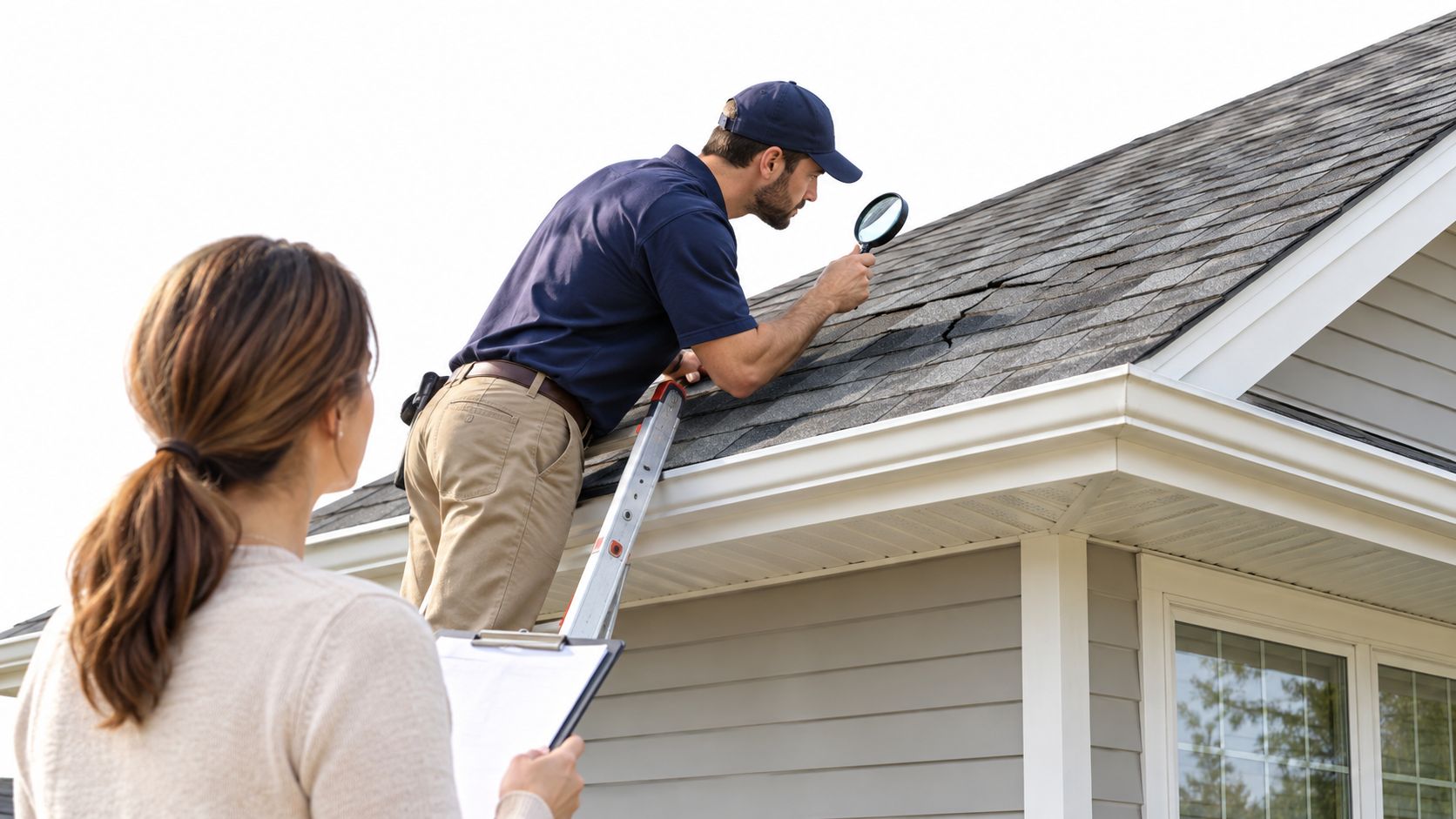
A roof problem isn't a rare surprise. In a survey of 998 recent homebuyers, 86% said their inspector found at least one problem before closing, and roofing was the most frequent issue category at 19.7% of defect reports according to this home inspection survey summary. If you're buying in South Florida, that should reset your priorities fast.
First-time buyers often treat the roof like one line item on a long inspection report. That's a mistake. The roof is the part that can turn a manageable deal into an insurance fight, a financing delay, or a five-figure surprise right after closing. The question isn't “Does the roof look okay?” The question is simpler and more expensive: are you buying a roof with useful life left, or inheriting someone else's deadline?
Table of Contents
- Why the Roof Deserves Its Own Inspection
- What You Can Check Before You Even Call a Roofer
- What a Professional Looks for on the Exterior
- Why the Attic Reveals What the Exterior Hides
- Reading the Report Like a Negotiator, Not a Buyer
- From Findings to Deal Terms That Actually Work
- Your Closing-Week Checklist and Final Buyer Questions
Why the Roof Deserves Its Own Inspection
Roofing came up more than any other defect category in the buyer inspection survey cited above. Treat that as your cue to separate the roof from the rest of the inspection and price it on its own merits.
A general inspector can flag concern. A roofing inspector should tell you what that concern means in dollars, timing, and deal risk.
That distinction matters in South Florida. In Broward, Miami-Dade, and Palm Beach, roofs age faster, repairs fail faster, and insurance questions show up faster. A house can look clean at showing and still come with an aging tile system, weak flashing, soft decking, or old leak history that changes the math of the purchase.
What a roofer catches that a general inspector may not
A dedicated roof inspection before buying a house should identify the roof system, estimate remaining service life, document active failure points, and separate cosmetic wear from defects that need money soon. That is a different job from a broad home inspection.
A roofer reads patterns. On shingle roofs, that may mean granule loss, lifted tabs, exposed nails, and aging around penetrations. On tile, it may mean slipped pieces, cracked field tiles, underlayment age, and bad prior repairs. On metal and low-slope sections, it often comes down to fasteners, seams, transitions, ponding, and flashing details. Those are the areas that decide whether you are looking at a minor credit request or a replacement conversation.
The attic matters too, but not because it makes the report look thorough. It shows whether the roof has been leaking long enough to stain sheathing, compress insulation, or leave a repair history the seller never mentioned. If the roof report skips photos of valleys, penetrations, flashing, drainage points, and attic conditions, you do not have enough information to negotiate from strength.
Why this matters more in South Florida
Buyers here get hurt when they focus on the visible surface and ignore the deadline attached to it.
An older roof can trigger insurance headaches, push for more documentation, or force last-minute concessions before closing. A small active leak can become damaged decking, wet insulation, interior staining, and mold cleanup. That is how a roof issue jumps from maintenance to deal problem.
The roof does not need to be perfect. It needs to be understood well enough that you can decide what to do next.
The question to ask instead of “Is the roof good?”
Do not ask for a vague pass or fail. Ask for four answers you can use in negotiation:
- How much useful life is realistically left
- Which defects are active right now
- What needs repair soon versus later
- What the near-term cost exposure looks like if you close as-is
Those answers tell you whether to proceed, renegotiate, or walk.
If the roof has years left and the defects are minor, keep the deal together and ask for a focused credit. If the roof is near the end, has active leaks, or carries insurance risk, stop thinking like a buyer and start thinking like a negotiator. Get repair pricing, attach deadlines to the findings, and decide whether the seller is paying for the problem or you are leaving it behind.
What You Can Check Before You Even Call a Roofer
Before you pay for an inspection, do a buyer's screen from the ground. You are not trying to diagnose the roof. You are trying to spot deal signals early, so you know whether this house needs a normal roofing inspection or immediate repair pricing for negotiation.

Start from the street, not under the eaves
Stand across the street and look at the full roof shape. Buyers who walk right up to the house miss the pattern. Pattern matters.
A roofline that sags, dips, or runs uneven usually points to movement below the surface, older repairs, or long-term moisture trouble, as noted in this roof checklist for buyers. That does not give you a diagnosis. It does tell you the roof may become a money conversation, not a maintenance conversation.
Watch for four things first:
- A ridgeline that should be straight but is not. A wave or dip deserves scrutiny because the problem may be in the decking or structure, not just the covering.
- Sections that do not match. Different colors, profiles, or aging patterns often mean partial repairs. Partial repairs are common. Repeated patch areas are where buyers get stuck with surprise costs.
- Uneven roof planes. Ripples and low spots matter more than faded material because they can signal trapped moisture, poor past work, or deterioration below.
- Repairs clustered in one area. One isolated repair is normal. Several in the same zone usually means the original problem kept coming back.
If you already see those signs, change your posture with the seller now. Ask for roof age documentation, permit history, and any leak or repair invoices before you book anything else.
Follow the water path
Next, walk the perimeter and check where water exits. Roofs fail at the drainage path long before a first-time buyer notices a stain on the ceiling.
Look for these clues:
- Overflow marks at gutters or walls. Dark streaks and wash lines suggest water has been dumping where it should not.
- Rot or swelling at the fascia. That usually means repeated moisture exposure, not a one-time event.
- Blocked or painted-over soffit vents. Poor intake ventilation shortens roof life and can hide attic moisture problems.
- Staining below eaves and around corners. That often points to runoff issues, failed edge details, or chronic overflow.
If you are comparing materials, this visual on how Florida tile roofs age helps you separate normal weathering from defects that deserve pricing.
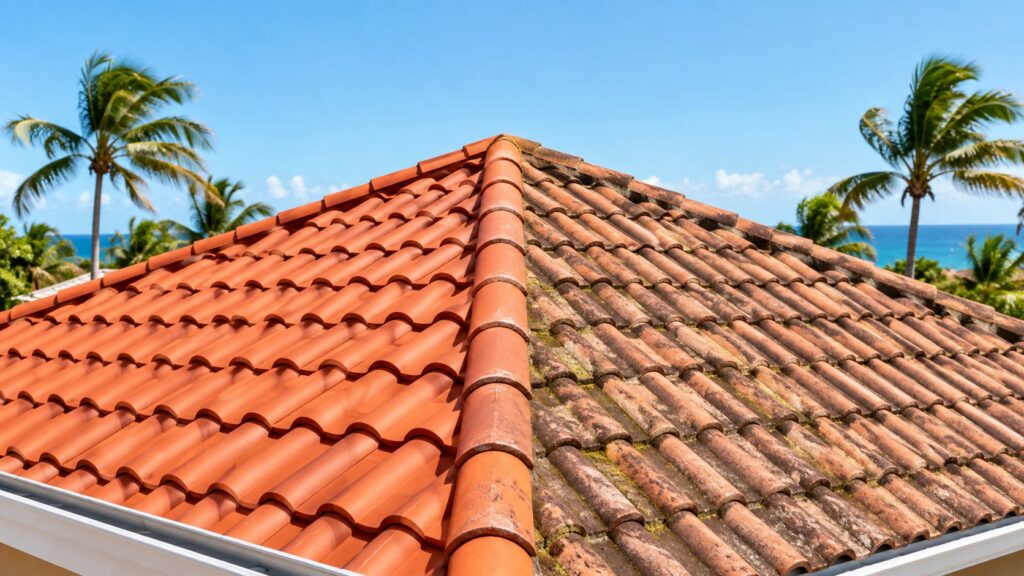
One honest rule. Cosmetic wear rarely kills a deal. Drainage problems, repeated patching, and roofline movement often do.
If the roof looks uneven from the street and the edges show water damage, skip the casual opinion and get a roofer who documents findings clearly. Use this guide to choose a roofer with confidence. You need photos, repair scope, and cost ranges you can use in the contract, not vague reassurance.
What a Professional Looks for on the Exterior
Surface defects get the attention, but the expensive surprises usually show up at the details.
One useful stat sets the tone. Independent home-inspection data roundups report that missing or damaged shingles show up in a large share of roof defects according to this inspection statistics roundup. That matters for one reason. Surface damage is often the first visible sign of a roof that is already aging unevenly, shedding water poorly, or hiding bad repairs.
Shingles, tiles, and membrane clues that matter
A real roof inspector does more than glance up and call it old.
On shingle roofs, I want to see whether the tabs still seal, whether granule loss is isolated or widespread, and whether past patching matches the surrounding slope. On tile roofs, cracked tiles matter, but the bigger question is whether the pattern of cracks suggests foot traffic, shifting, or underlayment age. On flat or low-slope roofs, I care about seams, blisters, ponding stains, patch edges, and how terminations were finished at the walls.
Those details change the money conversation. A few isolated defects usually mean a repair credit. Broad wear across the field, repeated patching, or failing seams usually puts you in replacement territory sooner than the listing suggests.
Flashing and penetrations decide whether a tired roof still performs
Buyers fixate on the field covering and miss the spots where water gets in. Flashing at penetrations, valleys, wall tie-ins, skylights, and chimneys deserves more attention than a handful of worn shingles.
A good exterior inspection checks whether those transitions were installed cleanly, repaired sloppily, or layered over again and again. If I see smeared sealant, exposed fasteners in the wrong place, loose counter-flashing, or cracked pipe boots, I assume the roof has a leak history until proven otherwise. For a buyer, that is not trivia. It is a pricing issue.
Watch for these problem areas:
- Pipe boots: Sun-cracked rubber collars fail all the time in South Florida.
- Valleys: Granule loss, broken metal, or debris traps speed up wear and concentrate runoff.
- Wall transitions: Stucco-to-roof intersections leak when flashing was skipped, buried, or patched badly.
- Skylights and chimneys: These spots reveal the quality of prior work fast.
- Mechanical penetrations: Satellite mounts, solar attachments, and added vents often create preventable entry points.
If tree limbs are scraping the surface or dropping debris into valleys, fix that before it turns into a roof claim. It makes sense to find an arborist Central Coast or a comparable local tree specialist where you live.
Turn the defect list into deal terms
In South Florida, exterior findings need to be read through two filters. Remaining service life, and insurability.
That is why close-up photos matter. If your roofer documents impact marks, exposed underlayment, failed flashing, open seams, or old patchwork, you can stop arguing in generalities and start asking the right question. Is this house asking you to inherit routine maintenance, a near-term repair bill, or a replacement project the seller should pay for now? A visual like this storm-related roof damage example shows the kind of surface evidence that often justifies a second opinion and a real cost estimate.

Here is the blunt rule. A roof with isolated exterior defects can still be a good buy at the right price. A roof with scattered repairs, failing penetrations, and visible water-management weak points usually needs contract terms, not optimism.
Why the Attic Reveals What the Exterior Hides
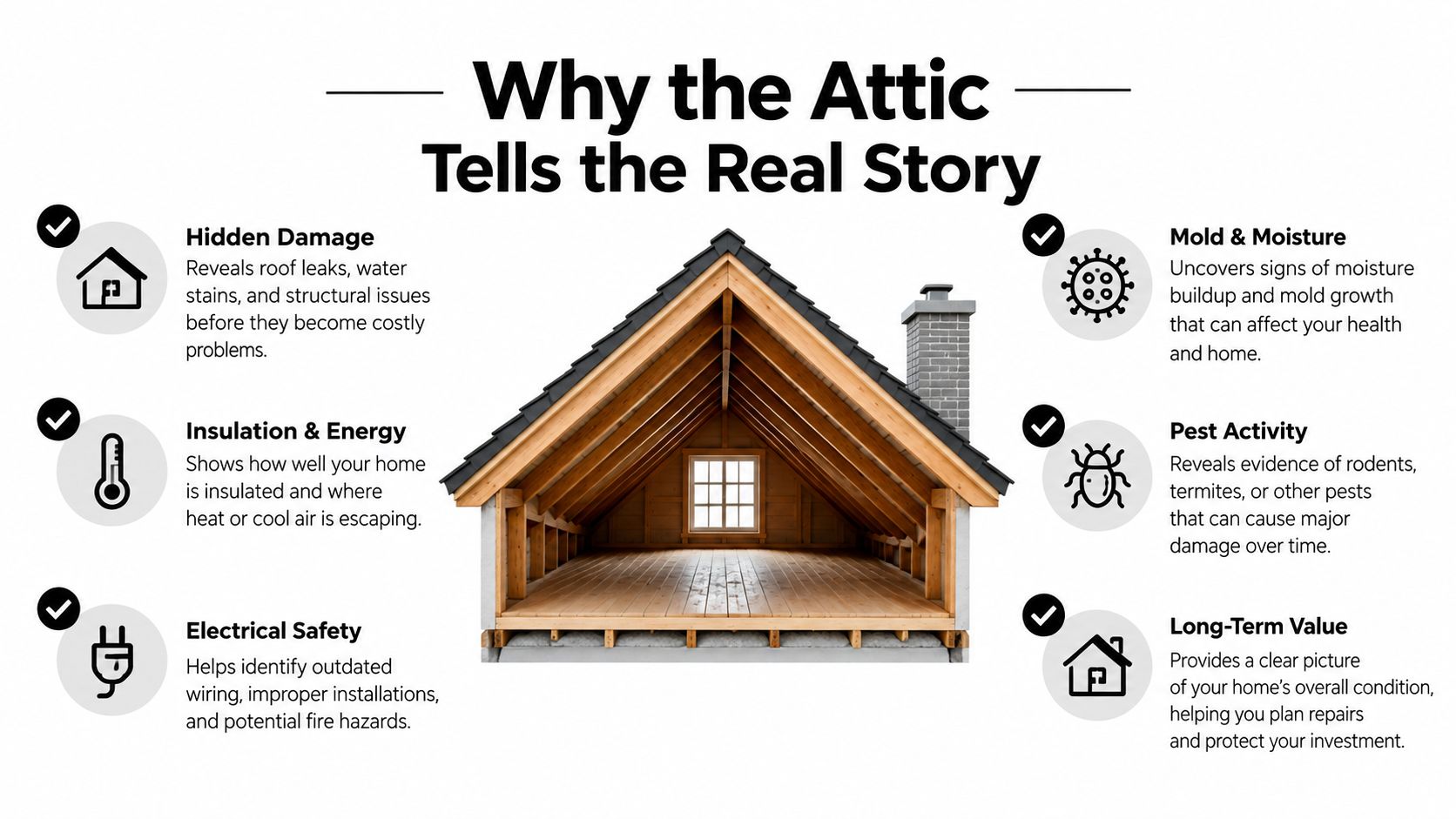
A seller can freshen up shingles before listing. They cannot hide moisture history in the attic nearly as easily.
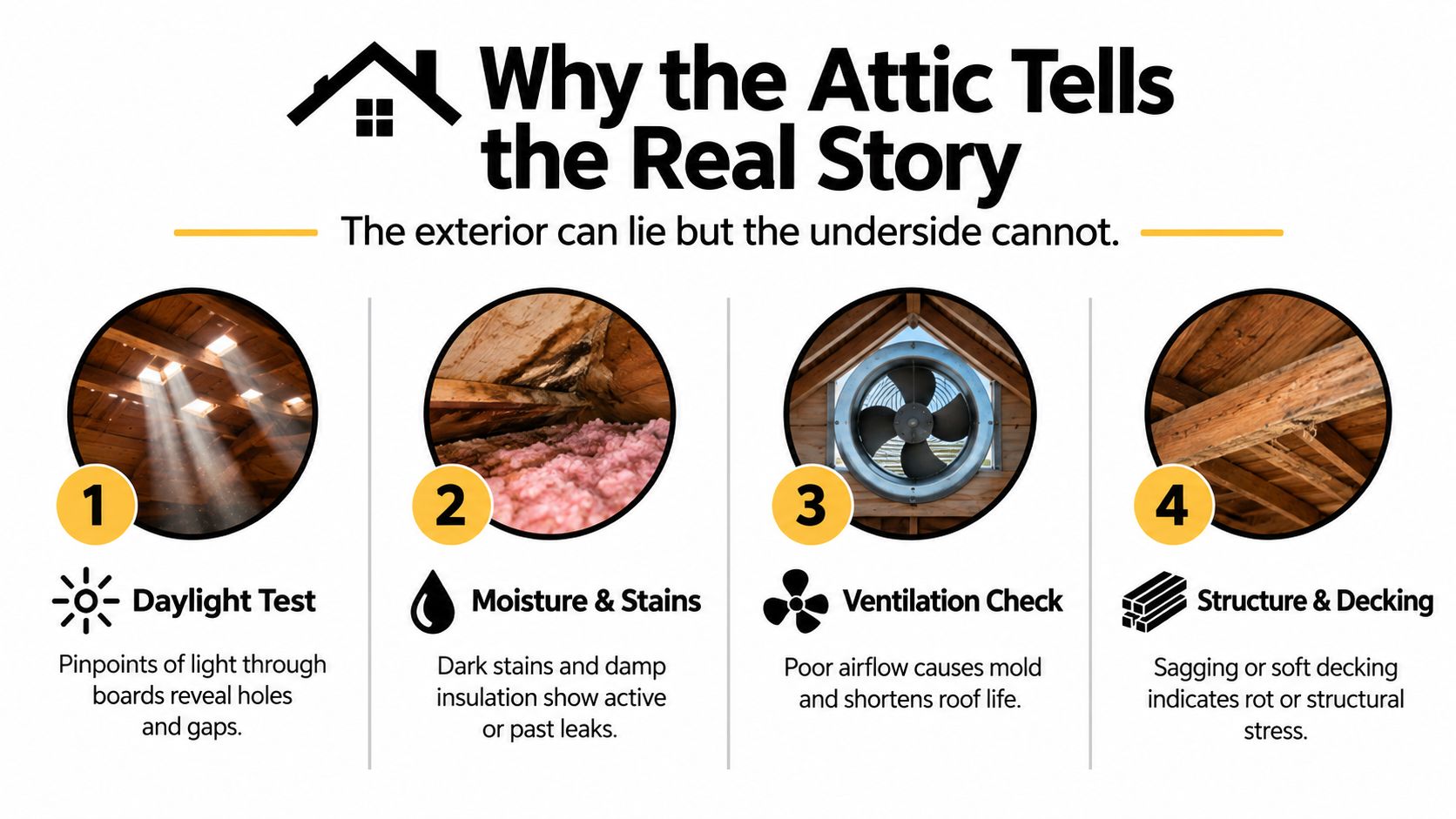
That space answers the question buyers care about most. Are you looking at a roof that needs routine upkeep, or one that is already costing you money the day you close? A solid pre-purchase roof review should include an attic or loft inspection for daylight through the deck, water stains on rafters or sheathing, mold or mildew, sagging rafters, and poor ventilation, as described in this first-time homebuyer roof guide.
What the inspector is looking for
A good inspector does more than wave a flashlight around. He is trying to separate old history from active failure, because that difference decides whether you ask for a small credit, a repair escrow, or a bigger price cut.
The clues that matter most are:
- Pinpoints of daylight: If light gets in, water gets in.
- Dark staining on sheathing: Dry, old stains are one thing. Fresh-looking marks or soft wood push this into current-risk territory.
- Rusted nail tips: That points to repeated moisture, often from condensation, leakage, or both.
- Wet, compressed, or discolored insulation: Insulation shows whether moisture has been ongoing long enough to cause hidden damage.
- Rafter or truss movement: Structural sag is a money problem, not a cosmetic one.
Ventilation problems cost money too
Ventilation gets brushed off because buyers are hunting for visible leaks. That is a mistake.
Guidance for buyers commonly points to confirming unobstructed soffit intake and ridge or exhaust ventilation, with a minimum 1:150 net free ventilation ratio as a benchmark in this homebuyer roof inspection checklist. In South Florida, poor attic airflow traps heat and moisture, cooks the roof system from below, and shortens shingle and sheathing life. It can also mean mold cleanup, insulation replacement, and higher cooling load.
If the attic feels hot, damp, and stale, treat that as a budget item. Not a footnote.
Attic evidence is what moves the deal
Exterior wear invites debate. Attic evidence usually ends it.
Photos of daylight through the decking, stained sheathing, damp insulation, or microbial growth give you stronger negotiating ground than a vague note saying the roof is “aged.” Those photos help you sort the issue into one of three buckets. Proceed with minor maintenance. Renegotiate because repairs are near-term and measurable. Walk away if the attic shows active leakage, structural movement, and neglected ventilation serious enough to suggest the roof problem is larger than the listing price can justify.
That is why buyers should care so much about the attic. It turns roof findings into dollar amounts and deal terms, instead of guesswork.
Reading the Report Like a Negotiator, Not a Buyer
A roof report should answer one money question fast. How much risk are you buying, and who should pay for it?
Buyers get in trouble when they read for reassurance. Sellers and agents love vague words like “serviceable” and “aged but functional” because those phrases calm people down without settling the core issue. Your job is to strip the report down to numbers, timing, and scope.
A dedicated roof inspection earns its keep because it estimates remaining life and puts repair or replacement on paper. Standard home inspections often stop at visible defects. Redfin also notes that a roof inspection commonly costs $120 to $300 in this roof inspection article. That is a small price if it saves you from inheriting a five-figure roof problem with no credit.
Pull out these three numbers first
Start here:
- Estimated roof age
- Remaining service life
- Current repair or replacement cost
Those three figures decide the deal conversation.
If the roof has a few years left and the repairs are limited, proceed and ask for a targeted concession if the estimate supports it. If the roof is near the end and the report shows patchwork repairs, failing flashing, or damaged decking, stop treating it like a maintenance item. It is now a pricing issue.
Report language that should change your offer
Some phrases are noise. Some should hit the purchase price.
| Report Phrasing | What it usually means for you | Deal impact |
|---|---|---|
| End of useful life | The roof may still shed water today, but replacement belongs in your ownership window soon | High |
| Active leak observed | The problem is current, not hypothetical | High |
| Multiple repairs noted | You may be buying a recurring problem, not one isolated fix | Medium to high |
| Flashing failure | Leak risk is concentrated at penetrations, walls, and transitions | Medium to high |
| Soft decking | Water damage may extend below the roof covering | High |
| Monitor | Keep an eye on it, but it usually does not justify a major ask by itself | Low |
| Maintenance item | Real work, but often small unless several items stack up together | Low to medium |
Here is the plain rule. “Ugly” does not always mean expensive. “Active,” “failed,” “soft,” and “end of useful life” usually do.
Demand scope, not adjectives
A weak report says the roof is “fair” or “shows wear.” That does nothing for your negotiation.
A useful report tells you what needs to be done now, what can wait, and whether repairs are a short-term bridge or a waste of money before replacement. If the inspector cannot separate those buckets, the report is not finished.
If you want a service focused on current roof condition for a real estate purchase, Paletz Roofing and Inspections offers pre-purchase roof inspections and condition reports for buyers in South Florida. That kind of report should help you put a number in an addendum, not just add another vague concern to your file.
Use a simple buyer worksheet:
- Age estimate
- Life left
- Defect list with photos
- Repair cost now
- Replacement cost if the roof is near the end
- Your ask to the seller
That is how you decide whether to renegotiate, proceed, or walk. A roof report is not a pass-fail document. It is pricing evidence.
From Findings to Deal Terms That Actually Work
Once the findings are in, you've got four real levers. They are not equal.
If roof concerns show up during the buying process, timing matters immediately. One source notes typical inspection contingency windows of 10 to 14 days in Alabama and 15 days in Florida for scheduling a dedicated roof evaluation and obtaining a licensed contractor's written estimate, as explained in this roof inspection timing guide. In plain terms, don't burn half your contingency period thinking about it.
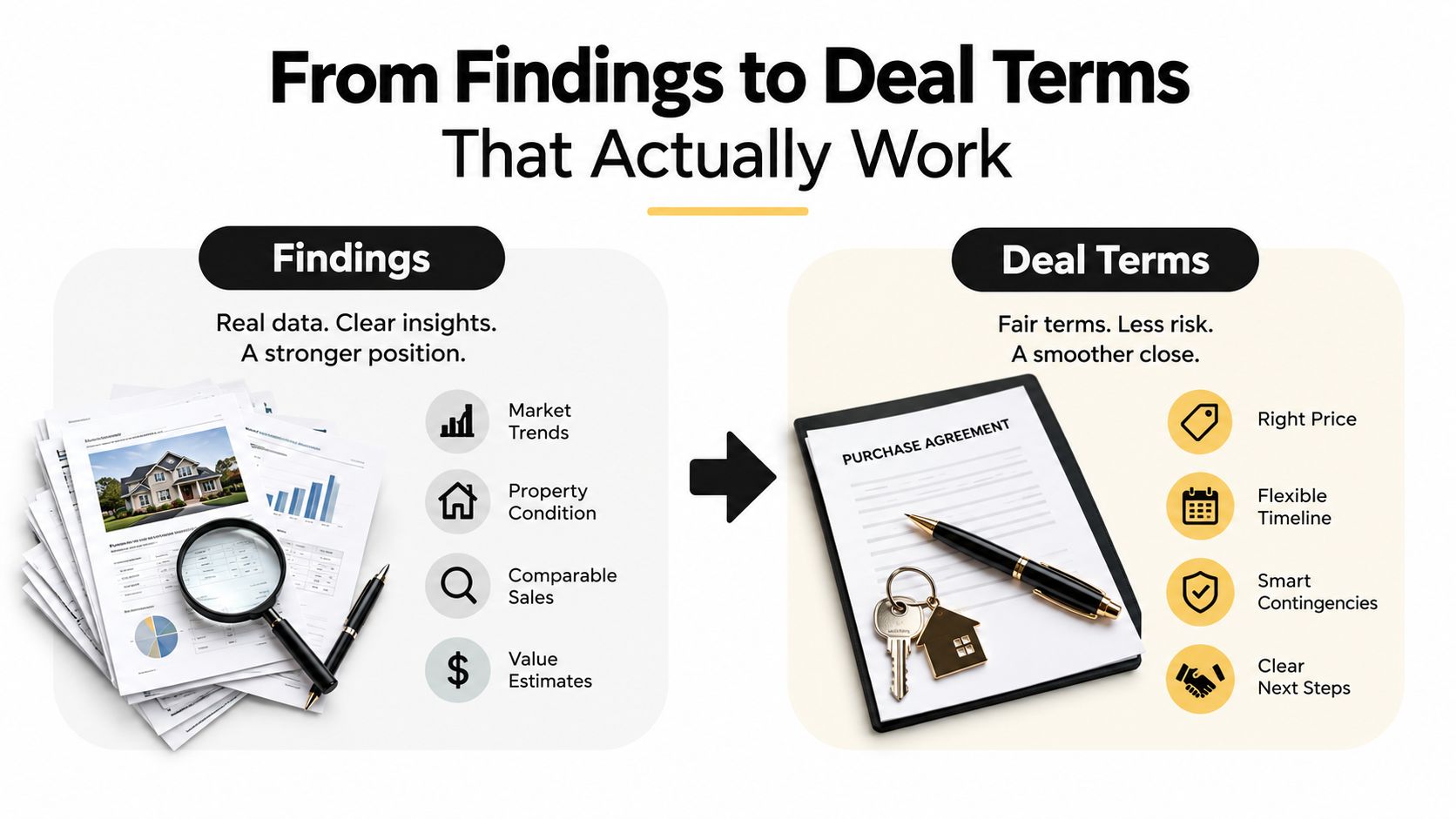
The four options ranked by usefulness
1. Price reduction or closing credit
This is usually the cleanest move. You control the work after closing, choose the contractor, and avoid rushed repair drama before move-in. If the roof is near a threshold where replacement is foreseeable, this is usually my first recommendation.
2. Seller-paid repair before closing
This can work when the issue is tight, specific, and well-documented. It's risky when the scope is fuzzy. Sellers often choose the cheapest path that satisfies the contract language, not the best path for long-term performance.
3. Escrow holdback
This is the compromise move when everyone agrees there's a real issue but the calendar is ugly. Funds stay reserved for post-closing work under written terms. Better than vague promises, worse than a clean credit.
4. Walk away
Use this when the roof appears unsafe, effectively uninsured, structurally compromised, or impossible to price with confidence before your contingency expires. Walking isn't dramatic. It's discipline.
Match the remedy to the finding
Here's the practical framework:
- Proceed with little or no change when the roof has usable life left and the defects are routine maintenance.
- Renegotiate firmly when the roof is repairable but the repairs are immediate and well-documented.
- Push for a full-value solution when leaks are active, decking is compromised, or replacement is near-term.
- Exit the deal when the documentation is poor, access is limited, the seller resists evaluation, or the findings suggest a larger hidden problem.
If you're trying to understand replacement scope before choosing between credit and repair, a visual guide to what a roof replacement includes helps frame what the seller is really being asked to solve.
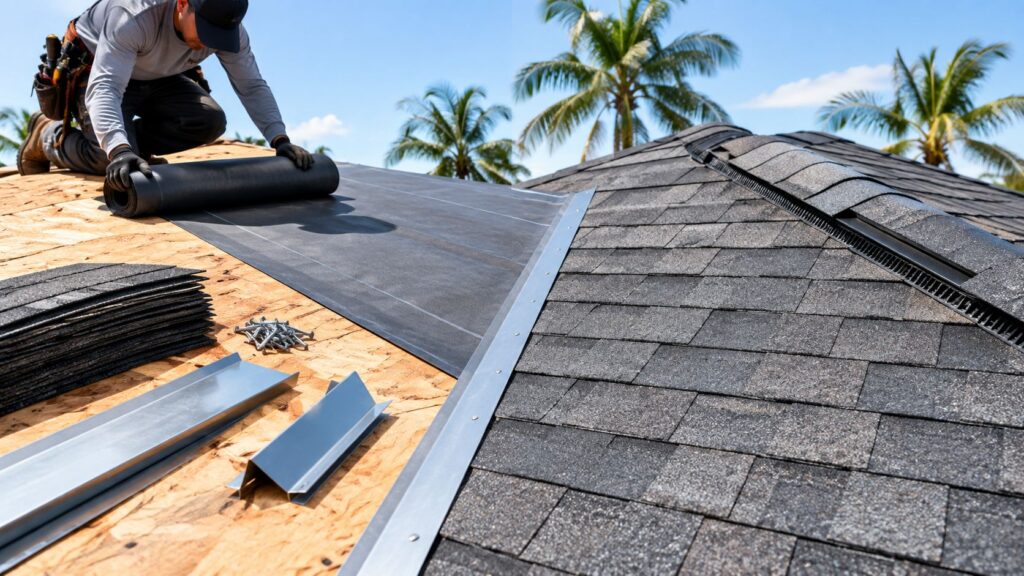
A script that keeps the deal moving
Keep your request simple and specific:
Based on the licensed roof inspection, the roof shows current defects and limited remaining service life. We are requesting either a seller credit reflecting the documented scope, or an agreed repair or replacement plan with permits and transferable documentation before closing.
That language works because it stays tied to evidence, not emotion.
Your Closing-Week Checklist and Final Buyer Questions
Closing week is where buyers either protect the deal or inherit the roof problem.
By this point, your real question is simple. Has anything changed since the inspection, and do you have enough paper to enforce what the seller promised? If the answer to either question is no, do not treat the walkthrough like a formality.
Your closing-week roof checklist
Bring the roof report, the repair addendum, and your phone. Check these items in person:
- Look for new water evidence: After recent rain, check ceilings, upper wall corners, around vents, and near the attic access for fresh stains, bubbling paint, or damp spots.
- Verify the work happened: If the seller agreed to repairs, get permits, paid invoices, photos, and the roofer's name. A vague note saying the issue was addressed is worthless.
- Check the attic again: Focus on the exact areas flagged in the report. Fresh staining, wet decking, damp insulation, or a new mildew smell means the problem is active.
- Confirm warranty paperwork: If a roof warranty or repair warranty transfers, get the documents before closing, not after.
- Check drainage at the ground level: Make sure downspouts, scuppers, and discharge areas are sending water away from the house instead of dumping it at the foundation line.
- Match every completed item to the agreement: If the contract says cracked tiles were replaced, count them. If it says flashing was repaired, ask where and by whom.
Paper closes arguments.
Buyer questions that deserve straight answers
What if the roof leaks right after closing?
If the leak source was already visible, already reported, or easy to find during your inspection period, you will likely own that problem after closing. That is why unresolved roof issues should be settled in writing before funds move.
Will a home warranty cover me?
Do not count on it. Home warranties often limit roof coverage, exclude pre-existing conditions, and pay too little to solve a real roofing issue. They are a weak backup, not a buying strategy.
When do the lender and insurance company start caring?
Late. Usually later than you want. If the roof looks worn, leaks, or appears near the end of its life, underwriting and insurance can still slow the deal or change the numbers at the last minute. Get ahead of that before closing week.
Does the seller's disclosure protect me if something was missed?
No. A disclosure is useful background, not proof that the roof is sound. Your protection comes from your inspection report, your contract terms, and the documents showing what was fixed.
The final decision rule
Use a money rule, not an emotion rule.
Proceed if the roof condition is stable, the remaining life fits your near-term budget, and every agreed repair is documented. Renegotiate if new walkthrough findings change the cost, the seller's repair paperwork is thin, or the roof now needs faster spending than the original deal assumed. Walk away if active moisture shows up again, the seller cannot prove what was fixed, or the deal only makes sense if you pretend the next roof bill is somebody else's problem.
If you're buying in Broward, Miami-Dade, or Palm Beach and want a roof opinion that helps you make a real deal decision, Paletz Roofing and Inspections provides pre-purchase roof inspections, condition reporting, and practical guidance on repair versus replacement before closing. They inspect the roof system with the transaction in mind, so you can decide whether to renegotiate, proceed, or step away with confidence. Visit Paletz Roofing and Inspections to schedule an inspection or review your property before the contingency clock runs out.