When you're looking at replacing your roof underlayment, the costs generally run from $0.75 to $4.00 per square foot. For most homeowners, this translates to a total project cost somewhere between $1,100 and $9,000. The final number really hinges on your roof's size, the type of material you go with, and the going labor rates in your area.
A Snapshot of Roof Underlayment Replacement Costs
Getting a handle on the numbers is the first step to setting a realistic budget. This isn't just about rolling out a new layer of protection; it's a big job that involves carefully removing your existing shingles or tiles just to get to the underlayment, then putting it all back together. That’s why the total cost is a mix of both materials and skilled labor.
You’ll find that labor is usually the biggest chunk of the final bill. While the underlayment itself might not break the bank, the detailed process of getting to it is what drives up the expense. Think of it this way: the underlayment is your roof’s hidden shield, and accessing it requires a careful deconstruction and reconstruction of your main roofing.
Cost Breakdown Per Square Foot
Let’s break down the costs into the two main buckets: materials and labor. On the low end, basic felt paper is the most budget-friendly choice, costing as little as $0.10 per square foot. If you opt for high-performance synthetic or rubberized underlayment, the price will naturally be higher.
Labor is where the real cost lies, typically running from $0.65 to $3.20 per square foot. For a more detailed look at pricing, you can find a comprehensive cost guide on roof underlayment replacement at HomeGuide.
To give you a clearer idea of what to expect, here’s a table breaking down the typical costs per square foot.
Estimated Cost Breakdown for Roof Underlayment Replacement
| Cost Component | Low-End Estimate (per sq. ft.) | High-End Estimate (per sq. ft.) |
|---|---|---|
| Material Cost | $0.10 | $0.80 |
| Labor Cost | $0.65 | $3.20 |
| Total Project Cost | $0.75 | $4.00 |
Keep in mind, these numbers are a great starting point for estimating your project. However, your final quote will be shaped by other factors we’ll get into, like how complex your roof is and the specific materials you choose.
Understanding the Role of Roof Underlayment

Before we start talking numbers and the cost of replacing roof underlayment, we need to get on the same page about what this stuff actually does. It's one of the most overlooked yet critical parts of your entire roof.
Think of your roof system like a serious piece of gear for a nasty storm. The shingles or tiles are the tough, visible outer jacket, built to take the brunt of the rain and wind. The underlayment? That’s the high-tech, waterproof base layer you wear underneath. It’s your last and most important line of defense.
When a hurricane-force gust lifts a shingle or wind-driven rain finds a tiny gap, the underlayment is what stops that water dead in its tracks. It prevents moisture from soaking into your roof's wooden decking, the very bones of your roof structure.
This single barrier is what stands between a simple roof repair and catastrophic damage. A failed underlayment allows even small amounts of water to cause wood rot, invite mold growth, and slowly compromise the structural integrity of your home. This is a huge deal here in South Florida, where the intense sun and relentless storms put every single component to the test.
Why Underlayment Is More Than Just Another Layer
A properly installed underlayment is way more than just a sheet of material rolled out on the deck. It’s an integral piece of a cohesive system designed for performance and a long life. Its job is multifaceted, and every function is critical for protecting your investment.
Here’s a breakdown of what a quality underlayment really does for you:
- Secondary Water Resistance: This is its main gig. It catches any water that sneaks past your shingles or tiles and channels it safely down to the gutters, keeping it out of your attic and walls.
- Weather Protection During Installation: It acts as a temporary roof, protecting the exposed wood decking from sun and rain after the old roof is torn off but before the new one goes on.
- A Barrier Against Ice Dams: While not a huge concern in Florida, in colder climates, it's what stops melting snow from backing up under shingles and leaking into the house.
A compromised underlayment is the hidden culprit behind so many roof leaks. By the time you spot a stain on your ceiling, the damage to the wood sheathing and trusses could already be widespread and expensive to fix.
Because its role is so vital, replacing a worn-out underlayment isn't an optional upgrade—it's non-negotiable maintenance. A failing underlayment means your roof is on borrowed time, no matter how great the shingles on top look. This hidden hero is what ensures your entire roofing system holds up against the elements for decades to come.
Key Factors That Drive Your Replacement Cost
When you start gathering quotes for your underlayment replacement, you'll likely see a pretty wide range of prices. This isn't random. The cost of replacing roof underlayment is basically a formula with three big variables: the materials you pick, how complex your roof is, and the labor needed to do the job right.
Breaking down these key drivers helps you understand exactly where your money is going and why one roof might cost a lot more than another. It's about much more than just the square footage; it’s about the unique challenges your specific roof presents to the crew.
The Role of Material Selection
The type of underlayment you choose really sets the starting point for your project's cost. Traditional asphalt-saturated felt is the most wallet-friendly option, kind of the entry-level choice for roofing. But that lower price tag comes with a shorter lifespan and less muscle to stand up to South Florida’s brutal heat and humidity.
On the other hand, modern synthetic underlayments are a serious upgrade. Made from engineered polymers, they're lighter, way more tear-resistant, and offer top-tier water protection. While they cost more upfront, their durability often makes them the smarter, more cost-effective investment over the long haul.
Labor Costs and Roof Complexity
Materials are a big piece of the pie, but labor is the real heavyweight in this equation. In fact, labor often eats up 80% to 90% of the total project cost. The average homeowner might see a bill around $3,300 for a full replacement, and labor alone can easily account for $2,800 of that. Of course, this all changes based on your location and the specifics of your roof. You can find more details about underlayment replacement costs on Angi.com.
A few things directly pump up those labor numbers:
- Roof Pitch: A steep roof is just plain harder and more dangerous to work on. It demands extra safety gear and naturally slows the crew down, which means higher labor charges.
- Roof Height: It’s no surprise that a two-story home costs more than a single-story ranch. That extra height adds risk and setup time, and you'll see that reflected in the quote.
- Accessibility: If your house is surrounded by thick trees or other obstacles, it can be a real headache for the crew to haul materials and equipment to the roof, adding more hours to the job.
A simple, low-pitch gable roof on a one-story home will always be less expensive to work on than a steep, multi-level roof with limited access. The complexity directly translates to hours on the job, which is the core of your labor bill.
Architectural Features and Complications
Finally, all the unique features that give your roof character also add layers of complexity and cost. These aren't just for looks; they are obstacles that demand extra skill, time, and materials to waterproof correctly.
Think about these common roof features:
- Skylights: Every skylight needs to be worked around with precision, requiring careful cuts and meticulous sealing to keep leaks out.
- Chimneys: Just like skylights, a chimney is a hole in your roof that needs custom flashing and sealing to be watertight.
- Valleys: A valley is where two roof planes meet. These areas act like funnels for massive amounts of water and need extra layers of underlayment for bulletproof protection.
- Dormers: They add charm to a home, but they also multiply the number of angles and edges that need detailed, time-consuming work.
Each one of these elements adds more time to the project, bumping up the overall labor cost and the amount of material needed to get that perfect, watertight seal.
Choosing the Right Underlayment Material
Picking the right underlayment isn’t some minor technical detail your roofer handles—it’s a decision that has a huge impact on the health of your roof and the cost of replacing roof underlayment again in the future. Think of it like choosing tires for a car. Sure, you can get by with a budget option, but a premium, all-weather tire gives you better performance, safety, and longevity, especially in demanding conditions like our South Florida climate.
The material you choose is literally the foundation for your roof's ability to fight off moisture and brutal heat. Each option comes with its own balance of upfront cost, toughness, and protective muscle. Your decision will affect not just the initial quote but also how soon you'll be having this same conversation again. Making the right call here is a real investment in your home's future.
Comparing Your Main Options
There are three main players in the world of roof underlayment, and each one has a different story when it comes to performance and price. Getting a handle on these differences is the key to having a smart conversation with your roofing pro and finding the perfect fit for your home and budget.
- Asphalt-Saturated Felt: This is the old-school, traditional choice. It’s essentially paper or fiberglass soaked in asphalt, offering a basic layer of water resistance. The downsides? It’s heavy, tears easily during installation, and breaks down much faster under the intense UV and heat we get here.
- Synthetic Underlayment: This is the modern, high-performance alternative. Made from engineered polymers like polypropylene, synthetic underlayment is incredibly lightweight, far more tear-resistant, and a champ when it comes to fighting off water and mold. It costs more upfront, but its durability often makes it a better value in the long run.
- Self-Adhered Membranes: This is the top-of-the-line option, what we often call "peel-and-stick." It has a rubberized asphalt adhesive that bonds directly to your roof deck, creating a totally waterproof seal. It’s your best defense against wind-driven rain, making it a fantastic choice for the most vulnerable spots like valleys and eaves.
The chart below gives you a clear look at how the material costs typically stack up per square foot.
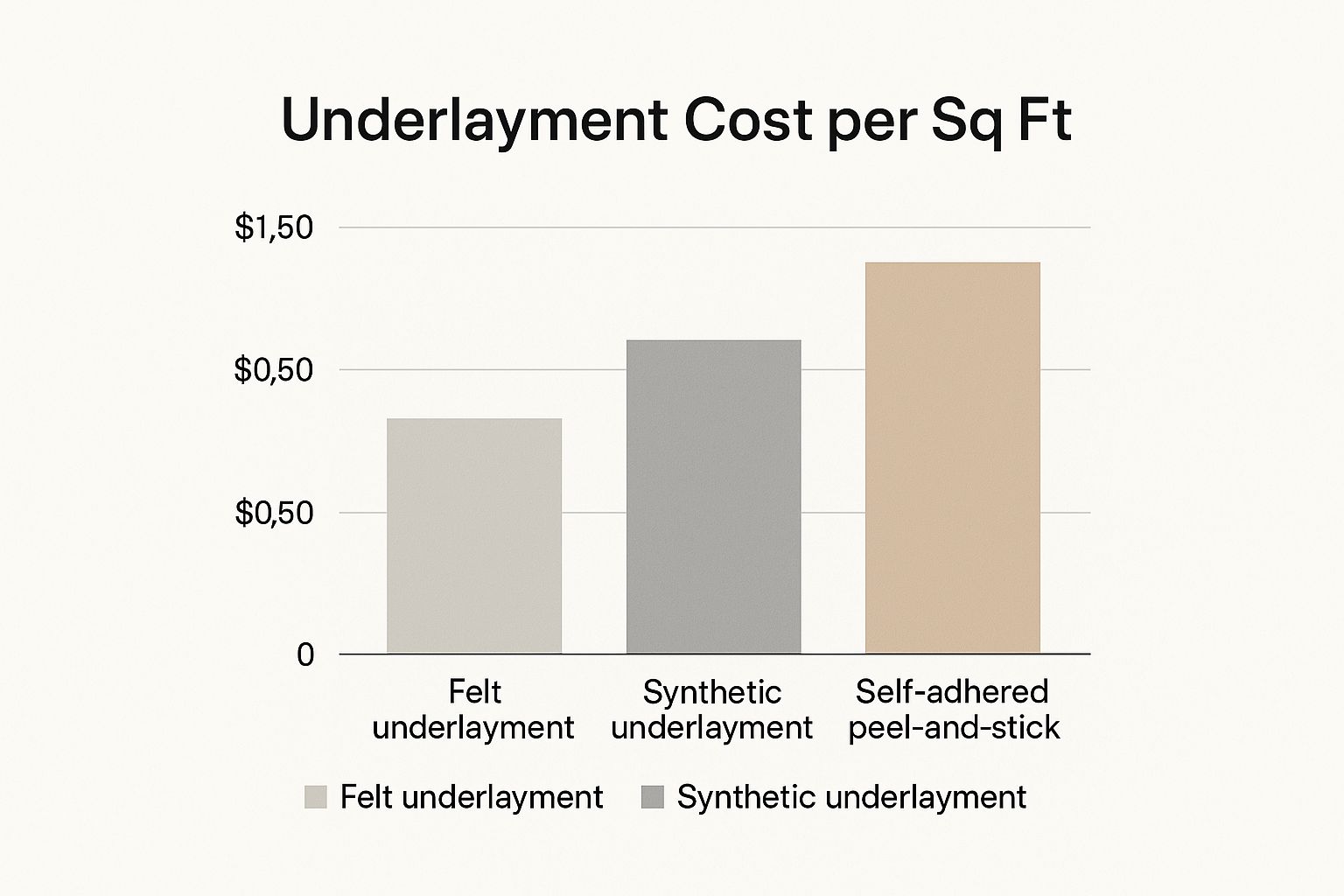
As you can see, while old-school felt is the cheapest right out of the gate, peel-and-stick membranes are a much bigger material investment.
To make it even easier to compare, here’s a quick breakdown of the three main types of underlayment. This table should help you weigh the pros and cons based on cost, lifespan, and what they do best.
Comparison of Roof Underlayment Materials
| Material Type | Average Material Cost (per sq. ft.) | Typical Lifespan | Best For |
|---|---|---|---|
| Asphalt-Saturated Felt | $0.15 – $0.50 | 15-20 years | Budget-conscious projects and simple roof designs in milder climates. |
| Synthetic Underlayment | $0.25 – $0.75 | 25-50 years | Most residential applications, especially in areas with high heat and humidity like South Florida. Offers a great balance of cost and performance. |
| Self-Adhered Membrane | $0.50 – $2.00+ | 30-50+ years | Critical, leak-prone areas like eaves, valleys, and around chimneys. The ultimate choice for high-wind zones and maximum water protection. |
This comparison highlights that your choice really comes down to balancing your immediate budget with your long-term goals for roof performance and durability.
Making the Smartest Choice
So, what's the verdict for your roof? It's all about finding that perfect balance between budget and performance. For the vast majority of homes here in South Florida, synthetic underlayment hits the sweet spot. It's a major upgrade in durability from felt, but without the premium price tag that comes with using a full self-adhered system across your entire roof.
Your roofer might also suggest a hybrid approach. This means using a self-adhered membrane on the most vulnerable parts of your roof—think valleys, chimneys, and skylights—and then covering the rest of the roof with a high-quality synthetic underlayment. It’s a smart strategy that puts maximum protection right where you need it most while keeping the total project cost in check.
Budgeting for Hidden Replacement Costs
A smart budget for your roof underlayment replacement is one that anticipates the unexpected. The initial quote from your roofer covers the main event, but it's the surprise expenses that can really throw your finances off track. Thinking ahead about these potential costs is the key to a smooth, stress-free project.
These "hidden" costs aren't about contractors trying to pull a fast one. They are simply variables that can't be known until the old roof comes off. Planning for them ensures your budget has a necessary safety net built right in.
Uncovering Potential Surprise Expenses
Once your old shingles are removed, your contractor gets the first clear look at the wooden roof deck underneath. This is often where the surprises live. If they find sections of soft, rotted, or water-damaged decking, it must be replaced before new underlayment can go down. This repair work adds both material and labor costs not included in the original scope.
Beyond that, you should also plan for a few other common extras:
- Debris Disposal Fees: Getting rid of old roofing materials lawfully comes with a fee. This can range from a few hundred to over a thousand dollars, depending on your roof's size and the material being hauled away.
- Permit Costs: Most towns and cities in South Florida require a permit for significant roofing work. This is a necessary expense to ensure the job is done to code and passes inspection.
- Optional Upgrades: While the roof is open, you might decide to invest in proactive protection. A common upgrade is adding a self-adhered "peel-and-stick" membrane in vulnerable spots like valleys or around chimneys. It adds to the upfront cost but can save you thousands in future leak repairs.
Building a 10-15% contingency fund into your total budget is a wise financial move. This buffer ensures that if rotted decking is discovered or other unexpected issues pop up, you can cover the costs without financial strain.
Creating a Resilient Financial Plan
Managing a big home improvement project like this one demands solid financial planning. When you're dealing with these kinds of numbers, understanding personal finance is key. Learning how to create a budget you actually keep can help you account for both the expected costs and those little surprises.
By anticipating these potential extras, you transform them from budget-busting shocks into manageable, planned-for expenses. This proactive approach is the difference between a stressful project and a successful investment in your home. A well-thought-out budget is your best tool to manage the total cost of replacing roof underlayment.
How Global Market Trends Affect Your Quote
Ever wonder why a roofing quote can feel like a moving target from one year to the next? The price you're quoted for replacing your roof underlayment isn't just set by your local contractor in South Florida. It’s also being nudged by economic forces happening thousands of miles away.
Think of it like the price of gas at the pump—what you pay is directly tied to global supply and demand for crude oil. It’s a similar story for roofing materials. The cost of raw materials used in underlayment, like asphalt and polymers, can shift based on worldwide construction booms and unexpected supply chain pressures.
When countries on the other side of the globe kick off massive construction projects, their demand for these essential materials skyrockets. This creates a ripple effect that tightens the global supply, making those same materials more expensive for manufacturers everywhere, including right here in the United States. Those increased production costs eventually get passed down the line, affecting the prices your roofer has to charge.
The Growing Global Market
The roofing underlayment market is expanding at a blistering pace, and that growth has a direct impact on your replacement costs. The market was recently valued at nearly USD 29.75 billion and is projected to blow past USD 52 billion by 2034, growing at an annual clip of about 5.75%.
What's fueling this? A global spike in construction, stricter building codes demanding better moisture protection, and a massive shift toward advanced synthetic materials. As this demand intensifies, both material and installation prices are expected to climb, influencing the cost of replacing roof underlayment for homeowners everywhere. You can dive deeper into these roofing underlayment market trends to see the full picture.
Understanding these broader trends helps you see your quote in context. A price increase isn't just some arbitrary number your roofer picked. It often reflects very real shifts in the global economy. This makes securing a detailed quote and locking in your pricing a smart, strategic move for your project.
This global perspective explains why roofing costs can feel so unpredictable. It’s not just about local labor rates; it's about a complex network of factors that begin long before a single roll of underlayment arrives at your home.
When you're digging into a roof underlayment replacement, a lot of practical questions are bound to pop up. Getting straight answers helps you plan better and sidestep those common mix-ups that can throw your budget for a loop.
One question I hear all the time is whether you can just swap out the underlayment without touching the shingles or tiles. While you technically can, it’s rarely the best move from a practical or financial standpoint. It means a roofer has to carefully pry off every single shingle or tile, which is a ton of labor.
Plus, there’s a huge risk of breaking them, especially if they’re older and brittle.
You can pretty much count on about 10% of tiles breaking during the removal and reinstallation process. Once you add the cost of those replacement tiles to the massive labor bill, a full roof replacement often makes a lot more sense for the long run.
Can I Just Install a New Layer Over the Old One?
Another common thought is to simply layer new underlayment over the old stuff. Please don't do this. Every professional roofer will tell you it's a terrible idea because it traps moisture and all sorts of gunk between the layers, which will speed up rot in your roof decking.
A proper replacement demands a full tear-off of the old material. This gives us a chance to properly inspect the wood deck underneath. It’s a critical step that lets us find and fix any hidden rot or mold before the new underlayment goes down, ensuring your new roof has a solid foundation to rest on.
How Long Does an Underlayment Last?
The lifespan of your underlayment really boils down to the material you pick. There's a big difference between the options.
- Asphalt-Saturated Felt: This is the old-school choice. You can expect it to last somewhere between 15 and 20 years before it gets brittle and stops doing its job.
- Synthetic Underlayment: A major step up. Modern synthetics are built to last, giving you anywhere from 25 to 50 years of protection with much better resistance to our Florida heat and humidity.
- Self-Adhered Membranes: This is the top-tier option. These membranes can last 30 to 50 years or even more, providing the absolute best long-term defense against water intrusion.
Investing in a more durable material right from the start is always the best way to push that next big replacement project as far down the road as possible.
When it's time to protect your South Florida home with a reliable, expertly installed roofing system, trust the professionals. For a detailed inspection and a clear, honest quote, contact Paletz Roofing and Inspections today. Visit us at https://paletzroofing.com to schedule your free estimate.