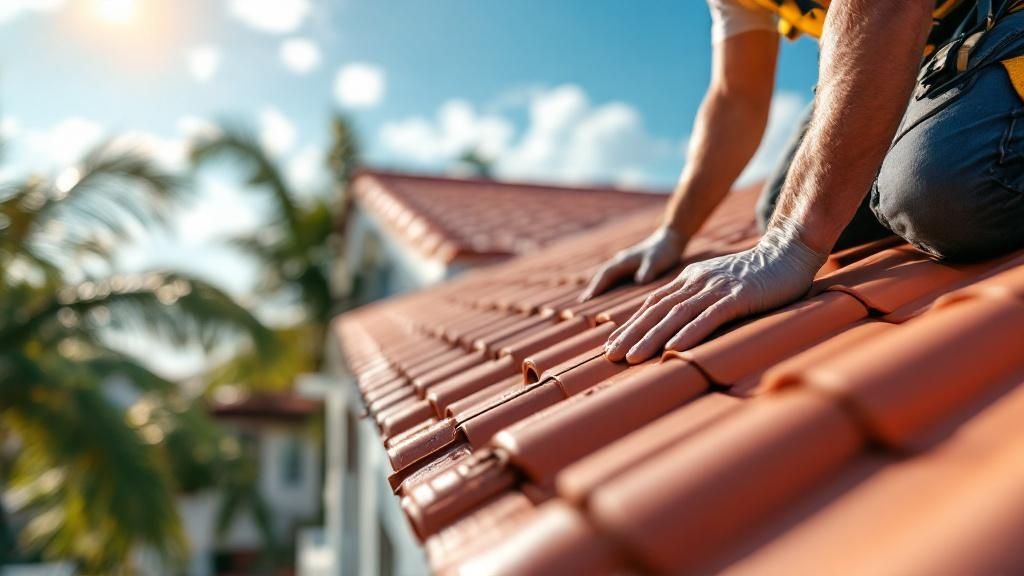
A new tile roof installation in Weston FL isn't just another home improvement project—it's a smart, strategic investment in your property's long-term durability, value, and resilience. It's an upgrade specifically designed to stand up to South Florida's unique climate, from the relentless sun to hurricane-force winds.
Why Tile Roofs Are a Smart Investment in Weston
Drive through any neighborhood in Weston, and you'll see elegant tile roofs everywhere. This isn't just an aesthetic trend. Homeowners here know that choosing tile is a practical, long-term decision rooted in solid performance and financial sense. Simply put, a tile roof is an asset built to handle the very specific pressures of our South Florida environment.
The intense, year-round sun is brutal on lesser materials like asphalt shingles, causing them to degrade, crack, and lose their ability to protect your home. Tile, whether it's classic clay or modern concrete, is naturally resistant to UV radiation. That means it won't break down or fade nearly as fast, which translates directly to a longer life and fewer costly replacements down the road.
Built for Florida Weather
When it comes to durability in the Weston climate, tile is the undisputed champion. While other roofing materials can buckle under the stress of torrential rain and high humidity, tile is non-porous and sheds water with incredible efficiency. This natural resistance to moisture is a huge deal here, as it prevents the growth of mold and algae that can compromise the integrity of your roof deck over time.
Most importantly, today's tile roofs are engineered to meet the tough High-Velocity Hurricane Zone (HVHZ) building codes that govern Broward County. When installed by a professional, these systems are designed to resist uplift from extreme winds, giving you a critical layer of protection when you need it most.
A properly installed tile roof isn't just a covering; it's a structural system engineered for resilience. It gives you real peace of mind, knowing your home's first line of defense is strong enough to handle the worst of Florida's storm season.
The Financial Advantages of Tile
Yes, the upfront cost of a tile roof is higher than some other options, but the return on investment becomes crystal clear over time. Let's break down the key financial benefits:
- Energy Savings: Tile roofs have fantastic natural thermal resistance. The air space created under the curved tiles acts as an insulator, stopping solar heat from baking your attic. This can lead to a significant drop in your air conditioning costs—a major expense for any South Florida resident.
- Increased Home Value: A tile roof is a premium feature that instantly boosts curb appeal and signals quality construction to potential buyers. It's an upgrade that is widely recognized for increasing a home's resale value. To learn more about how home improvements can pay off, check out these strategies to boost your home remodel's return on investment.
- Longevity and Low Maintenance: One of the main reasons tile roofing is so popular in Weston is that it far longer than asphalt shingles, often lasting well over 50 years with proper care. The tiles are also eco-friendly, made from naturally occurring materials that don’t deplete limited resources. You can see more about local roofing preferences on Angi.com.
Ultimately, choosing tile is about looking past the initial price tag and seeing the bigger picture. It's an investment in durability, long-term savings, and the lasting value of your Weston home.
Understanding the True Cost of a New Tile Roof

Let's get right to it. When you're planning a tile roof installation in Weston FL, the first question everyone asks is, "How much is this going to cost me?" It's tempting to hunt for a simple, single number, but the final price tag is really a sum of several crucial parts.
The upfront investment for a tile roof is higher than for something like asphalt shingles, but that initial cost reflects its incredible longevity and superior performance, especially in our demanding South Florida climate. You're not just paying for the tiles; you're paying for skilled labor, specialized underlayment, and the complex logistics of a major home improvement project.
Breaking Down the Primary Cost Factors
The total cost of your new roof really hinges on a few big variables. Each one can significantly shift the final price, so it’s important to see how they apply to your specific home.
- Choice of Tile Material: This is the single biggest driver of cost. Classic clay tiles often carry a higher price point because of their timeless look and the traditional manufacturing process. On the other hand, modern concrete tiles are exceptionally durable and usually more budget-friendly. They also come in a massive array of styles and colors that can mimic everything from Spanish terracotta to natural slate.
- Roof Complexity and Size: It's simple geometry. A straightforward, single-level gable roof will always cost less to replace than a multi-level home loaded with valleys, dormers, and steep pitches. Complex designs demand more intricate cuts, extra flashing materials, and many more labor hours to ensure every angle is sealed and protected perfectly.
- Labor and Professional Expertise: You're not just buying materials; you're investing in the skill of the installation crew. Experienced, licensed, and insured roofing teams in Weston command a fair price for their expertise, especially when it comes to meeting Broward County's tough hurricane code requirements. This is one place where cutting corners can lead to disastrous—and incredibly expensive—failures later on.
Uncovering the Hidden Costs
Beyond the big-ticket items, several other expenses are absolutely essential for a proper, code-compliant installation. Many homeowners overlook these "hidden" costs when budgeting, which can lead to some unwelcome surprises down the road.
Don't just look at the final number on a quote. A transparent, professional estimate will itemize every cost, from the permit fees to the final cleanup, ensuring you know exactly where your investment is going.
A truly professional contractor will always include these items in their detailed estimate, so be prepared for these additional line items:
- Tear-Off and Disposal: Removing and legally disposing of tons of old roofing material is a tough, labor-intensive job with its own disposal fees.
- Decking Repair or Replacement: Once the old roof comes off, the crew inspects the underlying wood deck. Any rotted or damaged plywood has to be replaced to create a solid foundation for the new tiles, which adds material and labor costs.
- Underlayment and Flashing: High-quality, self-adhering underlayment is your roof's critical secondary water barrier. This, along with new metal flashing for valleys and vents, is non-negotiable for a watertight system.
- Permit Fees: The City of Weston requires permits for all re-roofing projects. This ensures the job complies with local building codes, and while your contractor handles the process, the fee becomes part of the project's total cost.
Estimated Cost for Tile Roof Installation in Weston FL
To give you a clearer financial picture, here is a sample cost breakdown for a standard 1,800 sq. ft. home in Weston. Remember, this is just an estimate, and your actual costs will vary based on the factors we've discussed.
| Cost Component | Estimated Cost Range | Notes & Considerations |
|---|---|---|
| Tile Material | $7,200 – $27,000+ | Concrete tiles are at the lower end; premium clay or custom styles are at the higher end. This is the most variable component. |
| Labor & Installation | $9,000 – $21,600 | Varies based on roof complexity, pitch, and the experience of the crew. More complex roofs require more skilled labor hours. |
| Tear-Off & Disposal | $1,800 – $3,600 | Cost depends on the existing roof material and the number of layers to be removed. |
| Underlayment & Flashing | $1,440 – $2,700 | High-performance underlayment is crucial in Florida. Don't skimp here. |
| Decking Repairs | $500 – $2,500+ | This is a common "surprise" cost. The extent of damage isn't known until the old roof is off. |
| Permits & Fees | $450 – $900 | City of Weston permit fees are a required part of the project. |
| Total Estimated Project | $20,390 – $58,300+ | This range reflects the potential for a basic concrete tile roof vs. a premium clay tile roof with extensive decking repairs. |
This wide range, from $8 to over $45 per square foot, really underscores why getting multiple, detailed quotes is so important. A new roof on a 1,500 square foot home could run anywhere from $11,000 to $65,000, and even more for larger properties. You can explore more detailed local roofing cost estimates on EstimatorFlorida.com to see how these numbers break down further.
By understanding what drives these costs—from material choices to those necessary "hidden" fees—you can confidently navigate the process and make a smart, informed investment in your home's protection and value.
Navigating Weston's Strict Building Codes and Permits
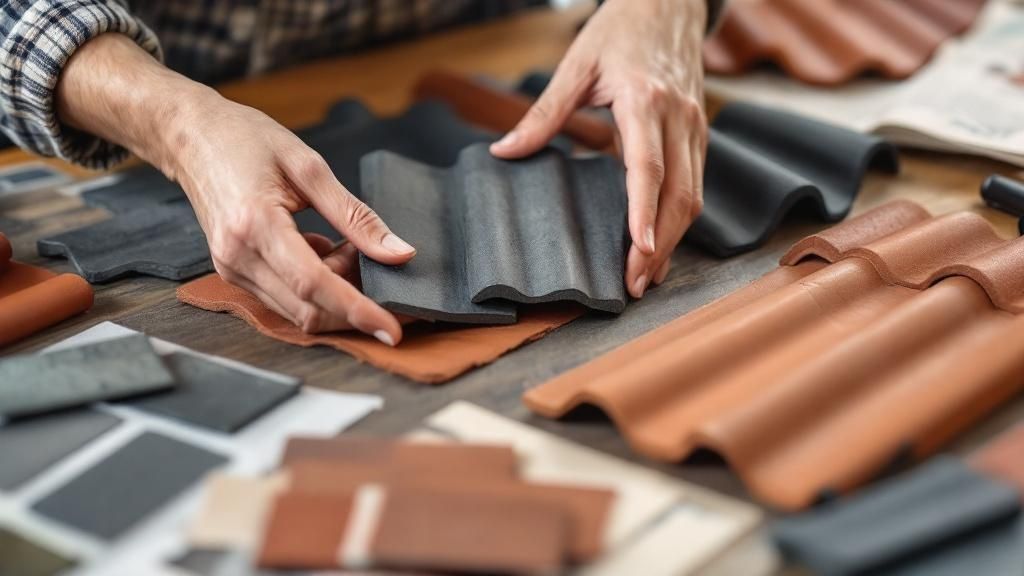
Here in Weston, and really all of Broward County, a building permit for a new roof is a whole lot more than just a piece of paper. Think of it as the blueprint for making sure your home can stand up to the wild weather South Florida throws at us. The process can feel a bit overwhelming, but every step is designed with one thing in mind: your safety.
These rules aren't random. They're the direct result of hard lessons learned from past hurricanes. When your contractor follows these codes to the letter, they're not just installing a roof; they're building a complete system proven to handle extreme conditions. That’s why a properly permitted tile roof installation in Weston FL is non-negotiable.
The High-Velocity Hurricane Zone Explained
Weston sits squarely inside Florida's High-Velocity Hurricane Zone (HVHZ), a special designation that covers all of Broward and Miami-Dade counties. This means we're held to the toughest building codes in the entire country, especially when it comes to what’s over our heads.
So, what does this actually mean for your project? It means every single piece of your roof—from the plywood decking and underlayment to the tiles themselves—must have a Florida Product Approval. This approval is proof that the material has been rigorously tested to withstand hurricane-force wind and rain. Any local roofer worth their salt knows these codes by heart and would never dream of using unapproved materials.
Your contractor’s ability to smoothly manage the HVHZ permitting and inspection process is a direct reflection of their local expertise. An inexperienced roofer can cause significant delays and added costs by failing to meet these highly specific requirements.
Your Permit Documentation Checklist
Your roofing contractor should be handling the entire permitting process with the City of Weston, but it's smart to know what they're submitting for you. A complete, organized permit package is the first green light for a project that runs on time and on budget.
Here’s a look at what goes into a typical tile roof permit application:
- Completed Permit Application: The official forms required by the city.
- Proof of Contractor Licensing and Insurance: This confirms your roofer is legit and qualified to do the work.
- Notice of Commencement (NOC): A legal document filed with Broward County that officially kicks off the project.
- Detailed Roofing Plans: This gets specific, naming the tile manufacturer, the type of underlayment, and other key materials.
- Engineering Specifications: These documents detail exactly how the tiles will be attached—nails, screws, or modern foam adhesives—to meet strict wind uplift codes.
- Florida Product Approvals: The official paperwork for every major component being installed on your roof.
A contractor who has this package buttoned up from day one is a contractor you can feel good about. Disorganization at this stage is a major red flag for problems down the road.
Key Inspections You Should Expect
Once the city issues the permit, the real work begins. But it's not a straight shot to the finish line; the project is punctuated by mandatory city inspections. These checkpoints are absolute requirements, ensuring each stage of the job meets the approved plans and local codes. The crew can't move on to the next phase until an inspector signs off.
You can expect inspections to happen at these key stages:
- Tear-Off / Decking Inspection: After the old roof comes off, an inspector checks the condition of the wooden roof deck. They’re looking for any rotted or damaged plywood and making sure it has been properly replaced.
- In-Progress or "Dry-In" Inspection: This one happens after the new underlayment is down but before a single tile is laid. The inspector verifies that this critical secondary water barrier is sealed up tight.
- Final Inspection: Once the last tile is in place, the inspector does a final, thorough review. They confirm everything matches the permit plans and meets all code requirements.
Only after passing that final inspection can the permit be officially closed. This final approval is the crucial document you'll need for your records and for showing your homeowner's insurance carrier to get potential discounts. Getting through this process smoothly is a core part of any professional tile roof installation in Weston FL.
What a Professional Tile Roof Installation Looks Like
A beautiful, long-lasting tile roof isn't something that happens by accident. The real secret to its decades-long lifespan is the meticulous, multi-step process that a professional crew follows. When you understand what goes into a proper tile roof installation in Weston FL, you can easily spot quality workmanship and feel confident that your investment is built to last.
This job is so much more than just laying down tiles. It’s a systematic approach, starting with a careful deconstruction of the old roof to prepare a solid foundation. Honestly, this initial phase sets the tone for the entire project and is probably the most critical part of the whole thing.
This diagram breaks down the three core phases of a professional installation, from the initial tear-off to the final tile placement.
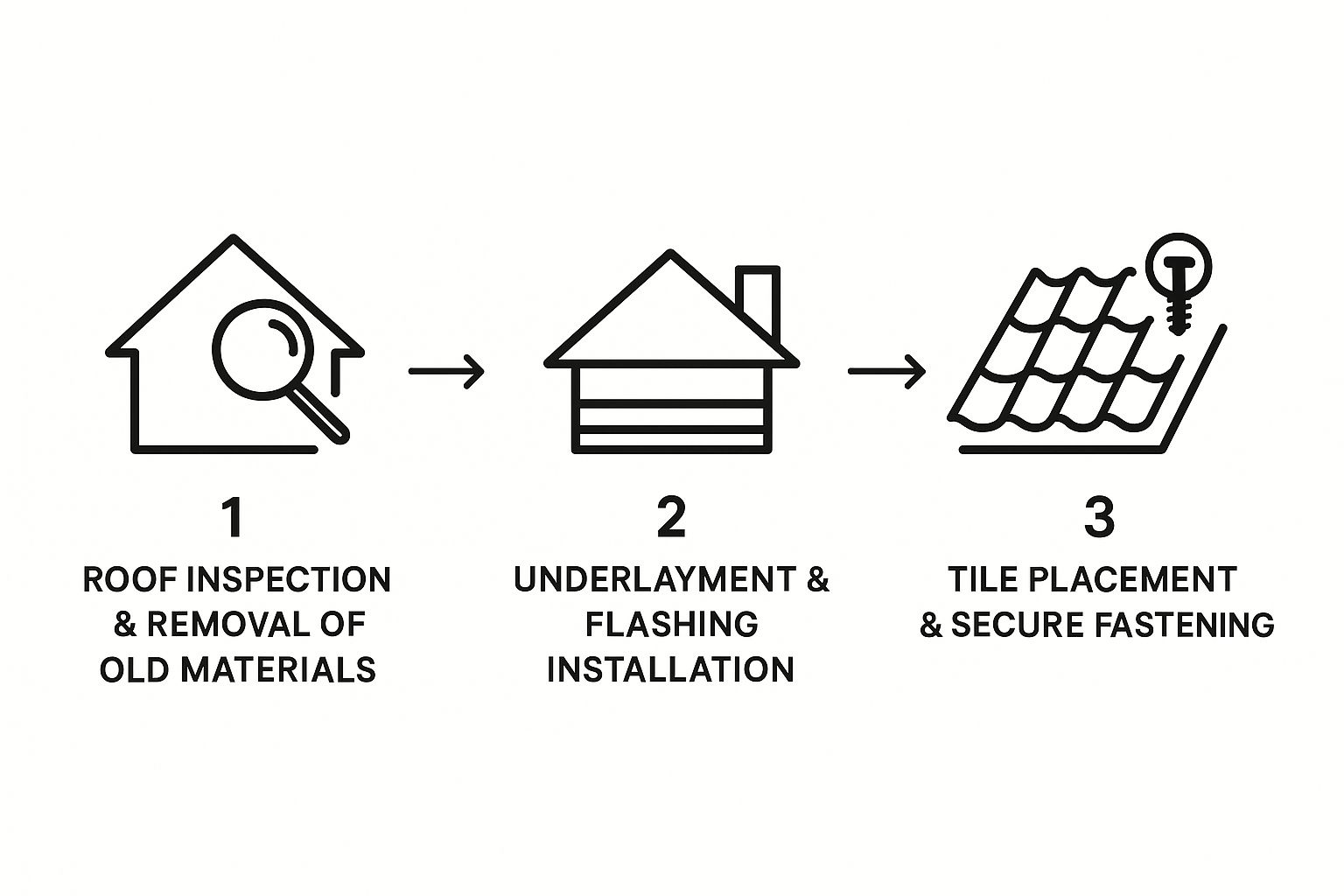
As you can see, it's a sequential process. The success of each step depends entirely on the one that came before it.
The Critical Tear-Off and Deck Inspection
The very first thing a professional crew does is strip off all the old roofing materials. This isn’t just about cleaning up; it’s a crucial diagnostic step. Every layer—old shingles, underlayment, flashing—gets removed to expose the bare wooden roof deck.
This is the moment of truth. An inspector or the foreman will walk every inch of that exposed deck, probing for signs of water damage, rot, or any structural weakness. In Weston's humid climate, it's pretty common to find soft or compromised plywood, especially around vents or along the eaves.
Any damaged sections must be cut out and replaced with new, code-compliant sheathing. Slapping new materials over a weak deck is a recipe for disaster. It creates a poor foundation for the heavy tiles and can lead to serious structural problems down the road.
Installing the Secondary Water Barrier
Once the deck is solid, the crew moves on to your home’s most important defense against water: the underlayment. Here in South Florida, we're not talking about simple felt paper. The standard for a tile roof installation in Weston FL is a high-performance, self-adhered "peel-and-stick" membrane.
This material comes in large rolls with a powerful adhesive backing. The crew meticulously lays it down, overlapping each course to create a single, waterproof shield over the entire roof. This isn’t just an underlayment; it's a secondary water barrier. If a tile ever cracks or gets shifted during a hurricane, this is the layer that keeps your home bone dry.
The quality of the underlayment and its installation are non-negotiable. This is your home's last line of defense against leaks, and a professional roofer treats its application with the utmost precision, ensuring every seam is perfectly sealed.
Around the same time, new flashing goes in. This involves custom-fitting metal pieces in the roof's valleys, around chimneys, and along dormer walls to channel water away from these vulnerable spots.
Advanced Tile Attachment Methods for Hurricane Winds
With the foundation perfectly prepped, the crew begins the precise work of laying the tiles. They start at the bottom edge, using battens or chalk lines to make sure every row is perfectly straight and evenly spaced.
How those tiles are attached is dictated by Florida's strict High-Velocity Hurricane Zone codes. While nails or screws are sometimes used, many top-tier installations now rely on modern adhesive systems. Specifically, the process here in Weston demands exceptional preparation for our weather. After the deck is reinforced, crews often use a two-part foam adhesive engineered to withstand hurricane-force winds. This advanced method creates an incredibly strong bond, providing resilience against winds up to 150 mph. You can learn more about Florida's specific tile attachment methods on floridaroofingandgutters.com.
The foam is applied in a specific pattern to each tile, which is then pressed firmly into place. As the foam expands and cures, it locks the tile to the underlayment and the one below it, creating a single, unified system that stands up to severe storms.
Finishing Touches and Final Sealing
The main field of the roof is just one part of the job. The final steps involve detailed work on the most exposed areas, which require specialized pieces and careful sealing to ensure a complete, weatherproof finish.
- Ridge Caps: These are the curved tiles that cover the peak (or ridge) of the roof. They are set in a bed of mortar and secured to create a clean, sealed finish line.
- Hip Tiles: Similar to ridge caps, these are used on the angled "hips" of a roof, ensuring these joints are completely protected from the elements.
- Mortar and Sealants: Any gaps, especially around the ridge and hip tiles, are filled with color-matched mortar. The crew also ensures all vent pipes and penetrations are sealed with high-grade roofing cement.
Finally, the team does a full cleanup of your property, getting rid of all debris and running powerful magnets across the lawn to snag any stray nails. The result isn't just a new roof, but a complete, professionally installed system designed for decades of performance in Weston.
Protecting Your Investment with Smart Maintenance
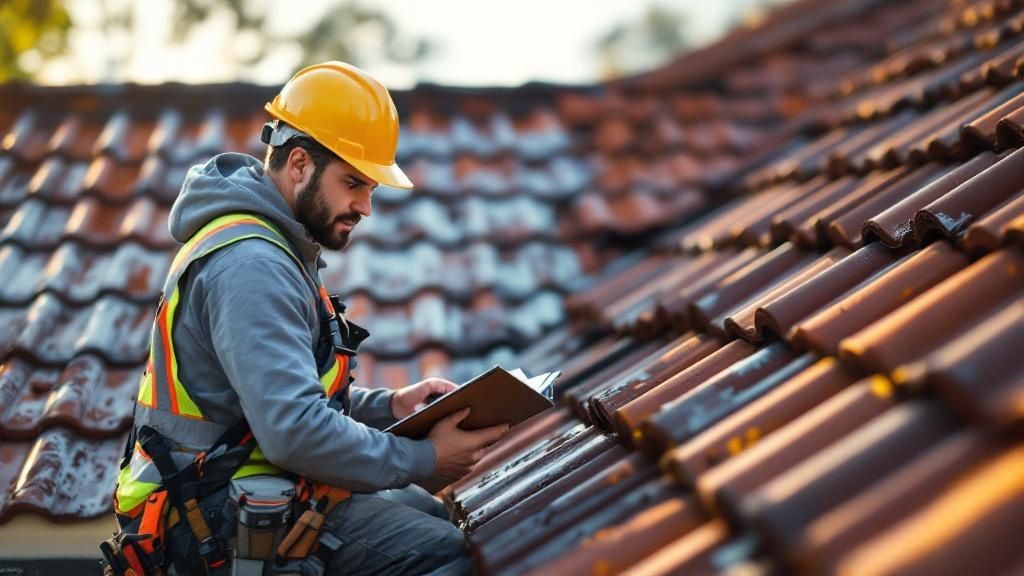
A new tile roof is a serious investment, built to perform for decades. But getting that 50-year lifespan doesn’t happen by accident. It’s all about proactive care. A smart, consistent maintenance plan is the best way to protect your investment and make sure it continues to stand up to Weston’s demanding climate.
Think of it this way: you wouldn't buy a premium car and skip the oil changes. The same logic applies to your roof. Simple, regular checks can catch small issues before they spiral into complex, expensive repairs. This long-term playbook is what keeps your roof looking great and functioning perfectly for years on end.
Creating a Simple Inspection Schedule
You don’t have to be a roofer to keep an eye on things. A straightforward, biannual inspection schedule is your best first line of defense. I always tell homeowners the best times for these checks are in the late spring, right before hurricane season really gets going, and again in late fall after the storm season has passed.
A quick visual inspection from the ground using a good pair of binoculars is usually all it takes. It’s also critical to do a quick once-over after any major weather event—like a named storm or a severe thunderstorm with high winds. These post-storm checks are your chance to spot immediate damage.
Early Warning Signs to Look For
Knowing what to look for is half the battle. When you do your inspections, keep an eye out for these common red flags. Spotting any of them means it’s time to call a professional.
- Cracked, Chipped, or Slipped Tiles: Even a single broken tile can expose the underlayment to direct sun and rain, which speeds up its decay. Look for any tiles that are out of alignment or have obvious damage.
- Debris in Valleys: Your roof’s valleys are designed to channel huge amounts of water away. When they get clogged with leaves and branches, they can act like a dam, forcing water to back up and seep under the tiles.
- Algae or Mold Growth: See any dark streaks or green patches, especially on shaded parts of the roof? That can signal moisture retention. While often just a cosmetic issue, heavy growth can trap moisture and needs to be dealt with.
- Mortar Damage: Check the mortar along the ridge caps and hips of the roof. If it looks cracked or is crumbling away, it can create a direct entry point for water.
Catching a single cracked tile or a small section of failing mortar early is the difference between a minor, inexpensive repair and a major leak that causes interior damage. Proactive maintenance is always more affordable than reactive repairs.
Safe Cleaning and When to Call a Pro
If you notice algae building up, you might be tempted to pull out a pressure washer, but that’s a huge mistake. High-pressure washing can easily strip the protective glaze from your tiles and force water underneath them, causing far more harm than good. The only safe method is a low-pressure chemical wash that uses solutions specifically designed for tile roofs.
However, walking on a tile roof is extremely dangerous. It's also easy to break more tiles if you don't know exactly where to step. For these reasons, professional cleaning and any repairs are jobs best left to the experts. If you see any of the warning signs I mentioned during your inspection, your next step should be to contact a licensed and insured roofing contractor. They have the right safety gear and the expertise to assess the problem and perform a repair that maintains the integrity of your tile roof installation in Weston FL.
Common Questions About Tile Roofing in Weston
Even after getting the numbers and understanding the process, it’s natural to have a few more questions. A tile roof installation in Weston FL is a major investment, and clarity is key. We’ve pulled together the most common questions we get from Weston homeowners to give you the straightforward answers you need.
How Long Does a Tile Roof Installation Typically Take?
This is one of the first things everyone wants to know. For a typical single-family home here in Weston, the whole process—from tearing off the old roof to getting that final sign-off from the city—usually takes somewhere between one and three weeks.
Of course, that timeline can shift. A simple gable roof is a much faster job than a complex roof with multiple dormers, steep pitches, and intricate valleys. The biggest wild card, as every Floridian knows, is the weather. A single afternoon thunderstorm can shut down work for the day. Finally, we have to work around the city's schedule for mandatory inspections, which can add a day or two as we wait for an inspector to give the green light at key stages.
Are Concrete or Clay Tiles Better for the Florida Climate?
That's the classic debate, isn't it? The good news is that you can't go wrong with either one. They are both fantastic choices for our climate. It’s less about one being "better" and more about which one fits your priorities.
- Clay Tiles: This is the timeless, classic look many people associate with Florida architecture. They are incredibly durable and really hold their color against our intense sun, resisting the fading you see with other materials.
- Concrete Tiles: Known for being exceptionally strong and often a bit more budget-friendly. The big advantage with concrete is the sheer variety of styles and colors—they can be made to look like natural slate or even rustic wood shakes, giving you a ton of design flexibility.
Ultimately, it often boils down to your personal taste and the budget you're working with. When installed correctly, both will give you decades of top-tier protection.
"A new tile roof is one of the most impactful upgrades a homeowner can make, both for hurricane protection and for insurance purposes. In nearly all cases, a new roof installed to current Florida Building Code will result in a significant reduction in your homeowner's insurance premium."
Will a New Tile Roof Lower My Homeowner's Insurance?
In almost every single case, the answer is a big yes. Frankly, this is one of the best financial perks of getting a new tile roof in Weston. When you have a brand-new roof system built to the latest High-Velocity Hurricane Zone (HVHZ) codes, your insurance carrier sees your home as a much lower risk.
Once the project is finished and passes that final inspection, your roofer will give you all the paperwork you need. You'll just send that documentation over to your insurance agent. They’ll update your policy to reflect your home's improved wind mitigation features, and you should see a very nice discount on your annual premium. It’s a great long-term return on your investment.
For a tile roof that meets the highest standards of durability and craftsmanship, trust the experts. Paletz Roofing and Inspections has over 30 years of experience providing Weston homeowners with reliable, code-compliant roofing solutions. To schedule your free inspection and receive a detailed quote, visit us at https://paletzroofing.com.