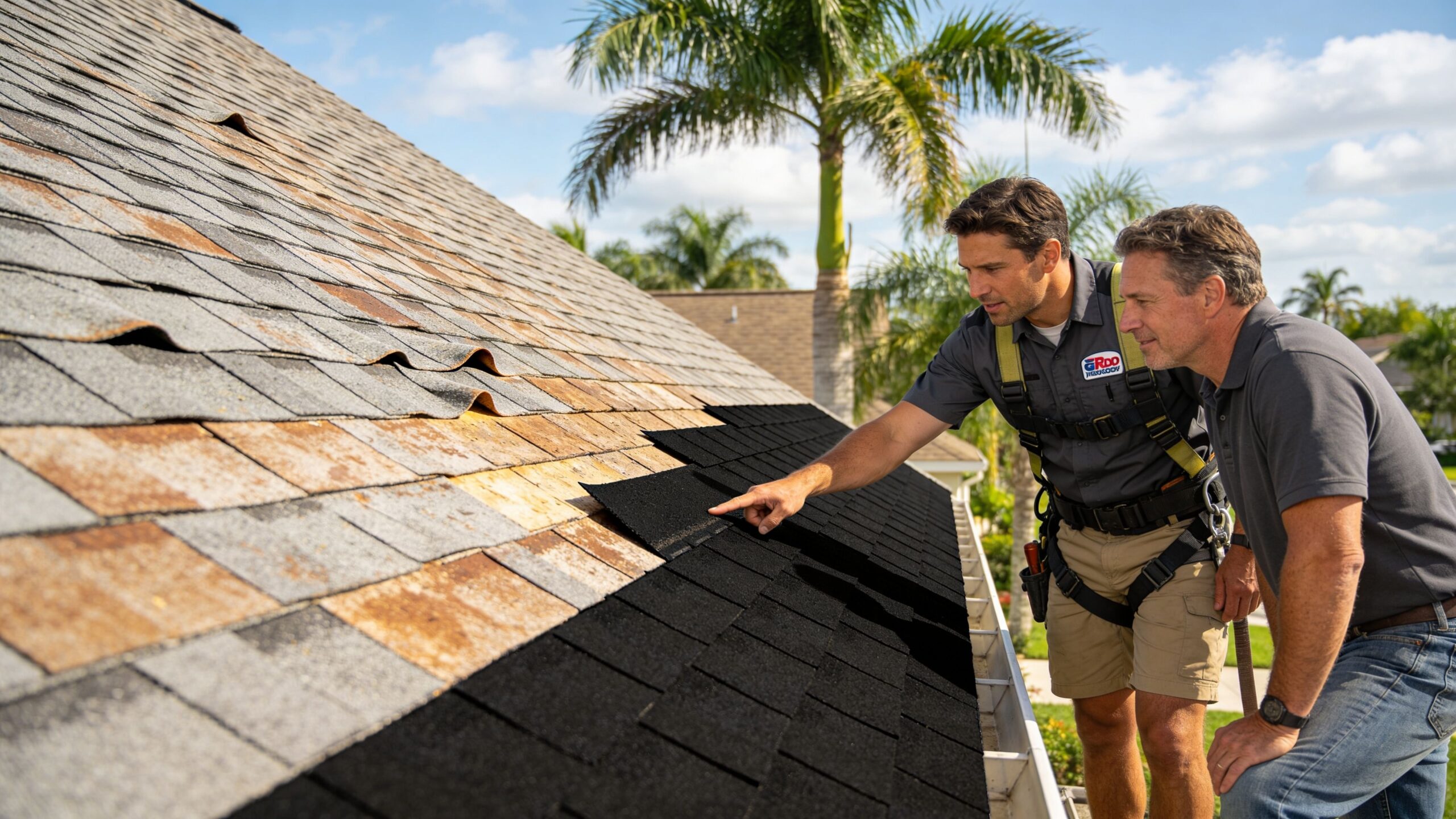
A roof in South Florida can reach the replacement zone a lot sooner than homeowners expect. Asphalt shingle roofs here typically last only 15 to 20 years, compared with a national average of 20 to 25 years because intense UV, humidity, rain, and hurricane-force winds wear them down faster, according to Florida roof lifespan guidance. That gap is the difference between planning a reroof on your schedule and dealing with leaks during storm season.
The key question isn’t just how old the roof is. It’s whether the roof still has enough life left to handle South Florida’s next hard summer, next wind event, and next insurance renewal. On commercial low-slope systems, the stakes get even higher. If more than 25% of the roof area has wet or saturated insulation, industry protocols call for full replacement, especially in high-humidity regions with 60 inches of annual rainfall like South Florida, as outlined in low-slope replacement standards.
Your Roof's Real Expiration Date in South Florida
South Florida roofs age faster. After three decades in this trade, I can tell you the published lifespan on the wrapper and the usable life on a house in Miami-Dade, Broward, or Palm Beach are often two different things.
The reason is local exposure. Year-round UV cooks the surface. Humidity keeps materials damp longer after rain. Salt air speeds corrosion near the coast. Then storm season tests every seam, fastener, flashing edge, and weak spot that built up over time.
A roof here works like a boat left in the water full-time. Constant exposure changes the maintenance schedule and shortens the service life. Homeowners who plan by national averages alone usually wait too long.
Why local timelines matter more than brochure numbers
Manufacturer timelines are a starting point, not a replacement calendar. In South Florida, the better question is how much storm-worthiness the roof still has left.
That matters because roofs rarely fail all at once. They lose margin first. Sealants dry out. Flashings loosen. Granules wear off. Underlayment ages. A roof can still look passable from the driveway and already be one hard summer away from leaks, uplift, or a problem during an insurance inspection.
I see this mistake all the time. A homeowner hears a roof "should last" another few years, puts off replacement, then a tropical system finds the one vulnerable section and turns a planned project into emergency work.
Practical rule: In South Florida, replace a roof based on local wear, storm exposure, and insurability, not the best-case lifespan printed in a brochure.
Residential roofs and commercial roofs fail differently
Residential roofs usually show their age on the surface first. You may see curling shingles, cracked tiles, loose ridge pieces, worn valleys, exposed fasteners, or repeated repairs in the same area.
Commercial low-slope systems are trickier. The field of the roof can look serviceable while moisture has already spread below the membrane. Once enough insulation is wet, patching stops making financial sense because the roof assembly is already compromised below the surface.
That is why replacement timing in South Florida is a risk decision as much as a maintenance decision. If the roof is older, weathered, repair-heavy, or getting harder to insure, waiting for a major leak is usually the most expensive way to handle it.
Roof Lifespan by Material The Official Timelines
Roofing material sets the range, but South Florida weather decides where your roof lands inside it. In this market, the brochure lifespan is the best-case number. The actual lifespan depends on sun load, salt exposure, attic heat, storm history, and how well the system was installed in the first place.
A roof here ages more like a truck driving coastal miles every day than a car parked in a garage. Same product. Harder service.

Roofing material lifespan comparison
| Roofing Material | National Average Lifespan | South Florida Lifespan |
|---|---|---|
| Asphalt shingles | 20 to 25 years | 15 to 20 years |
| 3-tab shingles | 20 years | Often 10 to 15 years, sometimes less on high-sun exposures |
| Architectural shingles | Up to 30 to 40 years for premium variants | Commonly around 20 years with good maintenance |
| Metal roofing | 50 to 100 years | Often 25 to 50 years, depending on coating, fastening, and location |
| Tile roofing | Long-lived nationally | Often 25+ years, but the underlayment may age out first |
| Flat roofing systems | Varies by system | Commonly 10 to 20 years under favorable conditions |
Those South Florida ranges are planning numbers, not promises. I have seen a well-installed roof outlast expectations, and I have seen a poorly detailed roof start giving trouble far too early. Coastal homes usually age faster than inland homes. South-facing and west-facing slopes usually show wear first.
What each material really looks like in this climate
Asphalt shingles are the shortest-lived option in many South Florida neighborhoods. Heat bakes them, UV dries them out, and wind works the edges loose over time. They can still make sense on a tighter budget, but homeowners should go in with realistic expectations about service life and future insurance questions.
Architectural shingles usually hold up better than basic 3-tab products because they are heavier and generally more wind-resistant. That said, local sun and humidity still take a toll. A label that sounds long-term on paper does not change what August and hurricane season do to a roof year after year.
Metal roofing is a strong choice here if the system is designed for Florida conditions. It sheds water well, handles sun better than shingles, and can perform for decades. The trade-off is in the details. Exposed fasteners, poor edge metal, bad flashing transitions, and corrosion near the coast can cut years off the roof.
Tile roofs often last a long time in South Florida, but the tiles are only one part of the assembly. The waterproofing layer underneath usually determines replacement timing. That is why a tile roof can look solid from the street and still be close to the end where it counts.
Flat and low-slope roofs live a harder life than many owners realize. Ponding water, foot traffic, flashing fatigue, and trapped moisture shorten their service life. On commercial buildings especially, the membrane may look acceptable while the insulation below is already compromised. A professional roof inspection from an experienced South Florida roofer is often the only way to know whether repairs still make financial sense.

Use age as a planning tool, not a verdict
Age helps sort the conversation into three buckets:
- Still early in the roof's life: stay on top of inspections, sealant maintenance, and minor repairs.
- Closing in on local expected life: start pricing replacement, review insurance requirements, and avoid putting major money into scattered patch jobs.
- Past what South Florida usually gives that material: treat replacement as an active decision, even if the roof is not leaking inside yet.
That is the practical difference in this market. In a milder climate, an older roof may have a little more margin. In South Florida, an older roof often has less margin than it appears to have.
Visual and Performance Warning Signs Your Roof Is Failing
In South Florida, roofs rarely fail all at once. They usually fail in stages, and the early signs are often visible from the ground, in the attic, or around the perimeter of the house. The trouble is that homeowners often treat those signs as isolated annoyances instead of evidence that the system is wearing out.
A roof works like a chain. You can get by with one weak link for a while. Once several links start giving way at the same time, repair money stops going very far.

What to look for from the ground and in the attic
Start with what you can safely see without climbing up there. In this climate, the warning signs often show up at the edges, around penetrations, and anywhere water tends to linger after a hard rain.
- Curling shingle edges: Shingles that lift, cup, or roll are drying out and losing flexibility. That matters in South Florida because brittle shingles are easier for wind to catch.
- Missing shingles or exposed areas: One missing piece is never just cosmetic. It gives rain and wind a place to start working underneath the system.
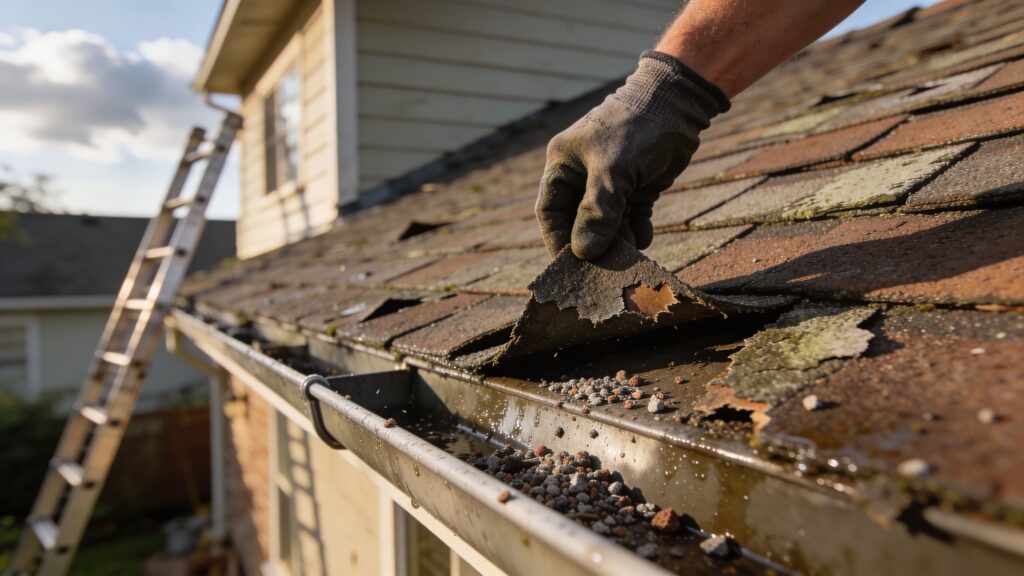
- Granules collecting in gutters or downspouts: Granules protect asphalt from sun exposure. Once they start washing off in quantity, the shingle ages fast.
- Cracked tiles or broken corners: Tile can still look decent from the street while individual pieces are failing and letting water get to the underlayment.
- Sagging roof lines: A dip in the roof plane points to trapped moisture, deck damage, or framing trouble. That is a replacement conversation, not a small repair call.
- Stains, damp insulation, or daylight in the attic: If water is showing up inside the envelope, the roof has already moved past surface wear.
For homeowners who want to see the kind of condition checks a contractor should be making, this roof inspection visual reference shows the sort of evaluation that matters.
What each symptom usually means
One symptom can sometimes be repaired. Several showing up together usually mean the roof is losing reliability, not just appearance.
| Warning sign | What it looks like | What it usually means |
|---|---|---|
| Curling or cupping | Shingle edges lift or distort | Aging asphalt and reduced wind resistance |
| Bald spots | Areas with little surface texture | Heavy granule loss and direct UV exposure |
| Cracked or broken sections | Split shingles or fractured tiles | Impact damage, age, movement, or heat stress |
| Dark streaks or organic growth | Black lines, staining, or buildup | Moisture retention, surface wear, or drainage issues |
| Sagging | Dip in the roof plane | Possible deck rot or structural deterioration |
I tell South Florida homeowners to pay attention to clusters. Curling shingles plus granule loss plus interior staining is a very different situation than one isolated cracked tile. A few repairs can still make sense on a younger roof. On an older roof with multiple symptoms, patching becomes a temporary bandage.
A practical homeowner checklist
Walk the property after a summer storm, not just after a major hurricane. Smaller events often expose the same weak points.
- Check the gutters and ground below downspouts: Heavy granule loss, tile fragments, or roofing debris means the surface is breaking down.
- Look at eaves, ridges, and valleys first: Those areas usually show stress sooner because they handle runoff, wind pressure, and movement.
- Compare one slope to another: The side that gets hit hardest by sun, salt air, or prevailing weather often ages faster.
- Look indoors after heavy rain: Ceiling spots, bubbling paint, musty smells, and attic humidity are often the first signs homeowners notice.
- Get an expert roof survey if the signs are mixed: That is especially useful when the roof is old enough that repair and replacement are both still on the table.
The biggest mistake is waiting for an active leak in the living room. By then, the roof deck, insulation, or underlayment may already be compromised. In South Florida, a roof can look acceptable from the curb and still be one storm away from turning a manageable project into an insurance claim.
Hurricane Prep and Florida Climate The Real Stress Test
South Florida doesn’t give roofs a gentle aging process. It stress-tests them year-round. The combination of heat, humidity, salt air, and storm pressure changes the answer to when should you replace your roof because the climate strips away your safety margin faster than most homeowners realize.
South Florida’s extreme climate can reduce the lifespan of shingles and tiles to 10 to 15 years, and NOAA data cited in the verified guidance notes that local roofs face double the UV degradation compared with inland areas, according to South Florida climate wear guidance. That’s why a roof that still looks passable from the street may already be nearing failure.
Sun and salt do damage you can’t always see
UV exposure breaks materials down gradually. The roof doesn’t wake up one day and fail. It dries, hardens, fades, and loses resilience. Salt air adds another layer of stress by attacking metal components and vulnerable details near the coast.
That matters at flashings, fasteners, valleys, penetrations, and edge metal. These are the connection points that hold the system together when weather gets rough. If those areas weaken, wind finds a way in.
Wind doesn’t need a huge opening
A lot of owners think hurricane damage starts with a dramatic tear-off. Many times it starts smaller. Wind catches a lifted edge, a brittle shingle, or a loose flashing detail. Once pressure gets under the roofing material, uplift spreads.
That’s why proactive pre-storm evaluation matters. If you want to understand how a structured assessment is approached before visible failure becomes obvious, a detailed expert roof survey is a useful reference for what professionals look for in condition, drainage, and hidden risk.
A roof in South Florida isn’t judged by how it looks on a calm day. It’s judged by what happens when wind starts pulling at every seam.
Humidity turns small leaks into big repairs
Humidity changes the pace of damage. In drier regions, a small intrusion may stay localized longer. Here, trapped moisture lingers. Decking softens, insulation loses performance, and mold or staining can spread beyond the original entry point.
A roof leak is rarely just a roof leak in this climate. It can become an attic problem, drywall problem, insulation problem, and insurance problem.
Here’s what a proactive mindset looks like in practice:
- Before storm season: Inspect known weak points such as penetrations, valleys, ridge lines, and edge details.
- After even a minor wind event: Recheck for lifted shingles, displaced tiles, or flashing movement.
- Don’t trust appearance alone: A roof can stay visually intact while hidden moisture or fastening failure is developing.
- Choose materials for this market: Products and assemblies need to match high humidity and wind exposure, not just look good on paper.
Homeowners who wait for interior damage are usually making the most expensive version of the decision. In South Florida, the climate doesn’t reward delay.
Budgeting for a New Roof Costs Financing and Insurance
Most homeowners don’t replace a roof because they feel like it. They replace it because the math eventually gets clearer than the hope. The key is making that decision before patchwork starts draining money.
For sloped residential roofs, replacement is recommended when repair costs surpass 30% of a new roof’s value, according to Florida-focused replacement guidance from Kin. That’s a strong practical rule because repeated repairs often chase symptoms instead of solving the underlying condition.
The repair versus replace decision
A single repair still makes sense in the right situation. If damage is isolated, the roof is relatively young, and the surrounding materials are in good shape, repair can be the smart move.
Replacement becomes the smarter move when you’re seeing any combination of these:
- Multiple repair areas: Problems showing up in different sections usually mean the system is aging broadly.
- Age plus damage: An older roof with active symptoms rarely gets cheaper to own.
- Ventilation issues: Poor attic ventilation can shorten roof life by 5 to 7 years in Florida’s subtropical climate, based on the Kin guidance above.
- Insurance pressure: Older roofs can complicate renewals, claims, and premium conversations.
Why budgeting early saves headaches
Homeowners get into trouble when they only budget for a repair and then discover bad decking, failing underlayment, or broader storm wear. That’s why planning ahead matters even before you sign a contract.
A practical budget should account for:
| Budget item | Why it matters |
|---|---|
| Material choice | Shingle, tile, metal, or flat systems change the total scope |
| Tear-off and disposal | Removing old roofing is part of doing the job right |
| Deck repairs if needed | Some damage isn’t visible until the old roof comes off |
| Permit and compliance requirements | South Florida work has to meet local code and wind requirements |
| Contingency reserve | It gives you room if hidden conditions appear |
Financing and insurance realities
Many homeowners spread the cost rather than paying the full amount at once. If you’re comparing payment strategies before moving forward, this guide to understanding financing options is a useful starting point for how financing structures are typically evaluated.
Insurance also affects timing. In Florida, roof age and condition can influence how an insurer views your home. A roof that’s near the end of its service life may trigger tougher questions at renewal time, while a newer roof can improve how the property is assessed.
The practical side of insurance is simple:
- Document condition early: Take photos after storms and keep inspection records.
- Don’t wait for visible ceiling stains: By then, the claim conversation is often more complicated.
- Read your policy carefully: Know whether the issue is wear-and-tear, storm-related, or excluded.
- Coordinate timing smartly: If replacement is coming, align planning with your insurance renewal cycle when possible.
The cheapest roof decision is rarely the lowest invoice. It’s the choice that stops repeated repairs, interior damage, and insurance headaches from stacking up.
If you’re asking when should you replace your roof from a financial standpoint, the answer is usually this. Replace it before you’ve paid for the same problem several times.
The Roof Replacement Process From Tear-Off to Final Inspection
A lot of homeowners delay replacement because they expect chaos. A professional reroof should feel organized, not improvised. The process is noisy and technical, but it shouldn’t feel confusing.

What happens before installation starts
The job begins with inspection, measurements, and material selection. That’s where the contractor confirms roof type, slope transitions, flashing details, ventilation needs, and likely trouble spots.
Then comes scheduling, permits, delivery coordination, and site preparation. Driveways, landscaping, pool areas, and exterior fixtures need protection before tear-off starts. This roof replacement project visual reflects the kind of structured field workflow homeowners should expect to see.
Tear-off shows the truth
The old roof has to come off so the crew can inspect what’s underneath. During this inspection, hidden problems often become apparent. A roof may have looked acceptable from above but still have soft decking, damaged sheathing, or failed flashing at penetrations.
Tear-off is also where a good contractor separates cosmetic aging from structural concern. If the deck is solid, the project moves efficiently. If damaged sections appear, they get replaced before the new system goes on.
Installation is a sequence, not just shingles or tile
A roof system is layered. The visible surface is only one part of what keeps water out.
A typical installation sequence includes:
- Deck inspection and repair if any weak or rotted sections are found.
- Underlayment installation to create the water-shedding barrier.
- Flashing and detail work around valleys, walls, penetrations, and transitions.
- Primary roofing material installation such as shingles, tile, metal panels, or membrane.
- Ventilation and accessory work where required for system performance.
- Cleanup and magnetic sweep so nails and debris don’t stay behind.
The roof you can see matters. The waterproofing and flashing you can’t see matter just as much.
Final walkthrough and inspection
The closeout phase matters more than many homeowners realize. A proper final inspection checks installation quality, drainage paths, flashing terminations, ridge or hip details, and site cleanup.
Homeowners should also receive the practical handoff items. Product information, warranty documentation, permit closeout details, and clear maintenance advice. A good contractor leaves you with a finished roof and a clear understanding of what was done.
A reroof is a major project, but it shouldn’t feel mysterious. When the process is handled correctly, each phase has a purpose, and each detail supports the next one.
Choosing a Trusted Partner for Your Protection
The wrong contractor can turn a roofing problem into a much bigger one. In South Florida, experience isn’t a marketing extra. It’s part of the protection. The person replacing your roof needs to understand local wind exposure, moisture behavior, insurance realities, and how different systems perform in Broward, Miami-Dade, and Palm Beach.
The answer to when should you replace your roof is only half the decision. The other half is who you trust to make that call correctly and execute the work the right way.
What to look for in a roofer
A dependable roofing partner should check several boxes before you ever talk price.
- Licensed and insured: This is basic protection for you and your property.
- Deep local experience: South Florida roofing is its own environment. Local knowledge changes recommendations.
- Clear scope of work: You should know what’s being replaced, what gets inspected, and how hidden damage is handled.
- Strong material standards: Better products and proper detailing matter more than sales promises.
- Real communication: You want straight answers about age, condition, repair limits, and replacement timing.
The red flags homeowners miss
Not every bad roofing decision starts with an obviously bad contractor. Some start with a low bid that leaves out essential work. Others start with vague language about repairs that won’t hold.
Watch for warning signs such as:
| Red flag | Why it matters |
|---|---|
| No clear discussion of flashing and underlayment | Those details often determine long-term performance |
| Heavy focus on price only | Cheap roofs often become expensive roofs |
| Pressure to sign immediately | Good contractors explain. They don’t rush you past the details |
| No documentation of condition | A roof recommendation should be tied to observed facts |
Why local credibility matters
South Florida roofs live hard lives. The contractor has to know what full sun does to shingles, what salt air does to metal details, what ponding does to flat roofs, and how insurers look at roof age and condition. Generic advice from outside the market won’t carry the same weight.
A trustworthy contractor should also make the process understandable. This roof inspection and homeowner handoff visual reflects the kind of professional closeout and communication homeowners should expect after an inspection or replacement project.
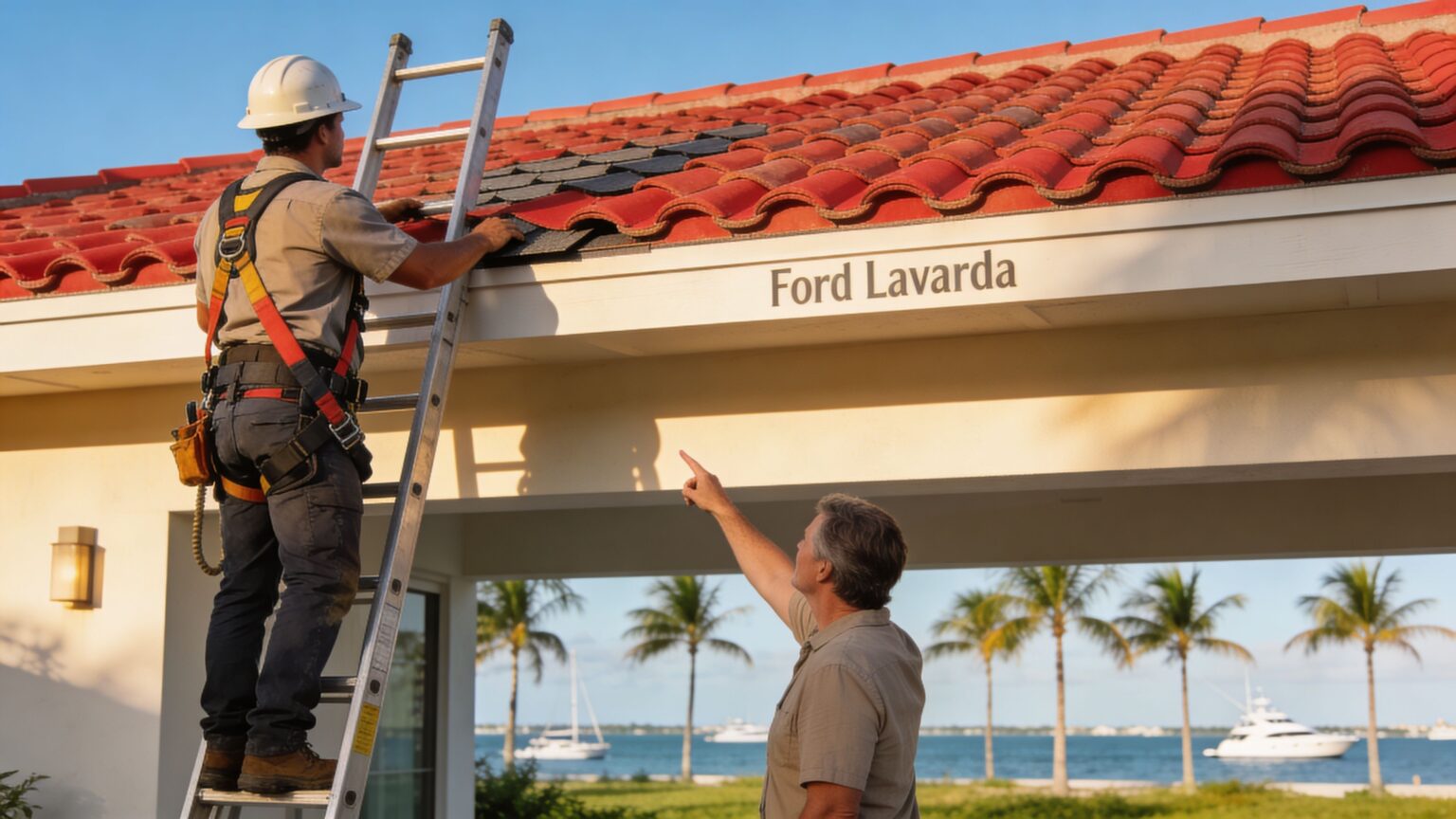

If your roof is aging, showing visible wear, or making you uneasy every time a storm track shifts toward South Florida, get it evaluated before the next emergency forces the decision. Roof replacement is always easier to manage when it happens on your timeline.
If you want a straight answer about your roof’s condition, Paletz Roofing and Inspections serves homeowners and property owners across Broward, Miami-Dade, and Palm Beach counties with inspections, repairs, and full replacements for shingle, tile, metal, and flat roofing systems. They’ve been licensed and insured since 1990, and they understand how South Florida weather changes replacement timing. Contact them for a free, no-obligation inspection and get a clear recommendation before small roof issues turn into major interior damage.