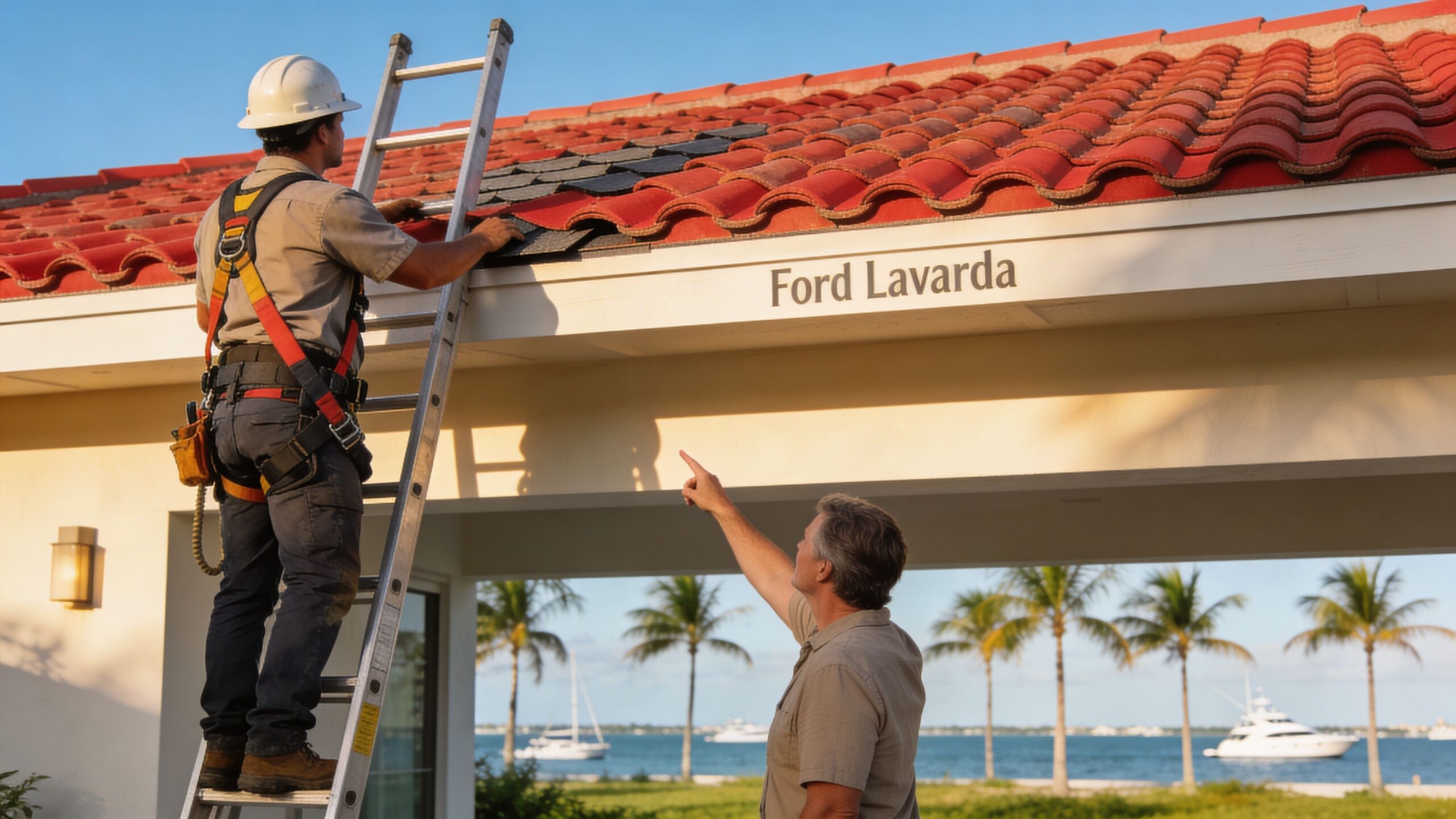
A lot of Fort Lauderdale roof problems start the same way. You notice a brown ceiling stain after a hard rain. You hear a drip in the middle of the night. You walk into the attic and catch that damp, musty smell that tells you water has been there longer than you thought.
When that happens, most homeowners jump to the same question. Is this a simple repair, or am I looking at something much bigger? In South Florida, that answer depends on more than the visible leak. Heat, humidity, wind, and contractor quality all shape what happens next.
This guide is written the way a roofer would explain it on site. Calmly. Directly. No vague advice, no scare tactics. If you need roof repair fort lauderdale homeowners can trust, the most important thing is to act in the right order, document everything, and avoid shortcuts that fail in this climate.
First Signs of Trouble What to Do When Your Roof Leaks
You wake up at 2 a.m. to a steady drip, then notice the ceiling stain has spread past the light fixture. In Fort Lauderdale, that usually means the leak started before tonight’s storm. Our humidity keeps roof decking, insulation, and drywall wet longer, so a small entry point can turn into rot, mold, and a larger repair bill faster than homeowners expect.

Your first job is to make the house safe and limit interior damage. Water near a recessed light, ceiling fan, outlet, or power strip changes the situation immediately. If you can shut off power to the affected area safely, do it. If not, stay clear of the wet area and call for help.
Do not rush onto the roof. After a South Florida rain, tile, shingle, and low-slope surfaces stay slick. Wet underlayment and algae film make footing worse than it looks from the ladder.
Check the house in the right order
Start inside. The visible drip is not always the entry point. Water often runs along trusses, decking, or framing before it shows up in a hallway or bedroom.
Look for these signs:
- Brown or yellow ceiling rings: Usually a sign the leak has happened more than once.
- Bubbling paint or swollen drywall: Moisture is trapped and pressure is building behind the surface.
- Musty attic air: In Fort Lauderdale, that often means moisture has been sitting long enough for microbial growth to start.
- Wet insulation: It holds water, loses performance, and keeps the surrounding area damp.
- Wall staining away from the ceiling spot: Water may be traveling sideways before dropping.
Then walk the exterior from the ground. Use binoculars if you have them. Look for displaced tiles, missing shingles, loose flashing, clogged valleys, fallen branches, or debris piled where water should be draining. On flat and low-slope sections, pay attention to areas where water may have ponded after the storm.
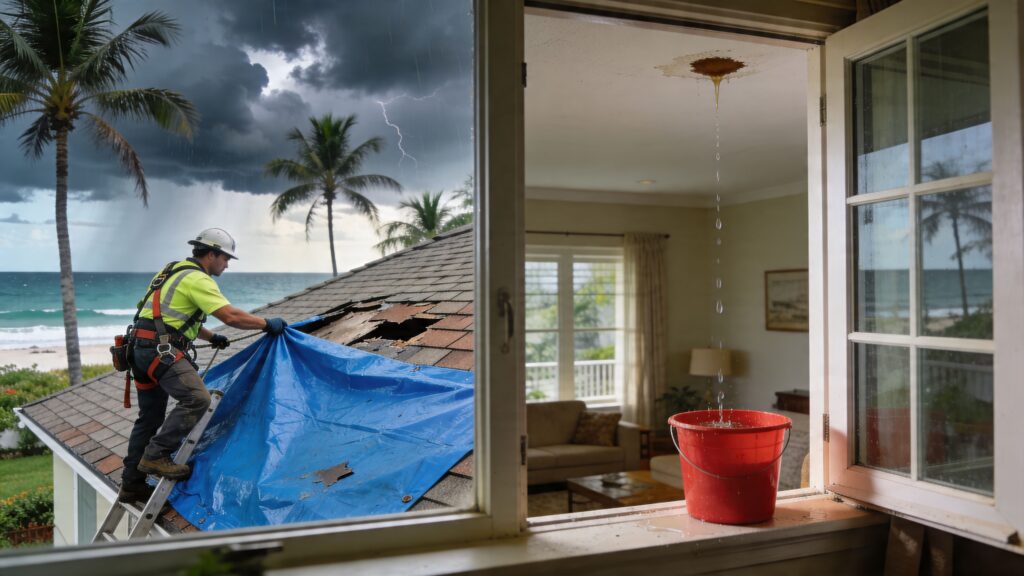
If you want a quick point of comparison, this roof leak damage example image shows the kind of interior staining and active leak conditions that often signal more than a one-day problem.
What to do in the first hour
Keep it simple. The goal is damage control, not a full diagnosis.
- Catch and contain the water. Use buckets, storage bins, towels, and plastic sheeting.
- Move belongings out of the path. Furniture, electronics, rugs, and boxes soak up damage fast.
- Drain a bulging ceiling carefully if needed. If water is pooling in drywall and collapse looks possible, a controlled release into a bucket can limit a wider mess. Only do this if the area is clear of electrical hazards.
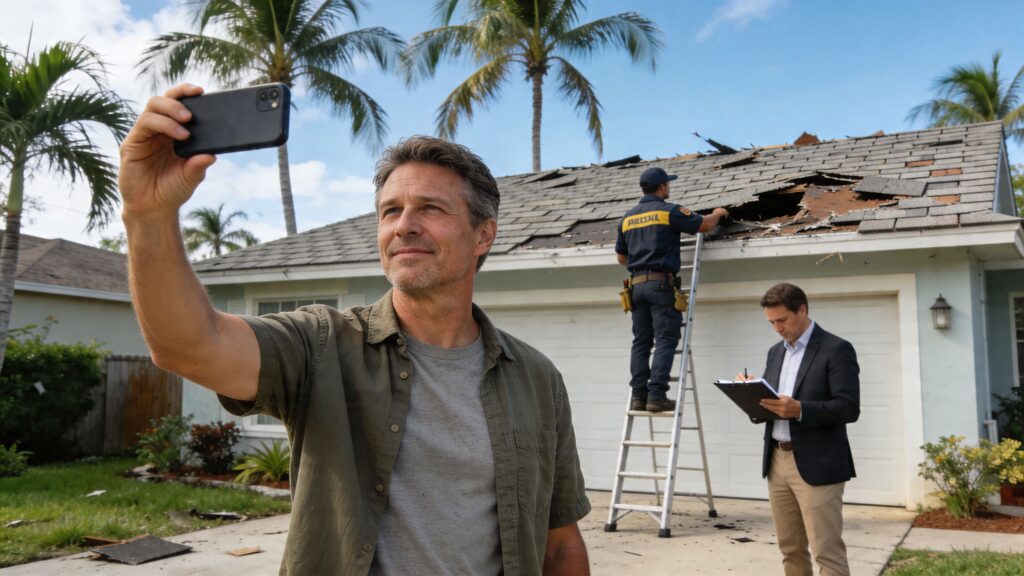
- Take photos before cleanup changes the scene. Get the ceiling, walls, floors, damaged items, and any visible exterior issue from the ground.
- Call a roofer if the leak is active, storm-related, or tied to visible structural movement.
That order matters. I have seen homeowners spend an hour searching for the exact roof entry point while water ruined flooring, cabinets, and drywall below.
Temporary fixes help, but bad temporary fixes create bigger repairs
A tarp can buy time. A badly installed tarp can trap water, tear loose in wind, or damage the roof covering more than the original leak. In Fort Lauderdale, I see this after tropical weather all the time. Someone nails plastic into the wrong area, water gets driven underneath, and now the repair includes deck damage and interior staining that might have been avoided.
Use caution with roof cement and store-bought patch products too. They have a place, but they are not a diagnosis. On tile roofs, the leak may come from flashing or underlayment while the tile above still looks intact. On shingle roofs, the failure may be at a wall tie-in, vent boot, or valley, not the shingle tab homeowners focus on first.
If storm damage is involved, keep your policy details close while you stabilize the house. Early photos, the time of loss, and a short written timeline can matter later if the carrier questions when the damage occurred. Keeping ACORD Insurance Claims resources handy can make that first call easier while the leak is still being contained.
One more local reality. Some leaks in Fort Lauderdale are made worse by poor workmanship from prior repairs. Loose flashing, mismatched materials, and shortcuts around penetrations often hold up until the next heavy rain exposes them. That is why the right response is not panic and not guesswork. Make the area safe, control the water, document what you see, and get the roof inspected before humidity turns a manageable repair into a much more expensive one.
Navigating Your Insurance Claim Like a Pro
Insurance claims are won or lost on documentation. Not on how serious the damage feels. Not on how obvious it looked to you standing in the living room. What matters is the record you build.

In South Florida, 40% of storm damage claims are initially undervalued due to documentation gaps, and 35% face delays over 60 days without expert damage assessments and photo logs. The same source notes that average claims run $15,000 to $25,000, and a 2026 Florida OIR report showed a 15% increase in approved claims when a third-party roofing inspection is included, according to this storm damage insurance claim guidance. That’s why sloppy photo-taking and vague descriptions cost homeowners real money.
Build a damage file that an adjuster can follow
Take photos like you’re explaining the loss to someone who has never seen your house.
Use this sequence:
- Start wide: Get full-room shots showing the ceiling, walls, floors, and any damaged contents.
- Move tighter: Capture stains, cracks, bubbling paint, wet insulation, and visible paths where water traveled.
- Document exterior evidence: Missing shingles, broken tiles, lifted flashing, fallen branches, and debris impact all matter.
- Add context: Photograph the date on your phone screen in a separate image, and keep a simple written timeline of when you noticed the problem and when rain or wind occurred.
- Save cleanup evidence: Wet drywall, damaged baseboards, soaked boxes, and ruined contents should be photographed before disposal if possible.
Don’t rely on memory. Adjusters work from records, not homeowner impressions.
If you can’t show the sequence of damage, the insurer may narrow the claim to the smallest visible issue instead of the full scope of repair.
Understand the wind-versus-water distinction
Many Fort Lauderdale homeowners assume “storm damage” is one category. It isn’t. Your policy language may treat wind-driven roof damage, interior water intrusion, and long-term moisture issues differently.
If wind lifted a roofing component and rain entered because of that opening, your file should clearly connect those two events. If the carrier sees only an interior stain with no documented exterior cause, the conversation often shifts in the wrong direction. That’s why roof-level photos and written observations from a qualified roofer matter so much.
A useful primer for homeowners who want to understand how contractors and insurers approach the process is this Roofing Contractor Insurance Claims Guide. It helps explain the paperwork side without turning the claim into a guessing game.
Red flags that usually mean the claim is headed off course
An undervalued claim rarely announces itself. It usually starts small.
Watch for these signs:
- The adjuster documents only the interior leak point and spends little time on the roof system.
- Your estimate lists patch work but doesn’t address flashing, underlayment, or matching materials.
- The carrier asks for more proof repeatedly because the original submission was thin.
- There’s no mention of code-related requirements even though South Florida roofing work has strict standards.
- Communication drags and no one gives you a clear next step.
If that happens, don’t argue with emotion. Respond with better documentation. Add photos, a written chronology, and a professional roof assessment.
The approach that gets cleaner results
The strongest claims are organized before the adjuster visit, not after. Put your policy, claim number, photos, repair invoices for emergency mitigation, and contractor observations into one folder. During the inspection, walk the adjuster through the sequence calmly. Show exterior damage first, then attic conditions, then interior effects.
For homeowners dealing with roof repair fort lauderdale insurance issues, the goal is simple. Make it easy for the carrier to see the full scope, the cause, and the urgency. When the file is complete, there’s less room for the claim to be minimized.
Finding a Licensed Fort Lauderdale Roofing Contractor
At this stage, the wrong contractor can cost you more than the leak.
In Fort Lauderdale, I tell homeowners to slow down here, even if water is coming in. Heat, salt air, and constant humidity turn small roofing mistakes into repeat repairs fast. A bad patch may look fine the week it goes in, then fail once the next hard rain pushes water under a loose flashing edge or poorly sealed penetration. That is why contractor screening matters so much in South Florida. You are not just hiring someone to stop a drip. You are hiring someone to repair a system that has to hold up through storm season.
What to verify before you talk about price
Start with paperwork. A roofer who is properly set up should be able to send these documents without delay.
Check for:
- Florida roofing license: Verify that the license is active and matches the company name on the estimate.
- General liability insurance: Ask for a current certificate, not a verbal assurance.
- Workers’ compensation coverage: Do not assume a subcontractor crew is covered.
- Local permit familiarity: Broward County inspections and South Florida code requirements are strict, especially after storm damage.
- A written repair scope: You need more than “repair leak near valley” on a proposal.
If a company avoids these questions, reconsider. Fort Lauderdale gets plenty of storm chasers after major weather events, and the smoothest sales pitch in the room often comes from the contractor you should avoid.
How to compare bids without getting fooled by a low number
A cheap estimate is often missing part of the job.
For roof repair fort lauderdale projects, I look for whether the proposal explains the actual failure point and the surrounding components that may also need work. On a leak repair, that can include underlayment, step flashing, counterflashing, vent boots, sealant at penetrations, fastener replacement, and damaged decking if moisture has been sitting there for a while. In this climate, humidity keeps wet materials wet longer. That drives hidden rot and mold, and it is one reason delayed or incomplete repairs often end up costing more than homeowners expected.
Ask every contractor the same set of questions and compare the answers line by line:
| Question | Why it matters |
|---|---|
| What caused the leak, not just where did it show up? | Interior stains rarely sit directly below the roof failure |
| What materials are included in writing? | Prevents substitutions and vague allowances |
| How will you handle damaged decking if you find it? | Sets the rule for change orders before the roof is opened |
| Will you pull permits if the repair requires them? | Protects you from code and inspection problems |
| Who is supervising the crew on site? | You need one accountable person |
| How do you protect attic insulation, landscaping, and the driveway during the job? | Cleanup and property protection vary a lot |
A good estimate reads like a work plan. A weak estimate reads like a guess.
Fort Lauderdale red flags that deserve immediate caution
Local homeowners run into the same problems again and again. The names change. The pattern does not.
Watch for these warning signs:
- Pressure to sign the same day
- No roof inspection photos
- No discussion of ventilation, flashing, or underlayment
- A promise to “handle insurance” without explaining the repair scope
- Large deposits before materials are scheduled
- No physical business address or no local track record
Insurance disputes make this more important. A contractor who cannot document conditions clearly can leave you stuck between an underpaid claim and a repair bill that keeps growing while the roof stays exposed. In Fort Lauderdale, that delay matters. Moisture intrusion does not pause while paperwork gets sorted out.
The contractor should explain trade-offs clearly
Good roofers do not talk in slogans. They explain options.
If the repair area is small, they should say whether a targeted repair is likely to hold or whether surrounding materials are too brittle, too thin, or too weathered to trust. If matching tile or shingle color will be difficult, they should say that up front. If the deck might be compromised because the leak has been active for months in humid conditions, they should explain what happens if the crew opens the roof and finds soft wood.
That kind of conversation builds trust because it is specific. It also helps if you are weighing the repair against other curb appeal work or reviewing broader home exterior renovation ideas. Roof repairs affect drainage, fascia condition, paint, and the overall look of the home.
Paletz Roofing and Inspections is one example of a South Florida contractor that has been licensed and insured since 1990 and handles repairs, replacements, and inspections across Broward, Miami-Dade, and Palm Beach.
Clear answers matter more than charm. Get the paperwork, get the photos, and get a scope that still makes sense after the first rain.
Repair vs Replacement The Critical South Florida Decision
Fort Lauderdale homeowners can lose the most money by choosing the wrong fix. A repair can be smart. A replacement can also be smart. The mistake is choosing the cheaper option without looking at how South Florida weather changes the math.

In South Florida, ignoring a small roof issue can lead to 5 to 10 times the repair cost within 6 to 12 months because humidity accelerates mold growth and structural rot. During hurricane season, an untreated missing shingle can expose a roof to 74 mph gusts, and local reports indicate 30% of those cases lead to major water intrusion, turning a $500 fix into a $5,000+ problem, based on this South Florida roof damage escalation analysis.
When repair makes sense
A repair is usually the right call when the damage is isolated and the surrounding roof system is still performing well. That often means a limited section of wind damage, a flashing failure around a penetration, or a small area of material loss where the rest of the roof is still in sound condition.
Repair also makes sense when the roofer can identify a single source clearly. If the leak came from one failed detail and the rest of the system shows good integrity, there’s no reason to replace the entire roof just because water showed up inside.
Good repair candidates usually have these traits:
- Damage is localized
- Materials can still be matched reasonably
- Decking below the failed area remains sound
- The roof is not showing broad wear across multiple sections
When replacement is the better financial move
Replacement becomes the smarter decision when the roof has multiple weak points, widespread age-related wear, repeated leak history, or hidden deck problems. In Fort Lauderdale, humidity changes this calculation fast. Once moisture gets under the roofing system and stays there, the visible repair area may be only a small part of the underlying problem.
A contractor who keeps offering one patch after another on a failing system is not saving you money. They’re spreading the cost out while the risk continues.
Field judgment: If you’re paying to chase leaks in different areas, you’re often not repairing a roof anymore. You’re financing its failure in installments.
Fort Lauderdale Roofing Material Comparison
The table below focuses on practical fit, not invented pricing. Material cost and lifespan vary by product line, roof shape, and installation details, so a contractor should price your house specifically.
| Material | Installed Cost per Sq. Ft. (2026 Avg) | Typical Lifespan (South Florida) | Hurricane Resistance | Best For |
|---|---|---|---|---|
| Asphalt shingles | Varies by product and scope | Moderate, climate dependent | Good when installed correctly | Budget-conscious homes, straightforward slopes |
| Concrete or clay tile | Varies by product and structure | Long with proper maintenance | Strong, but attachment details matter | Homes where appearance and longevity both matter |
| Metal roofing | Varies by panel type and system design | Long with proper coating and detailing | Strong in wind when properly engineered | Coastal properties, modern homes, low-maintenance goals |
| Flat roofing systems | Varies by membrane and detail work | Depends heavily on drainage and maintenance | Good if seams, flashing, and drainage are right | Commercial buildings and low-slope residential sections |
Three questions that usually settle the decision
Ask these before signing anything:
Is the problem isolated, or is this just the first visible symptom?
If moisture has spread under the system, a cheap patch can be a false economy.Can the repaired area tie in properly with what’s already there?
Material matching and watertight transitions matter more than homeowners realize.What will this roof likely need next if I choose repair now? A good roofer should answer truthfully, even if the answer is uncomfortable.
If you’re already thinking about broader curb appeal, energy performance, or resale impact, these home exterior renovation ideas can help you evaluate roofing work as part of the larger exterior plan rather than as an isolated fix.
For roof repair fort lauderdale homeowners should think beyond the leak they can see. The key decision is whether a repair solves the cause, or just postpones the next call.
What to Expect During Your Fort Lauderdale Roof Repair
Most homeowners feel better once they know what the job will look like day by day. Roof work is noisy, messy, and very organized when the crew knows what it’s doing.

In South Florida, the complete roof replacement process can take 4 to 6 weeks from initial inspection to final approval, while active on-site construction typically lasts 3 to 7 days. A full tear-off and deck inspection are critical because the exposed deck must be checked for rot or damage before new materials go down, according to this South Florida roof replacement process overview.
Before the crew arrives
The quiet part happens first. Inspection, scope review, material selection, scheduling, and permit coordination all happen before the first bundle hits the roof. That’s why the overall process feels longer than the actual construction window.
You’ll usually be asked to:
- Move vehicles away from the house
- Clear patio furniture, grills, and fragile décor
- Protect attic belongings if dust might fall during tear-off
- Keep pets and children away from work zones
- Expect access to driveways, side yards, and electrical outlets
If you want a visual of what active installation conditions can look like, this roof installation progress image gives a useful reference.
What happens during active construction
Day one often starts with material delivery, site protection, and tear-off. This is the loudest phase. You’ll hear scraping, hammering, crew movement, and debris being removed. A good contractor protects landscaping, places debris control where needed, and keeps the site from turning into chaos.
Once the old materials come off, the deck is exposed. That’s a key moment. If damaged wood or weak spots are found, they need to be addressed before the underlayment and finish materials go on. Skipping that step is one of the fastest ways to waste money on a “new” roof that sits on a compromised base.
Then the assembly moves forward in order. Underlayment. Flashing details. Field materials. Ridges, vents, penetrations, and tie-ins. On repair jobs, the sequence is smaller but the logic is the same. The crew has to rebuild the waterproofing path correctly, not just cover the visible opening.
You should expect noise, foot traffic, and periodic supervisor check-ins. You should not expect confusion about what the crew is doing next.
Permits, inspections, and the finish line
Fort Lauderdale roofing work has to satisfy local requirements, and in South Florida that includes attention to HVHZ compliance where applicable. Homeowners don’t need to master code language, but your contractor should.
After installation, the site should be cleaned thoroughly. That means debris removal, magnetic sweeps for nails, and a final look at gutters, plantings, and ground areas. Then comes the inspection stage and any final approval steps.
The best crews keep you informed without overexplaining. They’ll tell you when tear-off starts, when hidden damage changes the scope, when installation is complete, and when final inspection is scheduled. That simple communication is what makes the project feel controlled instead of stressful.
Final Walkthrough and Proactive Roof Maintenance Tips
The job isn’t finished when the crew leaves. It’s finished when the roof passes a careful walkthrough and you have the paperwork that proves what was done.
A professional final inspection verifies that shingles or tiles are secure, flashing is sealed correctly, and vents are installed to manufacturer and local code specifications. That quality check is critical for HVHZ compliance and helps prevent expensive callbacks, according to this roof replacement final inspection guide.
What to inspect before you make final payment
Walk the property with the contractor if possible. You don’t need to perform a roofer’s inspection yourself, but you should look for signs of care and completeness.
Use this checklist:
- Roof appearance: Lines should look consistent. Nothing should appear loose, shifted, or unfinished.
- Flashing details: Look around vents, walls, chimneys, and roof transitions for clean, sealed work.
- Vent and ridge components: These should sit properly and look intentional, not improvised.
- Ground cleanup: Check lawn areas, beds, driveway, and patios for nails or debris.
- Gutters and downspouts: Make sure they’re clear and not packed with roofing scrap.
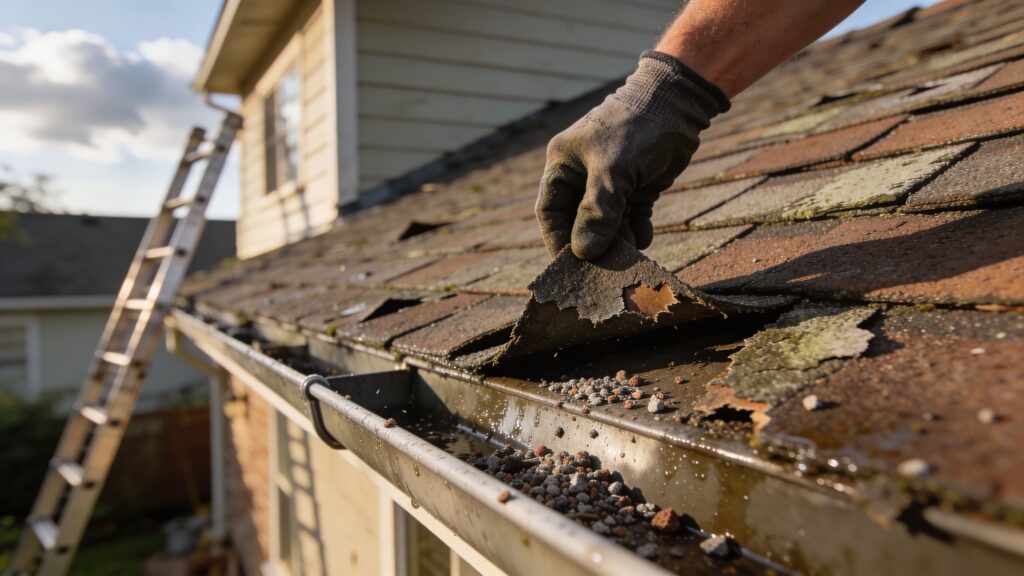
Ask for the closeout items too. That includes warranty information, permit sign-off if applicable, and any final invoice details that match the agreed scope. If you like visual references before or after a final walkthrough, this completed roofing work image can help you know what a finished look should feel like.
Maintenance that actually helps in Fort Lauderdale
Roofs in South Florida don’t fail only because of age. They fail because small issues sit too long in heat, humidity, and wind exposure.
Keep the maintenance routine simple and consistent:
- Check after major storms: Look from the ground for displaced materials or impact signs.
- Keep gutters and drainage paths clear: Backed-up water creates avoidable roof edge problems.
- Watch sealants and penetrations: Vents, flashings, and transition points are common failure spots.
- Pay attention to attic smell and ceiling stains: Those clues often appear before a visible drip.
- Schedule professional inspections periodically: Especially if the roof has already been repaired once.
A roof lasts longer when minor defects are corrected early. In Fort Lauderdale, delay is what turns maintenance into reconstruction.
Good maintenance is not obsessive. It’s observant. The roof doesn’t need daily attention, but it does need someone to notice changes before the next heavy rain notices them first.
Frequently Asked Questions About Fort Lauderdale Roofing
Can a leak start far away from the stain on my ceiling
Yes. Water often travels along decking, rafters, or framing before it shows indoors. The stain you see may be only the final exit point, not the entry point.
Should I stay home during the repair
For many repairs, yes, you can stay home. Expect noise, vibrations, and workers moving around the property. If you work from home, plan for interruptions. If anyone in the house is sensitive to noise or has pets that stress easily, being elsewhere for the loudest part can make the day easier.
Will a roofer need access to my attic
Sometimes. Attic access helps confirm whether water is entering through decking, flashing, penetrations, or condensation-related issues. It also helps the roofer see how far moisture has spread.
Is a tarp enough until I decide what to do
A tarp is only a temporary protective measure. It can buy time, but it does not solve underlying flashing failure, damaged decking, or compromised roofing materials. In Fort Lauderdale weather, temporary measures shouldn’t sit longer than necessary.
What if my roof isn’t leaking now, but I know it was after the last storm
That still deserves inspection. Some leaks appear only under certain wind directions or heavy rain volume. A dry ceiling today doesn’t mean the problem is gone.
How do I know if a contractor understands local conditions
Listen to how they talk about the roof. They should discuss wind resistance, flashing details, underlayment, drainage, humidity exposure, and local permit or inspection requirements without speaking in generalities.
If you need clear answers about a leak, storm damage, or whether your roof should be repaired or replaced, Paletz Roofing and Inspections provides inspections, repairs, and reroofing services across Broward, Miami-Dade, and Palm Beach. A good next step is to schedule a professional assessment, get the damage documented properly, and make the decision based on the roof’s real condition rather than the spot where the water finally showed up.