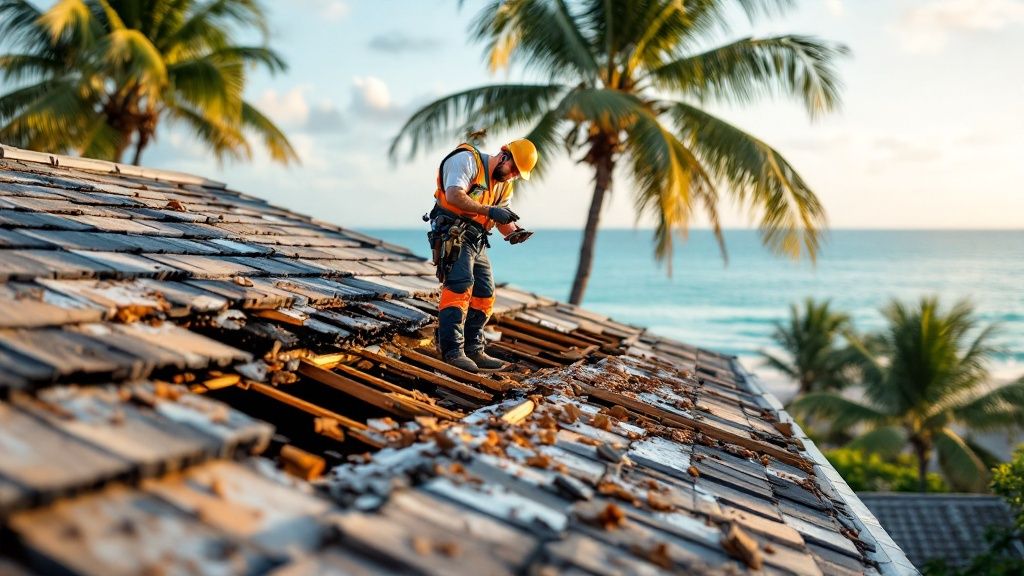
When the wind and rain finally stop, it’s easy to feel overwhelmed. But what you do in those first few hours after a major storm is absolutely critical for a successful storm damage roof repair in Key Biscayne. The number one rule? Never climb onto your roof. Instead, your job is to document what you can see from the ground and get a professional roofer on the phone right away. This simple step can stop a minor issue from turning into a catastrophic failure.
Your Immediate Post-Storm Action Plan
The storm has passed, but for a homeowner, the real work is just beginning. Taking the right steps now can make a huge difference in the safety of your home and, just as importantly, the outcome of your insurance claim. You don't need to be a roofing expert—you just need to be a prepared observer.
Safely Assess from the Ground
Your first priority is safety, which means keeping your feet firmly on the ground. Take a slow walk around the perimeter of your property and look for any obvious signs of trouble. You’re hunting for the red flags that even an untrained eye can easily spot.
Here’s what to look for:
- Missing or Damaged Shingles: Scan your roof for shingles that are cracked, peeling up at the edges, or completely gone. Don't forget to check your yard and flowerbeds for any pieces that have blown off.
- Dented Gutters and Vents: Dents on your gutters, downspouts, or the metal vents on your roof are often tell-tale signs of hail. This kind of impact can cause hidden fractures in your roofing material that aren't visible from below.
- Large Debris: A fallen tree limb or any other significant debris sitting on your roof needs immediate professional attention. You have no way of knowing what kind of structural damage is hiding underneath it.
It's also worth remembering that storm damage can create new, unwelcome entry points for wildlife. It's a good idea to be aware of how to handle preventing squirrel infestations in your attic.
Document Everything Immediately
Before you even think about moving a single fallen branch, pull out your smartphone. Solid photo and video documentation is the most powerful tool you have when it comes time to file your insurance claim.
Get wide shots of your entire home from different angles, then move in for close-ups of every single bit of damage you can find. Make sure to photograph any shingles or other debris that has fallen off your roof and landed in the yard.
Pro Tip: Take way more photos than you think you need. Timestamped images from multiple perspectives create an undeniable record of your roof's condition right after the storm. This leaves no room for your insurance company to dispute the timeline of the damage.
This proactive approach sets the stage for a much smoother repair journey. In a place like Key Biscayne, where we all know severe weather is a fact of life, this level of preparedness is non-negotiable. In fact, storm damage is a widespread issue here, with recent data showing that approximately 60% of homeowners in the area have dealt with roof damage from extreme weather.
You can learn more about local storm damage trends on mycityroofing.com. Your next step is just as vital: calling the right professional to secure your home.
Navigating Your Roof Insurance Claim
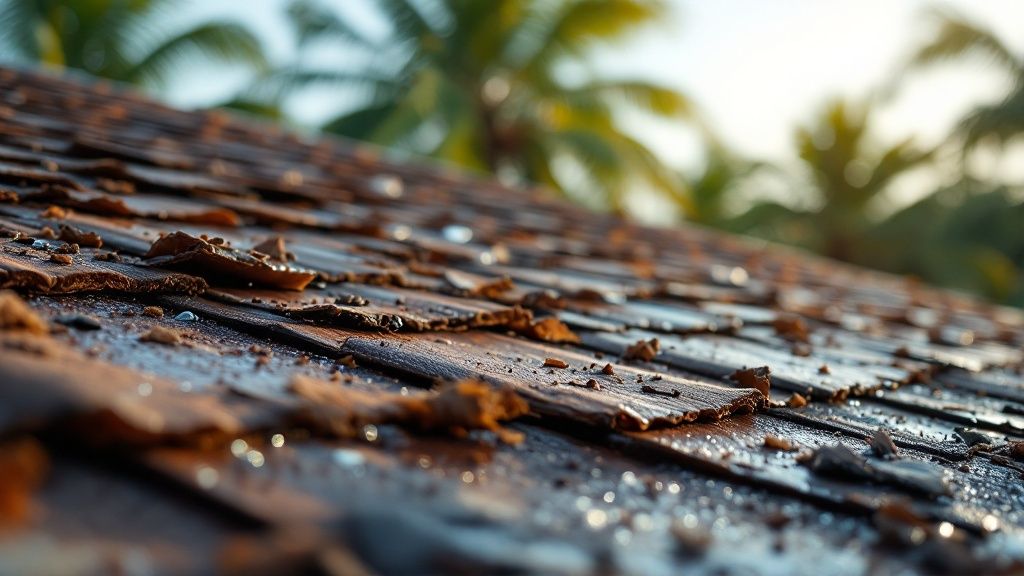
After a storm rolls through Key Biscayne, dealing with your insurance company can feel like you're heading straight into another one. The whole process seems built to be confusing and intimidating, but you can get the coverage you deserve if you approach it the right way. It all starts with understanding your own policy before you even pick up the phone.
Go dig out your policy documents. You're looking for specific terms like "wind damage," "named storm deductible," or the one everyone dreads, the "hurricane deductible." In a place like this, those clauses are everything—they spell out exactly what you'll be paying out-of-pocket. Knowing these details upfront gives you a massive advantage when you finally talk to your agent.
Preparing for the Adjuster's Visit
Once you report the damage, your insurance company will send out an adjuster to assess your property. Your mission here is simple: make their job as easy as possible while making sure they see the complete picture of the damage. That means having all your documentation ready to go.
Get your materials organized for a smooth and productive meeting:
- Your Photo Evidence: Have all those timestamped photos and videos organized and easy to show. A digital folder on a tablet or even a printed-out album can be incredibly effective.
- A Professional Roofer's Report: This is your ace in the hole. A detailed inspection report from a qualified local roofer gives you an expert third-party assessment, which is often far more thorough than what an adjuster might notice at a glance.
- A List of Questions: Write down specific questions about your coverage, the timeline for the claim, and how the depreciation process works. Never be afraid to ask for clarification on anything that doesn't make sense.
Bringing in a roofer who is experienced in working with insurance adjusters can be a total game-changer. They speak the same language. They can point out subtle damage that an adjuster might otherwise miss, ensuring nothing gets left out of the assessment for your storm damage roof repair in Key Biscayne.
Understanding the Claim Process and Common Pitfalls
Navigating an insurance claim is a marathon, not a sprint. One of the most common mistakes I see homeowners make is accepting the first settlement offer without pushing back. These initial offers are often based on a quick, surface-level assessment and might not come close to covering the full cost of a quality repair.
Never feel pressured to accept an initial offer on the spot. You have the right to get multiple repair estimates and negotiate a settlement that fully covers the cost of restoring your roof to its pre-storm condition.
Another major pitfall to watch out for is signing an "assignment of benefits" (AOB) form without fully understanding what you're giving away. An AOB transfers your insurance claim rights directly to a contractor. While some legitimate companies use them, this form can also be a tool for shady outfits to inflate claims and completely take control away from you, the homeowner.
Nationally, storm and wind damage are huge drivers of insurance claims. In fact, about 39% of all homeowner insurance claims are related to wind and hail.
For those of us living in a community association, it’s also crucial to understand your HOA special assessment rules. These can come into play for large-scale storm repairs that aren't fully covered by insurance. By staying informed and being methodical, you can protect your investment and make sure your claim ends successfully.
How to Hire the Right Key Biscayne Roofer
The chaos after a storm creates a sense of urgency. You need your roof fixed, and you need it done now. It's tempting to hire the first contractor who answers the phone, but that pressure can lead to some seriously bad decisions.
Here's the hard truth: the quality of your storm damage roof repair in Key Biscayne hinges entirely on the contractor you choose. This is easily the most critical decision you'll make in this whole recovery process.
This isn't the time for a quick Google search. You need a vetted, local professional who lives and breathes the challenges of our coastal environment—from mastering high-wind building codes to understanding the relentless, corrosive effects of salt air. A great roofer doesn't just patch a hole; they build a fortress against the next big one.
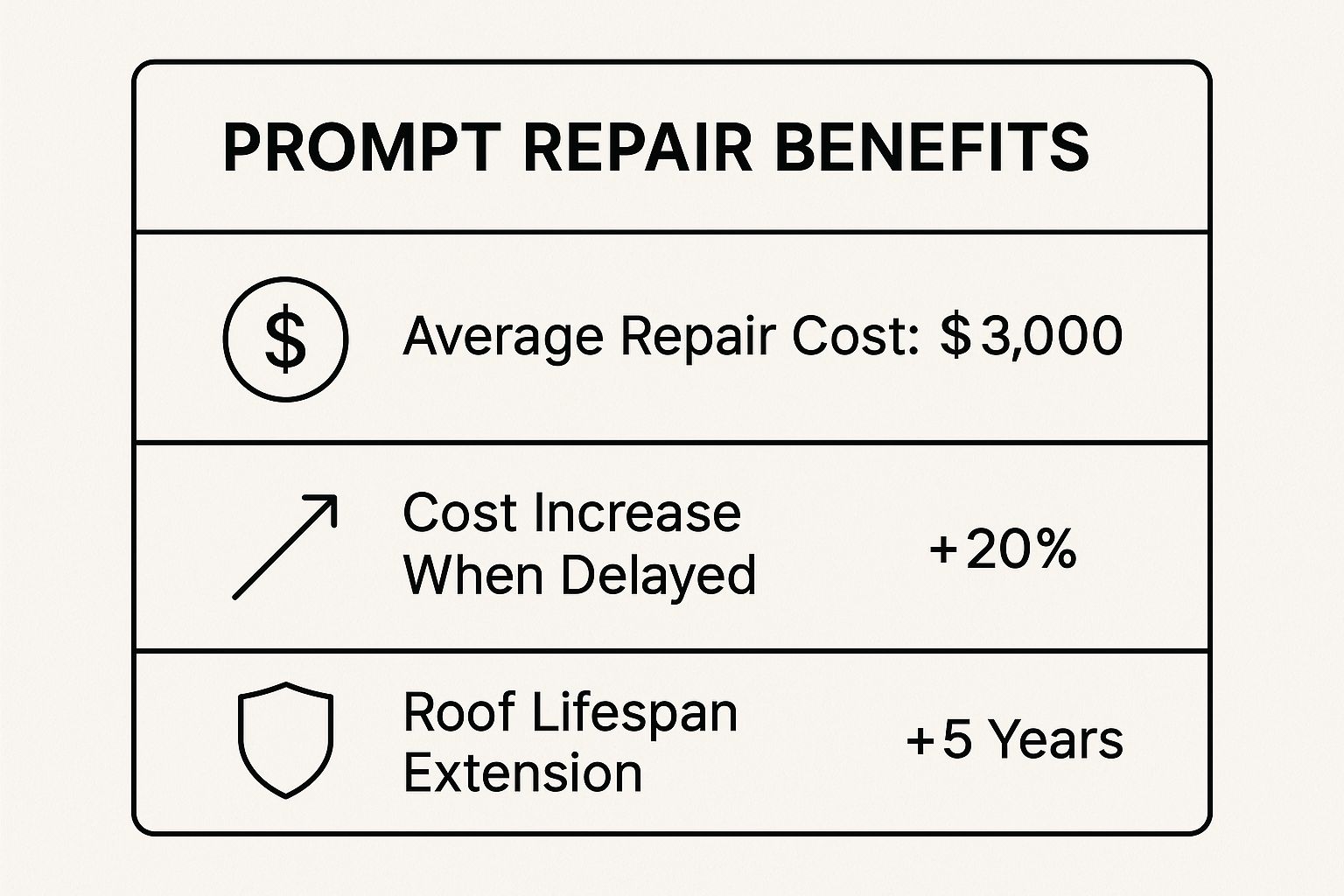
Vetting Contractors Beyond a Business Card
As soon as a storm passes, you'll start seeing them: the "storm chasers." These are out-of-state contractors who descend on disaster areas, promising cheap prices and immediate availability. They often knock on your door, make big promises, and then disappear once they have your money, leaving behind shoddy work with no warranty.
To sidestep this nightmare, you have to focus your search on established, local roofing companies. Here’s a quick-and-dirty checklist to help you filter out the predators:
- Florida License Verification: This is non-negotiable. Always check a contractor's license number on the Florida Department of Business and Professional Regulation (DBPR) website. It confirms they're legally allowed to work here.
- Proof of Real Insurance: Ask for certificates showing both general liability and worker's compensation. If someone gets hurt on your property without it, you could be on the hook. It's a huge liability you don't want.
- Insist on Local References: Don't just ask for references—ask for addresses of recent projects right here in Key Biscayne or other coastal communities like Coral Gables or Miami Beach. A roofer who’s proud of their work will be happy to show it off.
When you're comparing contractors, a simple checklist can keep you from overlooking critical details. This table breaks down what you need to verify for any roofer working in our specific high-risk area.
Key Biscayne Roofer Vetting Checklist
| Credential | What to Look For | Why It's Critical in Key Biscayne |
|---|---|---|
| FL State License | A valid, active license number on the DBPR website. | Confirms they are legally registered and meet state minimums. |
| General Liability Insurance | A policy of at least $1 million in coverage. | Protects your property from damage caused during the repair work. |
| Worker's Compensation | A valid policy covering all their employees. | Protects you from liability if a worker is injured on your property. |
| HVHZ Experience | Specific examples of projects in High-Velocity Hurricane Zones. | Key Biscayne has some of the strictest codes in the nation. This is not the place for a roofer to learn on the job. |
| Local Office | A physical address in Miami-Dade or Broward County. | "Storm chasers" use PO boxes. A local office means they aren't going to disappear when the work is done. |
| Detailed Written Estimate | An itemized quote, not a lump-sum price. | Ensures transparency and prevents surprise charges later on. |
Use this checklist as your guide. A contractor who can't tick every one of these boxes isn't worth the risk, especially not here.
Asking the Questions That Truly Matter
Once you have a shortlist of licensed and insured local pros, it’s time to really dig in. The answers to these questions will separate the true experts from the rest.
Key Takeaway: A roofer's deep knowledge of local building codes is absolutely non-negotiable. Key Biscayne is in a High-Velocity Hurricane Zone (HVHZ), meaning our roofs must be built to some of the most stringent standards in the entire country.
When you get them on the phone or meet in person, hit them with these direct questions:
- "Tell me about your experience with HVHZ codes." You're not looking for a "yes." You want a confident, detailed answer. They should immediately talk about specific fastening patterns, underlayment requirements, and approved materials for our zone.
- "What roofing materials do you recommend for our salt air and humidity?" A real pro will discuss options like corrosion-resistant metal or properly sealed tile systems. They should be able to walk you through the pros and cons of each for our specific island climate.
- "Can you give me an itemized quote?" Vague, one-line estimates are a massive red flag. A transparent quote breaks down everything: labor, materials, permits, and even debris disposal.
Choosing your roofer is really about finding a long-term partner to protect your home. Don't rush it. Do your homework, ask the tough questions, and choose a company like Paletz Roofing and Inspections with a rock-solid track record in South Florida. It’s a decision that buys you peace of mind for many storms to come.
Deciding Between Roof Repair and Replacement
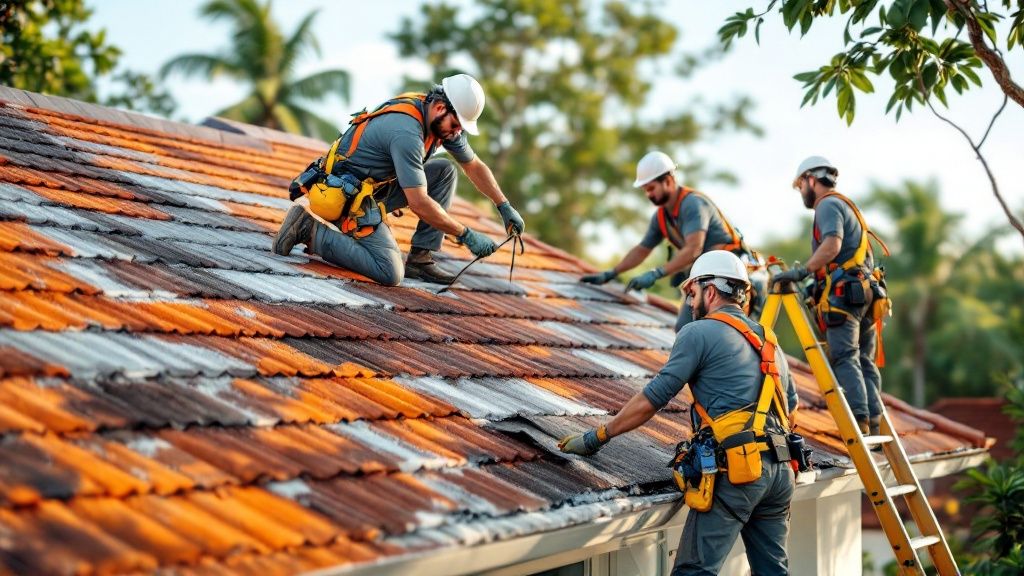
After a professional roofer has climbed down off your roof and given you their assessment, you’re at a crossroads. This is often the biggest decision you'll face in the whole process: is a targeted repair enough, or is a full replacement the smarter, safer path forward?
This choice isn’t just about the immediate hit to your wallet. It's a long-term investment in your home's safety, value, and your own peace of mind. A good contractor will walk you through the key factors—the age of your roof, the specific type and extent of the storm damage, and how many times it's been patched up in the past. Understanding these pieces of the puzzle will help you make sense of the quotes you get and choose with confidence.
Key Factors Influencing the Decision
The age of your roof is the first thing to consider. Let's be realistic: if your architectural shingle roof is over 20 years old and has damage scattered all over, pouring money into repairs is like putting a band-aid on a much bigger wound. A full replacement costs more upfront, no doubt, but it gives you a clean slate with a brand-new lifespan and a solid warranty.
On the flip side, if a storm ripped a few tiles off one section of your relatively new tile roof, a professional repair is the logical move. The goal is to restore the roof's integrity without the massive cost and disruption of a complete tear-off.
Expert Insight: Here in Key Biscayne, we have a general rule of thumb. If more than 25% of your roof's surface is damaged, a full replacement is almost always the more cost-effective and structurally sound choice. Trying to patch widespread damage often just leads to a cycle of recurring leaks and higher costs down the road.
Think of it like this: you get a flat tire, you repair it. But if all four of your tires are bald and cracking, replacing just one doesn't solve the fundamental safety problem. The exact same logic applies to your roof.
Material Performance in Our Coastal Climate
The type of material on your roof plays a huge role in this decision, especially here in Key Biscayne where salt air and hurricane-force winds are part of life. Each material has its own personality when it comes to storm damage.
- Tile Roofs: A classic for a reason—they're tough and look great. A few cracked or missing tiles can usually be replaced without much fuss. But if the damage is widespread, or if there are signs the underlayment beneath is compromised, that’s a strong signal you’re looking at a full replacement.
- Metal Roofs: An excellent long-term investment for our climate, as they're highly resistant to wind and corrosion. Damage is less frequent, but if a large section gets torn or punctured, patching it seamlessly can be tricky. Sometimes, replacing the entire slope is the only way to guarantee a watertight finish.
- Architectural Shingles: As the most common roofing material, they're also the most vulnerable to wind uplift. Minor damage where a few shingles are torn off is an easy fix. However, if high winds have stripped away the protective granules across large areas (what we call "balding"), the roof's ability to protect your home is shot. At that point, a replacement is necessary.
Ultimately, you're balancing cost, safety, and long-term value. The financial side of storm damage roof repair in Key Biscayne can swing wildly. A small, isolated repair might run you $500 to $2,500. A full replacement, however, could be anywhere from $10,000 to over $30,000, depending on your home's size and the materials you choose.
For a more detailed look at local costs, you can explore a breakdown of roofing costs in Key Biscayne on estimatorflorida.com. A trustworthy roofer won’t push you one way or the other; they’ll lay out both options clearly, with the pros and cons of each, helping you make the best call for your home.
Getting Your Home Ready for the Roofing Crew
You’ve done the hard work of picking a qualified roofer and signing the contract. Now, there’s a short but critical window of time before the crew arrives and the real work begins. Taking a handful of simple, proactive steps to prepare your property will make a world of difference in how smoothly the entire project goes.
A little prep work minimizes disruptions for your family, protects your belongings from accidental damage, and helps keep everyone safe—including the crew working on your home. Think of the repair process as a small, controlled storm. There will be noise, vibrations, and a ton of activity, but getting ahead of it makes the experience much less stressful for everyone involved.
Creating a Safe and Clear Work Zone
The main goal here is pretty simple: give the crew easy, unobstructed access to your roof and establish a safe perimeter around the house. Falling debris is just part of the deal with any roofing job, so clearing the immediate area is non-negotiable for preventing damage to your property.
Here's a quick checklist to get you started:
- Clear the Driveway: The roofing company is going to need a dedicated spot for their truck, equipment, and a dumpster to haul away all the old materials. The morning they're scheduled to start, make sure your driveway is completely empty.
- Protect Your Landscaping: Anything that can be moved should be. Move potted plants, patio furniture, grills, and the kids' toys at least 15-20 feet away from the house. For those delicate garden beds or shrubs that are permanent fixtures, cover them with tarps.
- Secure Outdoor Fixtures: Walk around your house and take down any fragile items. This includes things like wind chimes, hanging decorations, or those decorative string lights you have hanging under the roofline.
This isn't just about protecting your stuff—it's also about efficiency. When a crew can pull up and get straight to work without having to play moving company, the whole storm damage roof repair in Key Biscayne project stays right on schedule.
A Proactive Tip: Give your neighbors a quick heads-up as a courtesy. Just letting them know when the work will start and that there will be some noise can go a long way in preventing misunderstandings and keeping the peace.
Prepping the Inside of Your Home
All that hammering and activity on the roof is going to create some serious vibrations that will travel right through your home's frame. You'd be surprised how strong they can be—often strong enough to shake things right off the walls and shelves.
Take a few minutes to do a quick walk-through of your interior, especially in rooms directly under the roof and in your attic.
Take down pictures, mirrors, and any other decorations hanging on your exterior walls. If you have valuable or fragile keepsakes sitting on high shelves, it's a smart move to temporarily move them to the floor or into a secure cabinet. It only takes a few minutes, but it can prevent that one-of-a-kind family photo or piece of art from shattering on the ground. This small effort ensures your focus stays on the quality of the repair work, not on cleaning up an avoidable mess inside.
Common Questions About Storm Damage Repair
Even with the best preparation, the chaos after a storm can leave you with some tough questions. The whole process—from dealing with insurance adjusters to emergency repairs and worrying about the cost—can feel overwhelming. We've been through this countless times with Key Biscayne homeowners, so we've put together answers to the most common questions we hear.
Getting clear, straightforward answers is the first step toward moving forward. Our goal is to give you the practical advice you need to protect your home and make the right calls during a really stressful time.
How Long Do I Have to File an Insurance Claim in Florida?
This is one of the most critical, time-sensitive questions you can ask. In Florida, the rules around insurance claim deadlines can and do change, so you absolutely can't afford to wait. Your first and most important responsibility is to notify your insurance company about the damage as soon as it's safe to do so.
While you might have a year or two to submit the full, detailed claim, that initial notification is what gets the ball rolling. Reporting the damage right away is essential.
- Dig out your policy: The exact timeline will be spelled out in your policy documents.
- Call your agent: A quick phone call is the easiest way to clear up any confusion about deadlines.
- Don't delay: Seriously, don't wait. Missing a deadline could jeopardize your entire claim.
Should I Try to Tarp My Own Roof?
When you see water dripping into your home, your first instinct is to do something to stop it. And while grabbing a tarp and heading for the roof might seem like a good idea, it's one of the most dangerous things a homeowner can do.
Climbing onto a wet, slippery, and potentially unstable roof after a storm is a recipe for a serious accident. There's a reason professional Key Biscayne roofing companies offer emergency tarping services—it's a job for trained and insured crews.
An improperly installed tarp can cause more problems than it solves. If it isn't secured just right, it can trap moisture against your roof decking, which speeds up rot and can lead to major structural damage you can't even see.
Will My Insurance Premium Go Up If I File a Claim?
This is a huge fear, and unfortunately, it stops too many homeowners from filing a legitimate claim. Generally speaking, filing a single claim for damage caused by a natural disaster—what insurers often call an "Act of God"—should not cause your individual premium to spike.
However, it's important to understand the bigger picture. If a major hurricane causes catastrophic damage across all of Key Biscayne, insurance companies might raise rates for everyone in the region to cover their massive losses. Don't let the fear of a potential rate hike stop you from getting the money you need to fix your home. This is exactly what you have insurance for.
Navigating the world of storm damage roof repair in Key Biscayne is much easier with a partner you can trust. If you need an expert eye on your roof or immediate help, the team at Paletz Roofing and Inspections brings over 30 years of experience protecting South Florida homes. Contact us today for a free, no-obligation inspection.