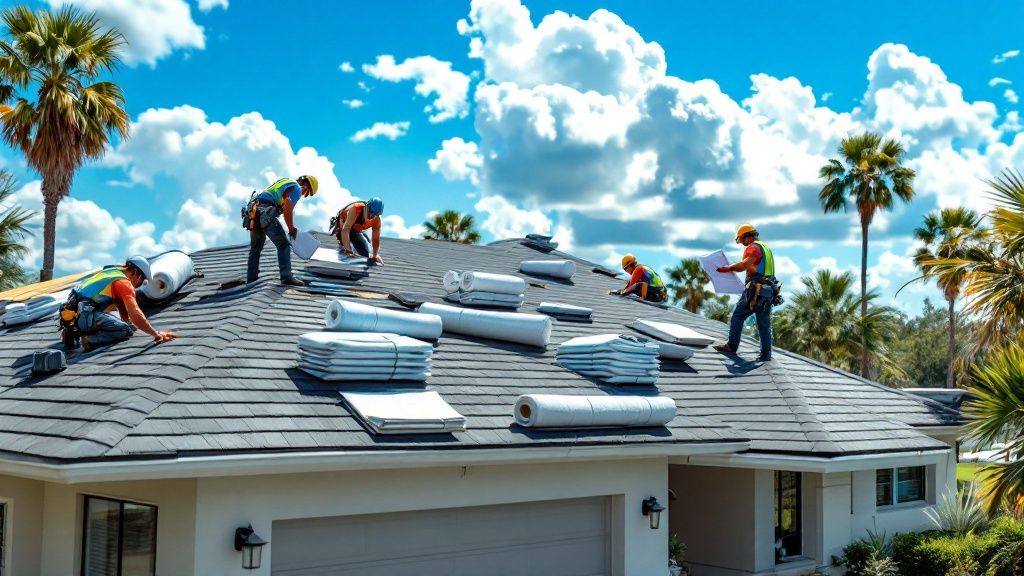
So, you're thinking about a roofing project in Southwest Ranches and the big question on your mind is: "What's this going to cost me?" It's the first thing everyone wants to know, and the answer isn't always simple. For a full roof replacement, you’re typically looking at a range between $5,890 and $12,800. If you just need a few minor repairs, the cost is much more manageable, usually falling somewhere between $380 and $1,800.
These numbers are a great starting point, but think of them as a ballpark estimate. The final price tag will really hinge on the specifics of your home, like the materials you choose and how complex your roof design is.
A Clear Look at Southwest Ranches Roofing Costs
Trying to budget for a roofing project can feel a bit like navigating a maze of different quotes and figures. There’s no single, one-size-fits-all answer to how much a roof costs in Southwest Ranches because every single home is different. But getting a handle on the typical price points is the best way to start.
For most homeowners, cost is the bottom line. Looking at data from real projects in our area, the average homeowner spends about $1,100 on common roof repairs, which is pretty manageable. Of course, when you get into full replacements, especially on larger properties or with premium materials like high-end tile or metal, those costs can climb. In some cases, a high-end replacement can run upwards of $46,000, according to detailed local service reports. You can dive deeper into these local cost averages on platforms like Angi.
Estimated Roofing Costs in Southwest Ranches at a Glance
To give you an even clearer picture, we've put together a quick reference table. This breaks down the typical costs for different roofing services you might need in the Southwest Ranches area.
| Roofing Service | Average Cost Range |
|---|---|
| Minor Leak Repair | $380 – $850 |
| Missing Shingle Replacement | $400 – $950 |
| Flashing Repair/Replacement | $550 – $1,500 |
| Full Asphalt Shingle Replacement | $5,890 – $11,500 |
| Complete Tile or Metal Roof Replacement | $10,000 – $25,000+ |
This table should help set some realistic expectations as you start to plan your budget. Just remember, these are estimates. In the sections that follow, we’ll get into the nitty-gritty details—from material types to labor rates—that will really shape the final quote you get from a professional contractor.
Breaking Down Your Roofing Quote: The Key Cost Drivers
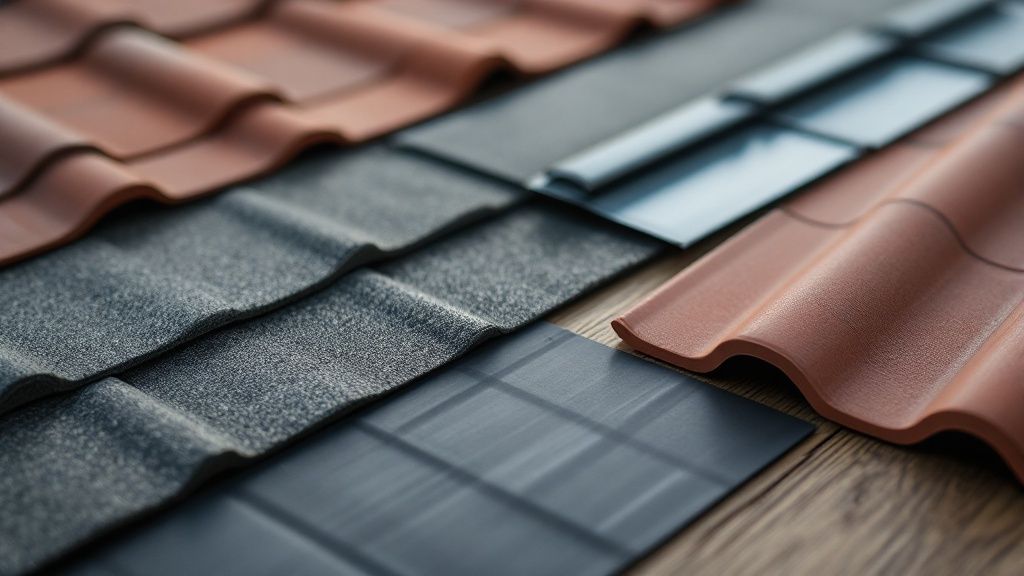
Ever looked at two different roofing quotes for the exact same house and wondered why the numbers are miles apart? It can feel a little confusing, but once you understand what actually goes into a bid, it all starts to click. Your final roofing cost in Southwest Ranches isn't just one arbitrary number; it’s a blend of several key factors working together.
Think of it like building with LEGOs. A simple, flat, rectangular structure is straightforward—it requires fewer pieces and less time to build. But a complex castle with towers, angled sections, and multiple levels? That needs way more pieces, careful planning, and a lot more skilled labor.
Your roof is no different. The three biggest drivers behind any quote are your roof's size, the materials you choose, and its overall complexity.
The Foundation of Your Quote: Roof Size
The most straightforward factor is simply the size of your roof. Roofers measure this in "squares," where one square equals 100 square feet. It’s pretty simple: a larger roof is going to need more materials—more shingles, more underlayment, more nails—and more hours of labor to get the job done.
Your contractor will calculate the total square footage to figure out how many squares are needed. This number becomes the baseline for estimating almost every other part of the job, from ordering materials to mapping out the project timeline. A sprawling ranch-style home will naturally have a much different starting cost than a compact two-story house, just based on this one measurement.
The Impact of Roof Complexity
This is where that LEGO analogy really comes to life. A simple, low-slope gable roof is the most cost-effective to replace. But as soon as you add complexity, you start adding layers of cost because the job demands more skill and time from the installation crew.
Several things make a roof more complex:
- Steep Pitch: A roof with a steep incline is more dangerous and difficult to work on. It slows the crew down and requires extra safety gear.
- Hips and Valleys: These are the angles and intersections where different roof planes meet. They demand precise cutting and sealing to keep water out.
- Dormers and Skylights: Every single one of these features has to be meticulously flashed and sealed, which adds significant labor time.
- Chimneys and Vents: Just like dormers, these roof penetrations require custom work to guarantee a watertight seal for years to come.
Each of these features adds a new level of difficulty, which bumps up the labor portion of your quote. In fact, labor is the single biggest part of the bill. It's not just about nailing down shingles; it’s about the skilled craftsmanship needed to navigate these tricky areas perfectly.
Labor is a huge component of any roofing job, often making up about 60% of the total cost. Skilled roofing work averages around $2 per square foot, but that figure can climb with a more complex roof design. To get a better feel for this, you can explore more detailed local labor insights from roofing professionals.
At the end of the day, a more intricate roof design means more material waste from all those custom cuts and, most importantly, more time from experienced roofers. Understanding these key drivers—size, materials, and complexity—gives you the power to read any contractor's bid with confidence, knowing exactly where your investment is going and why the numbers add up the way they do.
Choosing the Right Roofing Material for Your Budget
Picking a roofing material is easily the biggest decision you'll make for your entire project. It's the one choice that single-handedly dictates both your upfront cost and how well your home stands up to the elements over the long haul. It really is a balancing act between your budget, the look you want, and the performance you need—especially here in Southwest Ranches where our roofs bake under intense sun and face down hurricane threats.
Think of it like choosing tires for your truck. You could go with standard, budget-friendly tires that will get the job done for a couple of years. Or, you could invest in premium, all-weather tires built for high performance and a much, much longer life. The initial sticker price is different, sure, but so is the value and peace of mind you get over time. Your roof works the exact same way.
The three most popular choices around here each bring a unique mix of cost, toughness, and style to the table. To give you a clear picture of how they stack up financially, this chart breaks down the average cost per square foot for each one.
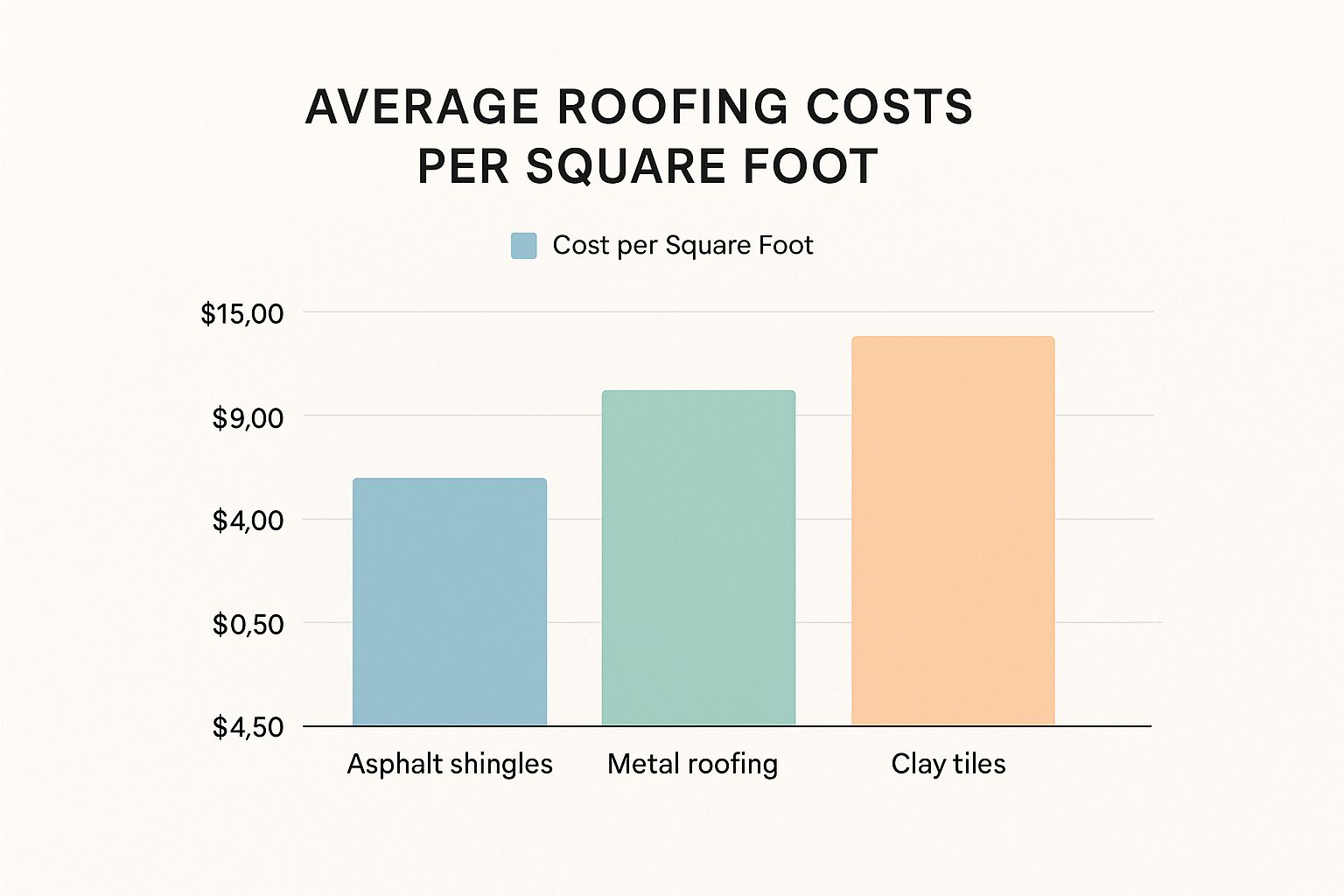
As you can see, there’s a pretty significant price jump from asphalt shingles to premium materials like clay tiles. This just goes to show that your material choice is the number one driver of your total project cost.
To help you weigh the pros and cons beyond just the initial price tag, here’s a quick comparison of what you can expect from each option.
Roofing Material Cost and Lifespan Comparison
| Material Type | Average Cost per Sq. Ft. | Expected Lifespan | Key Benefit |
|---|---|---|---|
| Asphalt Shingles | $4 – $7 | 15 – 25 years | Most affordable upfront cost and reliable performance. |
| Metal Roofing | $9 – $16 | 50+ years | Exceptional longevity and superior hurricane resistance. |
| Clay & Concrete Tile | $12 – $25+ | 50+ years | Unmatched durability and timeless South Florida style. |
This table makes it clear: while shingles are the most budget-friendly option today, materials like metal and tile offer a lifetime of service that can make their higher initial cost a worthwhile investment.
Asphalt Shingles: The Budget-Friendly Standard
Asphalt shingles are the most common roofing material in America for one simple reason: they deliver a fantastic combination of affordability and solid, reliable protection. For homeowners focused on keeping those initial project costs in check, shingles are almost always the go-to.
Plus, modern architectural shingles have a dimensional, textured look that really boosts curb appeal without wrecking your budget. While they don't last as long as metal or tile, a professionally installed shingle roof provides dependable protection for 15 to 25 years. They're a smart, practical choice for a huge number of homes in our area.
Metal Roofing: The Durable Mid-Range Investment
Stepping up in both price and performance, metal roofing has become a huge favorite for homeowners who put longevity and storm resistance at the top of their list. Yes, the upfront cost is higher than shingles, but a metal roof can easily last 50 years or more. In many cases, it’s the last roof you’ll ever have to put on your house.
Metal roofs are incredibly tough against high winds, which is a massive plus during Florida's hurricane season. They’re also energy-efficient because they reflect solar heat, helping to lower your cooling bills. This long-term value makes metal a savvy investment for anyone planning to stay in their home for the long haul.
Clay and Concrete Tiles: The Premium Choice for Classic Style
For that timeless, classic South Florida look, nothing even comes close to clay or concrete tile. This is the top-tier option, both in terms of cost and the sheer beauty it adds to a home. Tile roofs are exceptionally durable, lasting 50 years or longer with ease, and they offer superior resistance to just about everything—fire, rot, you name it.
A tile roof is a significant investment in your home's character and resilience. Its weight requires a strong roof structure, but its performance against the elements is second to none, making it a hallmark of quality construction in Southwest Ranches.
The higher price tag reflects not only the material's incredible longevity but also the specialized skill it takes to install it right. For those who want maximum durability and a signature aesthetic, tile is the ultimate choice. You can check out a gallery of incredible tile roof installations to see the kind of visual impact they make.
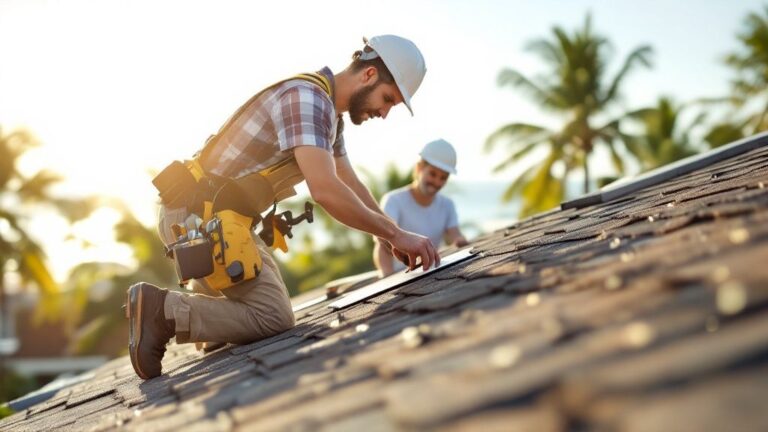
Ultimately, the "right" material for your budget all comes down to what you prioritize. Whether you need an affordable fix right now or you're investing in a lifetime of protection, understanding these options is the first step to making a decision you’ll feel great about for your Southwest Ranches home.
Uncovering the Hidden Costs of Roof Replacement

A roofer’s initial quote can sometimes feel like just the tip of the iceberg. It covers the big-ticket items like materials and labor, but what about everything else? Several essential costs often pop up, turning a manageable budget into a source of stress.
Getting a handle on these potential "hidden" expenses is the key to planning your project accurately and avoiding that dreaded sticker shock. One of the first costs you'll encounter is the tear-off and disposal of your old roof. This is a tough, labor-intensive job that involves stripping every old layer down to the bare wood and then hauling away tons of debris. It's a non-negotiable step for a proper installation, but it isn't always itemized upfront.
Beyond the Shingles: What Lies Beneath
Once the old roof is gone, your contractor might find some unwelcome surprises. The most common culprit? Rotted or damaged decking—the plywood sheathing that acts as the foundation for your entire roof. Any wood that's compromised must be replaced to give the new roof a solid base, and this repair work will add to your final invoice.
Other critical components will also contribute to the total cost, and they're just as important as the shingles themselves.
- Underlayment and Flashing: New, high-quality synthetic underlayment and fresh metal flashing are non-negotiable for proper water protection. This is especially true around tricky areas like chimneys, vents, and valleys where leaks love to start.
- Proper Ventilation: Your attic has to be able to breathe, especially in Florida’s climate. This might mean installing new ridge vents or soffit vents to meet modern building codes and prevent damaging heat and moisture buildup.
- Permitting Fees: Every legitimate roofing project in Southwest Ranches requires a permit from the local building department. This fee covers the official inspections that ensure the work is done safely and to code.
The total cost of a roof replacement isn't just about shingles and nails. It’s a complete system that includes demolition, structural repairs, waterproofing layers, and official inspections—all of which are vital for a safe, long-lasting roof.
When a storm is the reason for your replacement, navigating the complex process of filing storm damage insurance claims can be a huge part of managing these costs. These unexpected expenses are exactly why looking at regional cost data is so helpful for budgeting.
For instance, in Ocala, the average roof replacement price is around $14,710 for a standard home—a figure that already reflects these more inclusive project costs. Seeing these numbers helps provide a more realistic financial picture for your project in Southwest Ranches. You can see how all these details add up by looking at examples of comprehensive roof replacement projects.
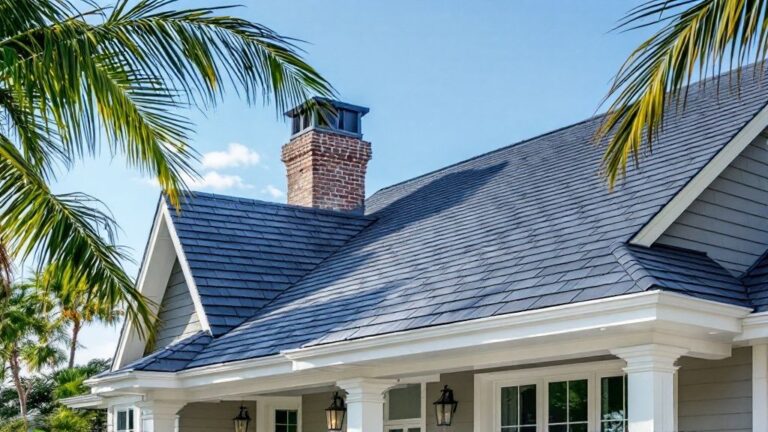
How Florida Climate and Codes Shape Your Final Bill
Roofing in Southwest Ranches isn't just about keeping the rain out; it's about building a fortress against hurricanes. The brutal Florida sun, biblical downpours, and the constant threat of high-velocity winds mean we play by a different set of rules down here. And yes, those demanding conditions directly impact the final cost of your roof.
Think of it this way: a roof in a mild climate is like a simple rain jacket. A roof built for South Florida has to be a full suit of armor. This means specialized materials and beefed-up installation techniques designed to laugh off extreme forces. It’s why your roofer will insist on certain products and methods that might seem pricier upfront but are absolutely non-negotiable for safety and survival.
Building for the Storm
The unique climate challenges in our area have given rise to some of the toughest building codes in the entire country. These codes aren't just friendly suggestions; they are mandatory requirements that dictate everything from the kind of nails we use to how shingles are fastened down. The number one goal is hurricane resilience, making sure your roof can handle the massive uplift forces generated by powerful winds.
This laser focus on resilience means contractors are required to use specific hurricane-rated materials and follow strict installation protocols. These add layers of cost to the project that homeowners in, say, Ohio or Colorado just don't have to worry about.
- Hurricane-Rated Materials: Shingles, tiles, and metal panels aren't just off-the-shelf products. They have to be tested and officially certified to withstand specific wind speeds.
- Reinforced Fastening: This often means using more nails per shingle than standard, applying specialized adhesives, and following very specific nailing patterns designed to prevent blow-offs.
- Upgraded Underlayment: We almost always use a self-adhering, waterproof underlayment. It acts as a secondary water barrier in case the primary roofing material is ever breached during a storm.
These standards are the bare minimum for a safe, compliant roof, and they directly add to both material and labor costs.
Investing in a code-compliant roof isn't just an expense; it's a critical investment in your home's safety, your ability to get insurance, and its power to weather the next storm. These regulations are what prevent catastrophic failures and protect your family and property.
Evolving Standards and Your Bottom Line
Florida’s building codes are always being updated, tweaked, and strengthened based on the latest storm data and engineering breakthroughs. For example, new laws that took effect in late 2023 and mid-2024, like the 8th Edition Florida Building Code, have introduced even stricter standards for contractors. Hurricane resilience is now the absolute top priority.
We're now building roofing systems that need to withstand wind speeds up to 180 mph for metal roofs and 130 mph for tile roofs. Installation standards now commonly demand components like hurricane straps and clips, which bump up both labor and material costs but dramatically improve a roof's ability to hang on. You can learn more about the latest roofing trends shaping our local codes and practices on WhaleRoofing.com.
Ultimately, knowing why these standards exist helps put the costs into perspective. When a contractor explains the need for these specific upgrades, you’ll understand it’s not an upsell—it’s what’s required to properly protect your home in Southwest Ranches.
Smart Ways to Manage Your Southwest Ranches Roofing Budget
Let's be honest: a new roof is a serious financial commitment. But that doesn't mean you have to feel powerless over the final price tag. With some smart planning and insider knowledge, you can absolutely manage the cost without cutting corners on the quality your home deserves. It really comes down to a mix of solid research, savvy timing, and focusing on what provides real value over the long haul.
One of the most powerful things you can do is get at least three detailed, written quotes from reputable local roofers. This isn't just about hunting for the lowest number. It's about comparing apples to apples—seeing exactly what scope of work, material quality, and warranties each contractor is offering. This process helps you spot the difference between a cheap job and a true investment.
Here's another trick of the trade: think about scheduling your project during the roofing off-season. In Southwest Ranches, that's usually during the late fall and winter months when things slow down. Contractors are often more competitive with their pricing then, trying to keep their experienced crews busy.
Maximizing Your Investment for the Long Term
Thinking beyond the initial sticker price is where you can find some of the biggest savings over the life of your roof. For instance, splurging a bit more upfront for energy-efficient materials might feel like a stretch, but it can literally translate into lower FPL bills month after month, for decades to come.
This long-term mindset applies to warranties, too. Take a close look at both the material and workmanship warranties being offered. A strong warranty isn't just a piece of paper; it’s a direct reflection of a contractor's confidence in their materials and their crew. It's your safety net against surprise repair bills down the road. You can see how we back up our work on our

.
Here’s a pro tip: a new roof with high energy efficiency ratings can sometimes earn you a discount on your homeowner's insurance. It's always worth a call to your insurance provider to see if you qualify after the installation is complete.
Finally, getting a handle on your roofing budget means staying organized. To keep track of all the moving parts and make sure expenses don't get out of hand, you can utilize a project budgeting tool specifically made for home renovations. By pulling all these strategies together, you'll be in a much better position to make a smart decision that balances today's costs with lasting protection and value.
Got Questions About Your Roof? We've Got Answers.
Tackling a roofing project can feel a little overwhelming, and it's natural to have questions. We hear them all the time from homeowners in Southwest Ranches. Below, we’ve broken down some of the most common concerns into clear, straightforward answers to help you feel confident about your next steps.
Should I Repair or Replace My Roof?
This is the big one, and the right call really boils down to two things: your roof's age and the extent of the damage.
If you have a relatively new roof with just one small, isolated leak, a professional repair is almost always the smart, cost-effective move. But if your roof is getting up there in years or you're seeing widespread problems—think curling shingles all over the place or multiple leaks popping up—a full replacement is a much better long-term investment.
How Often Should I Get My Roof Inspected in Southwest Ranches?
Here in Florida, our roofs take a beating from intense sun, torrential rains, and the constant threat of hurricanes. Because of that, we strongly recommend a professional inspection at least once a year.
It's also a very good idea to have it checked out after any major storm rolls through. This proactive approach lets you catch small issues, like a cracked tile or some loose flashing, before they turn into a major headache and expensive water damage inside your home.
A quick tip on insurance: Your homeowners policy will likely cover roof damage from a sudden event, like a hurricane, but not from slow, gradual wear and tear. It's always a good idea to check your specific policy so you know exactly what your coverage looks like before filing a claim.
Ready to get answers for your specific roof? The team at Paletz Roofing and Inspections has spent over 30 years protecting homes right here in Southwest Ranches. Give us a call today for a free, no-pressure quote and get expert advice you can actually trust. Get Your Free Quote Now.