Understanding a roofing estimate can feel like deciphering a complex code. Between line items for materials, labor costs, and project-specific charges, it's easy to get lost in the details and wonder if you're getting a fair deal. This guide is designed to demystify the process by providing a detailed breakdown of real-world roofing estimate examples specific to the South Florida market. We will move beyond generic templates and dive into the specific components that define a comprehensive and transparent quote.
By analyzing these varied examples, you'll learn to identify crucial elements, spot potential red flags, and understand the cost drivers behind different roofing systems. We will dissect estimates for common projects like asphalt shingle replacements and complex undertakings such as slate roof restorations and commercial flat roof installations. A thorough estimate details every aspect of the project, from the primary roofing material to specialized components. Beyond the main roof structure, a comprehensive estimate should also account for specialized elements like Skylights and Rooflights, which have their own material and labor considerations.
This practical approach will equip you with the knowledge to compare bids effectively, ask informed questions, and ultimately make a confident decision for your property. Let's explore what a professional roofing estimate truly looks like.
1. Asphalt Shingle Roof Replacement Estimate
The asphalt shingle roof replacement is the most common residential roofing project in South Florida, making it a critical benchmark among roofing estimate examples. This type of estimate outlines a complete "tear-off and replace" job, where the old roofing material is removed down to the deck, any necessary repairs are made, and a new shingle system is installed. It serves as a foundational example because it includes all the core components you'll see in more complex estimates: materials, labor, permits, and waste disposal.
For a typical 2,400 sq. ft. ranch home in Miami-Dade or Broward County, a full replacement can range from $12,000 to $18,000. This variation depends heavily on the shingle quality (e.g., basic 3-tab vs. architectural GAF Timberline HD), the roof's pitch, and the extent of any underlying wood damage discovered after the tear-off.
Analysis of a Sample Estimate
A well-structured asphalt shingle estimate breaks down costs clearly, preventing ambiguity. Here are the key line items to look for:
- Materials: This includes not just the shingles themselves ($90-$120 per square for architectural styles) but also underlayment, drip edge, flashing, and ventilation components.
- Labor: Covers the tear-off of old materials and installation of the new roof. Labor rates are a significant portion of the total cost.
- Permits & Fees: The cost to file for and obtain the necessary municipal permits.
- Disposal: The fee for a dumpster and hauling away old roofing debris.
- Contingency: A smart estimate includes a 10-15% contingency for unforeseen issues like rotted decking, which is common in South Florida's humid climate.
The following data chart visualizes the cost ranges for some of these key components in a standard shingle replacement project.
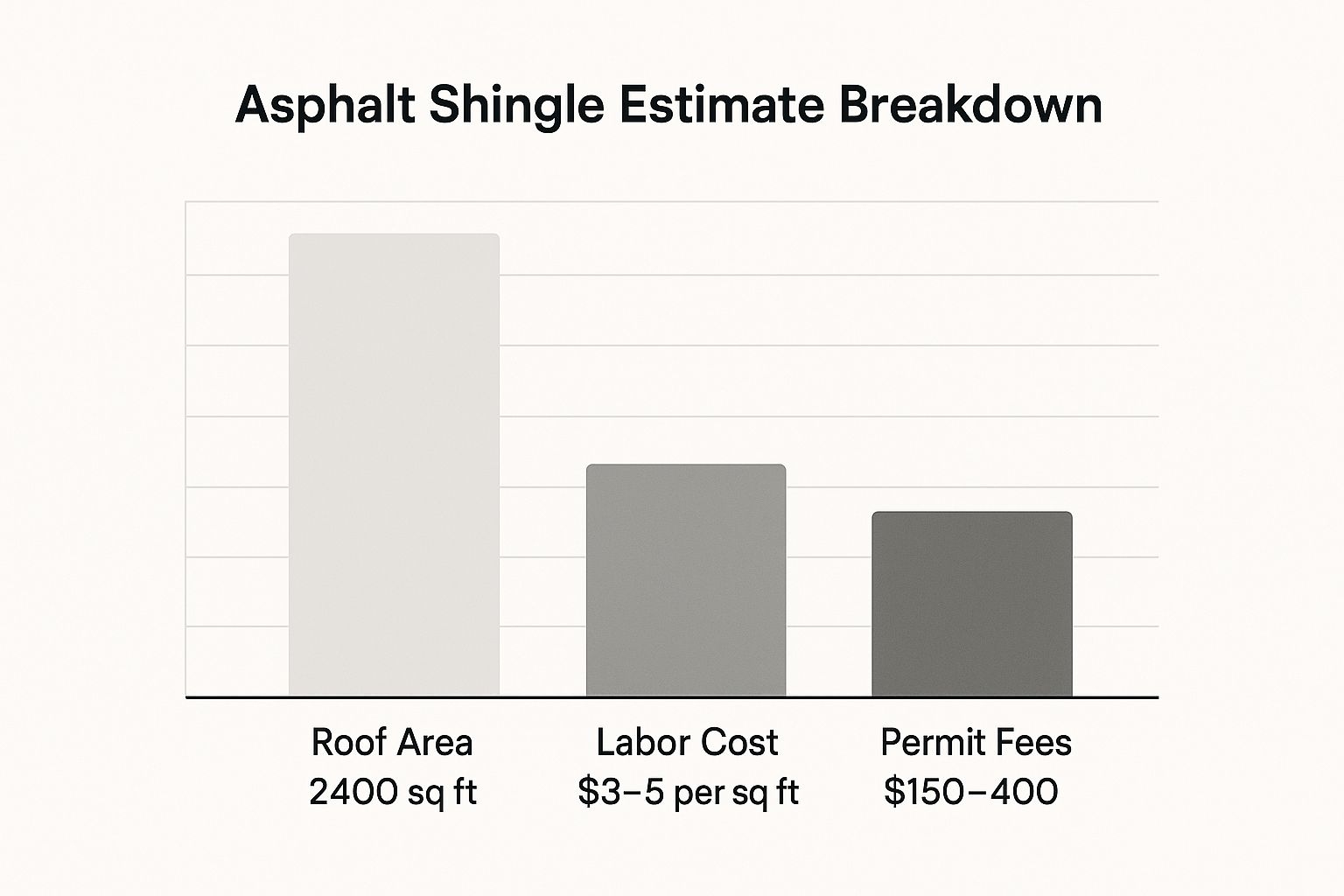
This bar chart highlights how labor costs can vary significantly, often equaling a substantial portion of the material costs for the entire 2,400 sq. ft. roof.
Actionable Takeaways
Strategic Insight: The most valuable roofing estimate examples are those that itemize every component. A vague, lump-sum quote is a red flag. It prevents you from comparing bids accurately and understanding where your money is going.
To use this information effectively, always:
- Request an Itemized Breakdown: Insist that any contractor provides a detailed list of materials and labor costs.
- Verify Licensing: Check the contractor's credentials with Florida's Department of Business and Professional Regulation (DBPR).
- Discuss the Warranty: Understand both the material warranty from manufacturers like GAF or Owens Corning and the contractor's workmanship warranty.
2. Metal Roofing Installation Estimate
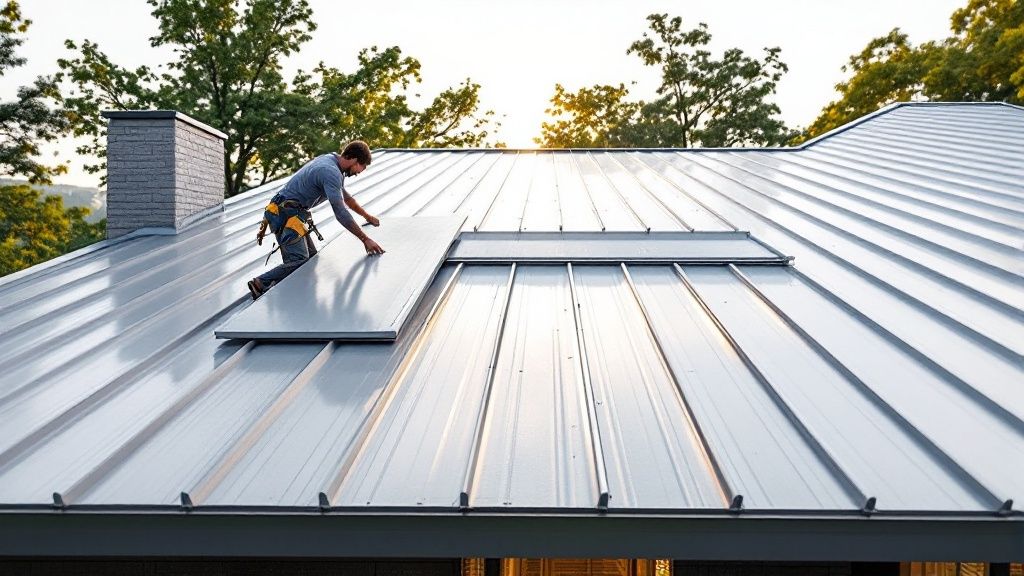
A metal roofing installation represents a significant upgrade in durability, energy efficiency, and longevity, making it a premium choice in roofing estimate examples for both high-end homes and commercial buildings in South Florida. This type of estimate is more complex than a standard shingle job, detailing the costs for sophisticated materials like standing seam panels and the specialized labor required for proper installation. It’s an essential example because it highlights the long-term value investment associated with a higher upfront cost.
For a typical 2,000 sq. ft. home, a standing seam metal roof can range from $20,000 to $35,000. The price varies based on the metal type (e.g., Galvalume steel vs. aluminum), panel gauge, finish (like Kynar 500), and the complexity of the roof's architecture. For commercial properties, such as a 10,000 sq. ft. warehouse, costs can range from $80,000 to $120,000.
Analysis of a Sample Estimate
A professional metal roof estimate provides a granular breakdown, justifying the higher investment. Key line items to scrutinize include:
- Materials: This specifies the exact panel type (e.g., 24-gauge standing seam), material (aluminum is crucial for coastal areas), and finish. It also includes specialized components like clips, fasteners, sealant, and custom-fabricated flashing and trim.
- Labor: Installation is more technical and time-consuming than for shingles. This cost reflects the need for skilled technicians certified to install systems from manufacturers like McElroy Metal or Berridge Manufacturing.
- Underlayment: A high-temperature, self-adhering underlayment is critical for metal roofs in Florida's climate to provide a secondary water barrier.
- Insulation & Soundproofing: The estimate may include options for rigid foam insulation or other materials to enhance energy efficiency and reduce rain noise.
- Warranty: Details on both the material finish warranty (often 30-50 years against fading and chalking) and the contractor's watertightness warranty.
Actionable Takeaways
Strategic Insight: The biggest mistake with a metal roof estimate is focusing solely on the total price. The real value lies in the specific material choices and the installer's qualifications, which directly impact the system's 50+ year lifespan.
To evaluate a metal roofing estimate effectively:
- Verify Installer Certification: Ask for proof that the crew is certified by the specific manufacturer whose product is being quoted. This is often required to validate the material warranty.
- Inquire About Energy Savings: Discuss potential energy tax credits or rebates. A metal roof's high solar reflectivity can significantly lower cooling costs, a major benefit in South Florida.
- Factor in Long-Term Value: Calculate the total cost of ownership. While the initial price is high, a metal roof can outlast 2-3 asphalt shingle roofs, eliminating future replacement costs.
3. Emergency Storm Damage Repair Estimate
Following a hurricane or severe storm in South Florida, an emergency storm damage repair estimate is a unique and urgent document. Unlike standard replacement quotes, this estimate often comes in two phases: immediate mitigation and full restoration. It prioritizes stopping further water intrusion with temporary measures like tarping, followed by a detailed plan for permanent repairs, which is crucial for insurance claims.
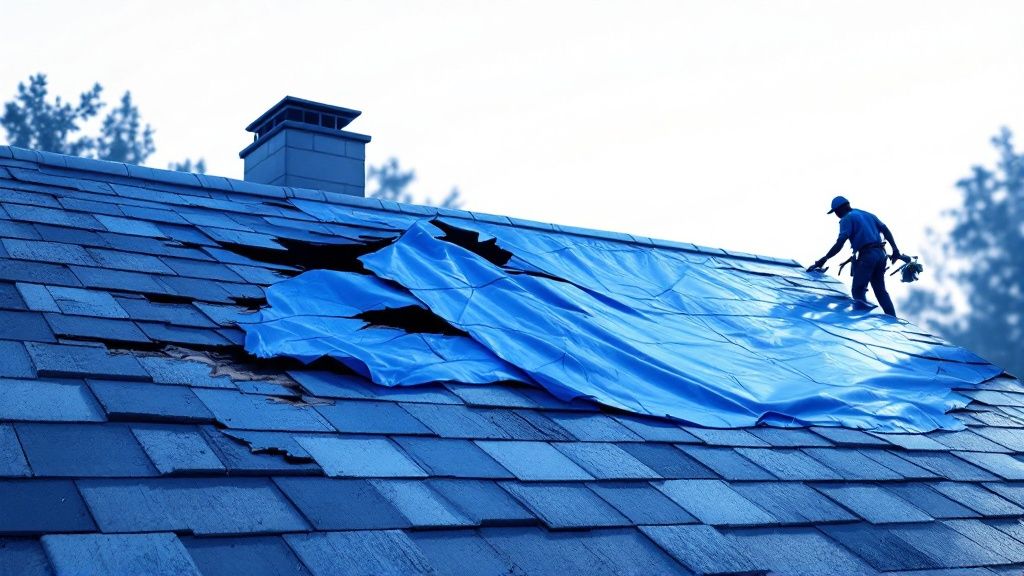
The costs for storm damage are highly variable. A straightforward repair for wind-blown shingles might cost $2,500 to $8,000. More extensive hail damage can lead to an insurance claim averaging $8,000 to $15,000, while major structural damage from a fallen tree can easily exceed $15,000 to $30,000. These figures often include emergency service fees for rapid response.
Analysis of a Sample Estimate
A credible storm damage estimate is structured to satisfy insurance requirements. It must clearly separate emergency services from the full repair scope. Key line items you'll find include:
- Emergency Mitigation: This covers immediate actions like tarping the roof or removing a fallen tree. These are billed at a premium due to their urgent nature.
- Damage Assessment & Reporting: A fee for the detailed inspection and creation of a report, complete with photographic evidence, required by insurance carriers.
- Scope of Work for Full Repair: A line-by-line breakdown of the materials and labor needed for a permanent fix, matching the pre-storm condition of the roof.
- Insurance Claim Support: Many restoration specialists like Paul Davis Restoration or ServiceMaster Restore include line items for managing and documenting the insurance claim process.
- Debris Removal: Specific costs associated with removing storm-related debris, which can be more complex than standard tear-off waste.
This bar chart shows that while initial tarping costs seem low, the full repair costs, especially for tree damage, escalate significantly due to structural work.
Actionable Takeaways
Strategic Insight: The primary goal of an initial storm damage estimate is to secure your property and properly document the loss for your insurance provider. The contractor’s expertise in insurance claim language and documentation is just as important as their roofing skill.
To navigate a storm damage claim effectively:
- Document Everything Immediately: Before any work begins, take extensive photos and videos of the damage from multiple angles.
- Authorize Only Emergency Work: Initially, only sign off on temporary, protective measures. Do not sign a contract for the full restoration until your insurance adjuster has assessed the damage.
- Verify Emergency Credentials: Ensure the contractor has experience dealing with insurance claims and can provide a detailed, itemized estimate that your provider will accept.
4. Commercial Flat Roof Membrane Estimate
Commercial flat roof estimates represent a significant shift in scale and complexity compared to residential projects, making them a crucial category of roofing estimate examples. These projects involve specialized membrane systems like TPO, EPDM, or modified bitumen, which are designed for large, low-slope surfaces. The estimate must account not just for the material itself, but also for critical components like insulation, proper drainage design, and specialized installation techniques required for commercial-grade performance.
For a large-scale project, such as a 20,000 sq. ft. warehouse in South Florida, a full TPO roof system replacement can range from $120,000 to $180,000, or about $6 to $9 per square foot. Smaller retail buildings might see EPDM systems costing between $15,000 and $25,000. The final cost is heavily influenced by the chosen membrane, insulation R-value, existing roof condition, and the complexity of rooftop penetrations like HVAC units and vents.
Analysis of a Sample Estimate
A professional commercial estimate is far more detailed than a residential one, focusing on long-term performance and compliance with building codes. Key line items include:
- Membrane & Insulation: Specifies the brand (e.g., GAF, Carlisle SynTec) and thickness of the membrane (e.g., 60-mil TPO) and the type/R-value of the polyiso insulation board.
- Labor & Equipment: This covers specialized labor for membrane welding and adhesion, plus costs for cranes or lifts needed to move materials to the roof.
- Drainage & Flashing: Details costs for new drains, scuppers, and custom metal flashing around parapet walls and rooftop equipment, which is critical for preventing ponding water.
- Substrate Preparation: Includes tear-off of the old system and costs to repair or replace the underlying structural deck.
- Warranties: Clearly outlines the cost for any manufacturer's No Dollar Limit (NDL) warranty, which requires a certified inspection and is a hallmark of a quality commercial installation.
Actionable Takeaways
Strategic Insight: For commercial flat roofs, the estimate’s focus should be on the total lifecycle cost, not just the upfront price. A cheaper bid that skimps on insulation or proper drainage will lead to higher energy bills and premature failure, costing far more in the long run.
To evaluate commercial roofing estimate examples effectively:
- Demand a Core Sample Analysis: A reputable contractor should analyze the existing roof layers to provide an accurate tear-off and substrate preparation quote.
- Verify Commercial Experience: Confirm the contractor is certified by manufacturers like Johns Manville or Firestone Building Products to install the specified system and offer premium warranties.
- Inquire About Energy Rebates: Ask if the proposed reflective membrane (like white TPO) qualifies for local or federal energy efficiency rebates and if they can assist with the application.
5. Tile Roof Installation Estimate
A tile roof installation is a premium choice, highly sought after for its durability and aesthetic appeal, especially for Mediterranean or Spanish-style architecture common in South Florida. This type of estimate is more complex than a standard shingle job, as it often involves specialized labor, premium materials like clay or concrete, and potentially structural considerations. A tile roof is a long-term investment, and the estimate reflects the higher material costs and intricate installation process required.
For a 2,500 sq. ft. Spanish-style home in Palm Beach County, a full clay tile roof installation can range from $35,000 to $55,000. This wide range is influenced by the type of tile (e.g., standard concrete vs. premium Ludowici clay), the complexity of the roof design, and whether the existing roof structure needs reinforcement to support the significantly heavier load of tile.
Analysis of a Sample Estimate
A comprehensive tile roof estimate must account for factors beyond just materials and labor. Here are the key line items that distinguish it from other roofing estimate examples:
- Materials: This includes not only the clay or concrete tiles ($8-$15 per sq. ft. for concrete, potentially more for clay) but also a high-performance underlayment system, specialized fasteners, and custom-fabricated flashing.
- Structural Engineering Assessment: A reputable contractor may include a line item for a structural assessment to confirm the roof deck and trusses can handle the weight of the tiles.
- Labor: The installation is highly skilled and labor-intensive, involving precise placement and fastening of each tile. Labor costs are substantially higher than for shingle roofs.
- Specialized Equipment: This can include costs for lifts or cranes needed to load heavy pallets of tile onto the roof safely.
- Warranty: Premium tile manufacturers like Boral Roofing or Eagle Roofing Products offer extensive material warranties, which should be clearly stated.
The estimate must detail the specific tile profile and manufacturer, as these choices significantly impact both the final cost and the long-term performance of the roof.
Actionable Takeaways
Strategic Insight: The most significant hidden cost in a tile roofing project is structural inadequacy. An estimate that omits a structural review or a contingency for deck reinforcement is a major red flag, potentially leading to catastrophic failure or costly change orders.
To use this information effectively, always:
- Verify Structural Capacity: Before signing a contract, insist on clarification about how the contractor will verify your home's structure can support the tile's weight.
- Source Extra Tiles: Ensure the estimate includes ordering a surplus of matching tiles (a "boneyard") for future repairs, as matching dye lots later can be difficult.
- Hire a Specialist: Don't hire a general roofer. Work exclusively with contractors who have a proven, extensive portfolio of successful tile roof installations.
6. Slate Roof Restoration Estimate
The slate roof restoration or installation represents the pinnacle of residential roofing, making it a critical, high-end example among roofing estimate examples. This type of estimate is far more complex than standard replacements, focusing on specialized craftsmanship for historic preservation or luxury new construction. It involves sourcing premium natural stone and employing artisans skilled in traditional slate-setting techniques, a stark contrast to the high-volume nature of shingle or tile work.
For a historic home in an area like Coral Gables or a luxury estate in Palm Beach County, a slate project is a significant investment. A restoration can range from $15 to $25 per square foot, while a new installation using premium Vermont slate can cost $20 to $40 per square foot or more. A full project on a large, complex roof can easily total $80,000 to $150,000.
Analysis of a Sample Estimate
A professional slate roofing estimate is exceptionally detailed, reflecting the meticulous nature of the work. Here are the key line items to look for:
- Materials: This specifies the type, grade, and origin of the slate (e.g., Vermont Unfading Green). It also includes specialized components like copper nails, copper flashing, and heavy-duty underlayment designed to last as long as the slate itself.
- Labor: This is the largest component, reflecting the cost of master slaters. The estimate should detail labor for tear-off (if applicable), deck preparation, and the painstaking installation of each individual slate.
- Preservation & Salvage: For restoration projects, this line item covers the careful removal, inspection, and cleaning of existing slates to be reused, a highly specialized task.
- Structural Assessment: An engineer's fee may be included to ensure the roof structure can support the immense weight of natural slate.
- Specialty Equipment: Costs for lifts or scaffolding needed to work safely on steep, high-end properties.
Actionable Takeaways
Strategic Insight: A slate estimate's value lies in its specificity and the credentials of the contractor. Unlike other roofing, the installer's expertise is more critical than the material itself. A poorly installed slate roof will fail, no matter how expensive the stone.
To properly vet a slate roof estimate, you must:
- Demand a Portfolio: Ask for and visit previous slate projects the contractor has completed. Look for clean lines, proper slate overlaps, and expert flashing work.
- Verify Material Sourcing: The estimate should name the quarry, such as Vermont Structural Slate Company or North Country Slate. This guarantees quality and traceability.
- Plan for Extended Timelines: Slate installation is not fast. Discuss the project timeline in detail and ensure it accounts for material delivery and weather delays without rushing the craftsmanship.
7. Solar-Ready Roof Replacement Estimate
A solar-ready roof replacement is a forward-thinking investment that prepares your home for the future integration of photovoltaic (PV) panels. This specialized estimate goes beyond a standard reroof by incorporating structural and electrical provisions needed for a solar array. For South Florida homeowners, where sunshine is abundant, this proactive approach streamlines the eventual solar installation, saving significant time, money, and potential roof intrusions down the line.
For a 2,400 sq. ft. home, a solar-ready asphalt shingle roof can range from $18,000 to $25,000. A more robust metal roof designed for integrated solar mounting might cost $25,000 to $40,000. These costs factor in the added labor and materials for reinforcement and electrical prep, but are less than retrofitting a standard roof later.
Analysis of a Sample Estimate
A comprehensive solar-ready roofing estimate will detail specific line items beyond a typical replacement. These additions are critical for a seamless solar transition.
- Structural Reinforcement: This may include thicker plywood decking or reinforced truss sections in areas designated for solar panel mounting.
- Electrical Conduit: Installation of conduit runs from the attic to the main electrical panel during the roofing phase. This avoids disruptive interior work later.
- Specialized Underlayment: Use of high-temperature, self-adhering underlayment in solar array zones for superior waterproofing and heat resistance.
- Mounting Point Installation: Pre-installing flashed mounting pucks or standoffs directly to the roof structure, ensuring watertight seals before shingles are laid.
- Coordination Fees: A line item may cover time spent coordinating with a solar installation partner, like SunRun or GAF Energy, to ensure all specifications are met.
Actionable Takeaways
Strategic Insight: The key to a successful solar-ready project is integration. A roofing estimate that treats solar prep as an afterthought is a recipe for future leaks and electrical issues. True solar-ready roofing is planned from the deck up.
To ensure your estimate sets you up for success, follow these steps:
- Involve a Solar Pro Early: Have your roofer and a reputable solar installer collaborate on the plan before the roofing estimate is finalized.
- Confirm Roof Orientation: Ensure the estimate accounts for work on the roof planes with optimal sun exposure (typically south-facing in South Florida).
- Plan for Future Tech: Ask about compatibility with future solar technologies, not just current panel models. The infrastructure should be built to last.
Roofing Estimate Comparison Matrix
| Estimate Type | Implementation Complexity 🔄 | Resource Requirements ⚡ | Expected Outcomes 📊 | Ideal Use Cases 💡 | Key Advantages ⭐ |
|---|---|---|---|---|---|
| Asphalt Shingle Roof Replacement | Moderate – standard process, some variability | Moderate – common materials and labor | Reliable, affordable roof replacement | Residential homes, budget-conscious projects | Affordable, widely available, clear cost breakdown |
| Metal Roofing Installation | High – specialized skills and installation | High – premium materials, certified installers | Durable, energy efficient, long-lasting roofs | Commercial, high-end residential | Longevity, energy savings, low maintenance |
| Emergency Storm Damage Repair | High – urgent, variable conditions | High – expedited materials and 24/7 labor | Immediate damage mitigation, insurance support | Storm damage, urgent repairs | Rapid response, damage prevention, insurance help |
| Commercial Flat Roof Membrane | High – specialized commercial expertise | High – advanced materials, labor, and safety systems | Long-lasting, water-resistant commercial roofs | Commercial buildings, flat roofs | Superior water resistance, energy efficient |
| Tile Roof Installation | High – heavy materials, skilled craftsmanship | High – premium tiles, structural reinforcement | Extremely durable, architecturally distinctive | Mediterranean/Spanish style homes | Exceptional longevity, fire resistance, aesthetics |
| Slate Roof Restoration | Very high – artisan craftsmanship required | Very high – rare materials and skilled labor | Historic preservation, luxury appearance | Historic/luxury residential properties | Unmatched longevity, unique beauty, value increase |
| Solar-Ready Roof Replacement | High – coordination with solar trades | High – reinforced structures, electrical planning | Future-proofed, energy-optimized roofing system | Solar integration projects | Long-term energy savings, tax credits, integrated |
Final Thoughts
Navigating the complexities of a roof project can be daunting, but as we've demonstrated, a detailed and transparent estimate is your most powerful tool. Throughout our exploration of diverse roofing estimate examples-from standard asphalt shingles to intricate slate restorations-a clear pattern has emerged: clarity is king. The most reliable estimates are not just a single number; they are comprehensive roadmaps detailing every material, every labor hour, and every potential contingency.
By dissecting these sample documents, you've gained a crucial "behind-the-scenes" understanding of how professionals structure a project. You now know what to look for, the right questions to ask, and how to spot red flags before they become costly problems. This knowledge empowers you to move beyond price-shopping and into a more sophisticated evaluation of value, quality, and long-term security.
Your Actionable Blueprint for Success
To transform this knowledge into action, focus on these critical takeaways from our analysis:
- Demand Line-Item Detail: Never accept a vague, one-page quote. Insist on a breakdown that specifies material brands (e.g., GAF Timberline HDZ vs. a generic shingle), underlayment types, flashing details, and waste disposal fees. This is your primary defense against hidden costs and material substitutions.
- Scrutinize the Scope of Work: The "what" is as important as the "how much." A strong estimate will explicitly state the process for tear-off, deck inspection, rot repair protocols (including per-foot or per-sheet pricing), and site cleanup. This prevents disputes and ensures a thorough job.
- Verify Licensing and Insurance: The estimate should always include the contractor’s license number and proof of liability and worker's compensation insurance. This is non-negotiable in South Florida and protects you from significant financial and legal risk.
- Compare Apples to Apples: Use the detailed structure from the roofing estimate examples in this guide as a template. When you receive multiple bids, rearrange them into a consistent format to accurately compare material quality, warranty terms, and the scope of labor included.
Mastering the Estimate, Securing Your Investment
Ultimately, understanding a roofing estimate is about more than just budgeting. It's about protecting your most valuable asset. A well-executed roof safeguards your property from Florida’s intense sun and hurricane-force winds, enhances curb appeal, and provides decades of peace of mind. By applying the strategic insights from these real-world examples, you are no longer a passive recipient of a price quote; you are an informed partner in the process. You are equipped to select a contractor who values transparency, craftsmanship, and your long-term satisfaction.
Ready to see what a truly comprehensive and transparent estimate looks like for your own property? The team at Paletz Roofing and Inspections specializes in providing the kind of detailed, easy-to-understand proposals we've analyzed here. Visit Paletz Roofing and Inspections to request a meticulous, no-obligation estimate and experience the clarity and professionalism your project deserves.