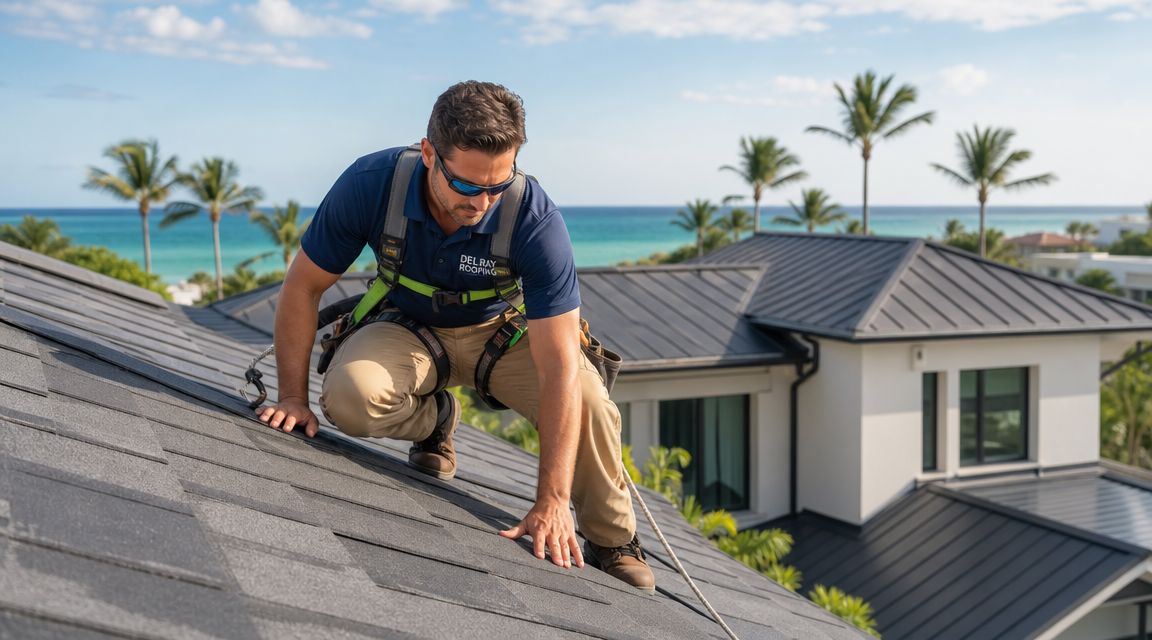
A lot of Delray Beach homeowners start looking for a roofer the same way. A stain shows up on the ceiling after a hard rain. Wind starts rattling something overhead at night. Or you walk outside after a storm, look up, and realize you don't know whether the roof took damage or just looks rough from the ground.
That's when the search for a roofing contractor in Delray Beach stops being a routine home project and starts feeling urgent. In South Florida, your roof isn't just there to keep the sun off the living room. It has to handle storm season, heat, moisture, and the kind of coastal exposure that punishes weak details fast.
Homeowners also have to sort through a crowded market. Delray Beach has 39 highly-rated local roofers on Angi and 80 roofers in BuildZoom's Delray Beach directory, which tells you one thing clearly: there are plenty of options, and choosing the right one matters (Angi Delray Beach roofing listings). The challenge isn't finding a name. It's finding someone who understands what is effective on a Delray Beach roof.
Table of Contents
- Your Expert Roofing Contractor in Delray Beach
- Why Local Expertise Matters for Your Delray Beach Roof
- Comprehensive Roofing Services for Delray Beach Residents
- Choosing the Right Roofing Material for South Florida Climate
- The Paletz Roofing Process From Start to Finish
- Navigating Delray Beach Roofing Permits and Insurance Claims
- Your Trusted Partner in Delray Beach Roofing Since 1990
- Frequently Asked Questions for Delray Beach Homeowners
Your Expert Roofing Contractor in Delray Beach
When a summer storm rolls in off the coast, homeowners usually notice the same things first. A drip near a light fixture. Damp drywall around a vent stack. Pieces of shingle or tile in the yard. By the time that happens, the question isn't “Who does roofing?” It's “Who knows how to diagnose this correctly and keep it from becoming a much bigger problem?”
That's the difference between a generic roofer and a contractor who works this part of South Florida every day. A Delray Beach roof lives under intense sun, heavy rain, and salt exposure. Small installation shortcuts don't stay small for long.
If you're evaluating contractors, it also helps to understand the business side of protection. Homeowners often ask what insurance a legitimate contractor should carry and why it matters if something goes wrong on the job. This overview of liability insurance for Miami contractors gives useful context on why insurance documentation matters before any crew starts work on your property.
A roofing contractor in Delray Beach should be able to explain the roof system in plain English, document damage clearly, and tell you whether you're looking at a repair, a targeted section rebuild, or a full replacement. You shouldn't have to guess your way through that process.
For homeowners who want to verify they're dealing with the right company materials and branding before scheduling, this Paletz Roofing and Inspections company image is one reference point tied to the business identity online.

A good roofer doesn't start with a sales pitch. He starts with the failure point, the water path, and what has to happen next to protect the structure.
Why Local Expertise Matters for Your Delray Beach Roof
A roof in Delray Beach doesn't fail the same way a roof fails inland. That's why local expertise isn't a marketing line. It's a technical requirement.

Delray Beach roofs fail for local reasons
In Delray Beach and similar South Florida coastal markets, contractors have to design for wind uplift and salt-air corrosion. Local coastal exposure and Florida wind-resistance requirements make metal, tile, and high-performance shingle assemblies materially different in durability, fastening density, and maintenance needs (South Florida coastal roofing conditions).
That matters in real-world terms. Wind doesn't only rip off visible roof coverings. It tests edge metal, ridge attachment, flashing transitions, underlayment integrity, and the details around penetrations. Salt air creates a separate problem. Fasteners, metal components, and exposed accessories can degrade faster if the wrong products are used or if dissimilar materials are paired poorly.
A contractor from outside the area may talk about “a new roof” as if all roofs are basically the same. They aren't. On the coast, the assembly has to be matched to exposure.
A local contractor designs the whole system
The strongest roofing contractor Delray Beach homeowners can hire isn't just installing a surface material. He's choosing and coordinating a full system.
That includes decisions like these:
- Fastening strategy: The attachment pattern has to fit the material and the exposure conditions.
- Flashing details: Valleys, walls, chimneys, curbs, skylights, and vents are where many leaks begin.
- Corrosion resistance: Fasteners, clips, and metal trims have to make sense for coastal conditions.
- Drainage planning: Low spots and bad runoff patterns shorten roof life, especially on low-slope areas.
- Ventilation and moisture control: Heat and humidity can punish the roof deck from below as well as above.
A local roofer also understands what doesn't work. Cheap patch materials over failed flashing usually don't hold. Reusing worn components to save money often creates a callback. Slapping new material over hidden substrate trouble is one of the fastest ways to turn a manageable job into a much more expensive one later.
Practical rule: If a contractor talks only about roof color and price, keep asking questions. In Delray Beach, the important conversation is about attachment, corrosion resistance, drainage, and code compliance.
There's also a market reality here. Delray Beach homeowners are shopping in a crowded field. That's good for comparison, but it means you need to separate polished sales language from actual local competence. A seasoned contractor should be able to walk your roof, point out where water is entering or where wind pressure is attacking the system, and explain why the fix fits this climate.
The houses may vary. The rules don't. South Florida punishes weak roofing details faster than many homeowners expect.
Comprehensive Roofing Services for Delray Beach Residents
Most homeowners don't need “roofing services” in the abstract. They need the right service for the problem they have. Leak. Age. Storm damage. Pending sale. Insurance documentation. Active emergency. Each one calls for a different response.

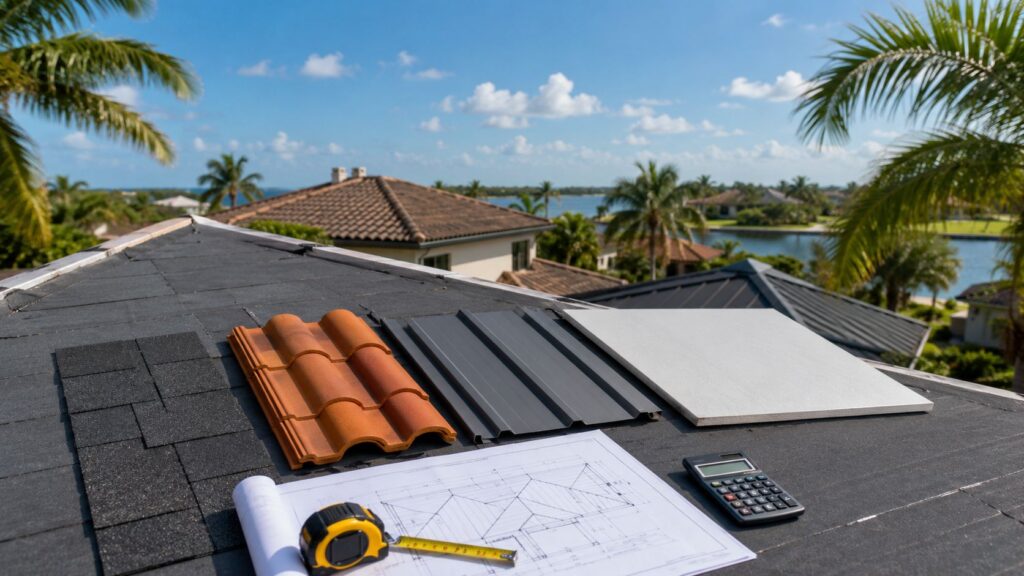
For Delray Beach roofs, providers commonly work on shingle, tile, metal, and flat systems, and those materials have different cost, lifespan, and climate tolerance profiles (Delray Beach roof material performance). That's why service should start with diagnosis, not assumptions.
A current roofing project photo example from Paletz gives homeowners a practical sense of the type of field work and roof conditions involved during inspection and service planning.
Roof repair when the problem is isolated
Repairs make sense when the roof system is still broadly serviceable and the failure is limited. That can include a leak around flashing, a section of damaged shingles, broken tiles in one area, or a localized flat-roof seam issue.
Good repair work starts with tracing the water path. That's important because the interior stain often isn't directly below the exterior failure. Water travels. It follows decking, framing, underlayment laps, and penetrations before it shows itself indoors.
Repair is usually the right path when:
- The issue is confined: One section failed, but the rest of the roof is holding.
- The roof still has serviceable life: The assembly isn't broadly worn out.
- The substrate is sound: There's no widespread deck or structural deterioration.
- The goal is targeted protection: You need to stop damage now while planning future work wisely.
Roof replacement when repairs stop making sense
A full replacement is the smarter move when multiple areas are failing, prior repairs have piled up, or the roof has reached a point where patching just postpones a larger problem. Homeowners often resist replacement because repair sounds cheaper. In practice, repeated repair on a worn-out roof can become the more expensive path.
Replacement also gives the contractor a chance to correct system-level problems. Bad flashing details, weak ventilation, aging underlayment, and poor drainage don't usually get solved by patchwork.
A replacement conversation should cover:
- The condition of the existing roof covering.
- Whether the deck shows signs of trouble.
- Which material suits the building and exposure.
- How flashing, drainage, and ventilation will be handled.
Roof inspections for planning and prevention
An inspection is more than a glance from the driveway. A proper inspection helps homeowners make decisions before the problem becomes visible inside.
Inspections are useful when you're dealing with:
- Post-storm uncertainty: You saw wind and rain, but can't tell what changed.
- Real estate activity: Buyers, sellers, and agents often need condition clarity.
- Preventive maintenance: Catching trouble early is cheaper than rebuilding damaged interiors.
- Insurance documentation: Clear notes and photos matter if a claim becomes necessary.
If the roof has been through a major weather event, don't wait for an indoor leak before getting eyes on it. Hidden damage is common after wind-driven rain.
Emergency response after wind and water intrusion
Emergency roofing work is about stabilization first. Stop active water intrusion. Protect the interior. Secure exposed sections. Then evaluate what the permanent solution needs to be.
What works in an emergency is disciplined triage. What doesn't work is pretending an emergency patch is the final repair. Temporary measures buy time. They don't replace a full assessment.
For a homeowner searching “roofing contractor Delray Beach” during a storm season scare, the practical order is simple:
- Protect the inside first: Move valuables and limit interior water spread if it's safe.
- Document visible damage: Take photos from safe ground positions.
- Call for professional assessment: Active leaks and lifted materials need prompt evaluation.
- Separate emergency stabilization from permanent scope: They are not the same job.
Choosing the Right Roofing Material for South Florida Climate
Material choice drives how the roof handles heat, storms, maintenance, and long-term ownership cost. In Delray Beach, that decision shouldn't be based on appearance alone.
Each common system has strengths. Each has trade-offs. The right answer depends on slope, home style, exposure, budget, and how long you plan to keep the property.
Shingle roofs
Shingles remain a common option because they're familiar, widely available, and workable on many residential roof shapes. For homeowners who want a straightforward roofing system and a broad range of color choices, shingles often make sense.
The trade-off is that shingles generally require more careful evaluation of wind exposure and wear over time than heavier or more specialized systems. In Delray Beach, a shingle roof needs proper installation details and realistic expectations. A cheap shingle job may look fine on day one and disappoint fast once weather starts testing it.
Shingles fit best when the homeowner wants:
- lower initial investment than premium systems
- a traditional residential look
- a practical replacement on a standard sloped roof
Tile roofs
Tile works well in South Florida because it suits the architecture and stands up well in coastal conditions when the system under it is built correctly. Tile also gives homeowners a durable, substantial roof profile.
The mistake some people make is thinking tile itself is the whole story. It isn't. Underlayment, flashing transitions, attachment details, and replacement availability matter. A tile roof can perform very well, but spot repairs and matching can become more involved than on simpler systems.
Tile is often a good fit when:
- appearance matters a lot
- the home suits a premium coastal style
- the owner wants long-term durability and doesn't mind a more involved system
Metal roofs
Metal is one of the strongest choices for homeowners focused on long-term performance, reflectivity, and coastal durability. It's especially appealing where corrosion resistance and storm resilience are top priorities.
Metal also demands precision. Panel layout, fastener selection, clip systems, penetrations, and flashing work all have to be handled carefully. A sloppy metal installation can create persistent problems even though the material itself is strong.
Metal usually makes the most sense when the homeowner values:
- strong resistance to coastal exposure
- a clean, modern roof appearance
- long-term ownership over the lowest upfront price
On coastal homes, material quality matters. Installation quality matters more. A premium roof installed poorly will still fail where the details are weak.
Flat roofing systems
Flat and low-slope roofs are common on commercial buildings and some residential designs. They solve architectural and use-case needs, but they ask more from drainage design and waterproofing details than steep-slope systems do.
The biggest failure points on flat roofs are usually seams, penetrations, flashing transitions, and ponding-related trouble. Flat systems can perform well, but they reward regular inspection and quick response to small issues.
Flat roofing is usually right for:
- low-slope residential sections
- additions and porches
- commercial structures with rooftop equipment or modern profiles
Delray Beach roofing material comparison
Because each roof type performs differently, a side-by-side view helps frame the conversation. The lifespan and cost columns below are qualitative because precise numbers vary by product, installation details, building design, and project scope.
| Material | Est. Lifespan (Years) | Hurricane Resistance | Energy Efficiency | Initial Cost |
|---|---|---|---|---|
| Shingle | Varies by product and conditions | Moderate to strong when properly specified and installed | Moderate | Lower relative upfront cost |
| Tile | Varies by assembly and maintenance | Strong | Moderate | Higher upfront cost |
| Metal | Varies by coating, panel type, and environment | Strong | Strong | Higher upfront cost |
| Flat | Varies by membrane type and detailing | Depends heavily on attachment and detailing | Moderate to strong depending on system | Varies widely by system |
The best roofing contractor Delray Beach homeowners can hire will walk through these trade-offs without forcing one answer on every property. Good contractors match the material to the building. Bad ones try to make every building fit the material they'd rather sell.
The Paletz Roofing Process From Start to Finish
A Delray Beach roof job usually feels hardest on day one. The stain on the ceiling has spread, a few shingles or tiles may be out of place, and every homeowner wants the same answer fast. Is this a repair, or is it the start of a full replacement? A disciplined process is how that question gets answered without guesswork.

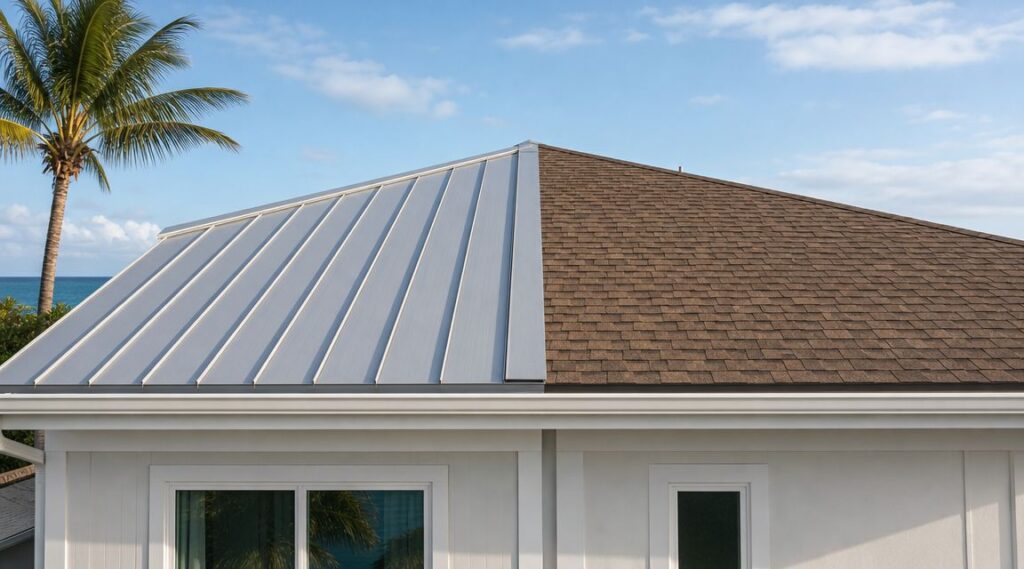
For homeowners who want a visual reference for completed roofing work and project presentation, this Paletz roofing project image shows the kind of finished-site context many customers review during the selection process.
What happens first
The job starts with contact, then an on-site inspection. In South Florida, that inspection has to do more than confirm visible damage. It should identify the roof system, likely water-entry points, signs of wind uplift, flashing condition, drainage problems, previous repair work, and any evidence that the problem extends beyond one small area.
That first visit also shapes the decision that matters most. Repair, maintenance, or replacement. A careful contractor does not jump to the biggest job. If the roof has good structure and the trouble is isolated, a targeted repair may make sense. If the system is near the end of its service life, has widespread deterioration, or no longer meets the performance standard the homeowner needs for storms and insurance, replacement may be the better financial choice.
The proposal should make that line clear.
A solid scope spells out what will be removed, what will stay, what material is being installed, how flashings and penetrations are handled, and what conditions could change the price once the roof is opened. That last point matters because hidden deck damage is common in leak areas, especially where water has been getting in for a while.
What happens before installation starts
Once the homeowner approves the scope, the process shifts into scheduling, material ordering, and permit preparation where required. Good planning reduces jobsite problems later. It also gives the homeowner time to ask practical questions about access, driveway use, landscaping protection, noise, and how long the property will be exposed during tear-off and dry-in.
This part is where local knowledge shows up in a real way. Delray Beach roofs are not installed in a vacuum. Crew timing, weather windows, code requirements, and product lead times all affect how a project should be staged. A contractor who works this area regularly is less likely to get surprised by those factors.
What happens during the job
The field work should follow a clean sequence. Protect the property first. Remove existing roofing where the scope requires it. Inspect the deck. Replace damaged substrate as needed. Dry in the roof. Install flashing details correctly. Then install the finish roofing system and clean the site thoroughly.
That sequence sounds simple. The trade-offs are not.
If hidden deterioration turns up, the homeowner should see photos and get an explanation before extra work proceeds. If afternoon weather threatens an open section, dry-in and water control become the top priority. If the roof has valleys, wall tie-ins, skylights, chimneys, vents, or low-slope transitions, those areas deserve more attention than the broad field of the roof because they are where many failures start.
A sound process includes:
- Property protection: Covering vulnerable landscaping, protecting driveways, and controlling debris around entry points.
- Deck and detail review: Checking sheathing condition, fastening issues, flashing transitions, and penetrations before finish materials cover them up.
- Clear communication: Letting the homeowner know what stage the crew is in, what was found, and whether any approved scope change is needed.
- Code-aware installation: Making sure attachment methods, underlayment, and detail work line up with local requirements and the selected roof system.
- Daily cleanup: Picking up nails, removing tear-off debris, and leaving the property in safe condition at the end of each workday.
What closes the project properly
A roof is not finished the moment the last material goes on. Closeout should include final inspection, cleanup, and a walkthrough with the homeowner. The contractor should explain what was repaired or replaced, point out any areas that deserve future monitoring, and provide the records the homeowner may need for warranty, resale, or insurance files.
That paperwork has value. In Delray Beach, homeowners often need clear documentation to show what was installed, when it was installed, and who performed the work.
Among local service options, Paletz Roofing and Inspections is one contractor that handles residential and commercial roof repairs, replacements, and inspections across South Florida, including Delray Beach, using this kind of inspection-to-completion workflow.
Navigating Delray Beach Roofing Permits and Insurance Claims
Roofing problems are stressful enough without paperwork getting in the way. In Delray Beach, permit handling and insurance documentation can shape the outcome almost as much as the field work itself.

When to repair, when to replace, when to document
After a storm, many homeowners rush toward one of two bad decisions. They either underreact and ignore damage that should be documented quickly, or they jump straight to replacement without first understanding whether the roof still has serviceable life.
A smarter framework looks like this:
- Document first if the damage is recent and tied to a storm event.
- Stabilize second if water is entering or materials are loose.
- Assess scope third to decide whether the trouble is local or widespread.
- Choose repair or replacement last once the facts are clear.
This order keeps emotions from driving a costly decision.
Why permit handling matters
Permits matter because roofing isn't just maintenance. It's regulated work tied to building safety, code compliance, and final inspections. Homeowners should be cautious of anyone who tries to treat permit requirements like a nuisance or shortcut around them.
The contractor should handle permit-related steps professionally, including scope alignment, paperwork support, and inspection coordination. If a roofer is casual about permitting, that usually says something about how casual he may be with flashing details, attachment methods, and other things you can't easily see once the job is complete.
Insurance claim habits that protect homeowners
One of the most important post-storm warnings for Florida homeowners is this: verify that the contractor's license and insurance are in their own name, not borrowed, especially after storm activity brings in out-of-area operators and makes warranty enforcement harder (Florida contractor verification guidance after storms).
That single step protects homeowners from a lot of preventable trouble.
Use this checklist when a storm claim may be involved:
- Take safe photos early: Capture exterior debris, visible roof disturbance, and interior staining if present.
- Keep notes on timing: Write down when the storm passed and when the issue was first noticed.
- Save temporary repair records: If emergency stabilization is needed, keep every related document.
- Verify license and insurance directly: Don't rely on verbal claims or borrowed paperwork.
- Ask for damage documentation in writing: Photos and written findings help when adjusters review the file.
The homeowner who documents calmly and verifies credentials early usually has a cleaner path than the homeowner who waits until memory, weather, and paperwork all get messy.
Your Trusted Partner in Delray Beach Roofing Since 1990
Trust in roofing isn't built with slogans. It comes from consistency, licensing, insurance, communication, and work that holds up after the crew leaves.
Paletz Roofing and Inspections has been licensed and insured since 1990, and that matters because roof work in South Florida demands experience with repairs, replacements, inspections, and material selection under real coastal conditions. Homeowners aren't just hiring labor. They're trusting someone with one of the most vulnerable parts of the property.
A dependable roofing contractor in Delray Beach should bring a few things to the table every time:
- Clear recommendations: Repair if repair makes sense. Replace if replacement is the honest answer.
- Material fluency: Shingle, tile, metal, and flat systems each need different handling.
- Documentation: Estimates, photos, and job records shouldn't be hard to get.
- Professional follow-through: Questions after the job should still get answered.
Homeowners also tend to trust what they can verify visually. Completed project photos, inspection images, and before-and-after documentation give a much better sense of workmanship than vague promises ever will.
The right roofer doesn't just show up when there's a leak. He helps the homeowner make better decisions before, during, and after the project.
Frequently Asked Questions for Delray Beach Homeowners
How often should I have my roof inspected in Delray Beach
In this climate, inspections make sense after major storms, before real estate transactions, and anytime you notice signs like staining, loose material, damaged flashing, or debris impact. Coastal heat, rain, and wind can turn a small issue into a larger one faster than many homeowners expect.
If your roof is older or has a history of repairs, staying ahead of problems is even more important. Waiting for active interior leakage usually means the roof has already been letting water go where it shouldn't.
How do I know if I need a repair or a full replacement
A repair is usually appropriate when the problem is localized and the rest of the roof is still in sound working condition. Replacement is usually the better choice when failures are spread across multiple areas, prior patchwork is stacking up, or the assembly is broadly worn and vulnerable.
The key is diagnosis. Not every leak means a new roof, and not every “small issue” should be patched.
What should I ask before anyone starts roofing work
Ask who will inspect the roof, what materials are being proposed, whether the problem is isolated or systemic, how documentation will be handled, and what permit or insurance steps apply to your situation. After storm events, also verify that the contractor's license and insurance belong to that contractor directly.
If you're considering adding solar later, roof warranty coordination matters too. Homeowners looking into that topic may find this Florida homeowner's solar warranty guide helpful because post-installation penetrations and responsibility lines can affect how roof issues get handled.
If you need a repair estimate, a storm-damage inspection, or a full roof replacement assessment, contact Paletz Roofing and Inspections for a no-obligation quote and clear guidance on the next step for your Delray Beach property.