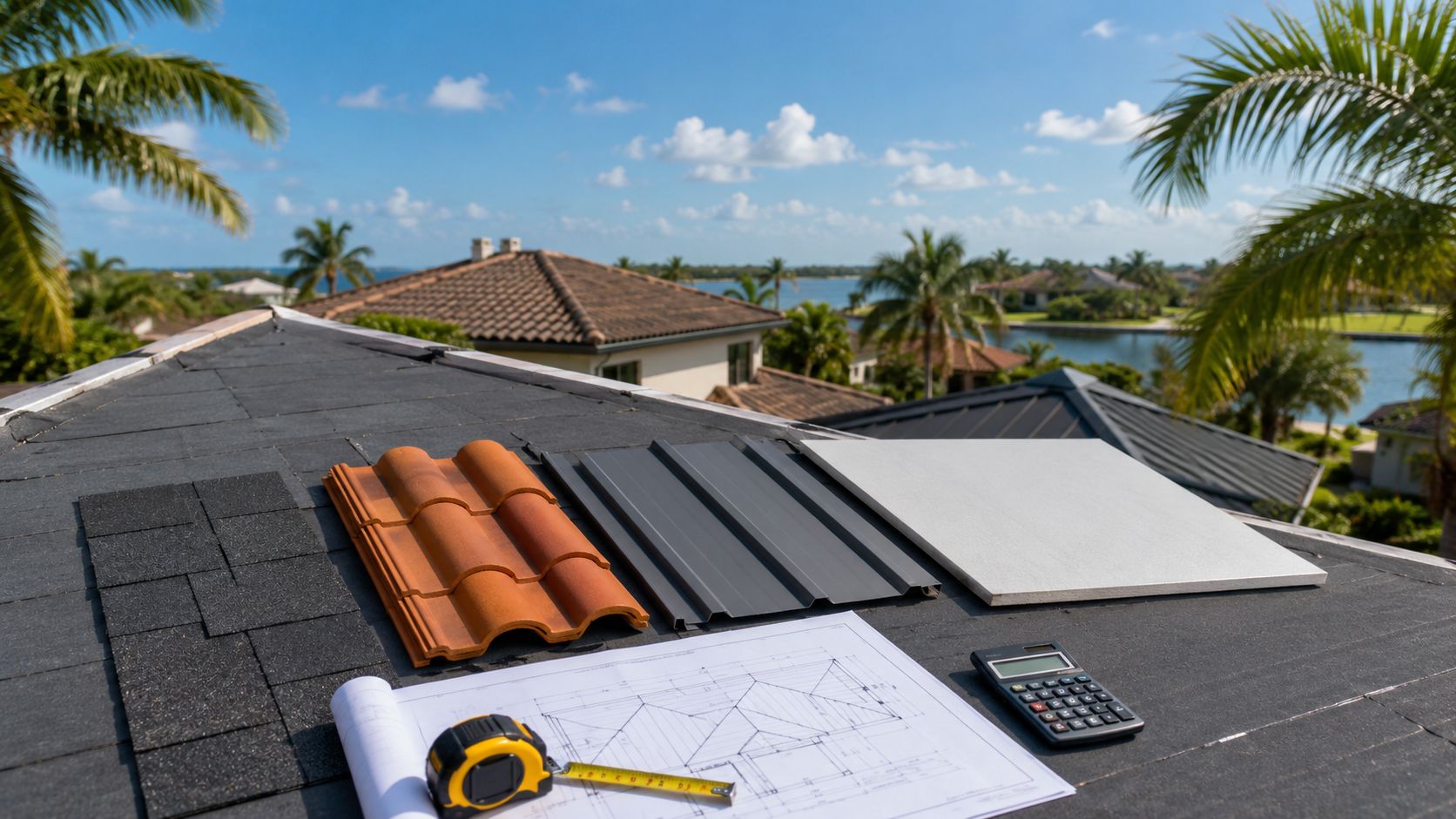
A new roof in South Florida can run from about $15,000 for a basic shingle roof on a smaller home to over $70,000 for premium tile or metal systems. National pricing shows why that spread is so wide: asphalt roofs often fall in the $20,000 to $30,000 range in one 2026 guide, while another source puts national roof replacement at about $9,530, or roughly $4 to $11 per square foot, depending on size, pitch, and location (Bill Ragan Roofing cost guide).
In South Florida, those national averages only tell part of the story. Hurricane exposure, stricter code requirements, permit rules, roof shape, and material choice all push a roofing quote up or down. A simple ranch home with an easy walkable roof is one kind of job. A two-story tile roof in Miami-Dade with valleys, chimneys, limited access, and replacement decking is a different job entirely.
After more than 30 years around South Florida roofing, the pattern is always the same. Homeowners usually focus on the shingle, tile, or metal they can see. The actual cost is built from what sits underneath, what code requires, and how hard the roof is to install correctly in a storm-prone market.
Table of Contents
- Your 2026 Guide to South Florida Roofing Costs
- The Three Pillars of Any Roofing Estimate
- Roofing Material Costs in South Florida A Detailed Comparison
- How Local Factors Drive Up Your Roofing Bill
- Decoding Your Roofing Quote Line by Line
- Securing a Fair Price and Exploring Payment Options
- Frequently Asked Questions About Roofing Costs
- Protect Your Investment with a Professional Estimate
Your 2026 Guide to South Florida Roofing Costs
Most South Florida homeowners asking how much does a roof cost aren't really asking for a national average. They want to know what they're likely to pay in Broward, Miami-Dade, or Palm Beach when hurricane rules, insurance expectations, and local labor are part of the job.
That's why broad online averages often miss the mark here. A roof on a smaller home with basic shingles may land around the lower end of the market, while premium tile and metal systems on larger or more complex homes climb quickly. The gap isn't random. It comes from material choice, roof size, roof geometry, tear-off conditions, and how much code-required work has to happen before the final roof goes on.

A good roof budget also has to look past the roof covering itself. Gutters, drainage, and maintenance affect how long the system performs. Homeowners trying to protect the full exterior should also understand issues like preventing water damage and ice dams, even though South Florida deals more with heavy rain and drainage overload than winter ice.
What homeowners need to know first
South Florida roofing isn't priced by guesswork. It's priced by conditions on your specific home.
A real estimate usually turns on a few practical questions:
- What material are you installing: Shingle, tile, metal, and flat systems don't price the same, and they don't install the same.
- How hard is the roof to work on: Steep areas, high walls, tight lot lines, and complex valleys add time and waste.
- What does local code require: Fastener patterns, underlayment details, and inspection steps matter more here than in mild-weather markets.
- What do we find after tear-off: Rotten wood, damaged fascia, and failed flashing can't be ignored once the old roof comes off.
For a visual example of the kind of roof profile that can change pricing fast, this South Florida roof image reference shows the type of upscale residential roof where material and detailing make a major difference.
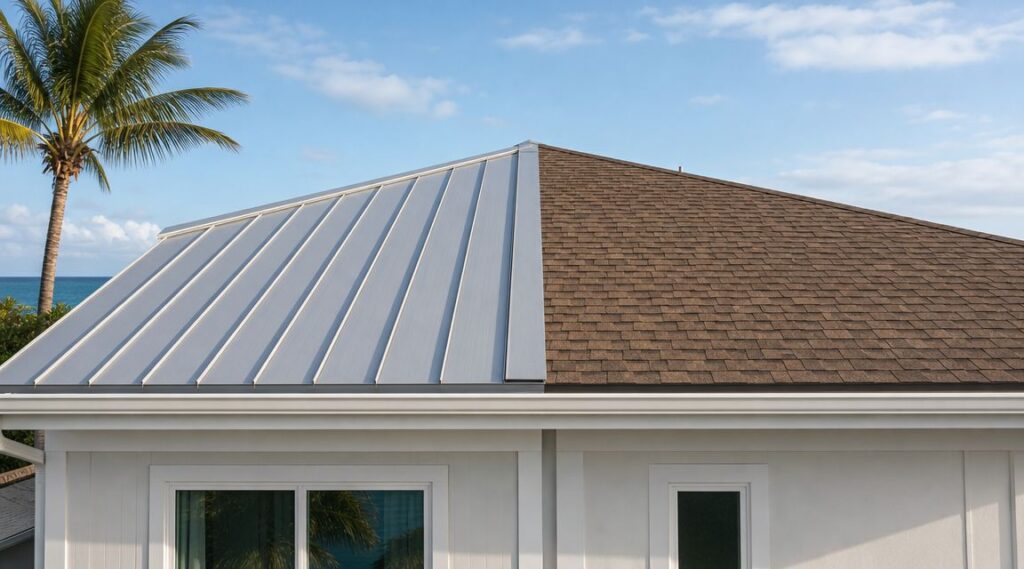
In this region, the cheapest roof on paper often turns into the most expensive one if it doesn't hold up to weather, inspections, and insurance scrutiny.
The Three Pillars of Any Roofing Estimate
Every roofing bill comes down to three things. Materials, labor, and permits or job-related fees. If you only look at the price of shingles or tile, you're not looking at the full cost of the roof.
The easiest way to understand it is like a restaurant bill. The ingredients matter. The cook's time matters. The cost of running the place matters too. Roofing works the same way. You're paying for the roof system, the crew that installs it, and the overhead required to do the work legally and safely.

Materials set the baseline
Material choice usually establishes the starting point for the estimate. National benchmark pricing shows just how wide that spread can be. Typical asphalt shingle replacement runs about $3.40 to $5.95 per square foot overall, while metal runs roughly $6.00 to $24.50 per square foot and tile about $6.30 to $12.30 per square foot (Roofing Calculator material benchmarks).
That doesn't mean your roof will land neatly inside a simple chart. South Florida homes often require details that affect what “material” really means in practice. Underlayment, flashing package, starter materials, vent products, ridge accessories, and code-compliant attachment all move with the roof system.
Labor changes everything
Labor is where many homeowners underestimate the job. One 2026 analysis says labor typically accounts for 40% to 60% of a roof replacement bill, averaging about $4,000 to $6,000 (Fixr roof replacement cost analysis).
That number makes sense in the field. Installation is not just laying material in rows. The crew has to protect landscaping, tear off the old roof, inspect the deck, stage material, install the waterproofing layers correctly, detail penetrations, and clean the property when the job is done.
Practical rule: When two quotes are far apart, the difference is often labor scope. One contractor may be pricing a complete installation, while another is leaving out steps that only show up later as change orders.
Permits fees and job costs are real
The third pillar is what many homeowners call “miscellaneous,” but it isn't miscellaneous at all. These are the costs tied to doing the project properly.
A complete estimate may include items like:
- Permit handling: Local filing, inspections, and approval steps.
- Dump and disposal: Tear-off debris has to go somewhere, and hauling isn't free.
- Insurance and compliance: The contractor carries business costs so the homeowner isn't exposed.
- Site protection and cleanup: Tarps, magnetic sweeps, and damage prevention take time and planning.
What works and what doesn't
What works is comparing estimates based on scope. What doesn't work is comparing one bottom-line number to another without reading the details.
A good estimate should show whether it includes tear-off, disposal, underlayment, flashing replacement, ventilation work, and permit-related items. If those pieces are vague, the price isn't really settled.
Here's the simple breakdown:
| Estimate Pillar | What it covers | Why it matters |
|---|---|---|
| Materials | Roof covering, underlayment, flashing, accessories | Drives the base cost and performance level |
| Labor | Tear-off, installation, detailing, cleanup | Usually one of the biggest cost components |
| Permits & Fees | Permit process, disposal, admin, job logistics | Keeps the project legal and complete |
Roofing Material Costs in South Florida A Detailed Comparison
Material choice changes the price faster than almost anything else on a roofing quote. In South Florida, it also changes how the roof handles salt air, UV exposure, heavy rain, and the stricter installation standards that come with a hurricane-prone region.
A shingle roof and a tile roof may cover the same house, but they do not carry the same labor demands, accessory costs, or long-term maintenance profile. National price ranges can give homeowners a starting point. They do not show the full South Florida picture, where attachment methods, underlayment requirements, and insurance-driven upgrades often push the final number higher than a national chart suggests.
For a quick visual comparison of common roof appearances in this market, this South Florida roofing material image shows the style differences many homeowners compare before they narrow the material list.
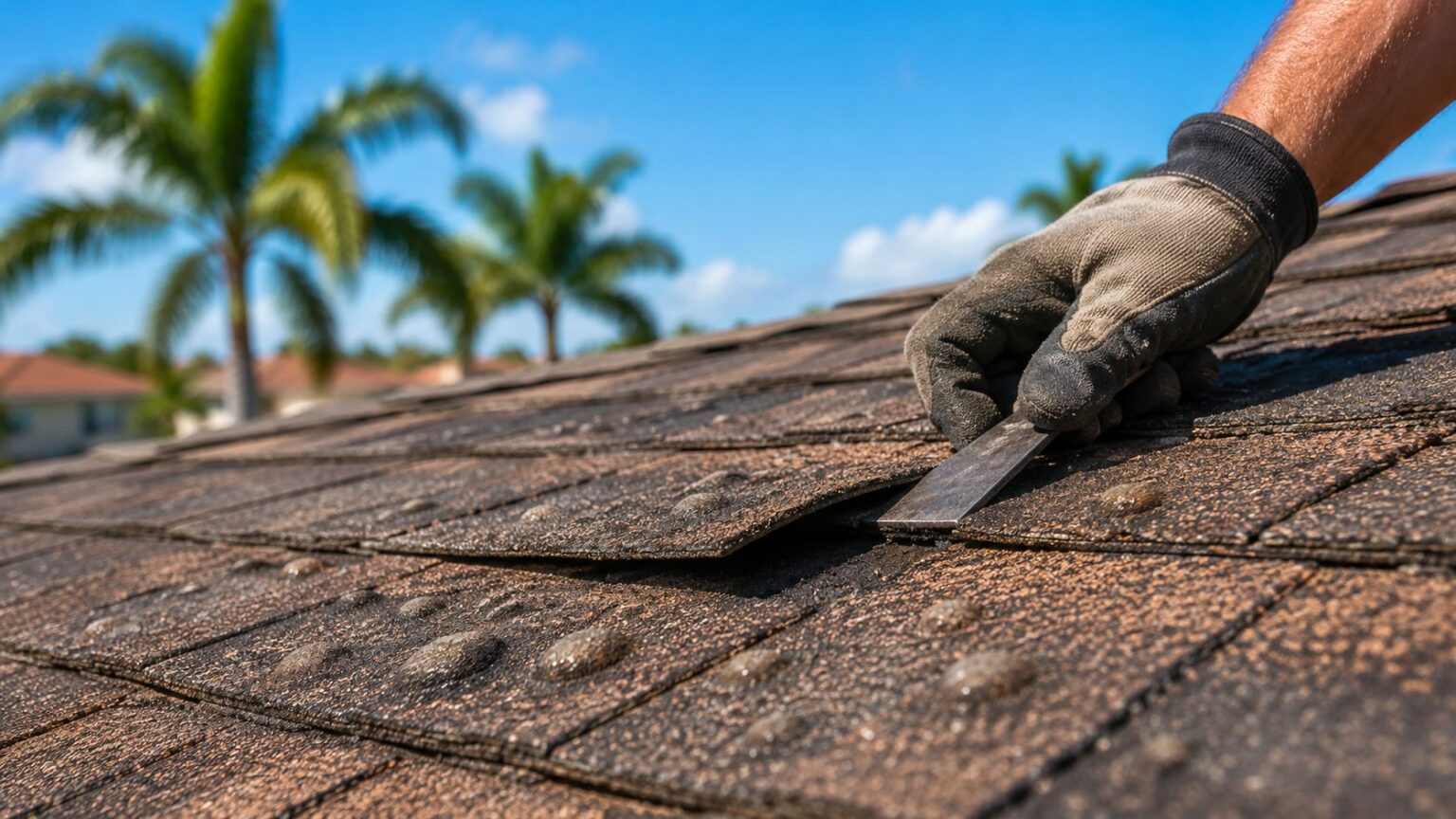
South Florida Roofing Materials Cost and Lifespan Comparison 2026
| Material Type | Installed Cost per Sq. Ft. | Expected Lifespan (South Florida) | Best For |
|---|---|---|---|
| Asphalt shingles | Lower-cost option among common residential materials | Depends heavily on product grade, ventilation, installation quality, and storm exposure | Homeowners focused on lower upfront cost |
| Tile | Higher upfront cost than shingles, often with added structural and detail work | Long service life if the structure, underlayment, and fastening system are right | Homes where appearance and durability matter |
| Metal | Wide price range, with standing seam at the premium end | Long service life with proper panel layout, trim work, and maintenance | Owners wanting premium performance and less weight than tile |
| Flat roofing systems | Case-by-case pricing based on system type and roof condition | Depends on drainage, ponding, seams, flashing, and maintenance | Low-slope residential sections and commercial buildings |
Asphalt shingles
Shingles are still the budget entry point for many South Florida homeowners. They install faster than tile on a straightforward roof, and they do not put the same weight on the structure.
That said, a proper shingle roof here is not a bargain-basement product. South Florida sun shortens the life of weak materials. High wind exposure punishes sloppy nailing, poor starter layout, cheap ridge vents, and reused flashing. I have seen plenty of homeowners buy the lowest quote, then pay again a few years later because the details were skipped.
Best fit
- Budget-conscious replacement: Works for homeowners who need to control upfront cost.
- Simpler roof layouts: Usually a practical choice on homes without a lot of cuts, valleys, and height changes.
- Lighter roof load: Useful where the structure is not designed for heavy tile.
Trade-offs
- Shorter service life than tile or quality metal: In South Florida, installation quality and sun exposure have a direct effect on how long shingles last.
- Less architectural impact: Some homes look better with tile or metal.
- More sensitive to workmanship errors: Poor fastening and weak flashing show up fast in this climate.
Tile roofing
Tile is a South Florida staple for a reason. It fits the architecture, holds up well in heat, and has the look many neighborhoods expect. Concrete tile is common. Clay-style profiles are popular too, especially on higher-end homes.
The tile itself is only part of the bill. A tile roof often needs more labor, more cut work, more setup time, and closer attention to underlayment and flashing. On some homes, the structure also has to be evaluated for the added weight. If the roof has a lot of hips, valleys, wall tie-ins, or second-story transitions, the price climbs quickly.
Tile makes the most sense for homeowners planning to stay put and for homes where curb appeal matters. The underlayment beneath the tile usually determines how soon major work is needed, not just the tile on top.
Tile can look great and last a long time, but the system underneath it decides whether the roof performs well in South Florida weather.
Metal roofing
Metal has gained ground in South Florida because it offers a clean look, long service life, and less structural weight than tile. It is especially common on coastal homes, modern designs, and houses where the owner wants a premium system without the mass of concrete tile.
It also has very little tolerance for bad workmanship. Panel alignment has to be right. Trim has to be fabricated and installed correctly. Flashing around walls, valleys, vents, and curbs has to be done by a crew that knows metal, not a crew that mainly installs shingles and takes a metal job on the side.
Where metal works well
- Coastal and modern homes: Strong aesthetic fit.
- Long-term ownership: Better value for homeowners who plan to stay in the property.
- Weight-sensitive structures: Premium performance without the load of tile.
What raises the quote
- Custom trim and flashing work: These details take time and skill.
- Complex roof geometry: More transitions mean more labor and waste.
- Specialized labor: Experienced metal installers charge more, and they should.
Flat roofing systems
Low-slope roofs are common on additions, contemporary homes, condos, and commercial buildings across South Florida. These are not roofs to price by guesswork. The membrane type matters, but drainage matters more.
A flat roof with poor slope, weak edge detail, or heavy ponding can become a chronic leak problem no matter what brochure the material came from. TPO, modified bitumen, and similar systems should be quoted based on the existing deck condition, number of penetrations, drainage layout, and the amount of prep work needed before installation.
On flat roofing, the cheapest number is often the most expensive decision.
How Local Factors Drive Up Your Roofing Bill
South Florida roofing costs climb for reasons that don't show up in a national price chart. Homeowners see the final number and assume the contractor padded it. In reality, local rules and local conditions often drive the increase.
The biggest difference here is that a roof has to do more than cover the house. It has to meet strict installation standards in a storm-prone region, pass inspections, and hold up under punishing sun, wind, and rain.

Hurricane code and inspection pressure
In South Florida, code compliance is not a small add-on. It shapes the job from start to finish. The roof system has to satisfy local permitting and inspection expectations, and those expectations affect underlayment, attachment methods, edge metal, flashing, and documentation.
That's one reason out-of-market price comparisons don't help much. A quote from another state may look lower because the installation standard is lower. Here, shortcuts usually get caught either at inspection or after the first major storm.
Roof shape pitch and details
A simple roof is cheaper because it wastes less material and takes less labor. A complicated roof costs more because every valley, wall tie-in, skylight, chimney, and change of plane creates extra work.
Independent estimates note that roof cost varies by roof architecture, and that leak, flashing, and storm-damage repairs can range from a few hundred dollars to over $2,000 depending on severity, access, and material (Exterior Medics roof cost calculator). That tracks with what homeowners experience after storms. The visible issue may be one leak stain, but the labor required to trace and repair the source can be far more involved.
Cost drivers that surprise homeowners most
- Multiple valleys: These collect water and require careful waterproofing.
- Steep sections: They slow installation and increase crew difficulty.
- Penetrations: Vents, skylights, and pipes all create flashing work.
- Mixed roof sections: Tile on one area and flat roof on another complicate scope.
Access tear-off and hidden damage
Some homes are expensive before the first bundle comes off the truck. Tight driveways, limited staging space, pool cages, delicate landscaping, and multi-story access all make the job harder.
Then comes tear-off. That's when hidden damage often shows itself. If the deck has soft spots, rot around penetrations, or damaged fascia, the crew has to stop and correct the substrate before installing the new roof. No reputable roofer should bury bad wood under fresh material just to protect the original quote.
A roof replacement isn't only a roofing job. It's often a demolition, carpentry, waterproofing, and code-compliance job on the same property.
Decoding Your Roofing Quote Line by Line
A roofing estimate should read like a work order, not like a flyer. If the quote is one page with a lump-sum number and a material name, it's not detailed enough for a serious comparison.
The first term most homeowners need to know is square. Roofers measure roofs in squares, and 1 square equals 100 square feet. A technically sound estimate starts with roof geometry, not just house size. For example, a 2,000 square foot roof is 20 squares before pitch adjustment, and common pitch multipliers can rise from 1.15 at 3:12 to 1.40 at 9:12 because slope increases actual roof area and material demand (Rooferbase roofing estimates explained).
Start with squares not house size
Homeowners often get tripped up by this. They know the house is a certain size, so they assume the roof should match it. It usually doesn't.
A two-story home may have less roof area than a sprawling one-story home with the same interior square footage. A roof with steep pitch has more actual surface area than a flatter roof covering the same footprint. Add overhangs, hips, ridges, and valleys, and the difference grows.
What a complete quote should show
A solid quote should break out what's included, especially on a full replacement. You should be able to identify the system and the scope without needing a phone call to decode it.
Look for line items or clear language covering:
- Tear-off and disposal: How many layers are being removed, and is haul-away included
- Deck inspection and wood replacement terms: Whether damaged decking is included or billed as needed
- Underlayment: What type is going under the visible roof covering
- Flashing and penetrations: Valleys, walls, vents, pipes, skylights, and chimneys
- Ventilation components: Ridge vents, static vents, soffit intake, or other airflow details
- Permit and inspection handling: Who is responsible for filing and coordinating
Red flags on the page
If a quote is unusually low, the missing items are often easy to spot once you know where to look.
Here are the common warning signs:
- No mention of underlayment type
- No disposal or cleanup language
- No explanation of flashing replacement
- No note about permit handling
- No process for wood replacement if damage is found
If the quote doesn't tell you what happens when hidden damage shows up, you don't have a finished price. You have a starting number.
Securing a Fair Price and Exploring Payment Options
In South Florida, two roof prices that look close on paper can end up thousands apart by the time permits, upgraded underlayment, code-required attachments, and deck repairs are settled. A fair price reflects the actual scope from the start, not a low opening number that grows once the roof is open.
Cheap bids usually get expensive in the field.
The contractors worth listening to are the ones who explain where the money is going and what could change after tear-off. In this market, that means plain language about wind-mitigation details, permit responsibility, inspection scheduling, and how hidden wood damage will be billed if it shows up. If a roofer avoids those topics, the price is not firm enough to trust.
Questions that separate a real quote from a sales sheet
Ask these before you sign anything:
- Are you licensed and insured for this work: Ask for proof, not a verbal yes.
- What exactly is included in tear-off and disposal: Confirm dump fees, cleanup, and whether multiple layers cost extra.
- What underlayment and flashing system are you installing: In South Florida, those details matter as much as the finished surface.
- How do you handle damaged decking: Get the unit price or repair method in writing before the job starts.
- Who pulls permits and handles inspections: The contractor should own that process and say so clearly.
- What could cause the final price to change: A straight answer here usually tells you how organized the company is.
A local estimate has more value than a recycled national average because it reflects the roof in front of you. The age of the home, the municipality, access around the property, and the product you choose all affect the final bill in ways online averages cannot capture.
How homeowners usually handle the cost
Most homeowners pay for a roof one of three ways: cash or savings, financing through a lender or contractor program, or an insurance claim for covered storm damage.
The right option depends on the reason for replacement. An older roof at the end of its service life is usually an out-of-pocket project. Storm damage is different. In that case, document the condition early, keep photos and inspection notes, and make sure the proposed scope matches the actual damage instead of blending storm repairs with unrelated upgrades.
Financing can make sense if it lets you replace a failing roof before leaks spread into insulation, drywall, or framing. I have seen plenty of homeowners spend more by waiting six months than they would have spent on interest. The smart move is to compare the financing cost against the cost of delay, especially during storm season.
Good timing helps too. Getting estimates before water is entering the house gives you room to compare scopes, ask better questions, and avoid signing under pressure. That usually leads to a better contract and a cleaner final price.
Frequently Asked Questions About Roofing Costs
Can you roof over an existing roof in South Florida
Sometimes homeowners ask this to save money. In practice, a full tear-off is usually the cleaner and safer path because it lets the roofer inspect the deck, replace failed flashing, and correct hidden damage. On South Florida homes, especially older ones or homes with storm exposure, installing over existing problems is rarely the move you want.
Do commercial roofs cost more than residential roofs
They can, but not always for the reason owners assume. Commercial pricing depends heavily on the roof system, penetrations, equipment curbs, drainage, access, and staging. A large low-slope commercial roof may have simpler geometry than a luxury residential tile roof, but it can still involve more coordination and waterproofing detail.
How long does a full roof replacement take
That depends on weather, inspections, material type, and job complexity. A basic residential shingle roof usually moves faster than tile or custom metal. In South Florida, rain interruptions and local inspection timing can change the schedule even when the crew is ready.
Will insurance pay for a new roof
Insurance may help when the replacement is tied to covered storm damage. It generally won't pay just because a roof is old. The important part is documentation. The condition of the roof, the cause of damage, and the wording of the policy all matter.
Why do two homes with similar size get very different quotes
Because roof cost doesn't come from house size alone. Roof geometry, slope, material, access, tear-off condition, and local compliance requirements can make two similar homes price very differently.
Is repair ever smarter than replacement
Yes, if the roof still has useful life and the issue is localized. But repeated repairs on an aging roof can turn into wasted money. If the system is failing in multiple areas, replacement is often the more honest long-term decision.
Protect Your Investment with a Professional Estimate
In South Florida, the gap between a rough roof price and the final contract number can be thousands of dollars once permit requirements, attachment upgrades, and hidden deck repairs are defined. The true cost of a roof here depends on what the house, the code, and the inspection process require.
A professional estimate protects you because it turns assumptions into a written scope. It should clearly state tear-off, disposal, underlayment, flashing replacement, permit handling, and the unit price or allowance for damaged wood if the decking is opened up and problems are found. In this market, that level of detail matters. Hurricane-zone requirements, insurance expectations, and municipal review can all change the actual job cost.
Good estimates also make it easier to compare contractors fairly. A low number on page one does not mean much if one company excluded permit fees, drip edge replacement, secondary water barrier details, or the flashing work around walls and penetrations. On homes with complex lines and multiple transitions, a line-by-line review often shows why one proposal is higher and whether that higher price is buying better protection or just padding.
For homeowners who want a better sense of how roofing companies handle early communication and quoting, these Growth 4 Trades roofing lead insights provide useful background.
If you want to see the kind of roof layout where a detailed written scope matters, review this South Florida roof estimate example image.

If you own a home or commercial property in Broward, Miami-Dade, or Palm Beach County, contact Paletz Roofing and Inspections for a free, no-obligation inspection and estimate. A local quote gives you more than an online average. It shows what your specific roof needs to meet South Florida conditions before a small problem turns into interior damage and a much larger bill.