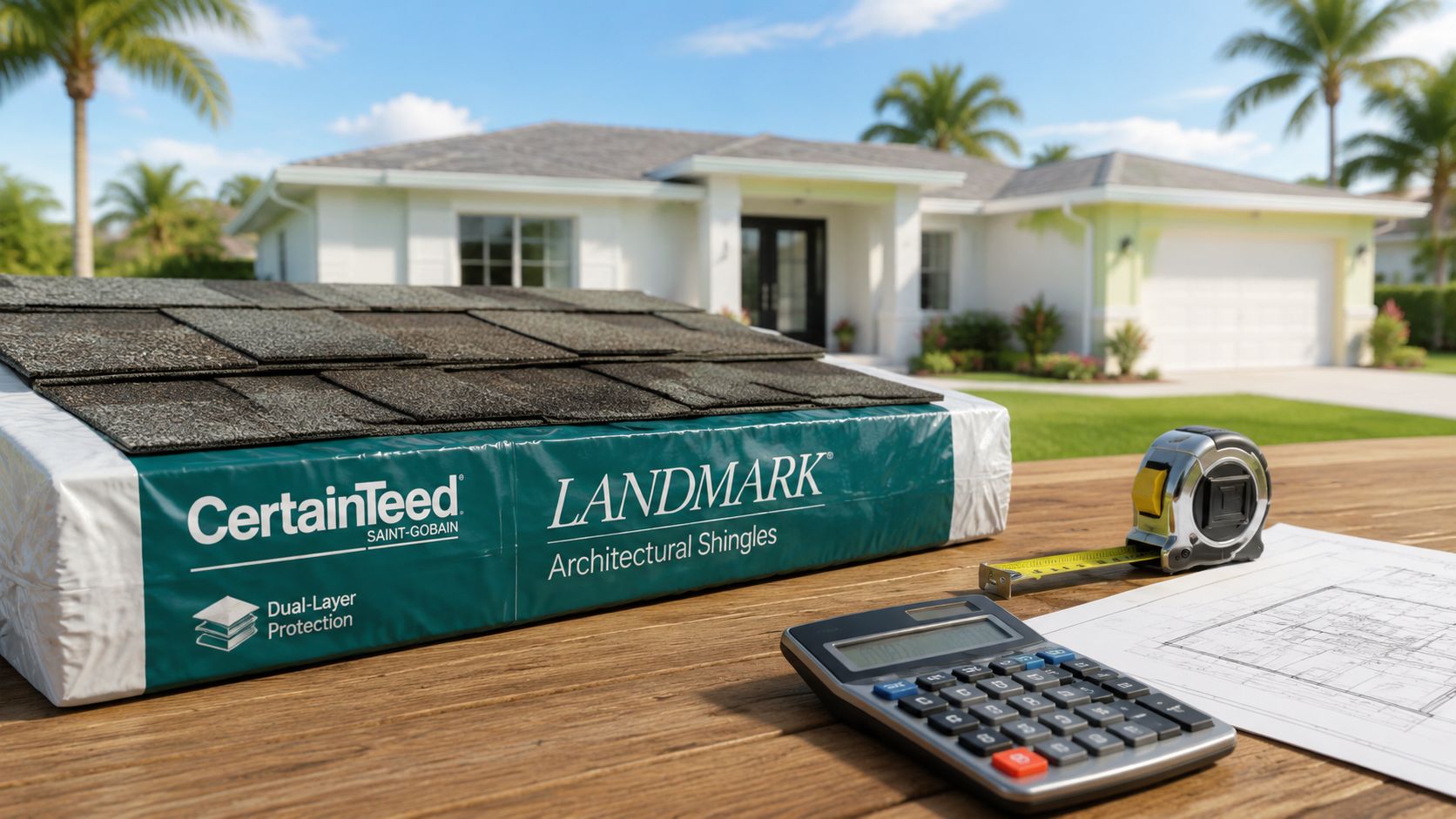
For a typical South Florida home, the total installed cost for CertainTeed Landmark shingles often lands between $8,500 and $16,000 or more, depending on roof size, tear-off scope, and complexity. On many residential properties, a full tear-off and re-roof with standard Landmark also commonly falls between $14,000 and $24,000.
Those two ranges don't conflict. They reflect that online roofing numbers often miss what happens in Broward, Miami-Dade, and Palm Beach counties, where labor pressure, permit requirements, storm demand, and roof design can move a job up fast. If you're trying to pin down the actual cost of CertainTeed Landmark shingles, national averages won't give you a reliable budget.
South Florida roofing has its own math. A simple walkable roof in one neighborhood can price very differently from a steep cut-up roof a few miles away. Material availability matters. Tear-off labor matters. Municipal inspection flow matters. So does whether the crew has to replace damaged decking, improve ventilation, or work around valleys, tie-ins, and flashing details that older homes often hide until the shingles come off.
This guide gives you the numbers that matter, then shows where those numbers bend in the field.
Table of Contents
- Your 2026 Guide to CertainTeed Landmark Shingle Costs
- What Are CertainTeed Landmark Shingles
- Breaking Down Material Costs Per Square
- Factoring in South Florida Labor and Tear-Off Costs
- Example Project Estimates for South Florida Homes
- How to Get a Precise Quote for Your Roof
Your 2026 Guide to CertainTeed Landmark Shingle Costs
In South Florida, a shingle roof quote on a 2,000-square-foot home can swing by many thousands of dollars, even when two contractors are pricing the same CertainTeed Landmark product.
That price spread is normal in Broward, Miami-Dade, and Palm Beach. It happens because homeowners are not buying shingles alone. They are buying a full roof system installed under stricter wind requirements, local permit rules, higher labor costs, and inspection standards that are tougher than what many national pricing guides assume.
For budgeting, treat CertainTeed Landmark as a mid-range architectural shingle that often makes sense for homeowners who want a recognizable brand without stepping up to a premium designer product. The installed price usually depends less on the bundle price and more on what the house and municipality require to get the roof replaced correctly.
South Florida pricing also moves faster than many online articles suggest. After storm activity, crews get booked out, dump fees rise, and material availability can tighten. In Miami-Dade especially, code-related details and scheduling pressure can push a job higher than the same roof in a less regulated market.
A real quote here usually includes several cost layers:
- tear-off and disposal of the existing roof
- underlayment and accessory materials
- flashing work around walls, penetrations, and edges
- labor for installation and site protection
- permit and inspection handling
- cleanup and haul-away
Low numbers usually mean something was left out.
The three biggest pricing drivers are straightforward. Roof shape changes labor fast. Deck repairs change the contract total once tear-off exposes the wood. Local permit workflow and crew demand change production time, especially in busy stretches of the year.
Homeowners make better decisions when they separate material cost from installed cost. That is how you see whether a quote is properly built for South Florida conditions, or whether it is using a low starting number that will grow once the job begins.
What Are CertainTeed Landmark Shingles
About 80 percent of residential roofs in the U.S. use asphalt shingles, and CertainTeed Landmark sits in the architectural category many South Florida homeowners end up comparing once they move past basic three-tab options, as noted by Hail King Professionals.
CertainTeed Landmark is an architectural asphalt shingle with a heavier, layered look than an entry-level strip shingle. For homes in Broward, Miami-Dade, and Palm Beach counties, that matters for two reasons. It improves curb appeal, and it gives homeowners a product line that is widely specified, widely available through local suppliers, and familiar to inspectors and roofing crews.
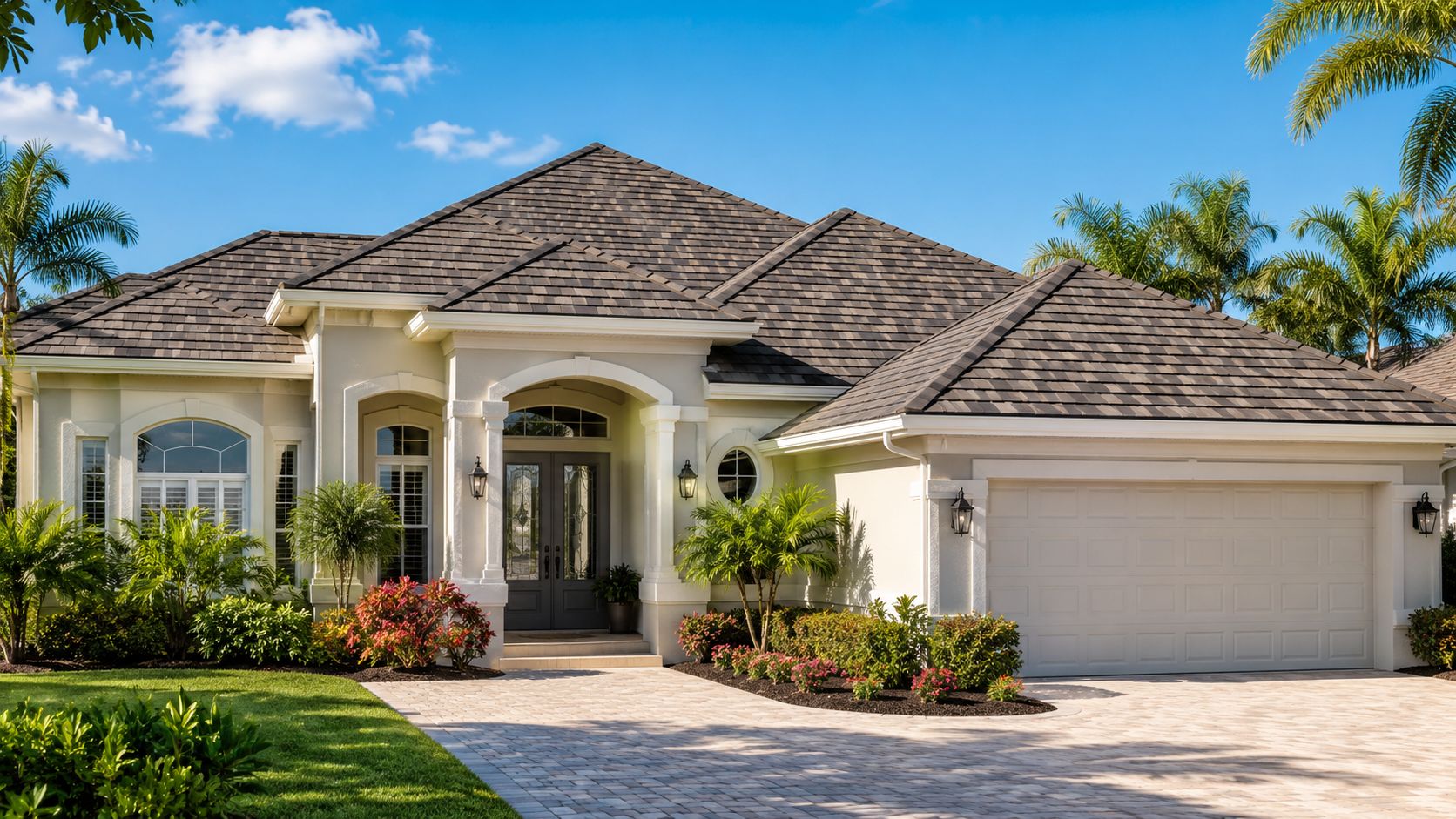
Based on the CertainTeed Landmark product listing at Ring's End, the standard Landmark shingle uses dual-layer construction, carries a Class A fire rating, includes a 15-year 110 mph wind-resistance warranty that can be upgraded to 130 mph, and comes with 25-year algae-resistance coverage through StreakFighter technology. The same product listing shows a 5-5/8-inch weather exposure, overall dimensions of 13-1/4 inches by 38-3/4 inches, and coverage of three bundles per square.
Those specs matter differently in South Florida than they do in inland markets. Algae resistance is a real issue here because roofs stay wet longer in humid months, especially under tree cover. Wind ratings also get more attention here because homeowners are not just buying for appearance. They are buying for a roof system that has to be installed to local code and inspected in a hurricane-prone region.
Why homeowners choose Landmark in humid, coastal counties
Landmark usually appeals to the homeowner who wants a roof that looks fuller from the street without paying for a designer shingle line.
That thicker profile helps older homes in South Florida, where a flat-looking roof can make the whole exterior look dated. On resale, buyers may not know every product name, but they do notice whether the roof looks clean, dimensional, and recently upgraded.
There is also a practical side. CertainTeed includes NailTrak, which is designed to guide nail placement more consistently. That does not replace installer skill, but it helps crews stay accurate, and accurate nailing matters on any asphalt roof in a high-wind region.
A Landmark roof is still only as good as the crew installing it. A well-designed shingle can underperform fast if the nailing pattern is off, the starter course is wrong, or the flashing details are sloppy around walls and penetrations.
Here is the plain-English version of what homeowners are buying:
- Dual-layer construction: a thicker architectural look than basic three-tab shingles
- Class A fire rating: standard top-tier fire classification for residential asphalt shingles
- Wind warranty options: added protection on paper, if the roof is installed to manufacturer requirements
- Algae resistance: useful in Broward, Miami-Dade, and Palm Beach because dark streaking is common in damp conditions
- NailTrak guidance: helps support cleaner, more consistent nail placement during installation
Landmark sits in the middle of the market for a reason. It is a recognizable shingle line with solid manufacturer specs, but it is not the most expensive option CertainTeed makes. For South Florida homeowners, that makes it a common choice when the goal is to balance appearance, weather performance, and budget.
Breaking Down Material Costs Per Square
In South Florida, the material line on a shingle quote can swing by hundreds or even a few thousand dollars before labor ever enters the picture. That is why homeowners in Broward, Miami-Dade, and Palm Beach need to separate shingle cost from full reroof cost right away.
A roofing square is 100 square feet of roof area. Contractors use that unit because roofs are ordered by square and bundle count, not by the home's interior square footage. A 2,000-square-foot house rarely has exactly 20 squares of roofing once you account for pitch, overhangs, valleys, hips, and waste.
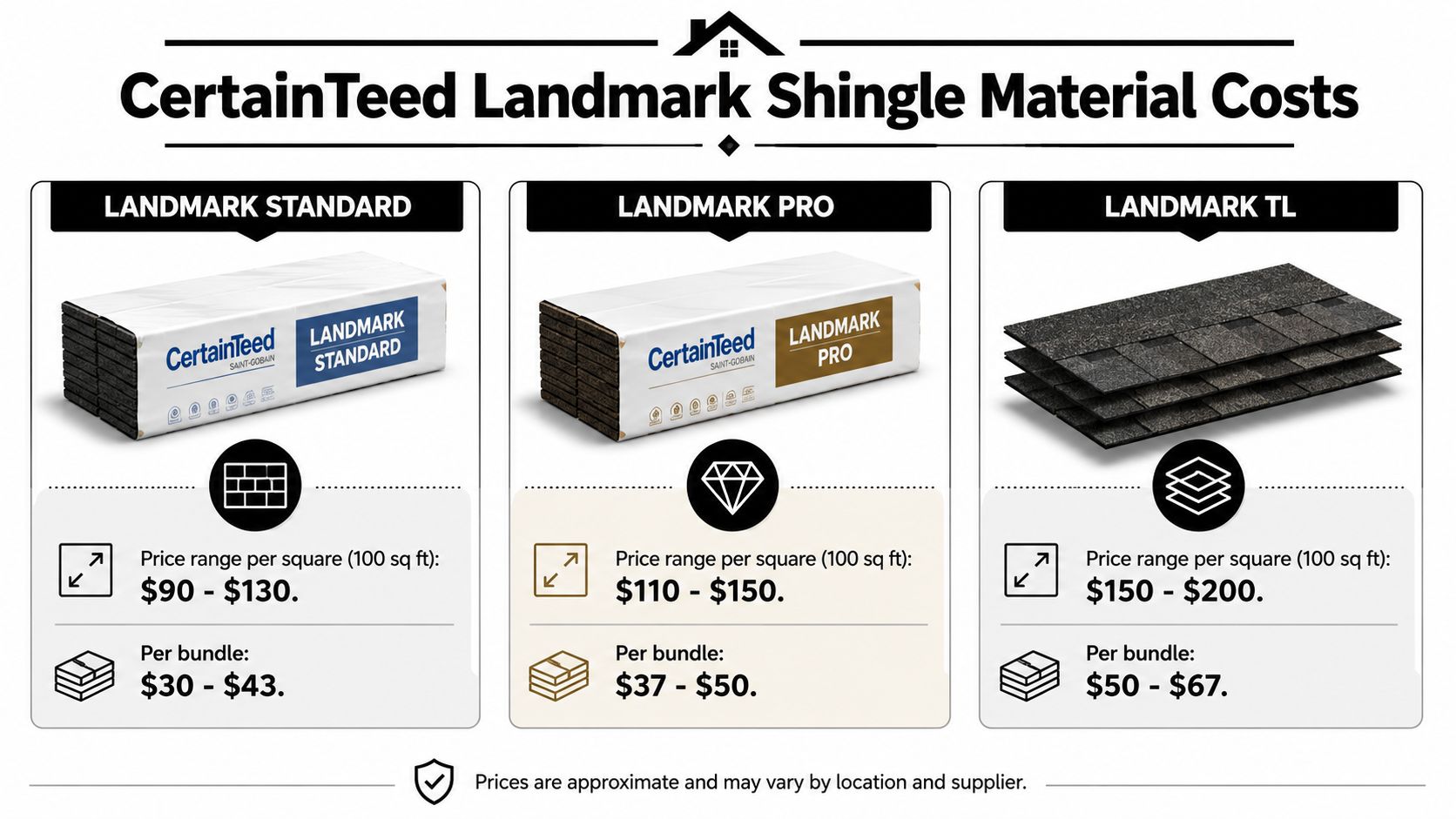
Standard Landmark vs Landmark PRO
For planning purposes, standard Landmark usually lands in the lower material tier, while Landmark PRO comes in a step higher. In real estimates, the gap is often smaller than homeowners expect.
At the supply-house level, I often see the conversation come down to bundle price more than marketing labels. A trade pricing reference showed standard Landmark at $123.99 per square ($41.33 per bundle) and Landmark PRO at $129.06 per square ($43.03 per bundle). That is only $5.07 per square apart, based on this roofing industry pricing post.
That spread matters because it changes how you read an upgrade charge. If a roof takes 30 squares, the raw shingle difference at that price level is about $152 before accessories, waste, and contractor markup. If a proposal shows a much bigger jump from Landmark to Landmark PRO, ask what else is bundled into that number.
In South Florida, that extra cost may be legitimate. Color availability changes fast after storms. Special-order colors can price differently from common stocked colors. Some contractors also carry higher markup on upgraded lines because they expect more homeowner comparison shopping and more time spent on color selection.
What the material price includes, and what it does not
The shingle cost per square is only the field shingle itself unless the proposal says otherwise. It usually does not include starter, hip and ridge, underlayment, ice and water protection in required areas, flashing metal, fasteners, ventilation changes, or permit-related items.
That distinction saves homeowners from a common mistake. They compare one contractor's shingle number to another contractor's full material package and assume one bid is inflated, when the scopes are not the same.
If you want a plain-English explanation of how roof pricing is discussed by square and by square foot, Hail King Professionals lays out the terminology clearly.
A practical comparison looks like this:
| Shingle option | Material pricing reference | What it means |
|---|---|---|
| Landmark Standard | $123.99 per square, $41.33 per bundle from the trade pricing reference above | Lower shingle cost at the material level |
| Landmark PRO | $129.06 per square, $43.03 per bundle from the same trade pricing reference | Modest upgrade cost for the shingle itself |
| Quoted project upgrade | Varies by contractor, color, waste factor, and local supply conditions | The increase may reflect more than the shingle price alone |
For homeowners in Broward, Miami-Dade, and Palm Beach, the cleanest way to review this part of the quote is simple. Ask for the shingle line, color, estimated square count, and whether accessories are included in the material figure. That is how you find out whether the PRO upgrade is a fair add-on or just a padded number.
Factoring in South Florida Labor and Tear-Off Costs
On a South Florida reroof, labor and tear-off often decide whether a Landmark quote lands near the low end of the budget or pushes well past it. In Broward, Miami-Dade, and Palm Beach, homeowners are paying for code compliance, disposal, access, and crew time as much as they are paying for shingles.
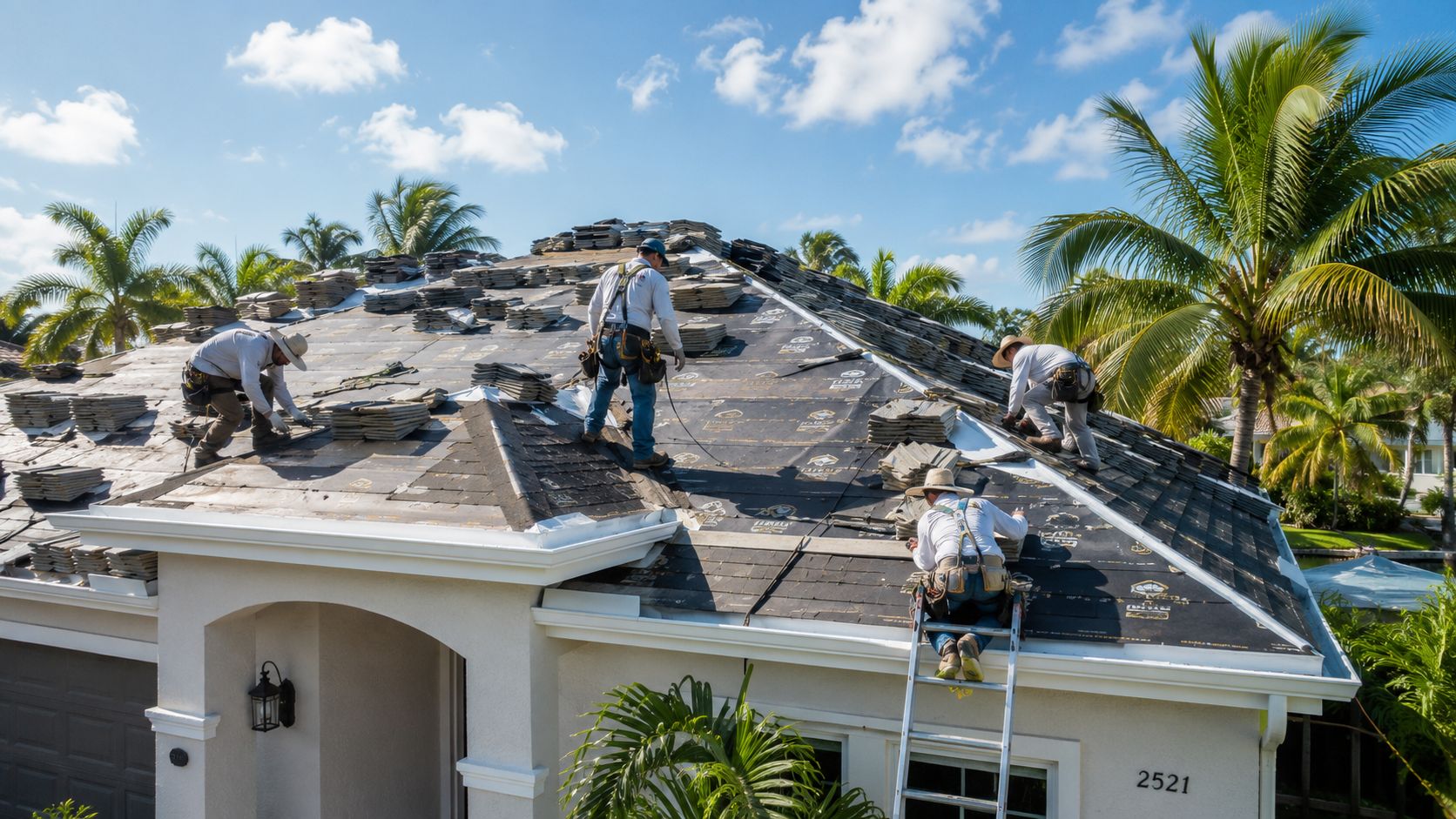
A simple one-layer tear-off on an easy roof usually prices very differently from a cut-up roof with tight access, heavy debris, and inspection timing issues. That gap is wider in South Florida than many homeowners expect, because local crews are working under stricter wind requirements, higher insurance pressure, and busier permit departments than contractors in cheaper inland markets.
Here is what usually drives the labor side of the number:
- Tear-off and haul-away: Removing old shingles, underlayment, nails, and flashings takes time, dumpsters, and dump fees.
- Deck inspection after removal: Once the roof is open, damaged or weak decking may need replacement before dry-in can continue.
- Roof shape and detail work: Valleys, hips, dormers, skylights, plumbing stacks, and wall tie-ins all slow production.
- Height and access: A one-story home with open access is faster and safer to work than a two-story house with limited staging room.
- Permit and inspection scheduling: Municipal timing in Broward, Miami-Dade, and Palm Beach can affect how efficiently a crew can move from tear-off to dry-in to final completion.
In real estimates, tear-off is rarely just a line for "remove old roof." It includes labor, disposal, dump charges, jobsite protection, magnetic nail pickup, and the extra handling that comes with heavier debris loads. If the home has multiple existing layers, expect that part of the quote to rise fast.
South Florida code requirements also affect labor in a practical way. Crews spend more time on fastening patterns, underlayment details, flashing work, and inspection readiness. Homeowners do not always see that from the ground, but they pay for it in labor hours and supervisor time.
One contract detail matters a lot here. The proposal should spell out what happens if the crew finds rotten decking or problem areas after tear-off. If that language is vague, the starting price can look competitive and the final invoice can change once the roof is open.
Cleanup is part of labor cost too. A professional crew should protect plants, control falling debris, sweep magnets through the yard and driveway, and leave the property usable at the end of each day. For a homeowner-friendly way to review post-job expectations, this guide on Arizona homeowner's clean-up steps gives a useful checklist.
A fair labor conversation usually covers the items below:
| Labor-related item | Why it changes price |
|---|---|
| Roof steepness and access | Slower setup, more safety handling, harder material movement |
| Tear-off volume | More removal time, heavier disposal loads, higher dump costs |
| Roof complexity | More cuts, flashing work, and detail labor around penetrations and transitions |
| Local demand | Busy storm seasons and tight crew availability can raise labor rates |
| Permit and inspection process | Scheduling delays can reduce crew efficiency and stretch project timelines |
The right question is not whether a labor number is low. The right question is whether the scope matches what your roof in Broward, Miami-Dade, or Palm Beach requires.
Example Project Estimates for South Florida Homes
On South Florida reroof jobs, a few dollars per square foot can swing the contract by several thousand dollars. That is why homeowners in Broward, Miami-Dade, and Palm Beach need local examples, not generic national averages.
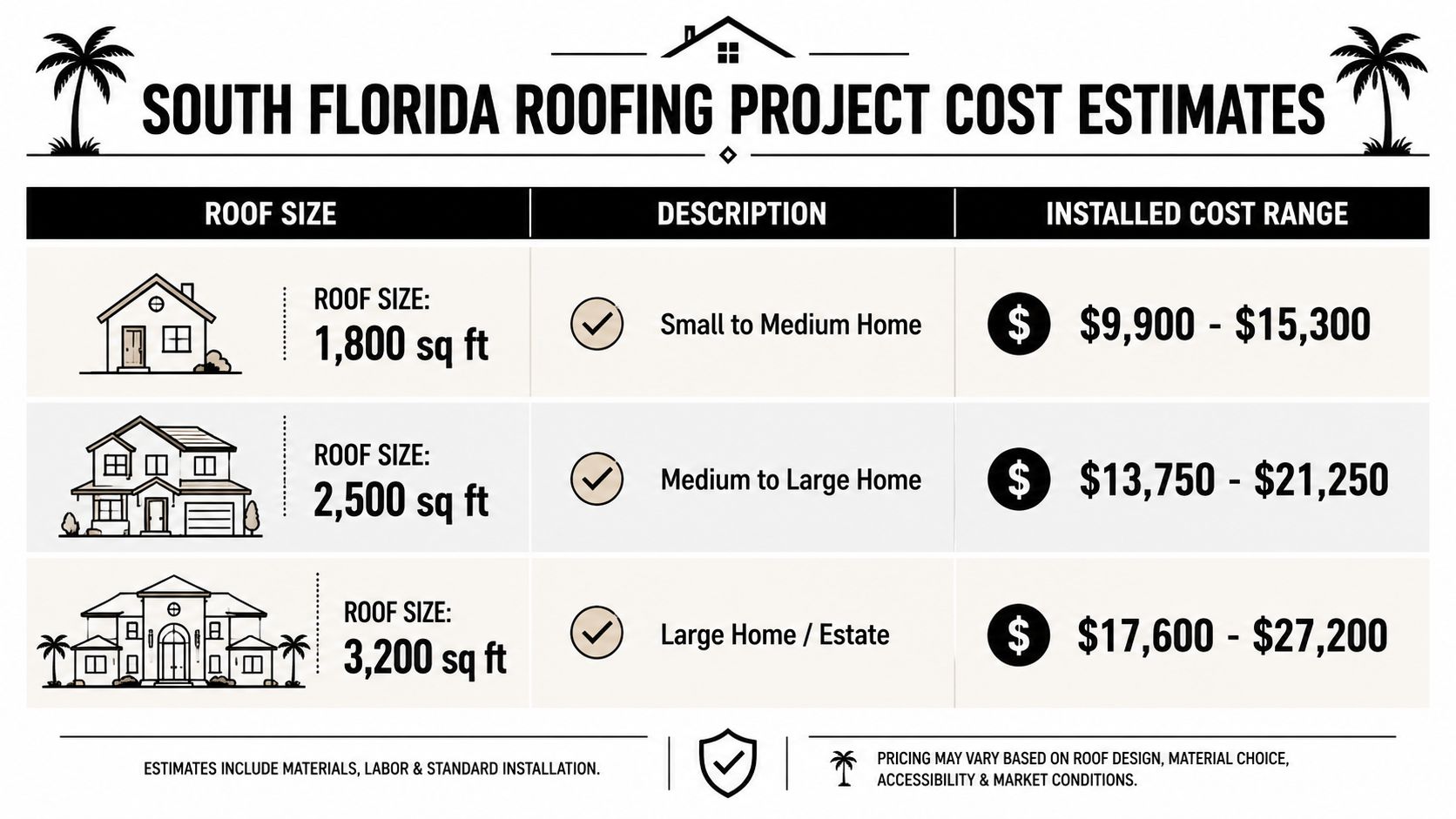
The ranges below use the installed pricing framework already discussed earlier in this guide. They are planning numbers for standard CertainTeed Landmark reroof projects on homes with typical South Florida conditions. Permit fees, tougher municipal requirements, deck replacement, and difficult access can still push a real quote higher.
Sample CertainTeed Landmark Roof Replacement Costs in South Florida 2026
| Roof Size (sq ft) | Approx. Roofing Squares | Estimated Total Cost Range |
|---|---|---|
| 1,800 | 18 | $9,900 to $15,300 |
| 2,500 | 25 | $13,750 to $21,250 |
| 3,200 | 32 | $17,600 to $27,200 |
Those numbers make more sense when you look at how these jobs behave in the field.
A roughly 1,800-square-foot roof is not a cheap project just because the house is smaller. The crew still has to mobilize, protect the property, tear off the old roof, dry it in, pass inspections, and haul debris away. On many Broward and Palm Beach homes, those fixed job costs keep smaller reroofs from dropping as much as homeowners expect.
A 2,500-square-foot roof is where I see the most quote shopping, and it is also where scope gaps cause the most trouble. Two bids can look close at first glance, then end up thousands apart once one includes better underlayment, more flashing replacement, permit handling, and a realistic allowance for code-related items. In Miami-Dade especially, stricter wind requirements and inspection flow can affect both price and schedule.
At 3,200 square feet, complexity usually starts to matter more than raw size. Larger homes often have more valleys, more penetrations, more ridge length, and more areas where crews slow down to keep the install clean and code-compliant. That pushes many bigger homes toward the upper half of the range.
Here is the practical way to read the table:
- Smaller homes: Fixed costs take up a bigger share of the contract.
- Mid-size homes: Scope details decide whether a quote is fair or artificially low.
- Larger homes: Roof design and access usually matter as much as square footage.
Material upgrades should be priced separately.
If you are considering Landmark PRO on a larger home, ask for that upgrade as its own line item. On some projects, the added shingle cost is noticeable but still smaller than the labor, disposal, staging, and code-driven parts of the job. A clean quote lets you decide whether the upgrade is worth it without guessing where the extra money went.
How to Get a Precise Quote for Your Roof
In South Florida, two CertainTeed Landmark quotes for the same house can end up far apart once permit requirements, dry-in details, and repair allowances are spelled out. A precise quote requires an on-site inspection, exact measurement, and a written scope that matches your roof in Broward, Miami-Dade, or Palm Beach.
What a contractor needs to inspect
A serious estimate starts on the roof and in the attic.
Satellite measurements help with planning, but they do not show how steep the roof is, how crews will access it, how many penetrations need to be worked around, or whether the existing flashing can stay. They also do not show tie-ins from additions, low-slope transitions, old leak repairs, or signs that the deck may have problems once the shingles come off.
For South Florida homes, municipality matters too. Miami-Dade work often carries stricter approval and inspection requirements. Broward and Palm Beach can have their own permit process, product approval checks, and scheduling delays. Those items affect labor time and job flow, which affects price.
A proper site visit should answer these questions:
- How complex is the roof layout: Valleys, hips, dormers, skylights, and plumbing stacks all add labor.
- How easy is access: A one-story ranch and a tight two-story lot do not cost the same to stage and protect.
- What shape is the deck in: Rotten or delaminated decking changes the final bill after tear-off.
- What underlayment and flashing are required: South Florida code and manufacturer requirements need to match the proposal.
- Does ventilation need to be corrected: A new shingle roof should not be installed over a ventilation problem that shortens roof life.
How to compare quotes without getting fooled
Low numbers get attention. Clear scope wins.
A quote should separate materials, tear-off, underlayment, flashing, permit handling, disposal, cleanup, and deck repair pricing. If a contractor rolls everything into one lump sum, it becomes hard to tell whether the price is efficient or whether key items were left out to make the bid look cheaper.
I tell homeowners to read the exclusions as closely as the total. That is usually where surprise costs show up.
A quote deserves extra scrutiny if it does any of the following:
- Keeps tear-off vague: Haul-away, dump fees, and site protection should be stated clearly.
- Blurs material differences: Landmark and Landmark PRO pricing should appear as separate line items if both were discussed.
- Says little about flashing: Pipe boots, wall flashing, chimney flashing, and valley metal are common shortcut areas.
- Leaves permits unclear: In South Florida, permit responsibility should never be assumed.
- Avoids deck repair pricing: The contract should explain how damaged wood is billed if it is found after tear-off.
A good roofer does not just hand over a price. The roofer gives you a scope you can review line by line.
If you want an accurate cost for CertainTeed Landmark shingles, ask for a written proposal tied to your home, your city, and current South Florida labor and material conditions.
If you want a roof quote that reflects actual conditions in Broward, Miami-Dade, or Palm Beach, contact Paletz Roofing and Inspections. Their team can inspect your roof, explain the cost drivers, and provide a detailed estimate that separates materials, labor, tear-off, and repair items.