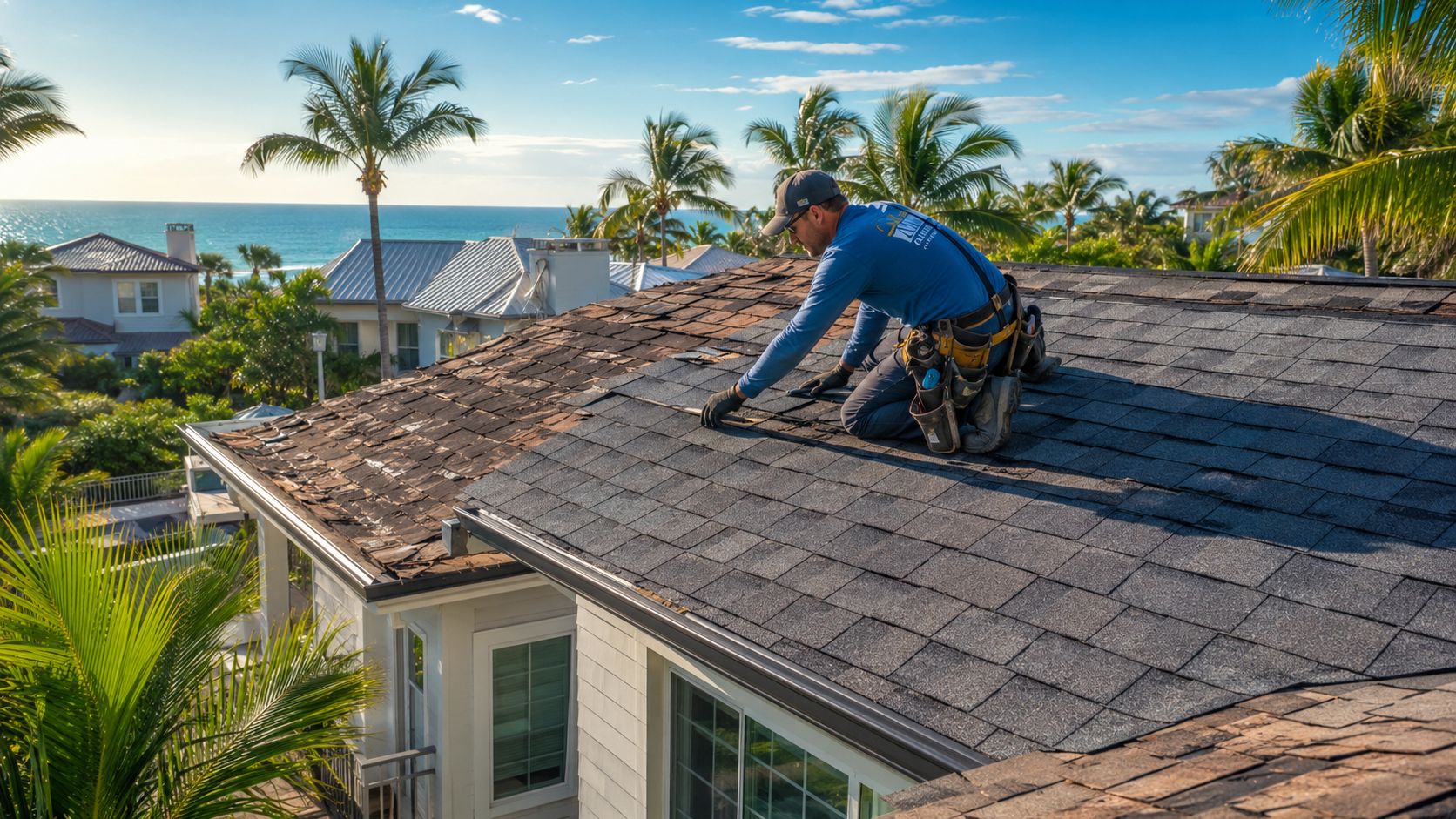
You walk outside after another hard South Florida rain, look up, and notice curled shingles, a stain spreading near the hallway ceiling, or a few cracked tiles that weren't there last season. Sometimes the warning doesn't come from the roof at all. It comes from an insurance notice that puts your roof's age under a microscope and suddenly turns a maintenance question into a deadline.
In Jupiter, a roof replacement isn't just a curb appeal project. It's storm protection, code compliance, insurance positioning, and a major budget decision tied to how homes perform in heat, salt air, and hurricane season. What confuses most homeowners isn't whether roofs wear out. It's knowing when a repair is still legitimate, when local rules force a larger job, and how HVHZ requirements change the way the whole project has to be built.
Table of Contents
- Your Guide to Roof Replacement in Jupiter
- Is It Time for a New Roof
- Decoding Jupiter's Hurricane Codes and Permit Rules
- Choosing Your Best Roof Material for Coastal Florida
- Managing Costs and Insurance Claims for Your New Roof
- Finding a Qualified Roofer and The Installation Process
- Protecting Your Jupiter Home for Decades to Come
Your Guide to Roof Replacement in Jupiter
Living in Jupiter means your roof takes a beating year-round. Sun bakes it. Salt air works on fasteners and exposed components. Wind-driven rain finds weak flashing faster than homeowners expect. By the time leaks show up inside, the underlying issue has often been building for a while.
The tricky part is that roof replacement in Jupiter isn't only about worn materials. Local homeowners also have to deal with HVHZ-related installation standards, permit paperwork, inspection sequencing, and the rule that can turn what feels like a repair into a code-triggered replacement. If you miss that distinction, you can end up paying twice. Once for the patch, and again for the corrective work.
Practical rule: In Jupiter, the cheapest roof decision is often the one that prevents a code problem, an insurance dispute, or a repeat leak six months later.
A sound replacement comes down to five decisions. First, confirm whether your roof has isolated damage or system-wide failure. Second, find out whether the scope crosses the legal threshold for permit and engineering review. Third, choose a material that holds up to coastal Florida conditions. Fourth, understand the estimate so you know what you're buying. Fifth, hire a roofer who installs to code instead of to the lowest bid.
That's how neighbors avoid surprises. It's also how a new roof lasts.
Is It Time for a New Roof
Some roofs make the decision obvious. Others drag homeowners through years of small repairs, recurring leaks, and false hope. In Jupiter, age and exposure matter more than many people realize.

What homeowners usually notice first
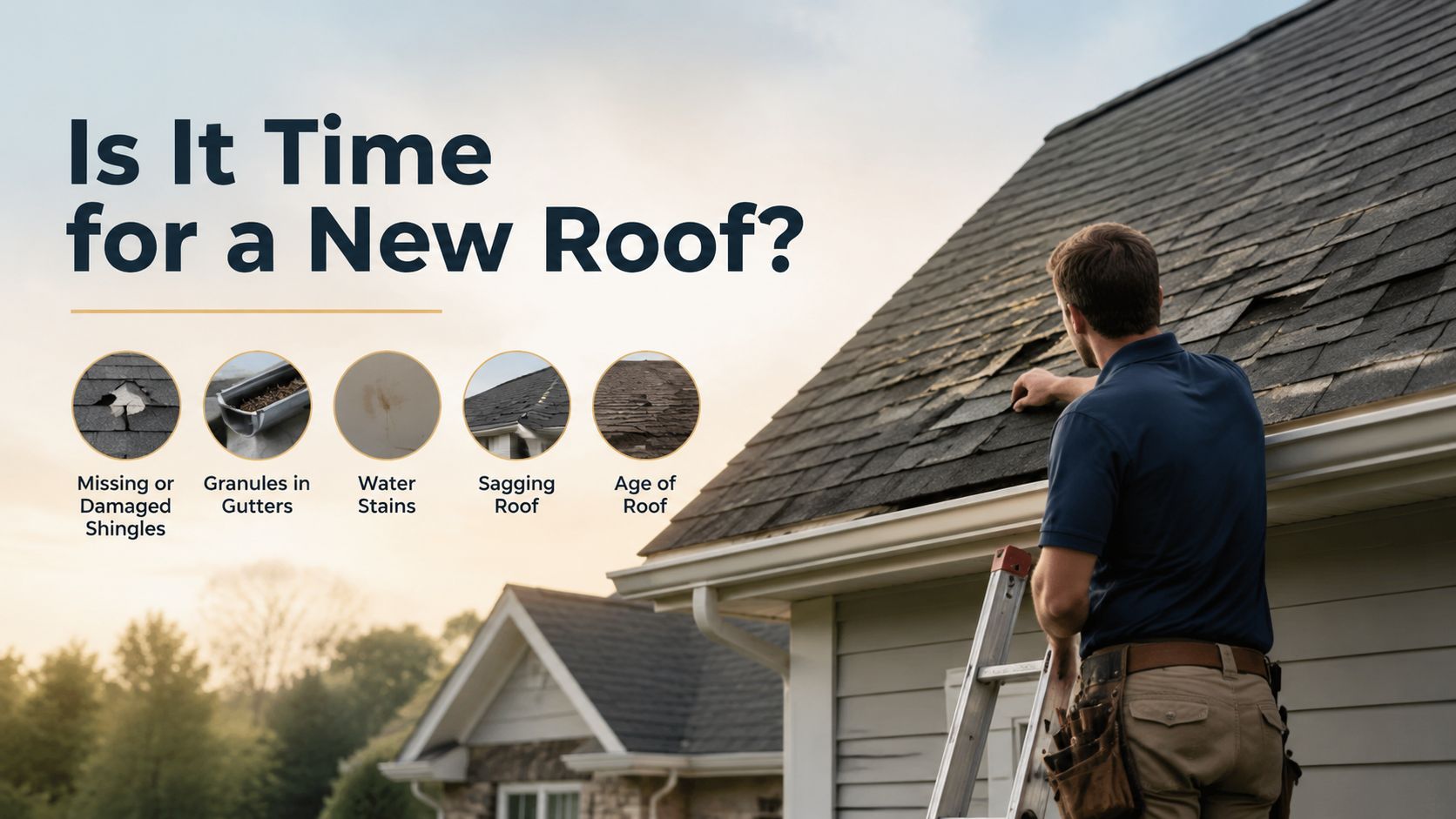
The first signs are rarely dramatic. They're usually small changes that repeat. You may see shingle edges lifting, granules collecting in gutters, cracked field tiles, dark streaking around penetrations, or ceiling stains that appear after a hard storm and then seem to dry out.
For asphalt systems, age is a major clue. In Jupiter, asphalt shingles typically last only 15 to 25 years before requiring full replacement, and once a roof reaches that final stretch, replacement is often the more stress-free and economically sound option than repeating short-term patch jobs for widespread leaks or visible sagging, according to ConsumerAffairs roofing statistics for Florida and Jupiter conditions.
Inside the house, pay attention to signs that suggest more than a surface problem:
- Stains that return: A dried ceiling spot doesn't mean the leak is solved. It often means water is entering only during certain wind directions.
- Soft drywall near exterior walls: That can point to flashing failure around valleys, sidewalls, or roof-to-wall transitions.
- Attic moisture or musty odor: In South Florida, poor ventilation and underlayment wear can show up there before you see active dripping.
When repair still makes sense
A repair still has a place when damage is limited and the rest of the roof is healthy. One slipped tile, a small flashing separation, or a localized issue around a vent stack doesn't automatically mean full replacement.
What doesn't work is pretending a failing roof is still in the repair stage. If leaks are showing up in multiple areas, if you've already had repeated service calls, or if you see sagging, the roof is telling you the system has aged out. At that point, piecemeal work often just buys time at a high monthly cost.
A roof near the end of its service life doesn't fail one dramatic day. Homeowners usually see a pattern first. Then the storms expose it.
Why a real inspection matters
A proper inspection should go beyond “yes, you need a roof” or “no, you don't.” The roofer should check field condition, flashing, penetrations, underlayment clues, deck integrity indicators, and how earlier repairs were performed. On tile roofs, they should look for brittle or mismatched replacements and movement around ridge and hip areas. On shingle roofs, they should check wear consistency and whether prior patches have changed water flow.
Local experience matters. A contractor like Paletz Roofing and Inspections can inspect residential systems in Jupiter and identify whether you're dealing with isolated storm damage, age-related failure, or a code-triggered scope that changes the whole decision.
If you're unsure, start with photos, attic observations, and the roof's approximate age. Then get a documented inspection before you spend money on another patch.
Decoding Jupiter's Hurricane Codes and Permit Rules
A Jupiter homeowner calls after a storm and says, "I only need a repair on the back slope." Then we measure the affected areas, check what was patched earlier in the year, and review the permit history. Many times, the job has already crossed into full-replacement territory under Florida code, whether the homeowner planned for that or not.
That is why this part of the process catches people off guard. The roof problem may start as a leak or a few broken tiles, but code can turn it into a permitted replacement with different labor, different materials, and different costs.
What the 25% rule means
The 25% rule is one of the biggest decision points in Jupiter roof work. If more than 25% of the roof covering is replaced within a 12-month period, the project can trigger full code compliance for the roofing system rather than staying a simple repair. Local permitting and approval requirements matter here, as outlined in this Jupiter roof permit breakdown.
Homeowners run into this rule in a few predictable ways:
- Storm damage hits several sections at once. What looks minor from the yard can add up fast once each slope is measured.
- Repairs are spread out over the year. One patch in spring and another after hurricane season still count together if they fall within the same 12-month window.
- Insurance scope expands after inspection. The field adjuster, engineer, or municipality may include more roof area than the owner expected.
This is the legal trigger many online guides skip. In practice, it is often the reason a homeowner asking about a repair ends up budgeting for replacement.
Why HVHZ details matter in Jupiter
Jupiter roof replacements are shaped by South Florida wind rules, not just by shingle color or tile profile. Once a job falls under replacement rules, the assembly has to match approved installation standards for this region. That includes the underlayment, fastener pattern, edge metal, flashing method, and the product approvals tied to that exact system.
Those details decide how the roof performs when wind pressure lifts at the corners, eaves, and ridges. A roof can look clean from the driveway and still be built wrong underneath. I have seen that more than once, especially on homes with older patchwork repairs where one contractor matched appearance but not the approved system.
Code reality: A good-looking roof is not the same thing as a compliant roof. If the assembly does not match approved requirements, you can run into failed inspections, warranty problems, and weaker storm performance.
Older homes need a second look here. If code upgrades are triggered, the owner may be responsible for costs beyond the visible storm damage. Before work starts, it helps to understand crucial coverage for older Florida properties so you know whether your policy addresses ordinance-and-law upgrades or only the damaged roof surface.
What permit planning should include
A proper permit package should fit the house and the roof system being installed. Generic paperwork causes delays, inspection problems, and change orders.
Ask these questions before tear-off starts:
- Who is pulling the permit? For a full replacement, the roofing contractor should handle it.
- Which product approvals are being submitted? The underlayment, tile or shingle system, metal details, and attachment components should match the approved assembly.
- How are they classifying the job? Repair and replacement are priced differently because they are built and inspected differently.
- What inspections are required? You want the inspection sequence in writing, including dry-in and final, plus any intermediate inspection the municipality requires.
Permit rules can feel like paperwork for paperwork's sake. They are not. In Jupiter, they are the line between a roof that only looks finished and one that is legal, insurable, and built to hold up in a real South Florida storm.
Choosing Your Best Roof Material for Coastal Florida
A Jupiter roof has to do two jobs at once. It has to survive salt air and summer heat every day, and it has to meet wind-zone and product-approval requirements when replacement time comes. That is why material choice is never just about appearance. It affects structure, permit approvals, repair options, and whether a partial fix makes any sense once the 25% rule is in play.
I tell homeowners to start with four questions. How close is the house to the water? What roof shape and slope are we dealing with? Was the home framed for a heavy system like tile? How long do you plan to own it? Those answers usually narrow the field fast.
How each system performs in Jupiter
Asphalt shingles are the lower-cost option for many sloped roofs, and they are lighter than tile. They also tend to age faster in coastal South Florida because UV, heat, and salt do not give them much of a break. Shingles can still be the right choice on a simple roof where budget matters and the owner wants the least structural burden, but they usually give up years of service compared with metal or tile.
Concrete and clay tile fit a lot of Jupiter homes because they handle heat well and look right on many South Florida designs. They are heavier, more labor-intensive, and less forgiving under foot traffic. That matters on repair day. One broken tile during service work can turn into a tile-matching problem if the profile is old or discontinued. On the other hand, if the house was built for tile and the owner plans to stay put, tile is often the material that best matches the home and resale expectations.
Standing seam metal is a strong coastal option if the details are done right. I like metal on homes where owners want long service life and cleaner lines, but the trim, panel layout, clip system, and penetration details have to be exact. A sloppy metal job can leak at the details long before the panels wear out.
Low-slope membranes belong in a different category. They are common over lanais, porches, and additions where tile or shingles do not belong. On those sections, drainage, edge securement, and corrosion resistance matter as much as the membrane itself. If your roofer specifies stainless fasteners near the coast, you can shop Contractor's Den for low slope screws to see the type of hardware often used in these assemblies.
One practical point gets missed in a lot of roof guides. The best material on paper is not always the best replacement material for your house. If a repair crosses the legal threshold and triggers full replacement, you may be forced into a system that meets current approvals and attachment requirements, not the cheapest option a homeowner would pick in isolation.
Jupiter roofing material comparison
| Material | Typical fit in Jupiter | Cost position | Coastal and storm trade-offs |
|---|---|---|---|
| Asphalt shingle | Good for simpler sloped roofs and tighter budgets | Usually the lowest entry price among sloped systems | Lighter and easier to repair, but shorter service life in salt, heat, and sun |
| Concrete tile | Common on many South Florida and Mediterranean-style homes | Mid to high | Handles heat well and looks right on many homes, but adds weight and needs a crew that knows tile details |
| Clay tile | Best where appearance and long-term ownership matter | High | Attractive and durable, but material and labor costs are usually higher than concrete tile |
| Standing seam metal | Good for coastal owners prioritizing longevity and clean lines | High | Strong wind performance with the right approved system, but detail work has to be precise |
| Low-slope membrane systems | Best for flat or low-slope sections such as lanais and additions | Varies by system | Performance depends heavily on drainage, attachment, edge metal, and maintenance |
Clay and concrete tile replacements in Florida are often among the more expensive residential roof options because of labor, underlayment, accessory parts, and structural considerations, as outlined by Statewide Roofing tile roof cost guidance. That does not mean tile is overpriced. It means homeowners should compare full system value, expected service life, and the house it is going on.
What works for different home types
On a smaller house with straightforward slopes, shingles may still be a practical answer. On a home that was designed around tile, changing to a lighter, cheaper-looking system can create curb-appeal problems and awkward transitions at walls, valleys, and ridges.
Waterfront and near-coastal homes need a stricter filter. Salt exposure punishes fasteners, flashings, sealants, and cut edges before it ruins the field material. In those cases, I pay close attention to the accessories and the serviceability of the roof, not just the surface product.
If you are deciding between materials after storm damage, do not compare bids by the top line alone. Compare what assembly, approvals, and labor practices each number is buying. In Jupiter, especially under HVHZ standards, that difference is often the whole job.
Managing Costs and Insurance Claims for Your New Roof
A Jupiter homeowner often gets a surprise after the storm has passed. The leak may look limited to one area, but once the roof is opened up, code, underlayment condition, and the 25% rule can turn what looked like a repair into a full replacement.

What a Jupiter replacement estimate usually covers
In Jupiter, replacement pricing depends heavily on roof size, pitch, material, access, and how much damaged decking turns up after tear-off. Tile usually lands at the higher end because the system includes more labor, heavier materials, more accessory parts, and stricter detailing around hips, ridges, valleys, and wall transitions. Remodeling cost data published for the South Atlantic region also shows that upscale roofing projects can return a meaningful share of their cost at resale, which is worth weighing if you plan to stay in the house or sell within a few years, according to the 2024 Cost vs. Value Report.
A legitimate estimate should spell out the full job, not just the surface material. That usually includes tear-off, disposal, dry-in materials, flashings, ventilation changes if needed, permit handling, inspection coordination, delivery, setup, and cleanup. If rotten decking or structural problems are found once the old roof is removed, the contract should explain how that extra work is priced.
I tell neighbors to read the exclusions as carefully as the total.
A low number often means something has been left out. On Jupiter reroofs, the common misses are wood replacement allowances, upgraded underlayment, secondary water barrier details, edge metal, and permit-related work. Those are not small line items in South Florida. They can change the final bill fast.
Keep these cost drivers in mind:
- Permits and inspections are part of the job: Palm Beach County and local enforcement do not treat reroof paperwork as optional.
- The 25% rule can change the budget: If enough of the roof section is being repaired within a 12-month period, code may require replacement of that entire section to meet current standards.
- HVHZ requirements affect material and labor cost: Approved assemblies, attachment patterns, and accessory details cost more than bare-minimum work.
- Change orders are not always a red flag: Deck damage found after tear-off is common on older roofs, especially where long-term leaks stayed hidden under tile or underlayment.
The total price matters. The approved assembly, the code path, and the hidden-condition terms matter just as much.
How to approach an insurance claim without losing control of the job
Insurance can offset part of the cost, but homeowners lose ground when they assume the carrier's first scope is complete or that every code-required item will be included automatically. In Jupiter, that assumption causes trouble because storm damage, matching issues, and code-triggered replacement are often separate arguments.
Start with documentation. Take clear photos of the roof, ceilings, attic staining, wet insulation, fallen debris, and any openings where water entered. Save receipts for emergency tarping if you had to stop active leaking.
Then get a roofer involved early. The point is not to create a fight with the adjuster. The point is to document what was damaged, what can be repaired, and what code may require if the repair area crosses the legal threshold for replacement. If you want a plain-English overview before speaking with the carrier, this guide on storm damage insurance explained by Rescreen Rescue is a useful starting point.
During the claim, keep your file tight. That means inspection notes, photos, adjuster summaries, estimates, permits, and any supplement requests in one place. If the carrier approves only a patch or a partial slope replacement, ask one direct question before signing off: does that approved scope comply with current Florida code and local enforcement requirements for this roof?
That question matters in Jupiter because the legal trigger is not always obvious to the homeowner standing in the driveway. A roof can look partly damaged and still end up requiring much more work once the 25% rule, permit review, and HVHZ assembly requirements are applied. If that issue is missed at the start, the homeowner gets stuck between the insurer, the contractor, and the building department.
The cleanest claims are the ones with good photos, a detailed scope, and clear code documentation from day one.
Finding a Qualified Roofer and The Installation Process
The contractor you hire matters as much as the material you choose. A strong product installed badly will still fail. In Jupiter, bad hiring decisions show up later as leaks, inspection trouble, denied warranties, and finger-pointing after the first major storm.
Bad contractor choices create expensive problems
The risk isn't theoretical. In Jupiter roof replacements, some of the most damaging mistakes include hiring unlicensed contractors, which results in 42% of warranty voidances, skipping a pre-replacement inspection, which leads to 35% of unresolved decking failures, and selecting non-HVHZ-rated materials, which causes 28% of wind uplift failures, according to documented reroofing mistakes in Florida.
That tells you what to screen for immediately. License status, insurance, local code knowledge, and written scope matter more than sales language.
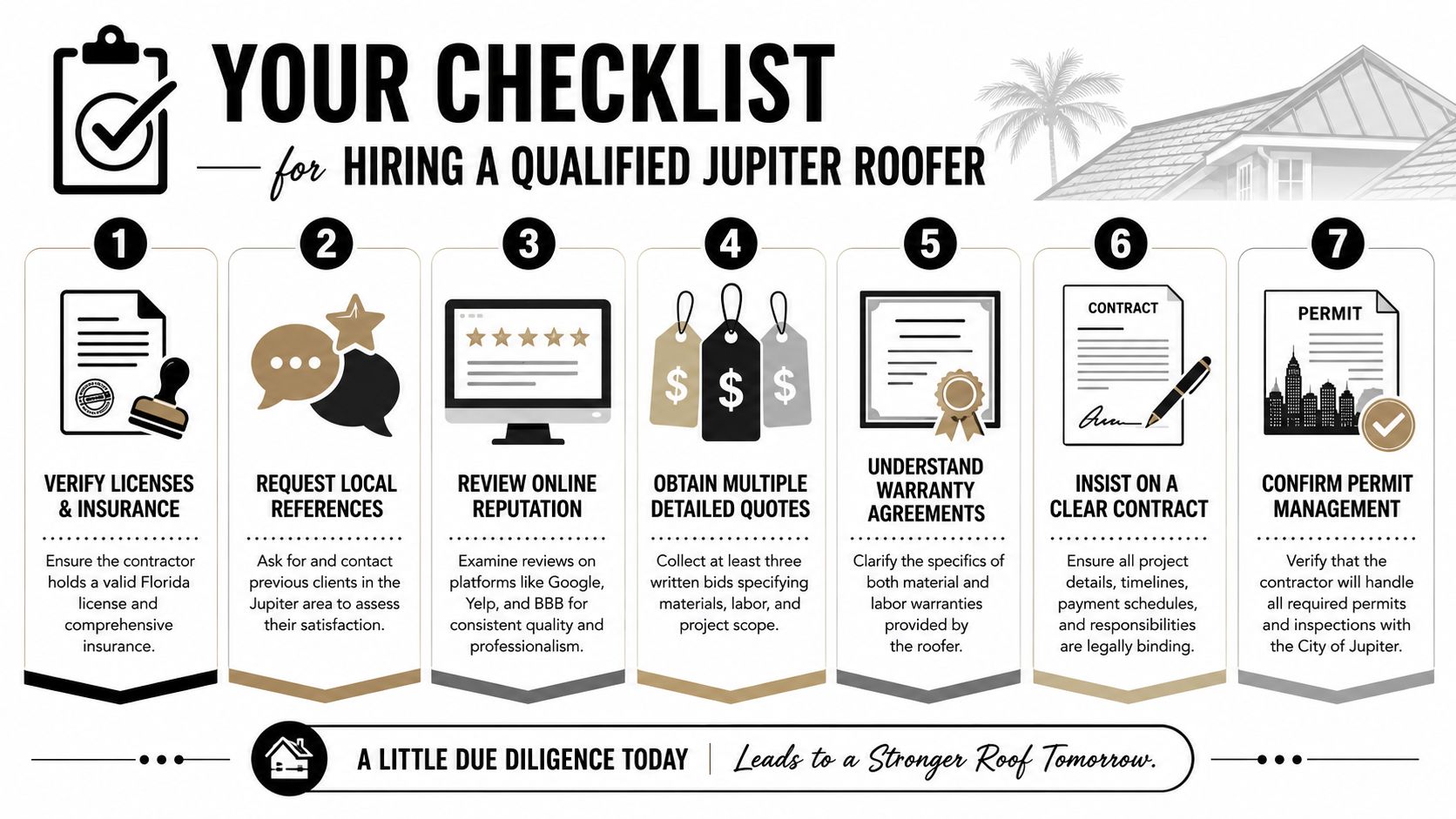
Here's what I'd want any neighbor to verify before signing:
- License and insurance first: Don't take a truck wrap or a business card as proof.
- Written scope with real details: Material type, underlayment, flashing approach, cleanup, and permit responsibility should all be listed.
- HVHZ familiarity: Ask how the contractor handles product approvals, fastening requirements, and inspections.
- Warranty clarity: You want to know what is covered by the manufacturer and what is covered by the installer.
A roofer earns trust before tear-off starts. Paperwork, scope detail, and code fluency are part of the workmanship.
What the replacement process should look like
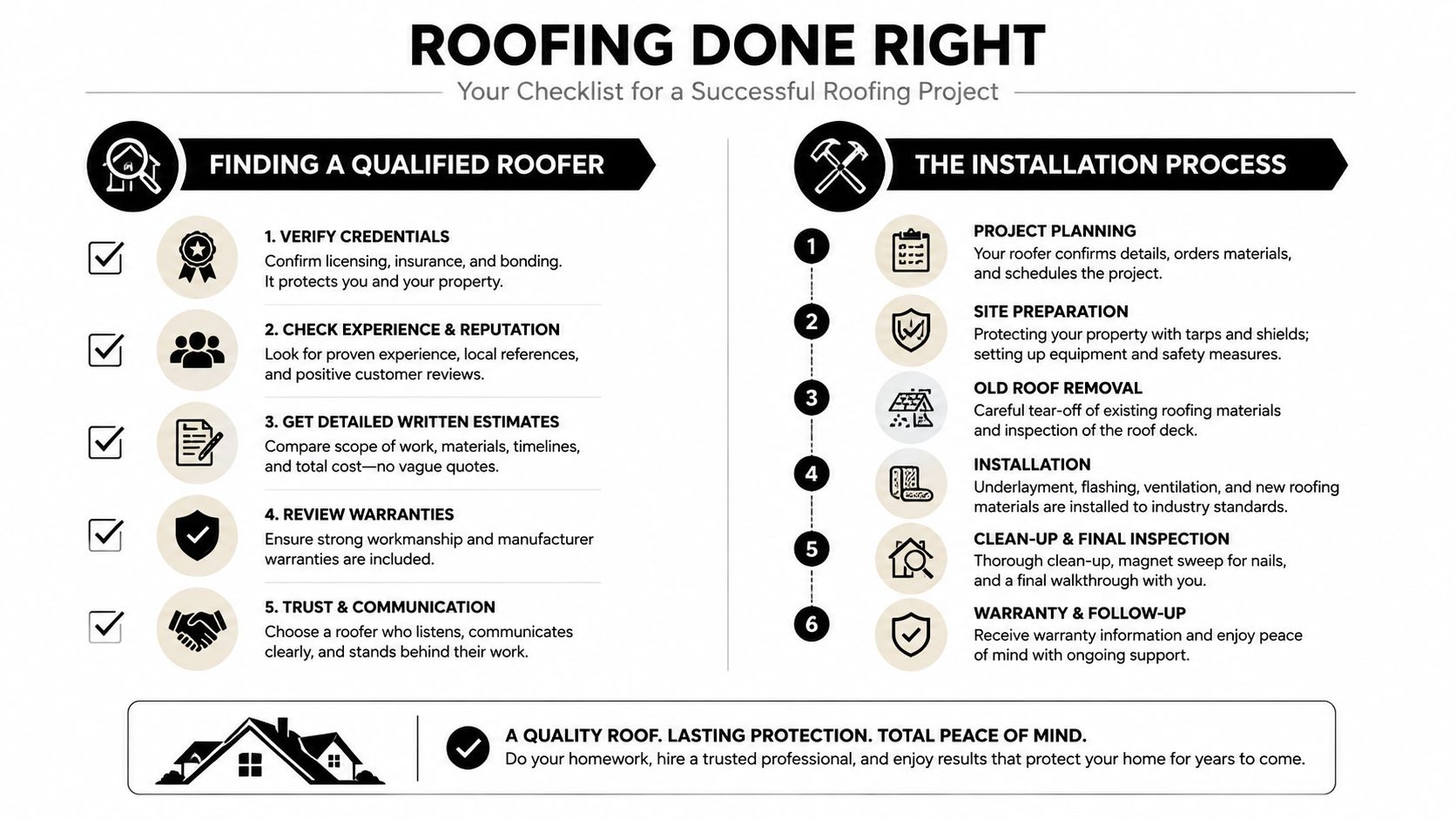
A professional replacement follows a sequence. The crew protects landscaping and access points, tears off the old system, checks the deck, installs the underlayment and flashings, sets the roof covering, and completes cleanup and final inspection coordination.
Homeowners should expect noise, delivery traffic, and staged debris handling. They should not expect constant surprises. If hidden deck damage is found, the contractor should stop, document it, explain the fix, and update the scope before moving on.
A clean jobsite is another sign of a disciplined crew. I look for tarps where needed, organized material staging, and a magnetic nail sweep before the crew leaves. Final walkthrough matters too. That's when you confirm transitions, penetrations, ridge work, and that permit close-out is being completed.
Protecting Your Jupiter Home for Decades to Come
A Jupiter homeowner usually feels the difference after the first hard summer storm. The ceiling stays dry, the attic stays quiet, and there is no scramble for buckets at 2 a.m. That peace of mind usually comes from getting the decision right before the job starts, especially when Jupiter code triggers and the 25% rule can turn what looks like a repair into a full replacement.
Long-term protection comes from matching the roof system to the house, the budget, and South Florida weather. A roof near the coast has to handle wind-driven rain, salt exposure, heat, and repeated storm seasons. It also has to meet the local fastening, underlayment, and permit standards that affect insurability and resale later.
The homeowners who avoid expensive mistakes tend to follow a simple order. Confirm the roof's condition. Find out whether code pushes the job into replacement territory. Choose a system that makes sense for the home and expected service life. Read the estimate carefully, then hire the contractor who understands Jupiter requirements and can document the work properly.
That last part matters years after installation.
A well-built replacement protects the house itself, but it also protects the owner from claim disputes, permit problems, and ugly surprises during a future sale. In this market, buyers, insurers, and inspectors all pay attention to roof age, documentation, and whether the work was done to code.
If you want a local opinion before you commit to repairs or a full replacement, Paletz Roofing and Inspections can help you sort out the roof's true condition, the likely code path, and the practical options for your home in Jupiter. After more than 30 years in South Florida roofing, that kind of clarity usually saves homeowners time, stress, and expensive wrong turns.