
You smell it when you pull down the attic hatch. It's not always strong. Sometimes it's just a damp, earthy note that shows up after a hard rain, or when the air conditioner has been running all day and the house still feels sticky. In Hollywood, that smell usually gets called “mold” right away. Sometimes that's true. Just as often, the smell is your first warning that the roof system or attic ventilation isn't doing its job.
That distinction matters. If you treat the odor like a surface cleanup issue and ignore the moisture source, the smell usually comes back. A roof leak, blocked soffit vents, sweating ductwork, or a fan duct dumping humid air into the attic can all create the same complaint. The attic mold smell Hollywood FL homeowners notice is often a roof and moisture-control problem first, and a mold problem second.
Table of Contents
- That Musty Attic Smell What It Really Means for Your Home
- Your Step-by-Step Attic Inspection Checklist
- Interpreting Your Findings When to Call a Professional
- Safe Cleanup Methods for Minor Attic Issues
- Long-Term Prevention for a Dry and Healthy Attic
- Frequently Asked Questions About Attic Odors
- Does a musty attic smell always mean mold
- Should you test the attic air if you can already smell something
- Can you paint over attic mold staining
- Will an air purifier fix the smell
- When should you call a roofer instead of a mold company
- What should you inspect first if you smell mildew but don't see mold
- Is odor alone enough reason to schedule an inspection
- Can attic insulation be the only thing causing the smell
- What doesn't work for recurring attic odor
That Musty Attic Smell What It Really Means for Your Home
The smell usually shows up before homeowners see anything dramatic. No stained ceiling. No wet drywall. No obvious black patches on the underside of the roof deck. Just an odor that seems stronger near the attic hatch, garage access panel, or the hallway below.
That's why people miss the underlying issue. They assume the attic just “smells old.” In South Florida, an attic rarely gets musty for no reason.

Why the smell shows up before obvious damage
A useful housing-science benchmark is that mold needs four conditions: spores, food, suitable temperatures, and considerable moisture. The Florida housing guide also notes that serious indoor mold problems often happen when porous cellulose materials stay wet from liquid water or ongoing condensation, often under conditions equivalent to at least 70% relative humidity according to the Florida mold management guide.
In an attic, three of those conditions are already there. Spores are everywhere. Wood framing, roof decking, paper-faced materials, and dust provide food. Heat is never in short supply in Hollywood. The condition you can control is moisture.
Practical rule: If the attic smells musty, don't start by asking “How do I kill mold?” Start by asking “Where is the moisture coming from?”
That moisture may come from a roof leak. It may come from condensation around ductwork. It may come from humid indoor air escaping into the attic through recessed lights, top plates, and access hatches. It may even come from plumbing or vent penetrations. If you suspect the moisture source could involve waste or vent piping, this guide to identifying drain pipe leaks is worth reviewing because plumbing-related attic moisture gets overlooked all the time.
Why South Florida attics get into trouble fast
Hollywood homes deal with heavy humidity, intense heat, and frequent storm exposure. That combination makes attics unforgiving. A small ventilation problem or flashing defect can keep sheathing damp long enough for odor to build, even before visible colonies become obvious.
The musty smell also tends to collect where warm, humid air gets trapped. I often tell homeowners to think of the odor as a symptom of stalled drying. Attics are supposed to shed heat and moisture. When they can't, the smell is often the first thing you notice.
For a visual reference on the kind of attic conditions inspectors look for, this attic moisture example image shows the type of environment where odor complaints often begin.

Your Step-by-Step Attic Inspection Checklist
If you're going to inspect an attic, do it methodically. Randomly poking your head into the hatch, taking one quick look, and guessing won't tell you much. The point is to find signs of moisture intrusion or trapped humidity, because attic odors often come from roofing or ventilation failures, with mold acting as a downstream symptom. That's the core issue described in this Hollywood attic moisture guidance.

Start with safety and a simple tool kit
Don't enter the attic in sandals, without a light, or while balancing on ceiling drywall. That's how people get hurt and damage the house.
Bring these basics:
- Headlamp or bright flashlight: You need both hands free at times.
- Gloves: Framing, fasteners, and old roofing nails are rough on bare hands.
- Respirator or mask: Especially if the attic already smells stale or dusty.
- Eye protection: Loose insulation and dust fall easily when you move around.
- Camera or phone: Take photos before touching anything.
- Moisture notebook: A simple list of where you smell odor, see staining, or notice damp insulation helps more than memory.
If the attic feels dangerously hot, if you see exposed wiring issues, or if the framing looks unstable, stop there and schedule an inspection instead of forcing it.
Check the roof deck and framing first
Once you're in, look upward before you look around. The underside of the roof tells the story.
Focus on these areas:
Roof sheathing seams and panel edges
Darkened lines, patchy discoloration, or localized staining can point to repeated wetting. Look carefully around transitions and low points where moisture lingers.Nails poking through the roof deck
Rusted nail tips can signal high moisture. When lots of fasteners show corrosion, I start thinking about humidity and condensation, not just a one-time leak.Around penetrations
Plumbing vents, exhaust vents, skylights, chimneys, and attic-mounted equipment create common failure points. A small flashing defect can wet one area repeatedly and create an odor long before interior ceilings show damage.Daylight through the roof system
If you can see light where you shouldn't, water can usually get in there too.
If staining is concentrated below a vent pipe or flashing location, suspect a roof detail failure first. If discoloration is spread broadly across the deck, suspect humidity, poor airflow, or a combination of both.
Look at ventilation paths and mechanical problems
A lot of attic odor complaints have nothing to do with an obvious hole in the roof. They come from air movement problems.
Check the intake and exhaust path:
- Soffit vents: Make sure insulation isn't packed tightly against the eaves and choking off intake air.
- Ridge or roof exhaust vents: Look for blockages, crushed baffles, or signs that the attic has intake without adequate exhaust.
- Gable vents: In older homes, make sure they haven't been closed off, screened poorly, or blocked by storage.
Then check the mechanical side:
- Bathroom fan ducts: They should terminate outside, not dump warm moist air into the attic.
- Dryer vents: These should never terminate into the attic.
- Air-conditioning ducts: Look for disconnected sections, condensation on outer jackets, or darkened insulation around joints.
- Air handler platforms and drain components: Any sign of moisture near equipment deserves attention.
If you want another inspection framework to compare with your own process, this essential checklist for Phoenix mold is useful because the inspection logic carries over even though the climate is different.
Document what you find
Don't rely on one snapshot. Track patterns.
Make notes like these:
- Location matters: “Strong smell near hatch” means less than “strong smell on east side near bathroom exhaust duct.”
- Surface condition matters: Separate “dark staining” from “fuzzy growth,” “damp insulation,” or “rusted fasteners.”
- Weather context matters: Note whether the smell appears after rain, on very humid days, or after long AC run times.
A quick visual can help you organize the inspection path. This attic inspection reference image gives a simple model for documenting zones and likely problem areas.
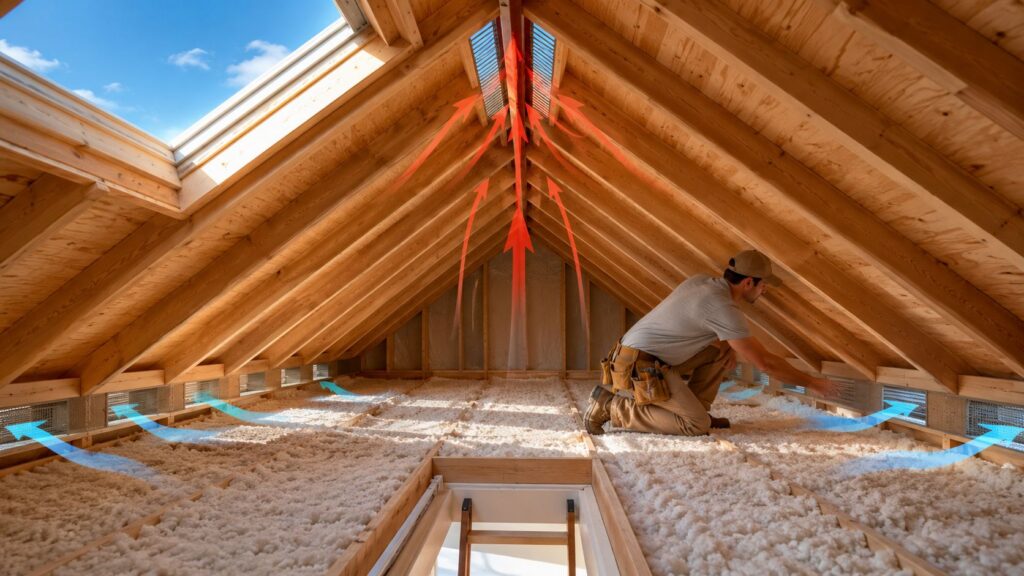
Here's the part many homeowners skip. Don't clean first. Diagnose first. If you remove the visible evidence before understanding the source, you lose clues and often keep the underlying defect in place.
Interpreting Your Findings When to Call a Professional
An attic inspection gives you clues, not always a final answer. The pattern matters more than any single stain or odor. One isolated mark around a vent penetration suggests a very different problem than widespread sheathing discoloration, compressed insulation, and a whole-attic smell.
Odor without visible growth also matters. In Hollywood homes, a moldy smell can come from stale insulation or from prolonged humidity spikes even after an earlier leak was repaired, and odor alone can justify a roof inspection, moisture mapping, or thermal imaging according to this attic odor guidance for Hollywood homeowners.
What different attic clues usually mean
Use this as a field guide, not a rigid rulebook.
| Clue you found | What it often points to | Best next thought |
|---|---|---|
| One small stain below a roof penetration | Flashing or seal issue at that specific detail | Inspect the roof detail before assuming broad mold contamination |
| Strong musty odor but no visible mold | Hidden moisture, stale insulation, or humidity accumulation | Check ventilation balance, duct leakage, and past leak history |
| Widespread dark roof deck areas | Condensation, trapped humidity, or repeated moisture exposure | Bring in a roofing or building-envelope professional |
| Damp or matted insulation | Active or recent moisture entry | Find the source first, then decide what insulation must be removed |
| Rusted fasteners across broad areas | Chronic elevated moisture | Think ventilation and humidity, not just one leak |
| Moisture near bath fan ducting | Exhaust terminating incorrectly or leaking at connections | Correct the duct path and inspect surrounding materials |
A strong smell with no obvious visual growth is not a false alarm. It usually means the problem is hidden, intermittent, or old enough that the material is still holding odor.
DIY vs. Professional Remediation Decision Guide
Some attic issues are manageable for a careful homeowner. Some aren't. The key is to separate a minor surface condition from an unresolved moisture event.
| Scenario | Recommended Action | Key Considerations |
|---|---|---|
| Small, localized surface staining on a non-porous item, with moisture source already corrected | Limited DIY cleaning may be reasonable | Use protective gear and avoid spreading dust or debris |
| Stain or odor directly below a suspected roof detail | Call a roofer or roof inspector | The roof defect needs confirmation before any cleanup plan matters |
| Broad sheathing discoloration across multiple attic sections | Professional evaluation | This usually means a bigger airflow or moisture pattern |
| Persistent odor after prior leak repairs | Consider moisture mapping or thermal imaging | Odor can linger, but it can also signal hidden wet materials |
| Wet insulation, sagging materials, or repeated smell after storms | Professional roof and moisture assessment | Insulation often masks how far water traveled |
| Uncertain findings and hard-to-access attic areas | Professional inspection | Safety and accurate diagnosis matter more than guesswork |
If you need a visual point of reference for a roofing inspection company that handles attic-related roof diagnosis, this Paletz Roofing and Inspections logo reference is tied to the type of service homeowners often use when odor complaints suggest a roof-source problem.

A good rule is simple. If you can't clearly say where the moisture came from and why it stopped, you're not ready to treat the problem as solved.
Safe Cleanup Methods for Minor Attic Issues
Minor attic cleanup only makes sense under narrow conditions. The affected area has to be small, accessible, and clearly limited. More important, the moisture source must already be fixed. If the roof still leaks or the attic still traps humidity, cleanup is just cosmetic delay.
When minor cleanup is reasonable
A cautious homeowner can sometimes handle a very small area of residue or light surface growth on a non-porous or lightly affected surface. That doesn't mean scrubbing everything in sight. It means cleaning only what you can reach safely and only after you've confirmed the area is dry.
Use proper protective gear:
- Respiratory protection: Wear at least an N95-type respirator or equivalent protection appropriate for dusty attic work.
- Gloves: Nitrile or other durable gloves keep contaminated dust off your skin.
- Eye protection: Use sealed or close-fitting eye protection, not regular reading glasses.
- Clothing: Wear long sleeves and clothes you can wash immediately after.
What safe cleanup actually looks like
Keep the process controlled. Don't turn a small attic issue into a whole-house air problem.
A practical sequence looks like this:
Set up stable access
Work from secure footing. Don't kneel on drywall ceilings or lean into loose framing.Isolate the work area as much as possible
Keep the attic hatch closed when you're not moving in and out. Limit traffic through the house.Remove and bag loose contaminated debris carefully
If insulation is visibly damp, compressed, or odor-loaded in one small area, it usually makes more sense to remove and replace that section than to try to “freshen” it.Clean the affected surface gently
Use a method appropriate for the material and avoid aggressive abrasion. The goal is to remove residue without blasting particles into the attic air.Let the area dry fully
If the surface still feels cool, damp, or smells stronger after cleaning, stop and revisit the diagnosis.
Clean only after correction. Dry materials stay clean longer than wet materials ever will.
What not to do
These mistakes create more trouble than the original odor:
- Don't dry-sand stained wood: That spreads particulates and can drive contamination into the living space.
- Don't fog the attic and call it done: Odor treatments don't fix wet roof decking, bad venting, or contaminated insulation.
- Don't spray indiscriminately on porous materials: Wetting already compromised materials can make odor worse.
- Don't paint over suspect areas before they're dry: Coating over moisture traps the problem in place.
- Don't keep insulation that smells strongly musty after a moisture event: Odor often stays in porous insulation even after the leak stops.
If the smell is strong, the affected area is broad, or you're not certain the source is fixed, stop the DIY work there.
Long-Term Prevention for a Dry and Healthy Attic
The best fix for attic odor is not better deodorizing. It's a drier attic. Homes in Hollywood stay ahead of this problem when the roof system sheds water properly, the attic moves air correctly, and indoor humidity stays under control.
Florida health guidance puts two prevention points in plain terms: dry wet building materials within 24 to 48 hours and keep indoor relative humidity below 60% to reduce mold risk, as outlined by the Florida Department of Health mold guidance.

Build prevention around roof airflow and humidity
Most recurring attic smell complaints come from one of three failures.
The first is roof water entry. That includes aging flashing, storm damage, underlayment issues, and roof penetrations that no longer seal well.
The second is bad attic airflow. Intake and exhaust have to work together. If soffit vents are blocked by insulation or the attic has poor exhaust, humid air stalls instead of moving out.
The third is interior moisture migration. When bathroom fans, duct leaks, ceiling bypasses, or poor humidity control keep feeding moisture upward, the attic becomes a collection point.
Stop thinking about the attic as a separate box. It reacts to what the roof allows in and what the house pushes up.
The prevention moves that actually matter
Some prevention steps work consistently. Others sound good but don't solve much.
- Inspect after storms and after odor events: If the smell appears after wind-driven rain, get the roof checked while the pattern is still fresh.
- Keep soffit paths open: Baffles matter. Insulation packed into the eaves can choke intake air.
- Confirm exhaust ducts terminate outdoors: A bathroom fan dumping into the attic can keep feeding moisture every day.
- Watch insulation condition, not just depth: Insulation that's damp, compressed, or dirty may be telling you about air leakage or condensation.
- Seal bypasses from the living space: Gaps around fixtures, wiring penetrations, and attic hatches let conditioned air and moisture migrate upward.
- Manage indoor humidity actively: Air conditioning helps, but some homes also need dehumidification, especially during long humid stretches. For practical homeowner-level ideas, this guide to HVAC solutions for home humidity is a helpful complement to roof and attic work.
A prevention plan also needs maintenance discipline. If a leak wets attic materials, don't wait to see whether the smell fades on its own. Drying speed matters. Wet insulation, damp sheathing, and humid enclosed air can keep the odor cycle going long after the original rain event.
One more point matters in South Florida. Repeated “cleanup only” approaches usually fail because they don't change the attic environment. Homeowners get better results when they treat the roof, ventilation, and humidity as one connected system.
Frequently Asked Questions About Attic Odors
Does a musty attic smell always mean mold
No. It can mean mold, but it can also mean trapped humidity, stale insulation, old organic dust, or a past leak that left odor behind. Smell is a warning sign of a moisture history. It isn't always proof of active growth.
What matters is whether the odor has a current source. If it gets stronger after rain, after high-humidity days, or near a specific attic zone, that pattern usually points to an unresolved condition.
Should you test the attic air if you can already smell something
Not always. In Florida, state guidance says visible mold is usually identifiable by sight or smell, and when mold is visible, sampling is generally not needed. In practice, that means testing is often less useful than finding the moisture source.
If you have odor without visible evidence, inspection tools can be more practical than blind sampling. Roof review, thermal imaging, and moisture mapping usually answer the homeowner's main question faster, which is where the moisture is coming from.
Can you paint over attic mold staining
You can cover the appearance, but you haven't fixed the cause. If the roof deck, framing, or insulation still gets wet, staining and odor typically return. Paint and stain blockers have their place after correction and proper cleaning, not as a substitute for them.
This is one of the most common mistakes in attic work. Covered-up evidence often delays the proper repair and makes future diagnosis harder.
Will an air purifier fix the smell
Not by itself. An air purifier may help with particles in occupied spaces, but it won't stop roof leaks, condensation, or humid air accumulation in the attic. If the source remains, the smell remains or comes back.
Air treatment can support comfort indoors. It does not replace roof repair, airflow correction, wet-material removal, or humidity control.
When should you call a roofer instead of a mold company
Call a roofer first when the clues point to a roof-system failure or attic ventilation issue. That includes odor after rain, staining around penetrations, repeated seasonal smell, or visible signs that airflow is blocked. If the moisture source is overhead, the roof has to be part of the diagnosis immediately.
Call a remediation-focused specialist when materials are clearly contaminated, odor is severe, or the attic contains widespread affected insulation and surfaces. In many homes, both trades are needed. The sequence matters. Source control comes first.
What should you inspect first if you smell mildew but don't see mold
Start with the clues most likely to reveal hidden moisture:
- Attic hatch area: Stronger smell here often means the attic is the source.
- Underside of roof sheathing: Look for dark patches, staining, and rusty fasteners.
- Vent terminations: Bathroom exhaust and duct issues are common causes.
- Insulation condition: Damp, flattened, or dirty insulation can hold odor.
- Around penetrations: Pipe boots, flashing points, and roof transitions are frequent culprits.
If you don't see anything obvious, think in patterns. Does the smell appear after storms, during very humid weather, or after long AC cycles? That timing helps separate a roof leak from an airflow or humidity problem.
Is odor alone enough reason to schedule an inspection
Yes, especially in Hollywood's climate. A musty attic smell is often the earliest sign you'll get before visible interior damage appears. Waiting for ceiling staining or obvious mold growth usually means the problem has had more time to spread through decking, framing, or insulation.
Homeowners often regret waiting because odor feels less urgent than a leak. In reality, odor is often the early version of the same moisture problem.
Can attic insulation be the only thing causing the smell
Sometimes insulation is the main odor reservoir, but it usually isn't the original cause. Insulation absorbs and holds smell after humidity events, condensation, or prior leaks. If the source has been fixed and the odor still lingers, contaminated insulation may need removal and replacement in affected sections.
That's why inspections should separate source materials from odor-holding materials. Roof decking may show where moisture entered. Insulation may show where the smell stayed.
What doesn't work for recurring attic odor
A few approaches fail over and over:
- Masking sprays and air fresheners: They don't change moisture conditions.
- One-time cleaning without roof review: The smell often returns.
- Ignoring venting defects: The attic keeps trapping humidity.
- Leaving wet or odor-loaded insulation in place: The attic keeps smelling stale.
- Assuming no visible mold means no problem: Hidden moisture can still be active.
The homes that stay dry long term are the ones where someone traces the odor back to the actual building failure.
If you're dealing with an attic mold smell in Hollywood, FL and want the roof side of the problem checked before it turns into repeated interior damage, Paletz Roofing and Inspections can inspect the roof system, attic ventilation, and likely moisture entry points so you can make a repair decision based on the source instead of the smell alone.