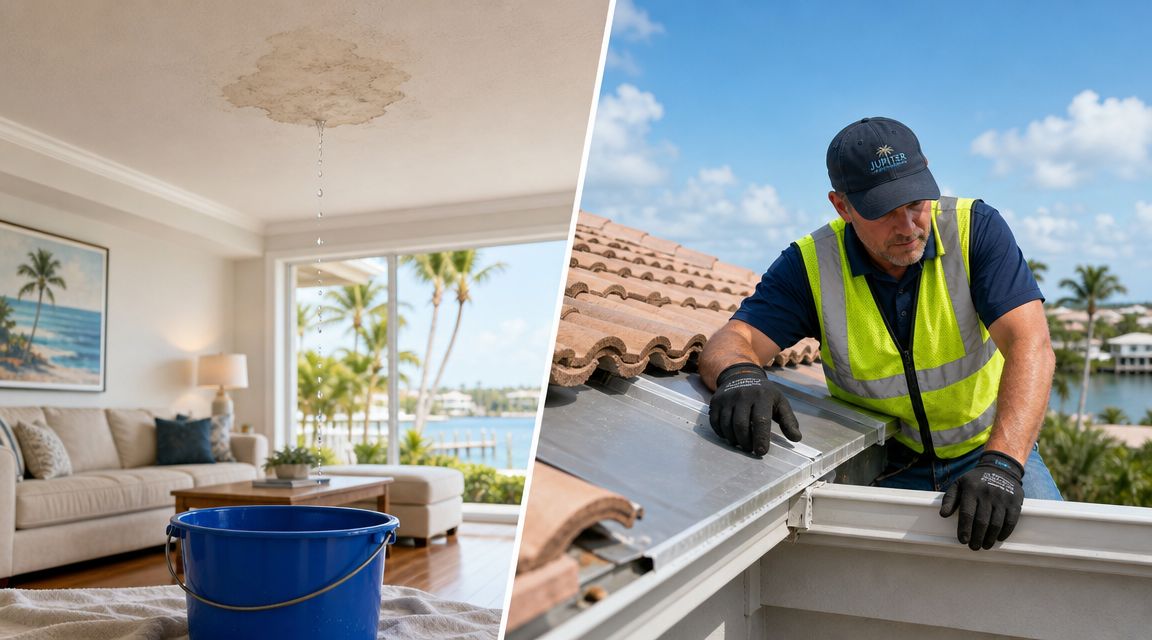
If you searched for ice dam leaks in Jupiter, the first thing to know is that the phrase points you in the wrong direction.
The only “ice” that clearly belongs with Jupiter is on Jupiter the planet, not Jupiter, Florida. NASA says Jupiter has three distinct cloud layers spanning about 44 miles (71 kilometers), with layers likely made of ammonia ice, ammonium hydrosulfide crystals, and water ice and vapor in a hydrogen-helium atmosphere, and its stripes are cold, windy clouds of ammonia and water in the largest planet in the solar system, as described in NASA's Jupiter facts. That has nothing to do with what leaks through a South Florida roof.
What you're dealing with is still real. Ceiling stains, wet drywall, musty attic insulation, drips around a light fixture, or water showing up after a storm all deserve fast attention. But in Jupiter, Florida, the cause usually isn't an ice dam. It's more often a leak that looks like one from the inside.
That distinction matters because bad diagnosis leads to bad repairs. If someone applies cold-climate advice to a South Florida roof, they can waste time chasing a problem that doesn't fit the local weather or the way Florida roofs fail.
Table of Contents
- Your Guide to Leaks in Jupiter Not Ice Dams
- Understanding True Ice Dams and Florida's Climate
- Diagnosing Common Roof Leak Causes in Jupiter
- Immediate Steps to Manage an Active Roof Leak
- Professional Repair Strategies for Florida Roofs
- How to Prevent Roof Leaks in Jupiter's Climate
- Frequently Asked Questions About Jupiter Roof Leaks
Your Guide to Leaks in Jupiter Not Ice Dams
Homeowners in Jupiter often use the search term ice dam leaks Jupiter because they're trying to describe a leak pattern, not a weather event. Water appears near the edge of a ceiling, along a wall, or after a storm. Online articles talk about backed-up water and roof-edge problems, so the term sounds close enough.
It usually isn't.

In South Florida, a leak that acts like an ice-dam leak often comes from a completely different failure point. Wind pushes rain where it normally wouldn't go. Debris slows drainage. Flashing around vents, walls, chimneys, or skylights fails. A cracked tile, lifted shingle, or weak seal lets water in high on the roof, and the stain shows up somewhere else entirely.
That's why homeowners get frustrated. They look at the wet spot and assume the problem is directly above it. On Florida roofs, water travels.
Practical rule: Don't name the leak before you diagnose the path. The stain is the symptom. The entry point may be several feet away.
The good news is that this kind of leak can be tracked. Once you stop trying to force a cold-weather explanation onto a South Florida house, the roof starts making more sense. The question isn't whether you have an ice dam. The question is which Florida leak pattern you're seeing, and what failed first.
Understanding True Ice Dams and Florida's Climate
A true ice dam has a specific definition. The University of Minnesota Extension explains that it's a ridge of ice at the edge of a roof that stops melting snow from draining, and the backed-up water can leak into walls, ceilings, insulation, soffits, and fascia in its guide to dealing with and preventing ice dams.
That process needs a particular chain of events.

What a real ice dam needs
A real ice dam forms when these conditions line up:
- Heavy snow on the roof creates the source water.
- Heat escapes into the attic and warms parts of the roof from below.
- Snow melts during the day and runs toward the eaves.
- Cold roof edges refreeze overnight and build a ridge of ice.
- Water backs up behind that ridge and can slip under roofing materials.
The National Weather Service guidance quoted in the same University of Minnesota Extension resource says ice dams are most common in northern climates and prevention often focuses on gutter cleaning and attic insulation, recommending at least R-30, with R-38 preferable in northern climates.
Why that doesn't fit Jupiter
Jupiter, Florida doesn't operate under that snow-and-refreeze pattern. You don't have roofs carrying heavy snow while meltwater refreezes along the eaves over repeated freeze-thaw cycles. That's why standard ice-dam advice doesn't solve the usual leak call in Palm Beach County.
What homeowners in Jupiter do have is a different stress set. Strong rain, wind-driven moisture, roof penetrations, drainage trouble, sun-baked sealants, and storm wear all create leaks that can show up in the same interior places a northern homeowner might blame on an ice dam.
If the climate mechanism doesn't exist, the diagnosis shouldn't either.
That doesn't mean the leak is minor. It means the repair strategy needs to match the local roof and the actual weather event. In South Florida, the right question is never “How do I stop roof ice?” It's “Where did water get in, and what allowed it to travel?”
Diagnosing Common Roof Leak Causes in Jupiter
Most online content about ice-dam leaks assumes snowmelt. That framework misses what really happens on South Florida roofs. As explained in this article on how ice dams cause roof leaks and why Florida lookalikes matter, the common culprits in places like Jupiter are often wind-driven rain, clogged drainage systems, and flashing failure around roof penetrations, all of which can leave similar interior stains after major weather events.

Why the stain location can fool you
Water rarely drops straight down from the entry point. It can run along underlayment, decking, trusses, fasteners, ductwork, or the top side of drywall before it finally shows itself inside the house. That's why a ceiling stain in a hallway might start at a vent boot, valley, wall flashing detail, or roof transition somewhere else.
A lot of homeowners also notice that the leak only appears under a specific wind direction. That's a big clue. If water shows up only during hard blowing rain, the leak may depend on pressure and angle, not just gravity.
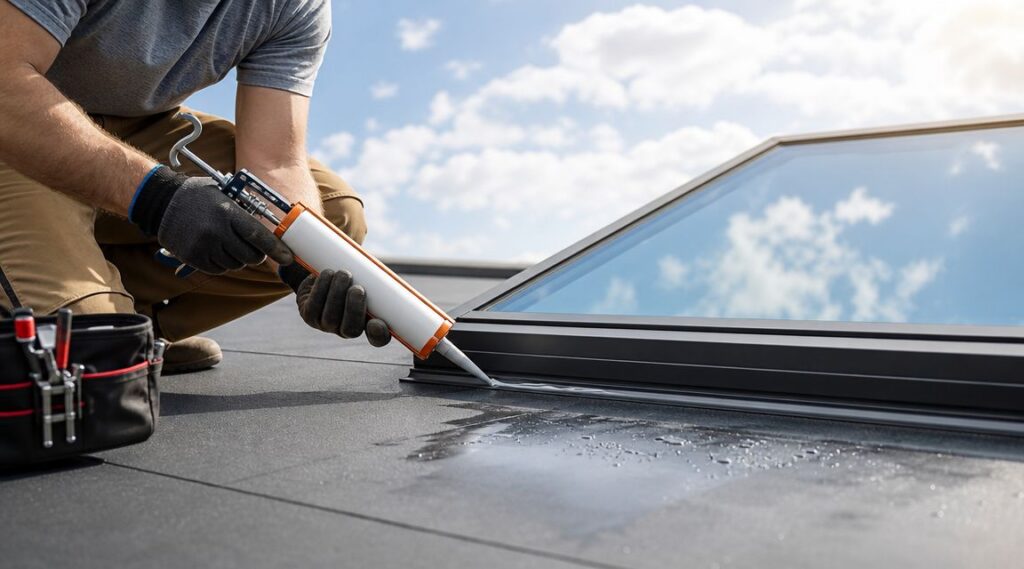
For a quick visual reference, this roof leak image guide helps show how leak symptoms can mislead you when the actual opening is elsewhere.
The most common Florida leak lookalikes
Some of the usual suspects in Jupiter homes are straightforward once you know where to look.
Wind-driven rain at roof-to-wall areas
Water gets forced behind flashing or siding transitions during storms. Inside, that often shows up as stains near exterior walls, upper corners of rooms, or around windows and soffit lines.Clogged gutters and poor drainage
When debris slows runoff, water can pool or overflow where it shouldn't. You may see staining near fascia areas, soffits, entry points at eaves, or a recurring drip after heavy rain.Failed flashing around penetrations
Vents, pipes, chimneys, and mechanical penetrations are classic trouble spots. Look for cracked sealant, loose metal, lifted edges, or rusting fasteners if they're visible from a safe spot on the ground or from the attic underside.Cracked, slipped, or missing roofing materials
On tile roofs, a break may not be obvious from below. On shingle roofs, a lifted or damaged area may only leak when rain hits from a certain angle. The interior clue is often a stain that seems random or appears after one storm but not the next.Skylight and perimeter seal problems
Skylights don't always leak through the glass unit itself. The frame, curb, surrounding flashing, or seal transitions can be the issue. Water marks often show at corners or along the ceiling shaft.
On Florida roofs, the leak you see indoors is often the end of the water path, not the start.
Here's a homeowner-friendly comparison table that can help narrow things down:
| Symptom | Likely Cause | Where to Look |
|---|---|---|
| Stain near an exterior wall after blowing rain | Wind-driven rain | Roof-to-wall transitions, upper wall lines, flashing details |
| Drip near eaves or soffits during heavy rain | Clogged drainage | Gutters, downspout discharge points, fascia edges |
| Leak around a bathroom or kitchen ceiling area | Penetration flashing issue | Vent boots, pipe flashings, exhaust outlets |
| Stain around a skylight opening | Skylight perimeter failure | Skylight curb, frame seal, surrounding flashing |
| Leak appears after storms but not every rain | Material damage or directional water entry | Tile or shingle field, valleys, exposed fasteners, roof transitions |
Homeowners can do basic observation safely. They shouldn't turn that into a roof walk after rain. Wet tile, wet shingles, and storm-damaged surfaces are where people get hurt and where small problems become bigger when they step in the wrong spot.
Immediate Steps to Manage an Active Roof Leak
An active leak feels chaotic, but the first response should be simple. Protect people. Protect contents. Limit interior damage. Leave roof work for dry conditions and the right equipment.

Protect people and property first
Start inside the house.
- Move valuables out of the drip zone. Get electronics, rugs, artwork, and wood furniture away from the wet area.
- Catch the water with buckets, storage bins, or any stable container you have.
- Lay down towels or plastic sheeting to keep floors from becoming slick.
- Watch nearby light fixtures and outlets. If water is close to electrical components, treat that as a safety issue first.
If the ceiling is bulging with trapped water, many roofers will tell you the same thing: the pocket may need controlled relief to avoid a wider ceiling collapse. Use caution. If you choose to do it, protect the floor, use a container underneath, and make only a small puncture at the lowest point of the bulge.
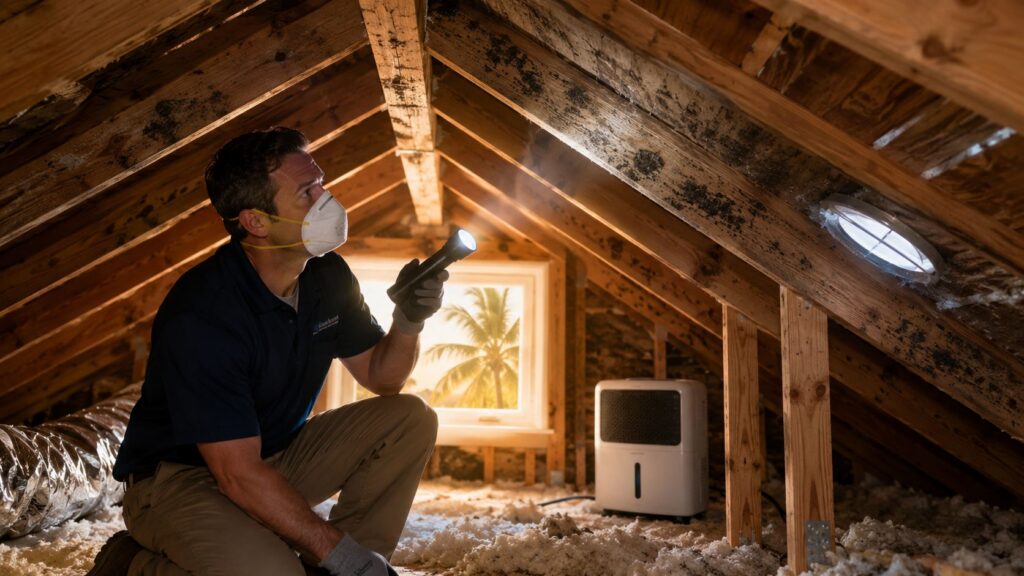
This visual leak response reference can help you identify the kind of interior conditions worth documenting right away.
What not to do during an active leak
Homeowners get into trouble when they rush outside.
Stay off a wet roof. Don't climb onto tile, shingles, or a ladder in wind or rain to “take a quick look.”
Also avoid these mistakes:
- Don't smear random sealant on the visible stain inside. That doesn't stop the roof entry point.
- Don't assume one drip means one hole. Wind-driven leaks can have more than one path.
- Don't throw away damaged materials too early. Keep evidence until you've documented the loss.
- Don't wait to ventilate the area. Fans and airflow can help dry interior finishes after the leak is controlled.
Take clear photos and short videos of the stain, drip, damaged contents, and weather conditions if they're obvious from a safe place. Note when the leak started, which room was affected, and whether it happened during steady rain or hard wind. Those details help with both diagnosis and any insurance conversations.
Professional Repair Strategies for Florida Roofs
A durable repair starts with separating the symptom from the failure. The ceiling stain is the symptom. The failed flashing, broken tile, open seam, worn penetration, or drainage issue is the failure.
Diagnosis before repair
A good Florida leak inspection follows the water path backward. That means looking at the roof surface, transitions, penetrations, drainage routes, attic signs, and the interior stain pattern together. Roofers who skip that process often end up doing cosmetic patchwork.
The best repair approach changes with the roof type. Tile systems, shingle systems, metal details, and low-slope sections all fail differently. A cracked tile isn't handled the same way as a vent boot issue, and neither one is handled like a wall flashing defect.
A company's background matters too. You want a contractor with real local roofing experience, proper licensing, and a track record in South Florida conditions. This Paletz Roofing and Inspections company profile gives a sense of the kind of local service footprint homeowners should expect from an established roofing firm.

Repairs that last longer than a patch
Permanent repair usually falls into a few categories:
- Flashing correction. Reworking the metal detail, not just adding surface caulk, is often what stops repeat leaks at penetrations and wall lines.
- Targeted replacement of damaged roofing materials. Broken tile, loose shingles, or deteriorated sections need proper replacement and fastening.
- Seal and boot replacement at penetrations. Old sealant can't always be revived. Sometimes the part itself is the problem.
- Drainage improvement. If runoff isn't moving correctly, the fix may involve gutters, discharge points, edge details, or debris management.
What doesn't work well long term is the “smear and hope” method. Homeowners sometimes get sold on quick sealant-only fixes because they're fast. On Florida roofs, that can buy a little time, but it often doesn't solve the weakness that let water in during storm conditions.
A repair is only as good as the diagnosis behind it.
If a leak keeps coming back, the usual reason isn't mystery. It's that someone treated the visible symptom without correcting the detail that fails under real weather.
How to Prevent Roof Leaks in Jupiter's Climate
Cold-climate advice puts heavy emphasis on attic heat loss, snowmelt, and insulation levels. In warmer, hurricane-prone markets, the priorities change. As outlined in this overview of preventing ice dams with attention to roof drainage and attic moisture pathways, practical prevention in places like Florida means focusing on effective roof drainage, moisture pathways in the attic, and separating storm-related leaks from cold-weather explanations.
What deserves your attention in South Florida
For a Jupiter homeowner, prevention is more about water management than ice management.
Look hard at the roof details that deal with moving rain off the house and keeping wind from driving it under the system. That includes gutters, downspouts, valleys, flashing intersections, vent penetrations, skylight edges, and any area where one material meets another.
Attics matter too, but not for the same reason northern articles suggest. In South Florida, attic inspection is useful for spotting moisture trails, staining, damp insulation, and signs that water is entering around penetrations or roof transitions.
If you're also dealing with plumbing concerns or trying to think broadly about leak prevention inside the house, this guide on how to protect your home from water damage is a useful companion read.
A simple homeowner checklist
Use a practical routine instead of waiting for the next storm to tell you what failed.
- Before storm season inspect visible roof edges, soffits, gutters, and downspouts for blockage or overflow signs.
- After major weather walk the property from the ground and look for displaced materials, debris impact, bent flashing, or new stains indoors.
- Check penetrations around vent pipes, exhaust outlets, and skylights for brittle or deteriorated seal areas.
- Watch the attic for water trails, darkened decking, damp insulation, or musty odor after rain.
- Trim back overhanging limbs that drop debris and increase surface wear.
The cheapest effective prevention is usually the work that keeps water moving where it belongs and catches small failures before they spread. In Jupiter, that means drainage, penetrations, and storm-related weak points.
Frequently Asked Questions About Jupiter Roof Leaks
Can a roof leak in Jupiter still be serious if it isn't an ice dam?
Yes. The label doesn't matter nearly as much as the entry point and water path. A leak from flashing, drainage trouble, or wind-driven rain can still damage drywall, insulation, trim, and framing if it isn't handled quickly.
How often should a Jupiter homeowner have the roof checked?
At a minimum, have it looked at regularly and especially around storm season or after a major weather event. If you've had a past leak, skylight trouble, drainage overflow, or older sealants around penetrations, more frequent attention makes sense.
Will insurance cover this kind of leak?
That depends on the policy and the cause. Sudden storm-related damage may be treated differently than long-term wear, deferred maintenance, or repeated leakage. Document the damage early and keep notes on timing and weather conditions.
How do I know if I need repair or replacement?
If the leak is isolated and tied to one detail, repair may be enough. If the roof has multiple failure points, recurring leaks, widespread material deterioration, or repeated patch history, replacement may be the smarter long-term decision.
If you're dealing with a leak in Jupiter or anywhere in South Florida, Paletz Roofing and Inspections can help you identify the actual cause, contain the damage, and choose the right repair before a small problem spreads.