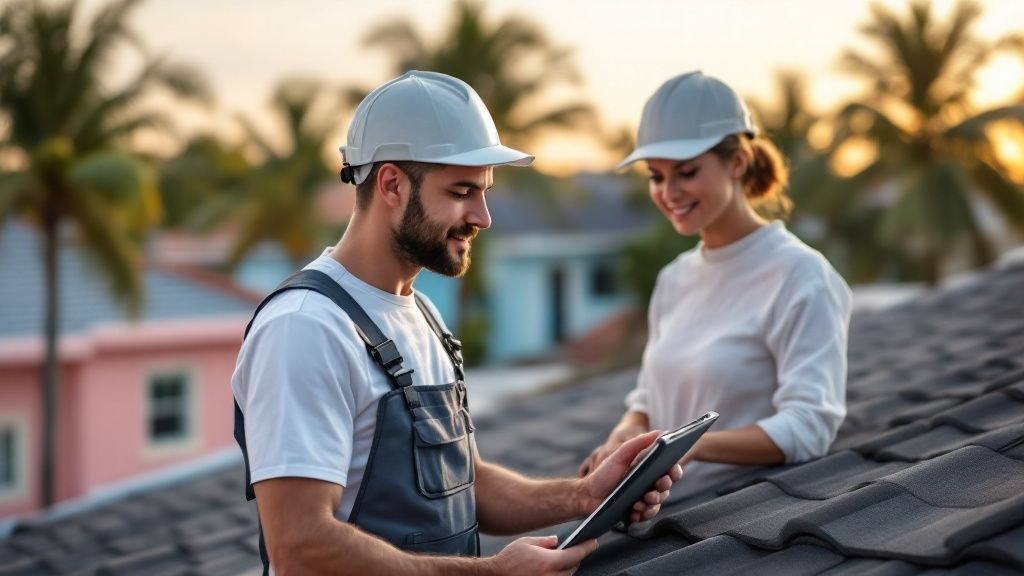
Finding the right roofer in South Miami isn't just about getting a good price. It’s about hiring a contractor who truly understands our unique challenges—from brutal hurricane codes to the relentless South Florida heat that can bake inferior materials into oblivion. A top-tier roofer here will always be fully licensed, insured, and ready to show you a portfolio of successful projects right in our neighborhoods.
How to Start Your Search for a South Miami Roofer
Jumping into a search for a roofing contractor can feel like a chore, especially in a market as crowded as South Miami's. The sheer number of choices is enough to make anyone's head spin. Florida has over 8,200 roofing contractors statewide, so you can imagine how many are competing for your business right here. This is exactly why a methodical approach is your best friend.
Your first move isn't picking up the phone for quotes. It's figuring out your absolute, non-negotiable requirements before you even start looking. Getting this straight from the beginning saves you a ton of time and helps you weed out the unqualified or unreliable players right away.
Defining Your Core Requirements
Before you start comparing companies, get crystal clear on what you actually need. Are you dealing with a sudden leak that’s dripping into your living room, or are you proactively planning a full roof replacement? Knowing the scope of your project is the first step to narrowing the field. As you start your search, it helps to explore the different kinds of reliable roofing solutions and materials out there to get a better handle on your needs.
Zero in on contractors who specialize in your specific roof type, whether it’s classic tile, shingles, modern metal, or a flat roof. A specialist has a much deeper grasp of the installation techniques and material quirks that come with your home's design and our local climate. You can often find great examples of their work, like this expertly installed tile roof.
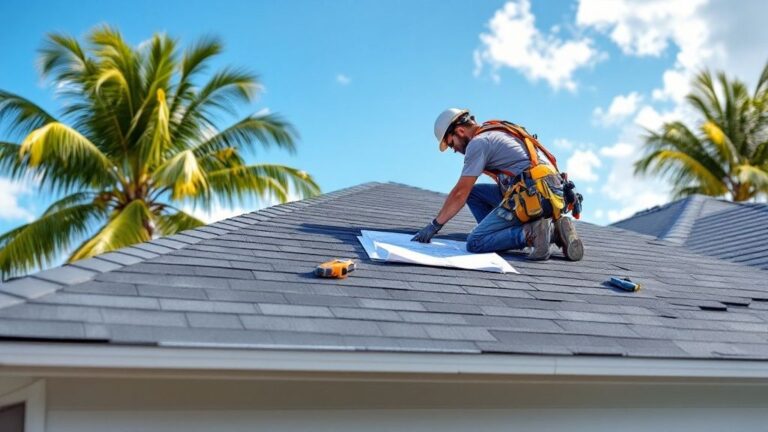
The best way to start is by making a simple checklist of your must-haves. This list should include proper licensing, full insurance coverage (both liability and workers' comp), and a track record of positive, verifiable local reviews. Any roofer who can’t tick these basic boxes shouldn't even be in the running.
Verifying Licenses and Insurance to Protect Yourself
Before you start collecting quotes, there’s a critical first step that you absolutely cannot skip: verifying a contractor's credentials. This isn't just about ticking a box. It's the single most important thing you can do to shield yourself from liability and protect your home and finances.
Hiring an unlicensed or uninsured roofer can quickly turn a straightforward project into a legal and financial nightmare. It happens more than you think.
Any legitimate roofer operating in South Miami has to hold a current, valid license from the Florida Department of Business and Professional Regulation (DBPR). You can—and should—look up their license number directly on the DBPR website. It's a quick check that confirms they've met the state's minimum standards and are legally allowed to work on your roof.
The Two Types of Insurance You Must Confirm
Beyond the state license, your roofer must carry two very specific kinds of insurance. Don't just take their word for it. Always ask to see a current certificate of insurance for both policies.
- General Liability Insurance: This is what protects your property. If a roofer accidentally drops a bundle of shingles on your car or a ladder falls and smashes a window, this policy covers the damage. Without it, those repair costs could fall on you.
- Workers' Compensation Insurance: This is what protects you if a worker gets hurt on your property. If a roofer doesn't have it, you could be held personally responsible for an injured worker's medical bills and lost wages.
Imagine a worker slips and falls from your roof. If the company lacks workers' compensation, that injured worker could sue you directly. This scenario is a homeowner's worst nightmare and can lead to devastating financial consequences.
This visual shows a professional roofer taking precise measurements, a key step in a compliant and high-quality roofing project.
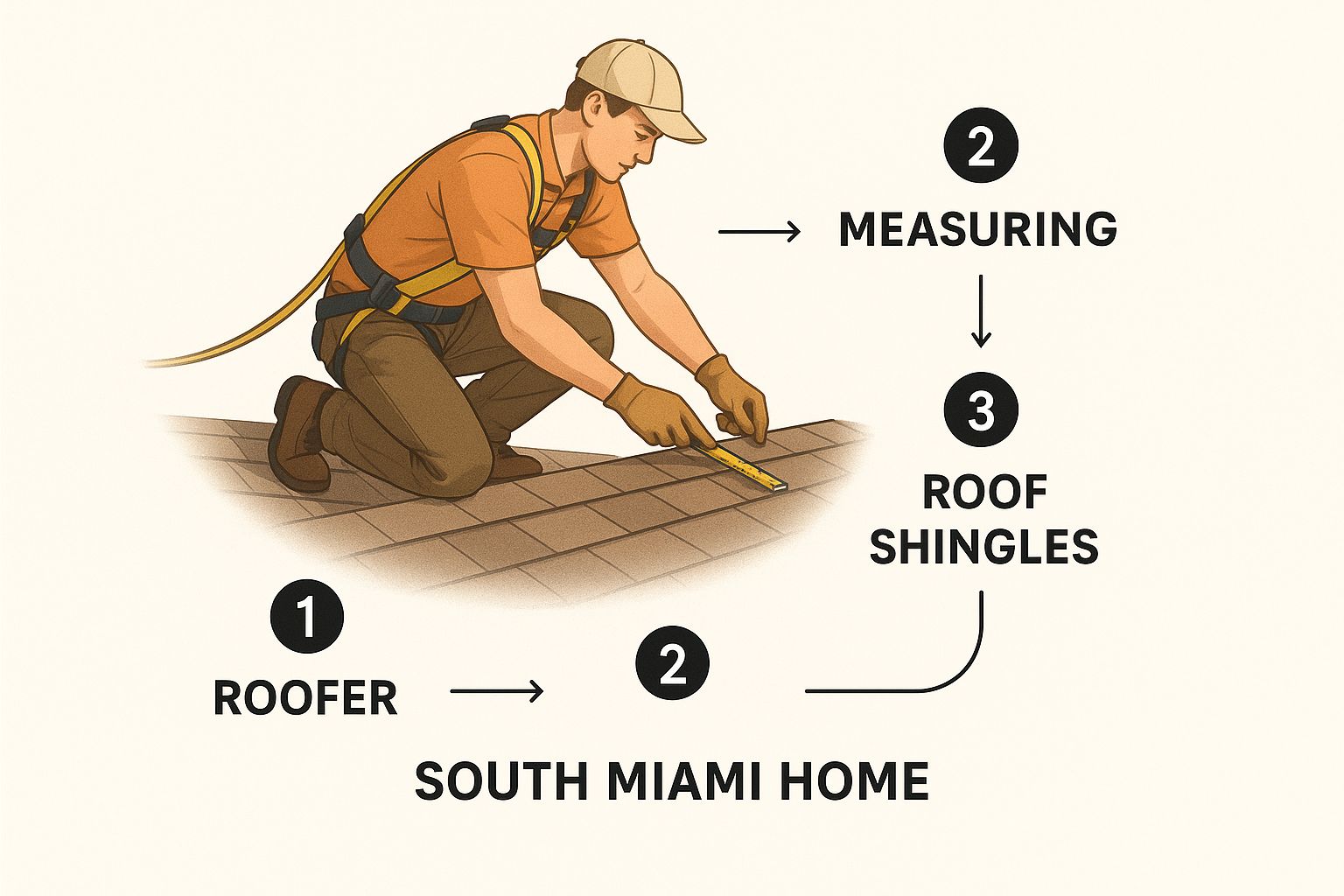
This image really highlights the professionalism and detail that a licensed and insured roofer brings to the job. A contractor who cuts corners on their own safety and credentials isn't likely to give your home the care it deserves. Taking a few minutes to verify this information is your first and best line of defense.
How to Decode Roofing Quotes and Spot Red Flags
Getting a few roofing quotes is a smart first step, but the real skill is learning to read between the lines. I've seen it time and time again: the lowest bid isn't always the best deal. In fact, it's often a massive warning sign. A truly professional quote from a top-tier South Miami roofer will be detailed, transparent, and easy to follow.
Your goal here is to compare apples to apples. A legitimate estimate should break everything down into clear, understandable categories. Look for itemized costs that cover materials (specifying the exact brand and type), labor, dumpster and disposal fees, and any necessary permits. This level of detail shows the contractor has actually done their homework and isn't just pulling a number out of thin air. Vague descriptions like "roofing materials" should make you pause.
Common Red Flags to Watch For
Once you have a few quotes in hand, it's time to put on your detective hat. Be very wary of any contractor who exhibits these behaviors, as they often signal much bigger problems down the road.
- Unusually Low Bids: An offer that's dramatically cheaper than the others is a major red flag. It usually means the roofer is cutting corners on materials, using uninsured labor, or worse, planning to hit you with surprise charges later on.
- High-Pressure Sales Tactics: Any roofer who pressures you to sign a contract right then and there should be shown the door. A confident, reputable professional will give you the time and space you need to make an informed decision.
- Vague or Missing Details: If the quote lacks a clear breakdown of costs, a payment schedule, or a projected timeline, you need to ask for clarification. If they can't or won't provide it, it's best to walk away.
- Large Upfront Payments: Demanding a massive deposit (anything over 10-20%) before any work even starts is unprofessional and incredibly risky for you as the homeowner.
The most reputable roofers have invested heavily in their business and their reputation. They simply won’t risk it by using subpar materials or questionable tactics. Their pricing reflects the quality and peace of mind they provide.
The high cost of acquiring new customers—often $50 to $200 per lead here in Miami—is a powerful incentive for good roofers to earn business through referrals rather than by cutting corners. A job well done is their best form of marketing. You can see examples of our past projects to understand our commitment to quality.
Checking a Roofer's Local Experience and Reputation
A roofer’s resume might look impressive on paper, but what really counts is their track record right here in our community. A contractor who mainly works in another state, or even just a different part of Florida, simply won’t have the same gut-level understanding of what our roofs go through season after season.
The best roofer in South Miami is someone who knows our specific challenges inside and out. They’ve wrestled with Miami-Dade County’s permitting process more times than they can count and can tell you exactly which materials actually hold up to our relentless UV rays and hurricane-force winds. This kind of local expertise isn't just a nice bonus—it's essential for a roof that lasts and stays compliant.
Look for a Portfolio of Local Work
Don't just take a roofer's word for it; ask them to show you their work. Any confident, experienced local roofer will be more than happy to share a portfolio of completed projects in and around South Miami.
- Ask for Addresses: Request a list of recent jobs they've completed in your area or nearby neighborhoods.
- Take a Drive: Nothing beats seeing their craftsmanship with your own eyes. Drive by a few of the homes to get a real-world sense of their quality. Pay attention to the details—how straight are the shingle lines? How clean and professional does the finished work look?
This simple step takes you beyond polished website photos and gives you a tangible look at their results.
Seeing a roofer’s work in person tells you more than a dozen online reviews ever could. It proves they have a real, established presence in the community and are proud of the work they've delivered to your neighbors.
A long-standing local presence is almost always a strong sign of reliability and quality work. For instance, some companies have spent decades building a solid reputation in the area. South Miami Roofing has served the community for over 25 years, handling everything from residential repairs to large commercial installations. That kind of history speaks volumes. You can find more on their extensive local background by exploring details of their long-standing service.
This type of deep-rooted experience means they get the unique architectural styles and weather patterns of South Miami, ensuring your project is handled with the specific care it demands.
Understanding Roofing Warranties to Secure Your Investment
A new roof is a serious financial commitment, and the warranties that come with it are your first line of defense in protecting that investment. It's tempting to file these documents away and forget about them, but that’s a mistake. Taking the time to actually read and understand what's covered—and what isn't—is crucial for your peace of mind.
What many homeowners don't realize is that a new roof almost always comes with two distinct warranties, not just one. Knowing the difference between them is a big deal, as they cover completely different parts of your roof. Any top-tier South Miami roofer will make sure you’re clear on both.

Manufacturer Warranty vs. Workmanship Warranty
First up is the manufacturer’s warranty. This one covers the physical materials—the shingles, tiles, or metal panels themselves. It’s your protection against defects that could cause the materials to fail sooner than they should.
The second warranty, and I’d argue it's the more important one, is the workmanship warranty. This comes directly from your roofing contractor and covers the quality of the actual installation. You can have the best materials in the world, but if they’re installed poorly, your roof will fail. Most early roof problems stem from installer error, not bad materials.
Here’s a quick rundown of what to look for in each warranty:
-
Manufacturer Warranty:
- How long is it? This can vary wildly, from 20 years to a supposed "lifetime" (but you need to read the fine print on what "lifetime" actually means).
- Is it prorated? Find out if the coverage value decreases as the roof gets older.
- Is it transferable? This is a huge selling point if you plan to move. Can the next homeowner inherit the warranty?
-
Workmanship Warranty:
- How long does it last? Look for a minimum of 5-10 years. A roofer offering a longer warranty is showing real confidence in their crew's skills.
- What’s included? It should spell out that it covers the labor costs to fix leaks or any other issue caused by the installation.
- What’s excluded? This part is just as important. Typically, it won't cover storm damage, falling trees, or problems caused by someone else messing with the roof.
A strong workmanship warranty is a direct reflection of a roofer's confidence in their own team and techniques. It’s your best assurance that the job was done right the first time.
Be careful, because certain things can void your manufacturer's warranty entirely. For example, many of the best material warranties are only honored if the roof is installed by a contractor who is officially certified by that specific manufacturer. Something as simple as pressure washing your roof or having a satellite dish installed incorrectly could also cancel out your protection. Curious about how contractors can improve their visibility online? SEO tools from RankMath offer some great insights. Always ask your roofer exactly what you need to do to keep both of your warranties valid for the long haul.
Making Your Final Decision with Confidence
You’ve done the legwork. Licenses have been verified, quotes are sitting on your table, and you have a good sense of each roofer’s reputation around South Miami. Now, you’re looking at a shortlist of qualified pros, and it’s time to make the final call.
This is where the decision moves beyond the paperwork and into the human element—the subtle but critical signs that point to a smooth, headache-free project.
Think back to your first interactions with each contractor. How did they handle the estimate process? A roofer who took the time to patiently answer every question, breaking down technical jargon into plain English, is probably going to keep that line of communication open when they’re up on your roof. That kind of transparency is a huge indicator of good customer service.
Professionalism isn't just a fancy word; it's a reflection of how a company is run. Did they show up on time? Was their truck clean and clearly marked? These small things say a lot about their organization and the respect they’ll show for your property.
Final Contract Review
Before you sign on the dotted line, that contract is your final and most important checkpoint. This isn't just a formality; it's the blueprint for your entire project, and it should leave zero room for confusion. A solid contract from a top South Miami roofer protects both you and them.
Go through the document with a fine-tooth comb and make sure these key items are spelled out:
- Detailed Project Timeline: Look for a specific start date and an estimated completion date. Sure, Florida weather can throw a wrench in the works, but a professional will give you a realistic schedule.
- Clear Payment Terms: The contract must lay out exactly when payments are due. Never pay the full amount upfront. The industry standard is a small deposit (10-20%), with the rest of the payments tied to specific project milestones.
- Lien Release Clause: This one is non-negotiable. A lien release is a document from the contractor confirming they've paid their suppliers and crew. Without it, you could be on the hook for their unpaid bills, even after you've paid them in full.
The final contract should feel like a confirmation of everything you’ve already discussed, not a source of new questions. If anything feels vague or makes you hesitate, speak up now. A trustworthy roofer will have no problem clarifying the details.
By pairing your diligent research with these final gut checks, you can confidently pick a roofer who not only has the right credentials but also the professionalism and integrity to be a true partner from start to finish.
Ready to work with a roofer who checks all the boxes for quality, professionalism, and reliability? The team at Paletz Roofing and Inspections has been serving South Florida with integrity for over 30 years. Contact us today for a free, no-obligation quote and experience the confidence that comes with hiring the best. https://paletzroofing.com