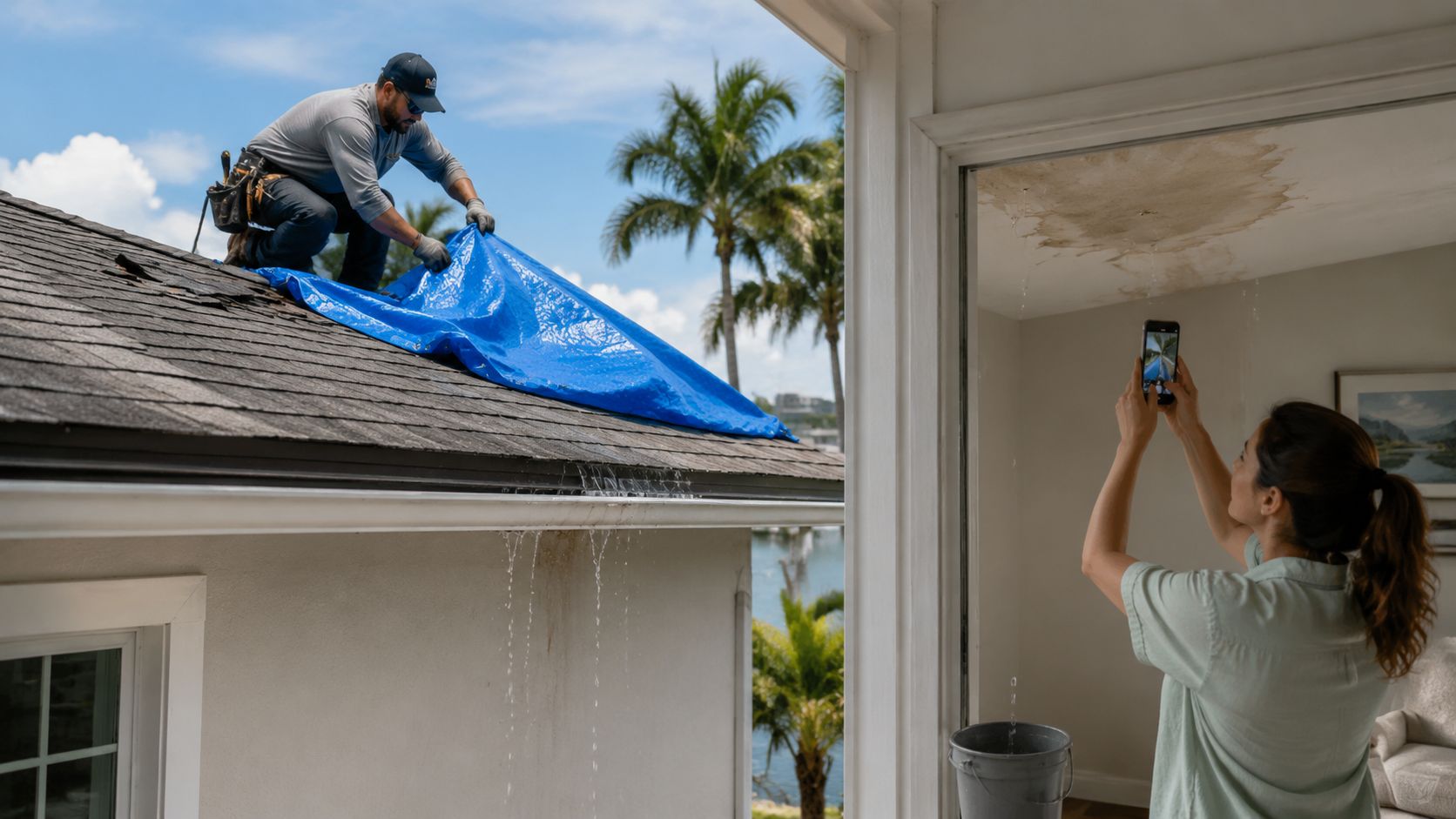
You hear dripping in the middle of the night. Then you see the ceiling stain spreading, a light fixture nearby, and water starting to hit the floor. In Fort Lauderdale, that kind of leak can go from nuisance to major interior damage fast, especially after a hard rain or wind event.
Stay calm. A roof leak feels chaotic, but the right sequence matters more than speed alone. Secure the room, contain the water, document the damage before permanent work starts, and get a licensed roofer moving. That order protects your family, your house, and your insurance position.
Table of Contents
- A Roof Leak in Fort Lauderdale Your Action Plan Starts Now
- Your First Moves Protect Your Home and Yourself
- Document Everything Your Key to a Smooth Insurance Claim
- Knowing When to Call for Emergency Roof Repair
- The Professional Response What to Expect in Fort Lauderdale
- Emergency Roofing FAQ
A Roof Leak in Fort Lauderdale Your Action Plan Starts Now
If you're hearing dripping when the storm has already passed, or finding a brown spot that wasn't there yesterday, treat it as active damage. Water rarely stays where it enters. It follows decking, framing, insulation, and drywall, then shows up indoors far from the actual roof breach.
That's why emergency roof leak repair in Fort Lauderdale starts with action, not guesswork. Small leaks don't stay small for long in South Florida. Industry data shows that delaying action on minor leaks often doubles the final cost of a complete roofing repair, because the initial problem spreads into broader water intrusion and structural damage, as noted in this Fort Lauderdale roofing cost discussion.
The first hour matters
Do three things in order:
- Protect people first. Keep everyone clear of wet ceilings, light fixtures, and slick flooring.
- Control the interior leak path. Buckets, towels, plastic sheeting, and moving valuables buy you time.
- Line up professional help. You need someone who can isolate the entry point and stop further intrusion.
Practical rule: Don't chase the leak by climbing a wet roof in the dark. Most homeowners make the situation worse when they rush outside before securing the room below.
Think beyond the drip
The leak you see is only the visible part. The hidden cost comes from soaked insulation, stained ceilings, warped wood, and moisture trapped where you can't see it. In Fort Lauderdale, humidity gives that moisture more ways to keep damaging the structure after the rain stops.
A calm response saves money. A rushed response often creates a second problem.
Your First Moves Protect Your Home and Yourself
The safest emergency response starts inside the house, not on top of it.
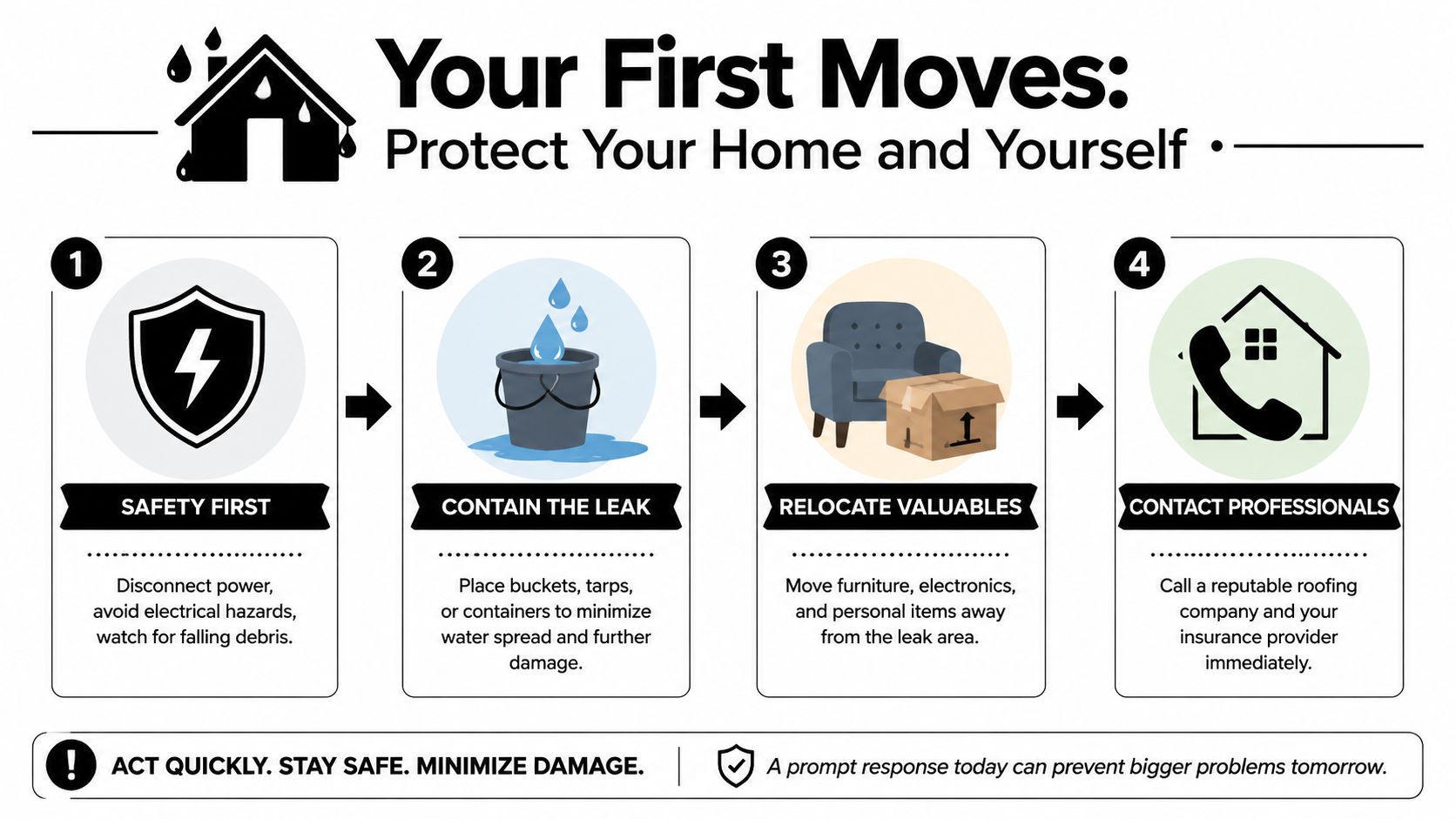
Start inside before you think about the roof
If water is near a ceiling fan, light, outlet, appliance, or breaker area, shut off power to the affected zone if you can do it safely. If you can't reach the panel without stepping into pooled water or under a sagging ceiling, leave it alone and keep the area clear.
Then contain the leak path.
- Catch the water: Use buckets, storage bins, or even a trash can if the flow is steady.
- Protect floors: Towels help at first, but plastic sheeting or a tarp under the drip zone does more to stop spread.
- Move what matters: Pull furniture, rugs, electronics, framed photos, and paperwork away from the wet area.
- Relieve a bulging ceiling carefully: If water is ballooning inside drywall, many roofers will tell you that a controlled drain point can reduce collapse risk. Only do that if the area is clear, electricity isn't a hazard, and you can manage the falling water.
For a simple visual reference, this roof leak response image shows the kind of interior-first thinking that prevents secondary damage.
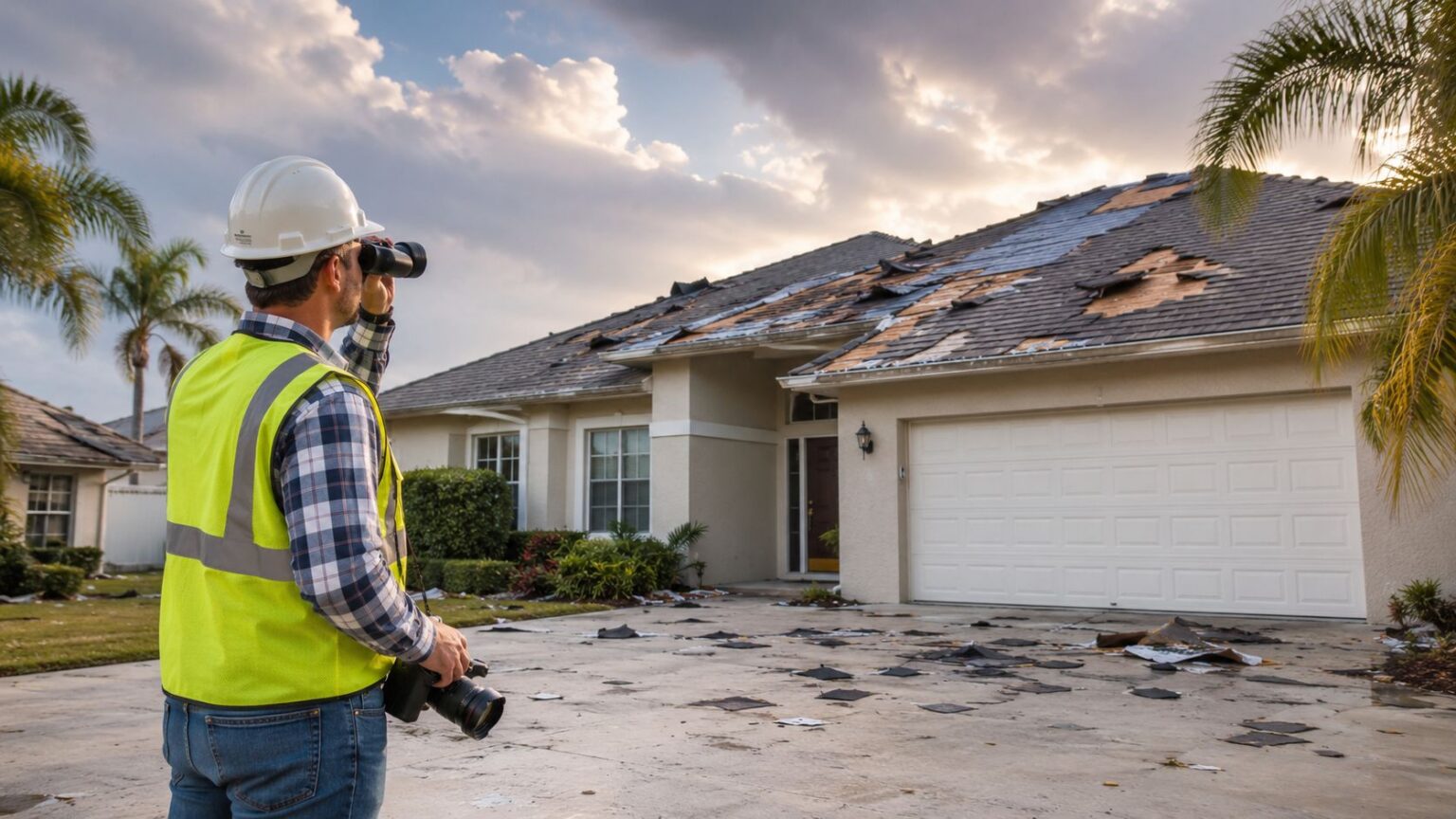
Containment before repair is the rule
Once the room is stable, the outside question comes up. Should you tarp it yourself?
Sometimes yes. Often no.
If weather is calm, access is safe, and the damaged area is obvious, a temporary tarp can limit water entry until a roofer arrives. In South Florida conditions, the field method is containment before repair. That means isolate the opening and keep water out first. Permanent sealing waits until the roof system is dry.
Here's what usually works for a temporary hold:
- Use a heavy-duty tarp: Extend it well beyond the damaged area so runoff doesn't sneak under the edge.
- Secure it against wind uplift: Loose corners fail quickly when the next gust hits.
- Keep the goal modest: The tarp is there to shed water, not to solve the roof problem.
The fastest patch is often the one that fails first.
Expert methodology for this region says 95% of permanent repair failures stem from moisture trapped beneath new materials due to insufficient drying time, and 40% of temporary repairs fail within 72 hours if the wood decking below isn't fully dried. That's why smearing sealant or slapping down tape on a wet surface usually backfires.
If you can't reach the roof safely, don't. A bucket inside is better than a fall outside.
Document Everything Your Key to a Smooth Insurance Claim
Homeowners often focus on stopping the water and forget the second emergency. Preserving proof.
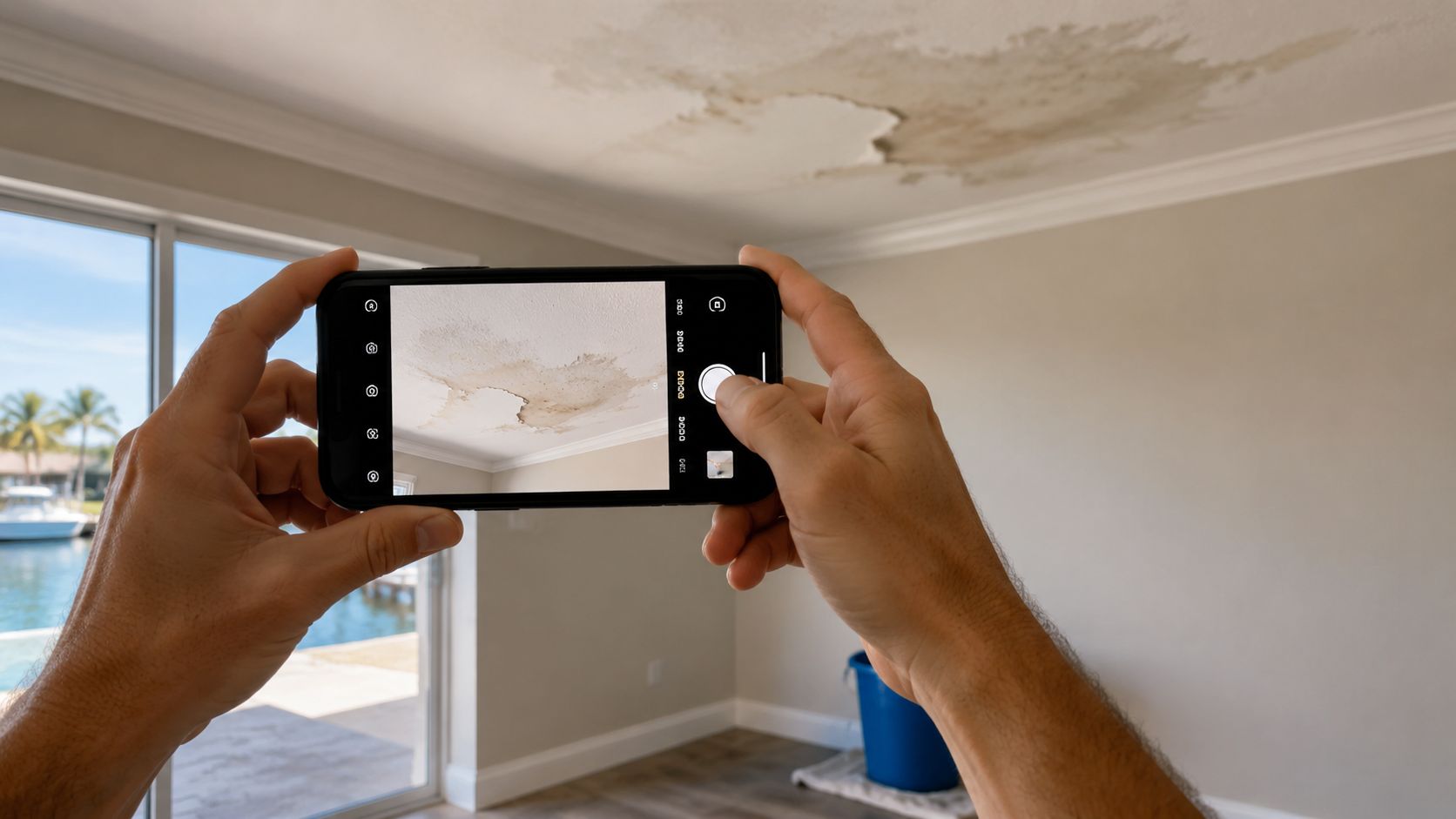
What to photograph before repairs begin
Before any permanent work starts, take clear photos and short video clips of everything you can safely access. That includes:
- The active leak itself: Dripping water, wet drywall, stained ceilings, bubbling paint.
- The room context: Wide shots showing where the damage sits in relation to windows, fixtures, and furniture.
- Damaged contents: Flooring, electronics, bedding, boxes, or anything else that got wet.
- Exterior evidence if safely visible: Missing materials, lifted flashing, punctures, or storm-thrown debris.
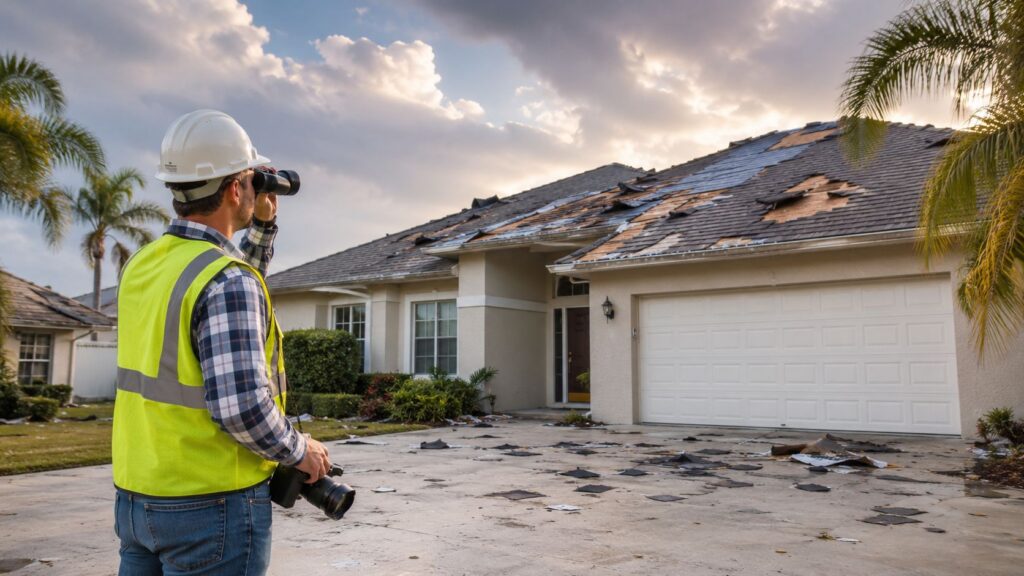
Don't overthink it. Start wide, move closer, and keep the date and time in your notes. This inspection image reference is a useful reminder that adjusters need both close-ups and context shots.
Build a claim file adjusters can follow
This is where many claims get into trouble. Independent research tied to the Florida Department of Financial Services found that 72% of emergency leak claims are denied due to lack of pre-inspection documentation, highlighted in this Fort Lauderdale emergency leak coverage discussion.
That number should change how you respond. Photos alone are good. A simple timeline is better.
Write down:
| Record | What to include |
|---|---|
| Time log | When you first noticed the leak, when the rain stopped, when water spread |
| Actions taken | Buckets placed, furniture moved, power shut off, tarp installed |
| Contacts made | Insurer called, roofer called, claim number if assigned |
| Damage notes | Rooms affected, ceiling condition, visible roof issue, damaged belongings |
If you want a cleaner process on your phone, tools built to secure field photo evidence can help organize images by location and sequence. That makes it easier to hand over a file that tells a clear story instead of a random camera roll.
Document first, mitigate second, repair third. If you reverse that order, you may solve the leak and still lose the claim.
Call your insurer early, ask what they want preserved, and don't throw away damaged materials until they say you can.
Knowing When to Call for Emergency Roof Repair
Some leaks need immediate professional response. Others can be contained briefly while you schedule follow-up work. The hard part is knowing which is which.
Signs you should not treat as a simple leak
Call for emergency help right away if you see any of these conditions:
- A sagging ceiling: Water may be pooling above drywall, and collapse can happen without much warning.
- More than one active leak: That often points to wider roof failure or water traveling across the structure.
- Visible roof opening: Missing materials, lifted metal, punctures, or storm debris impact.
- Leak near electrical components: This is a safety issue first, roofing issue second.
- Water continuing after the storm: That can mean trapped water is still moving through the system or the opening is larger than it appears.
- Flat roof infiltration: On low-slope systems, interior moisture can spread farther before it shows itself.
For flat roofs, timing matters. In Fort Lauderdale, emergency flat roof leak repairs typically require temporary patching material to be applied within 12 hours of identification, which reduces the risk of structural degradation by 75% over a 30-day period, according to the NRCA emergency response mechanics report for Florida systems.
When a short-term hold may be enough
A small, isolated drip that starts during rain, stays contained in one area, and shows no ceiling sag may be manageable for a short window with interior protection and a temporary exterior hold if conditions are safe.
Still, don't confuse controlled with harmless. If you're unsure whether the issue is cosmetic or structural, assume structural until a roofer proves otherwise.
The Professional Response What to Expect in Fort Lauderdale
When you call for emergency roof leak repair in Fort Lauderdale, the first signs of a serious operation show up before anyone reaches your driveway.
What a real emergency call should look like
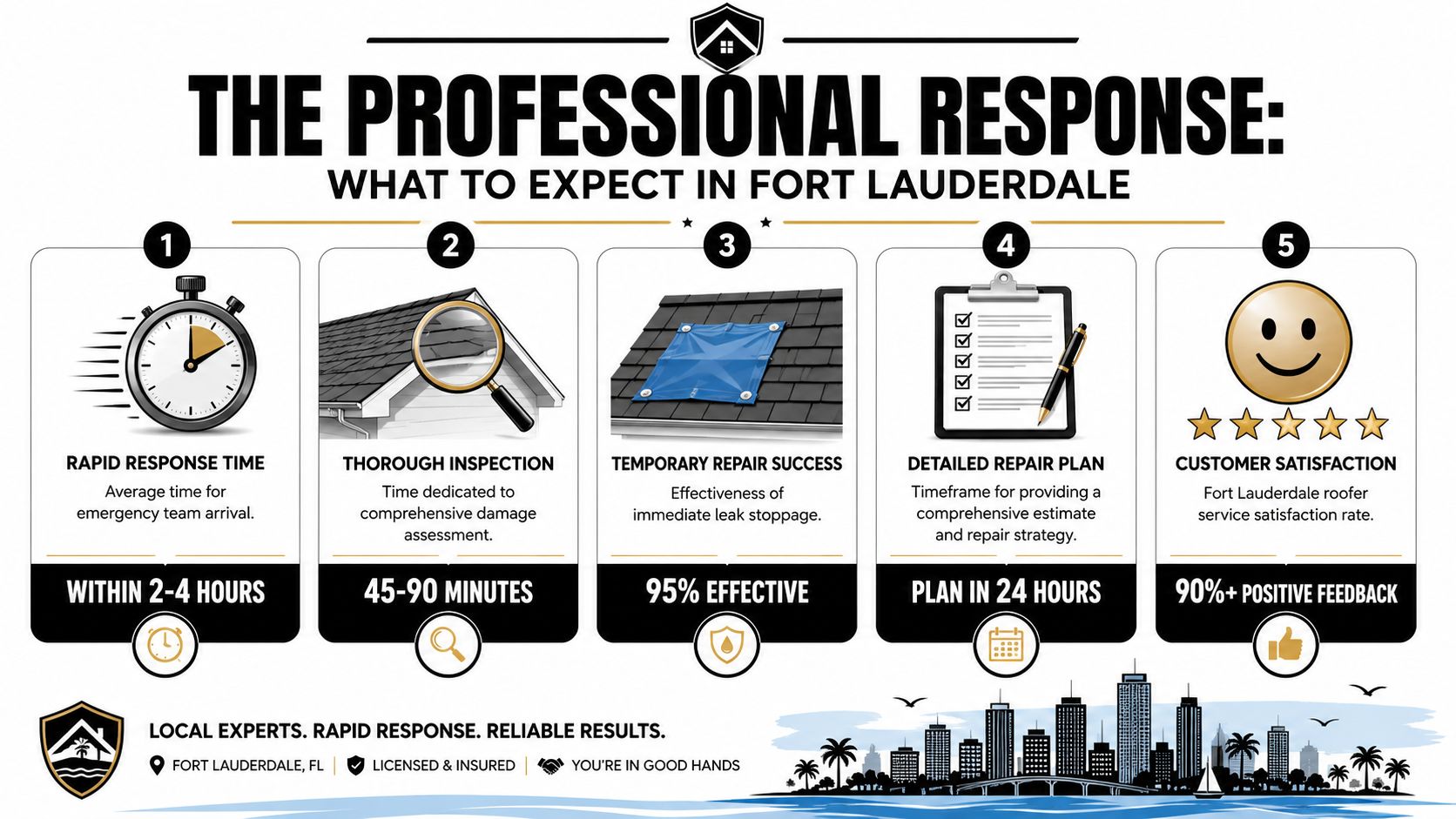
You should expect a human being to answer, ask where the leak is showing, whether power is involved, what type of roof you have if known, and whether storm damage is visible. In this market, the average response time for licensed contractors is 1.8 hours, and 92% of calls receive a real-person response, based on Fort Lauderdale emergency roof repair cost and service metrics.
The same local cost data puts typical emergency roof leak repair in Fort Lauderdale between $513.74 and $1,027.49. That range covers labor and materials for immediate mitigation, not every possible underlying repair that may be discovered once the system is opened up.
A contractor doing emergency residential work in this region should also meet the licensing and insurance requirements for the trade. If you need a quick refresher on why coverage status matters during hiring, these HomeProBadge insights on hiring are worth a look.
What the visit should include
A proper emergency visit usually has four parts.
- Interior assessment first. A roofer should look at where water is appearing, how it traveled, and whether ceilings, insulation, or framing show signs of ongoing saturation.
- Exterior source isolation. The goal is to find the entry point, not just the stain inside.
- Immediate containment. That may mean tarping, securing loose materials, or applying a temporary system where conditions allow.
- Clear next-step advice. You should know what was done, what still needs drying, and whether a return visit is needed for permanent repair.
Ask one direct question before work starts: “Is this stopping the water only, or are you proposing a permanent repair today?”
That single question clears up a lot of confusion.
If you're comparing options, one local provider in this category is Paletz Roofing and Inspections, shown here in this company logo reference. What matters most is that the roofer you choose is properly licensed, insured, and clear about the difference between emergency mitigation and final repair.

Emergency Roofing FAQ
Does insurance usually cover emergency leak work
Policies often address sudden damage and reasonable steps taken to prevent further loss, but coverage depends on the cause of the leak and how well you documented conditions before permanent repair. Call the carrier early, ask what they want preserved, and keep a written record of every instruction. If they request an inspection before certain work proceeds, follow that instruction carefully.
What is the difference between a temporary patch and a permanent repair
A temporary patch is meant to stop active water intrusion. It buys time. It does not restore the full roof assembly.
A permanent repair addresses the actual failure point and the surrounding materials affected by moisture. That can include replacing damaged components, drying the substrate, and resealing or rebuilding the area so the leak doesn't return. On an emergency call, the right answer is often containment first and permanent work after the roof system is dry.
How do you vet a roofer fast when water is coming in
Use a short checklist.
- Ask about license and insurance: Emergency roofing work should be handled by a properly licensed, insured contractor.
- Ask what happens today: You want to hear how they'll contain the leak, assess damage, and document findings.
- Ask what is temporary versus permanent: A solid roofer separates those two clearly.
- Ask what they need from you: Good contractors tell you whether to photograph damage, call insurance, or clear access areas before arrival.
- Ask for the cost range up front: Even if the final number depends on conditions, they should be able to explain how emergency pricing works.
If the answers are vague, rushed, or focused only on getting a signature, keep calling.
If water is getting into your home, move quickly and keep the process orderly. Paletz Roofing and Inspections handles emergency roof leak situations in Fort Lauderdale and across South Florida, including inspections, temporary containment, and follow-up repair guidance. If you need help, have your photos ready, note where the leak is showing, and call while the damage is still containable.