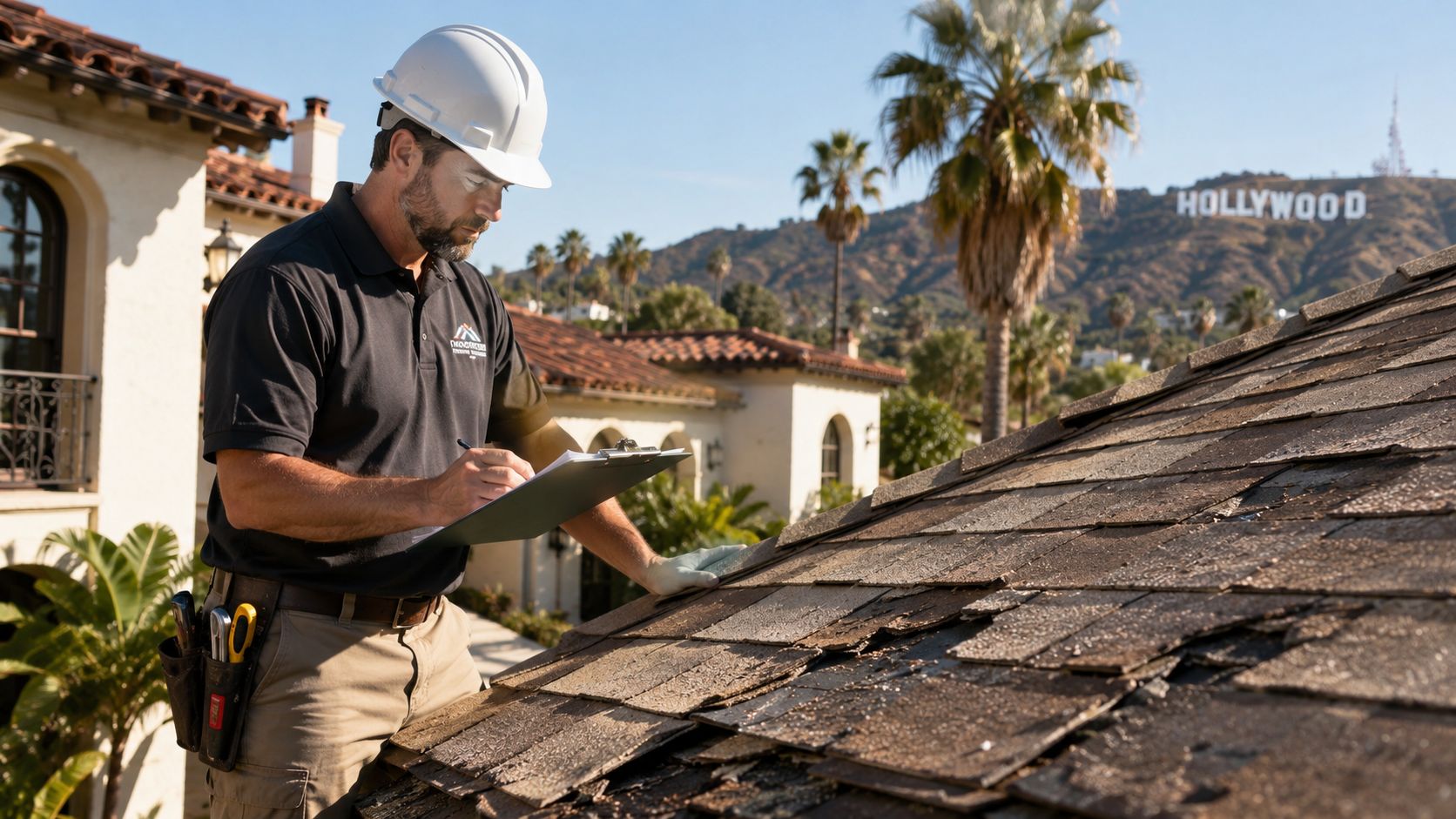
The call comes in the same way it always does after a hard wind or a heavy storm in Hollywood. A homeowner walks the perimeter, sees a few lifted shingles, some grit in the gutters, maybe a stain on the ceiling, and wonders if the roof is damaged or just looking rough after a rough night. In this market, that question matters because roof problems don't stay small for long, and insurance companies usually want evidence, not guesswork.
A proper roof damage inspection Hollywood homeowners can rely on is about more than spotting missing shingles. It's about understanding whether the roof has a real system failure, whether the damage ties to a specific storm, and whether the home is ready for the next insurance conversation, sale, or repair decision. If you live in South Florida, that timing is often the difference between a manageable fix and a much bigger claim headache.
Table of Contents
- Why Hollywood Homeowners Need a Roof Damage Inspection
- Signs of Roof Damage You Should Never Ignore
- What Happens During a Professional Roof Damage Inspection
- How Roof Inspections Affect Your Insurance Claims
- Roof Inspection Costs and Timelines in Hollywood
- Emergency Triage Steps After Storm Damage
- What to Expect from Paletz Roofing and Inspections
- Frequently Asked Questions About Roof Inspections in Hollywood
Why Hollywood Homeowners Need a Roof Damage Inspection
A Hollywood homeowner can go to bed with a roof that looks fine and wake up to a mess after a single storm. That's not exaggeration, it's South Florida reality. Hurricanes, tropical storms, strong wind events, hail, and heavy rain can all create roof-system failures that aren't obvious from the driveway, especially when the damage starts at flashings, edges, or penetrations instead of the center of the roof.
Storm exposure changes the stakes
Wind and hail accounted for 39.4% of homeowners insurance property claims in 2021, far more than fire and lightning at 24.8% or water damage and freezing at 23.5% (roof failures and claim patterns). That matters in Hollywood because roof inspections here aren't just about upkeep, they're part of a broader risk-management process tied to one of the largest categories of insured property loss.
Practical rule: after severe weather, treat the roof as a claim-sensitive asset, not just a maintenance item.
The local climate makes that even more important. Constant UV exposure, humidity, and salt air wear materials down over time, then a storm exposes the weak points all at once. A roof can look passable from the street and still have loose flashing, shifted shingles, or water intrusion that only shows up after the next rain.
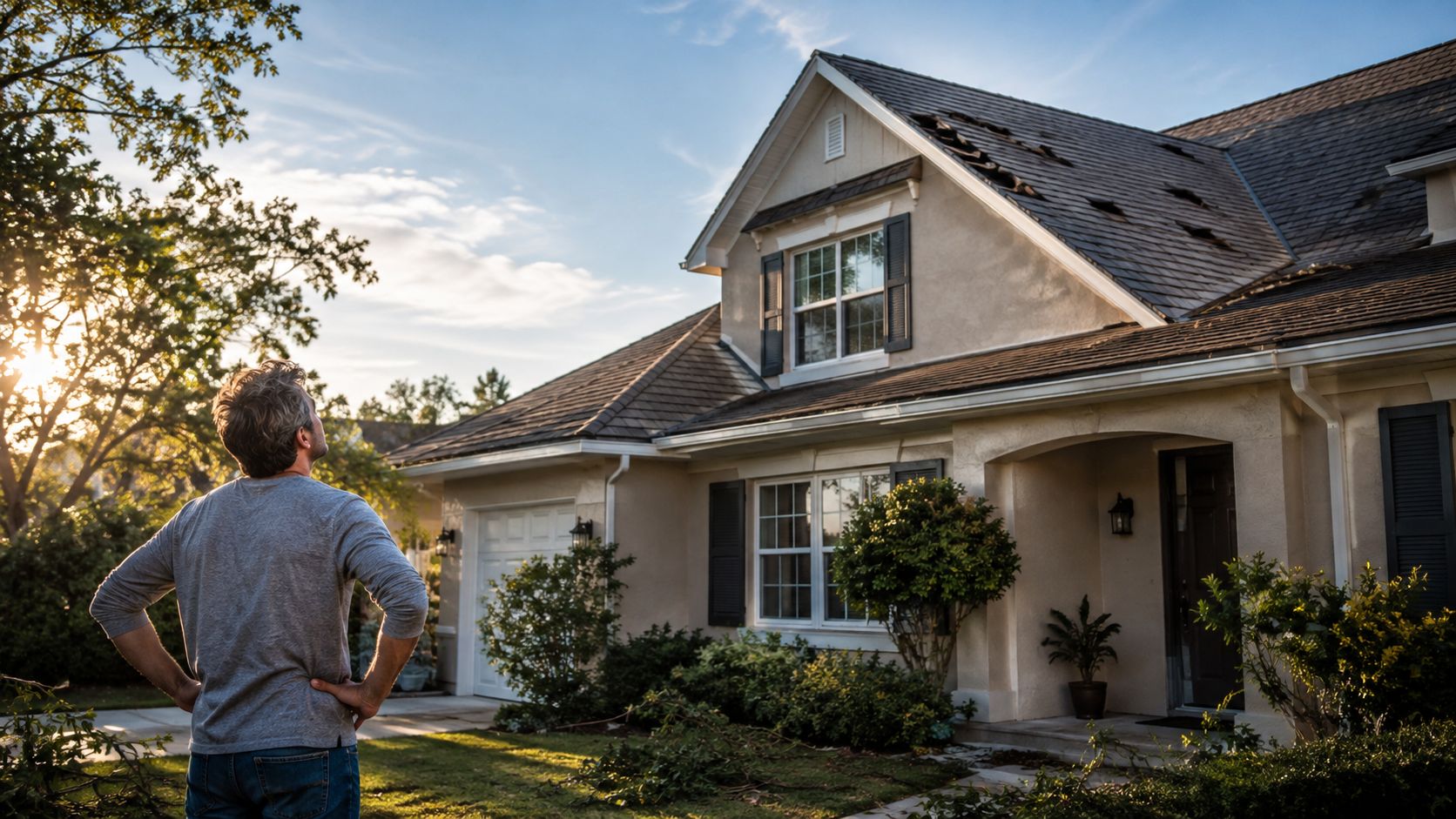
The smartest move after a storm is to get a qualified inspection before repairs get delayed or evidence gets washed away. That's especially true if the home has older attic conditions, hidden moisture, or other building-envelope concerns that can complicate a simple roof issue. For homeowners also thinking about attic efficiency and moisture control, a useful adjacent resource is closed cell foam for South Florida homes, since roof performance and attic performance often affect each other.
Signs of Roof Damage You Should Never Ignore
A roof doesn't have to leak into the living room to be damaged. In Hollywood, the signs usually show up in layers, first outside, then in the attic, then on the ceilings or walls. The trick is knowing which signs are cosmetic and which ones point to a real failure.
What you can spot from the ground
Missing shingles, curled edges, broken tile, and exposed underlayment are the obvious red flags. So are piles of granules in the gutters, loose ridge caps, and flashing that looks lifted around vents or chimneys. If you can see a sagging line from the curb, that's not something to shrug off.
The harder part is separating storm damage from age-related wear. Heat blisters, old sealant, and brittle shingles can mimic impact marks or wind loss, which is why a surface defect alone doesn't prove a claim-worthy event. Homeowners get stuck here, because a roof can look “bad” without being storm-damaged in a way insurance will recognize.
Hidden warnings matter just as much
Inside the house, look for water stains on ceilings, damp attic wood, musty smells, or daylight showing through attic boards. Those are signs the roof assembly may already be letting water or air through. Around the outside, moss, algae, and dark streaking can signal chronic moisture issues, not just dirt.
If you're cleaning the roof or gutters, choose methods that don't create more wear. A practical guide to soft washing tips for monsoon season can help homeowners understand how to remove buildup without blasting fragile materials. That matters because aggressive cleaning can make a roof look newer for a moment while hiding a problem that still needs diagnosis.
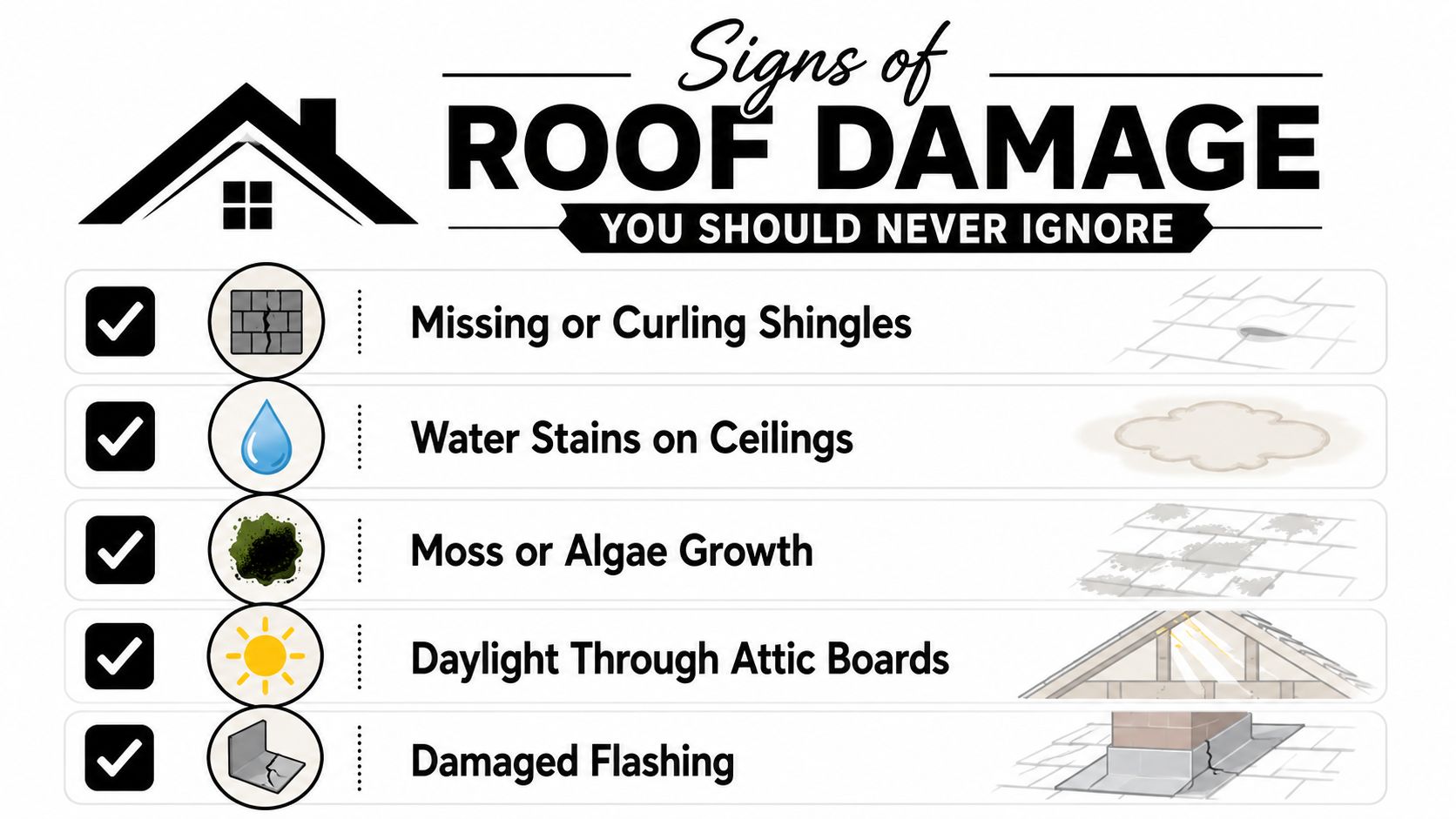
For a quick visual reference, many homeowners use this simple checklist:
- Missing or curling shingles, usually a sign of wind lift or aging adhesive.
- Water stains on ceilings, often tied to active or past intrusion.
- Moss or algae growth, which can point to trapped moisture.
- Daylight through attic boards, a clear warning that the roof envelope is compromised.
- Damaged flashing, especially around chimneys, skylights, vents, and walls.
If more than one of those signs appears together, the roof deserves a closer look from a professional. A quick visual check from the ground is useful, but it's not enough when weather, age, and hidden leaks are all in play.
What Happens During a Professional Roof Damage Inspection
A solid roof inspection starts at the property line, not on the roof deck. The inspector works around the home, studies each slope, and looks for signs of wind uplift, moisture entry, impact, and aging that do not always show up from the ground. That approach matters because the roof has to be treated as a system, with the perimeter, flashings, penetrations, drainage, and field areas checked in order, not as isolated parts (system-based inspection protocol).
The inspection follows the roof assembly
Florida inspection guidance calls for roof-covering materials, gutters, downspouts, vents, flashing, skylights, chimney areas, and other penetrations to be reviewed from the ground or the eaves (Florida roof inspection component list). For asphalt shingle roofs, the inspector also notes shingle type, missing shingles, damaged shingles, number of layers, prior repairs, cupping or buckling, and moss or vegetation growth. That gives a clear record of how the roof is aging and where failure points are starting.
Transitions and edges are where problems usually begin, because wind uplift, fastener loss, and flashing separation push water into the places homeowners rarely notice until stains appear inside. A roof can look mostly intact in the middle and still be vulnerable at the seams, valleys, and wall ties.
Documentation should separate what was seen from what it might mean. This documentation serves a practical purpose beyond compliance, because it helps support claim accuracy and repair planning.
Why details on the report matter
A useful report does more than say “damage present.” It identifies where the damage is, what kind it is, whether it looks isolated or widespread, and whether the attic or ceilings show related signs. That level of detail helps the homeowner, the contractor, and the insurer stay aligned when the roof is being evaluated for repairs or a claim.
Hollywood inspections also tie into local safety and insurance review in a very direct way. A report that tracks visible conditions, likely cause, and location-specific damage gives the adjuster a cleaner file to review, which matters when the claim is being matched against storm history, maintenance questions, and the home's existing condition.
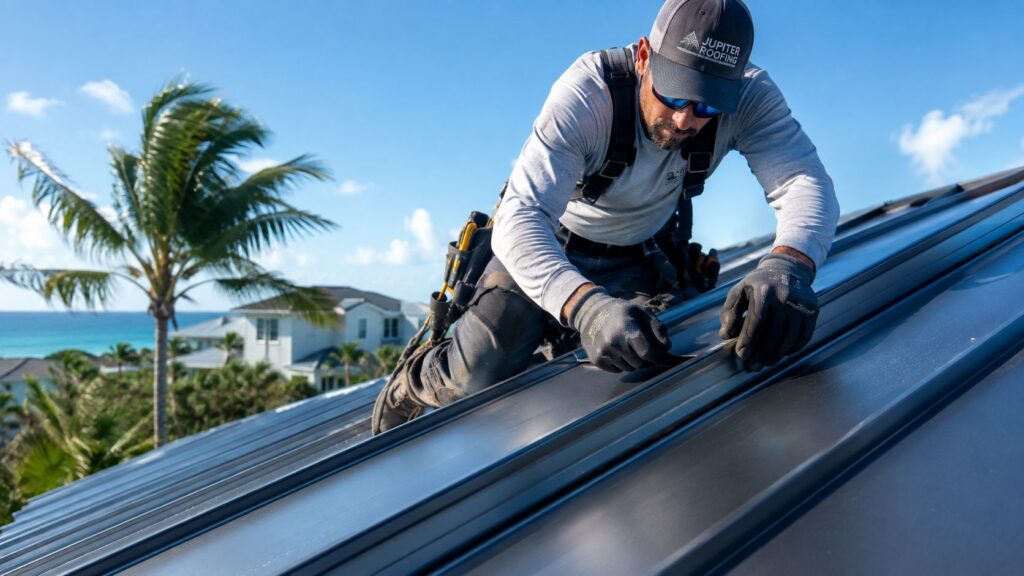
For homeowners who want to see the kind of system-based work that happens on real projects, an inspection walkthrough often sits alongside material and installation planning, similar to what is shown in this installation reference. The point is the same, careful observation first, decisions second.
How Roof Inspections Affect Your Insurance Claims
A roof claim in Hollywood usually rises or falls on the inspection file. Carriers often ask for a 4-point inspection on homes over 20 years old, while a wind mitigation inspection can support premium discounts when the roof and other parts of the home show wind-resistant features (Hollywood inspection overview). The 4-point report is mainly an underwriting requirement, while wind mitigation is the report that can affect pricing through credits.
What adjusters look for
Wind-related claims are rarely decided by a single mark on a single shingle. Training materials stress slope-by-slope review, representative test squares, and checks for collateral damage on gutters, siding, screens, fences, and AC units, because surface marks can be misleading and may come from heat blisters or aging rather than a storm event (adjuster training material). A homeowner should not assume every defect will be treated as claim-worthy.
The strongest inspection files record what can be observed and stop there unless the evidence supports a conclusion. That approach preserves credibility when the claim gets reviewed.
Why the paperwork has to be clean
If the report connects damage to a specific storm, the timeline has to hold up. If the roof mainly shows age-related wear, the claim may go nowhere. The outcome often depends on whether the inspection happened quickly, whether collateral clues were documented, and whether the inspector described the condition accurately instead of overselling it.
For homeowners in storm-prone neighborhoods, that is practical protection, not a sales pitch. A clean report gives the carrier less room to dismiss the loss and gives the homeowner a stronger basis for the next step, whether that means repair work, a full replacement discussion, or a claim file review. It also helps when a carrier wants the roof condition weighed against maintenance history and local building safety expectations, which is why roof notes often sit beside DIY vs professional gutter cleaning in the larger loss-prevention picture.
Roof Inspection Costs and Timelines in Hollywood
A homeowner in Hollywood usually finds out quickly that a roof inspection is cheaper than waiting for a leak to spread through drywall, insulation, and trim. The national average roof inspection cost is $247, with a typical range of $75 to $1,000 depending on the roof type, size, pitch, and inspection method (roof inspection pricing). Standard inspections usually fall between $125 and $358, drone inspections average $150 to $400, and infrared inspections run about $400 to $600.
How the options compare
| Inspection Type | Typical Cost Range | Best For |
|---|---|---|
| Standard inspection | $125 to $358 | Routine evaluation after storms, aging roofs, and pre-sale checks |
| Drone inspection | $150 to $400 | Hard-to-access roofs, steep slopes, and quicker exterior review |
| Infrared inspection | $400 to $600 | Suspected hidden moisture or temperature-related problem areas |
That price gap looks small next to the cost of actual roof work. Typical roof repairs average $400 to $1,800, and roof replacement averages around $9,000. For that reason, many homeowners treat inspection as an investment in preventing larger costs.
The cheapest time to inspect a roof is before a small problem becomes a repair invoice.
When to schedule it
A technically strong inspection should happen under dry conditions, ideally in spring and fall, and after severe wind, rain, hail, or snow events (Hoffmann inspection guidance). Hoffmann Architects also notes that inspections should occur when surface temperatures are below 80°F because hot surfaces can make defects harder to detect and increase slip risk (Hoffmann inspection guidance).
In Hollywood, timing matters for insurance documentation and local safety expectations. After a storm, the roof may need to be checked before cleanup crews, claim adjusters, or a city follow-up changes the evidence. If the drainage system is part of the problem, homeowners also have to decide whether they can handle a simple maintenance task or whether a pro should handle it. A practical look at DIY vs professional gutter cleaning helps draw that line before someone creates a second problem trying to solve the first.
Emergency Triage Steps After Storm Damage
The first hours after storm damage are about limiting loss, not fixing the roof. A homeowner should stay off the roof, document what's visible from the ground, and focus on preventing interior water damage before the next rainfall arrives. Permanent repairs can wait until the condition is documented and, when needed, reviewed by the carrier.
What to do right away
- Cover exposed areas safely, using a tarp only if it can be done without climbing onto an unstable roof.
- Contain interior leaks, with buckets or temporary catchments placed under active drips.
- Document damage with photos, taking wide shots and close-ups from safe ground level.
- Check for safety hazards, including downed lines, broken glass, and loose debris.
- Contact your insurance provider, then keep notes on when the damage was discovered and what happened during the storm.
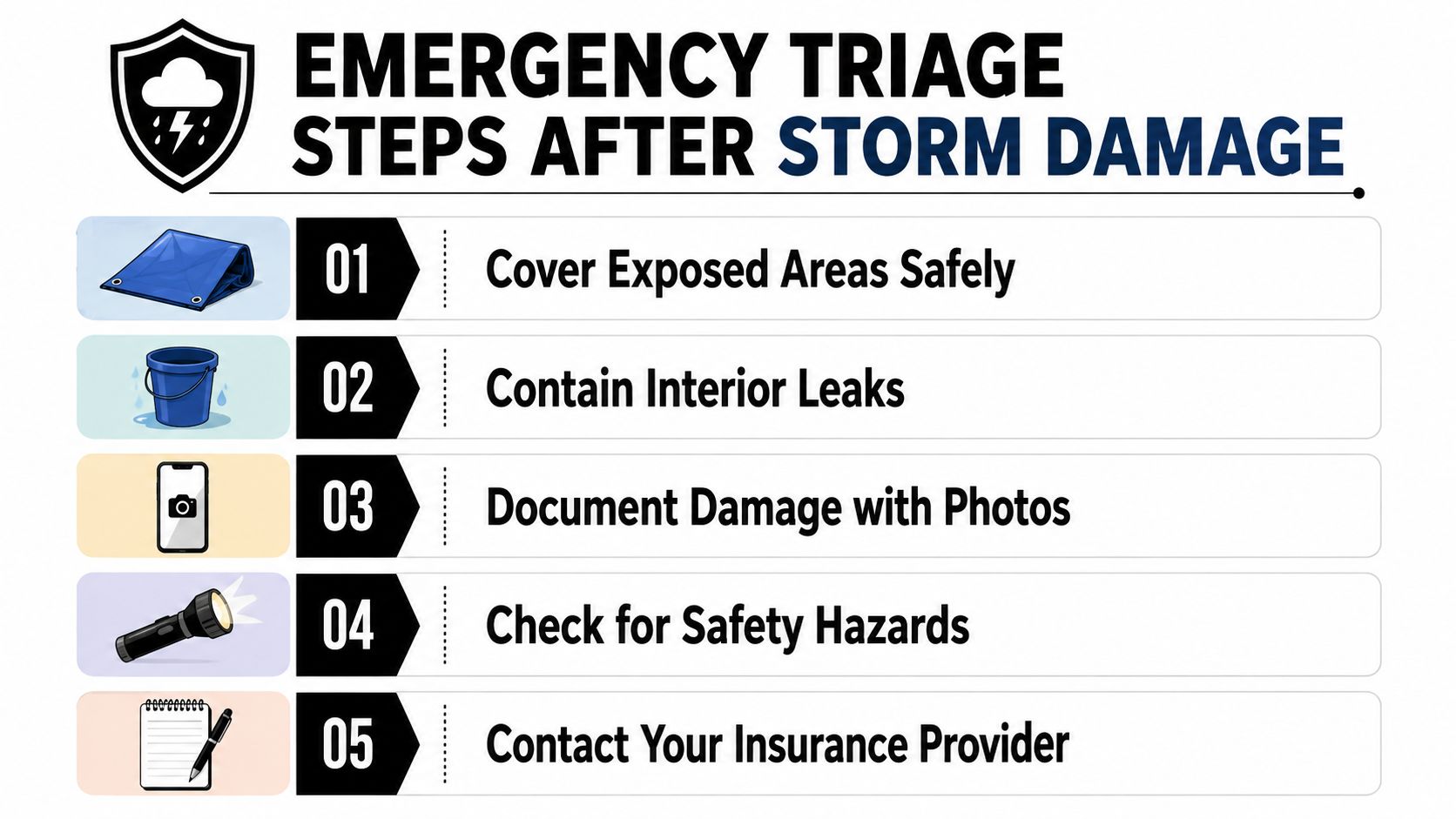
That sequence matters because evidence disappears fast. Rain can wash away loose granules, wind can move a damaged shingle, and well-meaning cleanup can erase the story the claim file needs.
What not to do
Don't climb a wet or damaged roof. Don't make permanent repairs before the damage is documented unless a temporary patch is needed to stop active water intrusion. Don't assume the roof is safe because the interior only shows one stain, either, because leaks often travel before they show up indoors.
If the roof is actively leaking into the living space, the goal is to protect the home, not to prove the loss on the spot. Safety and documentation come first, the repair plan comes after.
What to Expect from Paletz Roofing and Inspections
A homeowner who calls Paletz Roofing and Inspections usually wants two things, a straight answer and a workable next step. In Hollywood, that matters because an inspection is often tied to an insurance file, a repair decision, or a local safety issue that has to be addressed without guessing. The company brings over 30 years of South Florida experience and serves Broward, Miami-Dade, and Palm Beach counties, with work across shingle, tile, metal, and flat roofing systems.
How the visit typically runs
The process usually starts with scheduling and a short intake on what happened, storm timing, visible issues, leak locations, and any insurance deadlines. On site, the inspection focuses on the roof condition, the surrounding details that affect performance, and the spots that often fail first, like flashing, penetrations, sealant lines, soffits, and edge metal.
A practical roof inspection company in Hollywood should leave the homeowner with documentation that makes the next step easier, not more confusing. A written report, photos, and a clear summary of what is damaged, what is still serviceable, and what needs immediate attention help a claim adjuster or a contractor work from the same facts. The same standard is what homeowners should expect from Paletz Roofing and Inspections when the inspection has to support both repair planning and insurance documentation.
The team also handles the handoff after the inspection. If the roof needs repair, replacement, or additional documentation for an insurance file, the homeowner gets guidance on what comes next instead of a vague recommendation to keep checking it. That matters in a city where weather exposure, aging materials, and carrier expectations can all affect how fast a claim moves.
What local knowledge changes
Local experience matters because Hollywood roofs face more than ordinary wear. Inspectors who work here regularly know how storm history, roof age, and building context affect the decision tree, and they know where hidden failures tend to show up first. That includes understanding when a roof issue is isolated and when it points to a broader system problem that may involve underlayment, deck condition, or water intrusion around details a casual look can miss.
A good inspection does not pressure a homeowner into a replacement. It shows whether the roof still has service life or whether the damage is already beyond a simple patch, and it gives the homeowner the information needed to deal with repairs, insurance, and any local safety follow-up with less uncertainty.
Frequently Asked Questions About Roof Inspections in Hollywood
How often should I schedule a roof inspection
After a storm, do it right away. For routine upkeep, the timing depends on roof age, material, and how exposed the home is, but Hollywood roofs take a beating from sun, heat, and wind, so periodic checks make sense even when nothing looks obviously wrong from the ground.
Does Hollywood's Building Safety Inspection Program apply to my roof
Hollywood's Building Safety Inspection Program requires follow-up inspections at 10-year intervals once a building reaches 25 years of age, and the City says buildings under 3,500 square feet are exempt (Hollywood Building Safety Program). For buildings 40 years and older, the City sends a notice requiring a structural inspection by a third-party certified architect or engineer and an electrical inspection by a third-party licensed electrical contractor, with 90 days to complete and submit the report.
What if the inspection finds damage insurance won't cover
The report still matters. It separates age-related wear, maintenance problems, and damage that stays limited to one part of the roof, which gives you a practical basis for choosing repair or replacement instead of guessing what the carrier will accept.
How do I choose between repair and replacement
Scope, roof age, and how many parts of the system are affected usually decide it. A few isolated problems can often be repaired, but widespread wear, repeated leaks, or multiple failing transitions usually point toward replacement because patchwork work starts to cost more and buy less time.
If your roof took a hit in Hollywood, don't wait for the next rain to show you what the storm already did. Schedule a professional inspection so you get a clear damage assessment, sensible next steps, and documentation that helps with repairs and insurance.