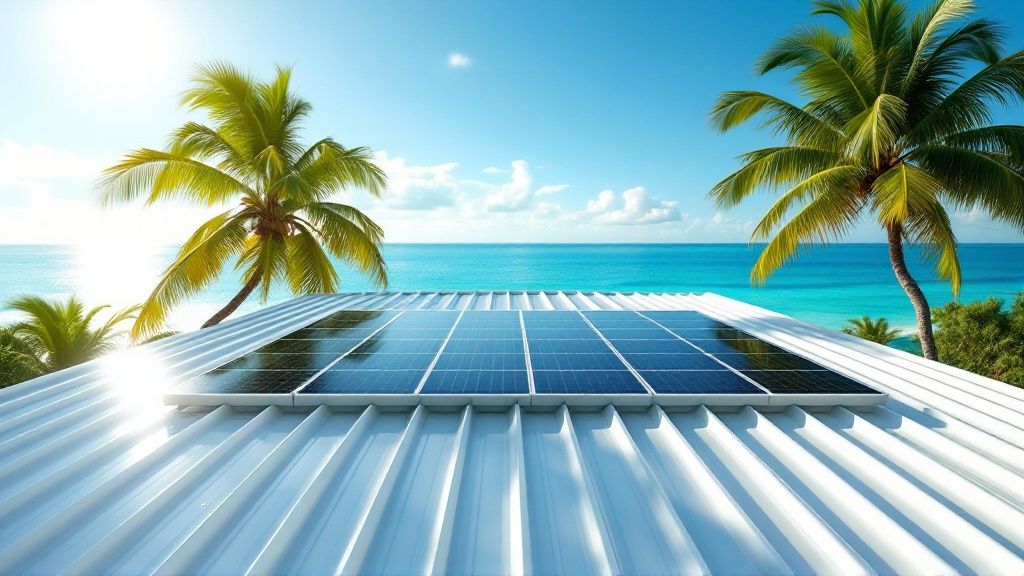
Picking an energy-efficient roof in Gulf Stream, FL, is probably the single best move you can make to lower your cooling bills and make your home more comfortable. It’s not a luxury here. With the South Florida sun beating down day after day, a roof designed to reflect heat isn't just nice to have—it's a necessity for taking the immense strain off your air conditioning unit.
Why Your Gulf Stream Home Needs an Energy-Efficient Roof
Living in Gulf Stream is a constant battle against intense heat and humidity. Your roof is on the front lines of that fight, taking the full force of the sun from morning till night. A standard, dark asphalt shingle roof can act like a giant heat magnet, with its surface temperature soaring way past the actual air temperature. All that absorbed heat radiates down into your attic and, eventually, into your living spaces.
This forces your HVAC system to work overtime just to keep the house from feeling like a sauna.
That constant workload doesn't just inflate your monthly FPL bill; it also puts a ton of wear and tear on your expensive cooling equipment. An energy-efficient roof, what we often call a "cool roof," is your home's best defense against this solar assault. It's engineered to do two critical jobs: reflect more sunlight and release any absorbed heat much more quickly.
The Power of Cool Roofing Technology
Think about the difference between a black car and a white car parked in the sun. The white car stays significantly cooler to the touch because its surface reflects sunlight instead of soaking it up. Cool roofing applies that exact same principle to your home. By using materials with high solar reflectance and high thermal emittance, these systems can dramatically lower the temperature of your roof's surface.
This simple change creates a powerful ripple effect through your entire home. A cooler roof means a cooler attic, which in turn leads to a cooler living space. The benefits are immediate and substantial:
- Lower Energy Consumption: Your air conditioner won't have to run as long or as hard, which directly cuts down your electricity usage.
- Reduced Strain on HVAC Systems: Less work for your AC unit means it will likely last longer with fewer costly repairs.
- Enhanced Indoor Comfort: Your home can maintain a more stable and comfortable temperature, even during the peak heat of the afternoon.
In a climate like Gulf Stream's, which sees an average of 230 sunny days per year, the cumulative impact of a cool roof is immense. It’s a proactive investment in both your comfort and your long-term financial savings.
The materials used for energy-efficient roofing in Gulf Stream FL are specifically chosen for how well they perform in hot, humid climates. Metal roofing, for example, is a popular choice because of its exceptional reflective properties. According to a 2019 R&D Engineering report, some metal roofs can improve energy efficiency by up to 218% compared to traditional asphalt shingle roofs. That number alone shows the dramatic difference modern materials can make. You can read more about these roofing material findings to dig into the data. For any savvy homeowner here, this kind of upgrade is a strategic decision, not just a repair.
The Science of Staying Cool: How These Roofs Work
Ever notice how wearing a white shirt feels way cooler than a black one on a scorching Gulf Stream afternoon? That simple, real-world experience is the exact principle behind how an energy-efficient roof protects your home. These roofing systems aren't just built from different materials; they're engineered with specific properties designed to win the battle against solar heat.
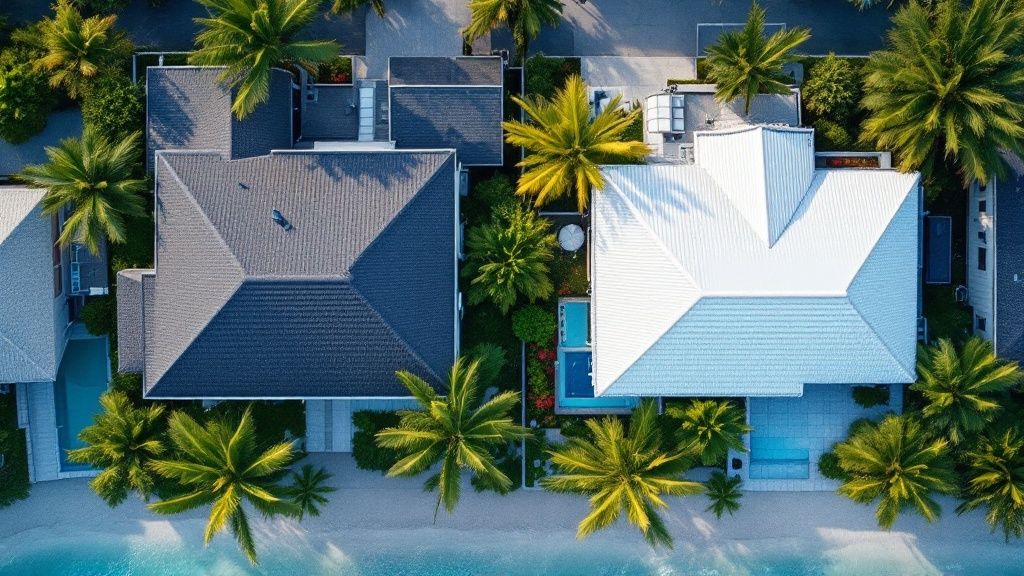
It all comes down to two key performance metrics: solar reflectance and thermal emittance. Once you get these two concepts, you’ll see exactly why certain roofs are champions under the intense Florida sun.
The Power of Bouncing Sunlight Away
First things first, a cool roof's most important job is to act like a giant mirror for sunlight. This ability is measured by solar reflectance, sometimes called albedo. It’s a simple scale from 0 to 1—the higher the number, the more of the sun's energy gets bounced back into the atmosphere before it can turn into heat.
A traditional dark asphalt shingle roof might have a solar reflectance as low as 0.05, meaning it soaks up a staggering 95% of the solar energy hitting it. Yikes. In contrast, a modern cool roof, like a white metal or specially treated tile, can have a solar reflectance of 0.70 or higher. That means it’s reflecting away 70% or more of that same energy. This one factor dramatically cuts down the heat your roof has to handle from the get-go.
Quickly Releasing Absorbed Heat
But let's be realistic—no roof can reflect 100% of the sun's energy. Whatever heat does get absorbed needs a quick exit strategy. This is where thermal emittance comes into play. This property measures how efficiently a surface can radiate, or release, the heat it has absorbed.
Also measured on a 0 to 1 scale, a high thermal emittance value means the roof material is great at shedding heat. Materials like unpainted metal, tile, and specialized coatings are highly emissive. They don't hang onto heat for long, cooling down fast once the sun goes down. This prevents that stored heat from slowly seeping into your attic and home all night, a common problem that keeps your AC running long after dark.
A truly energy-efficient roof excels in both areas. It combines high solar reflectance to minimize heat absorption with high thermal emittance to quickly get rid of any heat that does get through. This one-two punch is what keeps your home cooler and your energy bills lower.
Radiant Barriers Versus Traditional Insulation
This brings us to a crucial difference in how your home manages heat. According to the Florida Department of Environmental Protection (DEP), the two main strategies are thermal insulation and radiant barriers. Your fluffy attic insulation works by slowing down heat transfer, but it can eventually get saturated with heat.
A radiant barrier, a core feature of many cool roofing systems, works differently by actively reflecting radiant heat. Unlike insulation, these barriers don't have a saturation point; they just keep reflecting. This approach has led to observed energy savings between 18.8% and 43.3% in summer months. You can dive into the full findings from the DEP research to see the data for yourself. This fundamental science is exactly why choosing the right materials for energy-efficient roofing in Gulf Stream FL makes such a huge impact for local homeowners.
Finding The Best Roofing Materials For Your Home
Choosing the right roofing material is where the science of energy efficiency runs right into your personal style and budget. For any home in Gulf Stream, this decision is about much more than looks; it's about choosing a shield that can handle intense sun, relentless humidity, salt air, and even hurricane-force winds.
Let's break down the top contenders that keep a Gulf Stream home cool and protected.
Metal Roofing: The Reflective Powerhouse
When you’re talking about pure performance, it’s hard to beat metal roofing in South Florida. Modern metal roofs are engineered for more than just durability—they're built for exceptional energy efficiency. They are the undisputed champions of solar reflectance, bouncing a huge amount of the sun's rays away from your home before that energy ever has a chance to be absorbed as heat.
This one feature is a complete game-changer for keeping your attic and living spaces cooler.
The benefits of metal are practically tailor-made for our coastal environment:
- Superior Reflectivity: Lighter-colored metal roofs can reflect over 70% of solar energy.
- Hurricane Resistance: When installed correctly, metal roofing systems deliver some of the highest wind uplift resistance you can get—a non-negotiable feature in our hurricane-prone area.
- Longevity: A quality metal roof can easily last 50 years or more, far outliving traditional asphalt shingles.
- Corrosion Resistance: Modern coatings are fantastic at protecting against rust and corrosion from the salty air.
The effect on your home's temperature is dramatic. Metal roofs use special infrared-blocking pigments that can re-emit up to 90% of the solar radiation they do absorb. This incredible property can slash attic temperatures by as much as 69% compared to standard asphalt shingles, leading to cooling cost reductions of up to 25%. Anyone who's paid a summer FPL bill in Gulf Stream knows just how significant those savings are.
Concrete And Clay Tiles: Classic Style Meets Natural Cooling
Concrete and clay tiles offer that timeless, classic look that’s so popular in South Florida architecture. But beyond their good looks, these materials have inherent qualities that help create a cooler home. Their sheer thermal mass means they heat up very slowly, which delays the transfer of heat into your attic space.
Better yet, the curved shape of most tile profiles creates a natural air gap between the tiles and the roof deck. This pocket of space allows for constant airflow, which helps whisk away heat before it can penetrate your home's structure.
This natural ventilation is like giving your roof its own breathing room. The constant circulation of air under the tiles acts as a buffer, preventing the intense solar heat from directly baking your attic.
While they aren't quite as reflective as a bright white metal roof, you can now get modern "cool" tiles with special coatings that boost their solar reflectance, beautifully blending traditional style with modern energy-saving tech.
Cool-Asphalt Shingles: The Modern Upgrade
Asphalt shingles are the most common roofing material in the country, but standard shingles just can't stand up to the Florida sun. Thankfully, technology has given us a fantastic alternative: cool-asphalt shingles. These shingles are embedded with special reflective granules that bounce sunlight away, working much like their metal and tile counterparts.
This infographic gives a clear side-by-side look at the solar reflectivity you can expect from these top materials.
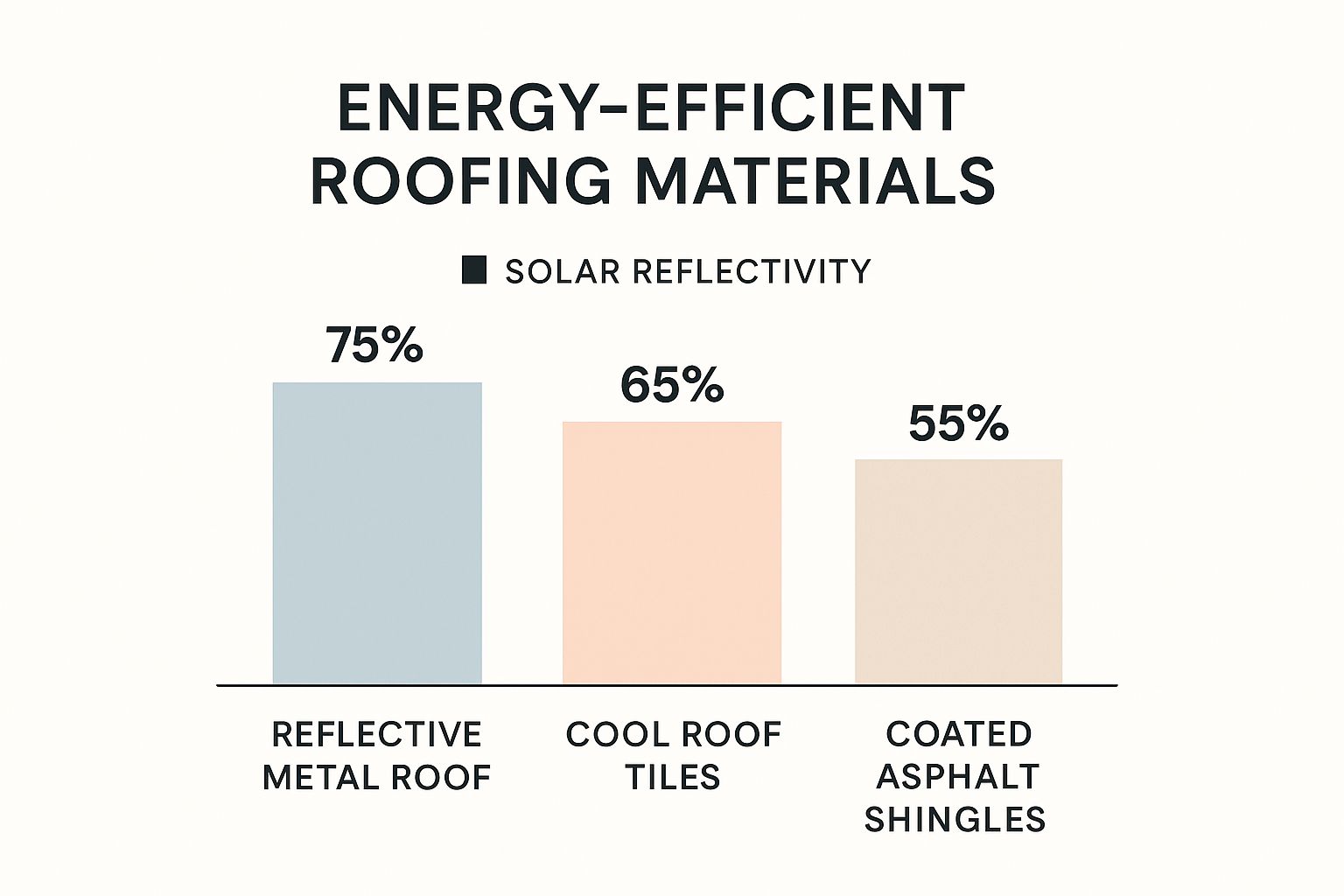
As you can see, while cool shingles are a massive improvement over standard asphalt, reflective metal roofs still lead the pack in sending solar energy packing.
Cool shingles offer a budget-friendly way to get real energy savings without giving up a traditional look. They're an excellent choice for homeowners looking to boost their home's performance on a more moderate budget, serving as an accessible entry point into the world of energy-efficient roofing in Gulf Stream FL. If you're curious about what these modern options look like on a real home, you can explore our gallery of recent projects.
Comparing Top Roofing Materials for Gulf Stream FL
Ultimately, the best material for your home comes down to balancing performance, your budget, and the architectural style of your property. To make the decision a little easier, here's a quick side-by-side comparison of the top choices for our area.
| Material | Energy Efficiency Rating | Hurricane Resistance | Average Lifespan | Estimated Cost |
|---|---|---|---|---|
| Reflective Metal | Excellent | Excellent | 50+ Years | High |
| Concrete & Clay Tile | Very Good | Very Good | 50+ Years | High |
| Cool-Asphalt Shingles | Good | Good | 20-30 Years | Moderate |
Each one of these materials makes a strong case for Gulf Stream homeowners. Your final choice will involve weighing these key factors to find the perfect shield for your home—one that keeps you cool, saves you money, and stands strong against whatever the Florida weather throws at it for decades to come.
Harnessing the Sun with Solar Roofing Solutions
What if your roof did more than just keep the rain out? What if it could actively slash your utility bills and maybe even put money back in your pocket? For homeowners in Gulf Stream, where sunshine is practically a natural resource, turning your roof into a personal power plant isn't science fiction—it's one of the smartest investments you can make.
Integrating solar technology is the final frontier in creating a truly energy-efficient home. It’s a strategy that works hand-in-glove with the principles of cool roofing. While a reflective roof bounces the sun's heat away, solar solutions capture that same energy and turn it into clean, usable electricity. This one-two punch is incredibly effective in our South Florida climate.

Two Paths to Solar Power
When you're ready to put the sun to work, you generally have two excellent options. The best choice for your home will often come down to your budget, aesthetic preferences, and performance goals.
-
Traditional Solar Panels: This is the approach most people are familiar with. High-efficiency solar panels are mounted on racking systems installed right on top of your existing cool roof. This method is highly effective, as the gap between the panels and the roof surface allows for airflow, keeping the panels cool and operating at peak efficiency.
-
Integrated Solar Shingles: If you're looking for a sleek, modern aesthetic, solar shingles are a fantastic solution. These are essentially photovoltaic cells designed to look and function just like regular roofing shingles. They blend seamlessly into the roofline, giving you all the power without the traditional "solar panel" look.
Both systems are powerful tools for achieving energy independence. They generate clean electricity that can drastically reduce—or even eliminate—your reliance on the local power grid. The result? Massive savings on your monthly FPL bill.
More Than Just Savings: A Financial Powerhouse
The benefits of going solar go way beyond just a lower utility bill. A solar roofing system is a major property upgrade that significantly boosts your home's value. It’s a feature that savvy buyers in Florida actively look for, because they understand the long-term value of lower living expenses.
A solar roof doesn't just save you money; it makes you money. In many cases, your system will produce more electricity than your home consumes, especially during our long, sunny days. This excess power can be sold back to the utility company through a process called net metering, earning you credits that further offset your costs.
This makes solar a forward-thinking investment with an impressive financial upside. And because our region has such high solar exposure, these systems are exceptionally productive, making energy-efficient roofing in Gulf Stream, Florida a no-brainer. Traditional solar panels are built to last, typically around 25 years, generating clean power while also shading your roof and helping it stay cool.
A Holistic Home Energy Strategy
A solar roof is the crown jewel of an energy-efficient home, but it performs best when it's part of a complete strategy. The goal is to manage the sun's energy from every angle. While you're harnessing the sun from above, don't forget that your windows play a huge role in managing solar heat gain. Exploring different solar shade options for windows can complement your new roof and cut down your cooling load even further.
By combining a reflective, well-ventilated roof with a power-generating solar array, you create a comprehensive system that minimizes heat gain while maximizing energy production. This is the smartest path to long-term savings and comfort in South Florida. To get a better idea of how this could look on your property, you can view examples of modern roofing integrations.
Maximizing Your ROI With Tax Credits and Incentives
When you invest in an energy-efficient roof in Gulf Stream, FL, you’re doing more than just lowering your monthly electric bill. Sure, those savings add up, but they're just one piece of a much bigger financial picture. Think of a high-performance roof as a strategic asset that starts paying you back from day one, in more ways than one.
One of the most immediate payoffs is the relief it gives your HVAC system. By reflecting the relentless Florida sun, your new roof keeps the attic from turning into an oven. That means your air conditioner doesn't have to run full-blast all day long just to keep you comfortable. The result? Less wear and tear, fewer costly repairs, and a much longer life for one of your home's most expensive appliances.
Down the road, this upgrade seriously boosts your home's resale value. In the competitive South Florida real estate market, a modern, energy-efficient roof is a huge selling point. It tells potential buyers that the home is well-maintained, costs less to own, and is built to last.
Unlocking Federal, State, and Local Savings
To make the upfront cost even more attractive, there are several programs designed to reward homeowners for making smart, energy-conscious choices. Tapping into these incentives can slash the net cost of your new roof, helping you break even faster and boosting your overall ROI.
The big one to know is the Federal Residential Clean Energy Credit. This isn't just a deduction; it's a direct, dollar-for-dollar credit against your federal tax bill for qualifying roofing systems, especially those that incorporate solar technology. It's a powerful way to immediately recoup a chunk of your investment.
But don't stop at the federal level. It pays to look closer to home:
- State-Level Programs: Florida occasionally rolls out grants or tax incentives for energy-efficient home improvements. These programs come and go, so it’s always a good idea to check with a local roofing pro for the latest scoop.
- Utility Rebates: Your local utility provider, like FPL, often has rebate programs for customers who install energy-saving products. A new "cool roof" frequently qualifies, putting cash right back in your pocket.
The Hidden Financial Benefit: Insurance Discounts
Here’s another layer of savings that many homeowners overlook: your insurance policy. We all know how steep homeowner's insurance premiums can be here in Gulf Stream. Insurers are all too aware of the damage high winds and hurricanes can cause, and they price their policies accordingly.
By installing a modern, wind-resistant roofing material like metal or properly fortified tile, you are actively mitigating that risk. Many insurance companies recognize this upgrade by offering significant discounts on annual premiums, providing a consistent financial return year after year.
When you combine this discount with lower energy bills and available tax credits, the financial argument for a high-performance roof becomes incredibly strong. To push your return even higher, you can look into funding opportunities like renewable energy grants, which can offer a major financial leg-up for projects that include solar. These different avenues for savings make energy-efficient roofing in Gulf Stream FL less of a home improvement project and more of a smart financial strategy.
Ensuring Peak Performance Through Proper Installation
An advanced roofing system is a major investment, but all that fancy, reflective material won't do you much good if it's not installed correctly. The truth is, the performance of your cool roof hinges entirely on the quality of the installation. Even the best materials on the market will fail to deliver energy savings if they aren't put on with precision and real-world expertise.
Think of it this way: the right installation team is just as critical as the right roofing material.
One of the most overlooked parts of the job is attic ventilation. Your attic is basically your home's lungs. In the thick of a Gulf Stream summer, hot air gets trapped up there, superheating the space and radiating all that heat right back down into your living room. Proper ventilation changes everything by creating a constant, passive airflow.
The Critical Role of Attic Ventilation
This whole system is a simple partnership between soffit vents and ridge vents. Soffit vents, tucked under your roof's eaves, pull in cooler air from outside. As that air heats up in the attic, it naturally rises and flows out through the ridge vent at the very peak of your roof. It's a continuous cycle that pushes hot, moist air out before it can cause trouble.
Without that airflow, your roof isn't just inefficient—it's actively at risk. Trapped moisture can lead to mold, mildew, and rot. On top of that, the extreme heat can literally cook your roofing materials from below, drastically shortening their lifespan. Any professional installation of energy-efficient roofing in Gulf Stream FL must include a careful plan for a balanced ventilation system.
A properly ventilated attic is the secret to unlocking your cool roof's full potential. It’s the engine that drives heat out, ensuring the reflective surface isn’t fighting a losing battle against a superheated attic below.
Finding a Qualified Gulf Stream Contractor
Vetting a roofing contractor is the single most important step you can take to protect your investment. You need a team with proven experience, not just in roofing generally, but specifically with the cool roofing systems designed for our unique coastal climate.
A thorough professional inspection is always the first step. It can uncover hidden issues before they turn into expensive nightmares. For a better idea of what a comprehensive check-up involves, you can learn more about a professional roofing inspection process to make sure every box is ticked.

Use this checklist to make sure you’re hiring a real pro:
- Licensing and Insurance: This is non-negotiable. The contractor must have a valid Florida license and carry both general liability and worker's compensation insurance.
- Local Experience: Find a company with a long history of successful projects right here in the Gulf Stream area. They’ll know the local codes and climate challenges inside and out.
- Material Expertise: Your contractor should be able to clearly explain the pros and cons of different cool roofing materials and hold certifications from the major manufacturers.
- Clear Maintenance Guidance: A great roofer doesn’t just install and disappear. They’ll give you simple, practical tips for long-term care, like how to gently clean reflective surfaces to keep them working effectively for decades.
Got Questions About Energy-Efficient Roofs? We've Got Answers.
Deciding to upgrade to an energy-efficient roof is a big step, and it's perfectly normal to have a few questions before you move forward. We hear from Gulf Stream homeowners all the time, and a few key queries always pop up. Here are some straightforward answers to help clear things up.
How Much More Is an Energy-Efficient Roof Upfront?
Let's be direct: high-performance materials like metal or tile often have a higher initial price tag than basic asphalt shingles, sometimes costing 1.5 to 3 times more. But that's just the beginning of the financial story, not the end.
The real value is in the return. You’ll see that investment come back to you through significantly lower energy bills month after month, a much longer roof lifespan, and even potential discounts on your homeowner's insurance. Over time, these benefits don't just pay for the difference—they make it the more cost-effective choice.
Do I Have to Get a White Roof for It to Be "Energy-Efficient"?
Not at all! While it's true that lighter colors are naturally better at reflecting sunlight, modern roofing technology has come a long, long way. You have far more aesthetic freedom than you might think.
Today's "cool-pigment" technology allows even darker roofing materials to reflect a significant amount of the sun's infrared radiation. This means you can choose a color that perfectly matches your home's style without sacrificing the performance you’re paying for.
Will a New Energy-Efficient Roof Actually Increase My Home's Value?
Absolutely. In the competitive South Florida real estate market, an energy-efficient roof is a huge selling point for potential buyers. It’s an immediate signal that the home is cheaper to run, built to last, and has valuable, modern upgrades.
This kind of feature can significantly boost your property's resale value and make it stand out to buyers who know what to look for. Investing in energy-efficient roofing in Gulf Stream FL isn't just an expense; it’s a direct investment in your property’s future worth.
Ready to see how an energy-efficient roof can transform your home's comfort and slash your cooling costs? The team at Paletz Roofing and Inspections has over 30 years of experience helping South Florida homeowners make the smartest choice for our unique climate. Schedule your free, no-obligation consultation today!