
The sound usually starts small. A tap in the ceiling during one of those hard South Florida afternoon storms. Then you notice a stain spreading near a vent, or water tracking down a wall that was dry yesterday. The roof often receives little attention until that moment. Then it's all one can think about.
That reaction is understandable. In Broward, Miami-Dade, and Palm Beach counties, roofs take a beating from heat, humidity, salt air, wind-driven rain, and hurricane season. Learning how to prevent roof leaks isn't about doing extra chores around the house. It's about protecting the structure, the attic, the insulation, the drywall, and everything living underneath that roof line.
Table of Contents
- The Unwelcome Drip Why Proactive Roof Care is Non-Negotiable
- Common Leak Culprits in South Florida Roofs
- Your Year-Round Roof Maintenance Blueprint
- Hurricane Preparedness A Proactive Plan for Your Roof
- DIY Fixes Versus When to Call a Roofing Professional
- Proactive Answers to Your Top Leak Prevention Questions
The Unwelcome Drip Why Proactive Roof Care is Non-Negotiable
A roof leak rarely announces itself at a convenient time. It shows up at night, during a weekend storm, or when the rain is coming sideways and nobody can safely get on the roof. By the time you see water inside, the problem has usually been developing for a while. The leak may have started at a vent boot, a valley, a lifted tile, or a clogged drainage path long before the ceiling stain appeared.

Across the country, leaks are the most prevalent roofing issue, affecting nearly 6 million households, according to America's worst roofs data on leaks, holes, and sagging. That matters here because South Florida adds extra stress. Heavy rainfall, tropical storms, clogged gutters, and skipped maintenance all raise the odds that a small weakness turns into an interior leak.
A lot of homeowners wait because the roof “looks fine” from the driveway. That’s a mistake. Many leak paths start in places you won't spot from the ground, especially around flashings, roof penetrations, valleys, and transitions where one roofing surface meets another. Even a roof that still looks sharp from the street can have vulnerable details that need attention.
Practical rule: If you only think about your roof when water is already inside, you're already late.
If you're trying to understand what vulnerable areas look like, this roof condition example image gives a useful visual reference for the kind of roof details that deserve closer inspection.
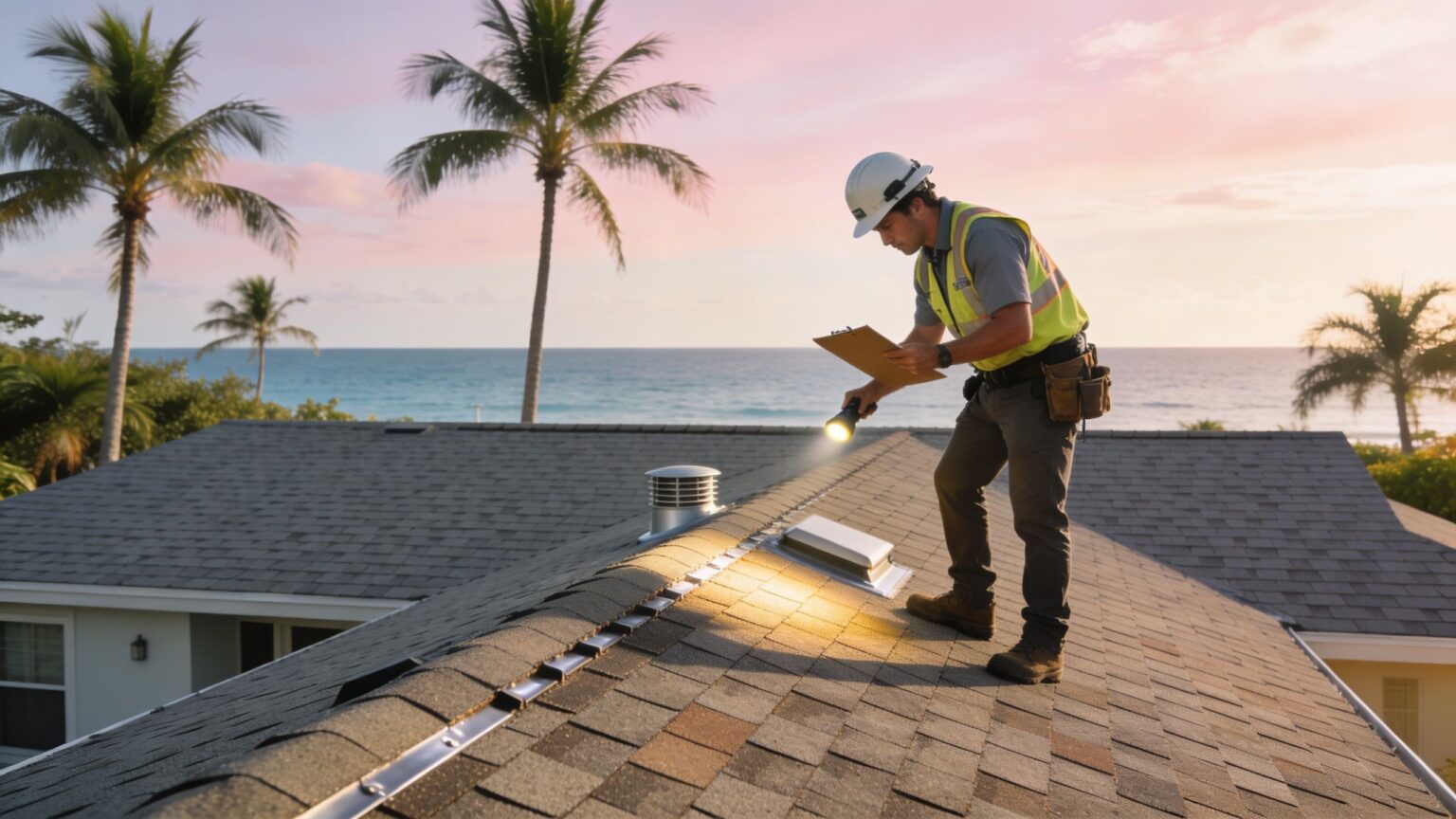
Prevention is cheaper, calmer, and safer than emergency response. In South Florida, the right approach is simple. Inspect on a schedule, keep water moving off the roof, protect the penetrations and valleys, and fix minor defects before hurricane weather tests every shortcut.
Common Leak Culprits in South Florida Roofs
South Florida roofs don't fail the same way roofs fail in milder climates. The combination of heat, humidity, salt air, and wind-driven rain exposes weak details faster. A roof can shed normal rain for years, then start leaking when a tropical system pushes water uphill under a flashing edge or drives it sideways into a vulnerable joint.
Why South Florida roofs fail differently
One of the most overlooked issues here is what heat does to the layers below the visible roofing material. In high-humidity subtropical climates like South Florida, daily temperature swings can expand asphalt underlayment and create wrinkles and gaps. According to this roofing leak prevention guide focused on build quality, 25-30% of leaks in Florida roofs stem from thermal expansion. The same source notes that roof valleys can fail 40% faster than the rest of the roof slope, which tracks with what roofers in coastal areas see every year.
That matters because homeowners often focus on the field of the roof. The field isn't always the problem. The problem is usually where water concentrates, changes direction, or meets a penetration.
On a South Florida roof, the details leak first. The big open sections usually aren't the first place to fail.
What to watch on shingle, tile, metal, and flat roofs
Shingle roofs often leak around penetrations before the shingles themselves are fully worn out. The common weak points are pipe boots, step flashing, chimney flashing, ridge transitions, and any place wind can lift an edge. On Florida homes, underlayment movement can also create trouble beneath what still looks like a decent shingle surface. If the underlayment wrinkles, shingles don't sit quite right, fastener paths can become vulnerable, and water can find a way in during hard rain.
Tile roofs fool a lot of people because the tile is visible and durable, but the waterproofing layer below provides the essential waterproofing. Cracked or slipped tiles matter, but underlayment condition matters more. Valleys on tile roofs deserve extra attention because they carry concentrated water flow and collect debris. Once leaves and grit build up, water slows down, backs up, and works on every seam and fastener in that area.
Metal roofs handle wind well when they're designed and installed correctly, but they have their own trouble spots. Fasteners can loosen over time. Sealant at exposed fasteners or transitions can age out. In coastal air, corrosion at cut edges, laps, and trim details needs to be watched closely. A metal panel system can look clean from the ground and still have a leak path at a flashing termination or roof penetration.
Flat and low-slope roofs demand the most discipline. Water moves slower on them, so drainage details are everything. Scuppers, drains, seams, penetrations, and areas with foot traffic are the first places I’d inspect after a storm. On these roofs, “small ponding area” and “minor seam issue” are phrases that often turn into interior leaks.
The trouble spots homeowners miss most often
A few areas cause repeat problems across all roof types:
- Valleys: These channel a heavy volume of rainwater. If debris sits there, the roof has to hold water where it was designed to move it.
- Flashing transitions: Roof-to-wall intersections, chimneys, skylights, and vent bases all depend on properly layered flashing.
- Gutter lines and drip edges: Overflow at the edge can push water back where it doesn't belong.
- Roof penetrations: Plumbing vents, exhaust vents, and equipment mounts are all common leak starters.
- Salt-air-exposed metal details: In coastal neighborhoods, corrosion tends to show up earlier at vulnerable metal components.
Trade-offs matter too. Closed valleys can look cleaner on some steep-slope roofs, but they still need regular clearing and inspection. Exposed metal valleys shed water efficiently, but in salt air, the material choice and coating quality matter. On hot roofs, underlayment choices matter just as much as the top layer because South Florida heat punishes cheap materials.
If you want the plain truth, most bad leaks don't come from one dramatic failure. They come from a neglected small detail that got tested over and over until it finally let water through.
Your Year-Round Roof Maintenance Blueprint
A roof stays dry when small problems get caught early. In South Florida, that means you need a repeatable routine, not guesswork and not one quick look after hurricane season. The most reliable schedule for most homes is a professional check twice a year, with basic homeowner observation in between.

A biannual professional roof maintenance protocol focused on flashing and drainage optimization can prevent 80% of leaks through early detection and can extend the life of an asphalt shingle or tile roof by 10-15 years in subtropical zones like Palm Beach County, according to this maintenance-focused roof leak guide. That same source states that vents and chimneys are the source of 40% of leaks, which is why good inspections spend time on details, not just the main roof surface.
The two times a year that matter most
For South Florida homes, the two most important inspection windows are:
Before hurricane season
You want drains, flashings, fasteners, and penetrations checked before long stretches of severe weather.After hurricane season
This is when hidden storm damage often shows up. Wind can loosen materials without tearing the whole roof apart.
If you manage a property with trees close to the roof, stay ahead of branch contact too. Even though it's written for a different region, this Perth tree trimming and pruning guide is a useful reference for understanding how branch weight, rubbing, and debris can affect structures. The same basic principles apply when limbs hang over a South Florida roof.
What to check from the ground and inside the attic
Homeowners don't need to climb the roof to be useful. A careful ground check and an attic check catch a lot.
From the ground, look for:
- Missing or displaced materials: Shingles, tiles, ridge pieces, or trim that don't sit flat.
- Debris buildup: Valleys, gutters, and low spots where leaves collect.
- Staining on soffits or fascia: This can point to overflow or edge-related moisture issues.
- Sagging gutter sections: Poor drainage often starts there.
- Branches too close to the roof: They scrape surfaces and drop debris into valleys and gutters.
Inside the attic, look for:
- Dark staining on wood: Especially near penetrations and valley lines.
- Damp insulation: It often shows a leak before the ceiling below does.
- Musty air or visible condensation: Moisture problems don't always start from above.
- Daylight at penetrations or seams: Light where it shouldn't be usually means water can travel there too.
Field advice: The attic tells the truth. If the roof looks fine outside but the attic smells damp or shows staining, keep digging.
A visual reference can help homeowners know what kinds of roof conditions are worth flagging during routine checks. This South Florida roof maintenance image is a practical example to compare against what you see at your property.
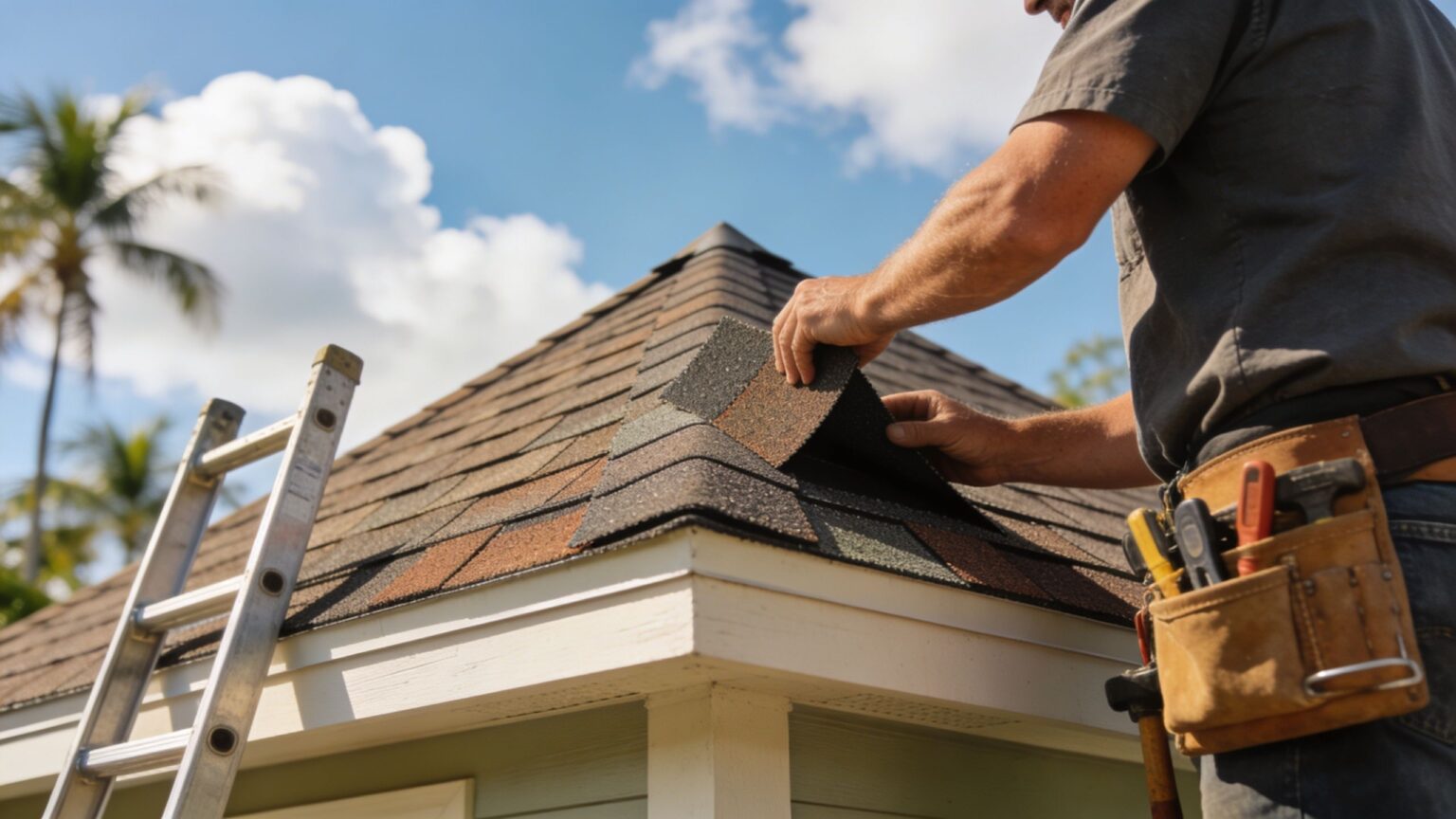
South Florida Biannual Roof Maintenance Checklist
| Area of Inspection | What to Look For | Frequency |
|---|---|---|
| Gutters and downspouts | Leaves, grit, standing water, loose sections, overflow staining | Twice yearly and after major storms |
| Valleys | Debris buildup, metal deterioration, sealant wear, trapped moisture | Twice yearly |
| Flashing at vents and chimneys | Cracks, lifting, rust, loose edges, failed sealant | Twice yearly |
| Roof field | Missing, cracked, slipped, curled, or displaced materials | Twice yearly |
| Attic | Damp insulation, stains, condensation, musty odor, daylight intrusion | Twice yearly |
| Roof edges and soffits | Water staining, rot, insect activity, paint failure | Twice yearly |
| Tree clearance | Limbs touching or overhanging the roof surface | Year-round review |
| After storms | New debris impact, shifted materials, drainage blockage | After each significant storm event |
What simple upkeep prevents bigger repairs
You don't need a long list of fancy products. You need consistency.
- Clean gutters and downspouts: Water has to leave the roof fast. If it can't, it starts testing edges, fascia, and low points.
- Clear valleys carefully: Don't let leaves turn a drainage path into a dam.
- Trim branches back: Branches scratch surfaces, drop debris, and create impact risk during storms.
- Watch sealant, but don't worship it: Caulk is not a roofing system. If a detail needs repeated sealant to stay dry, something underneath usually needs correction.
- Keep foot traffic limited: This matters a lot on tile and flat roofs. People do damage just walking where they shouldn't.
Some maintenance is homeowner-friendly. Some isn't. A proper inspection should include close review of flashings, drainage, penetrations, and any early sign that materials are moving out of place. If you're coordinating that work locally, Paletz Roofing and Inspections performs roof inspections and maintenance for shingle, tile, metal, and flat roofs across Broward, Miami-Dade, and Palm Beach counties.
Hurricane Preparedness A Proactive Plan for Your Roof
Hurricane prep isn't just about shutters and patio furniture. The roof is one of the first systems that gets tested by pressure changes, driven rain, and flying debris. The homeowners who do best during storm season are usually the ones who prepared while the weather was still calm.

Before the season starts
Start with the roof, then work outward.
Walk the property and look for anything that could strike the house in high wind. Tree limbs, loose fencing pieces, old satellite hardware, unsecured yard items, and stacked materials all deserve attention. On the roof itself, focus on loose edge details, debris in drainage paths, and any signs that previous repairs are aging out.
Take clear photos of the roof from multiple angles while conditions are dry. Those images help with before-and-after comparisons if a storm later causes damage. This roof documentation image reference shows the type of broad exterior view that can be useful for your records.
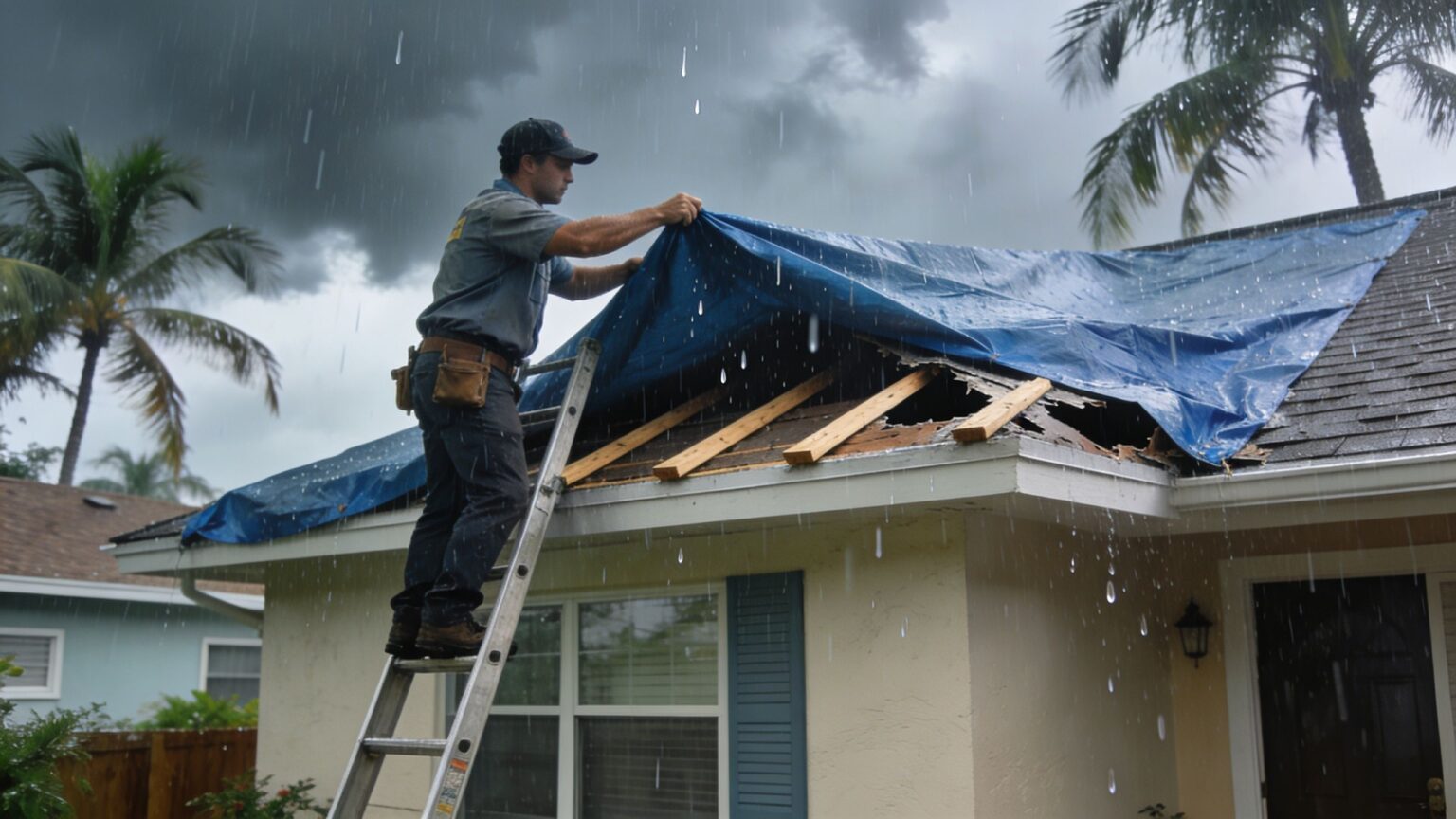
Get your documentation done before a storm is named. Nobody takes calm, thorough photos once the warnings start rolling in.
When a storm is tracking toward South Florida
Once a storm enters the cone and local guidance turns serious, don't start improvising on the roof. Safety comes first.
Use your time for tasks that reduce risk from the ground:
- Clear loose debris: Especially around downspouts, drains, and yard areas.
- Secure projectiles: Patio furniture, potted plants, ladders, tools, and trash bins should be tied down or moved inside.
- Protect the interior: If you already know of a vulnerable ceiling area, move valuables and place containers where needed.
- Check attic access: Make sure you can inspect safely later if needed.
- Charge devices and gather documents: Include insurance information, photos, and contact numbers.
Don't go up on the roof during deteriorating weather to “just fix one thing.” That's how people get hurt. A temporary tarp installed too late or poorly secured in wind can create more problems than it solves.
After the storm passes safely
Wait until conditions are safe. Wet roofs, hidden debris, and downed power hazards make early inspections risky.
Start from the ground and inside the home:
- Look for displaced roofing materials
- Check gutters, downspouts, and roof edges
- Inspect ceilings and walls for new staining
- Go into the attic with a flashlight
- Photograph anything new before cleanup changes the scene
If you find active water intrusion, contain the water first, protect belongings, and document everything. Then arrange for a proper roof assessment. On hurricane-damaged roofs, leak points aren't always directly above the stain. Wind-driven rain can travel along decking, framing, or underlayment before it shows inside.
DIY Fixes Versus When to Call a Roofing Professional
Some tasks are reasonable for a careful homeowner. Others aren't worth the gamble. Knowing the difference can save you from turning a manageable repair into a much bigger one.

What a homeowner can do safely
The short list is simple.
A homeowner can usually handle ground-level gutter clearing, downspout flushing, attic observation, and interior leak containment. If a branch is small, accessible, and safe to remove without climbing or cutting under tension, that may also be reasonable. Taking photos, marking where stains appear, and noting when the leak happens are all very helpful.
For an active drip, a temporary interior response is appropriate. Catch the water, move belongings, and relieve any ceiling bulge only if you can do so safely and understand the mess that follows. Temporary action inside protects the home while you line up a real repair.
What usually goes wrong with quick patch jobs
Most DIY leak repairs fail because they focus on the symptom instead of the path water is taking. Homeowners see one stain, one crack, or one lifted edge, then apply roofing cement or sealant to the first suspicious spot. Water doesn't care. It keeps moving until it finds the opening.
The professional repair approach is more methodical. According to this overview of a 3-step engineering solution for permanent roof leak prevention, 60% of leaks stem from unaddressed drainage. The same source explains that professionals begin with root cause analysis, often using tools like thermal imaging, then move to thorough crack filling and tiered waterproofing systems. It also states that these systems can have a sub-5% failure rate over 10 years, while surface-only DIY fixes can recur at an 80% rate.
That's the difference. A tube of caulk can cover a gap. It can't tell you why the gap opened, whether water is entering upslope, or whether the drainage pattern is what caused the failure in the first place.
If a leak comes back after a patch, the patch didn't fail. The diagnosis did.
When professional repair is the right call
Call a roofer when any of these apply:
- The leak is active during storms
- The roof is steep, high, slippery, tile, or storm-damaged
- You see flashing issues, valley deterioration, or multiple possible entry points
- Water shows up far from the suspected exterior defect
- There are signs of decking, underlayment, or structural involvement
- The leak has been “fixed” before and returned
Professional help also matters when documentation is important. If you may need to discuss storm damage, maintenance history, or repair scope with an insurer or property manager, clear findings and photos carry more weight than a homeowner's guess and a smear of sealant.
Proactive Answers to Your Top Leak Prevention Questions
Some leak questions come up after the inspection checklist, not before it. These are the ones homeowners and property managers ask when the weather gets rough or a stain shows up unexpectedly.
What should I do first if water starts coming in during a storm
Contain the water inside first. Use buckets, towels, and plastic bins. Move furniture, electronics, artwork, and anything else that can be damaged. If water is bulging a ceiling and you can respond safely, some homeowners puncture the lowest point to let the water drain into a container instead of allowing a wider ceiling collapse, but only do that if you're prepared for the immediate flow and can do it safely.
Then document what you see. Take photos of the ceiling stain, the drip location, and any affected belongings. Don't climb onto the roof during the storm. Wait until conditions are safe and the roof can be assessed without adding injury risk.
Will insurance cover a roof leak
That depends on cause, policy language, and the condition of the roof before the loss. Sudden storm-related damage is treated differently than long-term neglect in many claims situations. Documentation matters. So does maintenance history.
If you want a plain-language explanation of how claims professionals often separate origin from resulting damage, this article on cause vs consequence in UAE claims is a helpful framework. It's not Florida-specific, but the distinction it explains is useful when you're organizing photos, dates, invoices, and inspection records.
Are some roofing materials or colors better for South Florida
Material choice should follow the building, the slope, the exposure, and your maintenance tolerance. Tile can perform well here, but it still relies on the waterproofing system underneath. Shingle roofs are common and practical, but details like underlayment, flashing, and ventilation matter. Metal can be a strong option in coastal environments when the system and trim details are chosen carefully. Flat roofs need disciplined drainage and regular inspection because minor defects can turn into leak paths fast.
Color affects heat absorption, but color alone doesn't prevent leaks. Leak prevention comes from proper design, installation quality, drainage, flashing, underlayment, ventilation, and maintenance.
How often should I have my roof inspected
In South Florida, a schedule matters more than good intentions. A roof should be checked on a regular cycle and also after significant storms. Many homeowners do better with spring and fall timing because it creates a habit. Commercial properties and buildings with flat or low-slope sections often need even closer attention because drainage performance is so important.
If you're unsure whether your roof needs an inspection, ask yourself a few practical questions. Has it been through a storm recently? Are there trees overhanging the house? Have you seen any interior staining, musty attic conditions, or overflow at the gutters? If the answer to any of those is yes, don't wait for a drip to make the decision for you.
If you want a professional set of eyes on your roof before the next storm tests it, Paletz Roofing and Inspections serves Broward, Miami-Dade, and Palm Beach counties with inspections, leak diagnostics, repairs, and replacement guidance for shingle, tile, metal, and flat roofing systems. A timely inspection can help you catch the weak spots early and make a clean plan before minor moisture turns into major damage.