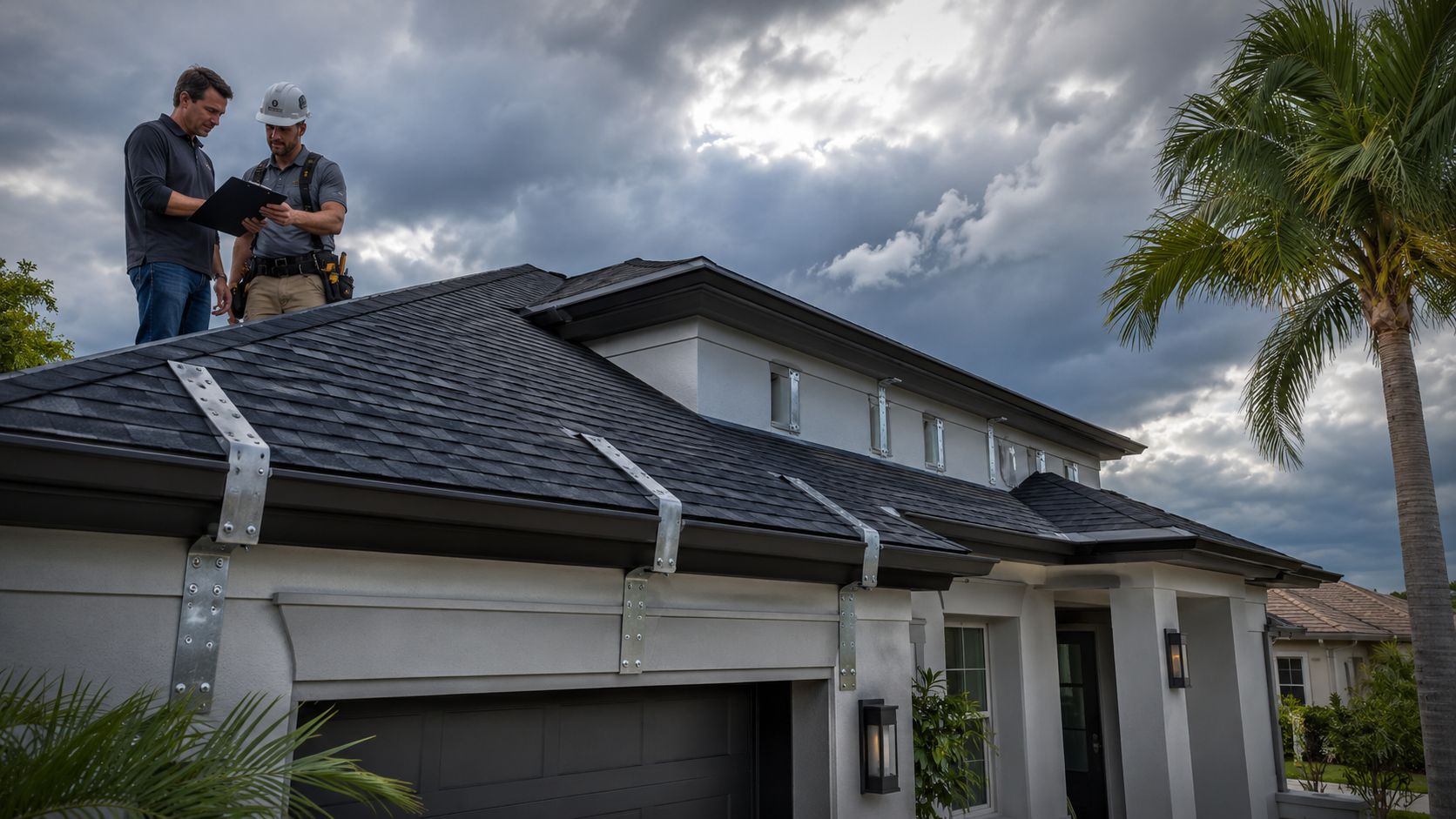
If you want to understand why a hurricane proof roof matters, start with the loss side. The Insurance Information Institute reports that about 70% to 90% of total insured residential catastrophic losses come from roof-related damage during severe wind events, which is why the roof is the first place serious South Florida hardening work has to start (roof-related catastrophe loss figures from the Insurance Information Institute).
In South Florida, homeowners often shop for a shingle, a tile, or a metal panel. That's the wrong starting point. A roof that stands up better in a hurricane is a system made of deck attachment, edge metal, underlayment, flashing, fastener schedule, roof-to-wall connection, and the final roof covering. If one part fails, the rest of the roof gets tested immediately.
I've seen plenty of roofs with decent-looking materials fail because the perimeter wasn't reinforced, the flashing work was weak, or the deck attachment was never upgraded. I've also seen older roofs stay drier than expected because the installer respected the basics and didn't cut corners at the edges and penetrations. In this climate, details decide outcomes.
Table of Contents
- Understanding Your Roof's Current Vulnerabilities
- The Core of a Hurricane-Resistant Roof System
- Selecting the Best Hurricane-Rated Roofing Materials
- Critical Installation Practices and Local Code Navigation
- Maintenance, Insurance Credits, and Long-Term Value
- How to Choose a Qualified South Florida Roofing Contractor
Understanding Your Roof's Current Vulnerabilities
A lot of homeowners think roof vulnerability means one thing. A visible leak. That's usually late in the sequence. Warning signs often show up earlier at the deck, flashing, soffits, ridge, and perimeter.
A useful benchmark is the FORTIFIED Roof standard. In an IBHS study of Hurricane Sally, if all homes in the storm's path had been retrofitted to that standard, insurers would have saved $105.6 million, and claim severity at FORTIFIED homes decreased by 15% to 40% (IBHS Hurricane Sally FORTIFIED findings). That doesn't mean every house needs the exact same retrofit package tomorrow. It means roof hardening starts with an honest inspection.
Start in the attic, not in the driveway
The attic tells you more than the street view does. Look up at the underside of the decking and framing on a clear day with a strong flashlight.
Check for these signs:
- Dark staining on the deck: Water marks around fasteners, seams, penetrations, or valleys often show past intrusion.
- Soft or delaminated sheathing: If plywood or OSB looks swollen, flaked, or deteriorated, the roof system may already have hidden structural weakness.
- Rusted nail tips or metal connectors: Corrosion can point to long-term moisture exposure.
- Daylight at penetrations or edges: Any visible light around vents, wall intersections, or deck gaps deserves attention.
- Sagging framing or uneven lines: Movement in rafters or trusses can change how loads transfer under wind pressure.
If you're scheduling a professional inspection, it helps to review a sample roof inspection reference image so you know the kind of documented condition review you should expect.

Practical rule: If the attic says the deck is compromised, replacing the surface covering alone won't give you a hurricane proof roof.
What to look for on the roof surface
From the ground and around the property, the biggest issues are usually visible if you know what to watch.
Use this checklist before you call a roofer:
Missing, loose, or lifted coverings
Shingles that don't lie flat, cracked tiles, displaced ridge pieces, and loose metal trim are all uplift warnings.Flashing wear at every transition
Roof-to-wall intersections, vent stacks, skylights, chimneys, and valleys are common leak points. A lot of storm failures start where different materials meet.Edge condition
Wind attacks the perimeter first. Bent drip edge, loose starter courses, and open rake details deserve immediate review.Soffits and fascia
Once soffits fail, wind can pressurize the attic and increase uplift stress on the roof assembly.Age and patch history
A roof with multiple spot repairs may have inconsistent fastening and layered weak points.
Use the inspection to define scope, not guess at repairs
A homeowner doesn't need to perform the repair. A homeowner does need to know whether the job is a repair, a reroof, or a structural upgrade conversation.
Ask the contractor to identify:
- Deck condition
- Edge metal condition
- Underlayment type
- Flashing integrity
- Attachment concerns
- Whether the current system supports code-compliant replacement without additional deck work
That last point matters. In South Florida, many roofs don't fail because the material was cheap. They fail because the assembly underneath was never upgraded to handle serious wind and water intrusion.
The Core of a Hurricane-Resistant Roof System
A hurricane-resistant roof isn't one product. It's an assembly designed to stay attached, resist uplift, and slow water entry after the outer layer takes damage.

The load path has to stay connected
The first concept homeowners need to understand is the continuous load path. Wind doesn't only push on the top of the roof. It tries to lift the roof assembly off the house and transfer force through the framing. That means the roof covering, deck, trusses or rafters, wall connection, and structure below all need to stay tied together.
If the roof deck is attached well but the roof-to-wall connection is weak, you still have a major vulnerability. If the roof-to-wall connection is solid but the perimeter attachment is sloppy, wind can start peeling from the edge and move inward. Roof survival is about continuity.
In practical terms, a contractor should be evaluating:
- Deck-to-framing attachment
- Roof-to-wall connectors such as straps or clips where applicable
- Perimeter detailing
- Penetration flashing
- Secondary water barrier continuity
Deck fastening and the sealed roof deck
Florida guidance and the FORTIFIED hurricane standard are clear on one point. The deck itself has to be hardened. The system emphasizes corrosion-resistant ring-shank nails, with at least 20 rings per inch and 1-inch penetration into wood, and deck joints sealed with a self-adhered membrane so the assembly can limit water entry even if the primary covering is damaged (FORTIFIED hurricane roof deck and sealing requirements).
That's not a cosmetic upgrade. It changes how the roof behaves when uplift starts working the field and perimeter.
A hardened deck system usually includes:
| Component | What it does | Common mistake |
|---|---|---|
| Ring-shank deck fastening | Improves grip in the deck-to-framing connection | Assuming conventional nailing is close enough |
| Sealed deck joints | Reduces water intrusion if covering is lost | Using basic felt without a sealed-joint approach |
| Proper fastener penetration | Helps the deck stay attached under wind load | Using the wrong nail length for the substrate |
| Corrosion-resistant hardware | Holds up better in coastal conditions | Mixing incompatible or noncoastal-grade components |
A sealed roof deck won't make the roof invincible. It can buy time and keep interior damage from becoming immediate catastrophe.
Edges, flashing, and attachments fail first
I tell homeowners the same thing every storm season. Don't get hypnotized by the field of the roof and forget the details.
The failure sequence often starts at:
- Eaves and rakes
- Starter strips
- Drip edge attachment
- Wall flashing
- Pipe boots and vents
- Ridge and hip terminations
A shingle or tile wind rating by itself doesn't solve those points. The roof covering only performs as well as the attachment schedule and edge metal support beneath it. In high-wind work, the crew has to respect the perimeter as the most vulnerable zone on the roof.
That's why a real hurricane proof roof conversation always moves below the surface. Homeowners who only ask, “What shingle are you using?” are asking too small a question.
Selecting the Best Hurricane-Rated Roofing Materials
Material choice matters. It just comes after system design, not before. In South Florida, the usual discussion is between standing seam metal, concrete or clay tile, and impact-rated asphalt shingles.

What the ratings actually mean
A lot of sales talk mixes impact resistance and wind resistance as if they're the same thing. They aren't. You need both.
UL 2218 Class 4 is the highest impact class and is described as withstanding a 2-inch steel ball dropped from 20 feet. On the wind side, Florida guidance lists H-rated shingles at 150 mph. In high-velocity zones, best practice is to prioritize products with a strong wind rating and either a Miami-Dade NOA or Florida Product Approval for the exact assembly you plan to install (paired impact and wind rating guidance).
That last part matters more than people realize. Product approval isn't a decoration on a brochure. It tells you the material and installation method have been evaluated for this market.
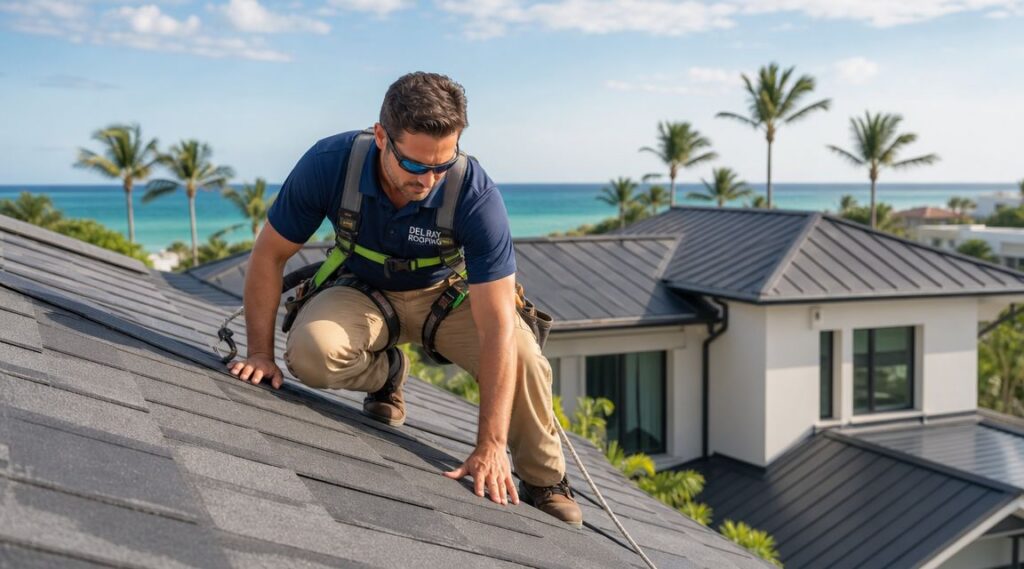
A useful visual example of a rated residential roof assembly is this South Florida roofing material reference.
How metal, tile, and shingles compare in the field
Each material has strengths and trade-offs. There isn't one perfect answer for every house.
Standing seam metal
Metal is popular for a reason. It's lighter than tile, it sheds water well, and a properly engineered panel system can perform very well in wind.
Where metal works well:
- Homes needing lower dead load on the structure
- Owners who want a long-service roof with clean lines
- Projects where panel attachment and edge detailing can be tightly controlled
Trade-offs:
- Higher upfront cost
- Noise concerns if attic insulation and assembly design are weak
- No tolerance for sloppy flashing or poorly planned penetrations
A bad metal job can fail at trim, clips, laps, or edge details long before the panel itself is the problem.
Concrete or clay tile
Tile is common in South Florida and can perform well when the substrate, fastening method, and geometry all line up. It also gives the home a look many owners want.
Where tile makes sense:
- Homes designed structurally for the load
- Owners committed to periodic maintenance
- Properties where aesthetics matter as much as storm performance
Trade-offs:
- Heavy roof system
- Breakage risk from impact or foot traffic
- Repairs can become piecemeal if the roof has mixed-age replacements
Tile roofs also rely heavily on the underlayment and flashing strategy underneath. Once tiles shift or break, the water management layer becomes the primary defender.
Impact-rated architectural shingles
Shingles remain the most common choice because they're familiar, available in many profiles, and usually easier on the budget than premium metal or tile systems.
Where shingles fit:
- Budget-sensitive reroofs
- Homes with simpler geometry
- Projects where a full deck-hardening approach is included
Trade-offs:
- Shorter service life than many metal or tile systems
- Greater dependence on exact nailing, starter, and ridge installation
- More vulnerable to performance loss from shortcuts
If you're going the shingle route, don't settle for a label alone. Match the wind rating, impact class if needed, approval status, underlayment, starter system, and fastening schedule.
Field advice: The best material on paper becomes average fast if it's installed over a weak deck, light perimeter detailing, or generic flashing work.
What to verify before you buy
Before you sign a contract, ask for the exact approval path for your roof system.
Review these items:
- Product approval documents: Confirm Miami-Dade NOA or Florida Product Approval where applicable.
- Exact substrate match: The attachment schedule has to match the actual deck material and thickness.
- Underlayment specification: Verify whether the proposal includes a full sealed-deck approach or a more basic layer.
- Accessory package: Starter strips, hip and ridge components, vent products, flashing metals, and sealants should all belong in the conversation.
- Roof shape impact: Valleys, dormers, dead valleys, transitions, and wall intersections can make one material more practical than another.
A homeowner shopping for a hurricane proof roof shouldn't ask, “What's your best product?” The better question is, “What tested assembly fits my house, my exposure, and my code requirements?”
Critical Installation Practices and Local Code Navigation
A weak installation can ruin a strong product. That's the truth of roofing in South Florida.

Installation quality beats product marketing
The roof covering is what homeowners see. The installation is what the storm tests.
I've inspected roofs where the material itself was respectable, but the installer missed the basics:
- Starter adhesion wasn't secure
- Drip edge integration was loose
- Penetrations were oversealed instead of properly flashed
- Fastener placement drifted off the manufacturer pattern
- Hip and ridge attachment was treated like finish work instead of wind-zone work
Those aren't small errors. They're common failure points.
The same principle shows up on other outdoor structures too. If you want a simple comparison, look at how installers think about anchoring a metal carport. The lesson is the same. Wind performance depends on how the structure is attached to the building or foundation, not just on what material the top is made from.
The code details that can't be skipped
South Florida code enforcement is strict for good reason. In high-wind areas, the attachment schedule, edge treatment, flashing details, and approved assembly matter more than marketing language like “storm-rated” or “hurricane tough.”
What I expect to see in a serious roofing proposal includes:
Approved materials for the jurisdiction
The product should match local approval requirements and the roof's actual slope and geometry.Deck attachment review
If the existing deck fastening doesn't support the intended system, the scope should say so plainly.Secondary water barrier details
This needs to specify how the deck joints and vulnerable areas are being protected.Edge and perimeter package
Drip edge, starter treatment, and perimeter reinforcement shouldn't be buried in fine print.Flashing scope at every penetration and wall tie-in
Pipe boots, curbs, vent stacks, step flashing, counterflashing, and valley details all need a plan.
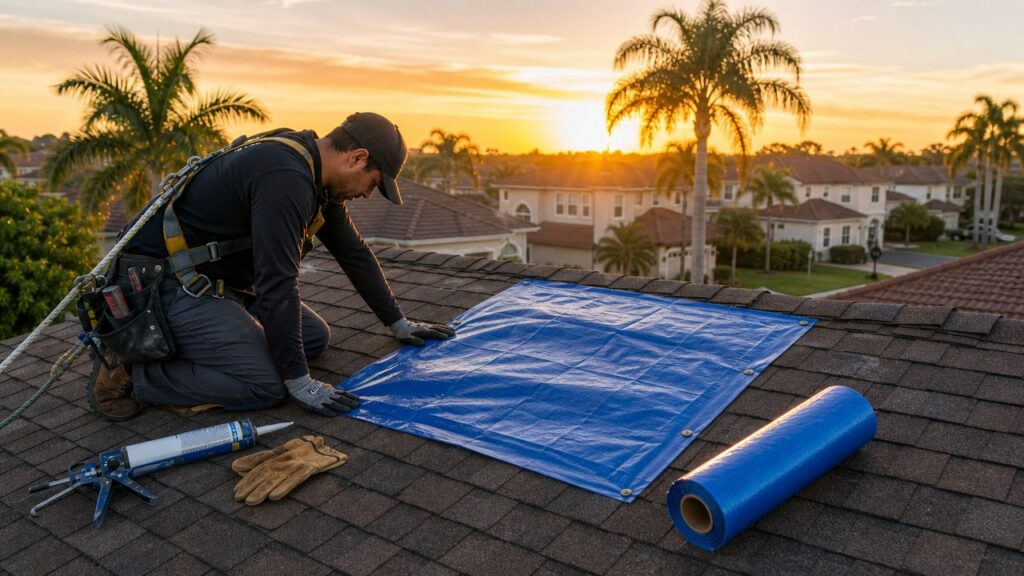
A sample project image that helps homeowners understand what a code-conscious reroof looks like is this roof installation reference for South Florida homes.
Bad roofs usually don't fail from one dramatic mistake. They fail because a contractor made five “small” ones.
Permits and inspections protect the owner
Permits aren't paperwork for its own sake. They create a record that the reroof was submitted, reviewed, and inspected against local requirements.
That matters for several reasons:
- Insurance questions later
- Resale disclosure
- Storm claim support
- Avoiding unapproved substitutions
- Making sure concealed work gets checked before it disappears under the finish roof
If a contractor wants to skip permits, rush the inspection sequence, or stay vague about approvals, that's a warning sign. In this region, local code fluency isn't optional. It's part of the job.
Maintenance, Insurance Credits, and Long-Term Value
A roof isn't finished the day the crew leaves. It enters a maintenance cycle. Homeowners who understand that usually get better service life and fewer ugly surprises after the next storm.
One point needs to be clear from the start. No roof is fully hurricane-proof. Real resilience depends on tested assemblies and verified documentation for insurers, and newer homeowner guidance increasingly points toward FORTIFIED-style upgrades plus a complete documentation package instead of relying on marketing language alone (guidance on tested assemblies and documentation).
What to maintain after the reroof
The simplest maintenance program is also the one most owners ignore.
Do these things consistently:
- Schedule regular professional inspections: Especially after major wind events, visible damage isn't the only damage.
- Keep gutters and drainage paths clear: Backed-up water stresses edges, fascia, and transitions.
- Watch sealants and flashing points: Sealant ages, boots crack, and wall intersections move.
- Trim back overhanging branches: Debris impact and rubbing wear shorten roof life.
- Check attic conditions after storms: Moisture, staining, or new daylight can show up before ceiling leaks do.
A hurricane proof roof system stays stronger longer when minor issues are corrected early. Deferred maintenance usually turns a manageable repair into deck work, interior damage, or both.
Documentation matters as much as the work
For insurance and ownership value, paperwork matters.
Keep these records organized:
| Record | Why it matters |
|---|---|
| Permit and final inspection records | Shows the job moved through the local approval process |
| Product approvals and system details | Helps prove what was actually installed |
| Contract and invoice | Establishes scope and materials |
| Photos during tear-off and dry-in | Helpful if concealed conditions become relevant later |
| Wind mitigation or related inspection forms | Supports insurance conversations about protective features |
I always tell homeowners to treat roof documents like title papers. If a storm hits, you don't want to be reconstructing the history of the job from memory.
Long-term value comes from fewer weak points
Insurance credits and premium effects depend on the features documented on the home and how the insurer evaluates them, so the practical move is to build a file that clearly shows your roof's protective elements and inspection history.
That means the long-term value of a hardened roof comes from three places:
- Reduced chance of major interior water damage
- Clearer support for insurance and mitigation review
- Better resale confidence when buyers ask what was done and how
The homeowners who get the most value out of a reroof are usually the ones who think beyond the surface material. They maintain the system, preserve the records, and respond quickly when small details start to degrade.
How to Choose a Qualified South Florida Roofing Contractor
A hurricane-rated roof is only as good as the crew that installs it. In South Florida, that means hiring a contractor who can build the whole assembly correctly, from deck attachment and dry-in to edge metal, flashing, and final inspection. A clean brochure and a low bid do not prove that.

Ask questions that expose shortcuts
Start with the parts of the job that fail first under wind and water pressure. A qualified South Florida roofer should answer these without guessing, dodging, or switching to sales talk.
What Florida Product Approvals or NOAs apply to my exact roof assembly?
The answer should match the roof covering, slope, deck type, underlayment, and attachment method. In Miami-Dade and Broward, that level of detail matters.Will you inspect the deck and re-nail it to current code if needed?
If the contractor treats the deck like an afterthought, keep looking. In high-wind zones, deck attachment is one of the main parts of the system.What secondary water barrier or underlayment system are you installing?
Ask how seams are sealed, how the underlayment is fastened, and how it ties into penetrations and valleys.How are you handling edge metal, flashing, and penetrations?
Generic answers cause leaks. You want the sequence, the fastening pattern, and the approved components.Who pulls the permit, who meets the inspector, and who signs off on corrections?
The contractor should own that process.What do I receive at closeout?
You should get permit records, product approvals, invoices, photos if available, and documentation that shows what was installed.
Insurance and licensing matter too. A homeowner should confirm the contractor carries the right coverage and has active credentials. For a plain-English explanation of why that business side matters, this guide to liability protection for roofers is useful background.
Look for HVHZ experience, not general roofing talk
South Florida is not one permit market. Miami-Dade County has High-Velocity Hurricane Zone rules. Broward follows many of the same high-wind expectations. Palm Beach has its own review habits and inspection standards. A contractor who works these jurisdictions regularly will know where jobs stall, what inspectors look for, and which details cannot be left vague on the proposal.
I would expect to see all of this from a serious contractor:
- Active Florida roofing license and current insurance
- A real local office or established local operating presence
- Experience pulling permits in Miami-Dade, Broward, and Palm Beach
- Working knowledge of HVHZ fastening schedules and approved assemblies
- A written scope that identifies underlayment, flashing, edge metal, and attachment details
- Job supervision that is assigned to a named person, not whoever happens to show up
- A clear closeout process with inspection and documentation records
One sentence tells me a lot. If a roofer cannot explain how the roof system will be attached and dried in before the covering goes on, that roofer is not ready for a hurricane-hardening project.
Review the proposal like a system, not a surface product
Homeowners get into trouble when they compare quotes by shingle brand or tile color alone. Important differences are often buried in the line items. One bid includes deck re-nailing, upgraded underlayment, and correct perimeter metal. Another leaves those items as allowances or excludes them until tear-off. The cheaper number on page one can turn into a weaker roof or a stack of change orders.
Read the scope for specific language about:
- Deck repair and deck reattachment
- Underlayment type and fastening method
- Flashing replacement at walls, valleys, chimneys, and penetrations
- Perimeter metal and soffit tie-in details
- Vent type and attachment
- Inspection responsibilities and correction handling
- Product approval paperwork for the installed assembly
If those details are missing, the proposal is incomplete.
One local option to evaluate
For homeowners comparing local companies, Paletz Roofing and Inspections handles residential and commercial roof work in Broward, Miami-Dade, and Palm Beach, including inspections, repairs, replacements, and reroofing across shingle, tile, metal, and flat systems.
That mention is not a substitute for vetting. Ask for the exact assembly details, permit path, product approvals, fastening schedule, and final closeout package. A contractor who does this work properly should be ready for those questions.
The right roofer for a hurricane proof roof project can show, in writing, how the roof system will be attached, sealed, flashed, inspected, and documented to meet South Florida code. That is what holds up when the wind starts testing every weak point.