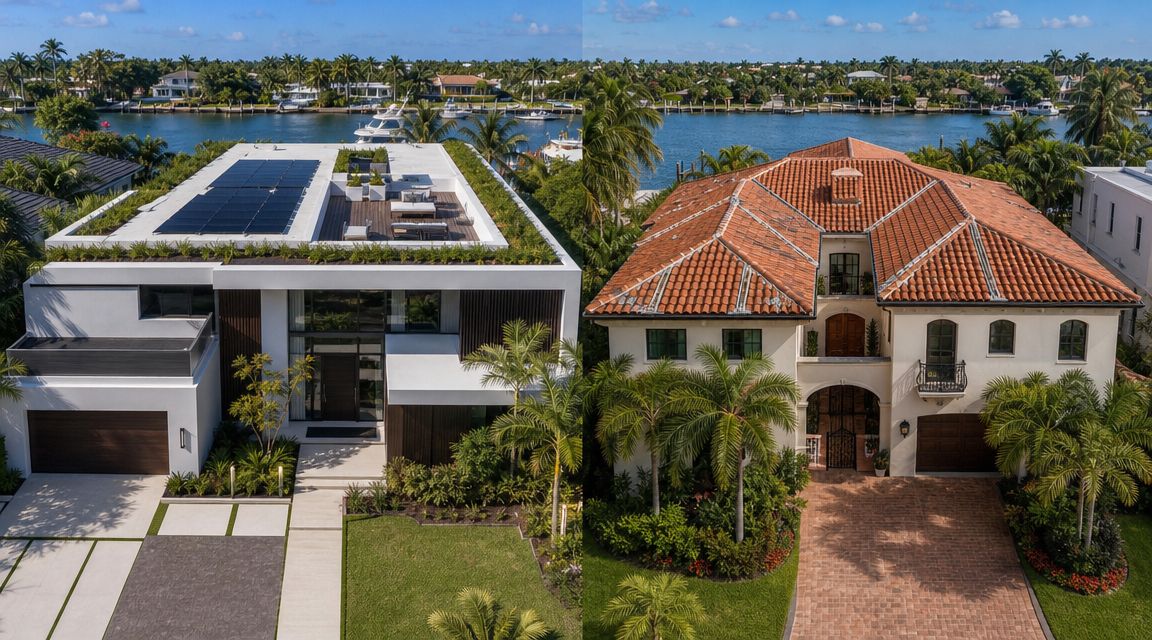
A roof in South Florida can look fine and still be one storm season away from a costly failure. Flat roofs usually give owners a shorter service window than pitched systems, and that gap changes the math. The cheaper first quote does not always lead to the lower lifetime cost, especially once you factor in repairs, coatings, drainage work, and replacement timing in a hot, storm-heavy climate.
In Broward, Miami-Dade, and Palm Beach, roof systems deal with UV exposure year-round, sudden downpours, and wind uplift pressure during tropical storms and hurricanes. I advise clients to judge this decision on how the roof will perform after years of ponding risk, flashing movement, and repeated heat cycles, not just how it looks from the street. A flat roof can be the right choice on the right structure, but only if the drainage layout is right and the owner is prepared for more hands-on maintenance. A pitched roof usually sheds water faster and often buys you more margin during heavy rain and wind, but that does not make it automatically better for every building.
For a quick visual reference, see this South Florida roof comparison image.

The question is not flat versus pitched in the abstract. It is which system gives your property the best long-term value under South Florida building demands, insurance pressure, and weather exposure.
Table of Contents
- Choosing Your Roof in South Florida
- Core Differences A High Level Comparison
- Cost Analysis Upfront Installation vs Lifetime Value
- Performance Under South Florida's Extreme Weather
- Maintenance Lifespan and Repair Realities
- Design Aesthetics and Practical Use Cases
- Your South Florida Decision Checklist
- Frequently Asked Questions About Florida Roofs
Choosing Your Roof in South Florida
South Florida owners usually start with appearance and budget. That's understandable, but it misses the critical factor. Your roof is your first barrier against wind-driven rain, standing water, solar exposure, and the kind of fast weather shifts that punish poor detailing.
The flat roof vs pitched roof decision is really about risk distribution. A flat system usually costs less at installation, but it asks for more discipline afterward. A pitched system usually costs more upfront, but it often reduces long-run repair pressure because water leaves the surface faster and more naturally.
That difference matters more here than in milder markets. A roof that performs adequately in a dry climate can become a recurring problem in coastal Florida if drainage, flashing, and maintenance are treated casually. South Florida roofs don't get much forgiveness.
If you're comparing options for a home in a traditional neighborhood, a modern custom build, a multifamily property, or a commercial structure, focus on three questions first:
- How does this roof remove water: Fast natural runoff and engineered drainage are not the same thing.
- What kind of maintenance can you realistically sustain: Some owners say they'll inspect regularly, then only call after a leak.
- What is the building supposed to do: A rooftop deck, solar layout, or mechanical equipment changes the answer.
For owners thinking visually, this South Florida roof example image reflects the reality that roof choice affects both architecture and long-term service demands.
The best roof in South Florida isn't the one with the best brochure pitch. It's the one your building can drain, your budget can support, and your maintenance habits won't neglect.
Core Differences A High Level Comparison
In South Florida, the biggest performance gap between flat and pitched roofs shows up during hard rain, wind-driven storms, and long stretches of sun. The shape changes how the roof sheds water, handles uplift pressure, absorbs heat, and ages over time.
A flat roof is a low-slope system. It uses a slight pitch to move water toward drains, scuppers, or gutters. A pitched roof uses a steeper slope so gravity clears water off the surface faster and with less dependence on internal drainage details.

Quick comparison table
| Feature | Flat Roof | Pitched Roof |
|---|---|---|
| Basic form | Low-slope surface with slight pitch | Sloped surface designed for natural runoff |
| Water management | Depends on membrane, drains, scuppers, and precise detailing | Relies more on slope and gravity to move water off quickly |
| Typical use | Commercial buildings, multifamily properties, modern residential design | Traditional homes, many residential neighborhoods, steep-slope custom homes |
| Visual style | Clean, modern, minimal | Classic, varied, more traditional |
| Access | Easier for service crews, equipment, and rooftop use | Harder to walk and work on safely |
| Common material direction | TPO, modified bitumen, built-up roofing, other membrane systems | Shingle, tile, metal, and other steep-slope systems |
| Heat behavior | Surface choice matters a lot because the roof takes direct sun exposure across a broad plane | Material and attic design play a bigger role in heat gain and ventilation |
| Hurricane concerns | Vulnerable points often include edge metal, seams, penetrations, and drainage details | Vulnerable points often include loose coverings, ridge details, flashing, and uplift at edges and corners |
| Maintenance tendency | Requires more frequent inspection, especially after heavy rain and storm debris | Usually less frequent routine attention, but failures can be more expensive by area depending on material |
| Failure pattern | Leaks often begin at seams, drains, flashing, ponding spots, or penetrations | Problems often show up in missing coverings, flashing failures, valleys, underlayment breakdown, or penetrations |
How the two systems actually behave
The practical difference is simple. A pitched roof is a shedding system. A flat roof is a managed drainage system.
That matters in South Florida because afternoon downpours test drainage fast. On a pitched roof, water starts leaving the surface right away. On a flat roof, water has to travel across the membrane and reach a specific exit point. If that path is slowed by leaves, poor slope, clogged drains, or settlement, the roof holds water longer and the system has less margin for error.
Wind changes the equation too. A low-slope roof can perform well in hurricane country, but only when attachment, perimeter securement, flashing, and edge details are done right. A pitched roof also faces uplift risk, especially along edges, ridges, and overhangs. Neither option gets a free pass here. Good installation matters more than the roof category by itself.
Heat is another real separator. Flat roofs take intense direct sun and can turn into heat reservoirs if the membrane color, insulation package, and reflectivity are chosen poorly. Pitched roofs can reduce some of that surface stress through attic space and ventilation, but dark materials still drive attic temperatures up. In this market, roof shape and roof assembly have to be judged together.
Where each roof tends to make sense
Some buildings clearly favor one approach.
- Commercial properties: Flat roofs make sense because they handle HVAC equipment, service access, and large footprints efficiently.
- Modern residential builds: Flat roofs fit the architecture and can support terraces, solar planning, or other rooftop use if drainage and waterproofing are treated seriously.
- Traditional homes: Pitched roofs usually fit the neighborhood better and provide a more forgiving water-shedding design.
- Coastal or storm-exposed custom homes: Either system can work, but the better choice depends on engineering, material selection, maintenance discipline, and how much long-term service attention the owner is prepared to fund.
Practical rule: Choose flat when the building needs usable roof space, equipment access, or a modern form and the owner will stay on top of inspections. Choose pitched when the priority is faster water shedding, lower drainage sensitivity, and better long-run forgiveness under South Florida weather.
Cost Analysis Upfront Installation vs Lifetime Value
A lower bid can cost more in South Florida. I see that mistake often with owners who compare roof proposals line by line but do not price out the years that follow: inspections, drain cleaning, leak calls, storm-related repairs, and the timing of full replacement.

On day one, flat roofs usually cost less to install. The framing is often simpler, material use can be lower, and large roof areas can be covered efficiently. Pitched roofs usually cost more up front because the structure is more involved, labor is higher, and the material package often carries a longer service expectation.
That first number still matters. It just does not answer the ownership question that matters on a South Florida property.
What the initial quote covers, and what it misses
A proposal usually covers tear-off, substrate work, installation, flashing, and warranty terms. It rarely captures the full cost of owning that roof in a climate with year-round UV exposure, wind-driven rain, hurricane preparation, and debris loading from tropical weather.
Flat roofs can make financial sense, especially on commercial buildings, modern homes, and properties that need roof access for equipment or solar. But the owner needs to budget for more service attention over time. On low-slope systems, small drainage problems turn into larger repair bills faster than many buyers expect.
Pitched roofs usually ask for more cash up front. In return, many owners get a roof shape that is more forgiving over the long run. Water sheds faster. Debris does not sit as easily. Minor maintenance issues are less likely to become interior damage if they are caught early.
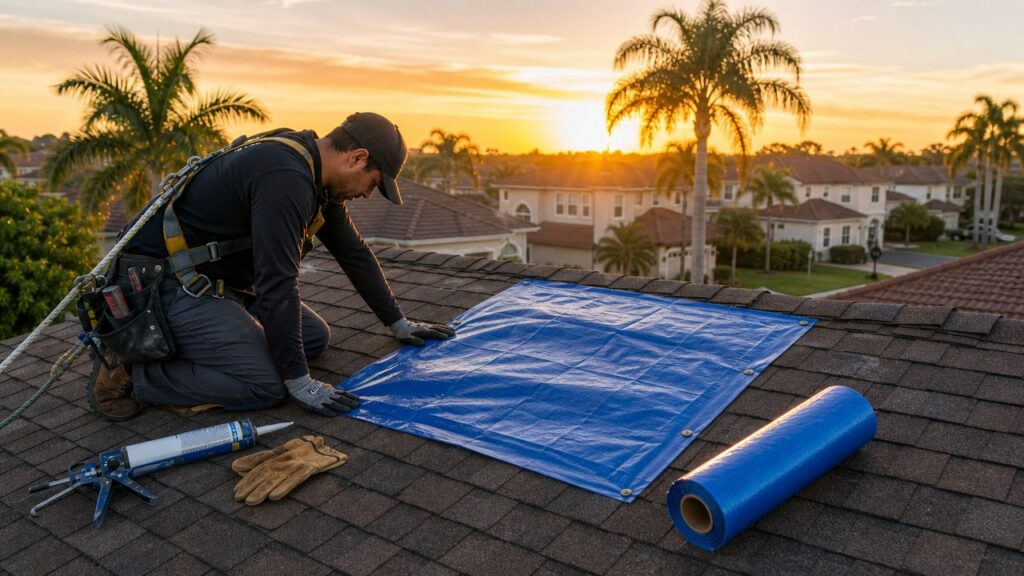
For a visual reference to the kinds of assemblies and exposures common in this market, see this South Florida roof comparison image.
Where lifecycle cost changes the decision
Service life is where the math often shifts. Flat systems commonly reach replacement sooner than pitched systems, and they usually need closer monitoring along the way. In South Florida, that difference gets sharper because heat ages materials faster and heavy rain punishes any weak drainage detail.
That does not mean pitched is always cheaper. It means owners should stop treating lower installation cost as lower total cost.
A flat roof can still be the better value if the building needs the roof to do work. That includes housing HVAC equipment, supporting solar layout, or fitting an architectural style that would be compromised by a pitched structure. In those cases, the right question is whether the building gets enough functional benefit to justify the shorter maintenance cycle and higher service intensity.
A pitched roof often delivers better value on homes where the priorities are predictable upkeep, longer replacement intervals, and fewer drainage-related surprises. That pattern shows up repeatedly in residential projects across South Florida.
A practical way to price ownership
Use this filter before choosing either system:
Separate bid price from ownership cost
Compare installation price, expected maintenance frequency, repair exposure, and likely replacement timing.Identify the first expensive failure point
On flat roofs, that is often drains, seams, flashing, or penetrations. On pitched roofs, it may be underlayment, fastener issues, or flashing at valleys and transitions.Price the roof around your hold period
A buyer planning to sell in a few years may judge value differently than an owner who expects to keep the property for 20 years.Account for South Florida service conditions
Heat, salt air near the coast, storm debris, and hurricane-season inspections all add to long-run cost.
A short value comparison
| Cost lens | Flat Roof | Pitched Roof |
|---|---|---|
| Initial budget pressure | Usually easier | Usually higher |
| Ongoing inspection burden | Higher | Lower |
| Drainage upkeep sensitivity | High | Lower |
| Earlier replacement risk | More likely | Less likely |
| Best value scenario | Buildings that need rooftop utility or modern form | Buildings that prioritize longevity and lower maintenance intensity |
Thompson Creek makes a useful point in its roof comparison article. The better choice often comes down to lifecycle fit, especially when a flat roof is selected for equipment access, solar planning, or building design rather than appearance alone.
For South Florida owners planning to keep a property long term, the cheapest proposal is rarely the cheapest roof. Replacement timing, maintenance frequency, and how the system handles local weather usually decide the true cost.
Performance Under South Florida's Extreme Weather
South Florida changes the flat roof vs pitched roof conversation because the climate exposes different failure modes than the generic national advice most owners read. Heavy rain isn't occasional here. Heat isn't seasonal in the same way it is farther north. Wind events don't just test the field of the roof. They test perimeter metal, corners, fastener security, flashing transitions, and every penetration.

For a visual reference to local roof conditions and assembly styles, this South Florida roofing image reflects the kind of weather exposure owners need to consider.
Heavy rain and drainage failure
The main technical advantage of a pitched roof is natural drainage. Its slope sheds rain and snow more effectively, which lowers ponding-water exposure and leak risk. By contrast, flat roofs rely on minimal slope and membrane systems, so they typically need more frequent inspections and maintenance to manage pooling water and debris, especially in wet climates, as outlined by CD Roofing's comparison of flat and pitched roof performance.
In South Florida, this distinction matters immediately. During a hard downpour, a pitched roof usually clears bulk water faster. A flat roof can still perform well, but only if drains, scuppers, and surface flow paths stay open and the membrane remains intact at seams and penetrations.
When low-slope systems fail here, the issue often isn't dramatic at first. It starts with slow drainage, standing water that lingers, stress at flashing edges, and then moisture intrusion at the weakest point.
Wind exposure and storm behavior
Hurricanes complicate the picture. Many owners assume a flatter profile is automatically better in wind. That's too simplistic. Wind performance depends on the roof shape, edge securement, fastening pattern, attachment method, and the condition of the entire assembly.
A pitched roof presents more shape to the wind, but that doesn't make it a poor choice. A properly designed pitched system can perform very well if the coverings, underlayment, flashing, and edge details are installed correctly. The bigger concern is often uplift at ridges, eaves, corners, and transitions.
Flat roofs have their own vulnerabilities. On low-slope assemblies, the membrane and perimeter details become critical. If edge metal, flashing, or attachment points are weak, wind can exploit them fast. Once the system opens up, water intrusion follows.
In hurricane country, roof geometry matters. Detailing matters more.
Heat and daily wear
South Florida heat creates a different kind of stress. It expands and contracts materials daily. It accelerates wear at exposed surfaces. It punishes shortcuts in flashing, sealants, and transitions.
Flat roofs often make sense where owners want reflective membranes and easy access for equipment or solar. But heat plus standing water is a rough combination if drainage is inconsistent. A section that stays wet longer after storms usually ages differently than the rest of the field.
Pitched roofs manage daily heat differently. Their design often supports attic ventilation and insulation strategies, which can help building performance when the assembly is designed properly. The trade-off is that repairs on steep surfaces are less convenient and sometimes more involved.
A useful way to look at South Florida performance is this:
- For rain management: Pitched roofs usually have the advantage.
- For rooftop function and access: Flat roofs usually have the advantage.
- For long-term resilience: Either can work, but poor drainage on a flat roof becomes a serious liability faster.
- For storm preparation: Neither roof type gets a free pass. Securement, flashing, and maintenance decide outcomes.
One often-missed point in national discussions is that low-slope roofs fail differently in warm, wet climates. The key issue isn't just lifespan. It's whether the design can control standing water, flashing stress, and maintenance access over time. That nuance is highlighted in this discussion of how flat and pitched roofs behave under climate pressure, and it applies strongly in South Florida.
Maintenance Lifespan and Repair Realities
In South Florida, roof life is usually lost at the details, not in the broad roof shape. Sun cooks materials year-round, wind worries every edge and flashing, and heavy rain tests drainage fast. Maintenance is the part that decides whether the roof reaches its expected service life or starts consuming money early.
That cost pattern looks very different on flat and pitched systems.
Flat roof maintenance reality
A low-slope roof needs routine attention because small drainage or membrane issues turn into expensive moisture problems faster in this climate. I tell owners to treat it like a working waterproofing system, not a surface you only think about after a leak.
The watch list is straightforward:
- Drains and scuppers: Leaves, grit, and storm debris slow runoff and leave water sitting longer than the system should tolerate.
- Seams and laps: Heat, movement, and aging can open weak points that are easy to miss from the ground.
- Penetrations: Curbs, vents, pipe boots, equipment supports, and termination bars are common repair locations.
- Surface wear: Punctures, blisters, soft spots, and patch failures need quick follow-up before water gets below the membrane.
Flat roofs often punish delay. An owner may have one clogged drain, one seam starting to open, and one soft area near a penetration. Then a summer storm hits, water sits, and the repair scope grows from a small service call into wet insulation, interior damage, and larger membrane replacement.
That is the lifecycle cost issue many buyers miss. A flat roof can be economical if it is inspected consistently and repaired early. It gets expensive when maintenance slips.
For owners comparing roof layouts and building form, this roof style comparison image for South Florida homes helps show why access and detailing differ so much between low-slope and pitched designs.

Pitched roof maintenance reality
Pitched roofs usually shed water faster, but they are not low-risk by default. In South Florida, the recurring trouble spots are wind damage, cracked or slipped materials, failing flashings, and debris packed into valleys or behind roof-to-wall transitions.
The maintenance pattern is different:
- Check coverings after storms for lifted shingles, broken tile, loose fasteners, or displaced metal components.
- Inspect flashings at walls, chimneys, vents, skylights, and transitions where wind-driven rain can get underneath.
- Keep valleys and drainage paths clear so runoff does not back up under the roof covering.
- Repair isolated damage early before underlayment, decking, or interior finishes are affected.
Pitched roofs often age in a more visible way. You may spot a cracked tile, a missing shingle tab, or a bent metal panel before water shows up inside. That can make repair timing easier to manage, but access is harder, labor is often higher, and matching older materials can become a problem on visible roof slopes.
Property condition around the roof also affects long-term repair planning. Wood trim, soffits, fascia, and attic framing can hide damage that is not strictly a roofing defect. If you are evaluating a home purchase or trying to connect exterior findings to future maintenance costs, WDO report details for Miami can add useful context.
Lifespan comes from inspection habits and repair timing
A roof reaches its potential lifespan when the system is installed correctly, inspected after major weather, and repaired while the problem is still small. That matters more in South Florida than in milder climates because heat accelerates aging and storms expose weak points quickly.
For flat roofs, missed maintenance usually raises costs in bigger jumps. For pitched roofs, costs tend to build more gradually, but hurricane repairs and access complexity can still make individual service calls expensive.
The practical takeaway is simple. Flat roofs usually need more frequent monitoring. Pitched roofs usually need less frequent but sometimes more labor-intensive repairs. Owners who budget for inspections, keep drainage clear, and fix flashing or surface damage early usually spend less over the full life of either roof.
Design Aesthetics and Practical Use Cases
A roof changes the way a building looks from the street, but in South Florida it also changes how the building works. That's why design shouldn't be separated from function. The strongest roof choices usually come from owners who match appearance to actual use instead of forcing one at the expense of the other.

For a visual example of how roof form shapes curb appeal and structure, this residential roofing image shows the contrast clearly.
Where flat roofs make sense
Flat roofs work best when the roof needs to be part of the building program, not just a cover.
That often includes:
- Modern architecture: Clean lines, parapets, and low-profile geometry fit contemporary homes well.
- Rooftop use: Deck space, observation areas, or service walkways are easier to create on low-slope systems.
- Solar planning: Panel layout can be more flexible on an open roof surface.
- Mechanical equipment: Commercial buildings often place HVAC and related equipment on flat roofs because access and layout are simpler.
A flat roof can absolutely be the right answer in South Florida. The mistake is choosing it only for style and then treating drainage maintenance like an afterthought.
Where pitched roofs fit better
Pitched roofs remain the natural fit for many South Florida residential styles, including traditional, Mediterranean-inspired, and other homes where the roof line is a major architectural feature.
They also make sense when the owner's priorities are more straightforward:
- lower maintenance intensity
- stronger natural water shedding
- broad material variety
- familiar residential curb appeal
A pitched roof gives you more design variation in profile and covering style. It also tends to look more at home in established neighborhoods where buyers expect a conventional residential roofline.
The practical synthesis
The flat roof vs pitched roof decision gets clearer when you stop treating aesthetics and performance as separate conversations.
If you want a minimalist design, accessible rooftop space, or a platform for solar and equipment, flat roofs create opportunities pitched roofs don't. If you want simpler long-term water management and a roof shape that suits most conventional homes, pitched roofs usually offer the more forgiving path.
Good roof design isn't just about what looks right on day one. It's about whether the roof form still makes sense after years of rain, heat, service work, and repairs.
Your South Florida Decision Checklist
Most owners don't need more theory. They need a clear way to narrow the decision. Use this checklist the way a roofing consultant would. Start with the building's job, then test each roof type against that reality.
Questions to answer before you choose
What matters more right now, lower installation cost or lower long-run maintenance pressure
If your budget is tight at the start, a flat roof may stay in the conversation longer. If you want fewer drainage-related concerns over time, pitched options usually deserve stronger consideration.What style does the building need to support
A modern custom home and a traditional family house don't ask for the same roof line. Let the architecture guide the shortlist, but don't let it overrule performance.Will the roof be used for anything besides weather protection
Rooftop deck plans, solar layout, and mechanical equipment often point toward a flat system. If none of that applies, a pitched roof may offer simpler ownership.How consistent will maintenance really be
Be honest here. Some owners are disciplined about inspections and drain clearing. Others aren't. Flat roofs punish neglect faster.How exposed is the property to standing water risk
South Florida lots vary. Drainage around the structure, surrounding trees, nearby roof elevations, and scupper placement all matter.How important is repair access
Service crews can move more easily on many flat roofs. That can be a practical advantage on buildings with equipment overhead.
Here is a quick self-sort:
| If this sounds like you | Likely better fit |
|---|---|
| You want rooftop function and modern design | Flat roof |
| You want simpler water shedding and lower maintenance intensity | Pitched roof |
| You own a commercial building with roof-mounted equipment | Flat roof |
| You own a traditional home and want predictable long-term upkeep | Pitched roof |
One final checkpoint matters more than any checklist. Roof decisions should always be validated on site. Drainage paths, structural conditions, penetrations, roof geometry, and local exposure can't be judged accurately from photos or assumptions alone.
A professional inspection is what turns a general preference into a defensible decision.
Frequently Asked Questions About Florida Roofs
Does roof type affect insurance
It can. Insurers and adjusters care about roof age, condition, covering type, attachment quality, and storm vulnerability. A well-installed roof in strong condition is usually a better insurance conversation than an aging roof with visible deferred maintenance, regardless of style.
The practical takeaway is this: don't assume flat or pitched is automatically better for insurance. Documentation, inspection results, and code-compliant installation matter more than broad labels.
What about Florida code and wind mitigation
Florida roofing work has to meet local code requirements, and wind-related standards are a major part of that reality. For owners, the important point isn't memorizing code language. It's making sure the roofing system, edge securement, flashing, underlayment or membrane assembly, and attachment methods are all designed and installed for the exposure your property faces.
If you're replacing a roof, ask for clear documentation of the system being installed and how it addresses local wind requirements. That's especially important in coastal South Florida.
Can you convert a flat roof to a pitched roof
Yes, but it isn't a cosmetic swap. It usually involves structural review, reframing, changes to drainage strategy, permitting, and significant design work. The reverse is also true. Converting a pitched roof to a flat roof is a major building project, not a routine reroof.
Owners usually pursue conversion for one of three reasons:
- the current roof form keeps creating problems
- the architectural direction of the property has changed
- the owner wants new functional use from the roof area
In many cases, improving the existing roof type is more practical than converting it. The only way to know is with a site-specific structural and roofing evaluation.
Which roof is better for South Florida overall
There isn't one universal winner. For many traditional homes, pitched roofs are the safer long-term answer because they shed water naturally and often require less maintenance. For commercial buildings and modern residential designs, flat roofs can be the better fit if the drainage plan is strong and the owner is prepared for disciplined upkeep.
The wrong choice isn't always the wrong roof type. Often it's the right roof type with the wrong expectations.
If you're weighing a flat roof against a pitched roof for a home or commercial property in Broward, Miami-Dade, or Palm Beach, Paletz Roofing and Inspections can help you make the decision based on drainage, structure, storm exposure, and long-term ownership costs, not guesswork. A site inspection will show what fits your building, what risks need to be addressed, and which system gives you the best value for the way you use the property.