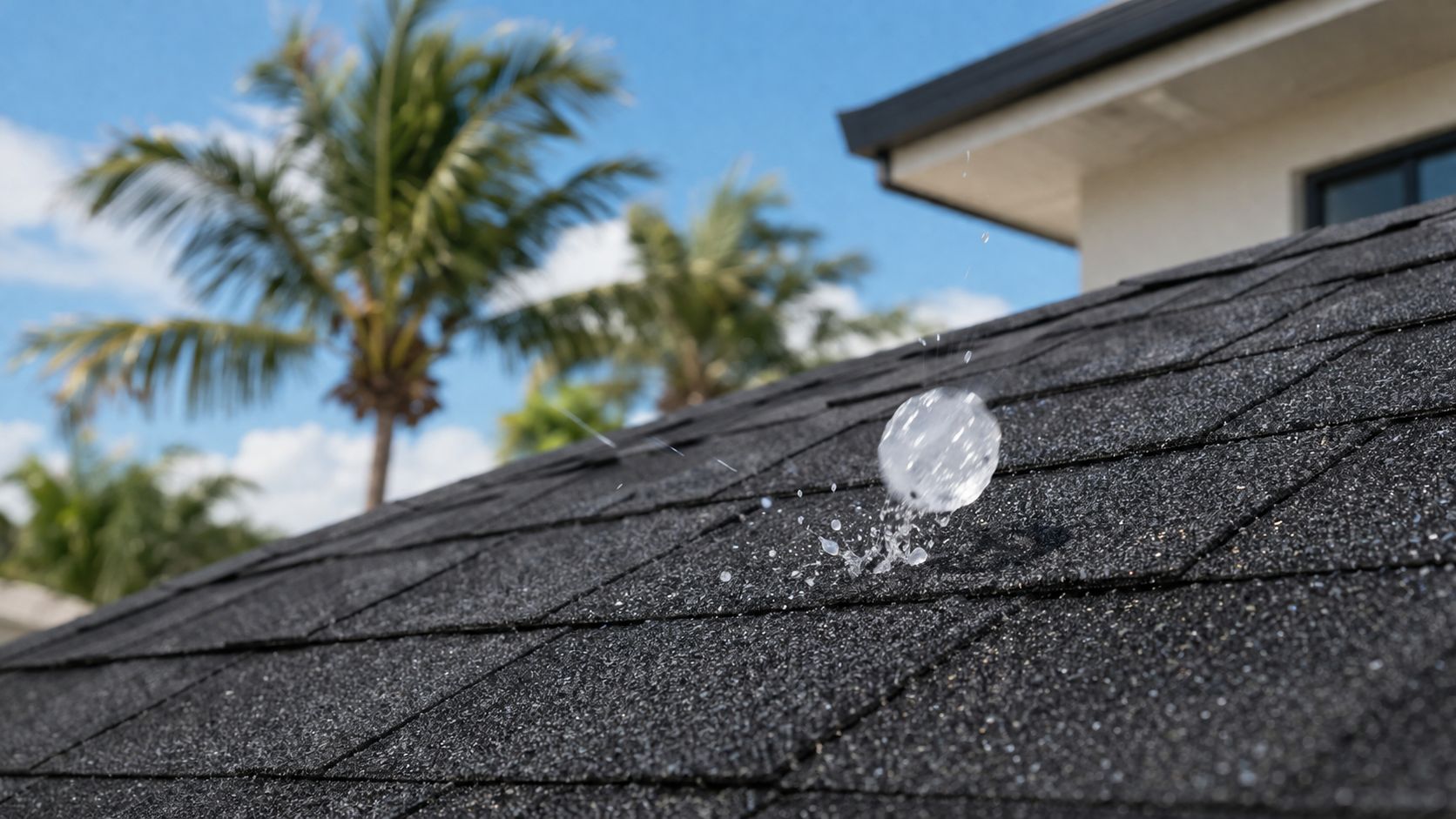
In 2024, Texas bought 43% of all Class 4 impact-resistant shingles sold in the United States, while Colorado and Missouri together accounted for just 10% combined, according to a market-trend report summarized in this industry video overview. That number matters even if you live in South Florida, because it shows how homeowners in high-risk weather zones treat roofing: not as a cosmetic upgrade, but as protection with financial consequences.
That same mindset applies here. In Broward, Miami-Dade, and Palm Beach counties, homeowners don't just worry about rain. They worry about flying debris, wind uplift, surprise hail, repeat repairs, and whether an insurance carrier will recognize a roof upgrade when premiums come due. A stronger shingle can affect all of that.
Impact resistant shingles sit right in the middle of that decision. They aren't magic, and they aren't cheap. But they can change the math on repairs, claims, storm resilience, and buyer confidence when it's time to sell. If you're trying to decide whether the upgrade makes sense for your home, the answer usually comes down to one question: will the added protection pay you back over time?
Table of Contents
- Introduction Why Your Roof Needs to Be Tougher in Florida
- What Are Impact Resistant Shingles
- The Science Behind a Stronger Shingle
- Performance Against Hurricanes and Hail
- The Financial Case for Impact Resistant Shingles
- Choosing a Contractor for Your Installation
- Homeowner FAQ and Quick Checklist
Introduction Why Your Roof Needs to Be Tougher in Florida
South Florida roofs live a harder life than most. They bake in heat, take long stretches of rain, and then get hit with sudden wind events that test every fastener, edge, and shingle tab on the house. If your roof system has one weak point, Florida weather tends to find it.
That's why homeowners here need to think beyond the cheapest replacement option. A roof isn't just the skin on top of the house. It protects insulation, drywall, framing, flooring, and the contents below. When it fails, the repair bill usually spreads far past the roof itself.
For many homeowners, a primary concern is insurance. You want a roof that gives your carrier fewer reasons to worry and gives you stronger documentation when you ask about credits, wind mitigation, or premium relief. That's where impact resistant shingles deserve a close look. They connect material science to dollars and cents in a way standard shingles often don't.
Practical rule: In South Florida, the best roofing choice usually isn't the one with the lowest initial price. It's the one that holds up better when wind, debris, and claim risk enter the picture.
There's also a resale angle. Buyers in storm-prone markets pay attention to roof age, roof type, and how well the home is prepared for harsh weather. A roof upgrade that signals durability can make a house easier to market because it reduces one of the biggest unknowns for the next owner.
If you're weighing options for a replacement, the useful question isn't “What's the cheapest shingle?” It's “What roof gives me the best protection for what I'll face here?”
What Are Impact Resistant Shingles
Impact resistant shingles are asphalt shingles made to absorb and withstand harder blows than standard shingles. For a South Florida homeowner, that matters for a simple reason. Storm damage is rarely just about rain. It often starts with something striking the roof first, such as wind-driven debris, a falling branch, or hail.
In roofing, “impact resistant” is not just a marketing phrase. It points to a tested performance standard.
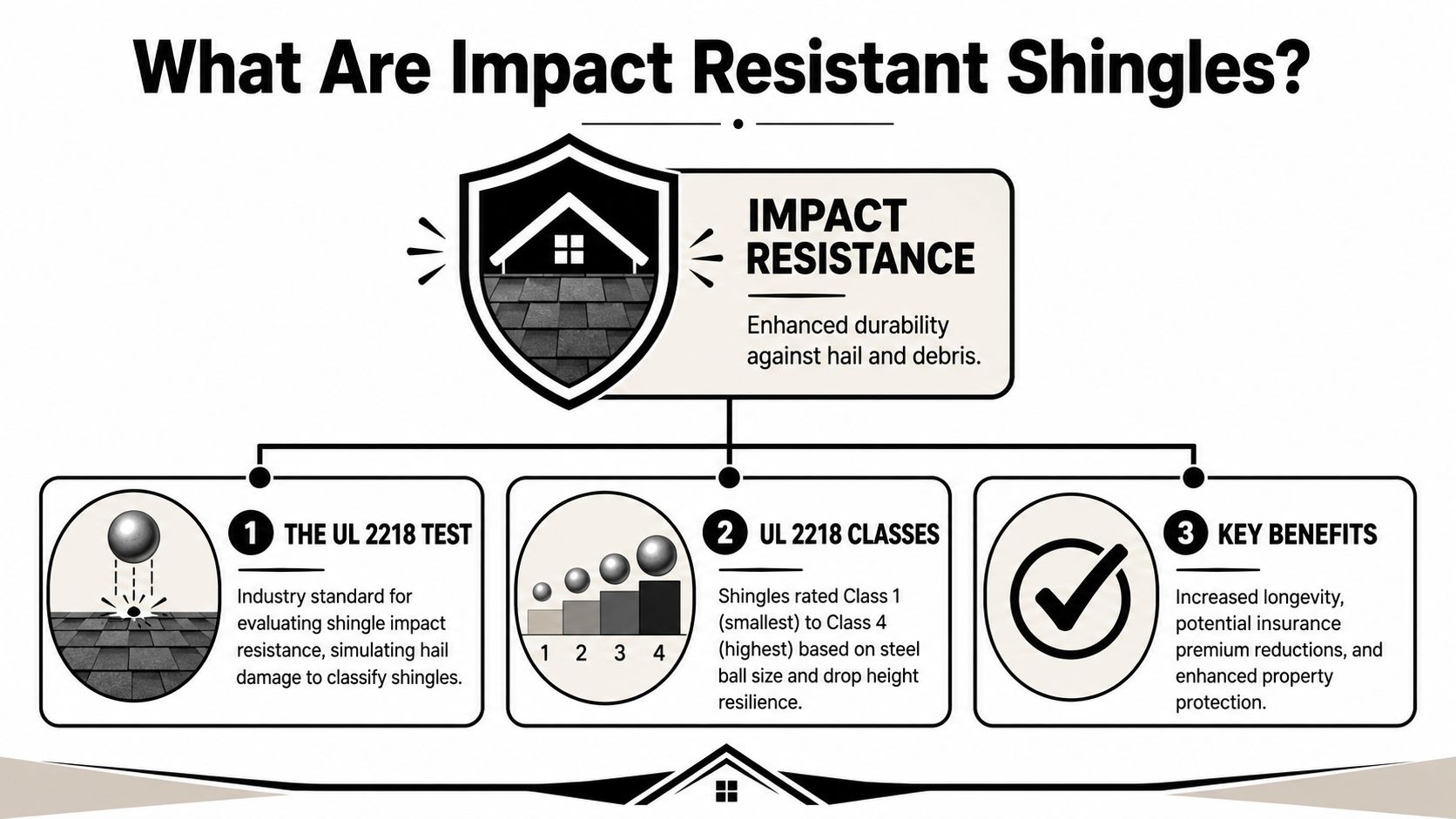
A top-performing product is usually identified by its Class 4 impact rating. According to IKO's explanation of the UL 2218 Class 4 standard, a shingle earns that highest rating by withstanding two impacts from a 2-inch (50.8 mm) steel ball dropped from 20 feet without cracking, tearing, or splitting. In plain language, the shingle has to stay structurally intact after a very tough repeat hit.
What the rating means in real life
Homeowners often hear “impact resistant” and assume it means the roof cannot be damaged. That is not what the label promises. The rating means the shingle held together under a controlled impact test that gives contractors, inspectors, and insurers a common benchmark.
The UL 2218 test functions as a pass-or-fail durability screen. Without that standard, one brand's idea of “tough” could be very different from another's. With it, you have a clearer way to compare products on estimates and product sheets.
That clarity matters in South Florida because the roof decision is also a money decision. If a shingle has a verified Class 4 rating, you have stronger documentation for insurance discussions, and you may reduce the chance that a debris strike turns into a repair bill, interior damage, or a claim.
How the class system works
The scale runs from Class 1 to Class 4. Class 4 is the highest level. Lower classes pass smaller impact tests, while Class 4 is reserved for products that survive the largest steel-ball test in the standard.
Here is the practical way to read it:
- Class 1 passed the lightest impact level.
- Class 2 handled a stronger hit than Class 1.
- Class 3 performed above that.
- Class 4 reached the highest rating in the system.
Some manufacturers and contractors use “impact resistant” for more than one rating level. Even so, Class 4 remains the rating many homeowners focus on when they want the strongest impact-related performance available in asphalt shingles, as noted by CertainTeed's overview of impact-resistant shingles.
A Class 4 label does not tell you everything about the full roof system, but it does tell you the shingle cleared the highest impact-resistance benchmark commonly used for residential asphalt roofing.
That is why this label carries weight beyond the roofing brochure. It helps you compare products more fairly, gives your contractor and inspector a shared reference point, and supports the financial side of the decision in a region where roof durability affects premiums, claims risk, and resale confidence.
The Science Behind a Stronger Shingle
The difference between a standard shingle and an impact resistant shingle usually starts in the asphalt itself. From the curb, the two can look nearly identical. Under a sharp hit from windblown debris, they do not respond the same way.
Why standard asphalt can fail
A basic asphalt shingle has limits. After years of sun, heat, rain, and daily expansion and contraction, it can lose flexibility. Then a branch, airborne debris, or hail strike hits concentrated on one small spot, and the shingle may crack, split, or shed granules.
A standard shingle behaves more like a rigid plastic phone case. It can look solid right up until a hard impact creates a fracture. On a roof, that matters because even a small break can shorten the shingle's service life and create a weak point that may later lead to repair costs.
Some damage is easy to miss from the ground.
That is one reason homeowners are surprised by storm-related roof bills. The roof may still look fine from the driveway, but the protective surface has taken a hit.
What SBS changes
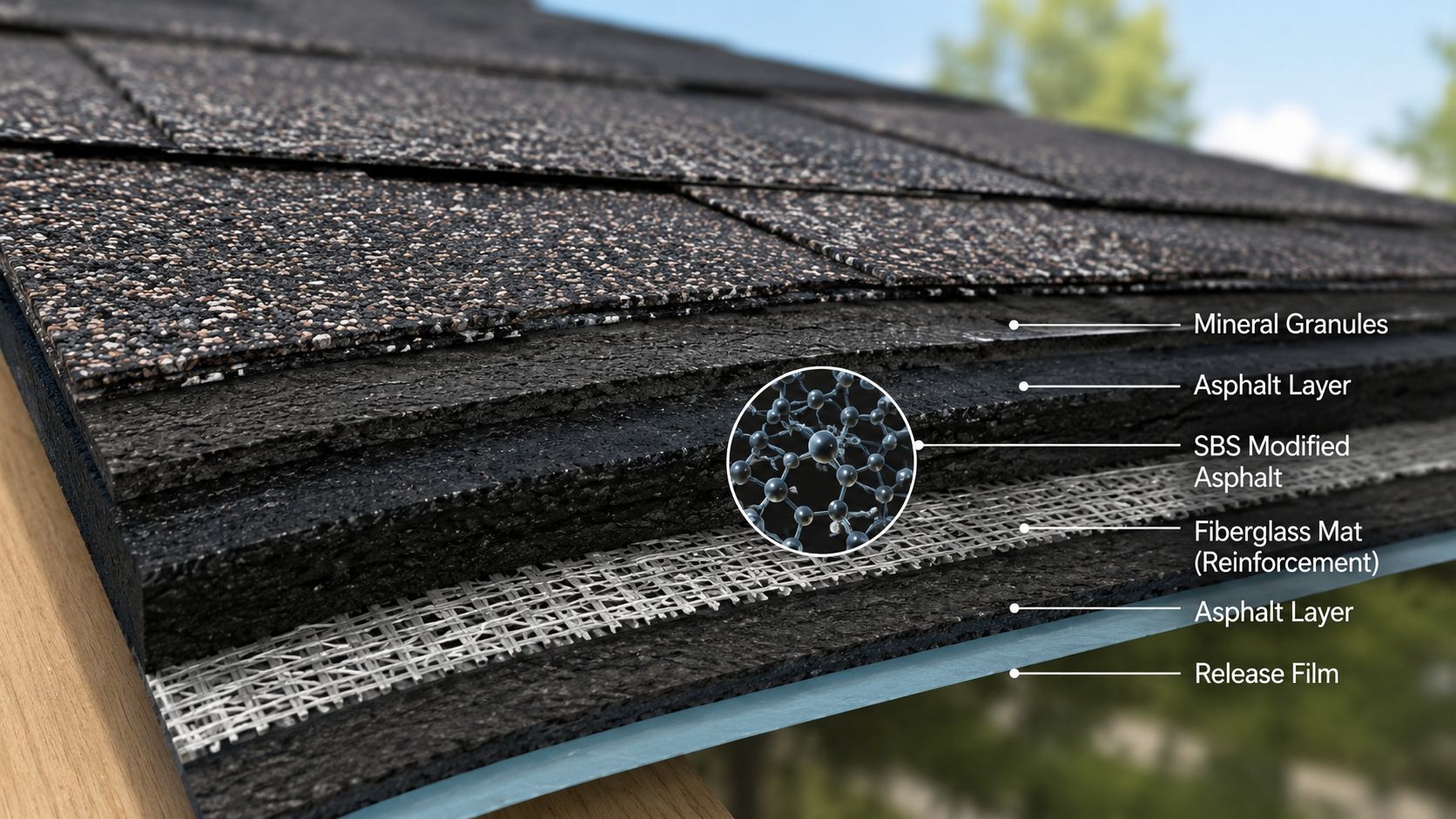
Many impact resistant shingles use polymer-modified asphalt, often SBS, which stands for styrene-butadiene-styrene. SBS changes how the shingle handles force. Instead of staying stiff and concentrating the blow in one brittle spot, the material can flex and spread that energy across a wider area.
That small material change has real consequences on a Florida roof. A shingle that bends and recovers better is less likely to suffer the kind of hidden bruising that turns into premature aging, isolated repairs, or an insurance claim after the next storm.
According to IBHS research on the relative impact resistance of asphalt shingles, impact-resistant architectural shingles showed a 25–80% improvement in passing rates across UL 2218 Class 1–4 steel ball impact tests compared with basic architectural shingles. IBHS also points to polymer-modified asphalt, often SBS, as a primary reason for that stronger performance.
Here is the plain-English version:
- More elasticity: SBS helps the shingle give under impact instead of cracking right away.
- Better cohesion: The asphalt is more likely to stay intact after the strike.
- Improved recovery: The shingle has a better chance of keeping its protective shape after the hit.
- Useful temperature range: IBHS notes that this rubber-based flexibility can help when conventional asphalt becomes more brittle in cooler conditions.
The strongest impact resistant shingles depend on controlled flexibility, not just extra thickness.
For South Florida homeowners, that science matters because roof decisions are rarely just about materials. They are about cost over time. If a shingle absorbs impact better, you lower the odds of paying for avoidable storm repairs, you improve your position in insurance conversations, and you protect resale value in a market where buyers pay attention to roof durability. In a high-risk region, the chemistry inside the shingle can affect the financial outcome outside the house.
Performance Against Hurricanes and Hail
South Florida roofs rarely fail from one clean, simple event. A storm usually brings wind uplift, flying debris, heavy rain, and sometimes hail in the same system. That matters because impact resistant shingles are built for the kind of damage that often starts small, then turns expensive.
A standard shingle can look fine from the street after a storm and still be bruised. The surface may lose granules. The asphalt layer can crack. A tab can crease from wind or a branch strike. Those hits do not always cause an immediate leak, but they can shorten the roof's usable life by creating weak spots where sun, rain, and the next storm do more harm.
Impact resistant shingles are made to absorb more of that punch before the surface breaks down. The easiest way to picture it is a car tire versus a dry cracker. One flexes under force. The other snaps. On a roof, that extra flex can mean the difference between a shingle that keeps protecting the house and one that starts aging fast after a single bad storm.
For South Florida homeowners, the hurricane question is really a system question. A tougher shingle can help the roof hold up better when debris hits during high winds, but wind performance also depends on how the whole roof is assembled. Nailing pattern, starter strips, ridge details, underlayment, flashing, and edge securement all matter. A strong shingle installed poorly is like a hurricane-rated window left half latched.
What these shingles do well
They help reduce common storm damage that often leads to repair bills later.
- They resist impact from hail and wind-driven debris better than standard shingles. That can mean fewer cracks, splits, and surface scars after a storm.
- They often come in product lines built for higher wind performance too. You still need to verify the manufacturer's wind rating for the exact shingle and installation method.
- They can leave you with fewer borderline damage calls after a storm. That matters in Florida, where even small roof problems can become expensive once water gets involved.
The practical benefit is not perfection. The practical benefit is fewer opportunities for storm damage to turn into interior damage, emergency tarp costs, deductible decisions, and early roof replacement conversations.
Where homeowners get confused
“Class 4” is an impact rating, not a promise that the roof cannot be damaged in a hurricane.
That misunderstanding causes a lot of frustration. Homeowners hear the rating and expect a storm-proof roof. What the rating really tells you is that the shingle performed better in a standardized impact test. Real storms are messier. Debris can hit at odd angles. Wind can lift edges. Rain can exploit a flashing mistake. If the roof deck is weak or the installer missed the nailing zone, the best shingle in the bundle cannot fix that.
Here is the field-tested view:
- A better shingle lowers risk. It does not remove risk.
- Installation quality still decides a lot. Fasteners, flashing, and edge details are part of storm performance.
- Your roof system is what the storm tests. The shingles, underlayment, deck, and ventilation work together.
That last point matters for the money side too. In South Florida, roof choices often affect both repair exposure and insurance conversations. If you are comparing roofing upgrades against your premium and deductible reality, it helps to understand windstorm insurance costs and requirements before you decide what level of protection makes financial sense for your home.
A tougher shingle is one layer of defense. In hurricane country, that layer can be worth real money, but it works best when the rest of the roof is built to the same standard.
The Financial Case for Impact Resistant Shingles
Roof replacement is one of the biggest checks a South Florida homeowner writes. That is why the critical question is not just, “What costs less today?” It is, “What costs less over 15 to 30 years when storms, insurance, and resale are part of the math?”
Impact resistant shingles can make financial sense because they change several parts of that equation at once. They may reduce repair frequency after hail or wind-driven debris strikes. They can improve your chances of getting an insurance credit, depending on the carrier and the policy. They can also make the home easier to market later, because buyers in this region pay close attention to roof age, storm readiness, and insurability.
The upfront price is higher. That part is real.
Class 4 products usually cost more than standard architectural shingles because they use modified asphalt and reinforcing materials designed to absorb hits better. A good way to picture the value is car insurance with a higher-rated safety feature. You pay more at purchase, but the goal is fewer expensive problems later.
For South Florida owners, the return usually comes from three buckets.
First, there is insurance. Some carriers recognize impact-resistant roofing and may offer a discount or a better underwriting conversation when the roof system is properly documented. The amount varies by company, home location, and policy details, so do not assume every insurer treats Class 4 the same way. Ask your agent what proof they need, whether the shingle rating matters on your specific policy, and how the credit compares with the upgrade cost. If you want context before that call, this guide to windstorm insurance costs and requirements explains why roof materials and documentation carry so much weight in Florida.
Second, there is damage avoidance. One avoided repair visit does not sound dramatic. A few avoided repairs over the life of the roof can add up fast, especially if they prevent underlayment exposure, ceiling stains, or deductible-driven claim decisions. In roofing, small failures rarely stay small once water gets involved.
Third, there is resale value and buyer confidence. South Florida buyers often ask about the roof early because they know insurance can shape the whole deal. A newer impact-resistant roof does not guarantee a higher sale price dollar for dollar, but it can reduce buyer hesitation. That matters in a market where people are already worried about premiums and storm exposure.
Documentation matters here too. A clean proposal, product specs, permit record, and inspection photos give you something concrete to show an insurer or future buyer. Even a simple file of roof inspection documentation and roofing company records can support the financial case for the upgrade later.

Bottom line: Impact resistant shingles rarely pay for themselves through one dramatic savings event. They tend to pay back through a steadier pattern of lower repair exposure, possible insurance savings, and stronger resale confidence.
Standard vs Class 4 at a glance
| Feature | Standard Architectural Shingles | Class 4 Impact Resistant Shingles |
|---|---|---|
| Initial cost | Lower upfront cost | Higher upfront cost due to upgraded impact-resistant materials |
| Impact performance | More likely to crack or lose granules after hard strikes | Better able to absorb impact and resist common strike damage |
| Storm-related repair risk | Higher chance of post-storm maintenance and spot repairs | Lower chance of routine impact-related repairs |
| Insurance potential | Fewer opportunities tied to impact ratings | May qualify for discounts if your carrier recognizes Class 4 roofing |
| Buyer perception | Standard replacement option | Often seen as a premium storm-prepared upgrade |
| South Florida fit | Works for budget-focused replacements | Better fit for owners comparing long-term cost, insurance, and resilience |
For many homeowners, standard shingles lower the invoice today. Impact resistant shingles can lower the total cost of ownership over time. In South Florida, that is often the comparison that matters most.
Choosing a Contractor for Your Installation
A premium shingle only performs like a premium shingle when the crew installs it correctly. That's not a small detail. It's the difference between a roof that earns its reputation and one that becomes an expensive disappointment.
The checklist that matters
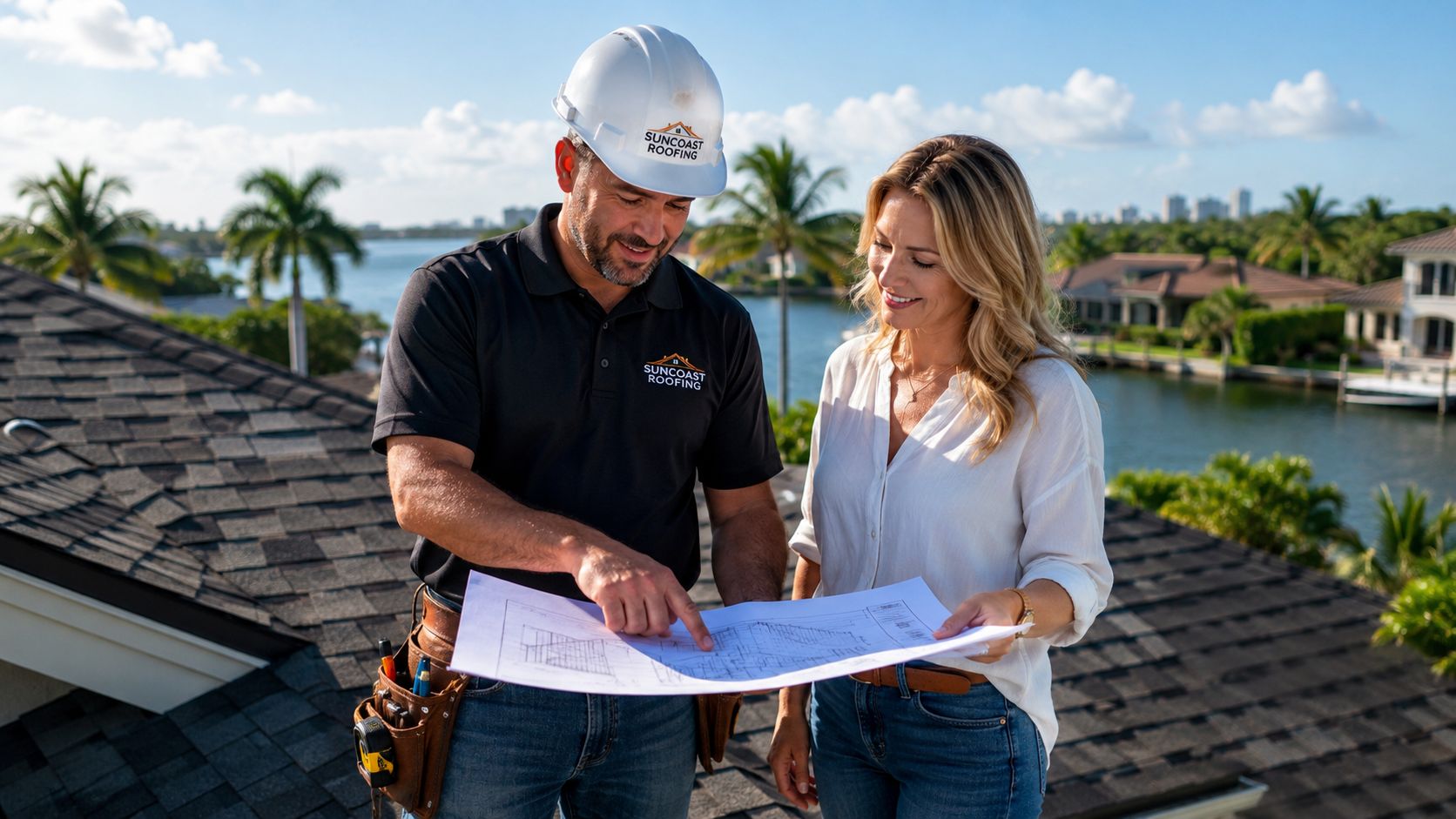
South Florida homeowners should screen roofers with a short list of essential requirements. Start with legal and practical basics. A contractor should be properly licensed, properly insured, and able to explain local code requirements in plain language.
The company's longevity matters too. Roofing isn't just about who can install today. It's also about who will still answer the phone if a warranty issue or storm repair question comes up later. A firm with a long operating history gives homeowners more confidence than one that appeared after the last big storm.
Use this checklist when you compare proposals:
- Verify licensing and insurance: Ask for documentation, not just verbal reassurance.
- Insist on a full inspection: The contractor should inspect decking condition, flashing areas, ventilation, penetrations, and problem transitions.
- Review the written quote carefully: You want material names, scope of tear-off, underlayment details, flashing scope, cleanup terms, and warranty language in writing.
- Ask about emergency response: In South Florida, post-storm service matters. A contractor should tell you what happens if your roof suffers sudden damage after installation.
- Confirm product familiarity: The crew should be comfortable installing impact resistant shingles, not learning on your house.
A visual identity or branded documentation can help you verify who you're dealing with. Homeowners sometimes even compare paperwork and branding assets, such as this Paletz Roofing and Inspections company logo file, with proposals and inspection materials to confirm consistency.
Questions worth asking before you sign
Don't stop at “How much?” Ask questions that reveal how the company thinks.
For example:
How will you document the existing roof condition?
Good contractors take photos and explain what they found.What installation details protect performance in high-wind areas?
You want a specific answer, not a vague promise.How do you handle flashing transitions and penetrations?
Leaks often start at details, not in the middle of the field shingles.What paperwork should I keep for my insurance carrier?
Organized contractors distinguish themselves. They know homeowners may need product details and completion records later.
A careful contractor doesn't rush your questions. They answer them clearly because they've solved the same problems many times before.
One more point that homeowners often miss: the cheapest bid can be expensive later. If a contractor cuts corners on underlayment, flashing reuse, cleanup, or fastening patterns, the roof may still look fine on day one. A significant test comes during the first serious storm.
Homeowner FAQ and Quick Checklist
A roof decision in South Florida is rarely just about shingles. It is a math problem. Homeowners usually want to know whether the added upfront cost can come back through fewer storm repairs, possible insurance savings, and better resale appeal in a region where buyers pay attention to roof age and storm protection.
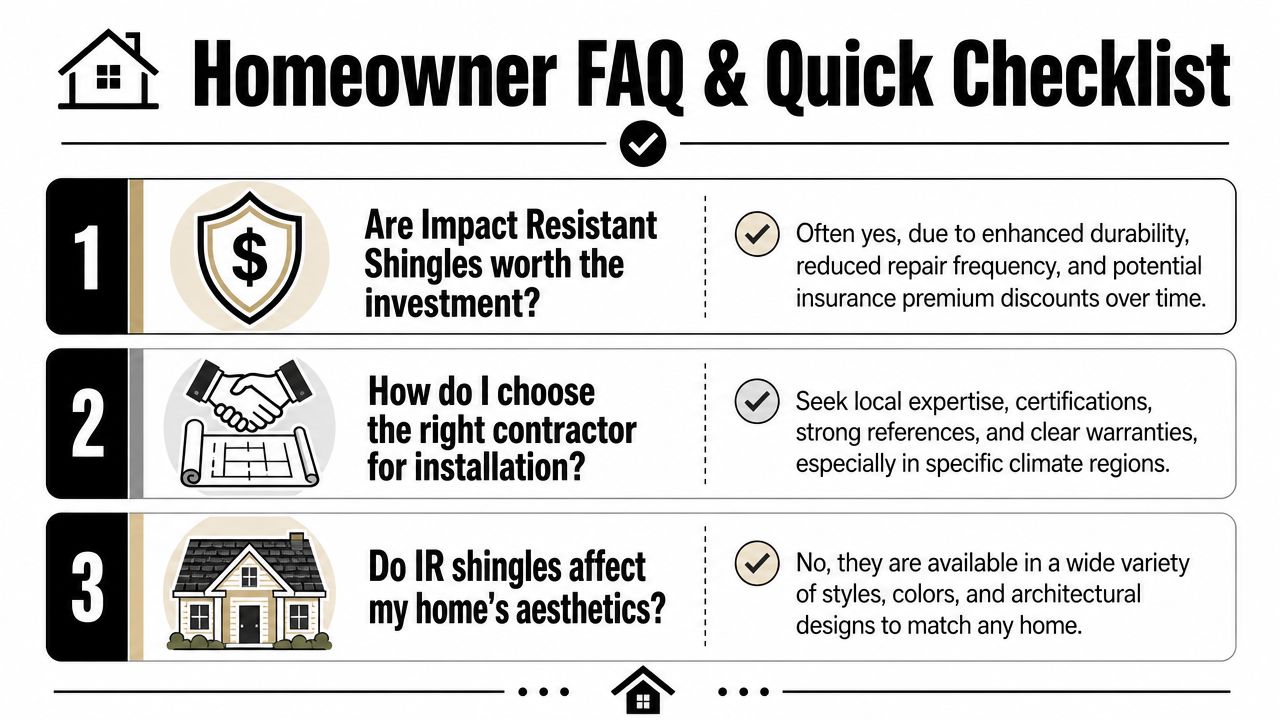
Common questions
Are impact resistant shingles hail-proof?
No roof is damage-proof. Impact resistant shingles are built to absorb and spread out force better than standard shingles, much like a tougher phone case helps the phone survive a drop without promising perfect protection. The practical benefit is lower odds of bruising, cracking, and granule loss from smaller impacts. You are buying a wider margin of protection, not a guarantee.
Are they worth the extra money in South Florida?
For many homeowners, yes, especially if you plan to stay in the house for several years. The value usually comes from three places working together. First, the roof may hold up better when wind-driven debris or hail hits. Second, some insurers may offer a discount if the product and installation meet their requirements. Third, a newer, tougher roof can be a selling point when buyers are comparing homes in a hurricane-prone area.
That is the South Florida equation. If the upgrade cost is reasonable and you can document the product for your carrier, the numbers can make sense beyond simple curb appeal.
Do they need special maintenance?
They need regular roof care, not exotic care. Keep valleys and gutters clear, trim branches that can scrape or fall, and have the roof checked after a major storm. Small damage is cheaper to fix when you catch it early.
How do I ask my insurance agent the right questions?
Keep the conversation specific. Ask whether your policy recognizes Class 4 impact resistant shingles, what proof they require, whether the discount applies before or after installation, and whether the credit stays in place for the life of the roof or must be reviewed at renewal.
Ask your insurance agent for the exact paperwork they want before installation, then keep copies with your contract and final invoice.
Quick checklist before you buy
Use this short list before you sign:
- Confirm the rating. Verify that the exact shingle product is listed as Class 4 if that is the protection level you want.
- Ask for the full roof system. A stronger shingle still depends on proper underlayment, flashing, ventilation, and fastening.
- Check the insurance side early. Get written guidance from your carrier on what qualifies for any premium discount.
- Compare cost against ownership time. The longer you expect to stay, the more time you have to recover the upgrade cost through durability and possible insurance savings.
- Save every record. Keep the contract, product data, permit paperwork, inspection records, and paid invoice together.
Good decisions get easier once you separate the sales pitch from the actual return. Impact resistant shingles make the most sense for South Florida homeowners who want a roof that gives them a better chance in storm season and a better financial position over time.
If you want a professional opinion on whether impact resistant shingles make financial sense for your home, Paletz Roofing and Inspections can help you review your roof condition, explain your material options, and provide a clear estimate for replacement or upgrade work in Broward, Miami-Dade, and Palm Beach counties.