A lot of Boynton Beach homeowners start this process the same way. A ceiling stain shows up after a hard rain, a few shingles land in the yard, or a leak appears right when you thought the storm had passed. At that point, you’re not just thinking about roofing materials. You’re thinking about timing, insurance, cash flow, permits, and whether the next storm hits before the work gets done.
That’s the part most articles skip. They’ll tell you the difference between shingle and tile, but they won’t spend much time on the gap between a damaged roof and a finished replacement. Yet that’s exactly where most of the stress lives. One Boynton Beach roofing guide points out that there’s minimal coverage of the intersection between insurance claims, roof replacement timelines, and financing options for homeowners facing out-of-pocket costs on projects costing $8,000-$16,500 in Boynton Beach (Boynton Beach Roofing Experts).
In South Florida, a roof replacement isn’t just a construction project. It’s a risk-management decision. It affects how your home handles wind-driven rain, how your claim moves with the carrier, and how much of the cost lands on you instead of insurance.
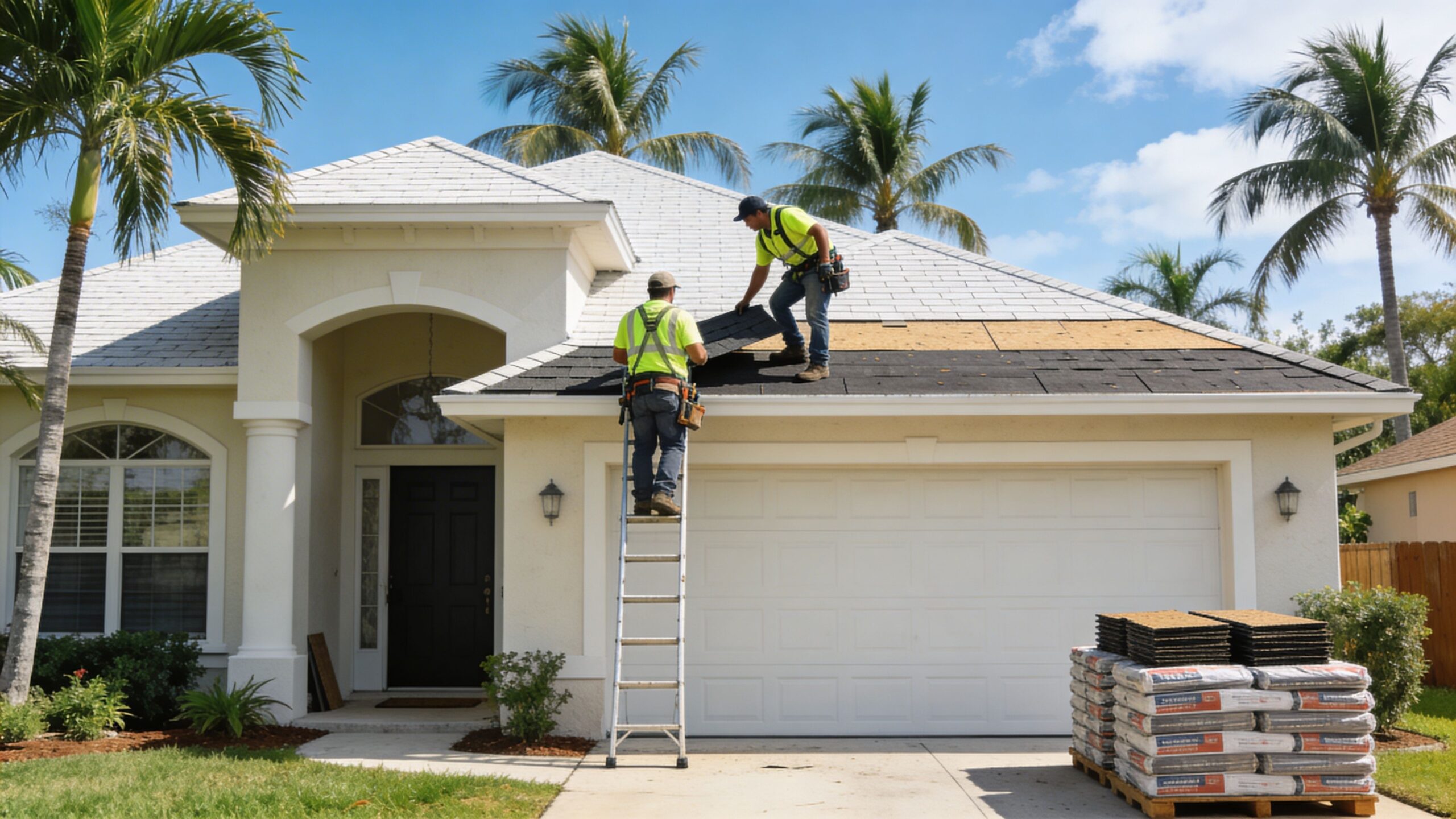
If you want a quick visual reference for what a full reroof looks like in the field, this Boynton Beach project image is useful: roof replacement project example.
Your Guide to Roof Replacement in Boynton Beach
The biggest mistake homeowners make is waiting for certainty. They want one obvious sign that says, yes, it’s time. Roofs usually don’t fail that neatly in Boynton Beach.
Sun, humidity, salt air, and storm exposure wear a roof system down in layers. You might first notice a small leak around a vent. Then a repair call. Then another. Then you learn the issue isn’t just the visible surface. It’s the underlayment, the flashing, the attachment, or the wood deck below.
That’s why roof replacement Boynton Beach decisions need to be made with both the physical roof and the financial timeline in mind. If a storm caused the damage, insurance documentation matters right away. If the roof is old, you may need to budget for the project yourself or bridge the gap between estimate, claim response, and installation.
Practical rule: If the inside of the house is already showing signs, assume the roof problem started earlier than you think.
The right approach is straightforward. Confirm whether you’re dealing with isolated damage or system-wide failure. Pick a material that makes sense for your house and your budget. Make sure the replacement method meets South Florida code expectations. Then hire a contractor who can document the job properly from tear-off to final inspection.
Boynton Beach homeowners also deal with a local reality that matters more than brochure language. Roof work often moves fast after storms, but claims and scheduling don’t always move together. If you understand that early, you make better decisions and avoid rushed contracts.
Decoding the Signs You Need a New Roof
You usually find out at the worst time. A hard afternoon storm rolls through Boynton Beach, water shows up on a ceiling that looked fine yesterday, and now you are trying to decide whether you need a repair, a full replacement, or documentation for an insurance claim.
Most homeowners should stay off the roof. A careful check from the ground, inside the attic, and around the ceilings will tell you a lot before a contractor ever gets there.

In Boynton Beach, age matters, but age by itself is not the whole call. A roof that has handled years of heat, wind, salt exposure, and repairs often starts failing in several places at once. That is the point where another patch can cost you money without buying much time.
What to look for from the ground
Walk the property slowly and look at the whole roof system, not just the spot above the leak.
Watch for:
- Shingle distortion: curling, buckling, bald spots, or sections that no longer sit flat
- Tile damage: cracked, slipped, chipped, or missing tiles, especially after a wind event
- Uneven appearance: repaired patches, mismatched color, or sections aging faster than the rest
- Material shedding: granules in gutters, tile fragments near downspouts, or metal pieces on the ground
- Perimeter trouble: lifted edges, loose fascia, displaced flashing, or sagging lines along the roof plane
One damaged area can still be a repair job. Wear showing up on multiple slopes usually means the roof is nearing the end of its useful life as a system.
What to check inside the house
Interior signs often show up after the roof has been deteriorating for a while.
Look for:
- Ceiling stains: yellow or brown marks that grow after heavy rain
- Attic moisture: damp insulation, dark wood, moldy smell, or rust on fasteners
- Repeat leak locations: the same vent, valley, wall intersection, or chimney area leaking again
- Wall and drywall damage: bubbling paint, soft spots, peeling texture, or trim swelling near exterior walls
A single leak around one penetration does not always justify replacement. Leaks in different rooms, or the same leak returning after past repairs, usually point to broader failure in the underlayment, flashing, or attachment points.
If you have paid for several repairs in the last few years and still keep setting out buckets, you are no longer solving isolated problems. You are financing a roof that is wearing out.
Signs that push the decision toward replacement
Some conditions make a repair hard to justify financially or practically.
Replacement becomes the stronger option when you see:
- Wear across large sections of the roof, not just one trouble spot
- Wind damage in more than one area, including lifted shingles or displaced tiles
- Soft decking or signs of trapped moisture below the visible surface
- An older roof with a growing repair history
- A home sale, policy renewal, or claim dispute where patchwork will not satisfy the buyer, insurer, or inspector
That last point matters in Boynton Beach. Homeowners often focus on stopping the leak, but the bigger issue is whether the roof will clear inspection, stay insurable, or justify the cost of another repair cycle.
A safe self-check before you call a roofer
A little preparation helps you get a better inspection and cleaner paperwork if storm damage is involved.
- Take photos from the ground: each slope, valleys, vents, edges, and anything on the ground that came off the roof
- Write down dates: when you first noticed the leak, when the storm hit, and whether the damage got worse
- Check the attic after rain: use a flashlight and stay on framing only
- Mark interior leak points: note which room, which wall, and how far the stain is from windows or vents
That record helps the contractor trace the source faster. It also helps if you need to show an adjuster that the problem lines up with a specific storm event instead of long-term neglect.
Choosing the Best Roofing Material for Your Florida Home
You find out the roof needs replacing, call your insurance carrier, and then hit the next problem fast. The policy payout may not cover an upgrade, the HOA may limit what you can install, and the material you want may not match the framing you have. In Boynton Beach, roof selection is part weather decision, part budget decision, and part construction decision.

Start with the house itself. Roof pitch, structural load, attic ventilation, neighborhood requirements, and storm exposure all matter. Then look at the money side. A lower upfront price can still cost more over time if the material ages faster in salt air, high heat, and repeated wind events.
Asphalt shingles
Shingles are the usual choice when cost control matters most and the home was built around a lighter roofing system. They are familiar, easier to source, and usually simpler to replace than tile.
That does not make them the automatic answer.
In Boynton Beach, shingles take more abuse from sun and storm cycles than they would in a milder climate. A good architectural shingle system can still be the right call for a homeowner who plans to stay put for a moderate term, wants a clean resale appearance, and needs to keep more cash available for windows, HVAC, or interior repairs after a storm.
Shingles usually make sense when:
- Upfront cost is the main constraint
- The structure is not set up for heavier materials
- You want a common system with broad contractor availability
- The home does not need a premium architectural match
The trade-off is service life and storm wear. If you go this route, focus less on brand slogans and more on fastening pattern, underlayment, flashing work, and whether the installer is using the right tools, including a properly set pneumatic coil roofing nailer.
Tile roofing
Tile is common across Boynton Beach for a reason. It fits the local look, holds up well over time, and can make financial sense for owners who expect to keep the home for many years.
It also brings real costs beyond the material invoice. Tile is heavier. Some homes can handle it as-is, some need engineering review, and some become expensive quickly once structural changes enter the conversation. Repairs can also be slower because the visible tile is only part of the system. Underlayment, flashing, and attachment details decide whether the roof stays dry.
Tile tends to be a strong fit when:
- You are replacing an existing tile roof
- The home design looks right with tile
- You expect to own the property long term
- You are prepared for a higher initial spend and more specialized labor
Clay and concrete both show up throughout South Florida. The right choice usually comes down to weight, profile, color match, and budget, not just lifespan on paper.
Metal roofing
Metal works well for homeowners who want a lighter system than tile and a longer-term option than standard shingles. In coastal South Florida, that can be a smart middle path.
A well-installed metal roof sheds water fast, handles wind well when the attachment and edge details are right, and gives a clean look that fits some homes better than others. The caution is installer skill. I have seen metal jobs look sharp from the street and still have bad transitions at penetrations, valleys, and wall flashings. That is where the leaks start.
Metal is often a good choice when:
- You want strong wind performance without tile weight
- You plan to stay long enough to justify the higher initial cost
- The home style works with the panel profile
- You want a system with relatively straightforward maintenance
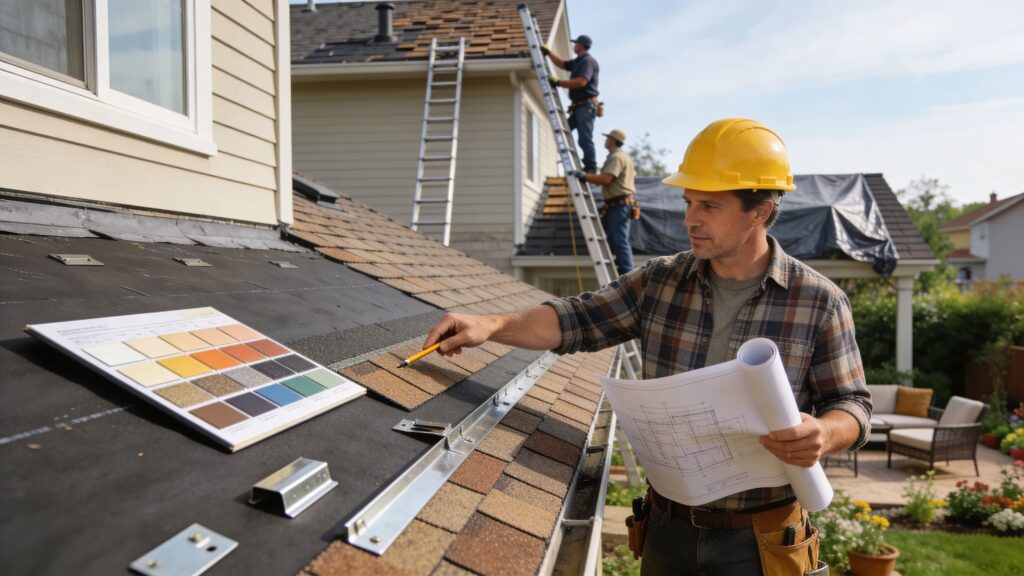
For a visual example of an active South Florida reroof setup, see this Boynton Beach reroof work in progress.
Flat and low-slope systems
Additions, lanais, porches, and some mixed-design homes in Boynton Beach often include low-slope sections. Those areas need a roofing system made for low pitch.
The main issue is water management. If drainage is poor or the membrane and flashing details are sloppy, those sections become repeat leak zones. Homeowners often spend years patching the same area because the wrong material was used or the transition from the main roof was handled badly.
Use a system designed for low-slope conditions on those sections. Trying to force a steep-slope product into that application usually creates expensive callbacks.
Boynton Beach Roofing Material Comparison (2026)
| Material | Estimated Cost per Sq. Ft. | Lifespan in FL Climate | Hurricane Resistance | Pros | Cons |
|---|---|---|---|---|---|
| Asphalt shingles | Lower than tile or many metal systems in typical local replacements | Shorter than tile and often shorter than metal | Good when properly installed | Lower upfront cost, familiar appearance, easier replacement path | Shorter lifespan, more exposed to aging from heat and storms |
| Clay tile | Higher-cost category | Long service life | Strong when system and attachment are correct | Long lifespan, classic Florida appearance, durable | Higher cost, heavier system, more specialized installation |
| Concrete tile | Higher than shingles, often below clay tile | Long service life | Strong when system and attachment are correct | Durable, common in South Florida, fits many home styles | Heavy system, repairs can be more involved |
| Metal roofing | Mid-to-upper price range depending on profile and finish | Often longer than shingles | Strong when detailed correctly | Long service life, lighter than tile, modern look | Higher upfront cost than shingles, depends heavily on installer skill |
| Flat roofing systems | Varies by system | Varies by system | Depends on slope, attachment, and detailing | Built for low-slope sections where pitched materials are unsuitable | Leak-prone if drainage and flashing are handled poorly |
How to choose without overcomplicating it
Three questions usually settle it.
How long will you keep the property? A shorter ownership window often points to shingles. A long-term plan can justify tile or metal.
What can the house support?** Style matters, but structure matters more. Weight, slope, and roof design narrow the options fast.
What will this choice do to your total project cost? Insurance may pay to restore what was there, not upgrade to a premium system. Any difference usually comes out of pocket.
That last point gets missed all the time. The best material is not the most expensive one. It is the one that fits the house, meets code, holds up in Boynton Beach weather, and makes sense for the way you are paying for the job.
The Roof Replacement Process From Start to Finish
A clean roof replacement job looks organized from day one. A sloppy one shows up immediately. The driveway is chaotic, the tear-off gets rushed, details get skipped, and homeowners don’t know what anyone is doing.

In Boynton Beach, a compliant replacement starts with full access, property protection, and a real tear-off. A compliant roof replacement in Boynton Beach follows a rigorous methodology, starting with a complete tear-off, as 20-30% of decks require re-nailing. The installation of a high-quality, waterproof underlayment is critical, as inadequate barriers lead to 40% of post-installation leaks. Finally, using wind-resistant fastening and securing materials from the eaves upward is essential for HVHZ compliance (Sea Breeze Roofing).
For a photo example of what an active reroof setup can look like, see this project image: Boynton Beach reroof work in progress.
Prep and tear-off
The crew should protect landscaping, set the dumpster placement, and make clear where vehicles should and shouldn’t park.
Then comes the tear-off. That means removing the existing roofing so the deck can be inspected properly. If someone proposes installing over old material where that isn’t appropriate, that’s a warning sign.
Noise is part of the job. So is debris control. Homeowners should expect both, but they should also expect discipline.
Deck inspection and fastening
Once the roof is open, the deck tells the truth.
Hidden problems appear. Soft wood, previous patchwork, water damage around penetrations, and fastening issues are common findings. Re-nailing is not a cosmetic step. It’s structural preparation for the new roof system.
Some crews still treat this like an inconvenience. It isn’t. It’s one of the most important stages in the whole project.
A roof that looks good on top can still fail early if the deck below wasn’t corrected first.
On the tool side, fastening quality matters. If you want to understand the kind of equipment crews use for roof attachment, a pneumatic coil roofing nailer is a good example of the category used on many roofing jobs. The tool itself doesn’t guarantee quality, of course. The installer’s pattern, pressure control, and consistency matter more.
Underlayment and weatherproofing details
In South Florida, underlayment is where a lot of real protection lives.
Homeowners often focus only on the visible roof covering. The better question is what’s underneath it and how the crew sealed penetrations, valleys, edges, and transitions.
Pay attention to:
- Underlayment coverage: it should be laid cleanly, without careless wrinkles or exposed areas
- Flashing work: around walls, chimneys, pipes, and transitions
- Edge treatment: drip edges and perimeter details matter in wind-driven rain
- Penetration sealing: vents and mounts need proper integration, not caulk-heavy shortcuts
Installing the new roof system
This phase looks different depending on whether the roof is shingle, tile, metal, or flat, but the pattern is the same. The crew starts at the lower sections and works upward with the proper fastening method for the system.
This is also where contractor quality becomes visible to an experienced eye. Clean layout, consistent lines, and attention at transitions usually signal a disciplined operation. Sloppy cuts and improvised details usually signal future service calls.
Paletz Roofing and Inspections is one local option that handles reroofing work across Palm Beach County, including shingle, tile, metal, and flat systems, which matters when a property has more than one roof type or complex transitions.
Final inspection and cleanup
A professional finish isn’t just the roof surface. It includes photos, cleanup, and clear closeout.
Look for:
- Magnet sweep and debris pickup around the property
- Final walkthrough so visible concerns can be addressed immediately
- Documentation of key phases, especially hidden work
- Permit closeout clarity so you know where the job stands
You don’t need to stand over the crew all day. But you should understand what good work looks like, and you should expect proof of it.
Budgeting for Your New Roof and Navigating Insurance
The number on the estimate matters, but the line items matter just as much. Two bids can look close at first glance and still be built very differently.

For a baseline, the average cost for a shingle roof replacement on a 1,282 sq. ft. roof in Boynton Beach ranges from $5,903 to $7,502, with materials at $4,732-$5,544, labor at $862-$1,596, supplies at $257-$279, and total project costs for standard homes typically falling between $6,475 and $8,229 in 2026 estimates (Homeyou Boynton Beach roof replacement costs).
What drives the quote
Roof replacement pricing changes based on the roof shape, material, access, slope, and what the crew finds after tear-off.
A useful estimate should separate major categories, such as:
- Roofing material: shingles, tile, metal panels, or flat system components
- Labor: installation crew time and complexity
- Supplies: underlayment, flashing, fasteners, accessories
- Removal and disposal: tear-off and dumpster handling
- Deck correction: if damaged or non-compliant sections are found
- Permit-related costs: where applicable through the normal local process
If a quote feels vague, it probably is. Homeowners should be able to tell what they’re paying for and what isn’t included.
Insurance after a storm
Many projects often become complicated.
If your roof was damaged by a storm event, don’t wait weeks to gather documentation. Take photos from the ground, photograph interior leaks and stains, note the date the issue appeared, and keep records of any temporary mitigation.
Then report the claim and schedule the roof inspection. The contractor’s documentation can help show the scope of visible damage, but the carrier still makes its own determination.
Don’t let the roof replacement schedule outrun the paperwork. Once materials are removed, some claim discussions get harder.
Many homeowners also need a better basic understanding of policy language. If you’re sorting through what a carrier may or may not pay after a leak, this overview of home insurance policies and water damage coverage is a useful starting point for the insurance side of the conversation.
Handling the out-of-pocket gap
Even when insurance participates, homeowners often still face deductibles, exclusions, depreciation issues, or scope differences.
That means you may need to plan for:
- Immediate mitigation costs
- Deductible responsibility
- Upgrades not covered by the claim
- Differences between insurance scope and contractor scope
- Timing gaps between claim progress and installation deposits
This is the piece many Boynton Beach homeowners discover late. The roof needs to move faster than the claim, but the money doesn’t always move at the same pace.
How to stay in control financially
Ask for an itemized proposal. Keep every photo and email. If the claim is active, make sure the contractor knows that before the project starts.
Above all, don’t choose a bid just because the total is lower. A cheaper proposal that leaves out deck work, underlayment quality, or key flashing details often becomes the more expensive job later.
How to Hire the Right Boynton Beach Roofing Contractor
If you remember one thing, remember this. The contractor matters more than the material.
One verified benchmark on installation quality makes that clear. Proper installation methodology boosts a roof's success to 92% leak-free after 10 years, compared to 65% for subpar installs. Key indicators include mandatory deck re-nailing to code, proper ventilation, and photo documentation. Overlaying old layers can void warranties and carries a 50% higher leak risk (SK Quality Roofing installation guide).
That gap is huge in practice. Homeowners often compare colors and price, when they should be comparing process, documentation, and accountability.
Non-negotiables before you sign
A contractor should be able to answer direct questions without dancing around them.
Ask for:
- Florida licensing information: you want a roofer working legally in this state
- Proof of insurance: both liability and workers’ compensation matter
- A written scope: not a handshake summary
- Material details: what system, what components, what attachment method
- Photo documentation expectations: especially for deck and hidden work
- Permit clarity: who is pulling it and who is closing it out
If you want to confirm the company identity you’re dealing with, this Paletz Roofing and Inspections company mark is one example of the local branding homeowners may see on proposals and trucks.

Questions that expose weak contractors fast
Don’t ask generic questions. Ask process questions.
Try these:
- Will you do a full tear-off where required, or are you proposing an overlay?
- How do you handle deck issues discovered after removal?
- What underlayment are you installing, and how do you detail penetrations?
- Will I receive jobsite photos of the hidden stages?
- Who supervises the crew each day?
A good roofer won’t be annoyed by those questions. They’ll expect them.
Red flags that should stop the conversation
Some warning signs are obvious. Others show up in the paperwork.
Walk away if you see:
- Vague estimates: no clear scope, no component detail
- Pressure tactics: “sign today” language after a storm
- Large unexplained upfront demands: especially before materials or permits are clearly addressed
- Verbal promises only: warranties or scope changes not put in writing
- No discussion of ventilation, deck condition, or flashing: that usually means they’re selling the visible surface only
Hiring the right contractor isn’t about finding the smoothest salesperson. It’s about finding the crew that can prove what they do before the roof is covered up.
What strong contractors usually do differently
They inspect thoroughly. They explain trade-offs instead of pushing one system on every house. They document hidden work. They don’t act surprised when you ask about code, fastening, or insurance timing.
That’s what protects you. Not the brochure. Not the pitch. The process.
Protecting Your Home With a Professional Roof Replacement
A roof replacement in Boynton Beach is never just about swapping old material for new. You’re making several decisions at once. Is the roof at its end, or still repairable? Which material fits your house and your budget? Is the installation method strong enough for South Florida conditions? Is the contractor documenting the work well enough to protect you later?
Homeowners who handle this well usually do two things right. They act before a small problem becomes interior damage, and they slow down enough to verify the scope, the installer, and the financial plan.
That matters in this market. Storm exposure, aging roofs, insurance friction, and local code expectations all meet in the same project. If you treat roof replacement Boynton Beach as a simple price-shopping exercise, you can end up with the wrong system or the wrong installer. If you treat it like a full property-protection decision, the choices get clearer.
A professional replacement should leave you with more than a nicer-looking roof. It should leave you with confidence in the deck, the underlayment, the attachment, the paperwork, and the people who did the work.
If you need a clear answer on whether your roof should be repaired or replaced, contact Paletz Roofing and Inspections for a free, no-obligation inspection and quote. They handle residential and commercial reroofing across South Florida and can help you evaluate the roof condition, replacement options, and the practical next steps after storm damage or age-related wear.