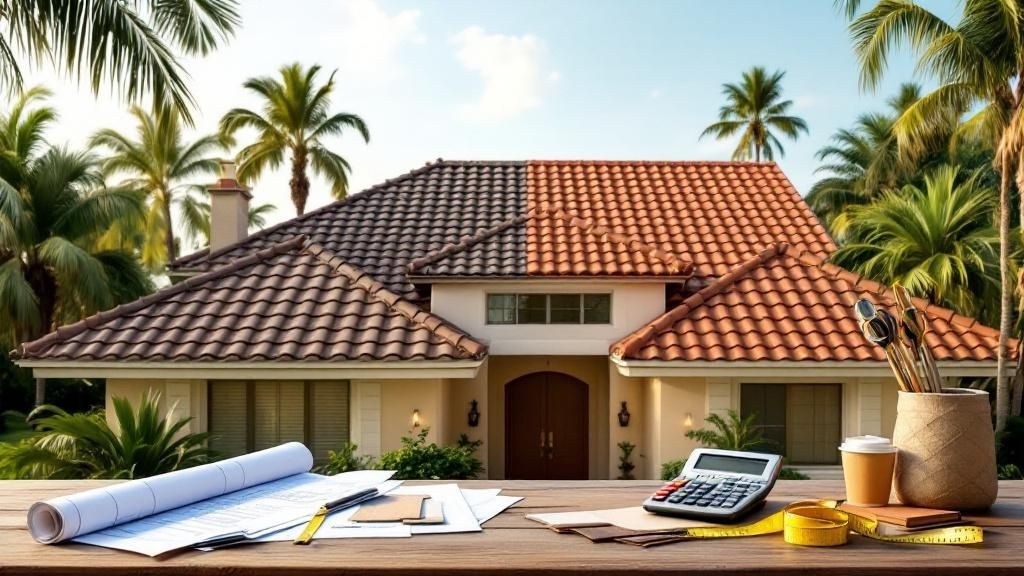
When you're looking at a complete roof replacement in Coral Gables, you can generally expect the cost to fall somewhere between $15,000 and $35,000 for a typical home. The final number really depends on the materials you pick and just how complex your roof is. This price tag is often a bit higher than the statewide average, and that's thanks to our area's strict building codes and local labor rates.
Understanding the Average Cost of a New Roof in Coral Gables
A new roof is easily one of the biggest investments you'll make in your home. Think of it as the ultimate shield against South Florida's relentless sun, heavy downpours, and the occasional hurricane. To really get a handle on the cost, you have to look past a single number and break down the pieces that make up your final quote.
The price tag is really a combination of three key things: the materials you choose, the skilled labor needed to install them correctly, and the permits and inspections the city requires.

While every single project has its own unique quirks, we can establish a pretty solid baseline. Data from early 2025 shows the average roof replacement cost for Florida homeowners hovers around $15,000 for a mid-sized home, though most projects land somewhere between $10,000 and $30,000. It all comes down to materials and location.
For example, affordable asphalt shingles usually run $5 to $10 per square foot, while a long-lasting metal roof will command a higher price of $10 to $15 per square foot. You can get more insights on Florida roofing cost trends on pitchroofing.com.
Why Coral Gables Costs Can Differ
It's really important to know that the roof replacement cost in Coral Gables operates in its own unique market. A few local factors push prices a bit higher than what you might see in other parts of the state:
- Strict Building Codes: Coral Gables is in a high-velocity hurricane zone (HVHZ), and the city enforces some seriously tough building codes. This means we have to use enhanced installation methods and tougher materials that can stand up to severe weather.
- Architectural Standards: So many homes here have that beautiful Mediterranean style, which often calls for specialized materials like clay or concrete tile. These are not only more expensive but also require more intensive labor to install.
- Local Labor Market: There's high demand for top-tier, licensed, and insured roofing pros in Miami-Dade County, and that definitely influences the labor rates.
A roof in Coral Gables isn't just a covering; it's an engineered system designed for resilience. The higher initial investment reflects the superior materials and stringent installation practices needed to protect your home and comply with local regulations.
To give you a clearer idea of what to expect, the table below breaks down the estimated costs for different roofing materials you'll commonly see in our area. Think of this as a practical starting point as you begin to map out your budget.
Estimated Roof Replacement Costs in Coral Gables by Material
This table provides a quick comparison of the estimated total cost and cost per square foot for different roofing materials on a typical 2,000 sq. ft. home in the Coral Gables area.
| Roofing Material | Average Cost per Sq. Ft. | Estimated Total Cost (2,000 sq. ft. home) | Typical Lifespan |
|---|---|---|---|
| Asphalt Shingles | $5 – $10 | $10,000 – $20,000 | 20-30 years |
| Metal Roofing | $10 – $18 | $20,000 – $36,000 | 50+ years |
| Concrete Tile | $12 – $20 | $24,000 – $40,000 | 50+ years |
| Clay Tile | $15 – $25 | $30,000 – $50,000 | 100+ years |
Keep in mind, these are just ballpark figures. In the next sections, we'll dig deeper into how each of these materials—along with labor and permit fees—shapes your total investment.
How Roofing Materials Drive Your Total Cost
Picking the right roofing material is hands down the biggest decision you'll make for your budget. It’s a lot like choosing the engine for a car; it defines the performance, lifespan, and a massive chunk of the final price tag. While it's tempting to focus just on the upfront cost, the real value comes from finding the right balance between looks, durability, and long-term protection for your Coral Gables home.
Every material has its own set of trade-offs. Some give you a classic look and great value, while others deliver top-tier storm resistance and a lifespan that can stretch for generations. Getting a handle on these differences is the key to making an investment you'll feel good about for years to come.
This graphic breaks down how a typical roof replacement budget is split between materials, labor, and other essential costs.
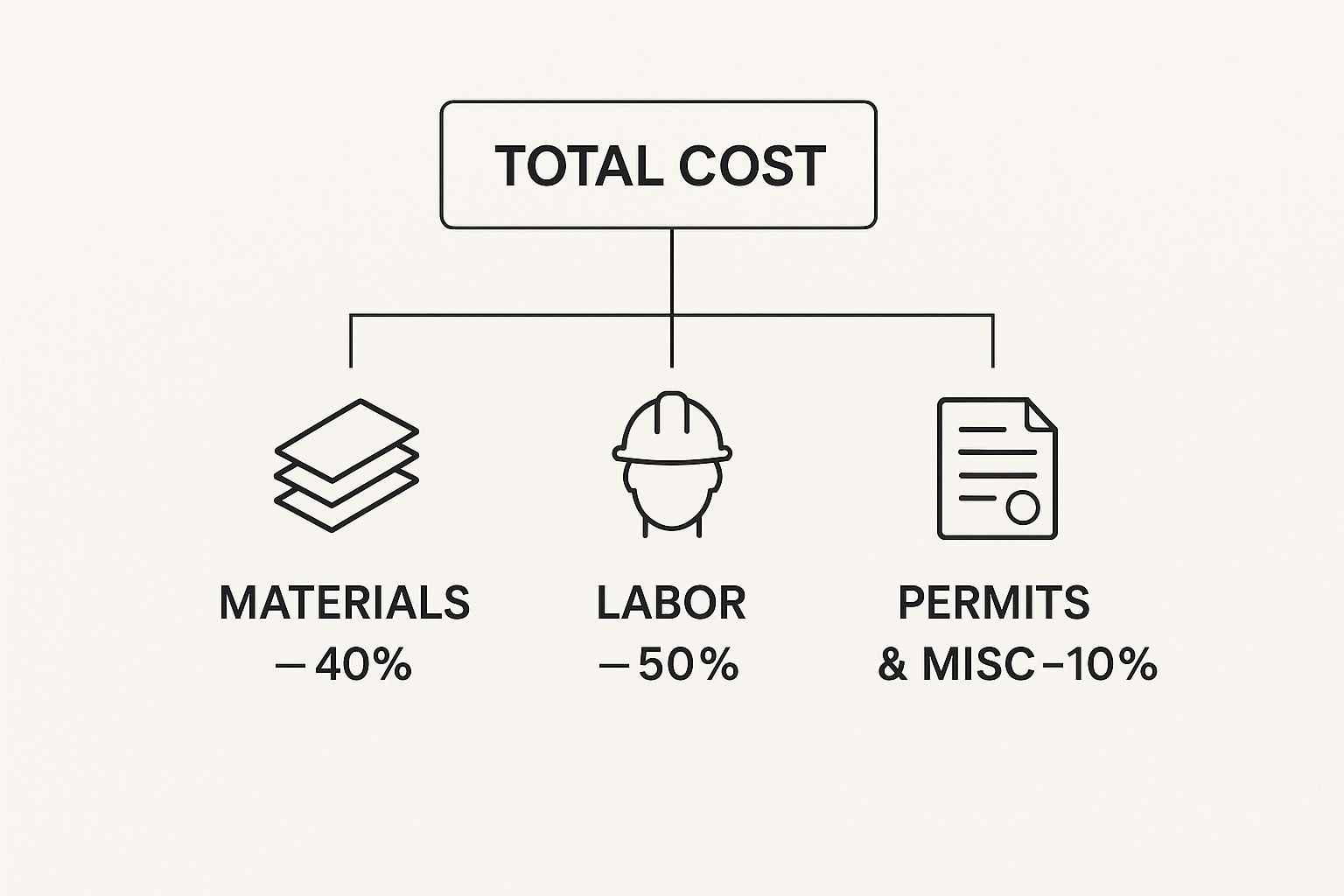
As you can see, labor and materials are the two heavyweights, eating up about 90% of your total project expense. This really drives home why your choice of material has such a huge impact on the final quote you receive.
Asphalt Shingles: The Popular and Practical Choice
There’s a reason asphalt shingles are the most common roofing material in the country. They hit a sweet spot, offering a fantastic blend of affordability, reliability, and a wide variety of styles, which makes them a go-to for many homeowners. Modern architectural shingles even provide a dimensional look that adds some serious depth and curb appeal.
The trade-off? They do have a shorter lifespan compared to other options, especially under the intense South Florida sun. And while they’re built to handle strong winds, they aren't as impact-resistant as tile or metal—an important thing to keep in mind during hurricane season.
For many, the lower initial roof replacement cost in Coral Gables makes asphalt a compelling option, giving you solid protection without the premium price tag of other systems.
Tile Roofs: The Coral Gables Classic
Take a walk through any neighborhood in Coral Gables, and you can’t miss the timeless beauty of tile roofs. They’re a perfect match for the area's Mediterranean architecture, offering an elegance that’s hard to beat and incredible durability.
You’ve got two main types of tile to consider:
- Clay Tile: Famous for its classic terracotta color and an incredible lifespan of over 100 years, clay tile is the premium choice. It's highly resistant to fire, rot, and insects, and it won't fade under our harsh UV rays.
- Concrete Tile: If you love the look of clay but not the price, concrete tile is a great alternative. It’s extremely durable and can be made in a huge variety of colors and profiles to look like clay, slate, or even wood shake.
The primary drawback of tile is its weight. Your home's structure must be able to support the significant additional load, which can sometimes require structural reinforcement and add to the project's complexity and cost.
Metal Roofing: The Champion of Durability
Not too long ago, metal roofing was something you’d only see on commercial buildings. Now, it’s a popular and stylish choice for homes, too. It offers exceptional longevity, often lasting 50 years or more, and provides some of the best protection you can get against wind uplift during a hurricane.
Metal roofs are also incredibly energy-efficient. They reflect the sun’s radiant heat, which can help lower your cooling costs—a massive plus in our warm climate. On top of that, they are lightweight, fire-resistant, and need very little maintenance over their long lives.
Composite Synthetics: The Modern Innovator
Composite synthetic roofing is one of the newer players on the field. These materials are engineered to mimic the high-end look of natural slate or wood shake without the hefty cost, weight, and maintenance that come with them. Made from advanced polymer blends, these shingles are surprisingly lightweight yet incredibly tough.
They come with high impact ratings and excellent wind resistance, making them a smart choice for storm-prone areas like ours. For 2025, the cost for these durable materials reflects their advanced engineering and longevity. For a typical 2,000 square foot home, composite synthetic shingles cost between $7 and $14 per square foot, which translates to a total project cost of $14,000 to $28,000. By comparison, traditional asphalt shingles range from $4.50 to $8 per square foot, while premium clay tiles can cost from $12 to $21 per square foot. To see a more detailed price breakdown, you can explore Florida roofing cost data on pitchroofing.com.
Breaking Down Your Roofer's Estimate
Getting a roofing estimate can feel like trying to translate a foreign language. You're handed a document packed with industry jargon, line items, and a bottom-line number that represents a major investment in your home. Learning to read between those lines is the secret to comparing quotes fairly and making sure you’re paying for a complete, top-tier installation.
While the roofing materials themselves are a big part of the cost, the other half of the equation is labor. In fact, labor can easily make up 50% or more of your final bill. This isn't just an arbitrary hourly rate; it's a number carefully calculated based on the unique challenges your specific roof presents.
What Drives Labor Costs
The complexity of your roof’s architecture directly impacts the time and skill needed to get the job done right. A simple, low-slope gable roof is always going to be less labor-intensive—and therefore cheaper—than a complex roof with steep pitches and multiple facets.
Several key factors will drive up the labor portion of your roof replacement cost in Coral Gables:
- Roof Pitch: The steeper the roof, the more dangerous and difficult it is to work on. Crews need extra safety equipment and move more slowly, which naturally adds up to more labor hours.
- Roof Complexity: Features like valleys, hips, dormers, and skylights are time-consuming. Every single one has to be meticulously cut, fitted, and sealed to ensure it's absolutely watertight.
- Number of Stories: Working on a two- or three-story home just takes longer. There’s more setup time for safety gear and a lot more effort involved in getting materials up to the roof and hauling old debris down.
Think of labor costs as a reflection of project difficulty. A flat, open highway is easy to pave, while a winding mountain road with tunnels and bridges requires far more engineering and time. Your roof is no different.
Beyond Materials and Labor
A thorough, professional estimate from a contractor like Paletz Roofing and Inspections will break down several other crucial services and components. These aren't "hidden fees"—they are non-negotiable parts of a proper roof replacement.
You should always look for line items covering:
- Tear-Off and Disposal: This covers the work and expense of stripping all the old roofing materials down to the structural decking. It also includes the dumpster rental and fees for disposing of the debris correctly.
- Underlayment: This is the critical waterproof barrier that sits between your roof deck and the shingles, tile, or metal. Here in South Florida, a high-quality, self-adhering underlayment is essential for providing a secondary layer of water resistance during a hurricane.
- Flashing: This is the metalwork installed around chimneys, vents, walls, and in roof valleys. Its job is to channel water away from the most vulnerable spots on your roof, stopping leaks before they can start.
- Ventilation: Proper attic ventilation isn't just a good idea; it's a building code requirement that's critical for your roof's lifespan. It prevents heat and moisture from building up, which can rot your roof’s structure and drive up your cooling bills.
By understanding every single component on your estimate, you can compare quotes with confidence. If one bid seems suspiciously low, it's often because the contractor has skimped on a critical element like new flashing or a quality underlayment. A detailed estimate is your best tool for asking the right questions and ensuring your investment results in a complete roofing system built to protect your home for decades to come.
Navigating Coral Gables Permits and Building Codes
When you replace a roof in South Florida, you're not just starting a construction project—you're stepping into a carefully regulated process. These rules aren't here to give you a headache. They exist for one simple reason: to protect your home and family from some of the most powerful weather on the planet.
Think of a building permit as your project's official playbook. It’s the city’s way of ensuring your contractor follows a strict set of safety and quality standards. Skipping this step isn't just a bad idea; it's a legal requirement that protects your investment and makes sure your new roof is genuinely built to last.
Why Codes and Permits Are Non-Negotiable
Pulling a permit kicks off a series of mandatory inspections at critical moments during the job. An inspector from Coral Gables will come out to verify that every stage of the work—from the initial tear-off to the final shingle or tile—meets every local code. This third-party oversight is your single best guarantee that no corners are being cut.
The rules are especially tough here because Coral Gables is in a High-Velocity Hurricane Zone (HVHZ). The building codes are written specifically to make sure every roof can handle extreme wind uplift and resist impacts from flying debris during a major storm. It’s this level of resilience that keeps your home standing when it counts the most.
In Coral Gables, a building permit isn't just paperwork; it’s a form of insurance. It guarantees that every nail, every shingle, and every layer of underlayment is installed according to the highest storm-readiness standards, protecting your home’s structural integrity.
Complying with these codes directly impacts the roof replacement cost in Coral Gables. In fact, statewide regulations play a massive role in project expenses. For 2025, getting a permit is mandatory before any work can begin, a crucial step in any hurricane-prone area. Following the International Building Code can add 5-10% to the total project cost, covering inspections, paperwork, and the necessary reinforcements for wind resistance. You can find more details on these statewide roofing requirements at teroof.com.
Understanding Specific Local Requirements
Beyond the basic permit, there are specific local rules your roofer absolutely has to follow. While these requirements add to the material and labor costs, they are essential for a safe, compliant installation.
Here are a few key examples you'll encounter:
- Enhanced Nailing Patterns: Shingles and tiles can't just be nailed down randomly. They have to be fastened with a specific number of nails in a precise pattern to maximize their resistance to wind.
- Secondary Water Barrier: A self-adhering "peel-and-stick" underlayment is almost always required. This waterproof membrane seals the entire roof deck, offering a critical backup layer of protection if the main roofing material is ever damaged in a storm.
- Strict Material Standards: Not just any material will do. All roofing materials must have Miami-Dade County Product Approval, which certifies they’ve been rigorously tested to withstand hurricane-force conditions.
The Role of Homeowners Associations (HOAs)
On top of the city's building codes, many Coral Gables neighborhoods are governed by a Homeowners' Association (HOA). While the city is focused on safety and structural integrity, your HOA is all about maintaining the community's aesthetic harmony.
Your HOA will likely have its own set of rules detailing things like:
- Approved Materials: They might limit your choices to specific roofing types, like clay tile or slate, to keep a uniform look throughout the neighborhood.
- Color Palettes: Many HOAs provide a pre-approved list of colors you can select from.
- Installation Style: They may even have guidelines on the profile or style of the material you use.
It is absolutely vital to get written approval from your HOA before your contractor pulls the city permit. Failing to do this can lead to hefty fines and, in the worst-case scenario, could force you to tear off a brand-new, non-compliant roof.
A professional roofer with experience in Coral Gables will handle the entire permitting process for you. They’ll navigate the specific requirements of both the city and your HOA, preventing delays and ensuring your project runs smoothly from start to finish.
Smart Ways to Manage Your Roofing Budget
Figuring out the total cost of a new roof is just the first step. The real challenge is finding smart ways to make that major investment feel more manageable. A strategic approach helps you balance your budget without ever having to compromise on quality materials or professional workmanship.
The goal here is to shift your focus from the upfront price tag to the long-term value your new roof provides. When planned correctly, a roof replacement can actually pay you back over time through lower insurance premiums, reduced energy bills, and decades free from repair headaches.
Secure Multiple Detailed Quotes
The single most powerful tool you have for managing your budget is comparison. You should never, ever settle for the first estimate you get. Instead, make it a personal rule to get at least three detailed quotes from reputable, licensed roofing contractors who have solid experience in Coral Gables.
This isn't just about hunting for the lowest price. When you compare itemized bids, you can see exactly how different companies break down their costs for materials, labor, tear-off, and permits. If one quote comes in dramatically lower than the others, it's often a red flag that something crucial has been left out—which could end up costing you a lot more down the road.
Invest for Long-Term Savings
While a cheaper material might look tempting on paper, a higher-quality roof almost always delivers a better return on your investment. This is especially true here in South Florida, where your roof is your home's primary line of defense against severe weather.
Here’s how a smart investment pays off:
- Insurance Discounts: Many insurance companies offer significant discounts for homes with roofs that meet the latest hurricane-readiness standards. Installing high-impact materials and ensuring your roof is fully compliant with wind mitigation codes can directly lower your annual homeowner's insurance premium.
- Energy Efficiency: Modern roofing systems, particularly light-colored tile or reflective metal roofs, are designed to bounce the sun’s intense heat away from your home. This takes a huge load off your air conditioning system, leading to lower monthly cooling costs that really add up over the years.
Think of your roof replacement as a chance to upgrade your home’s overall performance. A new, code-compliant, energy-efficient roof isn't just an expense; it's an investment that starts paying you back through lower insurance and utility bills from day one.
Explore Financing and Payment Options
A full roof replacement is a significant expense, and you don’t always have to pay for it all in one lump sum. Many established roofing companies, including Paletz Roofing and Inspections, understand this and offer flexible financing solutions to help.
When you're talking with potential contractors, always ask about their payment options. Financing lets you break down the total roof replacement cost in Coral Gables into predictable monthly payments, making the project much more accessible without draining your savings. This approach helps you get the high-quality materials your home deserves, ensuring you have the best possible protection without the financial strain.
Finding the Right Roofing Contractor in Coral Gables
Even if you’ve picked out the perfect materials and have a solid budget, the success of your new roof really comes down to the skill of the contractor you hire. Think of them as the captain of your ship; their expertise is what will steer your project to a smooth finish or into a costly storm. Frankly, choosing the right local roofer is the most critical decision you'll make to protect your investment for decades.
Let's be clear: the cheapest bid is almost never the best value. A price that seems too good to be true usually is. It often means a contractor is cutting corners by using subpar materials, skipping essential steps, or carrying inadequate insurance. A quality installation from a reputable, professional company is your best defense against leaks, repairs, and future headaches.
Vetting Your Potential Hires
Before you even think about signing on the dotted line, it's time to do some serious homework. This vetting process is what separates the real pros from the fly-by-night operators. Your goal here is to create a shortlist of contractors who are proven, reliable, and a good fit for your specific project.
To get started, focus on these non-negotiable qualifications:
- State Licensing and Insurance: Your contractor must have a current, valid Florida state roofing license. Just as important, ask them to show you proof of both general liability insurance and workers' compensation coverage. This is what protects you from any liability if an accident happens on your property.
- Local Experience and References: A roofer who knows Coral Gables' specific building codes and HOA rules is invaluable. Ask for a list of recent, local projects you can actually see. Take a drive by or, even better, call a few of their past clients.
- Online Reputation: Check their reviews on Google, Yelp, and the Better Business Bureau. Look for consistent patterns in the feedback. Pay close attention not just to the good reviews, but also to how the company responds to any negative comments.
Key Questions Before Signing
Once you've narrowed it down to a few strong candidates, it’s interview time. The questions you ask now can save you from major problems down the road, and a true professional will welcome your diligence. For a deeper dive, reviewing an essential contractor hiring checklist can give you even more ideas.
Remember, you’re hiring a long-term partner for one of your home's most vital systems. A transparent, communicative contractor who provides detailed answers is demonstrating their commitment to a successful project from the very start.
Make sure you ask every potential roofer about their warranties—for both materials and workmanship. Get a clear, projected timeline for the project and a detailed payment schedule. Getting all these details in writing in the contract ensures everyone is on the same page and fully protects your investment.
Common Questions About Coral Gables Roof Replacement
Even after breaking down all the numbers on materials and labor, you probably still have a few questions rolling around. It's completely normal. This is where we tackle the most common things homeowners ask about the roof replacement cost in Coral Gables, so you can move forward feeling confident.
We've gathered the top concerns we hear from homeowners just like you to fill in any final gaps.

How Long Does a Roof Replacement Take?
For a typical, average-sized home here in Coral Gables, a full roof replacement usually takes somewhere between 2 to 7 days. A few key things can stretch or shrink that timeline.
The biggest factor is your roof's complexity. A simple, straightforward gable roof is a much quicker job than a roof with lots of angles, valleys, dormers, and steep pitches. The material you choose also plays a huge role—installing heavy, delicate tile is a far more involved process than laying down asphalt shingles.
And, of course, there's the unpredictable South Florida weather. A good contractor will always give you a realistic timeline in their estimate, one that accounts for permitting and the mandatory city inspections.
Should I Repair or Replace My Roof?
Making the call between a simple repair and a full-blown replacement really boils down to two things: your roof's age and how bad the damage is. A repair is often the perfect solution for a newer roof that has minor, isolated problems, like a handful of shingles that went missing in a storm.
However, a full replacement becomes the smarter, more secure investment if:
- Your roof is getting close to the end of its expected lifespan (that's 20+ years for most asphalt shingle roofs).
- You're seeing widespread issues, like shingles that are curling up or shedding their protective granules everywhere.
- There are obvious signs of major water damage or you're chasing multiple active leaks.
Think of it this way: a full replacement is a proactive investment in your home's safety and value. While a repair just puts a bandage on a problem, a brand-new roof eliminates it entirely, giving you decades of protection and peace of mind.
Can a New Roof Lower My Homeowners Insurance?
Yes, it absolutely can—and often does, significantly. Here in Florida, installing a new roof that meets the latest hurricane building codes can unlock some serious discounts on your homeowner's insurance premium. It all comes down to proving your home is better equipped to handle a major storm.
Once your new roof is finished, you'll want to schedule a wind mitigation inspection. A certified inspector will come out and document all the storm-resistant features of your new roofing system. You then submit that official report to your insurance company. More often than not, this results in a lower annual premium, helping you earn back a nice chunk of your investment over time.
Ready to protect your home with a roof built to last? The experts at Paletz Roofing and Inspections offer free, detailed estimates to help you understand your options and make the best investment for your property. Schedule your free inspection today!