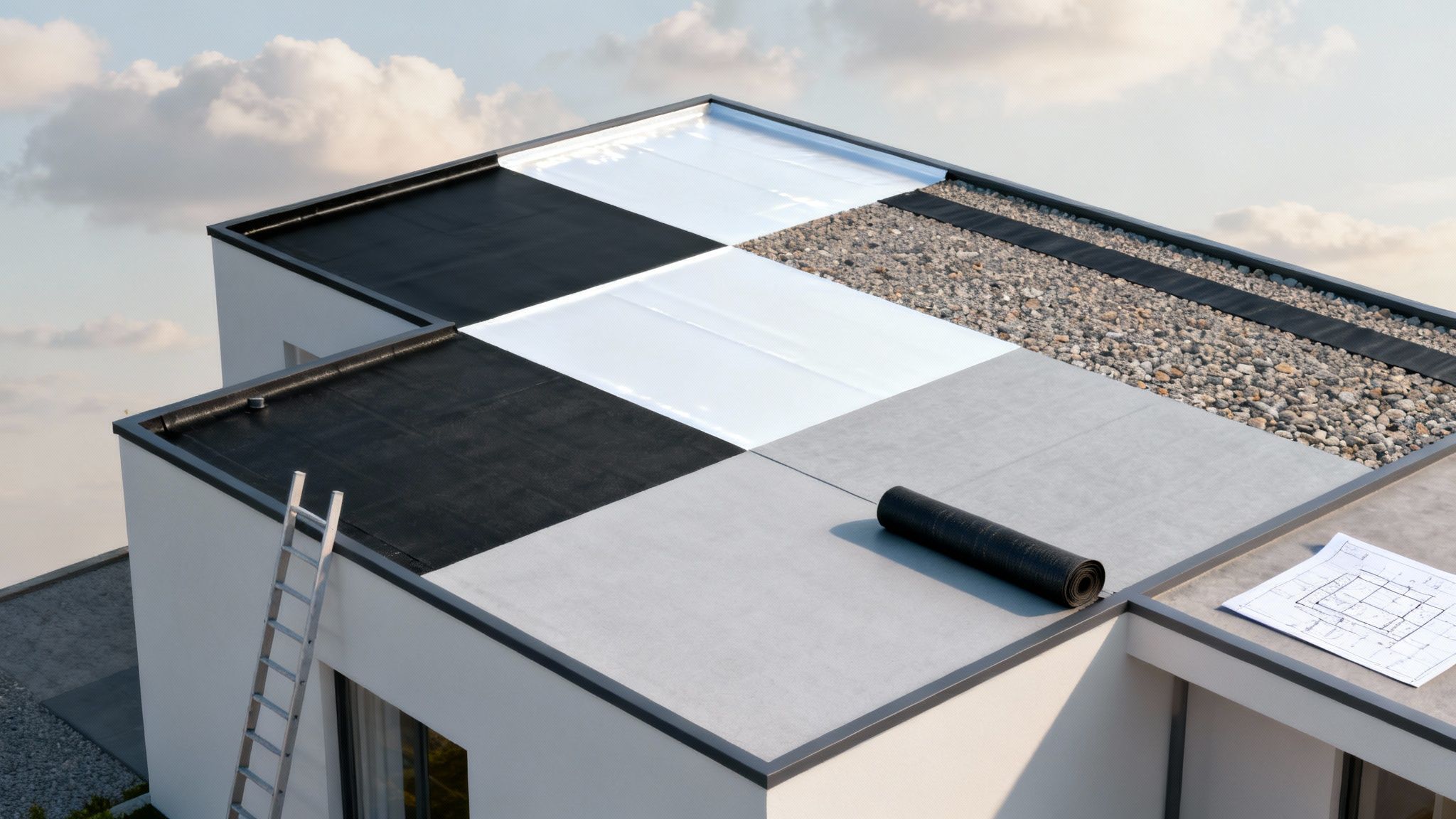
When you're looking at roofing materials for flat roofs, the main players are modern single-ply membranes like EPDM, TPO, and PVC. You'll also find traditional multi-layer systems still going strong, namely Modified Bitumen and Built-Up Roofing (BUR). Each one strikes a unique balance between durability, cost, and how it handles the weather, so picking the right one is absolutely critical for long-term performance.
Why Flat Roofs Need Specialized Materials
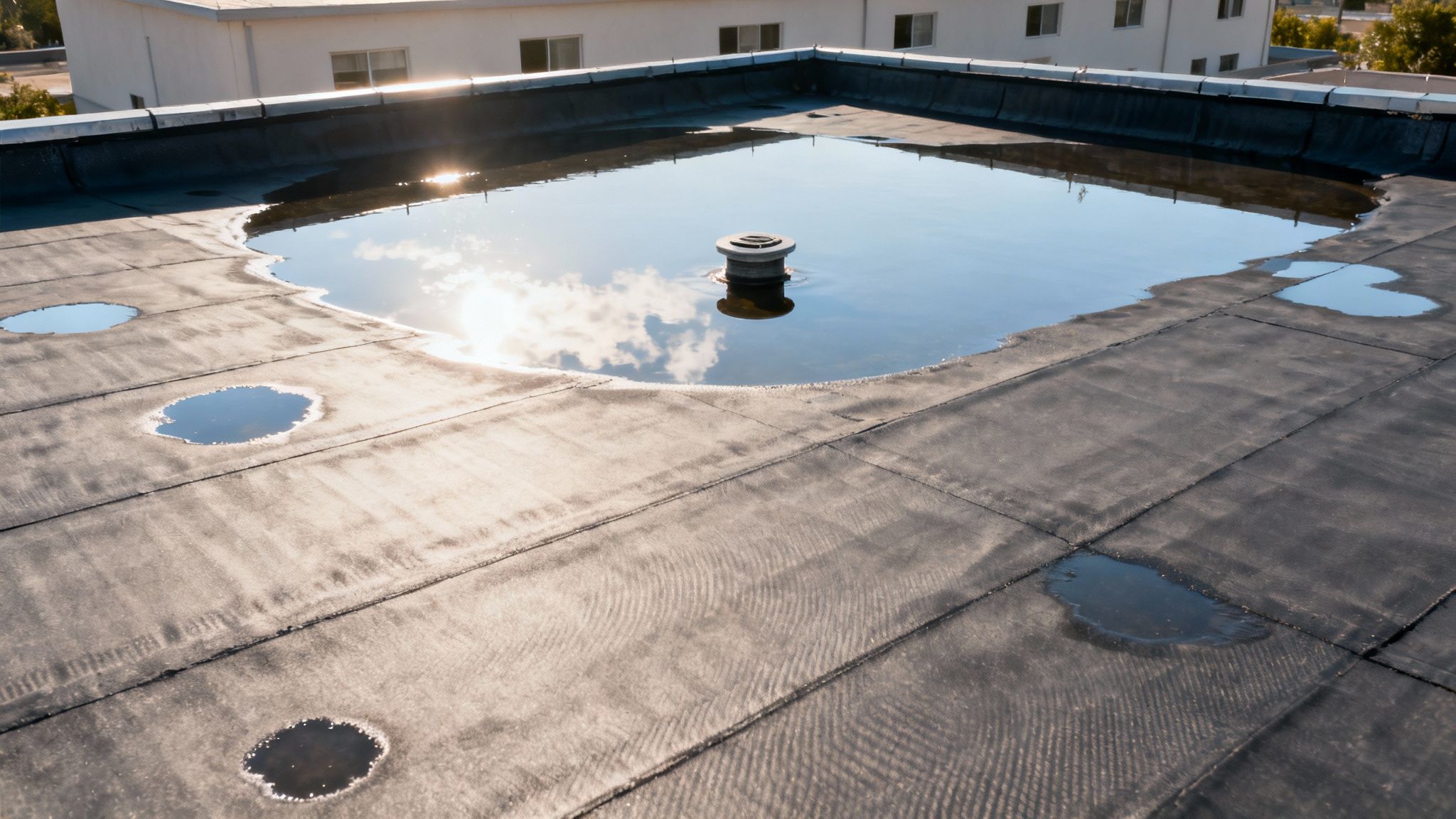
Choosing materials for a flat or low-slope roof is a completely different ballgame than picking out shingles for a typical pitched roof. The number one challenge? Water. A sloped roof uses gravity to its advantage, shedding rain and snow in a hurry. A flat roof, on the other hand, has to act more like a wide, shallow basin, holding water until it can either evaporate or find a drain.
This reality leaves zero room for error. A single failed seam or a tiny puncture can lead to pooling water, which will eventually cause major leaks and even structural damage. On top of that, flat roofs get blasted with direct, unrelenting sun, demanding materials that can handle constant thermal stress and UV radiation without cracking or falling apart.
Understanding Your Primary Options
The market for flat roofing materials is a mix of modern innovation and old-school reliability. Generally, these materials fall into two main camps:
- Single-Ply Membranes: These are the modern, sheet-based materials that get rolled out and sealed at the seams. Think of them as a single, massive waterproof blanket custom-fitted to your roof. The key players here are EPDM (a synthetic rubber), TPO, and PVC.
- Multi-Layer Systems: These are the traditional, built-in-place options made from multiple layers of asphalt and reinforcing fabrics. It's a "belt-and-suspenders" approach that creates a thick, tough, and highly redundant waterproof barrier. The main types are Modified Bitumen and Built-Up Roofing (BUR).
The growing demand for functional, energy-efficient building designs has given the flat roofing market a major boost. Projections show the global market climbing from USD 10.5 billion in 2023 to an expected USD 16.8 billion by 2032. This growth is largely fueled by innovations in materials that can support things like solar panel installations and better energy conservation. You can discover more insights about flat roofing market growth trends to see what's driving this demand.
Flat Roofing Materials at a Glance
Before we dive deep into each option, let's get a high-level view of the five main contenders. This table gives you a starting point for understanding how these roofing materials for flat roofs stack up against each other.
| Material | Average Lifespan (Years) | Estimated Cost per Sq. Ft. | Best For |
|---|---|---|---|
| EPDM (Rubber) | 25-30+ | $5 – $13 | Durability in harsh climates and large, unobstructed roofs. |
| TPO | 20-30 | $6 – $14 | Energy efficiency in sunny climates and eco-conscious projects. |
| PVC | 20-30+ | $7 – $15 | Commercial roofs exposed to chemicals, grease, or high foot traffic. |
| Modified Bitumen | 15-25 | $4 – $10 | High-traffic areas and buildings requiring extreme puncture resistance. |
| Built-Up Roofing (BUR) | 20-30 | $5 – $12 | Ultimate waterproofing, durability, and low-maintenance needs. |
Think of this as your cheat sheet. As we break down each material, you'll see how these numbers and use cases play out in the real world, helping you match the right material to your specific project needs.
Exploring Single-Ply Membrane Roofing Options
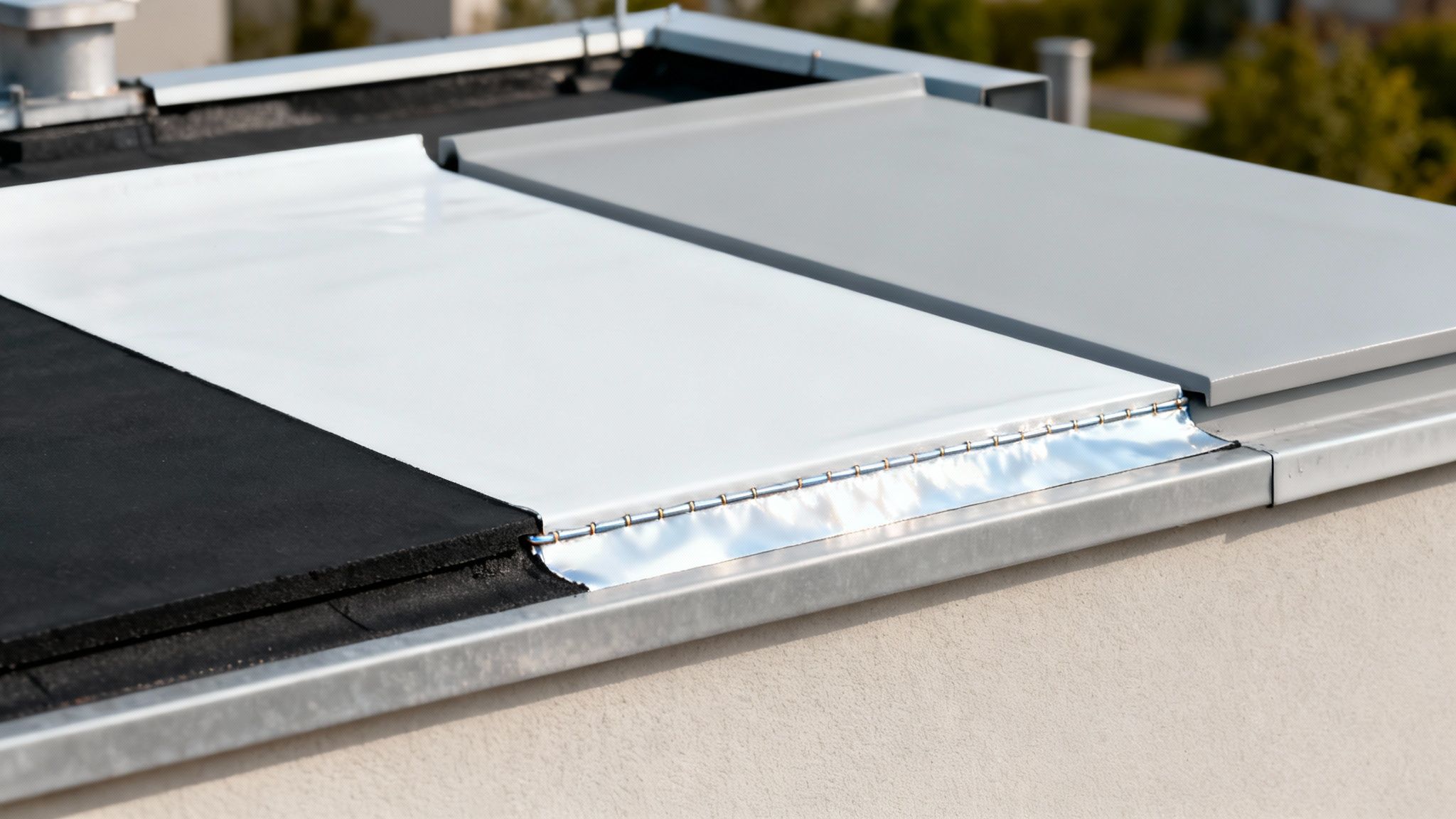
Single-ply membranes represent a huge leap forward in flat roofing. Unlike the old-school method of building up layers of material on-site, these modern systems are manufactured in a factory. This controlled environment guarantees a consistent thickness and quality, giving you a far more reliable and seamless protective layer for your property.
Think of it as a massive, custom-fitted waterproof blanket for your roof. We roll out these huge sheets across the roof deck and then seal the seams, creating one solid surface that's incredibly effective at stopping leaks. The three biggest players in this space are EPDM, TPO, and PVC, and each one brings something different to the table.
This part of the roofing market is growing fast. As builders and homeowners focus more on high-performance, energy-efficient homes, the demand for advanced roofing materials for flat roofs like TPO and PVC has shot up. Their ability to resist UV rays and their environmental upsides make them a smarter choice than older options. You can discover more insights about the growing flat roof materials market on marketreportanalytics.com.
EPDM The Durable Rubber Workhorse
For decades, EPDM (Ethylene Propylene Diene Monomer) has been the trusted workhorse of the flat roofing world. It’s a high-density synthetic rubber membrane, and its main claim to fame is its incredible durability. Much like the tread on a heavy-duty truck tire, EPDM is built to take a beating from the weather, whether it’s blistering summer heat or freezing winter cold.
One of its best features is its amazing flexibility. EPDM can expand and contract as temperatures swing wildly without cracking or getting brittle—a common reason why less flexible materials fail. It's usually black, which means it absorbs heat. In colder climates, this can actually be a good thing, as it helps melt snow and ice faster.
- Longevity: When installed and maintained correctly, an EPDM roof can easily last 25 to 30 years. Some have even been known to perform well for much longer.
- Installation: Because the sheets are so large, you have far fewer seams, which means fewer potential spots for leaks. The seams that do exist are sealed with specialized adhesives or tapes.
- Cost-Effective: EPDM is often one of the more affordable single-ply options, delivering fantastic long-term value for the initial investment.
TPO The Energy-Saving Champion
TPO (Thermoplastic Polyolefin) has quickly become a crowd favorite, especially in warmer climates like ours here in South Florida. This single-ply reflective membrane is made from a blend of polypropylene and ethylene-propylene rubber. Its most celebrated feature? A brilliant white surface that acts like a mirror to the sun's harsh UV rays.
That reflectivity is the secret to its energy-saving power. By bouncing solar heat away from the building instead of soaking it up, a TPO roof can dramatically reduce the strain on your air conditioning system. This translates directly into lower energy bills during our long, hot summers.
A "cool roof" like TPO can lower roof surface temperatures by over 50°F, translating into a 10-15% reduction in peak cooling energy demand. This not only saves money but also helps mitigate the urban heat island effect.
On top of the energy benefits, TPO is also tough against punctures, tears, and mold growth. The seams are heat-welded together, which creates a bond that is actually stronger than the membrane itself. That’s top-tier leak protection.
PVC The Resilient Powerhouse
PVC (Polyvinyl Chloride) is another thermoplastic membrane, known for its brute strength and long-term performance. It's considered a premium option often used on commercial buildings, but it's also a fantastic choice for homes that have unique challenges. For a clear look at what a finished roof looks like, you can see an example of a seamless flat roof installation.
PVC’s chemical makeup makes it incredibly resistant to a whole host of things, including:
- Chemicals and Pollutants: This makes it perfect for industrial areas or buildings with exhaust vents that release fumes.
- Grease and Oils: It's the top choice for restaurants or any property with rooftop kitchen ventilation.
- Fire: PVC membranes naturally have fire-retardant properties, giving you an extra layer of safety.
This incredible resilience, combined with strong, heat-welded seams, makes PVC an outstanding choice for roofs that will see some action. If you have a rooftop deck, a patio, or HVAC units that need frequent servicing, PVC can handle the foot traffic. While it often has a higher upfront cost, its durability and low maintenance needs make it a great value over the long haul.
While modern single-ply membranes get a lot of attention for their streamlined protection, sometimes the best defense is a heavy-duty, multi-layered one. These traditional systems, built layer by layer right on your roof, have been the gold standard in commercial roofing for generations for one simple reason: they are incredibly tough.
Instead of relying on a single sheet of material, they create a thick, redundant barrier that’s fantastic at resisting punctures, foot traffic, and weathering. We'll dig into the two main players in this category: Modified Bitumen and Built-Up Roofing (BUR). Both use asphalt as their core waterproofing agent, but they apply it in different ways to achieve some seriously impressive durability.
These are the systems you turn to when maximum resilience is the absolute top priority.
Modified Bitumen: The Supercharged Asphalt Roof
Modified Bitumen, which most of us in the industry call "Mod-Bit," is the modern evolution of traditional asphalt roofing. Think of it as asphalt that’s been beefed up in a lab.
Standard asphalt can get brittle in the cold and too soft in the heat, which eventually leads to cracks and failures. Modified Bitumen solves this problem by blending asphalt with powerful rubber or plastic polymers. This process creates a material with vastly superior flexibility and strength. It can stretch and move with a building as it settles and expands with temperature changes, dramatically cutting down the risk of cracks.
This makes it one of the best roofing materials for flat roofs that see regular foot traffic from HVAC technicians or other maintenance crews.
There are a few ways these systems go down, each with its own advantages:
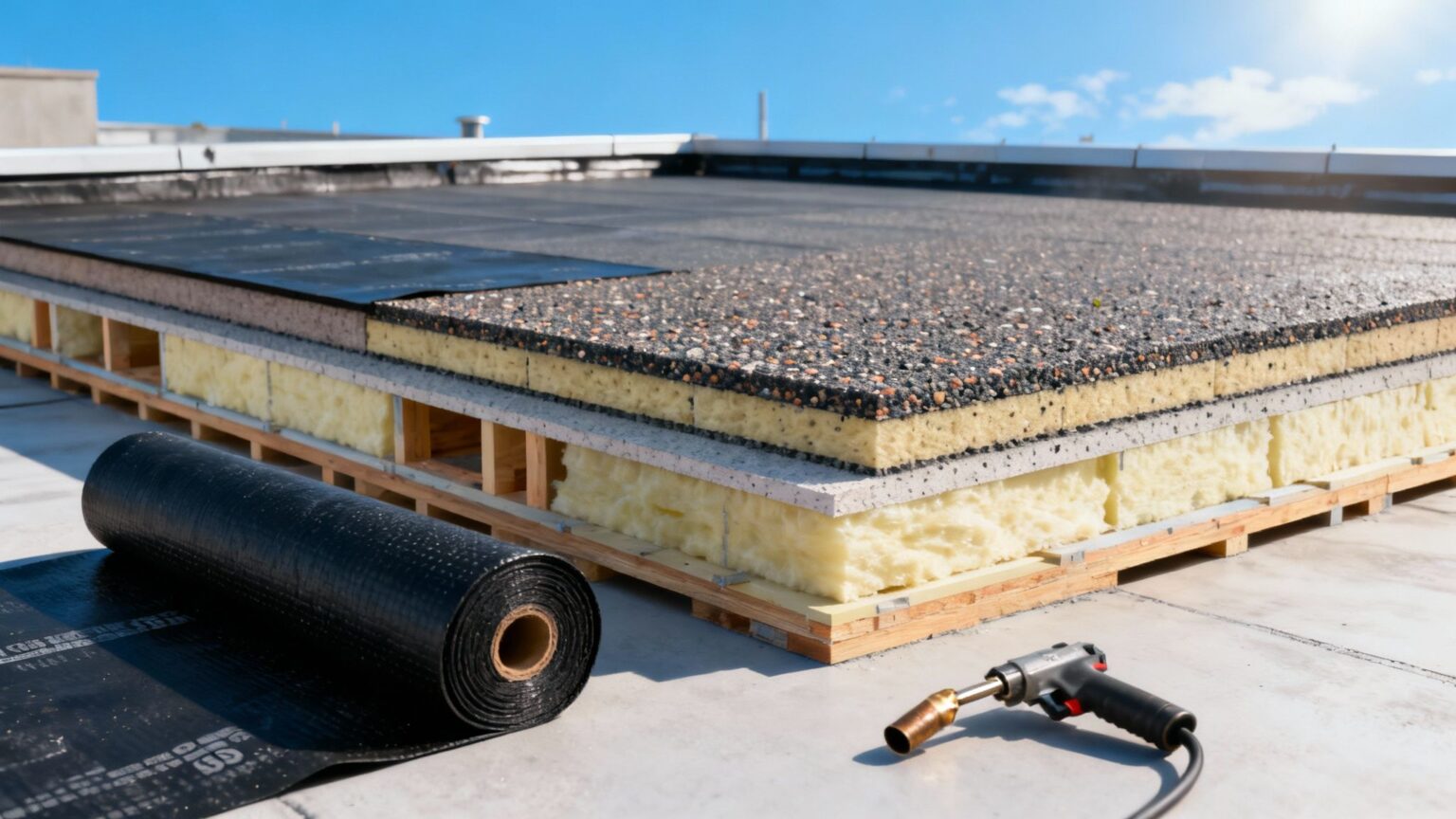
- Torch-Down Application: This is the classic method. We use a propane torch to heat the underside of the bitumen roll, melting it directly onto the roof deck. It creates a powerful, seamless bond.
- Cold-Applied Adhesives: A safer, more modern alternative that uses powerful adhesives to secure the membrane. This approach completely eliminates the fire risks that come with using an open flame on a job site.
- Self-Adhered Rolls: These rolls come with a simple peel-and-stick backing. It's the fastest and safest installation method, making it perfect for projects around sensitive areas where fumes or flames are a major concern.
Built-Up Roofing: The Original Heavy-Hitter
Built-Up Roofing (BUR) is the original heavyweight champion of flat roofs, often just called "tar and gravel." If you can picture a roofing lasagna, you've got a pretty good idea of how it's constructed.
It's literally built in place with multiple, alternating layers of hot asphalt (bitumen) and strong reinforcing fabrics called ply sheets. We repeat the process several times to create a thick, monolithic slab of waterproof protection. A typical BUR system has anywhere from three to five of these layers, making it exceptionally resistant to water getting in. Even if one layer were somehow damaged, there are several more underneath ready to stop a leak in its tracks.
The final layer of a BUR system is a top coat of gravel, crushed stone, or a reflective coating. This surface layer isn't just for looks—it provides crucial protection against UV radiation, shields the underlying asphalt from physical damage, and can even improve fire resistance.
This multi-layer approach gives BUR systems an average lifespan of 20 to 30 years, making them one of the most reliable options out there. The sheer thickness and redundancy make it an excellent investment for building owners who want a low-maintenance, long-lasting solution.
You can see an example of the kind of durable finish these multi-layer systems provide when properly installed.
Although newer technologies have come along, the proven track record and brute strength of BUR keep it a relevant and popular choice for commercial and industrial buildings that demand the ultimate in durability.
How to Choose the Right Flat Roof Material
Navigating the world of roofing materials for flat roofs can feel like a maze. With every option bringing its own unique mix of pros and cons, the right choice is about more than just grabbing the latest tech or the cheapest quote. It’s about finding the perfect match for your building's specific needs, your local climate, and what you expect from it down the road.
Think of it like picking the right tires for a car. You wouldn’t put slick racing tires on an off-road truck, and you wouldn't use chunky all-terrain tires for a cross-country trip where every gallon of gas counts. Your roof is no different—success is all about selecting the right tool for the job.
This guide will walk you through the essential factors to consider, giving you the confidence to make a smart, informed decision that will protect your property for decades.
Climate and Weather Impact
Your local weather is arguably the biggest piece of the puzzle. A roof in sunny South Florida has a completely different set of challenges than one in a place with heavy snow and wild temperature swings.
- For Sunny, Hot Climates: A highly reflective "cool roof" is your best friend. Materials like white TPO and PVC are the clear winners here, as they bounce solar radiation back into the atmosphere instead of soaking it up. This simple feature can seriously cut down the strain on your AC system, leading to lower energy bills.
- For Climates with Temperature Swings: If your area goes from freezing winters to scorching summers, you need a material with great flexibility. EPDM and Modified Bitumen are the champions in this department. Their ability to expand and contract without cracking or turning brittle is critical for long-term survival.
Building Use and Foot Traffic
Next up, think about what’s actually happening on your roof. Is it just a lid for your building, or is it a functional space? The answer will narrow down your options fast. A roof that just sits there has very different demands than one that has to support heavy equipment or people walking around.
If your roof needs to handle regular foot traffic from maintenance crews servicing HVAC units, vents, or other gear, you need something with high puncture resistance. This is where multi-layer systems really prove their worth.
This decision tree gives you a simple place to start: is your roof a high-traffic area or not?
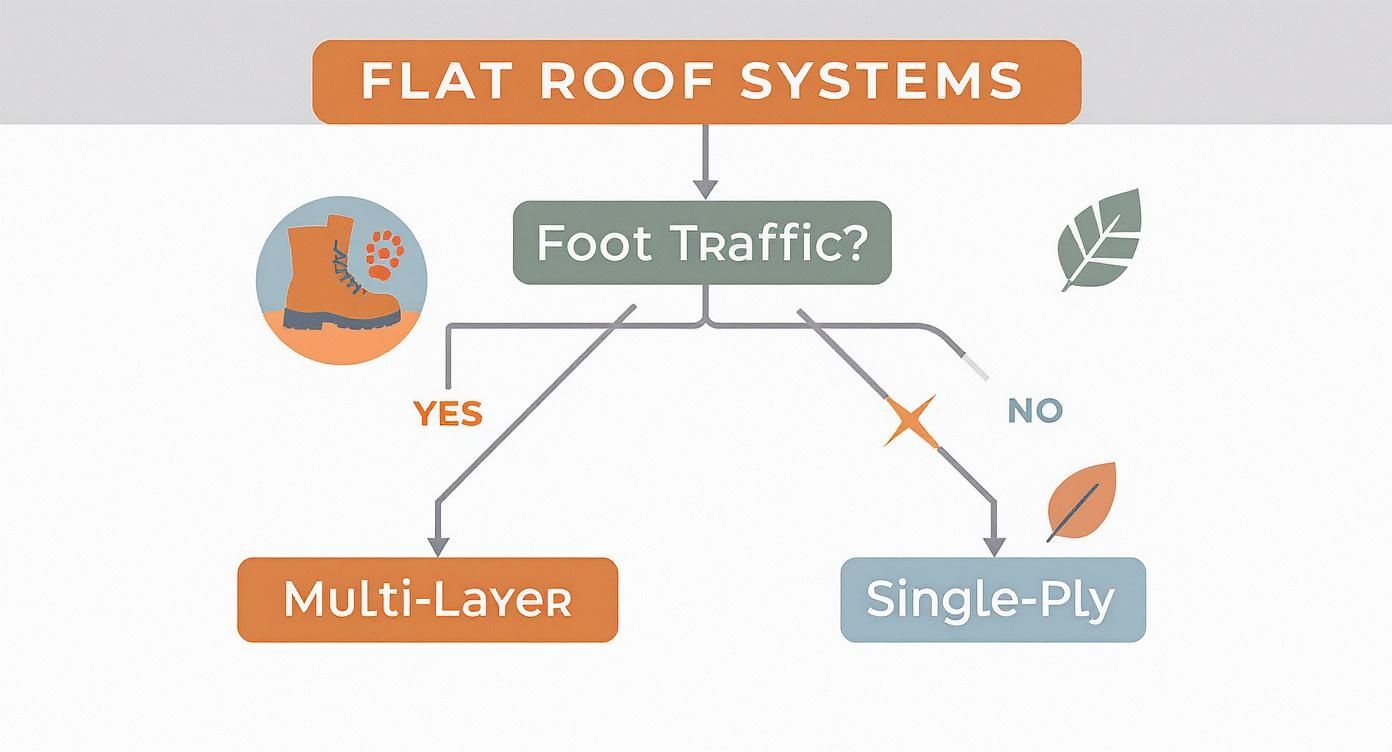
As you can see, if foot traffic is a real concern, tough multi-layer systems like Modified Bitumen or BUR are often the most practical choice because of their superior toughness.
Balancing Budget and Long-Term Value
Cost is always a factor, but it's a huge mistake to only look at the initial installation price. A cheaper material that needs constant repairs or a full replacement in ten years will end up costing you a lot more than a premium option that performs reliably for decades.
You have to think in terms of total cost of ownership. This includes:
- Upfront Installation Cost: The initial bill for materials and labor.
- Maintenance Expenses: What you can expect to spend on inspections and routine upkeep.
- Repair Costs: The likelihood and potential cost of fixing leaks or damage.
- Energy Savings: How much a reflective "cool roof" can save you on utility bills over time.
- Lifespan: The number of years the roof is expected to last before it needs to be completely replaced.
A material like PVC might have a higher price tag upfront, but its incredible durability and low maintenance needs can deliver a much better return on your investment over 25+ years.
To help you sort through these options, we've put together a simple decision matrix. Think about what's most important for your project—cost, durability, energy savings—and see how the materials stack up.
Decision Matrix for Flat Roof Materials
| Factor | EPDM | TPO | PVC | Modified Bitumen | BUR |
|---|---|---|---|---|---|
| Initial Cost | Low | Low-Medium | High | Medium | Medium-High |
| Lifespan | 20-30 years | 15-25 years | 20-30+ years | 10-20 years | 15-30 years |
| Durability | Very Good | Good | Excellent | Excellent | Superior |
| Puncture Resistance | Good | Fair | Very Good | Excellent | Superior |
| Energy Efficiency | Poor (Black) | Excellent (White) | Excellent (White) | Fair (Coating helps) | Poor (Coating helps) |
| Maintenance Needs | Low | Low | Very Low | Medium | High |
| Best For | Budget projects, cold climates | Cool roofs, budget-conscious | Chemical exposure, restaurants | High foot traffic | Extreme durability, high traffic |
This table isn't about finding a single "best" material, but rather the best fit for your specific needs. Every building and budget is different, and this matrix helps you align a material's strengths with your priorities.
Energy Efficiency Goals
A modern roof does more than just keep the rain out; it’s a critical part of a building's energy performance. Picking an energy-efficient roofing material can have a real, positive impact on your wallet and the environment.
The key concept here is the "cool roof." These roofs have high solar reflectivity, which just means they reflect more sunlight and absorb less heat than a standard dark roof.
According to the U.S. Department of Energy, a cool roof can stay more than 50°F cooler on a sunny day and can slash a building’s peak cooling demand by 10–15%. This directly reduces energy use and helps lower greenhouse gas emissions.
If cutting your carbon footprint and lowering your utility bills are top priorities, materials like white TPO and PVC are fantastic choices. Even traditional materials can get a boost in efficiency with reflective top coatings. As construction moves toward more sustainable designs, the demand for these solutions is only getting stronger. The flat roof tile market alone is projected to hit $15 billion in 2025, largely driven by this shift. You can read the full research on the flat roof tile market to learn more about these trends.
Installation and Maintenance Considerations
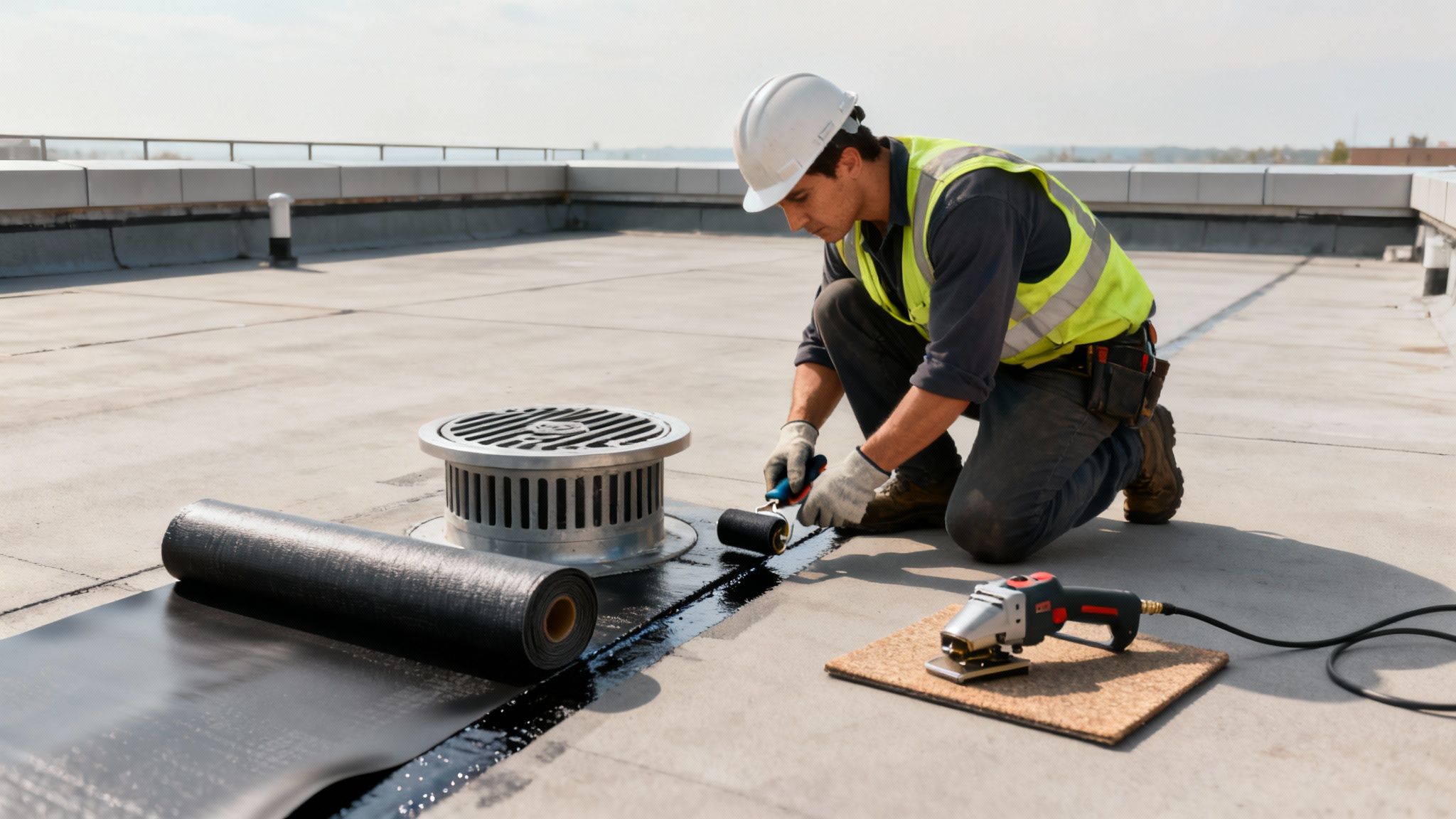
Choosing the right material is a huge step, but it's really only half the battle. A top-tier roofing material will only perform as well as its installation, and its lifespan depends directly on consistent upkeep. Understanding what goes into the installation and what's needed for maintenance is critical for protecting your investment.
The installation method can be wildly different between roofing materials for flat roofs, and knowing what to expect helps you pick the right contractor for the job. For modern single-ply membranes like TPO and PVC, the process is highly technical. Professionals use a specialized hot-air welder to fuse the seams, creating a single, continuous sheet across the entire roof. Done right, this weld is often stronger than the material itself.
On the other hand, traditional systems like Built-Up Roofing (BUR) are assembled layer by layer right on your roof. This involves applying hot asphalt and reinforcing fabrics—a labor-intensive process that demands a highly skilled crew. Modified Bitumen is a bit more flexible, with options ranging from old-school torch-down applications to safer, modern cold-applied adhesives.
Mastering the Installation Process
Here’s the thing: the quality of the installation is the single most important factor determining your roof’s future. A rushed or sloppy job will lead to premature failure, no matter how much you spent on the material. Your roof is only as strong as its weakest link.
A flawless installation really comes down to a few key things:
- Proper Substrate Preparation: The roof deck underneath has to be clean, dry, and solid before anything goes on top. Any bumps or imperfections can show through and compromise the new roof.
- Correct Seam Sealing: For single-ply roofs, perfectly welded or glued seams are non-negotiable. For BUR, getting a consistent, even application of hot asphalt between layers is everything.
- Attention to Flashing: Flashing—the material that seals around vents, skylights, and walls—is where most leaks start. Meticulous, detailed work in these areas is the mark of a true pro.
A study by the National Roofing Contractors Association (NRCA) consistently finds that improper installation is a leading cause of premature roof failure. This just goes to show how vital it is to vet your contractor and not just go with the lowest bid.
Proactive Maintenance Routines
Once your roof is installed, a simple but consistent maintenance routine is the key to getting the most out of it. Proactive care is always, always cheaper than reactive repairs. Think of it like changing the oil in your car—a small, regular investment that prevents a catastrophic engine failure down the road.
Your checklist should include a few key tasks performed at least twice a year, usually in the spring and fall. These simple actions can add years to your roof's life.
Essential Maintenance Tasks
- Clear Debris and Drains: Leaves, branches, and trash can clog drains and scuppers, which leads to standing water. Ponding water is the number one enemy of a flat roof; it adds a ton of weight and makes the material break down faster.
- Inspect Seams and Flashings: Give all the seams a good look for any signs of separating or cracking. Pay extra close attention to the flashing around pipes and vents, as these are common trouble spots.
- Look for Punctures or Blisters: Scan the surface for any punctures from falling branches or foot traffic. Also, keep an eye out for blisters or bubbles, which could mean moisture is trapped underneath the membrane.
Thinking about the long-term health of your roof also means being prepared for the unexpected. After a big storm, for example, knowing how to navigate hail damage roof insurance claims can make all the difference. Catching problems early keeps small issues from turning into expensive disasters. For a deeper look at what a professional check-up covers, learn more about our comprehensive roofing inspection process.

Common Questions About Flat Roof Materials
As you get closer to a final decision, it's totally normal to have a few last-minute questions. Think of this section as the final checklist before you make an investment. We’ll tackle the most common things we hear from property owners, giving you clear, practical answers so you can move forward with confidence.
We’ll cover durability, energy efficiency, and how long you can expect your new roof to last, making sure you have the complete picture.
What Is the Most Durable Flat Roof Material?
This is a great question, but the answer isn't a single material. "Durability" really depends on the specific challenges your roof will face day in and day out. The most durable material is the one that's best equipped to handle the threats unique to your property.
For example, if you have crews walking on your roof for regular HVAC maintenance, your biggest enemy is punctures. In that case, a tough, multi-layer system like Modified Bitumen is an excellent choice. Its sheer thickness can take a beating.
But if your main concern is just surviving decades of intense sun and weathering, other materials pull ahead.
- For Longevity: High-quality EPDM has the longest proven track record out in the real world. It's known for lasting for decades with very little fuss.
- For Chemical and Fire Resistance: This is where PVC really shines. It's the powerhouse performer, making it the go-to for restaurants dealing with grease exhaust or any building where chemical exposure is a risk.
Can I Paint My Flat Roof for Energy Efficiency?
Yes, you absolutely can, and it's a popular strategy. Applying a reflective "cool roof" coating is a fantastic way to boost the energy efficiency of certain flat roof materials, especially those that are naturally dark and soak up heat, like standard black EPDM or many modified bitumen systems.
A white elastomeric or silicone coating basically turns your roof into a giant mirror, reflecting the sun's harsh rays away from your building. This simple upgrade can take a serious load off your air conditioning system and lead to lower energy bills.
It's worth noting, though, that some of the best roofing materials for flat roofs are already designed to be cool from the start. TPO and PVC membranes come in bright white from the factory, meaning they deliver top-tier energy efficiency right out of the box without needing any extra coatings.
The key takeaway is this: while coatings can improve older or darker roofs, choosing an inherently reflective material like TPO or PVC from the start is often a more integrated and lower-maintenance solution for achieving a cool roof.
How Long Should a New Flat Roof Last?
The lifespan of a new flat roof really comes down to three things: the material you choose, the quality of the installation, and how well you keep up with maintenance. A well-cared-for roof will always outlast a neglected one, no matter what it's made of.
Here’s a general idea of what you can expect from a professionally installed and maintained system:
- EPDM & PVC: These premium single-ply membranes are often the leaders of the pack, with typical lifespans of 25 to 30+ years.
- TPO: A high-quality TPO roof should give you a solid 20 to 30 years of service.
- Modified Bitumen & BUR: These durable, multi-layer systems also offer great longevity, typically lasting 20 years or more.
Ultimately, routine inspections and catching small issues before they become big problems are the most important things you can do to help your roof reach—and even exceed—these estimates.
Making the right choice for your South Florida property requires expert guidance. The team at Paletz Roofing and Inspections has over 30 years of experience installing and maintaining every type of flat roof. Contact us today for a free, no-obligation quote and let us help you protect your investment for decades to come. https://paletzroofing.com