
After a storm blows through, the most common storm damage signs in Dania Beach aren't always dramatic. They're often subtle things like missing roof shingles, cracks in your siding, new water stains on ceilings, or localized flooding in your yard. But before you even start looking for damage, the absolute first step is prioritizing safety by checking for hazards like downed power lines.
Your Post-Storm Safety Checklist for Dania Beach
When the sky finally clears after a nasty storm, the urge to run outside and check on your property is powerful. But hold on. The moments right after severe weather are often the most dangerous. For those of us in Dania Beach, where hurricanes and tropical storms are just a part of life, taking a slow, methodical approach is the only way to avoid injury or making a bad situation worse.
The familiar landscape of your yard can become a minefield of hidden dangers. Downed power lines can be lurking in puddles or tangled in fallen branches, carrying a lethal risk of electrocution. A tree that looks fine from a distance might have a compromised root system, ready to fall with the next gust of wind. Your home itself could even be structurally unstable. Starting your inspection from a safe distance lets you spot these immediate threats without putting yourself in harm's way.
Prioritize Safety Above All Else
Before you even think about making a list of damages, your first and only thought should be personal safety. The post-storm environment is completely unpredictable.
Here’s a simple three-step process to follow the moment a storm passes.
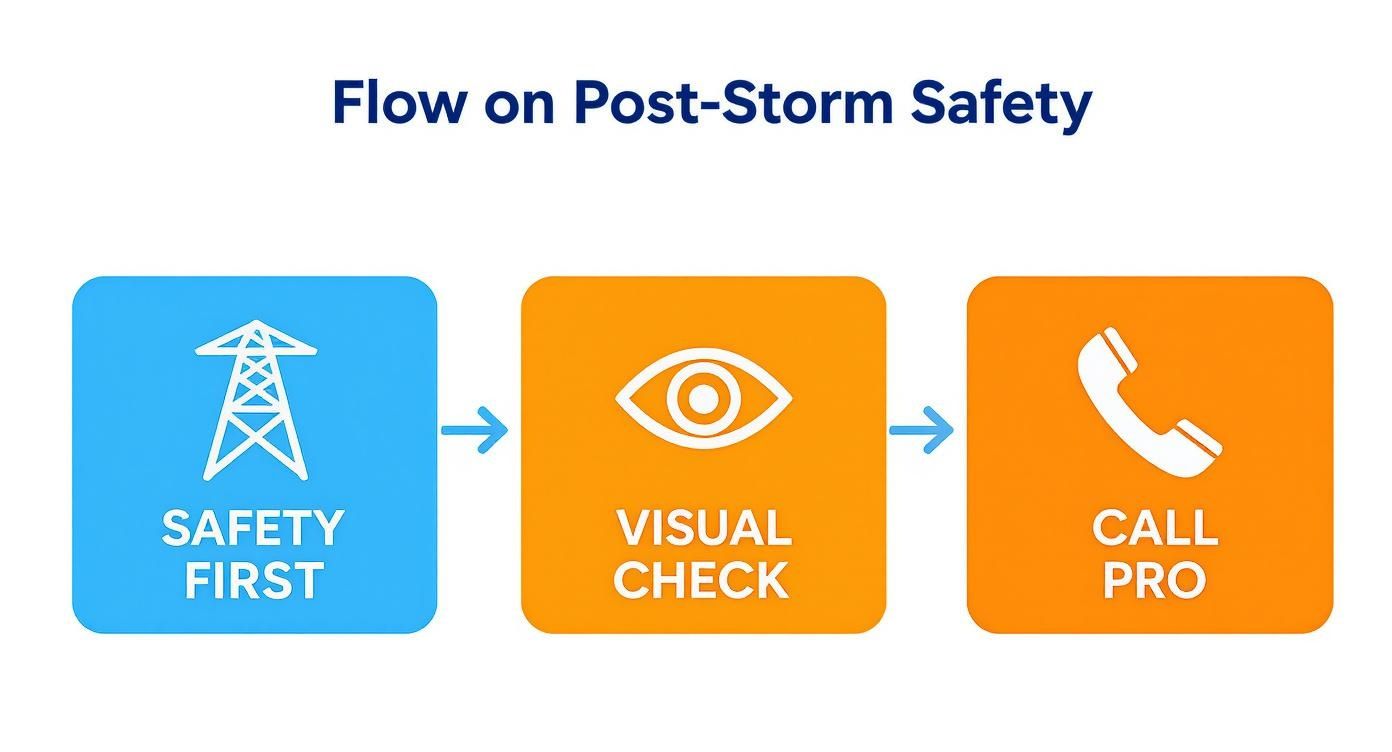
This workflow makes it clear: safety precautions and a careful visual check have to happen before you even pick up the phone to call for repairs.
Understanding Dania Beach's Unique Risks
Living in our coastal community means dealing with a one-two punch of high winds and major flooding. The historic April 2023 flood in Broward County was a brutal reminder of just how vulnerable we are.
The National Weather Service recorded an unbelievable 25.91 inches of rain in just 24 hours, causing widespread devastation. Damage reports from that single event showed that 1,095 structures sustained major damage, a number that truly drives home the destructive power of water. You can read the full report on the 2023 Broward County flooding to get a sense of the regional impact.
A safe inspection is a slow inspection. Rushing can cause you to miss critical damage or, worse, lead to an accident. Take your time and be thorough from a secure vantage point.
This history is exactly why a post-storm assessment in Dania Beach isn't just a casual walk-around. The combination of wind-driven rain from above and rising floodwaters from below creates a complex mix of potential damage that demands a careful eye. By putting safety first, you can start the recovery process with confidence, protecting both your family and your biggest investment.
How to Spot Critical Roof Damage Signs
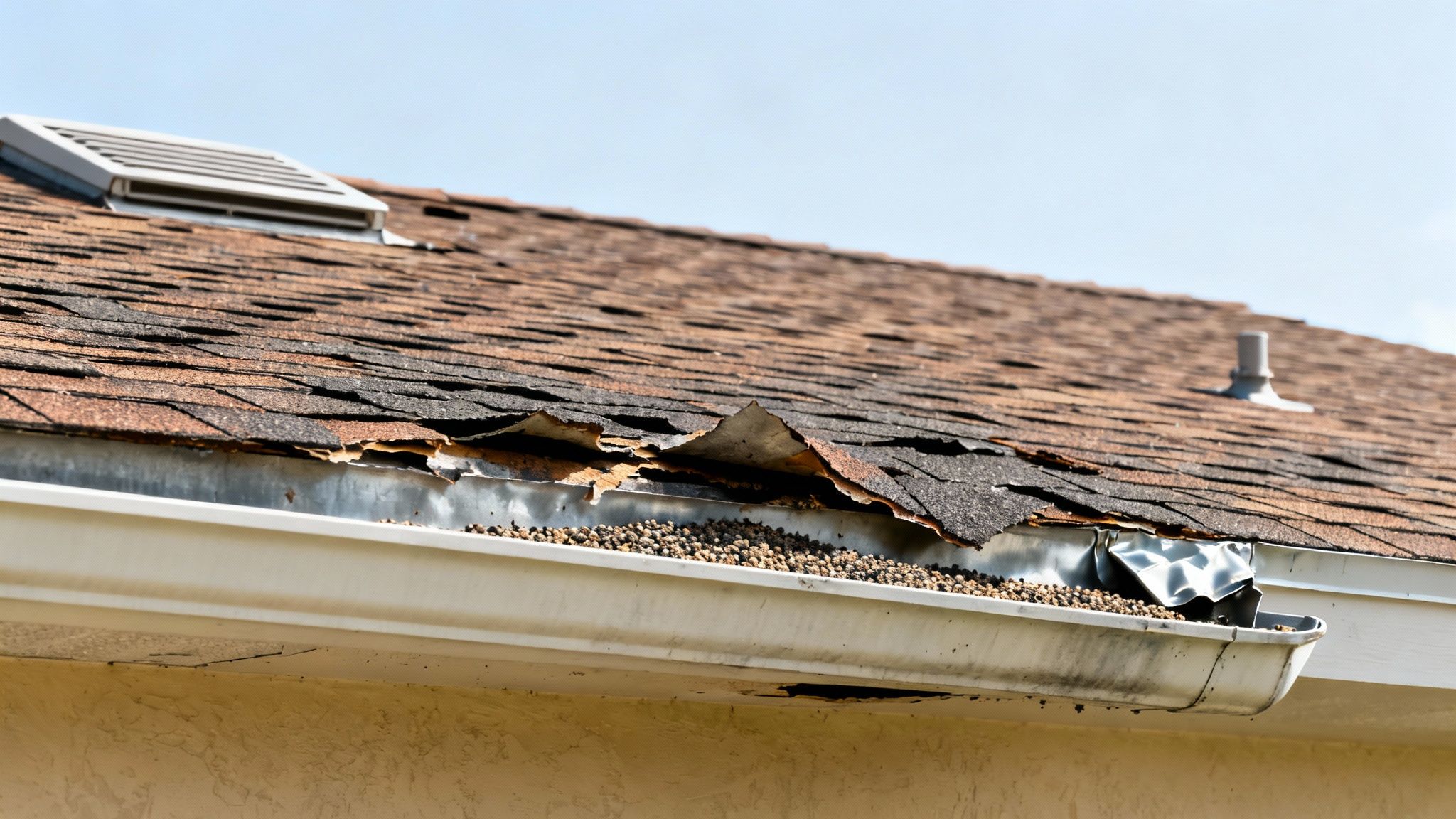
Your roof is your home’s shield against the brutal sun, wind, and rain that every South Florida storm throws our way. When that shield is compromised, everything underneath it is at risk. The good news is, you don’t have to be a roofer or climb a ladder to spot some of the most critical storm damage signs Dania Beach homeowners face. A quick walk around your property can tell you a lot.
The most glaring signs are missing shingles or tiles. After a storm passes, take a look at your roof and scan for any obvious bare patches. These spots are wide-open doors for water and demand immediate attention. While you're at it, look for any shingles that are cracked, curling up at the edges, or seem to be lifted—their waterproof seal has been broken, and the next strong gust could tear them right off.
Uncovering Subtle But Serious Damage
Beyond the obvious missing pieces, some of the most serious damage is much harder to see. One of the sneakiest indicators of a problem is granule loss from your asphalt shingles. Think of these granules as your roof's protective skin, shielding the shingle from harsh UV rays and weathering. When high winds and hail pound your roof, they can strip these granules away, dramatically shortening its lifespan.
You'll usually spot these tiny, sand-like particles collecting in your gutters or piled up on the ground where your downspouts empty. Finding a big pile of them is a major red flag. It’s like discovering your car’s tires have gone bald—the essential protective layer is gone, and a blowout is just a matter of time.
Another key area to check is the flashing. This is the thin metal stripping that seals the joints around chimneys, vents, and skylights.
Flashing is one of the most common failure points on a roof. Even a small dent or lift caused by wind can break the watertight seal, creating a hidden channel for rainwater to seep directly into your attic and walls.
Take a look at these areas from a few different angles on the ground. See any metal that looks dented, bent, or pulled away from the roof itself? That’s a classic and severe type of damage that many homeowners miss.
A History of Storms in Dania Beach
Understanding the potential for roof damage becomes much clearer when you consider our local history. Looking at historical hurricane data, it's obvious Dania Beach has been dealing with catastrophic storms for over a century. The infamous 1935 hurricane, a Category 5 monster, brought winds up to 184 miles per hour and damaged roughly 90 percent of local buildings. More recently, Hurricane Wilma in 2005 left 109 homes in Dania uninhabitable. Proactive roof inspections just make sense here.
Visual Clues You Can't Ignore
To keep your ground-level inspection simple, just focus on these key visual cues. Each one points to a specific type of storm damage that needs a professional follow-up.
- Bruised Shingles: After hail, a shingle might not crack, but it can develop dark, soft spots where the granules were knocked off. This "bruise" weakens the shingle and leaves it exposed to the elements.
- Creased Shingles: High winds can literally bend a shingle backward without ripping it off completely. This leaves a visible horizontal line or crease, which breaks the seal and makes it vulnerable to leaks.
- Exposed Nail Heads: Wind can lift shingles just enough to pop the nails underneath. These exposed nails, sometimes called "nail pops," are tiny but create a direct path for water into your roof decking.
Catching these problems early can be the difference between a simple repair and a full roof replacement. For a better idea of what professionals find, you can see examples of storm-related roof damage in our project gallery. If you spot any of these signs on your own roof, it's definitely time to call for an expert inspection.
Finding Hidden Damage on Your Home's Exterior
While your roof takes the most direct hit during a storm, the rest of your home's exterior is the secondary line of defense. The trouble is, damage to these areas can be subtle—but no less dangerous. Small breaches can create hidden entry points for water, pests, and eventually, rot. The best way to catch these problems early is to take a slow, careful walk around your property to spot these sneaky but critical storm damage signs in Dania Beach.
Start With Siding, Windows, and Doors
Begin your walk-around by focusing on your home’s siding. Keep an eye out for any cracks, chips, or small holes, which are classic calling cards of hail or wind-whipped debris. Think of your siding as a suit of armor; even a tiny dent can compromise its ability to shed water. Once breached, wind-driven rain can get behind it and start soaking your home’s wooden frame.
Next, shift your attention to the windows and doors. Shattered glass is obvious, of course, but the more common issues are far less dramatic. Look closely at the window frames for any dents or cracks. You should also inspect the seals around the glass itself. A broken seal often shows up as condensation or fogginess between the panes—a dead giveaway that its insulating barrier has failed and moisture can now get in.
You can view examples from post-storm inspections to get a better idea of what this kind of subtle exterior damage looks like up close.
Don’t Overlook Gutters and Downspouts
Your gutter system is engineered to funnel thousands of gallons of water safely away from your foundation. After a storm, it’s one of the most common casualties. Look for sections that are visibly dented, bent, or pulling away from the house. If you see gutters clogged with leaves and shingle granules, that’s another red flag. Blockages force water to overflow and cascade down your walls, which is exactly what you don't want.
Clogged or damaged gutters are a leading cause of foundation damage. When water isn't properly diverted, it pools around the base of your home, saturating the soil and creating immense pressure on your foundation walls.
A quick visual scan can help you spot these weak points before they escalate into much bigger, more expensive foundation problems.
Remember to Check Fences and Outbuildings
Finally, widen your inspection to include the rest of your property. Walk your fence line, checking for loose or broken panels and any posts that are leaning. The powerful winds in a Dania Beach storm can easily rock a fence's stability, turning it into a genuine hazard. Don't forget to check sheds, carports, or other outbuildings, as damage there can also give you clues about the storm's overall severity on your property.
To make your inspection a bit easier, here’s a quick-reference table you can use as you walk around your home.
Exterior Damage Checklist From Ground Level
This checklist helps you perform a safe, ground-level inspection of your property's exterior to identify common storm damage indicators.
| Area to Inspect | What to Look For | Potential Risk if Ignored |
|---|---|---|
| Siding | Cracks, dings, holes, or loose/lifting panels. | Water intrusion, wood rot, pest infestation. |
| Windows | Cracked glass, dented frames, foggy panes (broken seals). | Water leaks, energy loss, compromised security. |
| Doors | Dents, splintering wood, or difficulty closing properly. | Security issues, water leaks, and drafts. |
| Gutters | Dents, loose sections, and blockage from debris. | Foundation damage, siding stains, roof rot. |
| Fences & Sheds | Leaning posts, broken slats, and wobbly sections. | Safety hazard from collapse, further property damage. |
Each of these signs, even the ones that seem minor, represents a breach in your home’s protective envelope. Finding and addressing them quickly is the key to preventing moisture from getting in and causing the kind of costly, long-term repairs no homeowner wants to face.
Uncovering the Sneaky Signs of Interior Water Damage
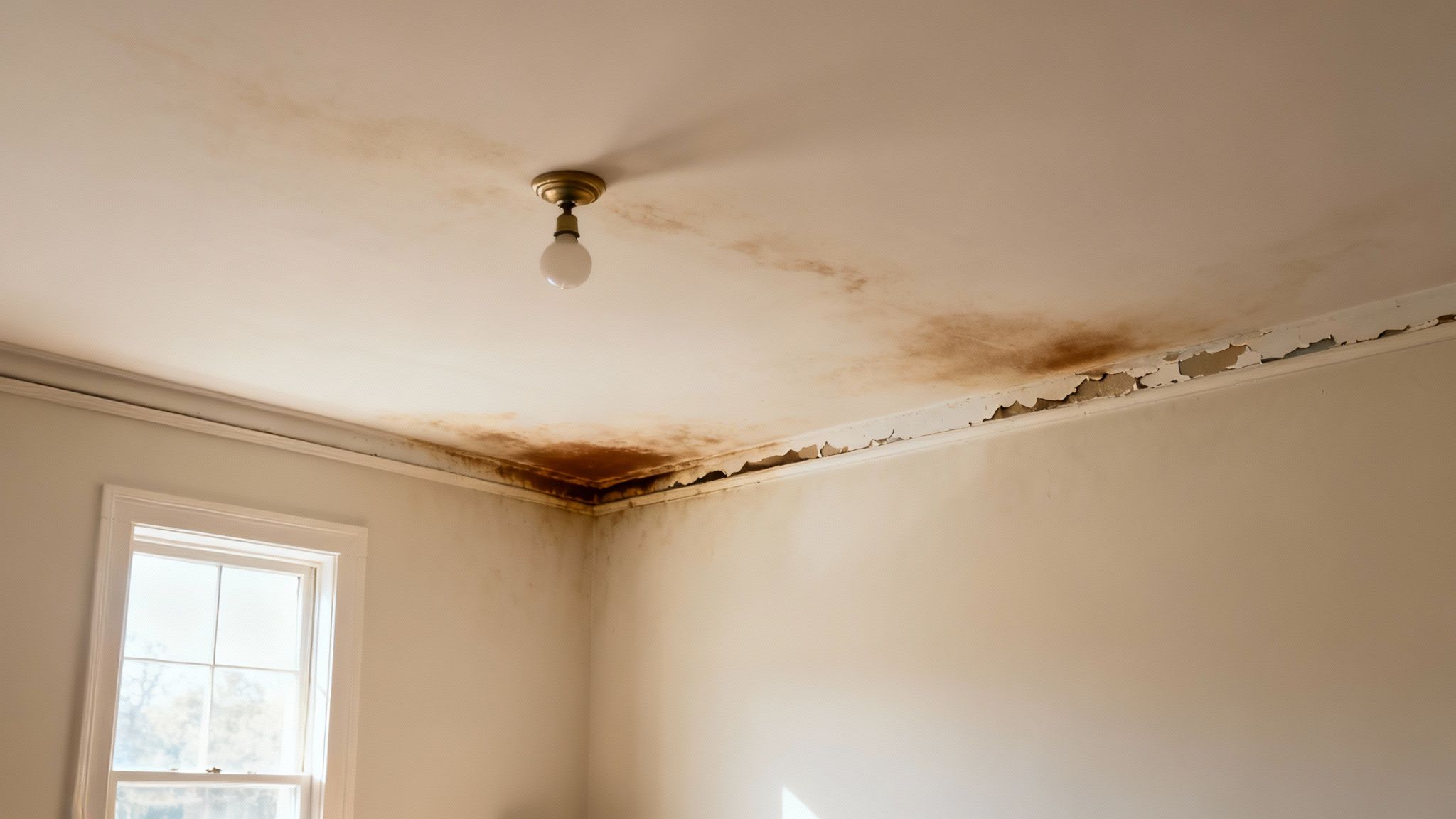
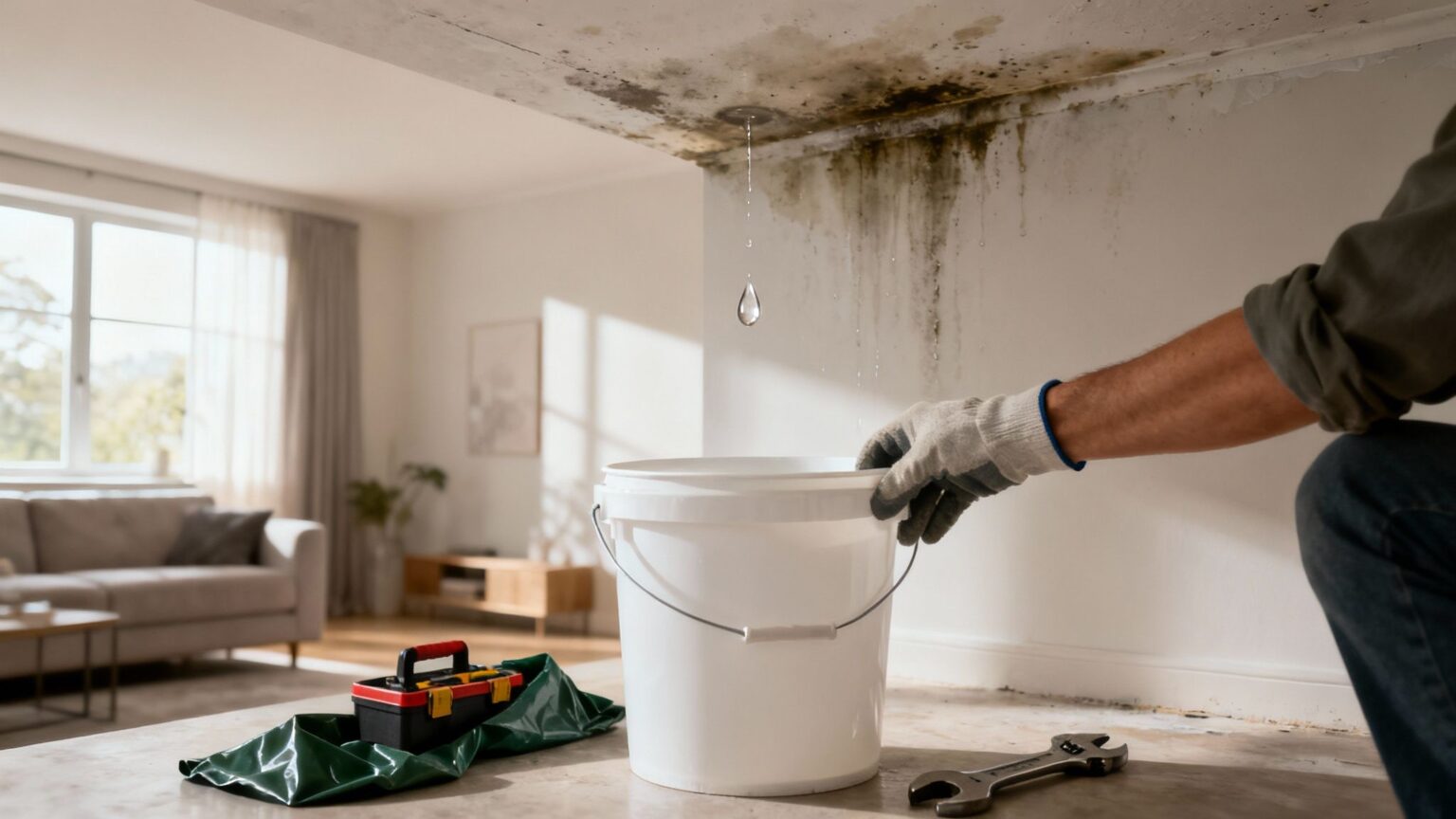
It's a common story after a storm: the most serious damage isn't the stuff you see from the curb. The real trouble often starts quietly, seeping into your home and only showing itself days or even weeks later. That's why learning to spot the subtle clues of water intrusion is so critical—it’s the key to stopping a small issue before it blows up into a massive, expensive problem.
You almost have to become a detective in your own home. Think about how water travels. A small breach in your roof or siding is the entry point, but from there, water can run along beams and inside walls before it finally makes an appearance. A new stain on your living room ceiling might not be from a problem directly above it; the leak could have started several feet away. The goal is to trace these symptoms back to the source.
Your Interior Damage Inspection Checklist
After any big Dania Beach storm, take a slow walk through every room. Keep your eyes peeled for these specific red flags.
- Ceiling and Wall Stains: This is the classic sign. Look for any new discoloration, usually yellowish or brownish, on ceilings and up in the corners where the walls meet.
- Bubbling or Peeling Paint: When drywall gets soaked, it swells and pushes the paint away from the surface. If you see paint starting to bubble, blister, or peel, that's a dead giveaway that there's water behind it.
- Warped Materials: Take a close look at your baseboards, door frames, and any wood flooring. Swelling, warping, or separating from the wall is a strong signal that water has wicked up from the subfloor.
One of the most important—and often overlooked—signs is a new musty smell you just can't place. That damp, earthy odor almost always points to hidden moisture. It’s also a warning sign that mold could be starting to grow, which can happen in as little as 24 to 48 hours.
Don’t Forget Your HVAC System
Your inspection isn’t complete until you’ve thought about your air ducts. If moisture gets into your attic or walls, your HVAC system can become a breeding ground for mold. Every time the AC or heat kicks on, it can spread spores throughout the entire house.
For a deeper dive into this, check out this guide on identifying mold in your air ducts. It offers some really valuable tips.
By being meticulous and searching for these sneaky signs of interior storm damage, Dania Beach homeowners can get ahead of the problem. Finding a small stain or catching that first whiff of a musty odor allows you to bring in a professional to find the leak's origin. It’s the difference between a simple repair and a major structural nightmare involving demolition and remediation.
Why Dania Beach Homes Are Uniquely Vulnerable
To really get a handle on spotting storm damage in Dania Beach, you have to understand why our homes are sitting ducks. We're not like the inland communities. Our properties are in a constant battle with a nasty combination of environmental factors that crank up the destructive power of any storm. Even a minor squall can turn into a major headache here. It’s not just about the wind; it’s about water coming at us from all sides.
Our city’s low elevation and front-row seat to the Atlantic Ocean put us in the crosshairs of two huge water threats: storm surge and good old-fashioned flooding. Think of a storm surge as a bulldozer made of seawater, pushed ashore by a hurricane's raw power, easily capable of swallowing entire neighborhoods. At the very same time, torrential rain overwhelms our local drainage, causing surface water to pile up fast. These two forces often team up, putting incredible hydrostatic pressure on foundations, siding, and door seals.
The Growing Threat of Water Intrusion
And the challenge is only getting worse. Climate projections are painting a pretty clear picture: Dania Beach is facing a much higher flood risk in the coming years. Right now, about 37.4 percent of properties here have a significant risk of flooding. That number is expected to skyrocket to 58.6 percent within the next 30 years. That's a staggering jump, and it tells us that water getting into our homes is going to be an even more common problem. You can dig into the full projections by exploring more insights about Dania Beach's climate risk.
This growing vulnerability means we can’t afford to ignore even the smallest weak spot in our home's armor. To truly address why Dania Beach homes are so susceptible to storm damage, it's crucial to consider layers of defense like hurricane protection window film, which reinforces one of the most fragile parts of any house.
In Dania Beach, every storm is a flood risk. The combination of coastal proximity, low elevation, and aging infrastructure means that water management is as critical as wind resistance for every single property.
This constant pressure from our environment is exactly why proactive inspections are a necessity, not an option. A tiny, unnoticed crack in the stucco or a worn-out window seal can quickly become a superhighway for wind-driven rain and rising floodwaters. Understanding these unique local risks is the first step. When you know what you're up against, you can spot the subtle signs of trouble before they snowball into a catastrophe. Protecting your home starts with knowing its weak points in our beautiful, but demanding, coastal town.
Your Action Plan After Finding Storm Damage
That sinking feeling you get when you discover storm damage in your Dania Beach home is tough, but having a clear plan flips the script from reactive to proactive. The absolute first priority is to stop the problem from getting any worse. This all starts with documenting everything and taking some smart, temporary steps to mitigate further damage.
Grab your phone and start taking photos and videos of every single thing you see, both inside and out. Get wide shots to show the overall scene, then move in for detailed close-ups of the actual damage. This visual proof is your single best asset when you talk to your insurance adjuster because it creates a clear, undeniable record of your home's condition right after the storm hit. Think of yourself as a detective building a case for your claim—the more evidence you have, the stronger it is.
Taking Control Before Help Arrives
Once you've got your evidence locked in, the next move is to apply some temporary fixes, but only if it’s safe for you to do so. This isn't about starting the actual repairs; it's about putting a temporary stop to any ongoing harm.
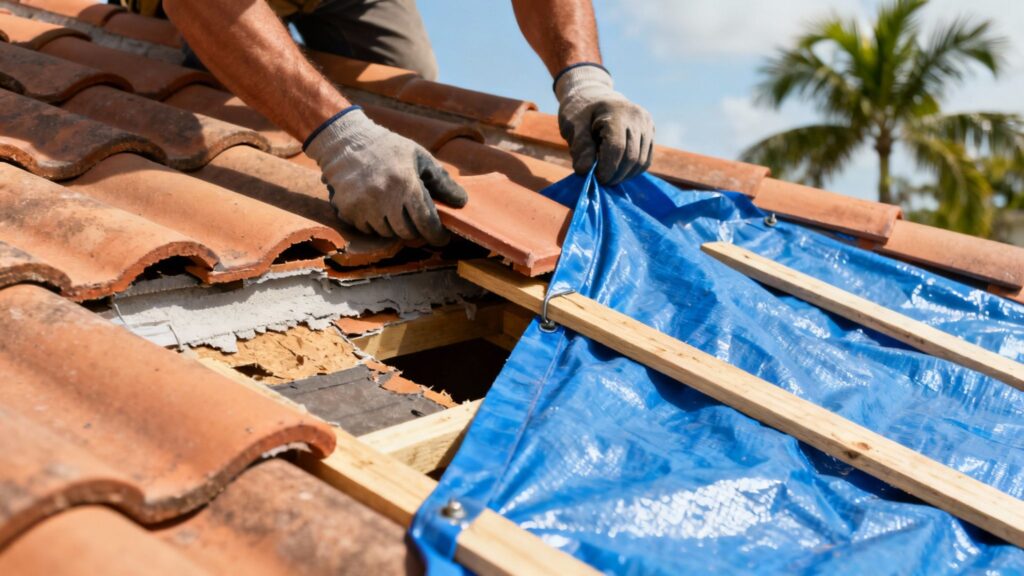
- Tarp the Roof: A properly secured tarp over a damaged section of your roof can be the difference-maker, preventing thousands of gallons of rainwater from pouring into your attic and the rest of your home.
- Board Up Windows: Covering up cracked or completely broken windows is crucial. It keeps more water out and secures your home from pests or anyone trying to get in.
- Move Your Valuables: Get furniture, electronics, and important documents out of the way of any leaks or damp spots. This simple step can save you from a world of secondary damage.
It's worth repeating: these are just stopgap measures. The whole point is to mitigate the damage until a professional can get out there, assess the real scope of the problem, and perform the proper repairs.
Finally, make the call to a licensed and insured local restoration professional. Getting their expert evaluation is a critical piece of the puzzle, and their detailed report will be a huge help with your insurance claim. To get a better idea of what a true professional assessment looks like, you can see how Paletz Roofing and Inspections handles the process. With solid documentation and an expert in your corner, you'll be able to navigate the recovery process with confidence.

Got Questions About Storm Damage? We Have Answers.
When a major storm blows through Dania Beach, the aftermath can be confusing. Homeowners are suddenly faced with a whole new set of worries and questions about how to start picking up the pieces.
We hear the same concerns from residents all the time, so we've put together answers to the most common questions about storm damage signs Dania Beach locals encounter.
What's the Deadline for Filing an Insurance Claim?
How long do I have to file an insurance claim for storm damage in Florida?
Florida law is pretty clear on this: you generally have up to two years from the date the storm hit to file a claim or even a supplemental claim. But here's a piece of advice from someone who's seen it all—don't wait. The longer you delay, the harder it can be to connect the damage directly to the storm, which can seriously complicate your claim.
The best move is to notify your insurance company right away. Waiting can muddy the waters and put your coverage at risk.
Should I Fix This Myself or Call a Pro?
Can I repair the storm damage myself?
If you're handy and the fix is minor—like tacking down a single shingle that came loose—you might be okay. But for the vast majority of storm damage signs Dania Beach homes show after a storm, especially anything involving your roof or the home's structure, you need a licensed professional. It's just not worth the risk. A botched DIY repair can void your material warranties, get you in trouble with local building codes, and end up costing you a lot more down the road.
What’s the Deal with Wind vs. Flood Damage?
What’s the difference between wind damage and flood damage for insurance?
This is a critical distinction, especially here on the coast. Your standard homeowner's insurance policy will typically cover damage from wind—think shingles torn from the roof or siding ripped off the walls. But the water damage from a storm surge or rising groundwater? That's almost always excluded. For that, you need a separate flood policy, usually through the National Flood Insurance Program (NFIP) or a private insurer.
One storm can easily cause both types of damage, so knowing where you stand is essential.
Here’s a quick action plan:
- Pull out your insurance policies and get familiar with the specific language on wind and flood coverage.
- Take pictures of everything. Document each type of damage with photos and detailed notes.
- If you have both kinds of damage, you’ll need to contact both your homeowner's and your flood insurance providers.
Following these steps can help Dania Beach homeowners avoid any nasty surprises and make sure they get the coverage they’ve been paying for.
Ready to get a professional eye on your roof? Contact Paletz Roofing and Inspections at https://paletzroofing.com for a thorough inspection and fast, reliable repairs.