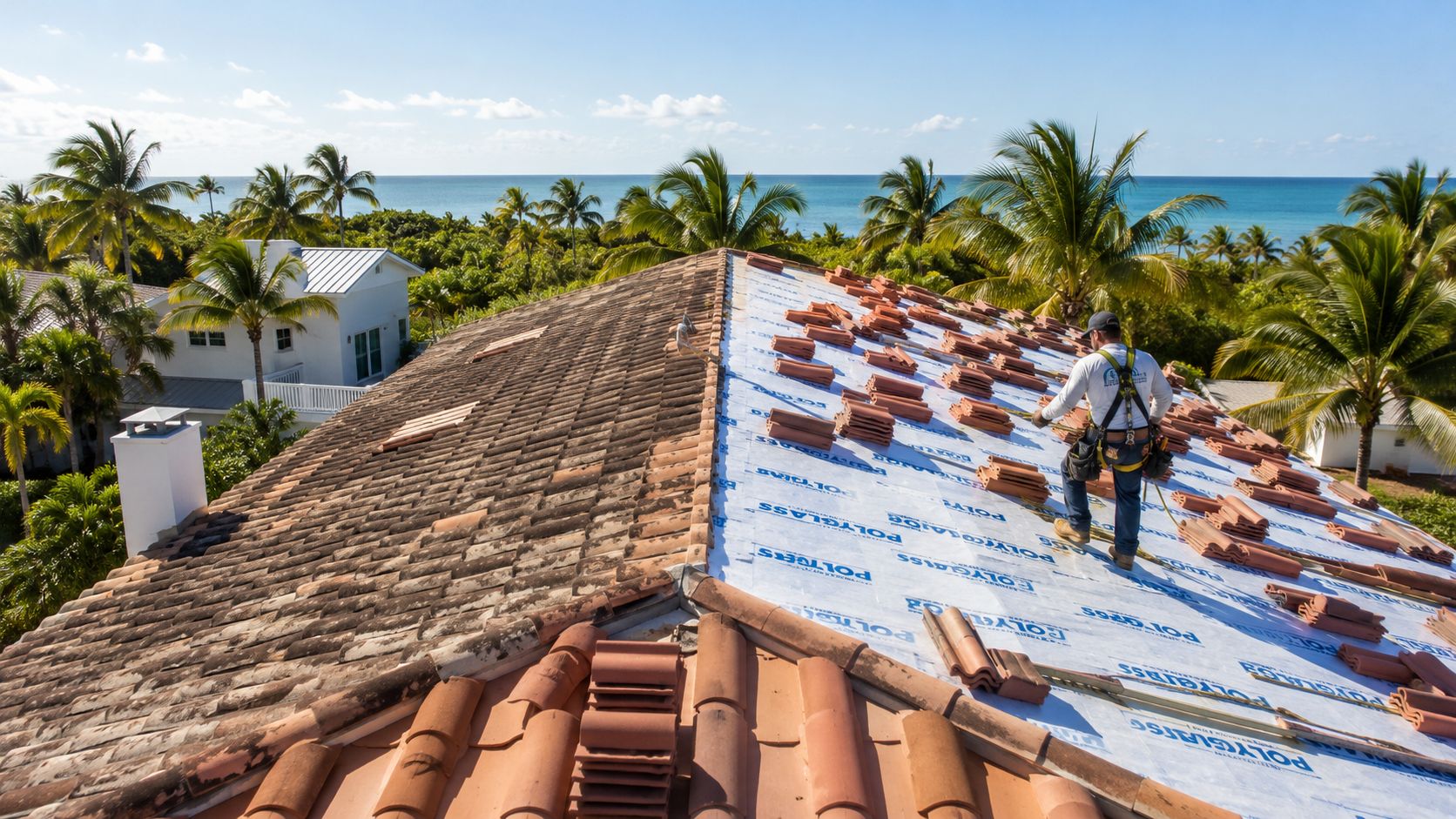
A typical roof replacement Key Biscayne project on a 2,200-square-foot home runs about $12,000 to $24,000 with HVHZ code compliance. Price swings come from permit timing, roof system choice, and whether the work needs to be a full replacement instead of another patch.
If you live on the island, you already know the problem rarely starts with a dramatic failure. It starts with a stained ceiling after a storm, a few loose tiles, or a contractor telling you the roof can be “repaired for now.” In Key Biscayne, that answer can get expensive fast when the roof is aging, the damage is widespread, or the code path pushes you toward a full reroof instead of a bandage.
Table of Contents
- What a Roof Replacement in Key Biscayne Actually Involves
- When Key Biscayne Homeowners Should Replace Instead of Repair
- Key Biscayne Permits and HVHZ Code Requirements
- Choosing the Right Roofing Material for Coastal South Florida
- How to Vet a Key Biscayne Roofing Contractor
- What to Expect From Tear-Off Through Final Inspection
- Financing, Insurance Claims, and Post-Installation Care
What a Roof Replacement in Key Biscayne Actually Involves
A homeowner on Key Biscayne usually gets pulled into a replacement decision after a storm exposes an old tile system, or after the third leak in the same ceiling line. At that point, the question is no longer whether the roof looks tired, it's whether the roof can still be brought back into compliance without wasting money on short-lived fixes.
The cost picture starts with the local market. A 2026 Miami roof-replacement guide puts a standard 2,200-square-foot home at about $12,000 to $24,000, and says HVHZ code compliance can add 15% to 30% versus non-HVHZ Florida zones. The same guide places tile roofs at $18,000 to $40,000 and standing-seam metal roofs at $20,000 to $35,000, which is why material selection matters so much in coastal work. RoofVista's Miami roofing cost guide is useful because it shows how quickly the total moves when code and material demands stack together.
The seven-phase sequence that keeps the job legal and durable
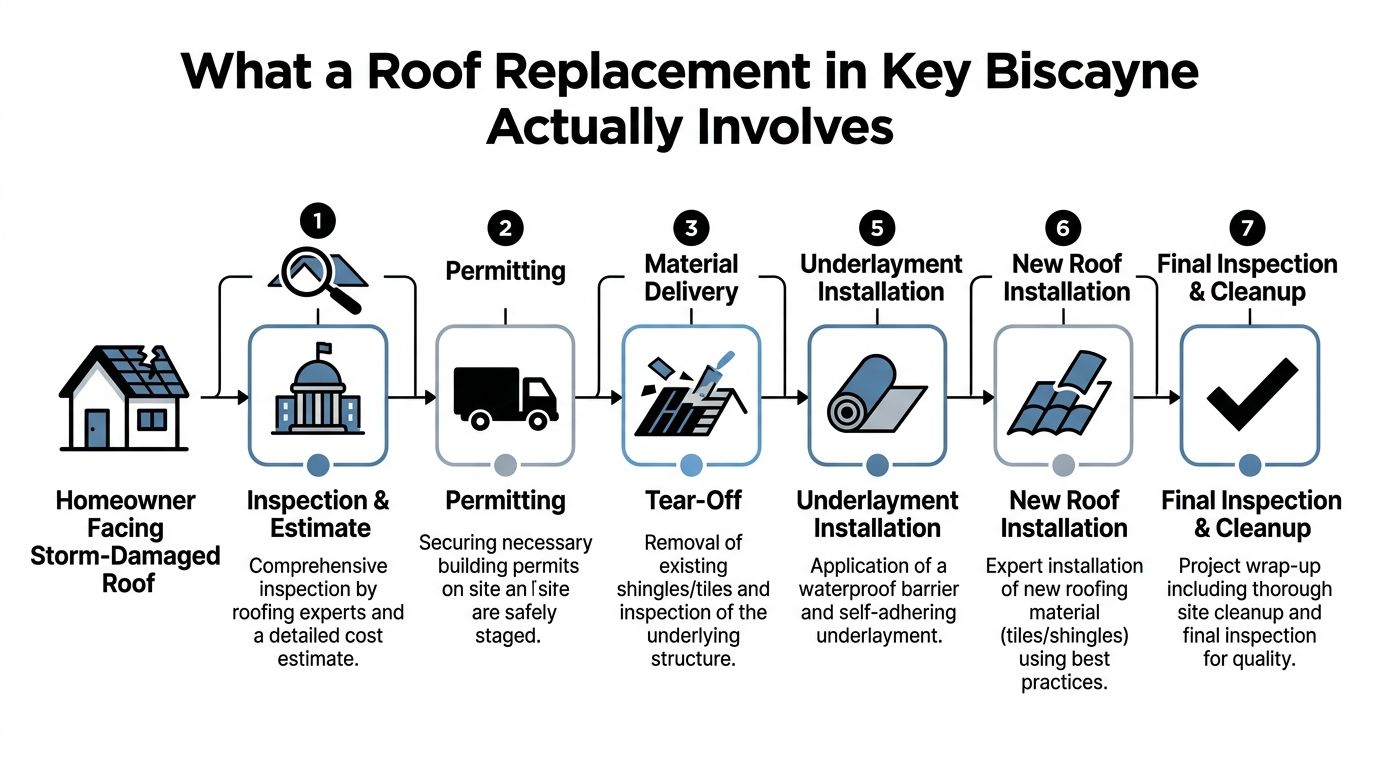
A proper roof replacement Key Biscayne job follows a sequence for a reason. First comes inspection and estimate, then product and NOA selection, then permit issuance before tear-off. After that, crews move through deck inspection and re-nailing to code, secondary water barrier and underlayment installation, covering and flashing, and finally final inspection with wind-mitigation documentation. This order protects the home, but it also protects the permit record and the insurance trail.
Practical rule: if a contractor wants to start ripping off material before the permit is issued, that's a stop sign, not a convenience.
The part homeowners underestimate is the deck work. On an HVHZ roof, the nailing pattern and substrate condition are not side issues, they're part of whether the roof is accepted at closeout. Skipping that step can create legal and insurance problems later, especially if the roof is sold, inspected, or challenged after a loss.
Why the order matters on the island
Key Biscayne isn't a place where you can treat a reroof like a simple tear-off and re-cover. The island's exposure to wind, salt, and driving rain makes the underlayment, flashing, and final documentation part of the system, not add-ons. A good contractor also keeps the homeowner informed about what gets discovered under the old roof, because hidden deck damage changes scope quickly.
A replacement done in the right order does more than stop leaks. It creates a roof that can be inspected, documented, and defended if the home is refinanced or sold. A roof done out of sequence may look finished from the street, but that doesn't make it usable in the ways homeowners need.
When Key Biscayne Homeowners Should Replace Instead of Repair
The line between repair and replacement is where many homeowners waste money. A few damaged tiles after a windy afternoon are one thing. A roof with recurring leaks, aging underlayment, and scattered storm damage across multiple slopes is another.
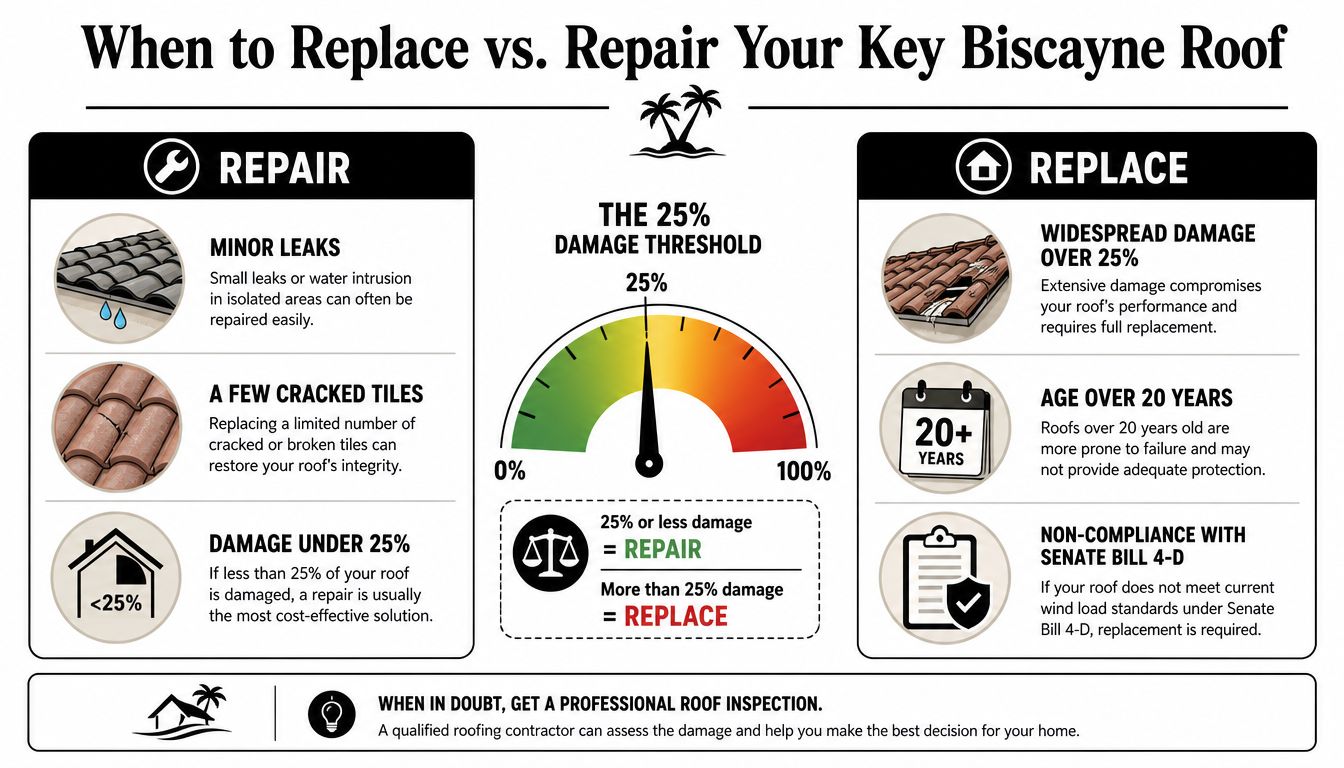
South Florida still uses a practical 25% roof-damage threshold as a decision benchmark, where damage above that level often makes full replacement the more cost-effective and structurally sound option than repeated patching. Florida law changed again with Senate Bill 4-D, which took effect on May 26, 2022, and an independent legal guide says the repair trigger rose from 25% to 50% under that law. The same guide notes that My Safe Florida Home grants can reach $10,000 for hurricane-hardening improvements, including roof upgrades. Florida roof replacement law guidance
The age and code question
Newer roofs are treated differently. Florida law can allow partial repair for roofs built or replaced after March 1, 2009 that meet the 2007 Florida Building Code or newer, while older or non-compliant roofs are more likely to run into the replacement trigger. That's where confusion often starts. Homeowners hear one threshold from a contractor, another from a neighbor, and a third from an insurer, then try to make a decision based on the cheapest answer.
The better question is whether the roof still has a clean path back to compliance. If the answer is no, repair money can disappear fast with little long-term gain. I've seen owners keep patching a tired roof because each fix felt manageable, only to end up paying for multiple visits, multiple disruptions, and a replacement anyway.
Widespread patching on an aging roof often costs more in the long run because each repair has to work around old materials that are already failing.
A useful way to think about the trade-off
If the damage is localized, the roof is newer, and the repair can be documented cleanly, repair makes sense. If the roof is older, the leaks keep moving, or the damaged areas are spread across different sections, replacement usually wins on durability and code certainty.
That's especially true on Key Biscayne, where one bad storm can reveal a larger pattern of failure that was already developing. The mistake isn't choosing repair once. The mistake is treating a roof with repeated failures as if it still has a simple repair future.
See a storm-damage example here: hurricane roof damage repair reference image
Key Biscayne Permits and HVHZ Code Requirements
Key Biscayne is not forgiving about paperwork. The permit window is narrow, the county rules are strict, and roofing work done outside the permit path can become a problem long after the crew leaves. A full replacement in Miami-Dade, Broward, or Palm Beach counties requires a roofing permit, and unpermitted work can block home sales, void insurance claims, or even force removal of the roof.
The Village of Key Biscayne also has a very specific schedule. Permit activity is limited to 7:30 a.m. to 12:30 p.m., Monday through Thursday, with no activity on Friday. Walk-through permits and plan review are also Monday through Thursday only, and structural walk-throughs run 7:30 a.m. to 11:30 a.m. Village of Key Biscayne permit application schedule
What the permit workflow really looks like
The workflow should start with inspection, estimate, and product selection, not with demolition. In practice, that means the contractor gathers the roof assembly details, chooses an approved product, and submits for permitting before tear-off begins. Miami-Dade's high-velocity rules mean the product selection isn't cosmetic, it has to be acceptable for the coastal wind environment.
The county also has a narrow exemption. A licensed roofing contractor may repair or replace a roof covering without a permit only if the work is not more than $2,000 in materials and labor and not more than two roofing squares in extent. Miami-Dade's permit exemption rule matters because homeowners sometimes assume small patch work can be stretched into a larger job. It can't.
What to ask before work starts
| Roof Work That Does and Does Not Require a Key Biscayne Permit | ||
|---|---|---|
| Work Scope | Permit Required? | Notes |
| Small licensed repair within the county exemption | No | Only if it stays within the $2,000 and two roofing squares limit |
| Full roof replacement | Yes | Required in Miami-Dade, Broward, and Palm Beach counties |
| Tear-off before permit approval | Yes, and that is a problem | Creates legal and inspection risk |
| Contractor requesting homeowner to handle permitting | Usually a warning sign | The contractor should handle the permit path |
Ask for the NOA product list up front, because HVHZ work lives or dies on approved assemblies. If a contractor can't explain the product approval and underlayment stack in plain language, the project is probably not being managed with enough discipline for this market.
Choosing the Right Roofing Material for Coastal South Florida
Material choice changes the whole project, from budget to curb appeal to how the roof ages in salt air. On Key Biscayne, the decision usually falls between asphalt shingles, tile, and standing-seam metal, and each one solves a different problem.
Shingles are the most cost-conscious choice, and they can fit certain homes well, especially when the architecture is simpler or the owner wants to keep the project lean. Tile and metal dominate more of the island because they fit the coastal look and tend to align better with HVHZ expectations. RoofVista's Miami pricing guide places tile roofs at $18,000 to $40,000 and standing-seam metal roofs at $20,000 to $35,000, which shows how much the system choice affects the total budget. RoofVista's Miami roofing cost guide
Comparing the three main options
| Material | Cost profile | Wind and durability profile | Best fit |
|---|---|---|---|
| Asphalt shingles | Usually the budget option | Commonly chosen for simpler reroofs and shorter planning horizons | Owners prioritizing lower upfront spend |
| Tile | Higher upfront cost, especially in coastal code work | Strong fit for South Florida homes and island architecture | Homes where appearance and long service life matter |
| Standing-seam metal | Often near the top of the price range | Suits harsh weather exposure and modern detailing | Owners who want a durable coastal system |
How the material interacts with the house
A roof should fit the structure, not just the budget. Heavy tile can look right on a traditional Key Biscayne home, but it needs a contractor who knows how to handle the system details. Standing-seam metal brings a different visual line and often works well where the owner wants a cleaner profile and strong wind performance.
Color matters too, especially under direct sun. Lighter tones can help the roof feel less heat-soaked, while darker finishes create a more dramatic look. HOA rules can narrow the palette quickly, so don't choose from a brochure before checking what the community will approve.
If the house is close to the water and the owner plans to stay long term, I usually push the discussion toward durability first and appearance second, not the other way around.
Insurance expectations also shape the conversation. Some carriers are more comfortable with documented HVHZ-rated assemblies, and that can affect how a roof is viewed after installation. The right answer is rarely the flashiest material, it's the material that fits the home, the code, and the owner's actual holding period.
How to Vet a Key Biscayne Roofing Contractor
A good contractor on Key Biscayne should sound organized before the first ladder goes up. They should be able to show a Florida Certified Roofing Contractor license, and the insurance certificates should come directly from the carrier, not as a blurry attachment pulled from some old email chain. If they hesitate on either point, keep shopping.
The next filter is permits. The contractor should pull the permit themselves, explain the inspection sequence, and name the product approvals they plan to use. If they ask you to pull the permit, that's usually a sign they're trying to shift responsibility onto the homeowner.
What the written estimate should include
Ask for three written estimates and compare them line by line. Each one should break out labor, materials, permit fees, and tear-off disposal, not bury those costs in a single lump number. A clean estimate also names the roof system, the deck work, and the warranty terms.
One useful outside resource for homeowner due diligence is making a confident hiring decision, because the same logic applies here, verify the coverage and don't confuse a polished sales pitch with proof of protection.
Red flags that save trouble later
- Storm-chasing door knocks: unsolicited bids after a major storm often come with rushed scopes and weak follow-through.
- Large upfront deposit demands: a contractor should be able to explain the payment schedule without pressure.
- Vague contracts: if the scope doesn't name materials, approvals, and permits, you're signing too much blind faith.
- No NOA product list: in HVHZ work, that missing list is a serious gap.
- Homeowner-permit workaround: a contractor who pushes that approach is handing you the risk.
For a project checklist example, see this reference view: roofing company measuring and checklist image
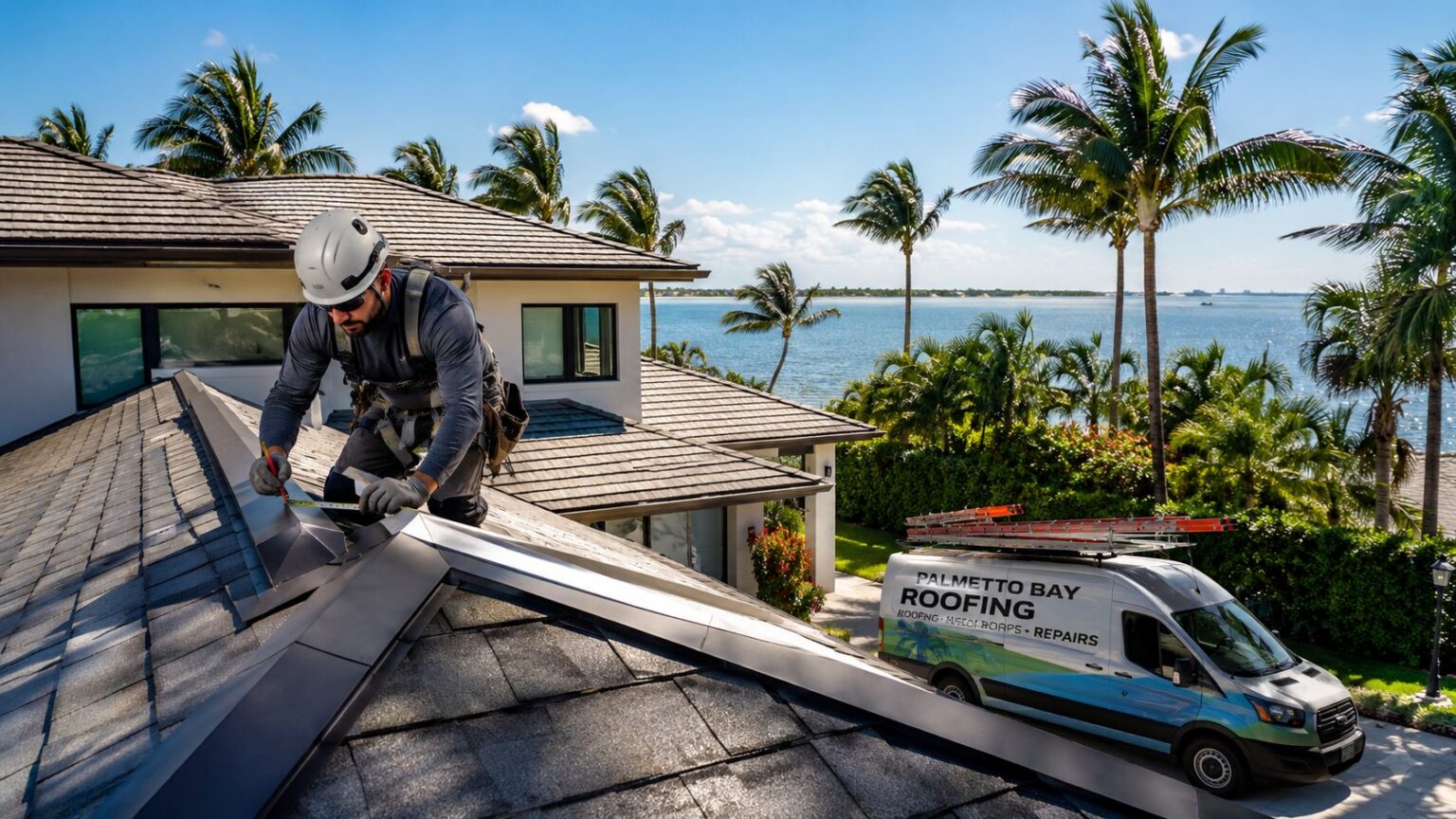
I've also seen homeowners ask about Paletz Roofing and Inspections during estimate comparisons, since the company provides roof inspections and replacement work across South Florida, but the core test remains the same. The contractor should be licensed, insured, clear on permits, and able to explain the job without hiding behind jargon.
What to Expect From Tear-Off Through Final Inspection
A roof replacement on Key Biscayne is loud, messy, and very ordinary once it starts. The homeowner usually spends the first morning moving patio furniture, covering valuables, and making sure the driveway and pool area are protected. After that, the dumpster shows up, the crew stages material, and the tear-off begins.
On a normal day, the first surprise is how much debris comes off a roof that looked “fine” from the street. The second surprise is what's under it, because deck re-nailing or sheet replacement can change the pace of the job once the old covering is gone. If rain threatens an open deck, crews stop work and secure the surface, because the priority shifts from speed to keeping water out.
The closeout steps homeowners should expect
By the end of the project, there should be a final municipal inspection and a wind-mitigation record if the roof qualifies for one. That paperwork matters because it becomes part of the home's documentation trail. The homeowner should also receive the permit closed card, manufacturer registration, and warranty paperwork before the job is finished.
Keep stray nails off the property by walking the yard after the crew leaves, especially along driveways, pool decks, and the side yard where tires and bare feet are most exposed.
Parking and neighbor notice matter more on Key Biscayne than they do on a wider suburban street. Narrow roads make material drops and dumpster access a planning issue, not a minor inconvenience. Good crews coordinate that ahead of time so the job doesn't create avoidable friction with the block.
For a closeout reference, this inspection-oriented visual can help you picture the final handoff: Paletz Roofing inspection logo image

Financing, Insurance Claims, and Post-Installation Care
A replacement roof is a capital decision, so the money side deserves as much discipline as the construction side. After storm damage, homeowners should document the roof with photos, save dates and repair notes, and keep every estimate in one place before the adjuster visit. That file makes the claim conversation much cleaner, especially when the damage pattern is spread across multiple slopes.
The financing side has a few real-world paths. Some owners use contractor payment plans, some use home equity lines, and some lean on grant support where they qualify. Florida's My Safe Florida Home program can provide grants of up to $10,000 for hurricane-hardening improvements, including roof upgrades, which can help offset part of the project cost. Florida roof replacement law guidance
Maintenance that actually preserves the investment
Once the roof is on, the goal is to keep small problems small.
- Annual inspections: catch lifted flashing, loose fasteners, and wear before they become leaks.
- Gutter cleaning: keep water moving away from the roof edge and fascia.
- Sealant checks: inspect flashing and penetrations where sealant naturally ages out first.
- Trim tropical foliage: reduce scuffing on tile and keep moisture from sitting against the roof surface.
Insurance claims can be helpful, but they're not magic. A public adjuster or attorney can add value when the damage is disputed, the scope is complex, or the carrier's position doesn't match the roof condition. The key is to avoid waiting until the file is thin, because weak documentation creates avoidable friction.
If you want a roof estimate that's grounded in HVHZ realities, code timing, and the actual replacement sequence that Key Biscayne demands, visit Paletz Roofing and Inspections and ask for a free estimate. A solid consultation should tell you whether repair is still viable, whether replacement is the smarter call, and what the permit and material path will look like before work begins.