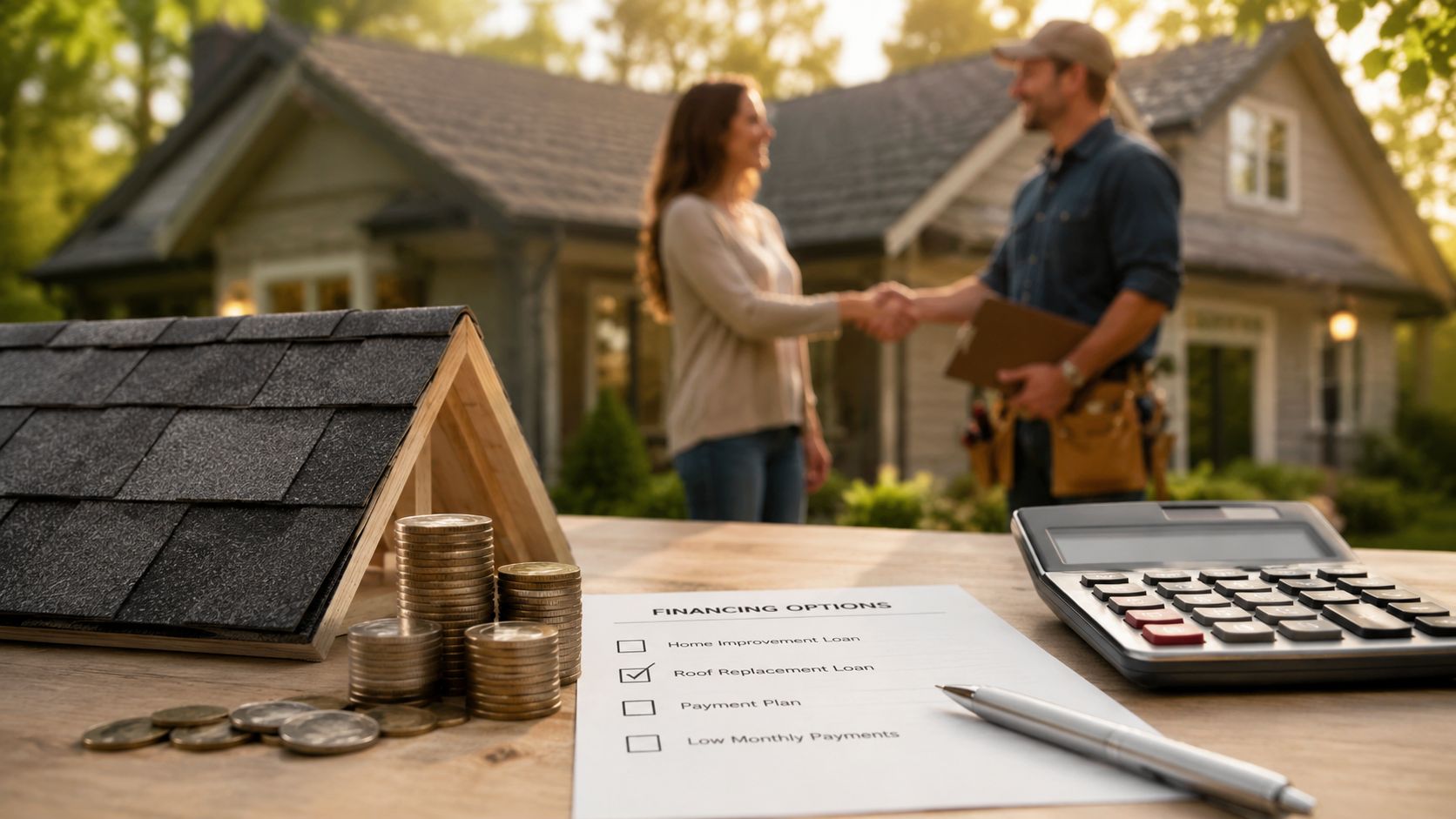
A roof leak never picks a convenient day. One storm rolls through South Florida, the ceiling stains appear, and suddenly the estimate on your kitchen table looks bigger than the savings account you hoped would cover it. That's when roof replacement financing options stop being a finance topic and become a home-protection decision.
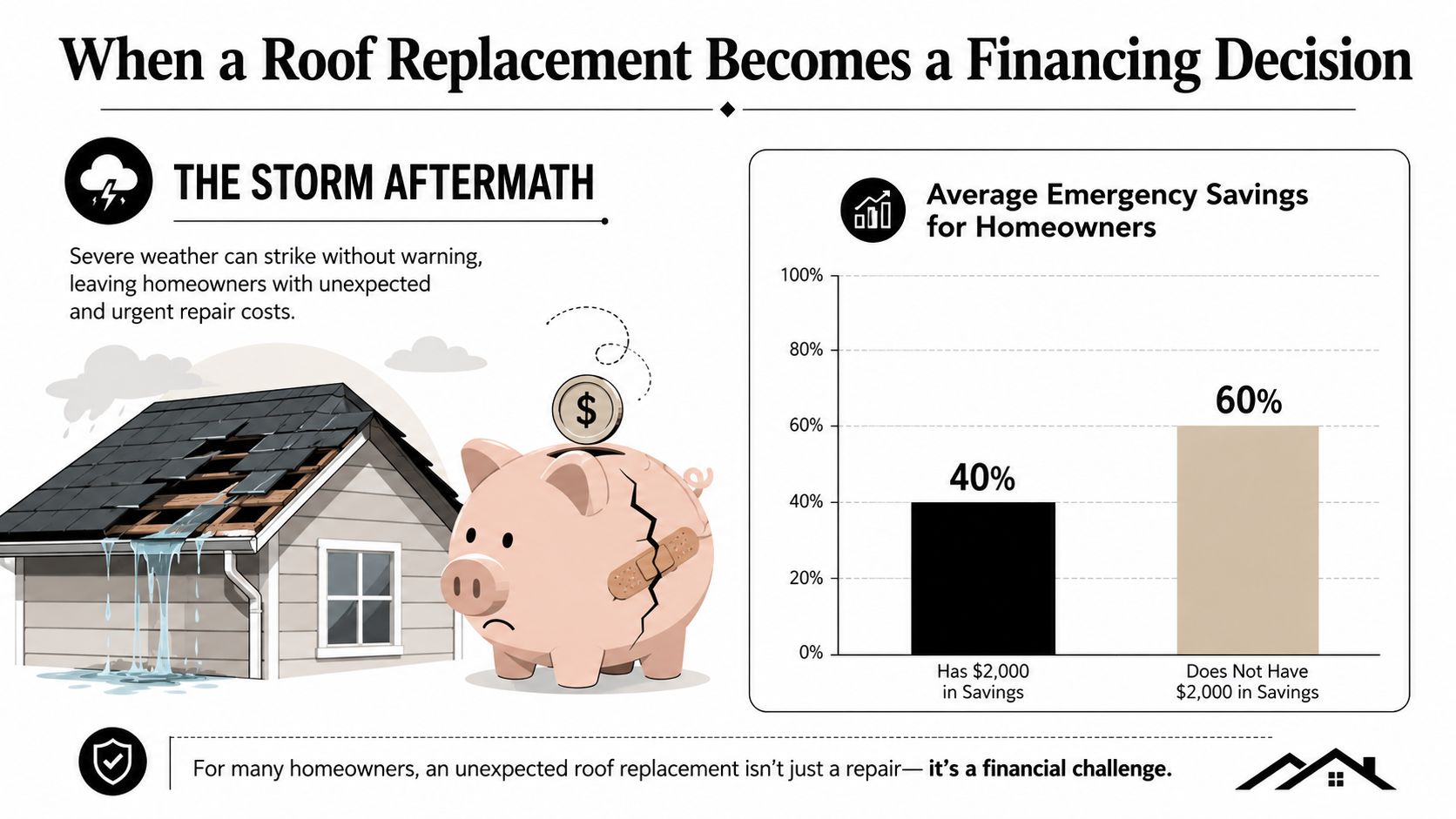
The Storm Aftermath
A damaged roof is rarely just a roofing issue. Water keeps moving, wood keeps soaking, and the repair bill gets uglier the longer a homeowner waits. If you're staring at a five-figure estimate after a storm, financing is usually the bridge between urgent work and a budget that can handle it.
A quick emergency tarp can buy time, but it doesn't solve the underlying problem. You can see a typical emergency setup in this roof damage tarp example, and it's a reminder that temporary protection and permanent replacement are two very different jobs.
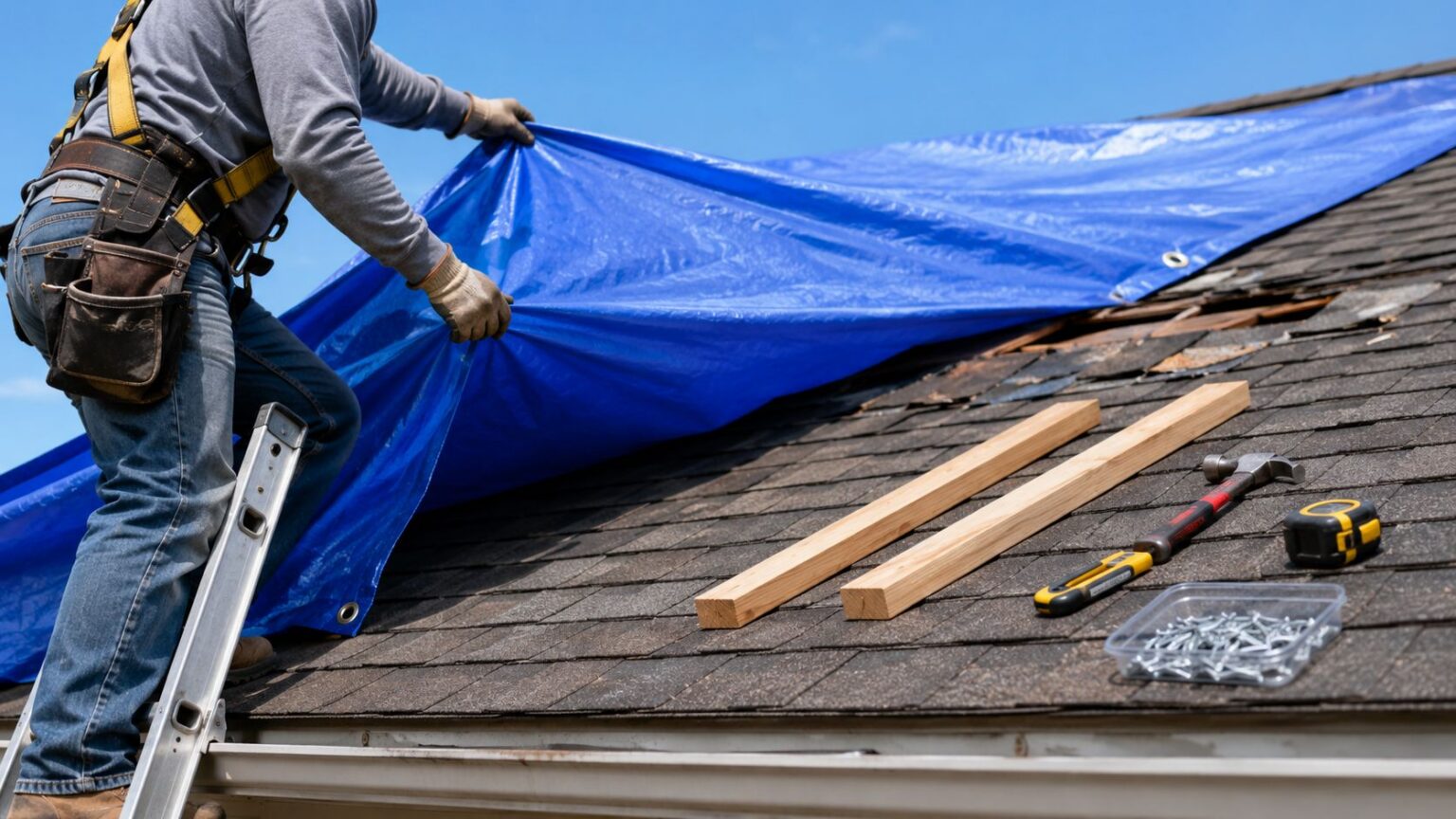
Table of Contents
- When a Roof Replacement Becomes a Financing Decision
- How Roof Replacement Financing Is Structured
- Comparing the Core Borrowing Options
- Contractor Financing and the 0% Promo Trap
- Florida-Specific Paths Most Guides Skip
- How to Compare Offers and Spot the Bad Ones
- How a Licensed Roofer Keeps the Financing on Track
When a Roof Replacement Becomes a Financing Decision
A homeowner gets the estimate, looks at the number twice, then starts doing the same mental math I see all the time in Broward and Miami-Dade. “Can I put this on savings? Can I wait? Can I split it?” That hesitation is normal, but it's also where people make expensive mistakes. The roof doesn't care about your timing, and neither does water intrusion.
The bigger truth is simple. Roof replacement financing has become mainstream because the project cost is often too large to treat like a routine repair. One 2025 industry estimate puts the average roof replacement at $21,050, with most homes falling in the $15,160 to $27,580 range and larger homes reaching $25,000 to $40,000. In the same dataset, 65% to 75% of homeowners reportedly use financing programs rather than paying cash, while cash payments account for less than 30% of projects, according to the referenced market data from Ridge Line Roofing.
Why waiting usually costs more
Delaying a replacement rarely makes the number smaller. Once leaks start, homeowners are often paying for ceiling repairs, insulation damage, or interior cleanup on top of the roof itself. Financing can be the cleaner move because it lets you solve the roof problem now instead of turning a roof project into a broader restoration bill later.
Practical rule: If the roof is already leaking, treat financing as part of the repair plan, not as an afterthought.
That's the advantage of understanding your options before signing anything. You negotiate from a better position, you can start the work faster, and you're less likely to accept the first offer just because the house is already under stress. For a visual example of how quickly roof damage can escalate, look at the photo-documented inspection process used in South Florida, because lenders and insurers both care about documentation.
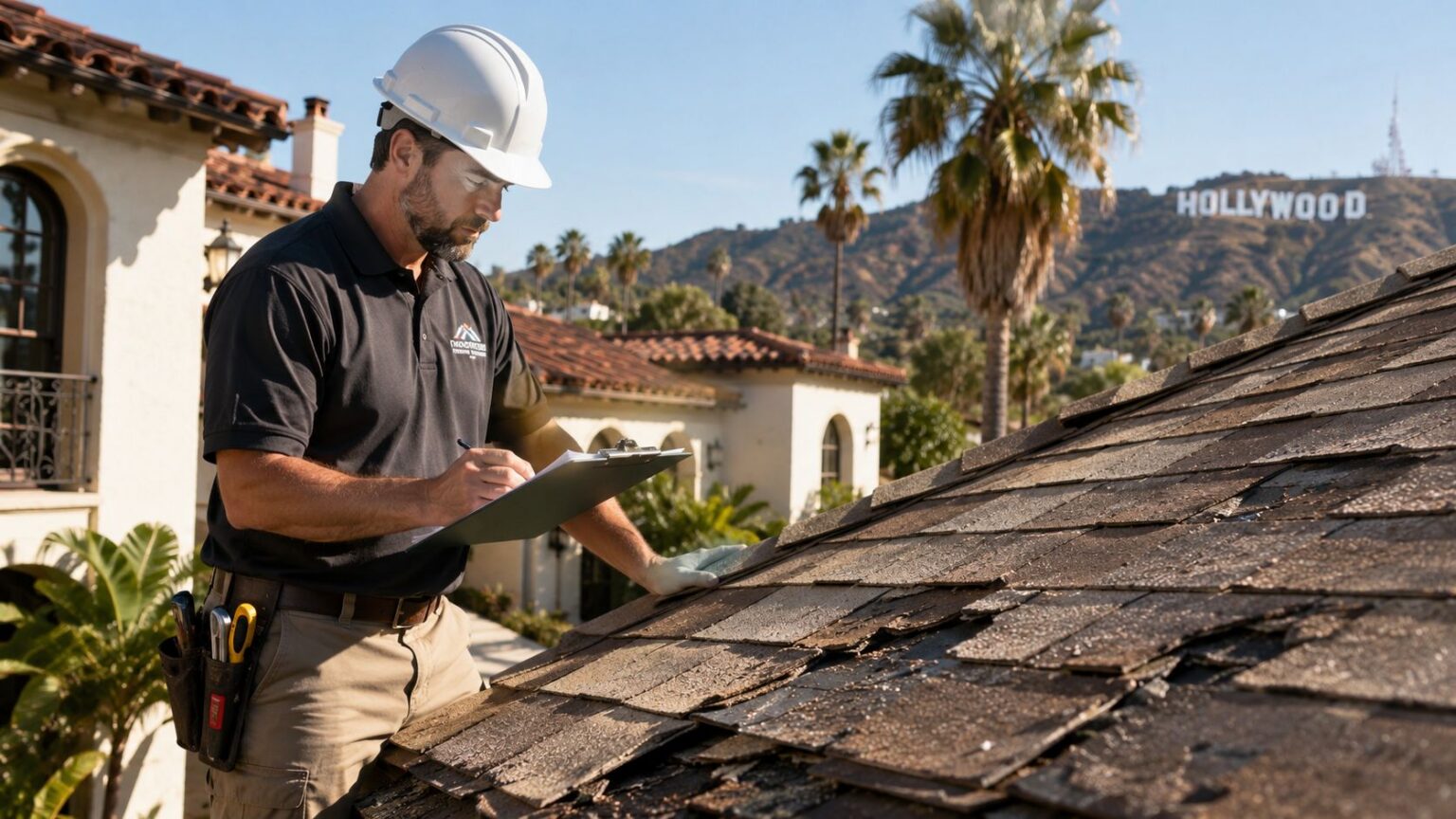
The homeowners who do best usually do one thing first. They stop thinking in terms of “Can I afford a roof?” and start thinking in terms of which financing structure fits my equity, credit, and timeline. That mindset keeps the project moving without surrendering control.
How Roof Replacement Financing Is Structured
A homeowner gets the roof estimate, calls the lender, and the file starts moving from there. The structure matters. Some loans are secured, which means the lender has collateral. Others are unsecured, which means approval leans more on credit, income, and debt profile. In storm cases, the contractor and the insurer can also sit inside the same transaction, because the roof, the claim, and the funding all have to match.
The four main buckets
The market usually breaks down into four families. Equity-based loans include home equity loans and HELOCs. Unsecured personal loans do not require home equity. Contractor-arranged financing runs through lending partners the roofer already works with. Government and specialty programs include options such as FHA Title I and state or utility-linked pathways.
That structure matters because each bucket solves a different problem. Equity products usually cost less when you have room in the property. Personal loans and contractor plans tend to move faster. Government-backed or specialty programs can help when equity is thin or credit is not ideal.
What lenders usually want to see
Before a lender moves money, expect to provide the basics. That usually means identification, proof of income, recent bank statements, and a contractor estimate. If you are using a secured product, property paperwork belongs in the file too. A practical credit approval checklist helps homeowners gather the documents underwriters ask for before the application gets stuck.
Good paperwork shortens the process. A clean estimate, clear photos, and readable income documents solve more delays than a lower advertised rate ever will.
A licensed roofer matters in this workflow because lenders want a project they can verify. The estimate has to match the scope. The photos have to show the damage. The paperwork has to make sense when the lender reviews it. When those pieces line up, approval is usually smoother and funding is less likely to stall.
A contractor also helps coordinate with insurance if a claim is involved. That matters in South Florida, where storm damage often becomes a documentation exercise before it becomes a financing exercise. For homeowners comparing broader home-loan structures, home loan tips from Everglow Prosperity can help as a planning reference, but roof financing still needs its own scope, timeline, and collateral decision.
Comparing the Core Borrowing Options
The right loan depends on three things, equity, speed, and how long you plan to carry the balance. If you have enough equity and decent credit, secured borrowing usually wins on price. If you need the roof started fast or don't have equity to tap, unsecured options become more practical even if they cost more.
Core Borrowing Options at a Glance
| Option | Typical APR | Term | Funding Speed | Best For |
|---|---|---|---|---|
| HELOC | 7% to 10% variable APR | Revolving draw plus repayment period | Usually 2 to 6 weeks | Homeowners who want flexibility and have equity |
| Home equity loan | 6.5% to 9% fixed APR | Fixed repayment term | Usually 2 to 6 weeks | Homeowners who want predictable payments |
| Personal loan | 7.99% to 24% APR | Fixed installment term | Faster than secured loans | No-equity cases or short emergency timelines |
| Credit card | 18% to 29% APR | Revolving balance | Immediate | Very small balances or temporary bridge use |
The secured options usually cost less because the lender has the home as backing. A March 2026 market snapshot placed home equity loans and HELOCs around 7.23% to 7.87% and described them as the lowest-rate path for homeowners with at least 20% equity and credit scores above 680. The same source estimated a typical financed roof project at $12,000 to $16,000, with a 10-year home equity loan at 7.87% translating to roughly $146 to $195 per month. That market snapshot also referenced roof financing options for homeowners comparing rate-sensitive choices.
The trade-off is time. A HELOC or home equity loan can take weeks, and closing costs can add 2% to 5% to the effective borrowing cost, according to the referenced 2026 guide from Get Global Roofing. If your roof is actively letting water in, that delay can be a real problem.
How to choose without overthinking it
- No equity and an urgent leak: Use a personal loan or contractor financing.
- Enough equity and a normal schedule: Choose a home equity loan if you want fixed payments.
- You need flexibility for add-on work: A HELOC fits phased projects better.
- You can pay it off quickly: A credit card can work, but only as a short bridge, not a long-term balance.
The smartest homeowners compare total cost, not just the monthly payment. A lower payment can hide a longer term, and a longer term can push the total cost higher even when the headline rate looks attractive. That's why the lowest advertised rate isn't automatically the cheapest loan.
Contractor Financing and the 0% Promo Trap
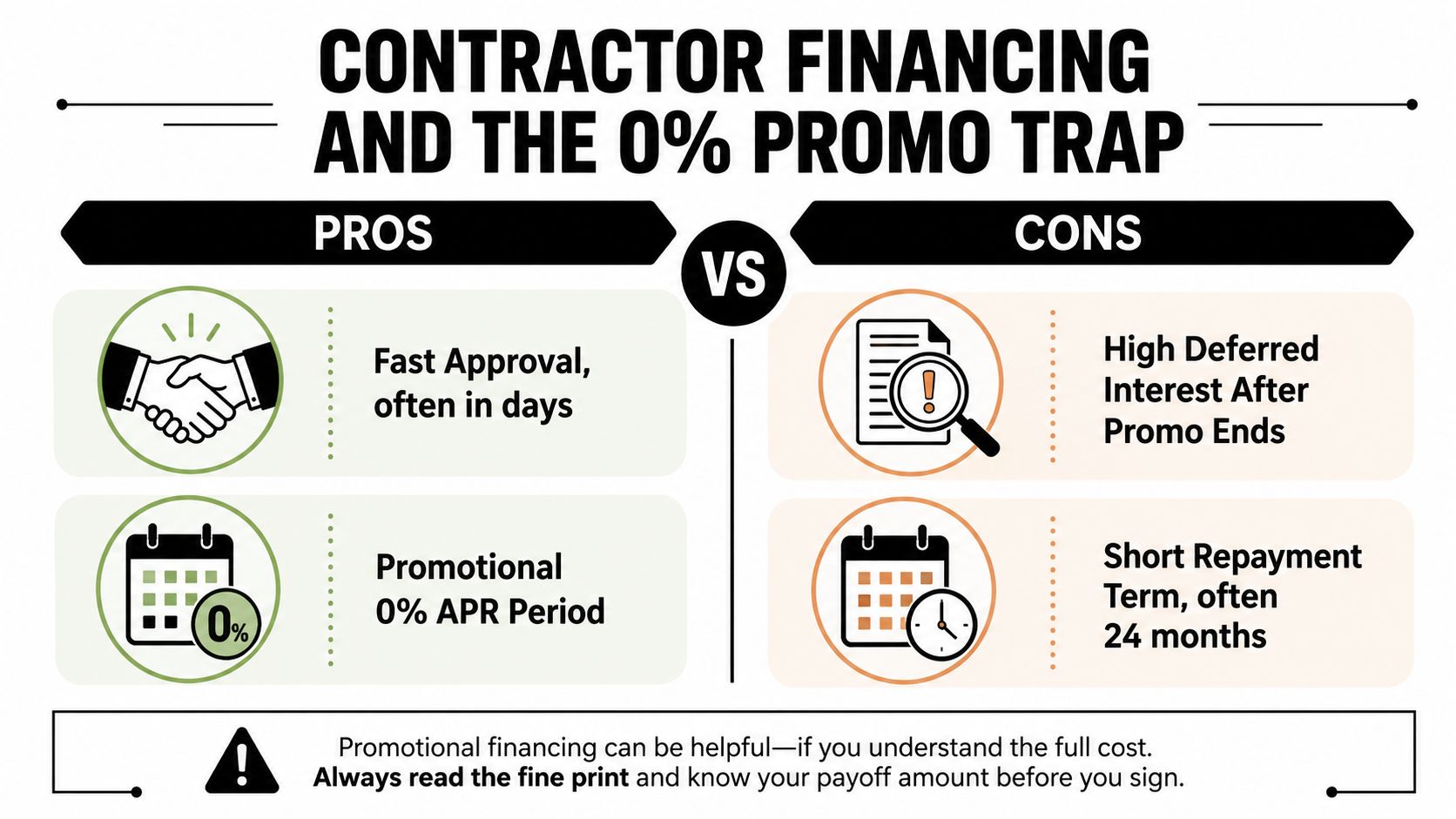
Contractor financing is popular for one reason. It's fast. The roofer partners with a lending company, the homeowner applies on-site or online, and approval can come quickly enough to keep the job moving. That speed matters when the roof can't wait for a traditional bank process.
Why the offer looks good on paper
The appeal is obvious. These plans can offer 0% intro periods of about 6 to 24 months, and they often don't require home equity. Sources also describe the approval path as faster than bank-secured products, which makes them useful when the roof has to start immediately. A 2026 financing guide from Roofing Experts Network notes that the technical risk is what happens after the promotional window ends.
That's the part homeowners miss. If the balance isn't paid off in time, the rate can jump into the 12% to 29% APR range. In some offers, the problem is deferred interest, which means the lender may charge interest retroactively on the original amount if the balance isn't cleared by the deadline.
What happens with a $15,000 balance
A homeowner finances $15,000 for a roof and assumes the 0% period gives plenty of breathing room. If the entire balance is still there when the promo ends, the loan stops being cheap fast. The monthly payment may still look manageable, but the payoff math changes the moment the promotional term expires.
Bottom line: If you can't realistically clear the balance before the promo ends, don't treat 0% as savings.
That's why I'm blunt with homeowners about this product. It's a good tool for a short, disciplined payoff window. It's a bad tool for people who think they'll “figure it out later.” Roofs don't reward wishful thinking.
The right questions are straightforward. Ask whether the offer is true 0% or deferred interest. Ask what the rate becomes after the promo. Ask whether the payment schedule retires the balance in time. If you're weighing roof financing against other household debt decisions, the article should I pay off my mortgage is a useful reminder that timing, interest, and liquidity all matter in different ways.
Florida-Specific Paths Most Guides Skip
Storm country changes the financing conversation. In Broward, Miami-Dade, and Palm Beach, a roof replacement often starts as an insurance question before it becomes a loan question. Hurricane and wind damage can create an insurance claim, and the payout structure affects how much of the project still needs to be financed.
Insurance, ACV, and RCV
If the carrier approves the claim, the settlement may not cover everything homeowners expect. ACV, or actual cash value, generally leaves more of the replacement burden on the homeowner than RCV, or replacement cost value, because depreciation changes the payout math. That gap is where financing often comes in, especially when the carrier's check doesn't fully match the contractor's estimate.
The important move is to document the damage early and clearly. Photos, inspection notes, and a detailed scope help an adjuster understand what happened and help the contractor prepare a quote that the lender can review. After a storm, the homeowner who documents first usually has fewer headaches later.
PACE, state help, and other niche options
PACE, or Property Assessed Clean Energy, is one of the few major options that can avoid a credit-score requirement. The trade-off is that repayment is attached to the property tax bill, which makes the lien structure worth understanding before anyone signs. It can make sense when the work ties into efficiency upgrades, but the property-based repayment mechanism is not something to gloss over.
Florida homeowners also run into programs that national guides often ignore. My Safe Florida Home can matter for eligible storm-hardening work. FHA Title I can finance up to $25,000 without home equity, based on the referenced neutral guide from Squaredash. USDA Section 504 and weatherization programs can be ultra-low-cost or grant-based for income-qualified borrowers, and some weatherization funding only applies when roof work is bundled with insulation or efficiency upgrades.
Practical rule: If your roof problem is tied to a hurricane claim, don't choose financing until you know what insurance will actually pay.
That's the South Florida reality. The best path is often a mix, insurance proceeds first, then a loan or program for the remaining gap. Homeowners who ignore the claim process usually overborrow, and homeowners who wait too long can end up with more interior damage than they planned for.
How to Compare Offers and Spot the Bad Ones
A low monthly payment can hide a lousy deal. I tell homeowners to look past the headline APR and inspect every line item that changes the cost. Origination fees, closing costs, prepayment penalties, mandatory arbitration, and credit insurance add-ons all matter because they change what you'll owe.
The comparison worksheet to use on every quote
Write each offer down side by side and compare the same fields every time.
- APR: The true annual cost, not just the interest rate.
- Fees: Origination charges, lender fees, and closing costs.
- Term: How long you'll be paying.
- Prepayment penalty: Whether paying early costs extra.
- Funding speed: How fast the money lands.
- Collateral: Whether your house is on the line.
A shorter loan can cost less overall if you can handle the payment. A longer loan can feel easier month to month but still cost more in total interest. That's why APR matters more than the monthly number alone, and why a quote with a slightly higher rate but lower fees can beat the “cheaper” looking option.
Red flags that should make you pause
- Same-day pressure: If someone is pushing you to sign immediately, slow down.
- Vague APR language: If the quote doesn't clearly separate interest and fees, walk away.
- Bundled markups: If extras are hidden inside the financed amount, ask for a line-item breakdown.
- Unclear lender identity: If you can't confirm who is funding the loan, don't share sensitive information.
Before handing over a Social Security number or bank details, verify that the lender is legitimate and that the offer terms match the written paperwork. A real lender won't be offended by a careful buyer. In roofing, rushed financing usually turns into expensive regret.
How a Licensed Roofer Keeps the Financing on Track
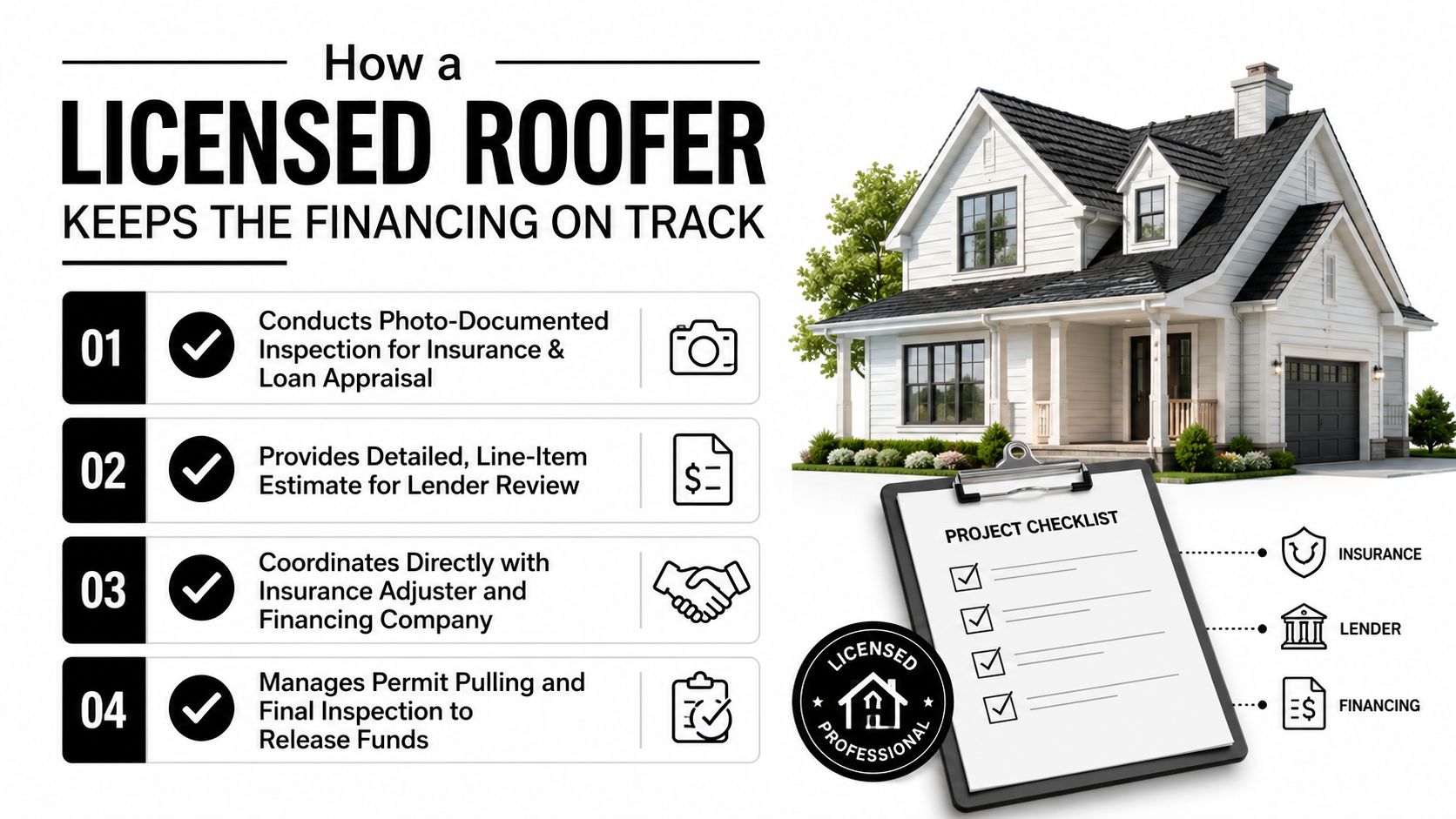
A roof replacement can fall apart fast if the contractor treats financing like an afterthought. The homeowner gets the loan or insurance approval, then the job stalls because the estimate is vague, the photos are missing, or the permit paperwork is incomplete. A licensed roofer keeps those pieces lined up so the project can move from approval to installation without avoidable delays.
How the contractor helps
The process starts with a photo-documented inspection and a detailed line-item estimate. Lenders want a clear scope, insurers want damage proof, and homeowners need a number they can trust before they borrow. In South Florida, that estimate also has to match code requirements and storm-related repair needs, because a financing package built on the wrong scope slows down both approval and installation.
A licensed contractor also keeps the adjuster, the financing company, and the permit office aligned. If the roof needs permits, the contractor handles that part. Final inspection can also tie into the release of funds, which is why a clean paper trail matters from the first visit to the last sign-off. That means fewer calls for the homeowner and fewer gaps where work is approved but not scheduled.
What a homeowner should do next
- Get a written estimate that itemizes labor, materials, and disposal.
- Choose the financing path based on equity, credit, and urgency.
- Gather documents early so the lender is not waiting on paperwork.
- Schedule the work quickly if the roof is already leaking.
A contractor's job is not to sell you a loan. It is to make sure the roofing side and the financing side fit together cleanly. That is what keeps a project on schedule instead of stuck in approval limbo while the damage gets worse.
If you're weighing roof financing after storm damage, Paletz Roofing and Inspections can provide the inspection, estimate, and repair documentation that lenders and insurers usually want to see. Visit Paletz Roofing and Inspections to request a roof assessment, compare your replacement options, and move ahead with a plan that fits the damage, the paperwork, and your budget.