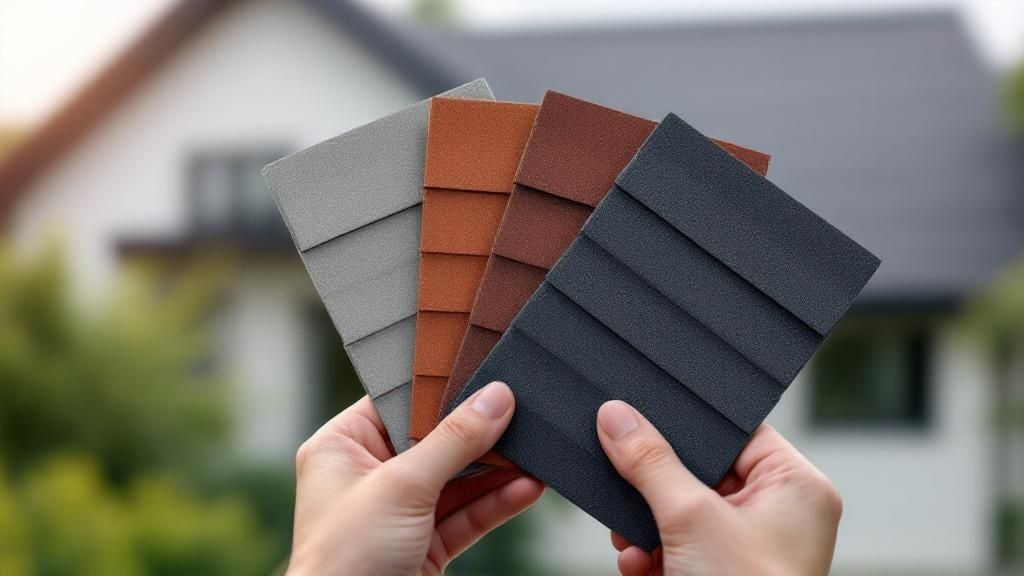
Picking the right roof color might feel like a huge decision, but it boils down to a few key things. You want to create a sense of harmony between your roof, your siding, and other permanent features like brick or stone. Get this right, and you'll seriously boost your home's curb appeal.
Finding Your Perfect Roof Color Quickly
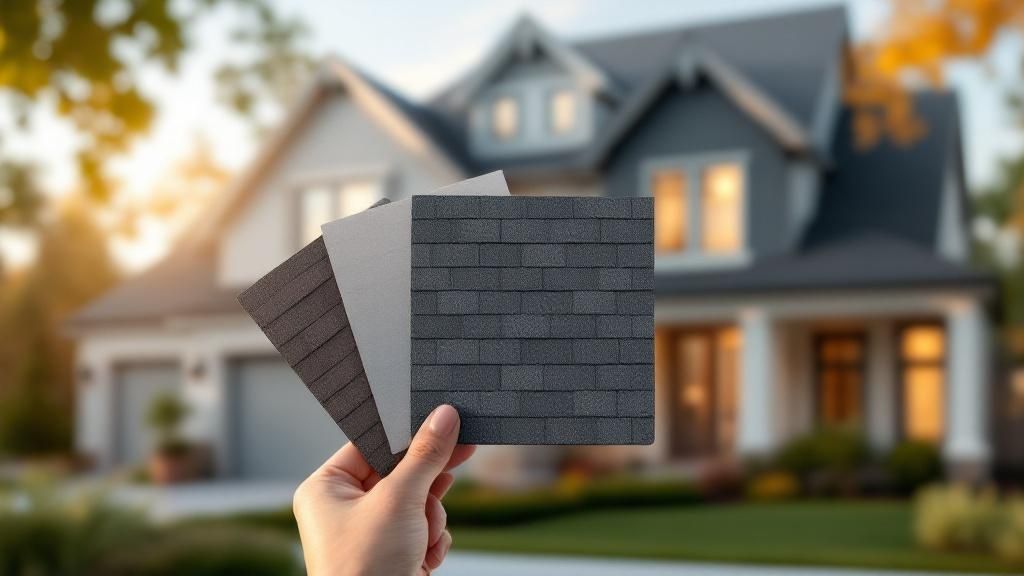
Let's be honest, choosing a roof color is a big commitment, but it doesn't need to be a stressful one. The best-looking homes are the ones where the roof works as part of a complete picture, not as a standalone feature. The goal is to make it feel like it was always meant to be there.
The easiest place to start is with the parts of your home you can't change. Look at your brick, stone accents, siding, or even the color of your window frames. Your new roof needs to complement these existing colors, not fight with them.
For instance, a house with warm, red-toned brick often looks fantastic with a deep brown or a rich charcoal gray. On the other hand, if you have cool blue or gray siding, a slate gray or even a classic black roof can tie the whole look together beautifully.
Climate and Energy Efficiency
Believe it or not, where you live plays a huge role in this decision. Your roof's color has a direct impact on your home's internal temperature, which in turn affects your energy bills.
In hot climates like we have here in South Florida, lighter-colored roofs are a game-changer. They are fantastic at reflecting sunlight, which helps keep your home cooler and gives your AC a much-needed break.
Research shows that light-colored or "cool" roofs can reflect up to 70% of solar radiation, while dark roofs may reflect less than 20%. This difference can lead to a 10-15% reduction in air conditioning usage in warmer regions, offering significant annual savings. You can find more details on these energy efficiency findings from Grandview Research.
For those in colder climates, darker roofs have a slight edge. They absorb more of the sun's heat, which can help melt snow a bit faster and slightly reduce heating costs in the winter.
A Quick Guide to Smart Choices
To make things even simpler, we've put together this quick reference guide. It’s a great starting point for matching popular roof color families with the home styles they suit best, along with their general energy profile. Use it to narrow your options down to a few solid contenders.
Roof Color Quick Reference Guide
| Roof Color Family | Best For Home Styles | Energy Efficiency Profile |
|---|---|---|
| Charcoals & Grays | Modern, Colonial, Craftsman | Good for most climates; mid-to-high heat absorption. |
| Browns & Tans | Rustic, Tudor, Mediterranean | Excellent with warm siding/brick; moderate heat absorption. |
| Blues & Greens | Coastal, Victorian, Cottage | Adds unique character; varies by shade. |
| Whites & Light Tones | Contemporary, Coastal | High solar reflectance; ideal for hot climates. |
This table should give you a clear direction, but remember that seeing samples in person, next to your home's siding and in natural light, is always the final and most important step.
Matching Your Roof to Your Home's Architecture
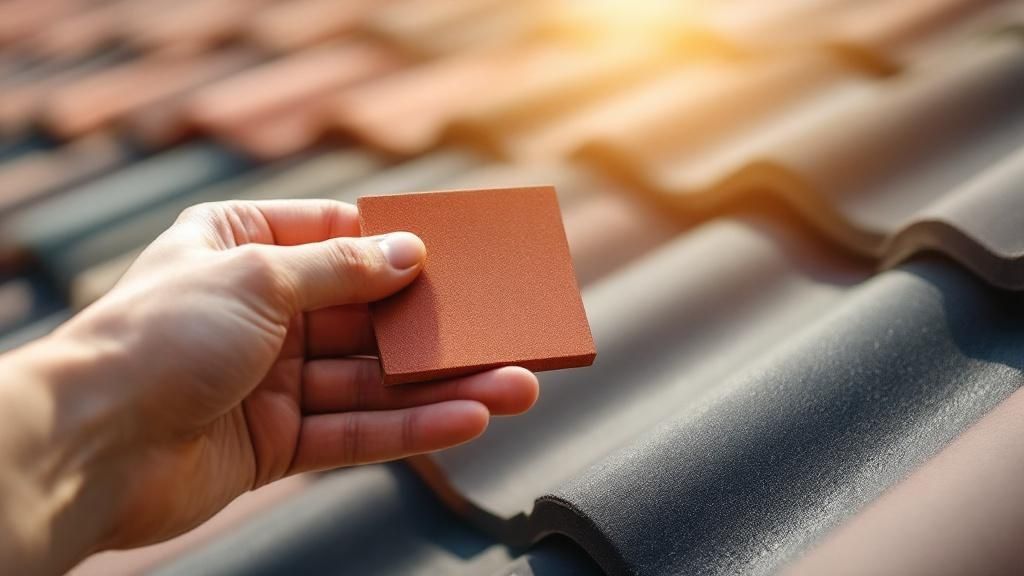
Your roof is much more than just a protective shield over your head—it's a massive design element. In fact, it can make up to 40% of your home's entire visible exterior. The color you pick can either pull the whole look together beautifully or create a jarring visual clash. The first step in choosing a roof color is always to take a hard look at your home's unique architectural style.
Think of it this way: your home’s design tells a story, and the roof color is a huge part of that narrative. You wouldn't put a vibrant, Spanish-tile-red roof on a rustic log cabin any more than you'd top a sleek, modern house with weathered brown shingles. The goal is to choose a color that feels like it belongs, one that complements the home's built-in character.
Colors for Modern and Contemporary Homes
Modern homes are all about clean lines, simple shapes, and neutral color palettes. The roof needs to fall in line with this minimalist vibe, and bold, solid colors are usually the way to go.
- Dark Charcoal or Black: A nearly-black roof on a crisp white or light gray modern home creates a stunning, high-contrast look. It’s a sophisticated choice that feels both timeless and completely current.
- Monochromatic Grays: If you have light gray siding, going with a medium or dark gray roof creates a subtle, layered effect. This adds visual depth without cluttering up that clean, modern aesthetic.
To get a better feel for your home's design, exploring different house elevation design styles can give you some great ideas and a language for the look you're trying to achieve.
Classic Palettes for Traditional Styles
Traditional homes—think Colonials, Tudors, and Craftsman styles—just feel right with classic, historically-inspired colors. These homes often feature rich textures like brick and stone, and those materials should be your guide when picking a roof color.
For a classic red brick Tudor, a deep charcoal or even a true black roof provides a stately, grounding contrast that makes the warmth of the brick pop. In the same way, a Craftsman home with earthy green or brown siding looks fantastic with a roof in a deep, variegated brown or a muted, weathered gray. These choices feel authentic and true to the style's roots.
Historical data shows a clear link between how a home looks and what it needs to endure. In North America, which had over 142 million housing units in 2021, roof color choices are heavily driven by both design trends and regional weather.
Earthy Tones for Rustic and Coastal Homes
For homes designed to blend into their natural settings, earthy and organic roof colors are a perfect match. You want the roof to feel like an extension of the landscape.
- Rustic & Cabin Styles: If your home is made of logs or has natural wood siding, look for a roof that echoes the colors of the earth. Variegated browns that mimic the look of wood shakes, deep greens that bring a forest canopy to mind, or weathered grays that look like natural stone are all fantastic options.
- Coastal & Cottage Styles: These homes often have lighter, airier siding in blues, whites, and pastels. A weathered gray roof can evoke the feeling of driftwood, while a muted blue or even a soft green can create that charming, relaxed seaside vibe.
By syncing your roof color with your home's architectural DNA, you create a cohesive and impressive exterior that seriously boosts curb appeal and just feels right for years to come.
How Climate And Energy Savings Shape Your Choice
Your roof's color is so much more than a design choice—it's an active player in your home's energy performance. The right shade can work for you 24/7, either deflecting intense heat or absorbing precious warmth, and that directly impacts your monthly utility bills. Honestly, how you choose your roof color should be heavily influenced by where you live.
It all boils down to a simple principle of physics. Lighter colors reflect sunlight and its thermal energy, while darker colors absorb it. This one factor can make a huge difference in your home's comfort and energy use all year long.
The Power Of Cool Roofs In Warm Climates
If you're living in a hot, sunny state like South Florida, Arizona, or Texas, a "cool roof" is one of the smartest home improvements you can make. These roofs use light-colored shingles or tiles—think whites, light grays, or sandy beiges—that are specifically designed for high solar reflectance.
By bouncing a huge chunk of the sun's rays away from your house, these roofs keep your attic and the rooms below much cooler. A really effective cool roof can lower surface temperatures by more than 50°F on a sweltering day. That takes a massive load off your air conditioning system and leads to real, tangible savings on your energy bills.
This image really breaks down the benefits of going with a lighter, more reflective roof color.
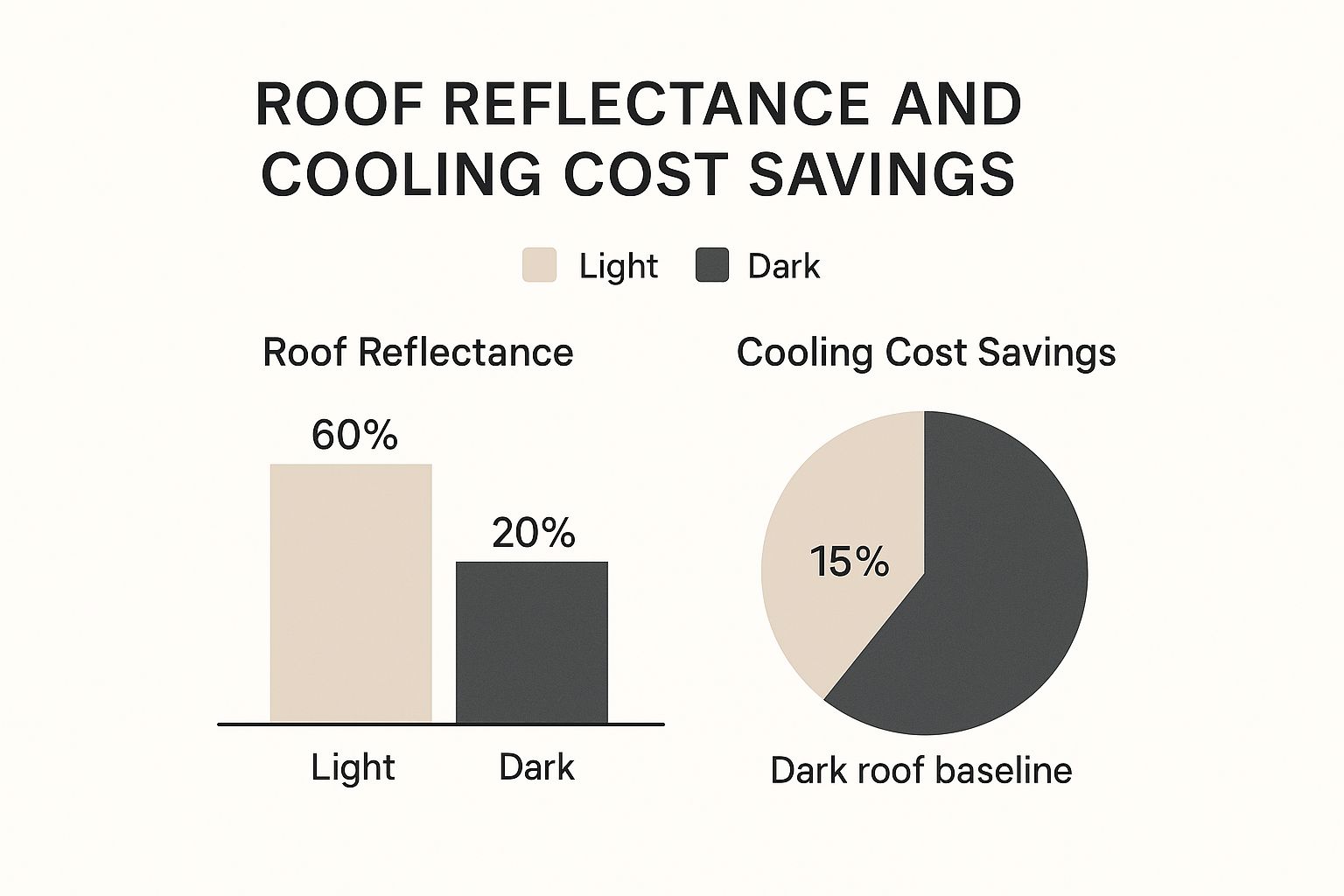
As you can see, the high reflectance of light-colored roofs directly translates into lower cooling costs, making it a no-brainer for sunny climates.
Leveraging Darker Roofs In Colder Climates
On the flip side, if your home is in a colder region with long, tough winters—like New England or the Pacific Northwest—a darker roof color can be a real asset. Shades of black, charcoal, and deep brown are fantastic at absorbing the sun's energy.
On those precious sunny winter days, this absorbed heat helps warm your home, slightly reducing your heating load. It can also help melt snow and ice off your roof faster, which is a big help in preventing damaging ice dams from forming. While the effect isn't quite as dramatic as a cool roof's impact in summer, every little bit of passive heating helps.
Expert Insight: From my experience, the core principle is to work with your environment, not against it. Here in Florida, we almost exclusively recommend lighter shades because the energy savings from reflecting heat are undeniable and immediate.
The growing demand for these climate-smart options is changing the roofing industry. The market for roof coatings, valued at USD 6.22 billion in 2023, is expected to hit nearly USD 9.77 billion by 2031, largely because homeowners want these energy-saving solutions. This shift shows that people are really starting to understand the link between roof color and their wallet.
To get a sense of how this plays out across the country, this table breaks down the typical impact of roof color choices in different climate zones.
Roof Color Impact on Energy Use by Climate Zone
| Climate Zone | Light Roof (High Reflectance) | Dark Roof (Low Reflectance) | Recommendation |
|---|---|---|---|
| Hot/Humid (e.g., Miami, FL) | High energy savings from reduced AC use | Can significantly increase cooling costs | Strongly Recommended |
| Hot/Dry (e.g., Phoenix, AZ) | Maximum energy savings; lowers indoor temps | Creates a significant heat island effect | Highly Recommended |
| Mixed-Humid (e.g., Atlanta, GA) | Good summer savings; minimal winter penalty | Minor winter savings; high summer penalty | Recommended |
| Cold (e.g., Chicago, IL) | Can increase heating costs in winter | Modest heating benefit; melts snow faster | Optional, but dark is often preferred |
| Very Cold (e.g., Minneapolis, MN) | Noticeable increase in winter heating costs | Good passive solar gain; helps with ice dams | Dark Roofs Recommended |
As the data shows, the "best" color really depends on balancing your summer cooling needs against your winter heating needs. For most of the country, a lighter roof offers more financial benefit over the course of a year.
And while picking the right roof color is a huge step, you can take your energy savings even further. For those looking to maximize their energy independence, pairing a reflective roof with solar technology is the ultimate combination. You can learn more in this complete guide to solar panels for home energy savings.
How Roofing Material Affects Color and Texture
The color swatch you pick is only half the story. It's the roofing material itself that truly brings that color to life. Every type of roofing has its own unique personality, dictating not just the color options but also the texture, sheen, and the way light plays across its surface.
Think about it this way: "charcoal gray" in asphalt shingles and "charcoal gray" in metal roofing are two completely different things on a house. The shingle's granular surface gives you a softer, matte look, while a metal panel delivers clean, sleek lines with a bit of a sheen. That textural difference is huge and completely changes the final aesthetic.
The Versatility Of Asphalt Shingles
Asphalt shingles are the chameleons of the roofing world. They offer what is easily the widest and most accessible range of colors, making them a fantastic choice if you want to create a sense of depth and dimension on your roof.
Their secret weapon is the use of color-blended granules. Instead of one flat, uniform color, manufacturers expertly mix different tones to create a more natural, variegated appearance. A "weathered wood" shingle isn't just a flat brown; it's a dynamic blend of deep browns, lighter tans, and even subtle gray notes. This is a game-changer for a couple of reasons:
- Visual Interest: The mix of tones adds a rich texture that keeps your roof from looking like a monolithic block of color.
- Hiding Imperfections: That dimensional look is fantastic at masking minor debris or the natural fading that happens over time.
- Complementing Siding: With multiple tones in each shingle, it’s much easier to find one that pulls out and matches specific colors in your home’s brick, stone, or siding.
Architectural shingles take this concept even further. Their layered, three-dimensional construction creates strong shadow lines that do an incredible job of mimicking more expensive materials like wood shake or slate, adding some serious curb appeal.
Timeless Tones Of Tile And Slate
When you step into the world of clay tile or natural slate, the color conversation shifts. Here, the beauty is all about authentic, earthy tones. Clay tiles are famous for those rich terracottas, warm reds, and sandy oranges that are the perfect finishing touch for Mediterranean or Spanish-style homes.
For homes with warm stucco or stone, the rich, organic colors of clay or concrete tiles create a natural harmony. These materials reinforce the architectural style and provide a timeless look that won't feel dated.
Slate brings its own unique palette to the table, with incredible natural variations of gray, black, deep green, and even purple. The color isn't painted on; it's inherent to the stone itself. This provides a level of sophistication and permanent elegance that manufactured products just can't replicate. With both tile and slate, you’re getting a permanence and authenticity that becomes a core feature of your home's design.
Modern Hues In Metal Roofing
Metal roofing has dramatically evolved from its purely functional, agricultural roots. Thanks to incredible advances in paint and coating technology, you can now get metal panels in just about any color you can dream up—from bold, vibrant reds and blues to sleek, modern charcoals and blacks.
The key advantage here is color stability. High-quality metal roofs are finished with coatings like Kynar 500®, which are exceptionally resistant to fading, even under the intense South Florida sun. This means the crisp color you choose today will stay true for decades. The clean, uniform lines of a standing seam metal roof also create a very different look—one that is sharp, modern, and precise.
Considering Your Neighborhood and Resale Value
Your roof is one of the most visible parts of your home, and the color you choose doesn't exist in a bubble. It’s a major decision that influences your home’s curb appeal, fits into your neighborhood's look, and can seriously impact your future resale value. A choice that feels right for your street is almost always the smartest long-term investment.
Before you fall in love with a specific color swatch, your first stop should always be to check the rules. Many homes are part of a Homeowners Association (HOA), and they often have very specific guidelines about what roof colors are permitted to keep the community looking cohesive. Don't skip this step—ignoring the rules could mean hefty fines and being forced to replace a brand-new roof.
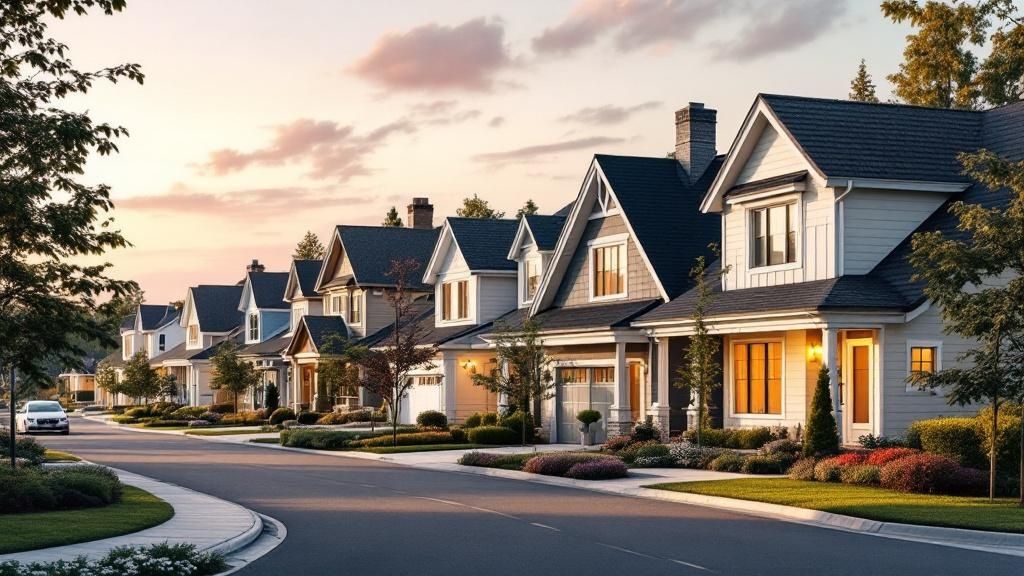
Even if you don't have an HOA, it pays to observe the "unwritten rules" of your block. Take a walk and get a feel for the prevailing color palettes. Are most roofs classic grays and blacks? Do you see a lot of earthy brown tones? You don’t need to be a carbon copy of your neighbors, but a wild outlier—like a bright blue roof in a sea of charcoal—can stick out for the wrong reasons and hurt your home’s appeal when it's time to sell.
The Impact on Resale Value
When a potential buyer pulls up to your house, the roof is one of the first things they see. You want that first impression to scream "well-maintained" and "move-in ready," not "what were they thinking?" This is where picking the right color becomes a smart financial move.
Real estate pros will tell you that a coordinated, appealing exterior is a huge factor in a home's value. Neutral colors are, without a doubt, the safest and most profitable choice for resale.
- Charcoal Gray & Black: These are the superstars of the roofing world. They work with almost any siding color, from crisp white vinyl to warm red brick, and give off a timeless, sophisticated vibe.
- Neutral Browns & Beiges: Perfect for homes with warm-toned stone or siding, these earthy colors feel grounded and welcoming. They're a popular and safe bet for many common architectural styles.
Choosing a roof color with resale in mind is about playing the odds. A bold, unique color might be perfect for one specific buyer, but a classic neutral like charcoal or black appeals to almost everyone. This makes your home far easier to sell and can help you get a better price.
Exterior Upgrades and Property Worth
Think of your roof as a critical piece of your home's exterior puzzle. Every major element works together to create a valuable first impression. A great roof color boosts your home's worth, and so do other key upgrades. For instance, it's helpful to understand why installing a new garage door can increase your home's value. Both your roof and garage door are prominent features that, when chosen wisely, create a powerful and appealing package.
By thinking about your neighborhood's character and putting yourself in a future buyer's shoes, you can pick a roof color you'll love for years—one that also pays you back when it's time to sell.
Of course. Here is the rewritten section, crafted to sound like an experienced human expert while adhering to all your requirements.
Final Questions Before You Pick a Roof Color
Once you’ve narrowed down your choices, a few final questions always seem to pop up. It’s completely normal. Making a decision that will define your home’s look for decades is a big deal, and getting these last details right will give you total confidence in your final pick.
Let's walk through the most common questions I hear from homeowners right before they sign off on a color.
Should My Roof Be Lighter or Darker Than My House?
This is probably the number one question, and the honest answer is: it depends on the look you're going for. There’s no hard and fast rule, but there are two common approaches that create very different effects.
A roof that is darker than the house siding is the most traditional and popular choice. It gives the home a grounded, substantial feel by creating a strong visual cap. Think of it as an anchor for your home’s entire color scheme.
On the flip side, a roof that is lighter than the siding can make a house feel bigger and more open. This is a great move for coastal homes, modern farmhouses, or any design where you want a bright, airy vibe. The real key, no matter which way you go, is contrast. A noticeable difference in shade is what keeps a home from looking flat and uninspired.
What Is the Best Roof Color for Resale Value?
When you’re thinking about resale, the safest bet is always a neutral color. Why? Because neutrals appeal to the widest possible audience of potential buyers. A wild or trendy roof color can be a deal-breaker for some, but nobody ever objects to a classic.
- Grays: Incredibly versatile. From a soft pewter to a bold charcoal, gray shingles complement almost any siding or brick color.
- Black: It’s timeless for a reason. Black provides a crisp, sophisticated look that pairs beautifully with both light and dark exteriors.
- Browns & Tans: These earthy, warm tones are perfect for homes with warm-colored brick, stone, or stucco, creating a cohesive and inviting appearance.
Real estate pros will tell you that a home with a great, coordinated exterior has a real edge. Neutral roofs are a smart investment because they don’t go out of style and new owners can easily match their own decor and landscaping to them.
How Can I Test Roof Colors Before I Commit?
Please, whatever you do, don't make your final call based on a tiny square in a brochure or a picture on a website. It’s a recipe for disappointment. You absolutely have to see how the color looks on your house, in your light.
The best way to do this is to get large sample boards from your roofer. Ask for your top two or three choices, take them home, and prop them up against your siding. Look at them at different times of the day—morning sun, high noon, and in the evening shadows. The color can change dramatically. Make sure you check on both bright, sunny days and overcast ones to get the complete picture.
As a starting point, many roofing manufacturers have online visualizer tools. You can upload a picture of your house and "try on" different shingle colors. It’s a fantastic way to narrow the field before you get the physical samples.
Do Dark Roofs Fade Faster Than Light Roofs?
This used to be a valid concern, but roofing technology has come a long, long way. Fading is much less of an issue than it was even 15 or 20 years ago.
Today, high-quality architectural shingles and premium metal roofs are engineered with advanced UV-blocking granules and specialized coatings designed to resist color degradation. With good quality materials, the fading difference between a dark and a light roof is pretty minimal over the life of the roof.
Instead of focusing on the shade, look at the manufacturer's warranty and ask about the specific color-retention technology in the shingle. A quality product from a reputable brand will hold its color, whether it's black, tan, or gray.
Feeling confident about your color choice but need an expert to bring it to life? The team at Paletz Roofing and Inspections has over 30 years of experience helping South Florida homeowners select and install the perfect roof. From shingle to tile to metal, we ensure a flawless finish that boosts your home’s curb appeal and provides lasting protection. Visit us at https://paletzroofing.com to get your free quote today.